
4-2-3-1 DM AM Wide
Utilizing inverted wingers allows for penetration in the middle while still maintaining width for attacking versatility.
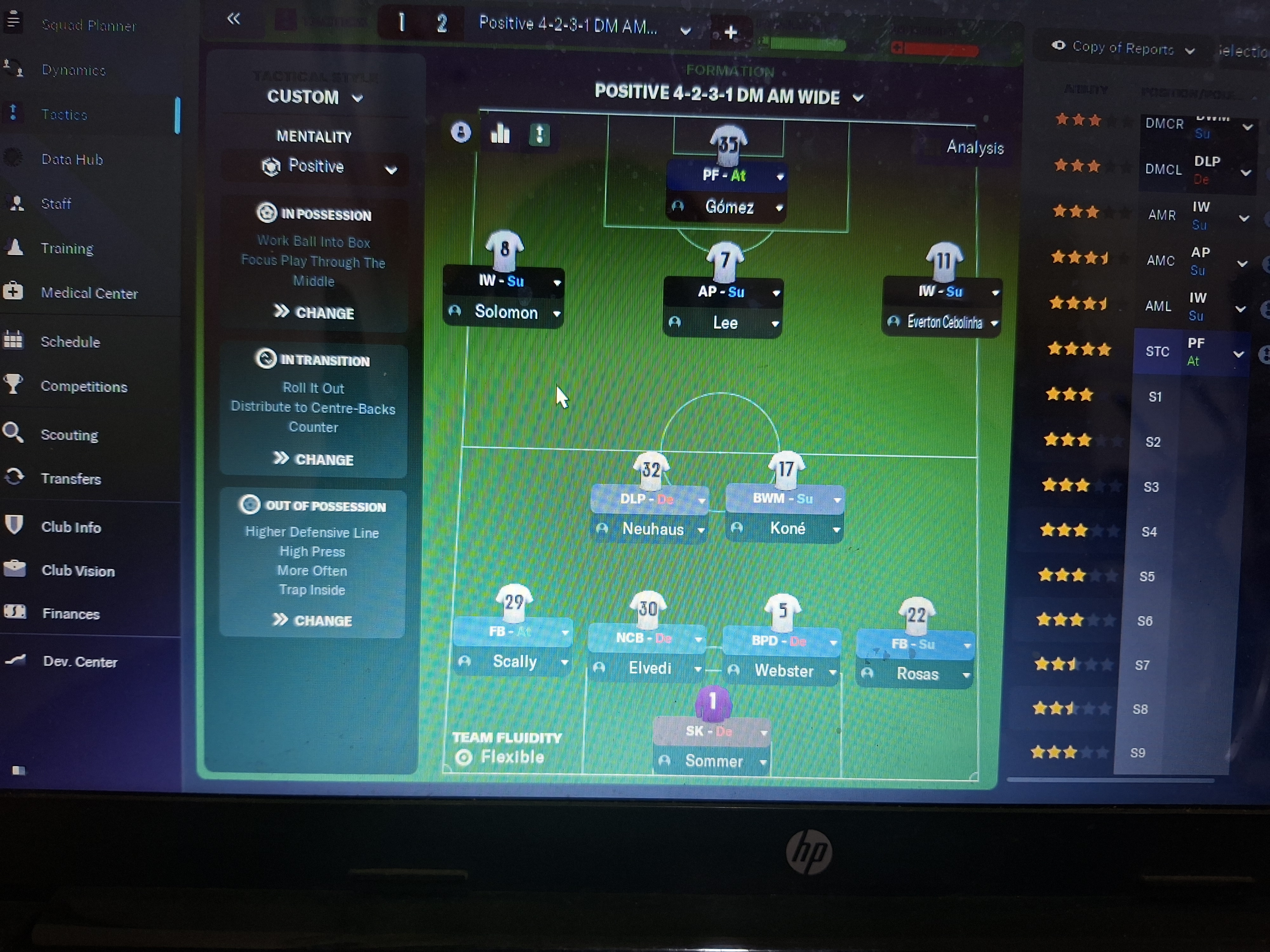
Loading tactical analysis...
Custom
Positive
4-2-3-1 DM AM Wide
Flexible
Work Ball Into Box
Focus Play Through The Middle
Roll It Out
Distribute to Centre-Backs
Counter
Higher Defensive Line
High Press
More Often
Trap Inside
STC
PF
Attack
AMC
AP
Support
W
IW
Support
DMC
DLP
Defend
MC
BWM
Support
FB
FB
Support
Utilizing inverted wingers allows for penetration in the middle while still maintaining width for attacking versatility.
The high press can force errors from opponents, creating quick transition opportunities.
While the high press is effective, it may expose the defensive line if pressed too aggressively, leading to quick counters from opponents.
Inverted wingers may lack the directness needed in the box if overly focused on working the ball in; should balance with a direct approach at times.
How can I adjust the mentality in different phases of the game?
Would switching to a more direct approach benefit the current squad?
How can I enhance the link-up play between the wingers and the striker?
What adjustments can be made against teams that sit deep defensively?
Is the defensive structure solid enough to withstand counter-attacks effectively?
Should I reconsider the roles of my central midfielders for better balance?
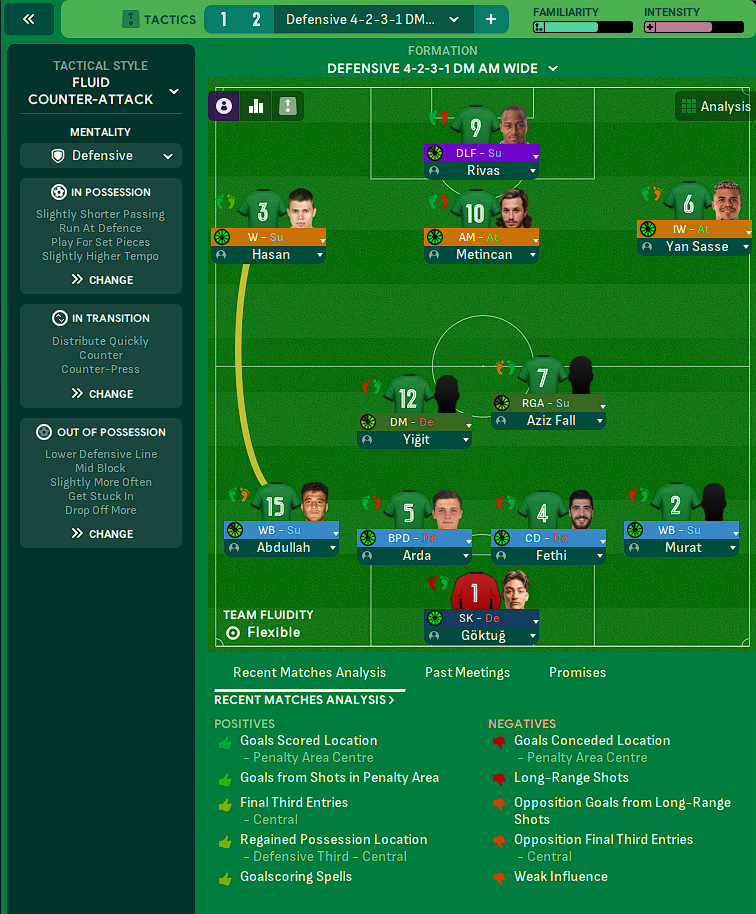
Fluid
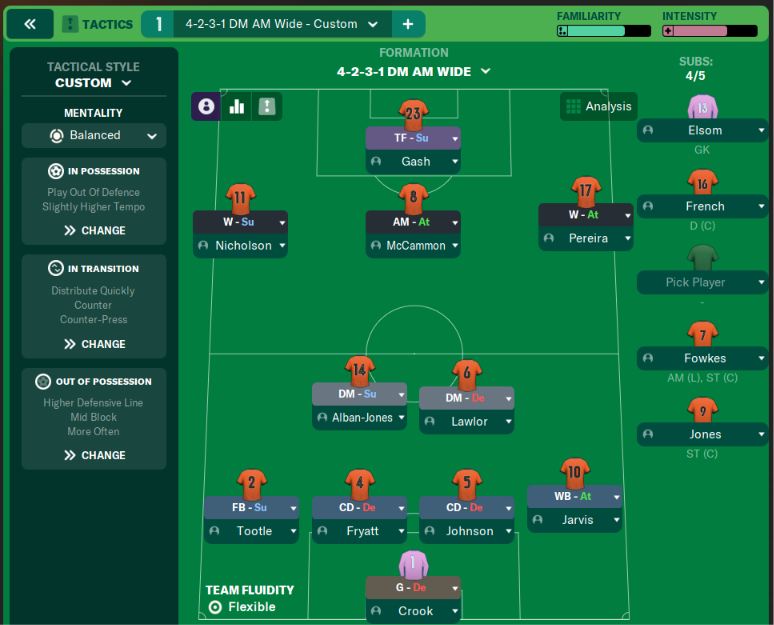
Custom
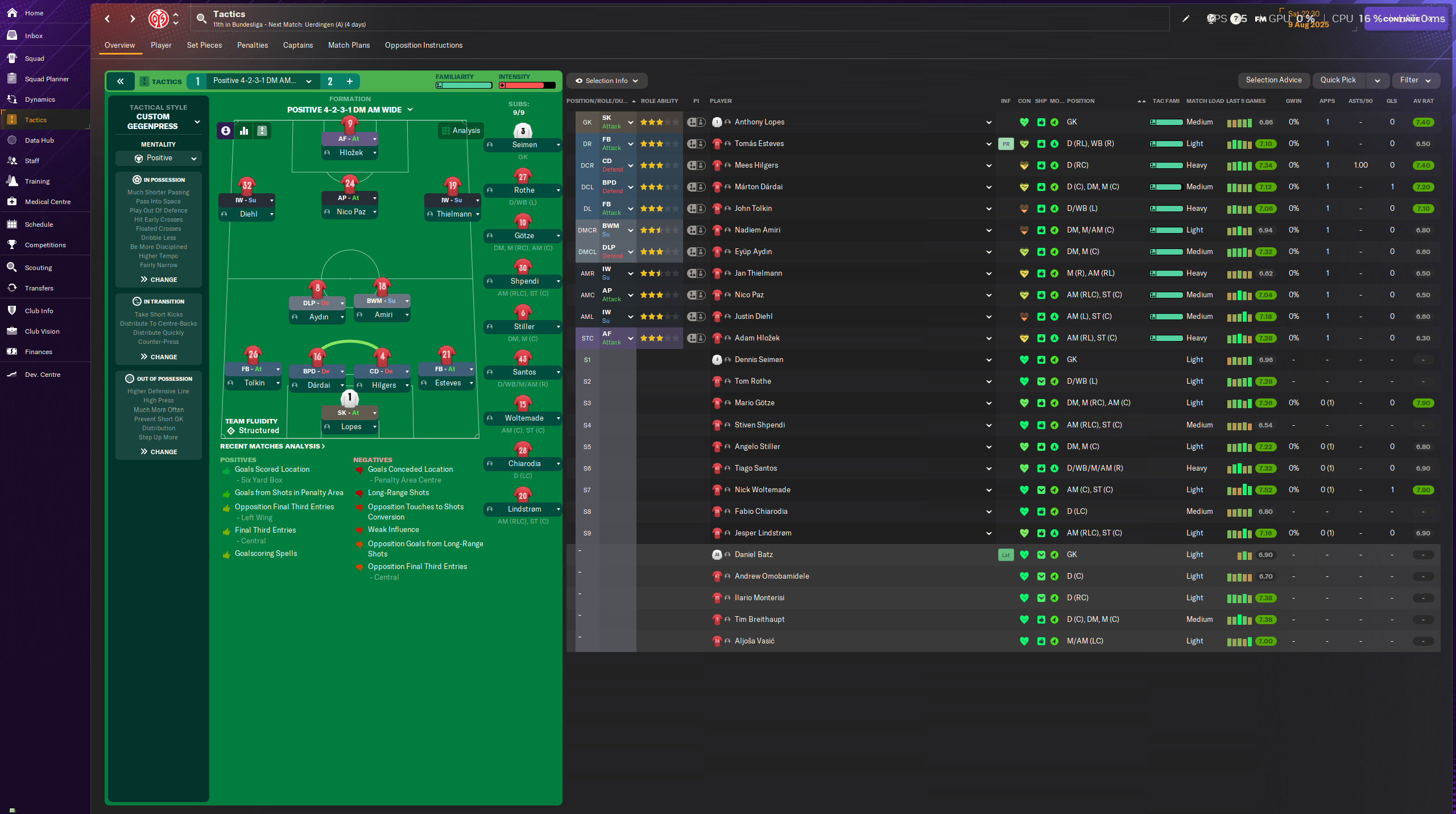
Positive
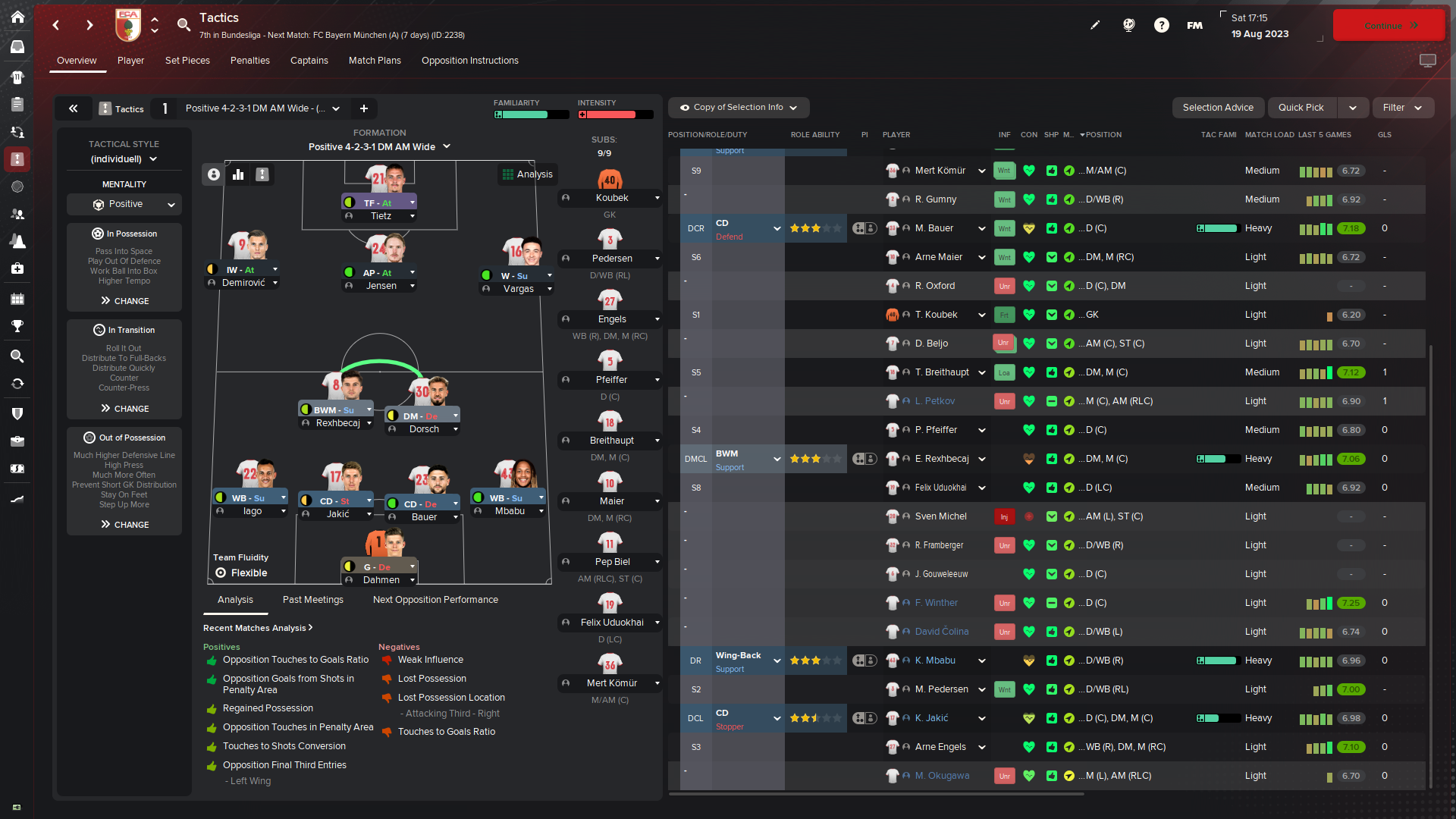
Positive
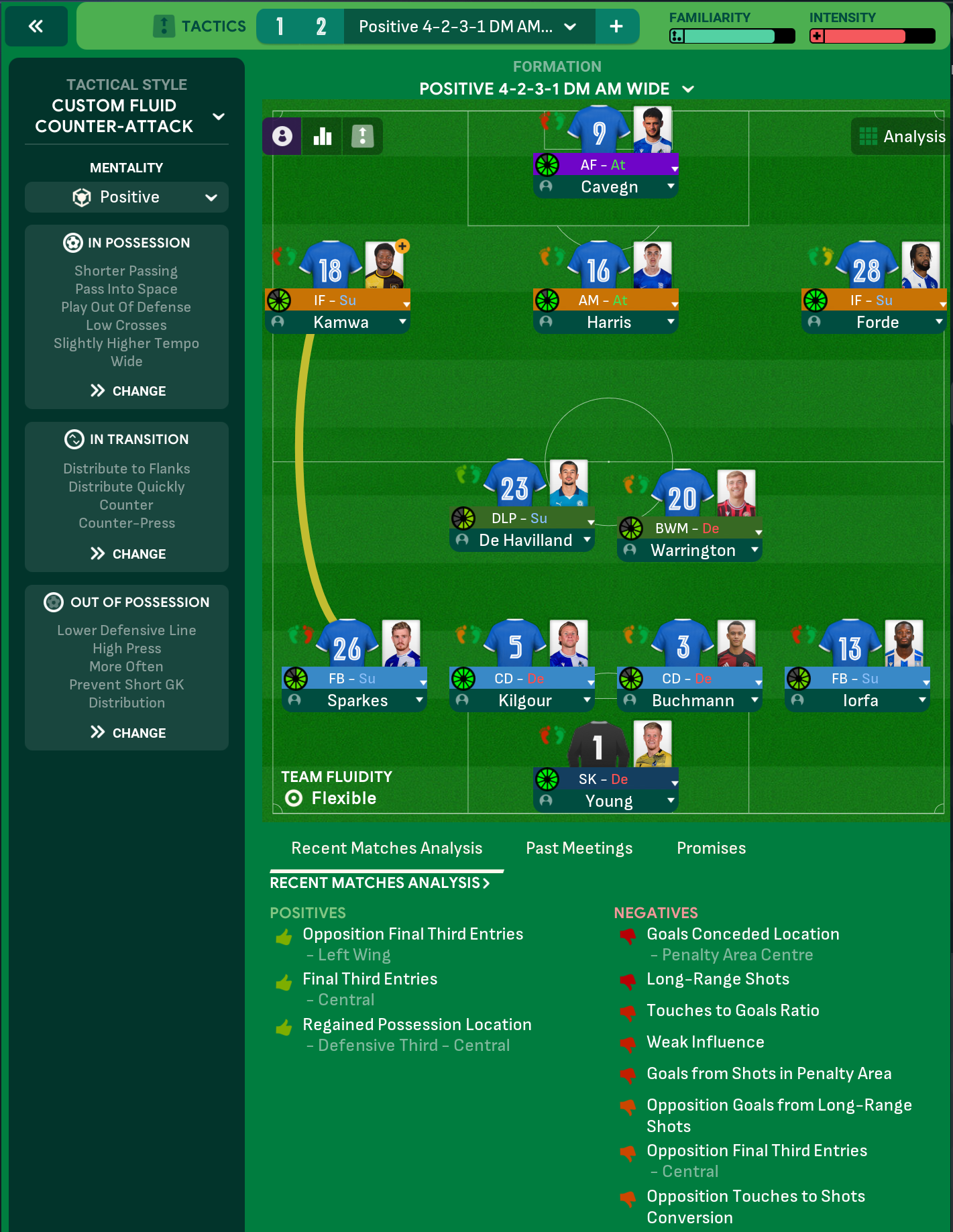
Custom Fluid Counter-Attack
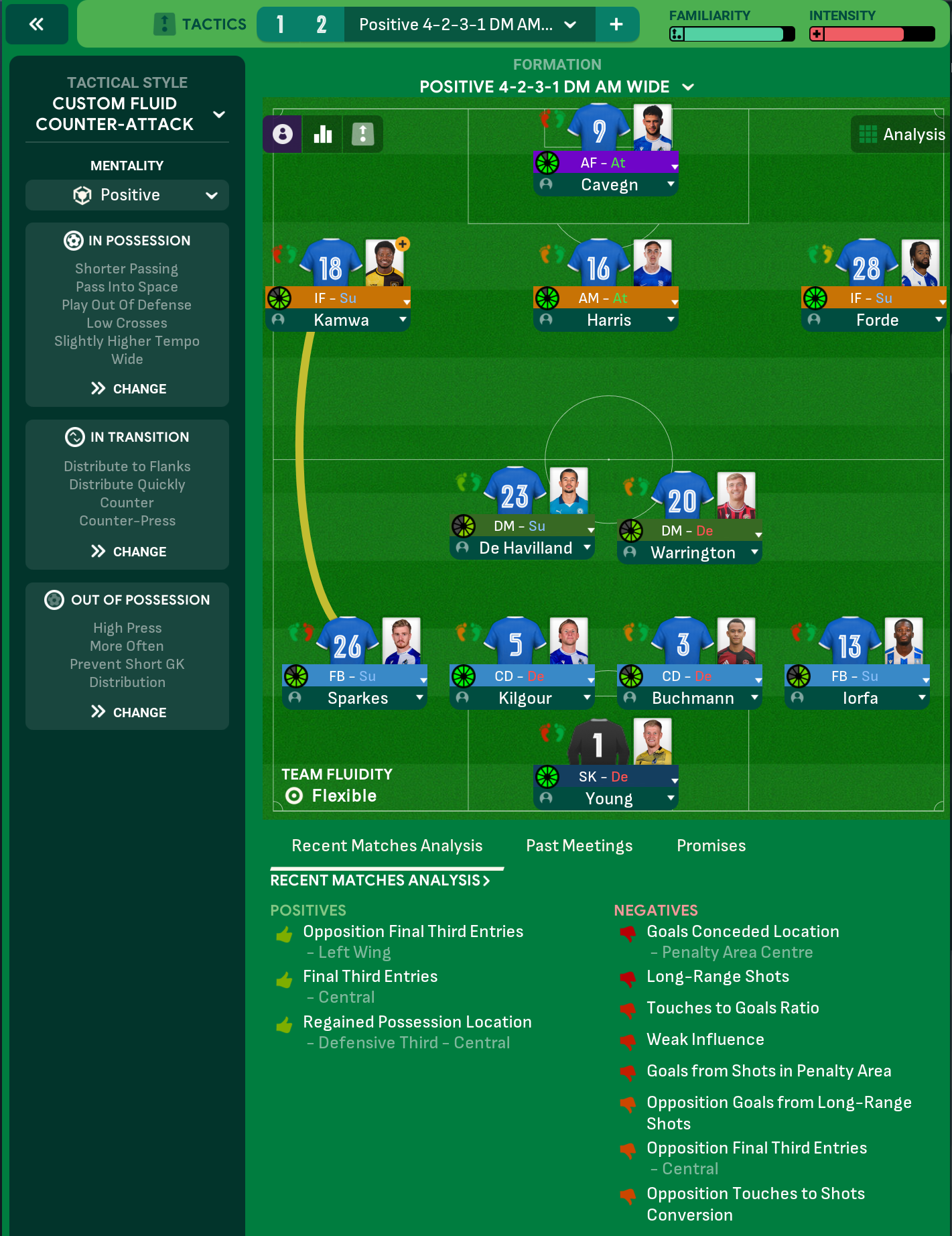
Custom Fluid Counter-Attack
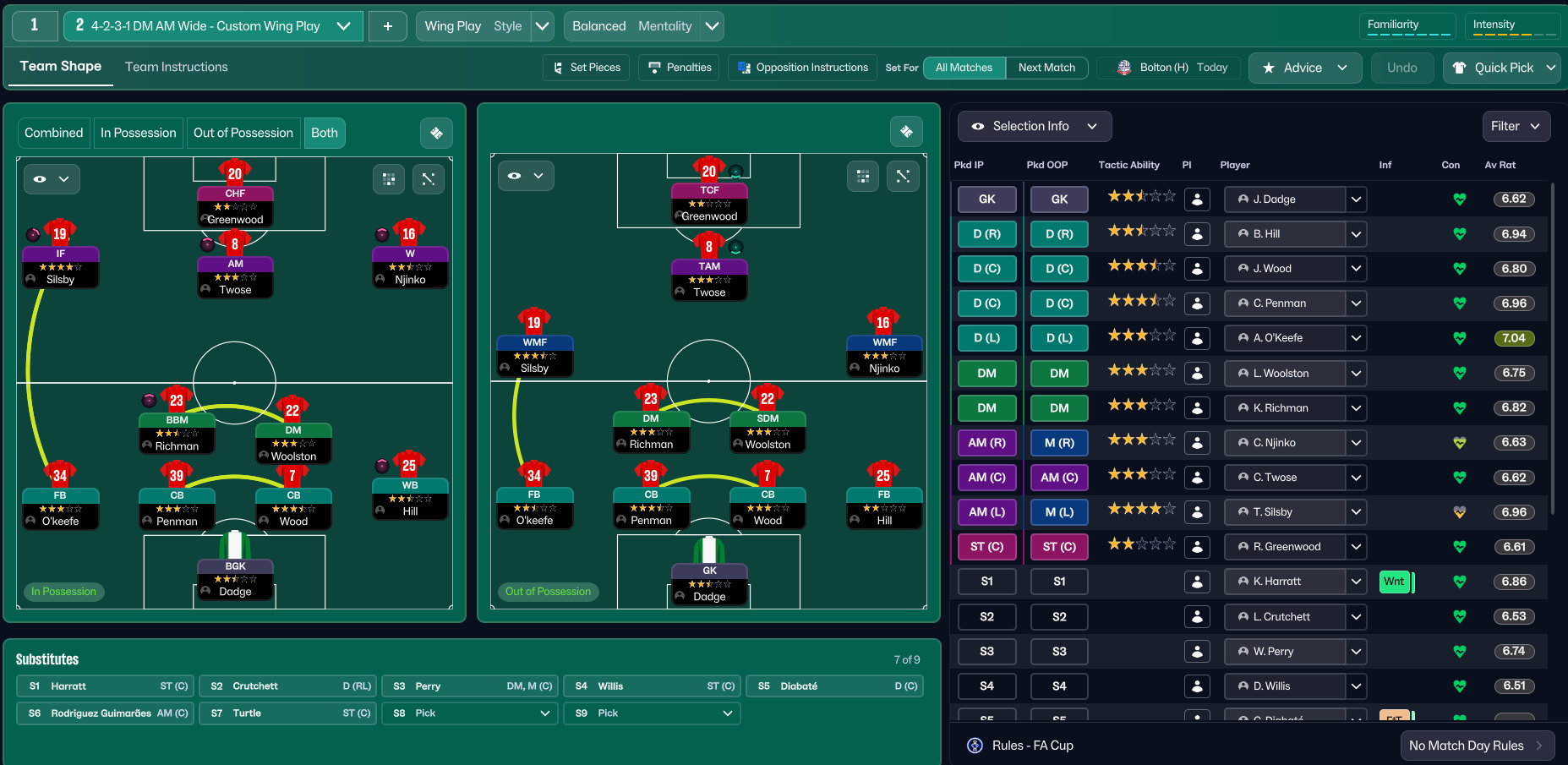
Wing Play
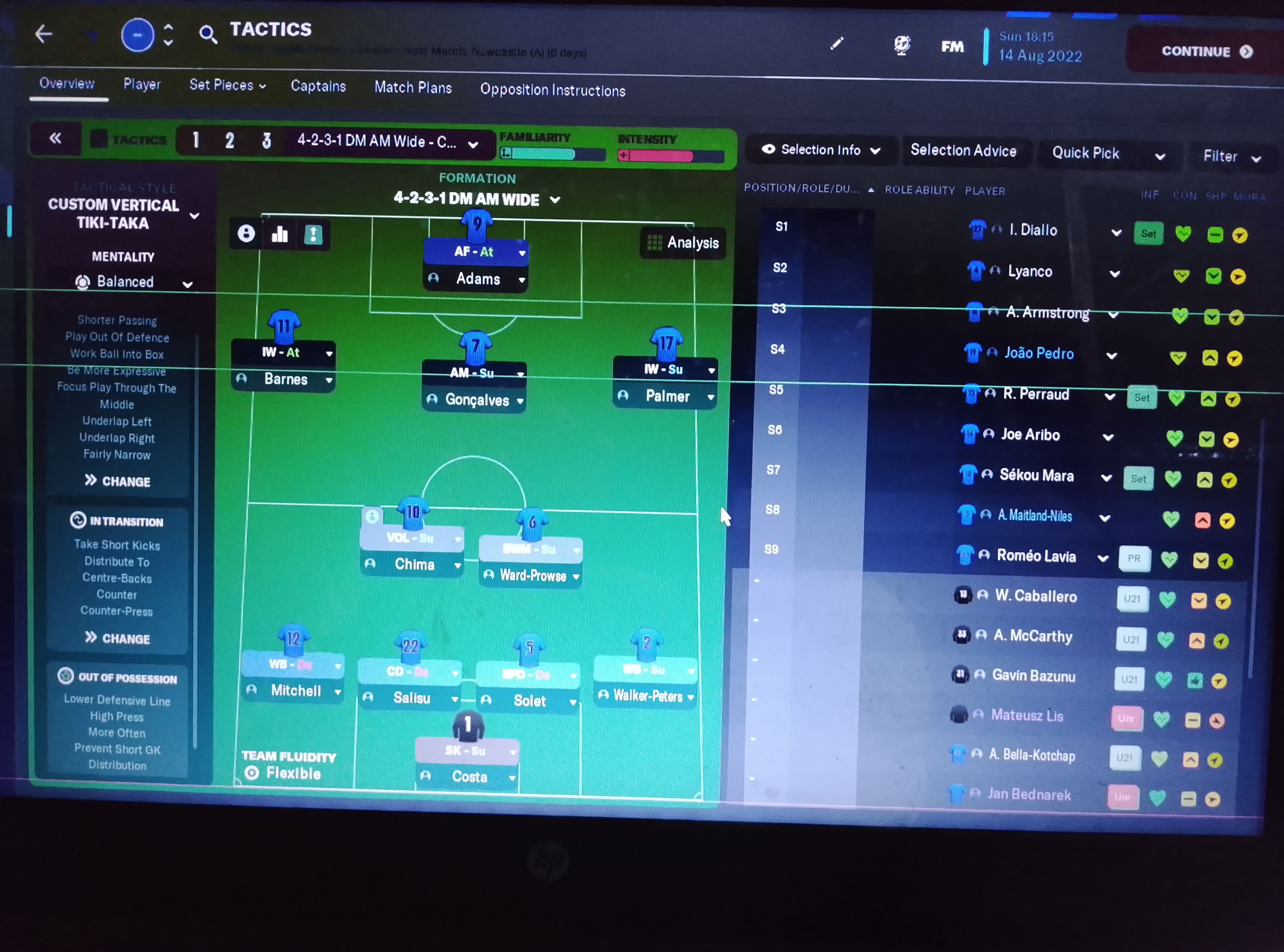
Custom Vertical Tiki-Taka
The tactical theory behind the 4-2-3-1 DM AM Wide: roles, instructions, and the trade-offs that decide whether the system holds up.
Klopp-style gegenpressing in FM, including squad profile, line-and-press pairing, sustainable workload, and the antipatterns to avoid.
Double pivots and flat pairs in 4-2-3-1 and 4-4-2: when each pairing works, when it collapses, and the AMC unicorn that rescues both.
Pass map, average position, xG, possession by zone: what each tablet panel tells you in FM and the tactical change it should trigger.