
4-2-3-1 DM Wide
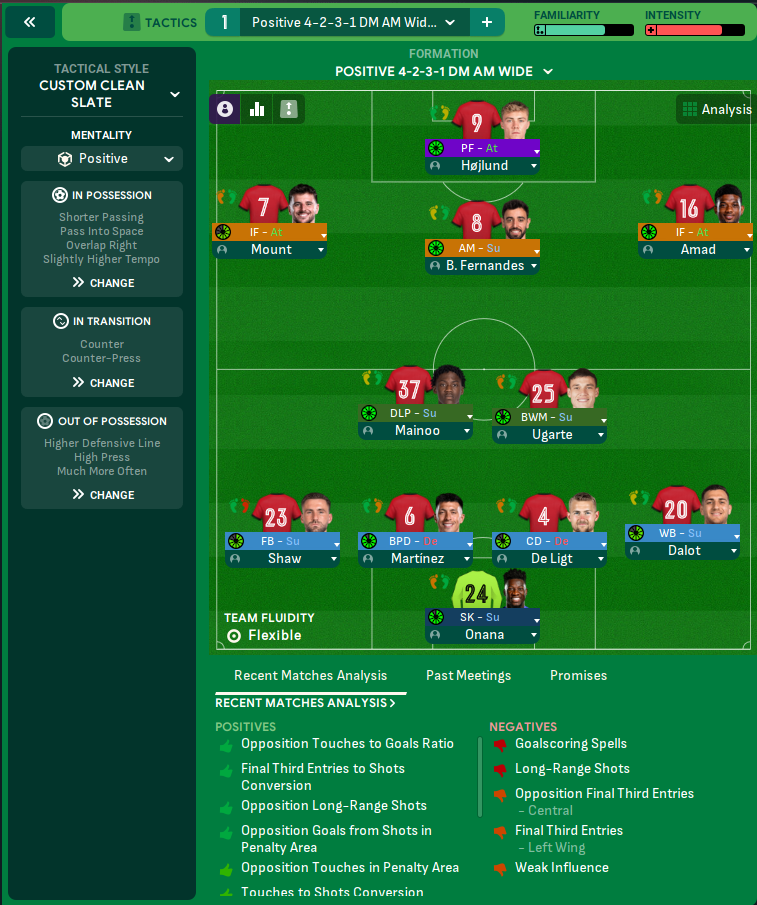
The presence of attacking players in three advanced roles allows for dynamic attacking play and creates multiple scoring opportunities.
Loading tactical analysis...
Custom Clean Slate
Positive
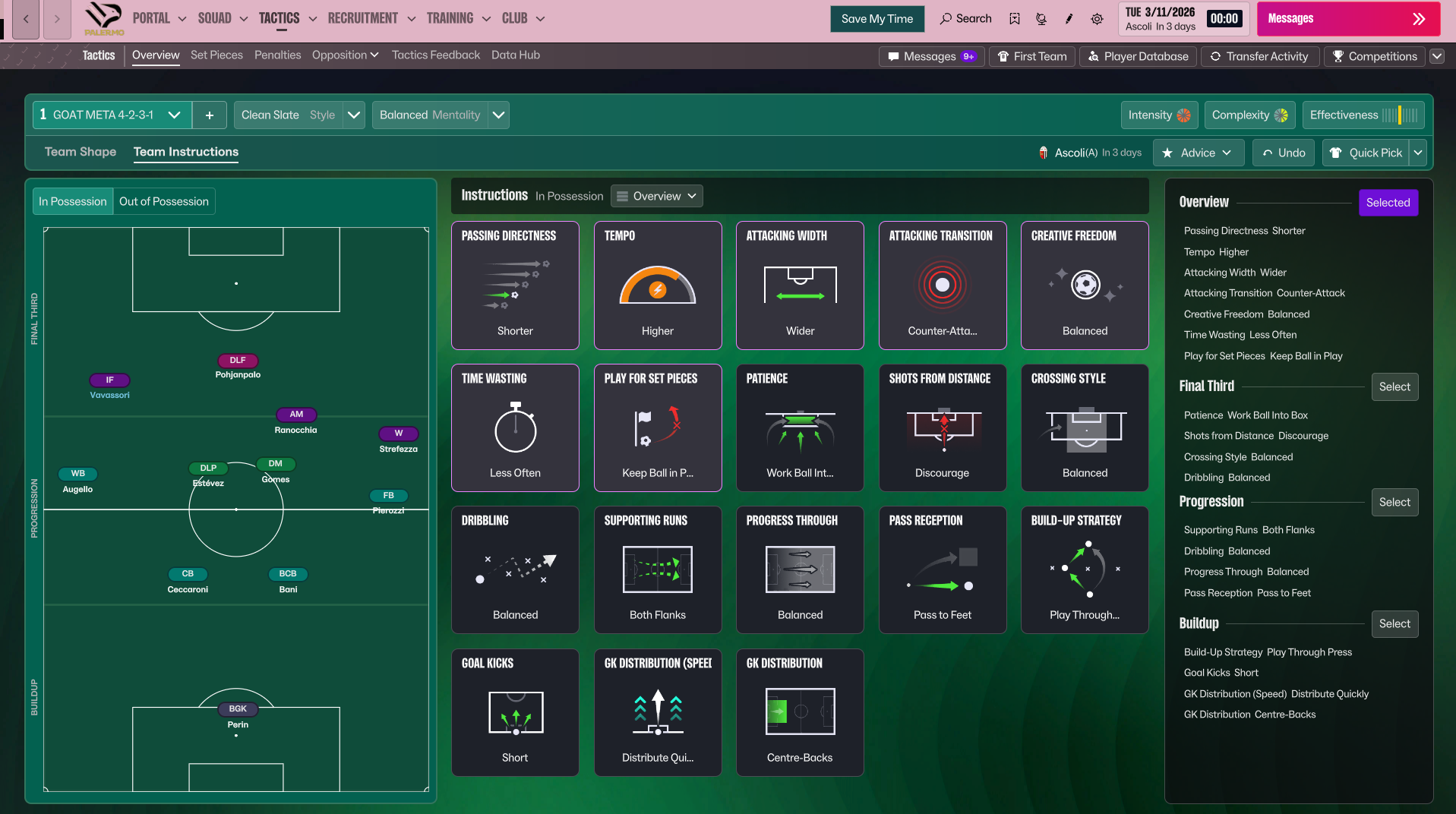
4-2-3-1 DM Wide
Flexible
Shorter Passing
Pass Into Space
Overlap Right
Slightly Higher Tempo
Counter
Counter-Press
Higher Defensive Line
High Press
Much More Often
ST
Pressing Forward
Attack
AM
Attacking Midfielder
Attack
IF
Inside Forward
Attack
DLP
Deep-Lying Playmaker
Support
BWM
Ball Winning Midfielder
Support
FB
Full Back
Support
BPD
Ball Playing Defender
Defend
CD
Central Defender
Defend
WB
Wing Back
Support
SK
Sweeper Keeper
Defend
The presence of attacking players in three advanced roles allows for dynamic attacking play and creates multiple scoring opportunities.
The tactical setup is built around a high pressing approach, making it difficult for opponents to play out from the back.
While a higher defensive line complements the high press, it may leave gaps in the back if not paired with a fast recovery strategy.
A short passing approach combined with a higher tempo may lead to hurried passes, increasing the risk of turnovers.
How can the midfield duo better support attacking transitions?
Is the team effectively using space on the wings?
What tactical adjustments are needed against compact defenses?
How frequently are the wing backs contributing to the attack?
Is the high press leading to recoveries in dangerous areas?
How well are players adapting to their roles during matches?
clean slate
clean slate
control possession
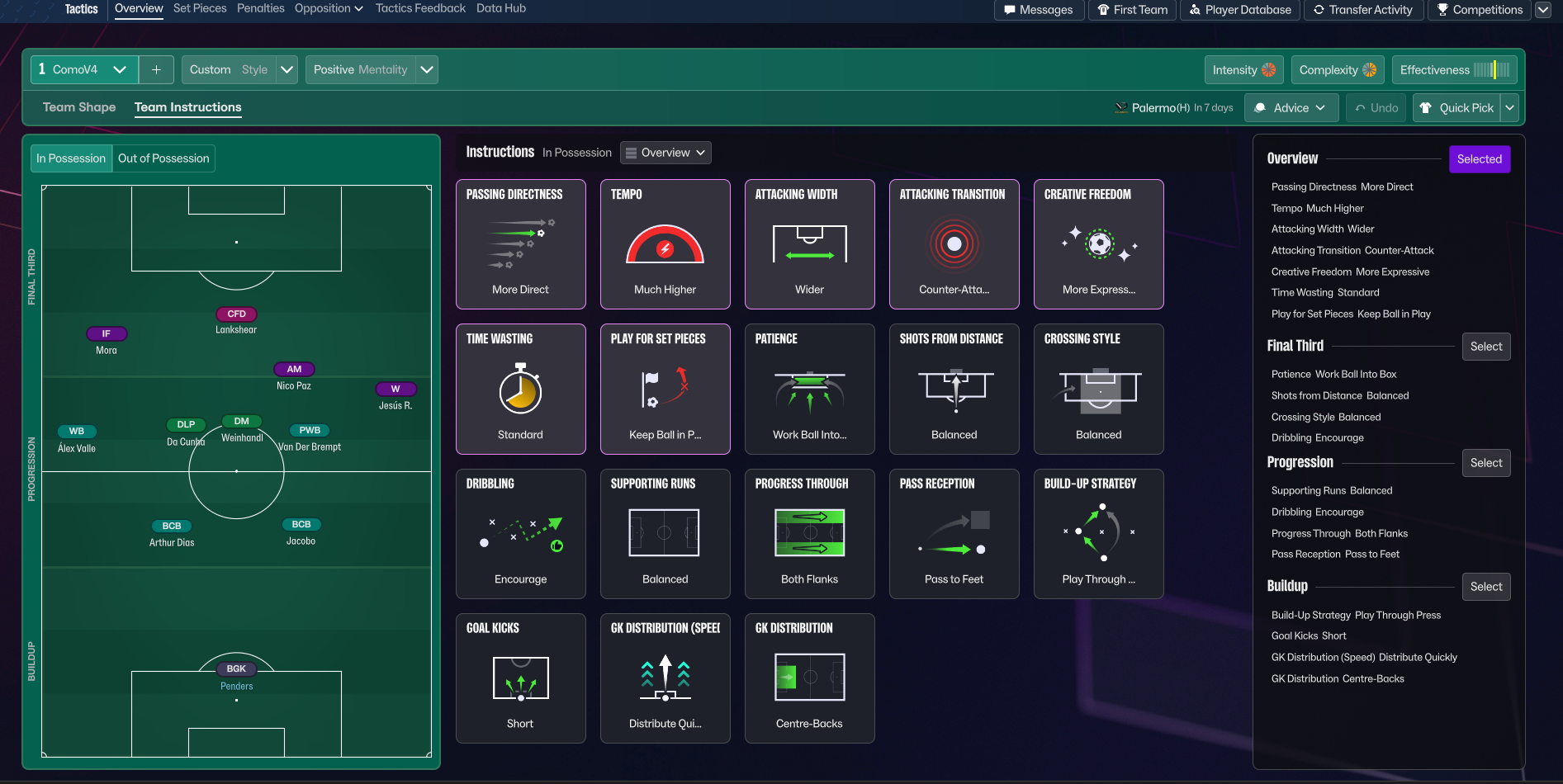
clean slate
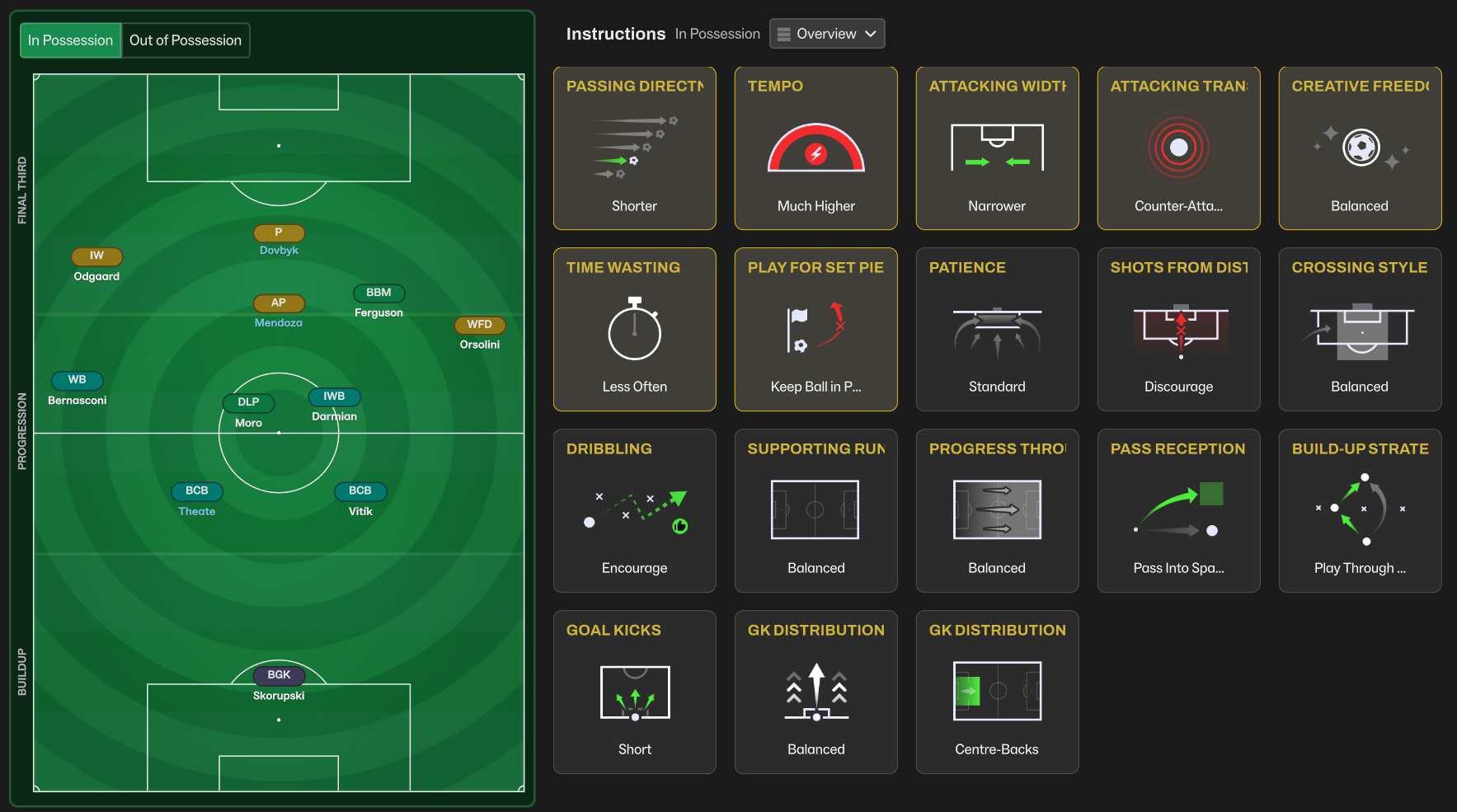
gegenpress
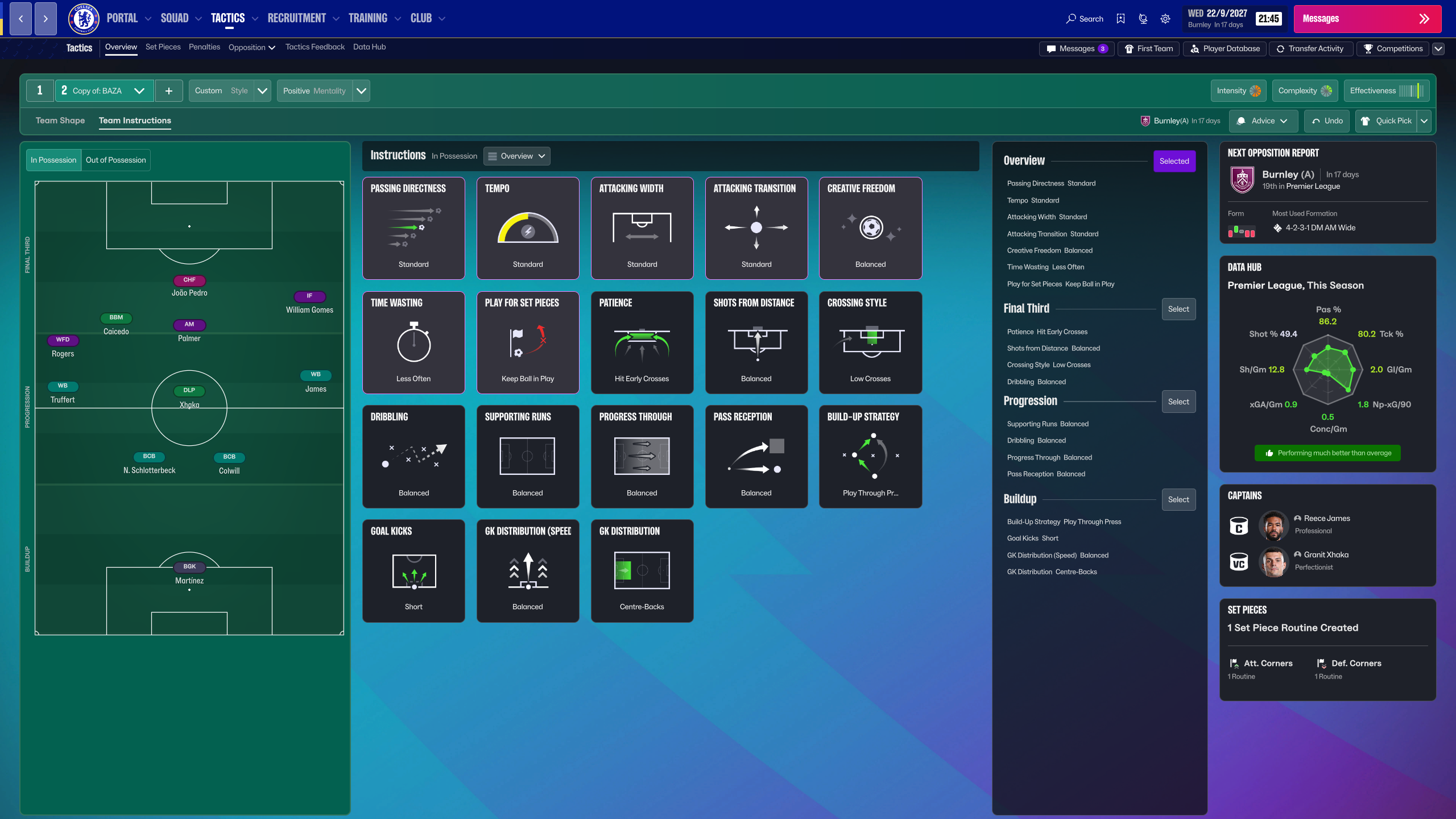
clean slate
clean slate
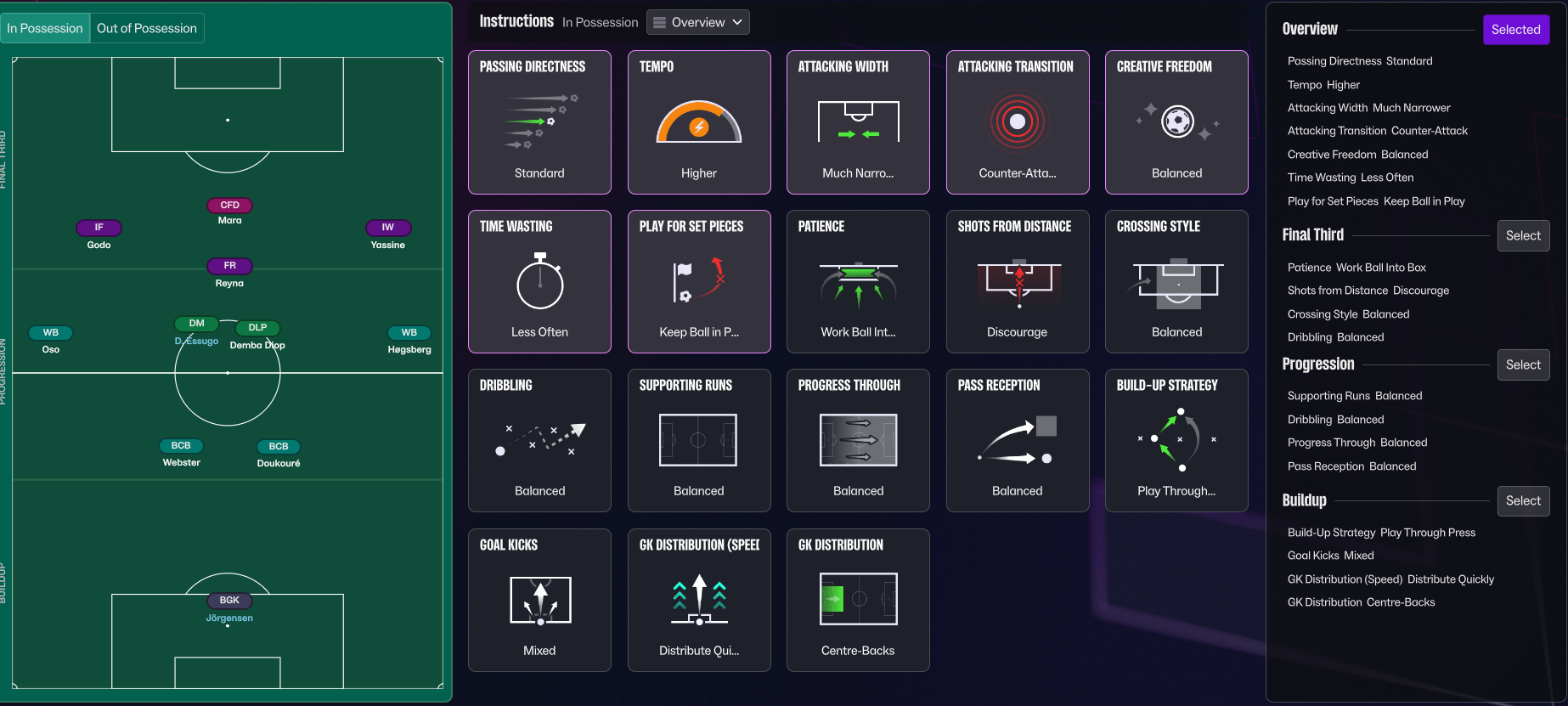
clean slate
The tactical theory behind the 4-2-3-1 DM Wide: roles, instructions, and the trade-offs that decide whether the system holds up.
Klopp-style gegenpressing in FM, including squad profile, line-and-press pairing, sustainable workload, and the antipatterns to avoid.
Double pivots and flat pairs in 4-2-3-1 and 4-4-2: when each pairing works, when it collapses, and the AMC unicorn that rescues both.
The five seconds after losing the ball decide most matches. Counter-press, drop-and-recover, and how to know which one you should be doing.