Uploaded Tactic
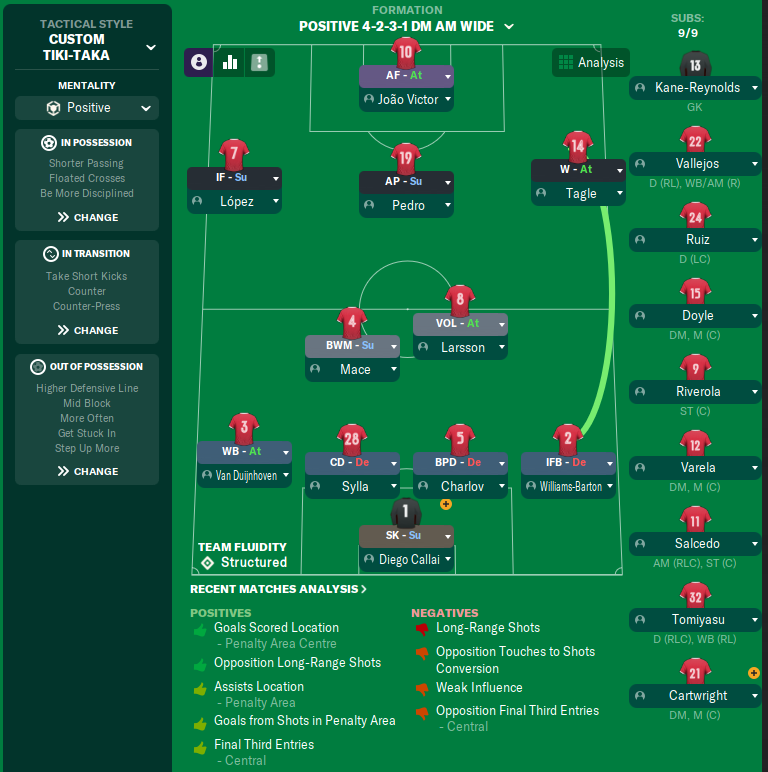
Formation & Style
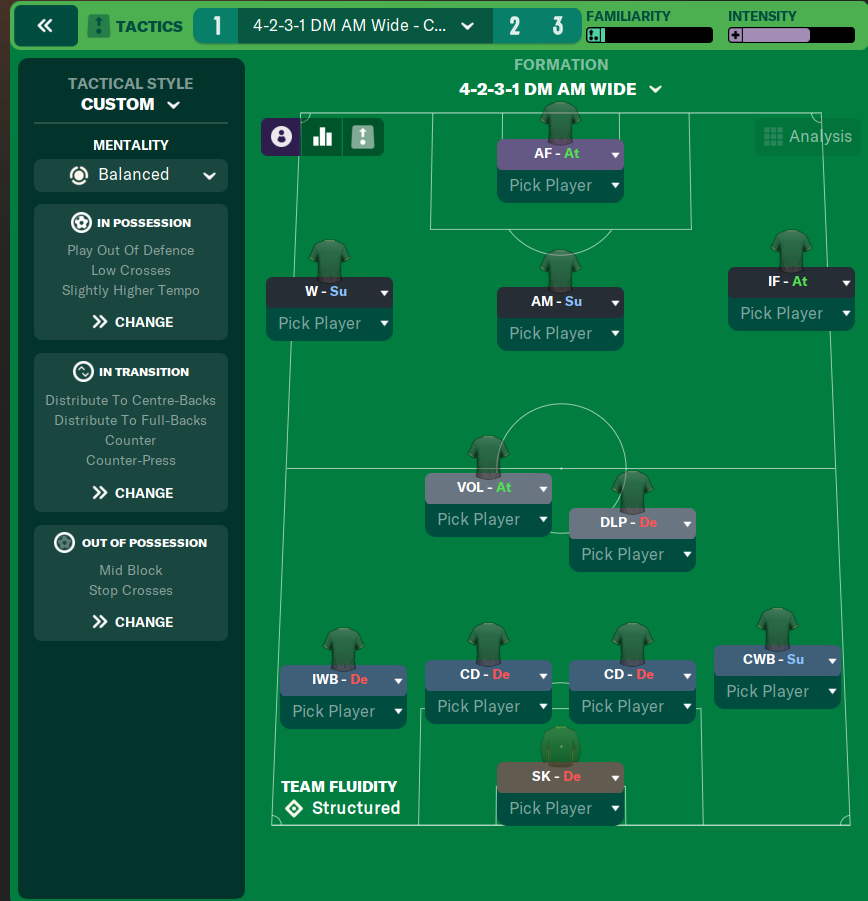
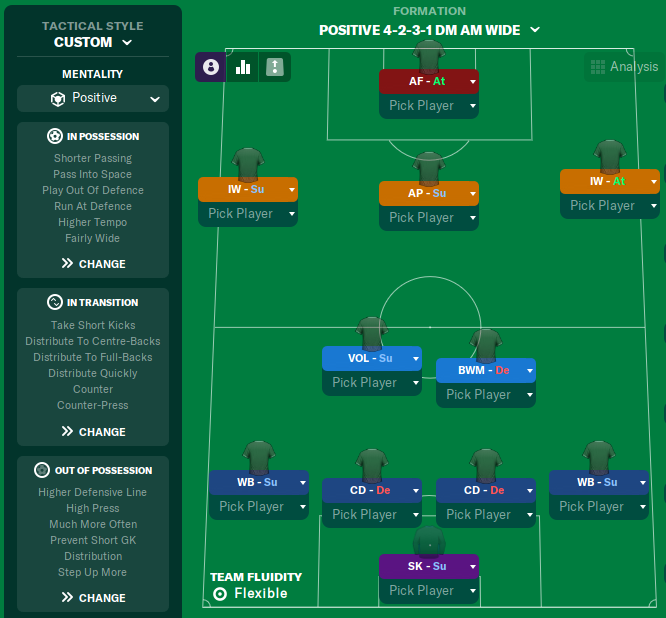
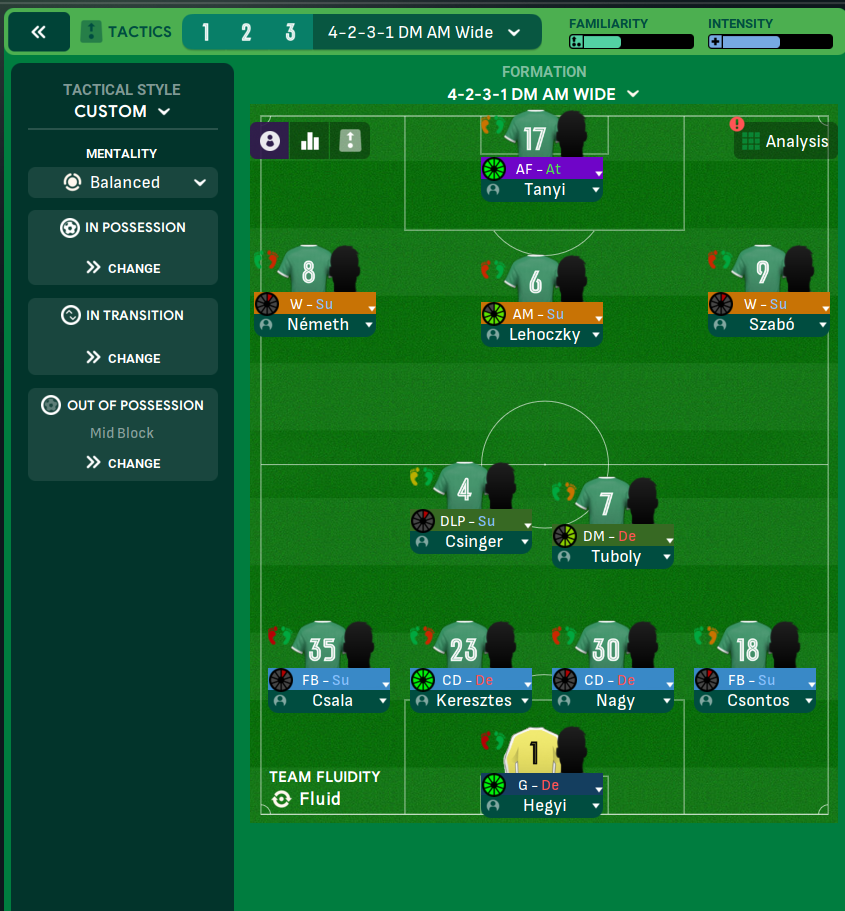
Tactical Style:Custom
Mentality:Balanced
Formation:4-2-3-1 DM Wide
Team Fluidity:Structured
In Possession
Play Out of Defence
Low Crosses
Slightly Higher Tempo
In Transition
Distribute To Centre-Backs
Distribute To Full-Backs
Counter
Counter-Press
Out of Possession
Mid Block
Stop Crosses
Team Shape Without Ball
Shape:Compact back four with a mid block
Description:The team maintains a compact shape, with defensive midfielders supporting the back line.
Evidence:The use of 'Mid Block' and 'Stop Crosses' in out of possession instructions.
Team Shape With Ball
Shape:Fluid movement with a focus on wing play
Description:The front three interchange positions and exploit the width with overlapping full-backs.
Evidence:Utilization of 'Play Out of Defence' and 'Low Crosses' along with attacking roles.
Phase Description
Attacking Play
The team looks to transition quickly into attack, utilizing the wings and direct through balls.
Defensive Transition
Upon losing the ball, the team applies a counter-press to regain possession quickly.
Main Focus
Creating goal-scoring opportunities through width and deep-lying passes.
Key Strengths
Dynamic Attack
The attacking trio can fluidly interchange and create space.
Strong Midfield Presence
The double-pivot can both support the attack and provide defensive cover.
Versatile Full-Backs
The Complete Wing-Back (CWB-Su) adds width and depth in attack while still covering defensively.
Conflicting Directions
Overly Aggressive Counter-Pressing
Counter-pressing might leave teams vulnerable if the first press is bypassed.
Static Midfield Roles
Potential for midfield to become congested if roles do not interchange effectively.
Dependence on Wide Play
Over-reliance on wide play could be neutralized by teams with strong full-backs.
Tactical Suggestions
Encourage More Fluid Movement
Encourage midfielders to interchange roles to break defensive lines.
Consider Tactical Variability
Introduce alternative tactical setups to deal with various opposition styles.
Re-evaluate Defensive Midfield Setup
Consider employing one defensive midfielder focused solely on break-up play.
Ask Questions About Your Lineup
Related Tactics
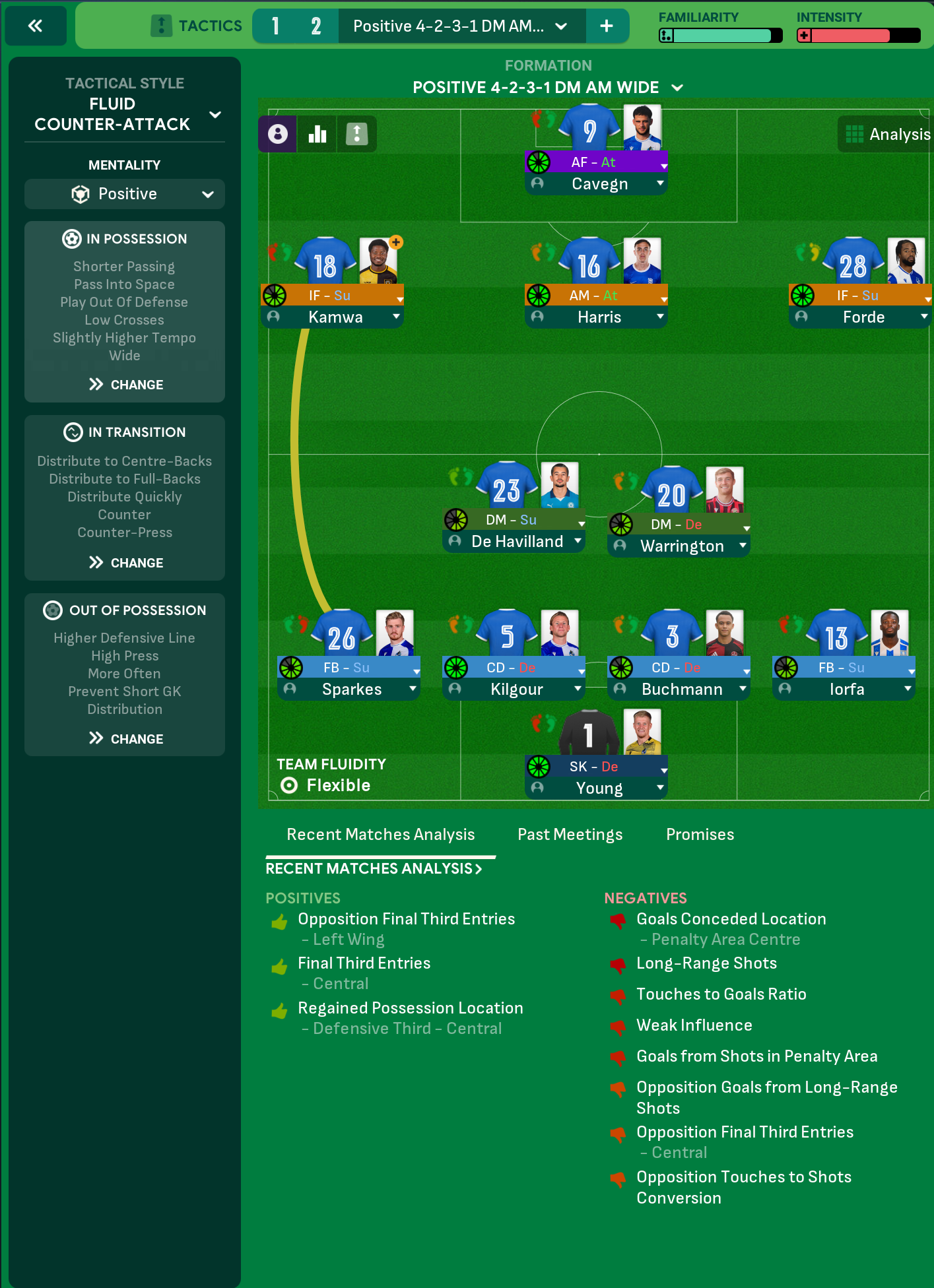
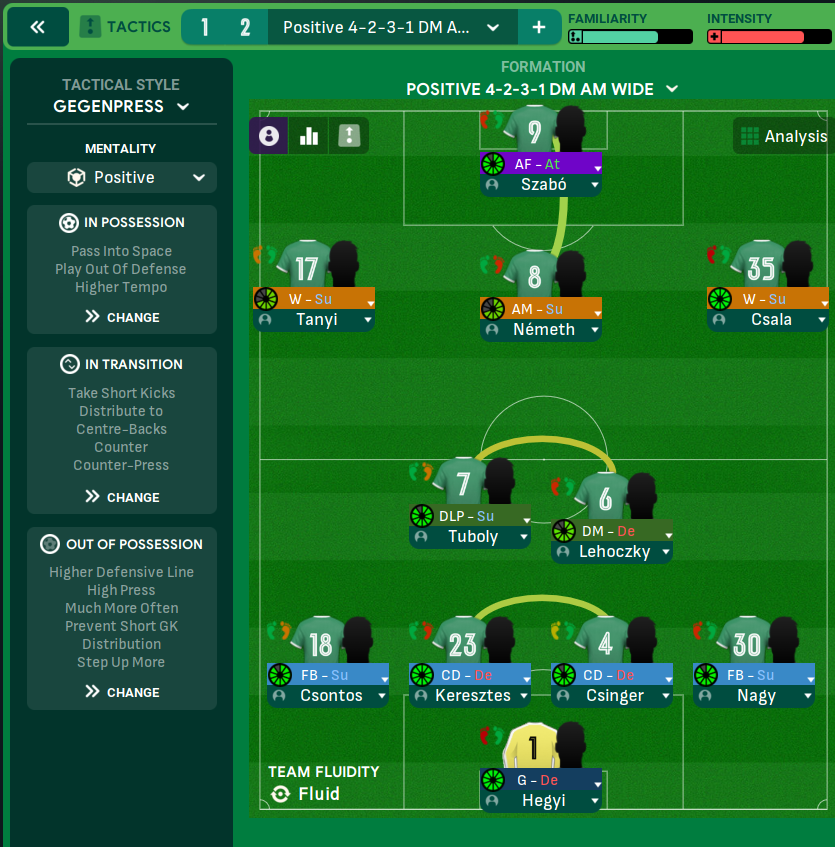
Guides for this formation
The tactical theory behind the 4-2-3-1 DM Wide: roles, instructions, and the trade-offs that decide whether the system holds up.
Player pairings
Midfield Pairs in 4-2-3-1 and 4-4-2
Double pivots and flat pairs in 4-2-3-1 and 4-4-2: when each pairing works, when it collapses, and the AMC unicorn that rescues both.
Read guide
Playing styles
Gegenpressing: A Full Guide
Klopp-style gegenpressing in FM, including squad profile, line-and-press pairing, sustainable workload, and the antipatterns to avoid.
Read guide