Uploaded Tactic
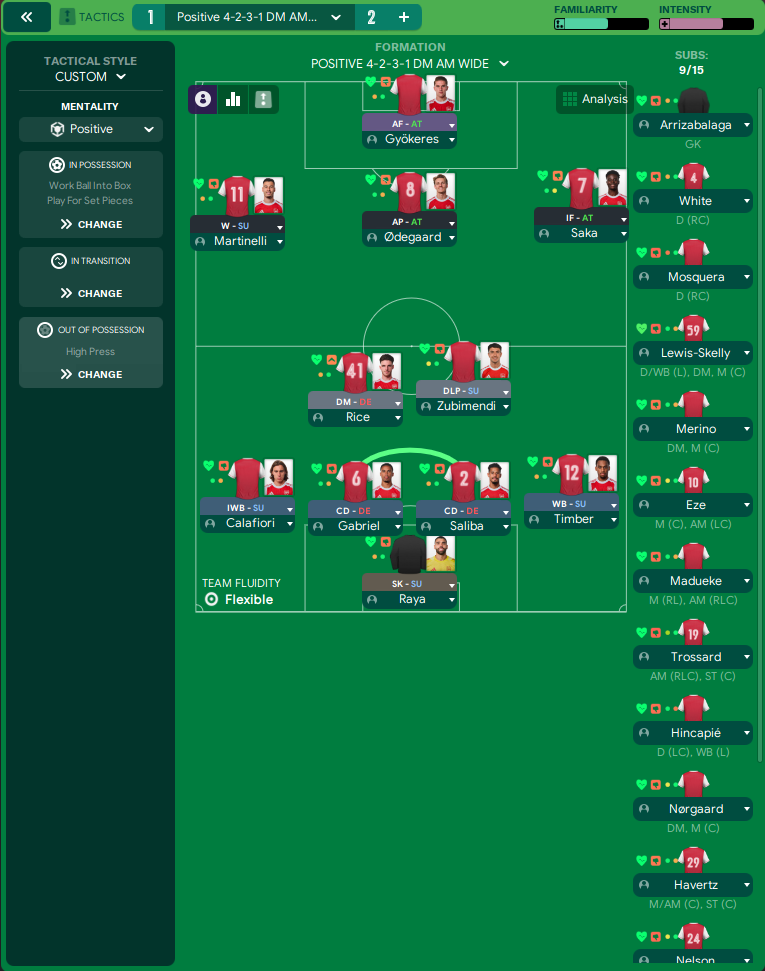
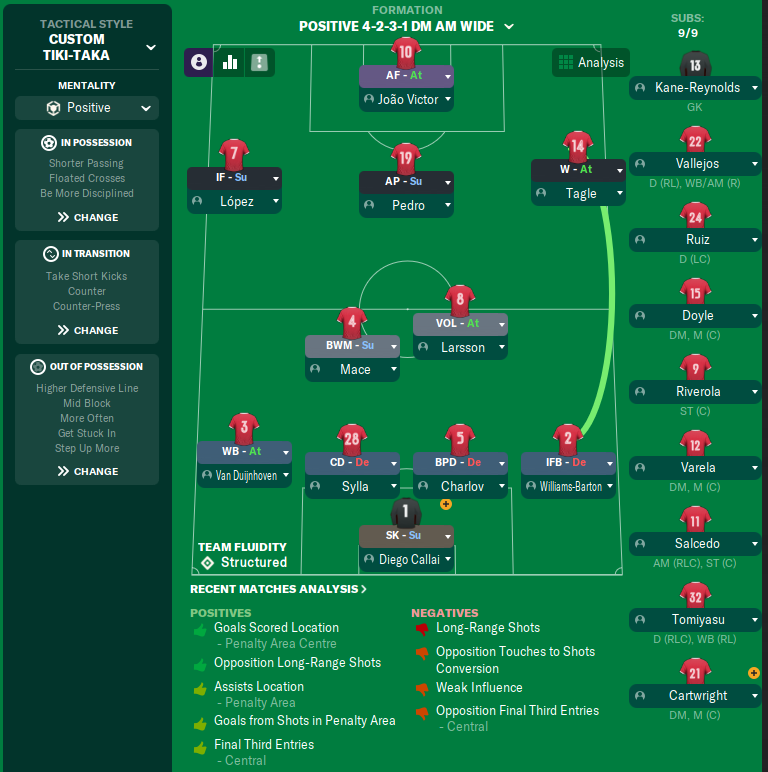
Formation & Style
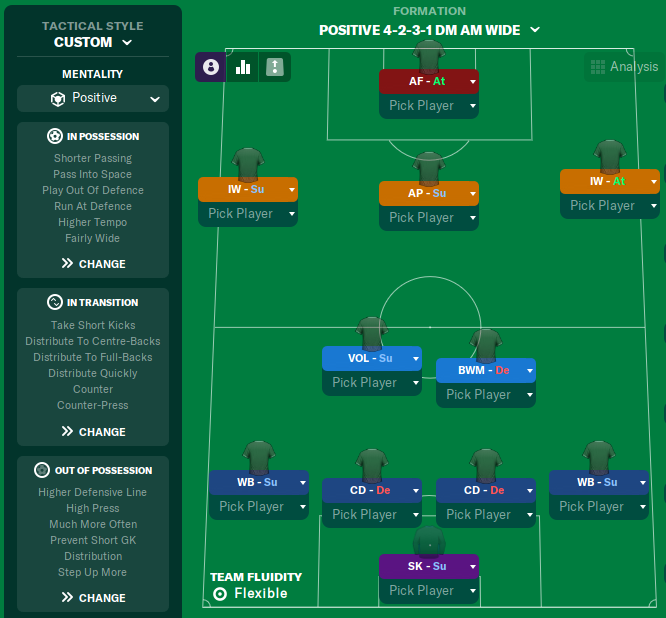
Tactical Style:Custom
Mentality:Positive
Formation:4-2-3-1 DM Wide
Team Fluidity:Flexible
In Possession
Work Ball Into Box
Play for Set Pieces
In Transition
Counter-Attack:Enabled
Counter-Press:Immediate
Goalkeeper Distribution:Short
Throw-ins:Quick
Out of Possession
Defensive Line:Higher
Line of Engagement:Higher
Pressing Intensity:More Urgent
Offside Trap:Yes
Team Shape Without Ball
Shape:5-4-1
Description:In a defensive scenario, the team transitions into a compact shape to reduce spaces and limit the opponent's options.
Evidence:2 Centre-Backs and 3 defenders providing cover, supported by a DM.
Team Shape With Ball
Shape:3-2-5
Description:In attack, the wing-backs push high, providing width while the AM and IFs create multiple attacking lanes.
Evidence:Utilization of WBs lifting up alongside wide IFs creating overloads in wide areas.
Phase Description
Attacking Play
Focuses on possession with structured build-up through the midfield, utilizing width from the wing-backs and inside forwards.
Defensive Transition
null
Main Focus
Creating chances through a combination of quick passes and exploiting space in and around the box.
Key Strengths
Width in Attack
Effective use of wing-backs creates space and stretches opposing defenses.
Midfield Control
The combination of a DM and a DLP ensures possession retention and distribution.
Dynamic Attack
Multiple attacking players contribute to varied offensive threats.
Conflicting Directions
Counterattacking Risks
With a high pressing and offensive mentality, teams could be susceptible during transitions.
Defensive Vulnerability
In case of injuries or substitutions that impact depth, the team may struggle defensively.
Overcommitment
Excessive pushing of wing-backs could lead to spaces behind them during counter-against.
Tactical Suggestions
Balance Transition
Incorporate defensive instructions to moderate the push of wing-backs based on the match situation.
Utilize Substitutions More Effectively
Refresh tiring midfielders for sustained control.
Improving Defensive Shape
Reinforce that communication is key when transitioning from attack to defense.
Ask Questions About Your Lineup
Related Tactics
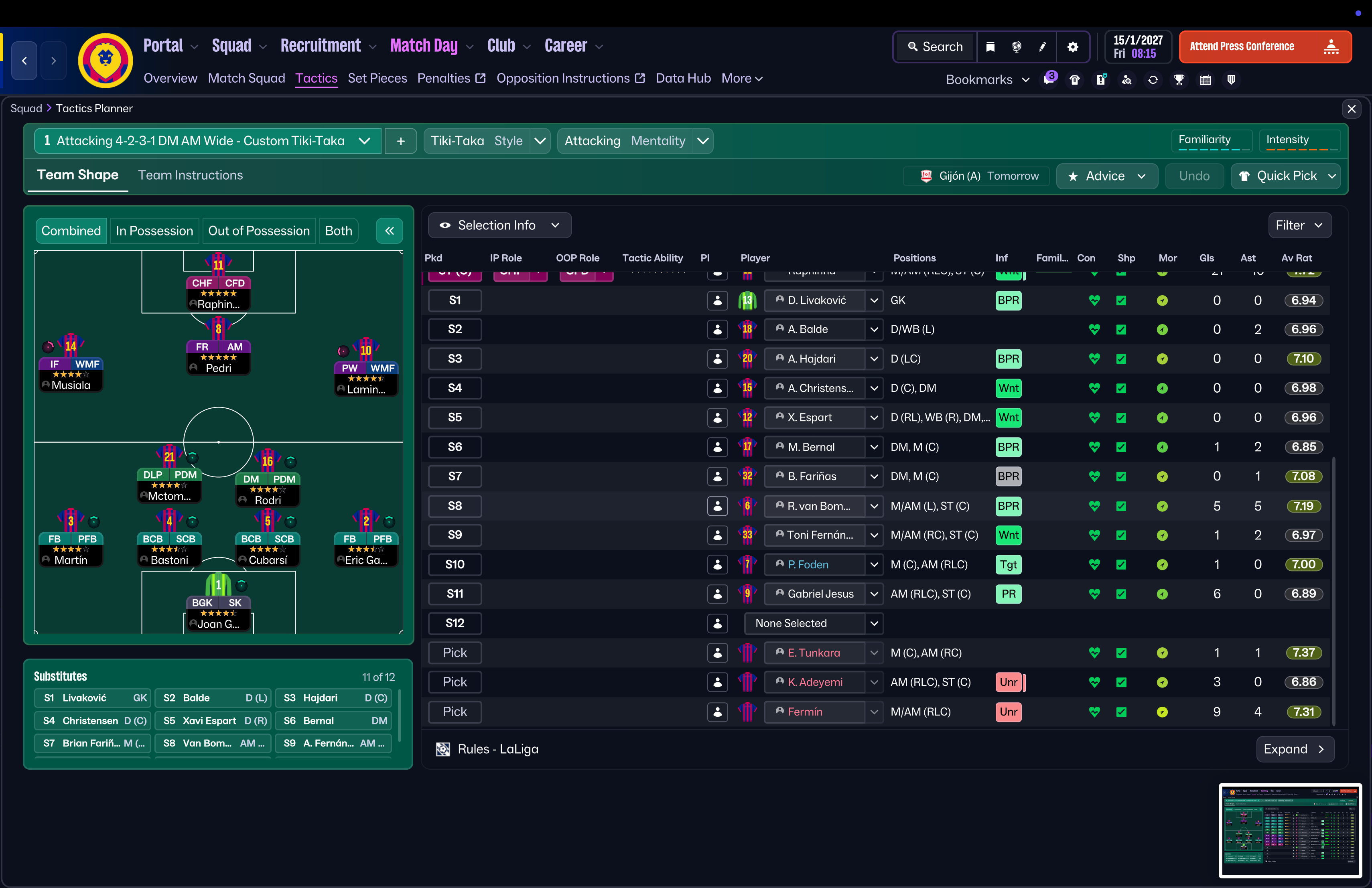
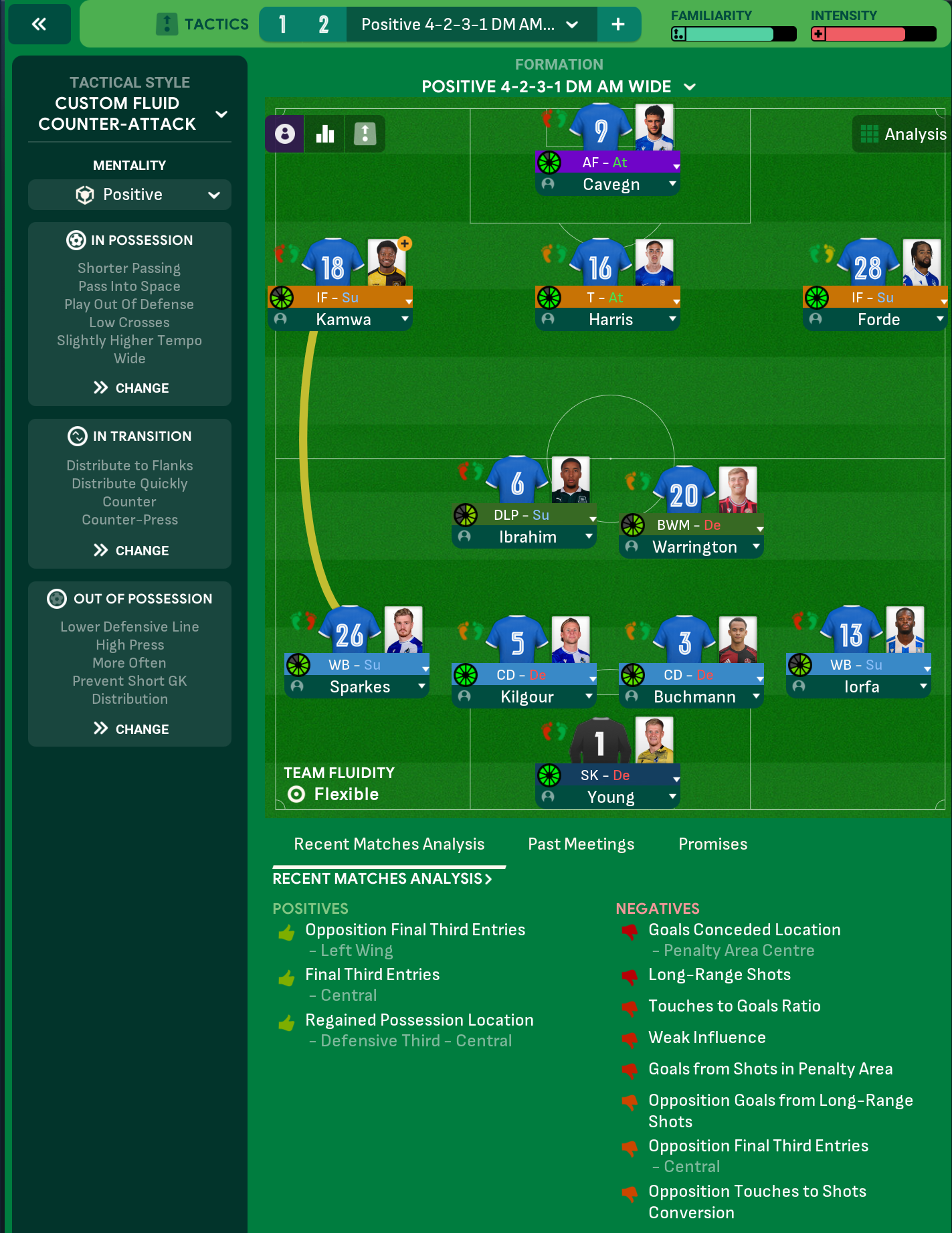
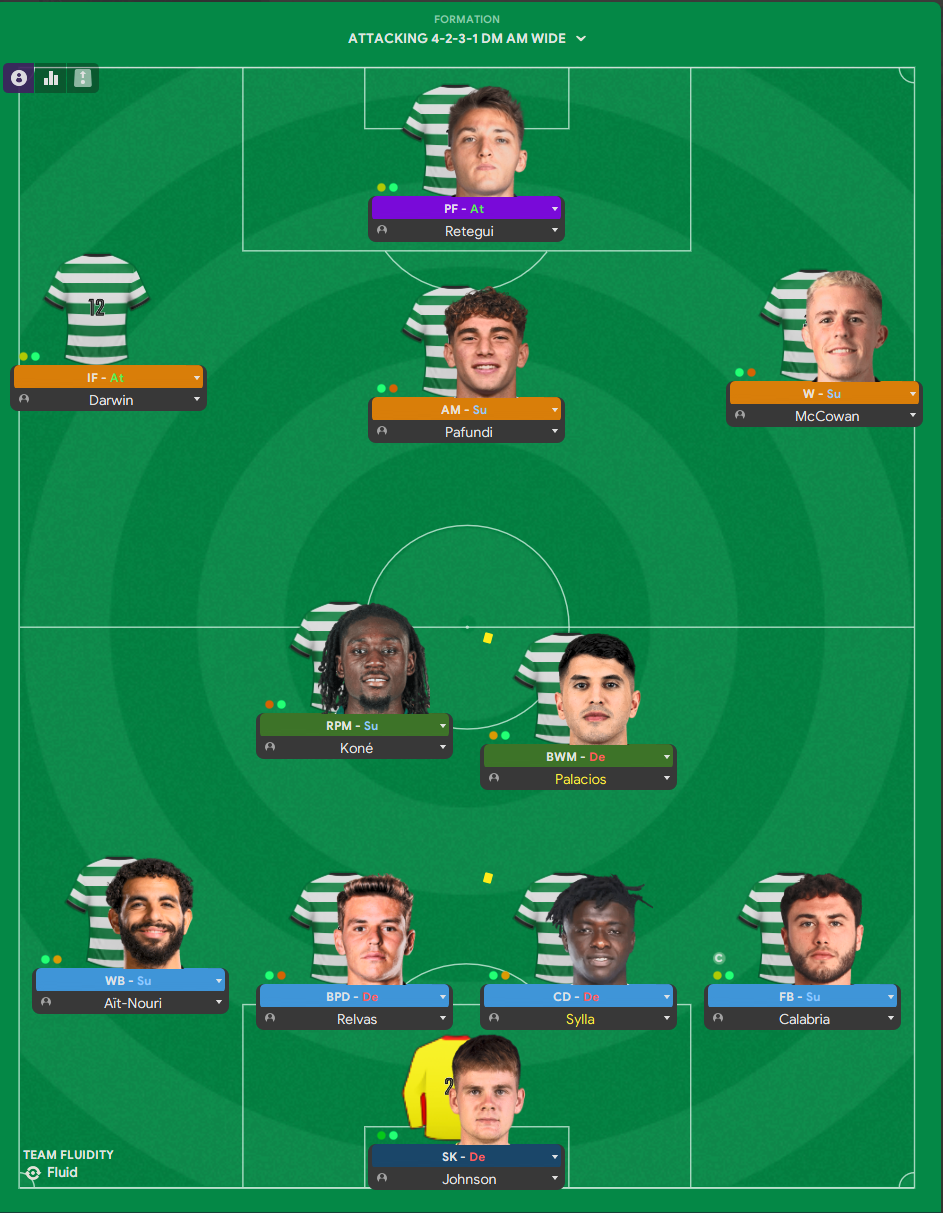
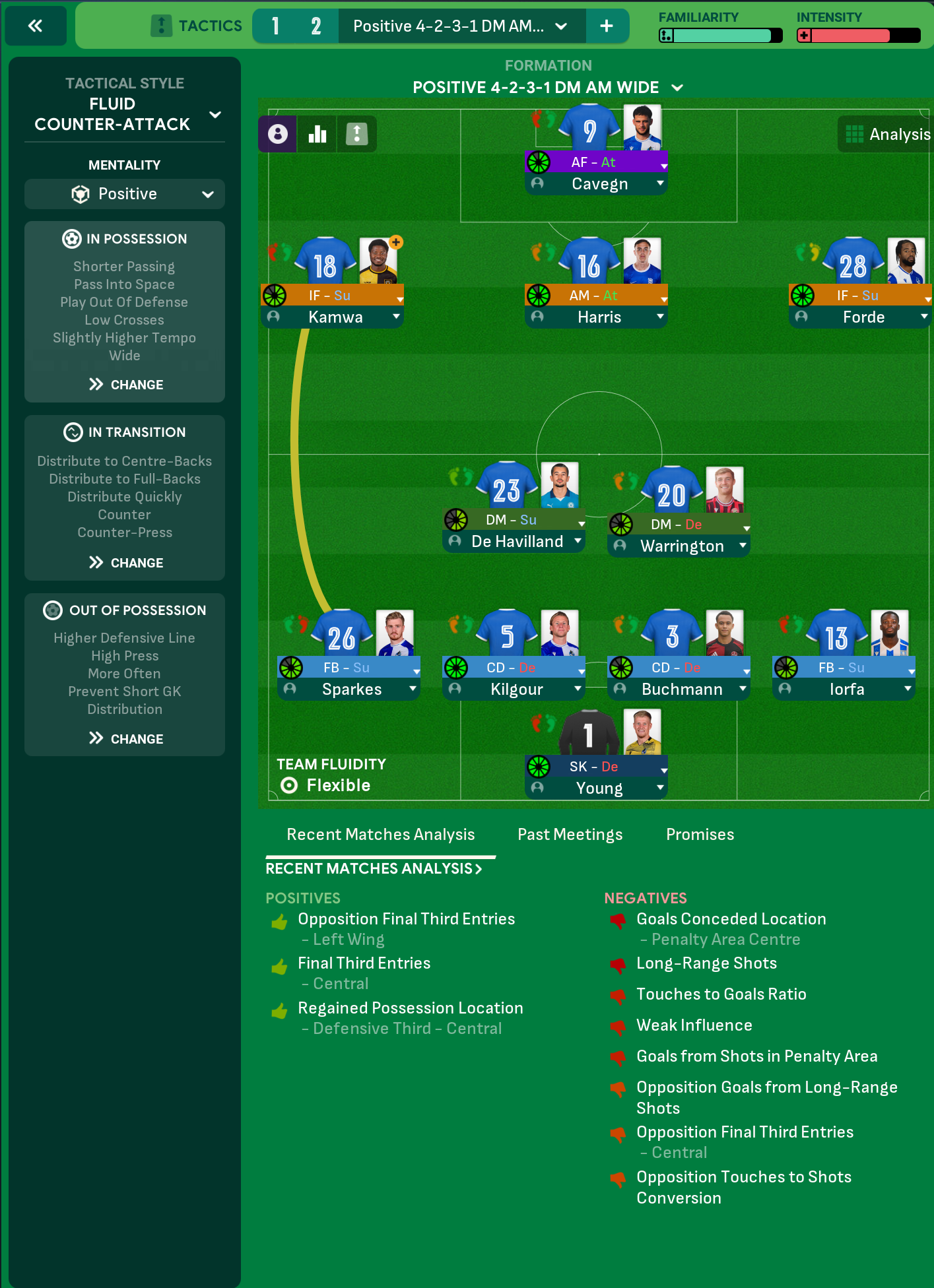
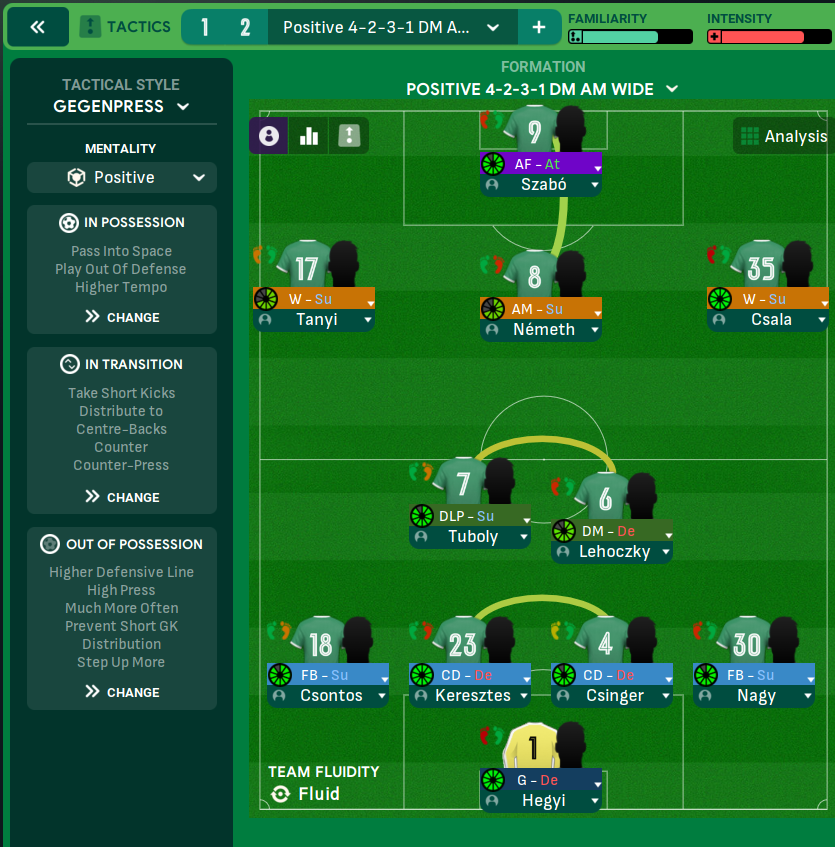
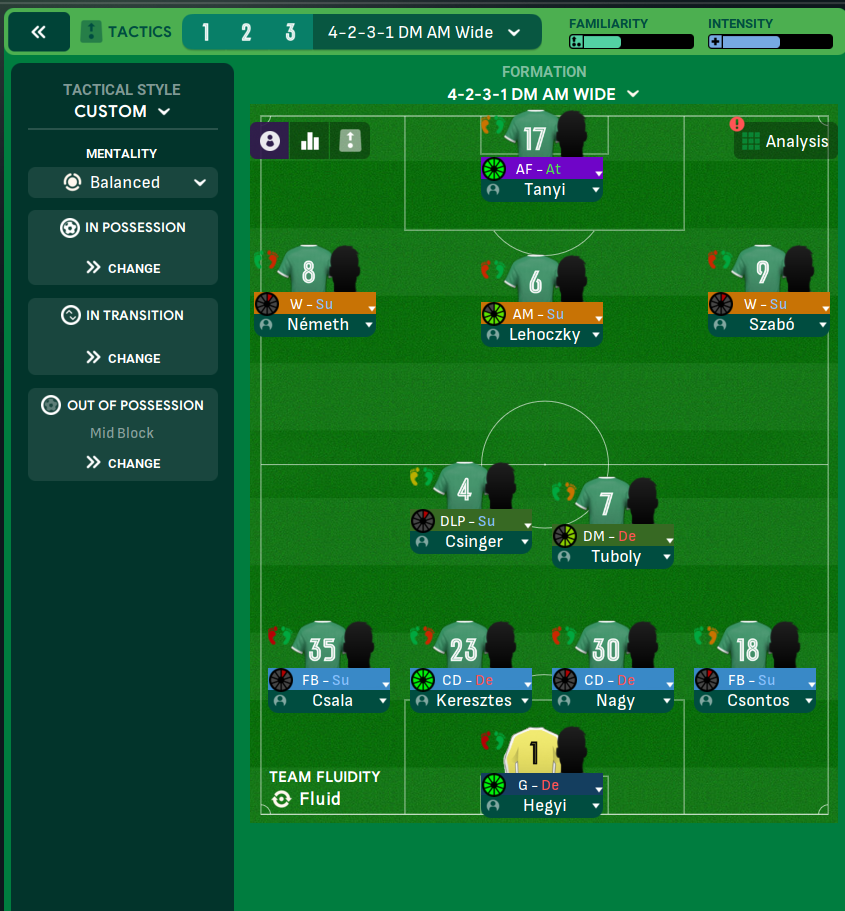
Guides for this formation
The tactical theory behind the 4-2-3-1 DM Wide: roles, instructions, and the trade-offs that decide whether the system holds up.
Player pairings
Midfield Pairs in 4-2-3-1 and 4-4-2
Double pivots and flat pairs in 4-2-3-1 and 4-4-2: when each pairing works, when it collapses, and the AMC unicorn that rescues both.
Read guide
Playing styles
Gegenpressing: A Full Guide
Klopp-style gegenpressing in FM, including squad profile, line-and-press pairing, sustainable workload, and the antipatterns to avoid.
Read guide