Uploaded Tactic
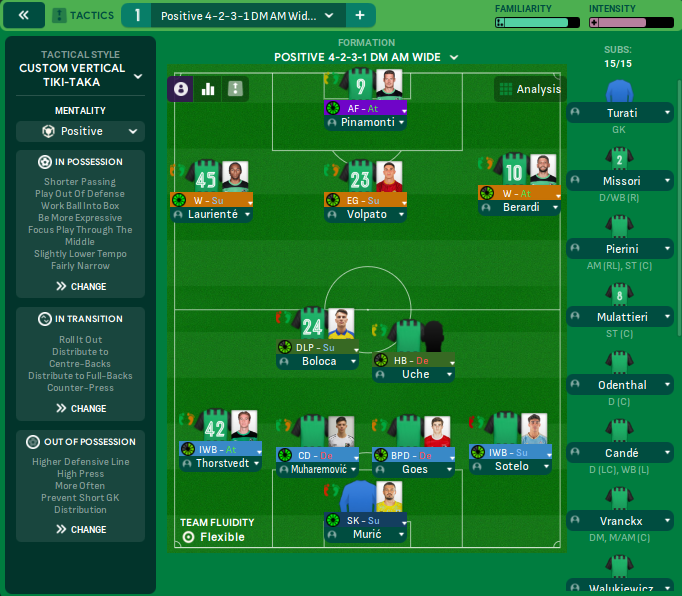
Formation & Style
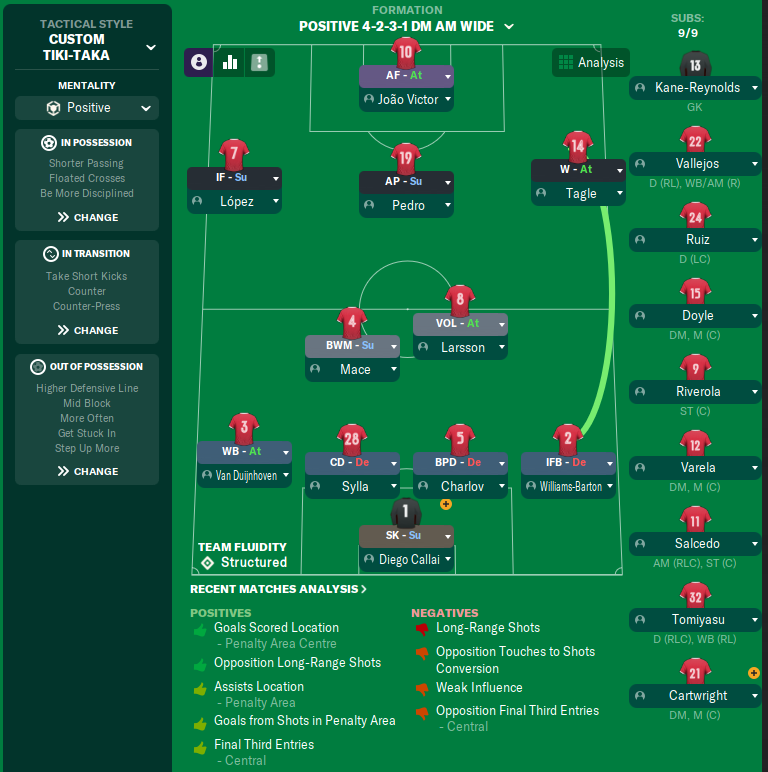
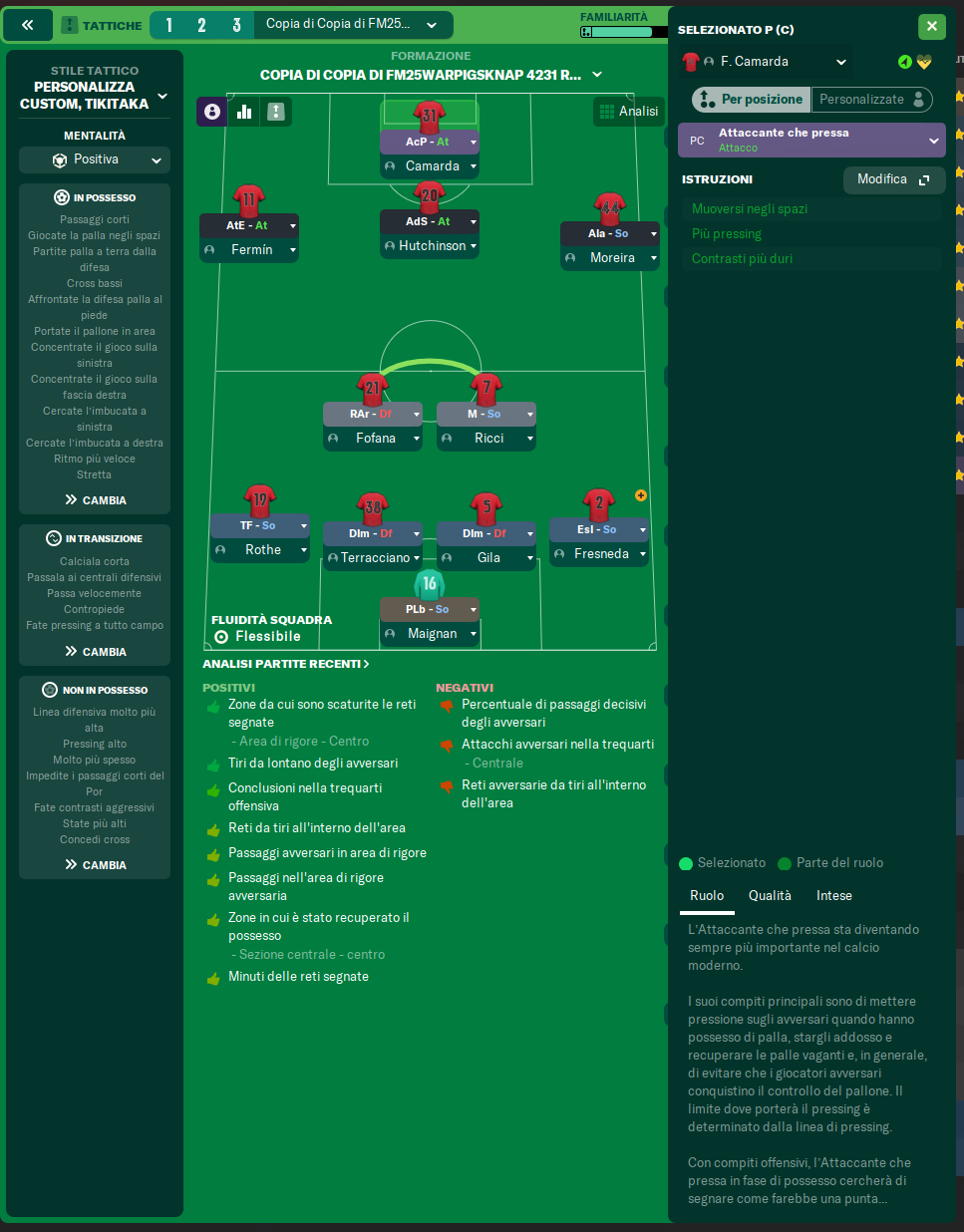
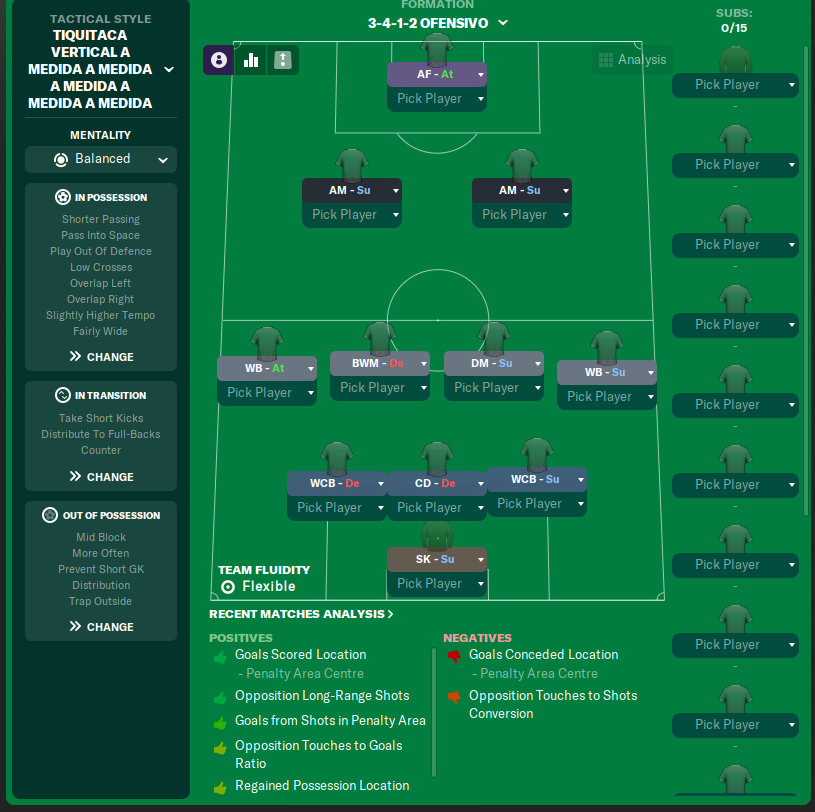
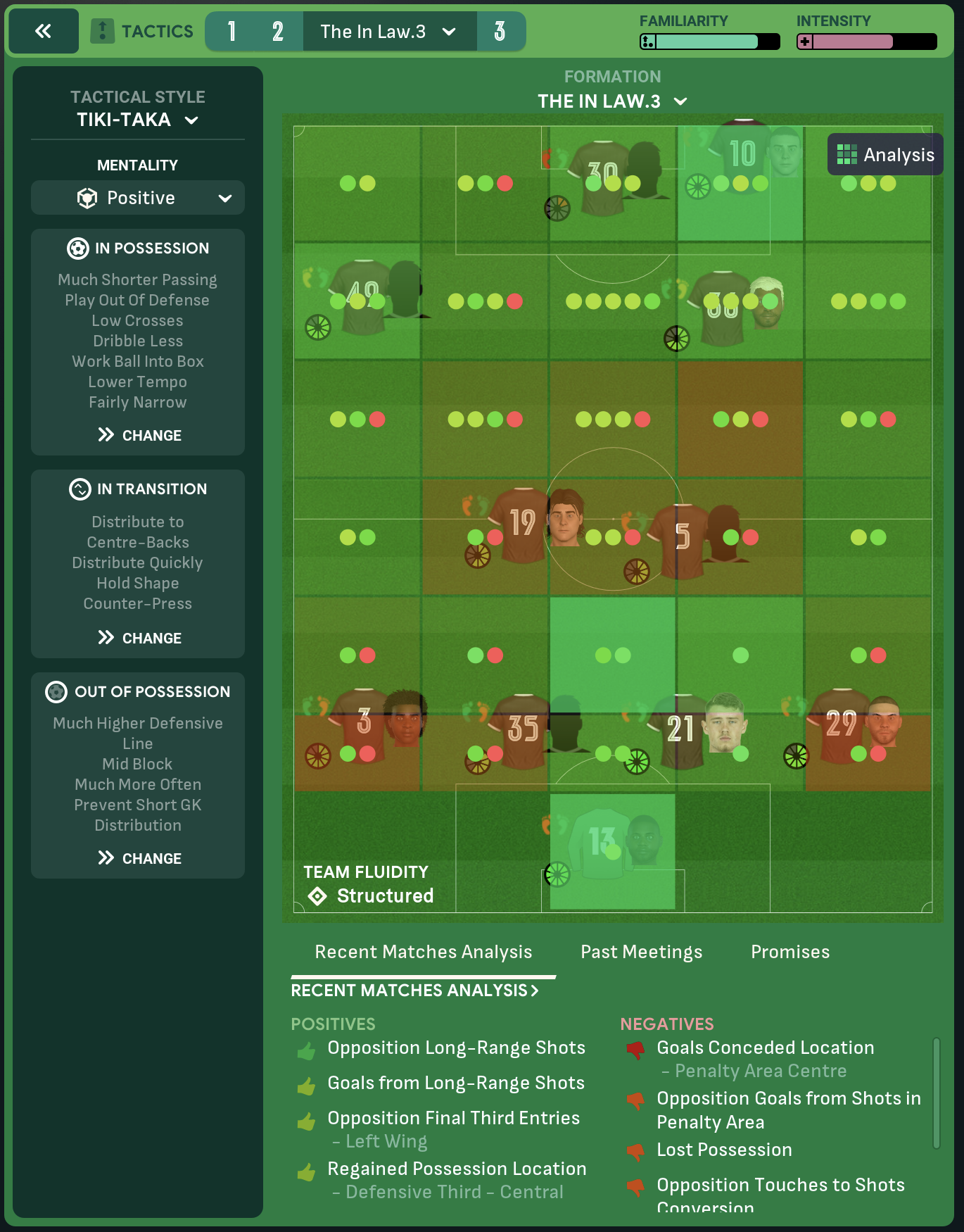
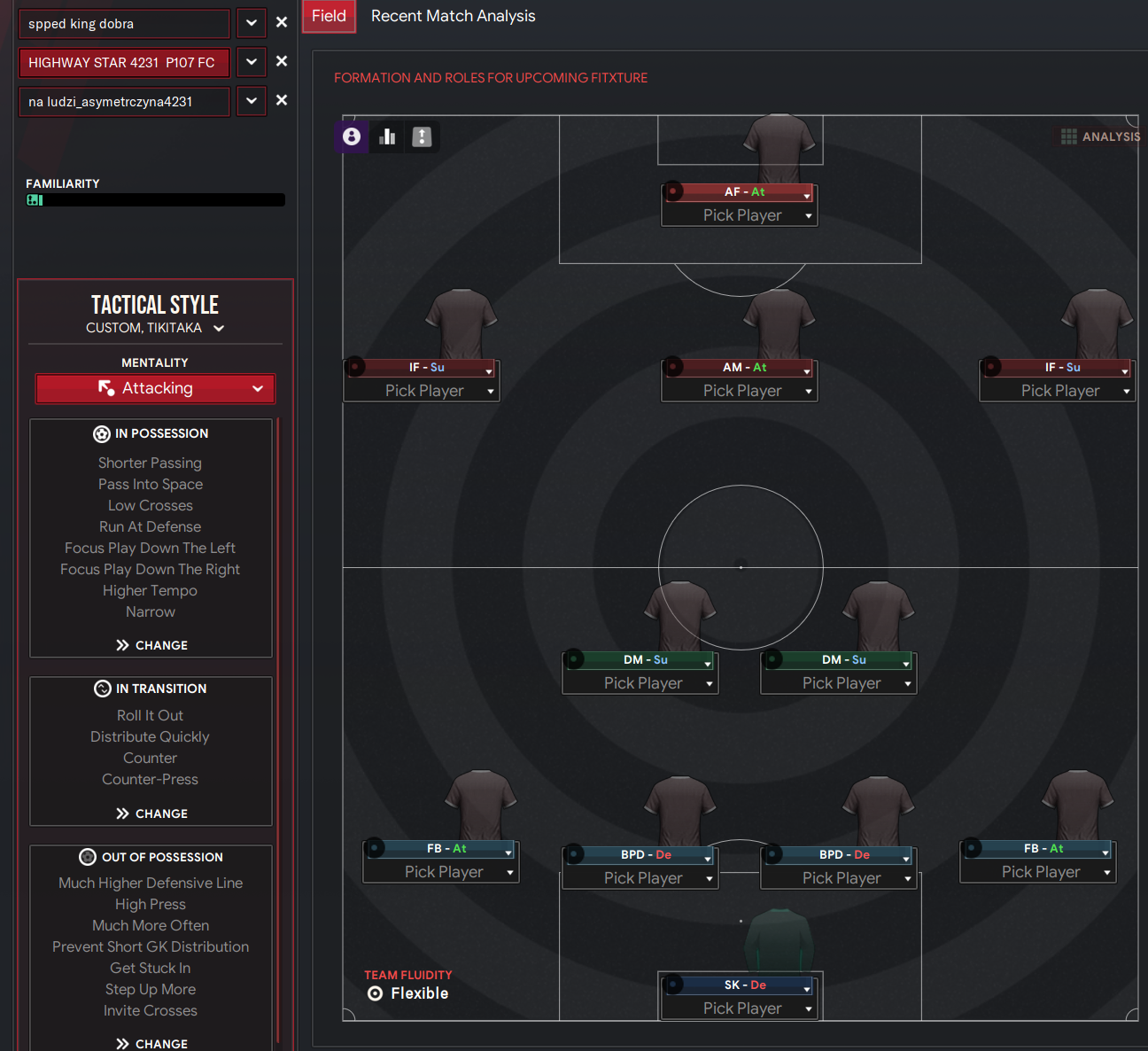
Tactical Style:Tiki-Taka
Mentality:Positive
Formation:4-2-3-1 DM Wide
Team Fluidity:Flexible
In Possession
Shorter Passing
Play Out Of Defense
Work Ball Into Box
Be More Expressive
Focus Play Through The Middle
Slightly Lower Tempo
Fairly Narrow
In Transition
Roll Out
Distribute To Centre-Backs
Distribute To Full-Backs
Counter-Press
Out of Possession
Higher Defensive Line
High Press
More Often
Prevent Short GK Distribution
Team Shape Without Ball
No team shape without ball data available
Team Shape With Ball
No team shape with ball data available
Key Strengths
Ball Retention
The shorter passing and focus on playing through the middle enhances possession, making it difficult for opponents to regain the ball.
Creativity in Attack
The use of the Tiki-Taka style encourages fluid movement and player interchanges, leading to creative goal-scoring opportunities.
Defensive Solidity
The higher defensive line and pressing approach can disrupt opposing attacks before they develop, maintaining defensive shape.
Versatile Wing Play
Wingers providing width help stretch the opposition and create space for central attacking players, maintaining attacking fluidity.
Conflicting Directions
High Press vs. Defensive Stability
While a high pressing approach can expose the defense, it may be counterproductive against teams that counter quickly unless the players are suited for aggressive presses.
Fluidity vs. Structure
The flexible team fluidity could lead to confusion in assignments if players do not adapt well to positional rotation, risking leaving gaps in defense.
Inverted Wing-Backs and Attacking Width
Inverted wing-backs tend to occupy central spaces and may limit width alongside traditional wingers, possibly leading to congestion in the area.
Tempo Management
The slightly lower tempo may not match the urgency of a high press, risking reduced effectiveness during transitional moments.
Tactical Suggestions
Adjust Pressing Intensity
Consider refining the pressing settings to match the team’s stamina and skills, providing balance in defense without sacrificing offensive shape.
Explore a Balanced Full-Back Role
Instead of solely relying on Inverted Wing-Backs, consider utilizing traditional full-backs to maintain width and support wingers effectively.
Increase Tempo in Key Moments
Increasing tempo during crucial attacking phases could help exploit opponent weaknesses and create quick scoring opportunities.
Rotate Player Roles
Experimenting with player roles can optimize individual strengths, especially in midfield, to better support both defense and attack.
Ask Questions About Your Lineup
Related Tactics
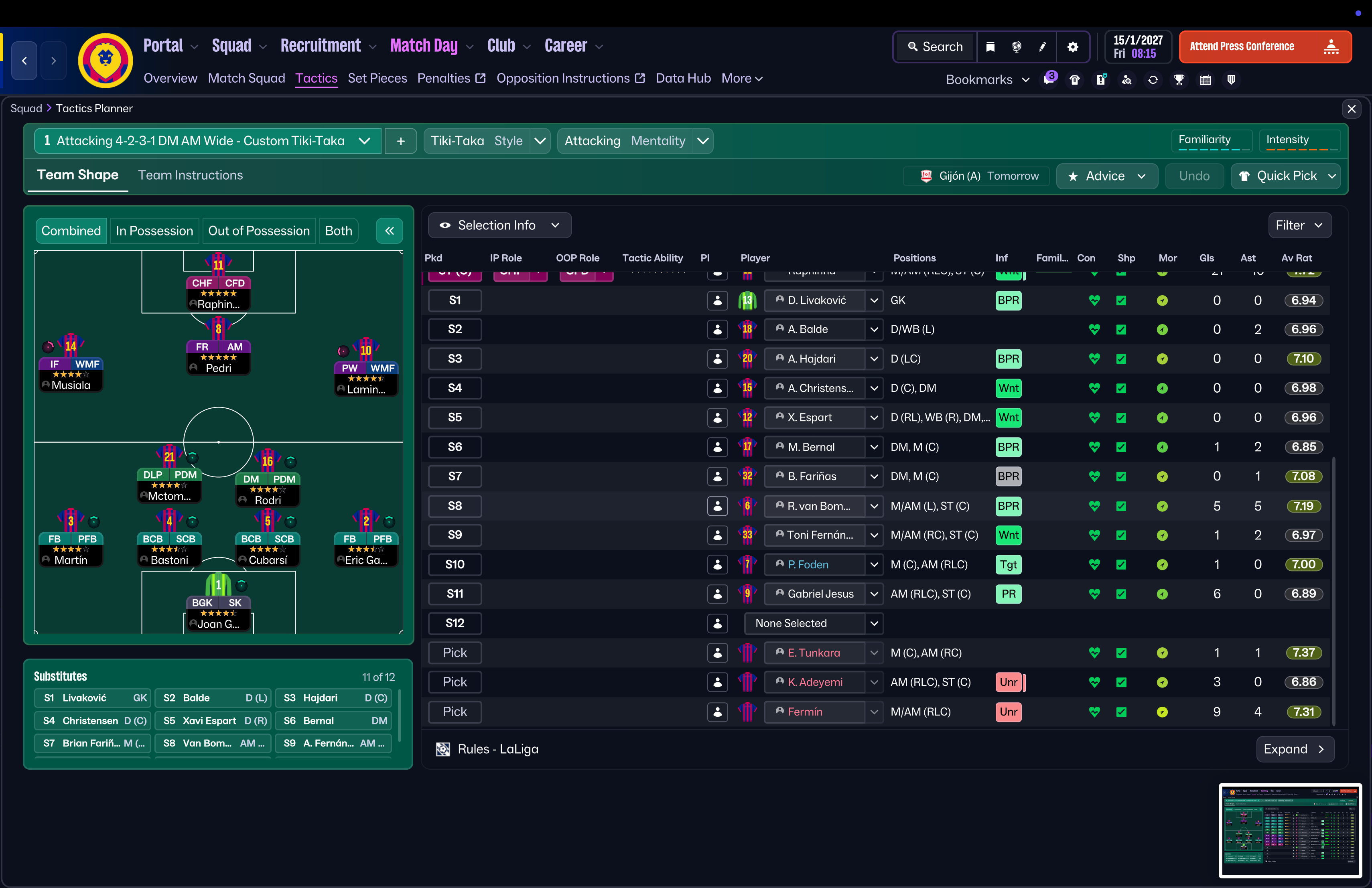
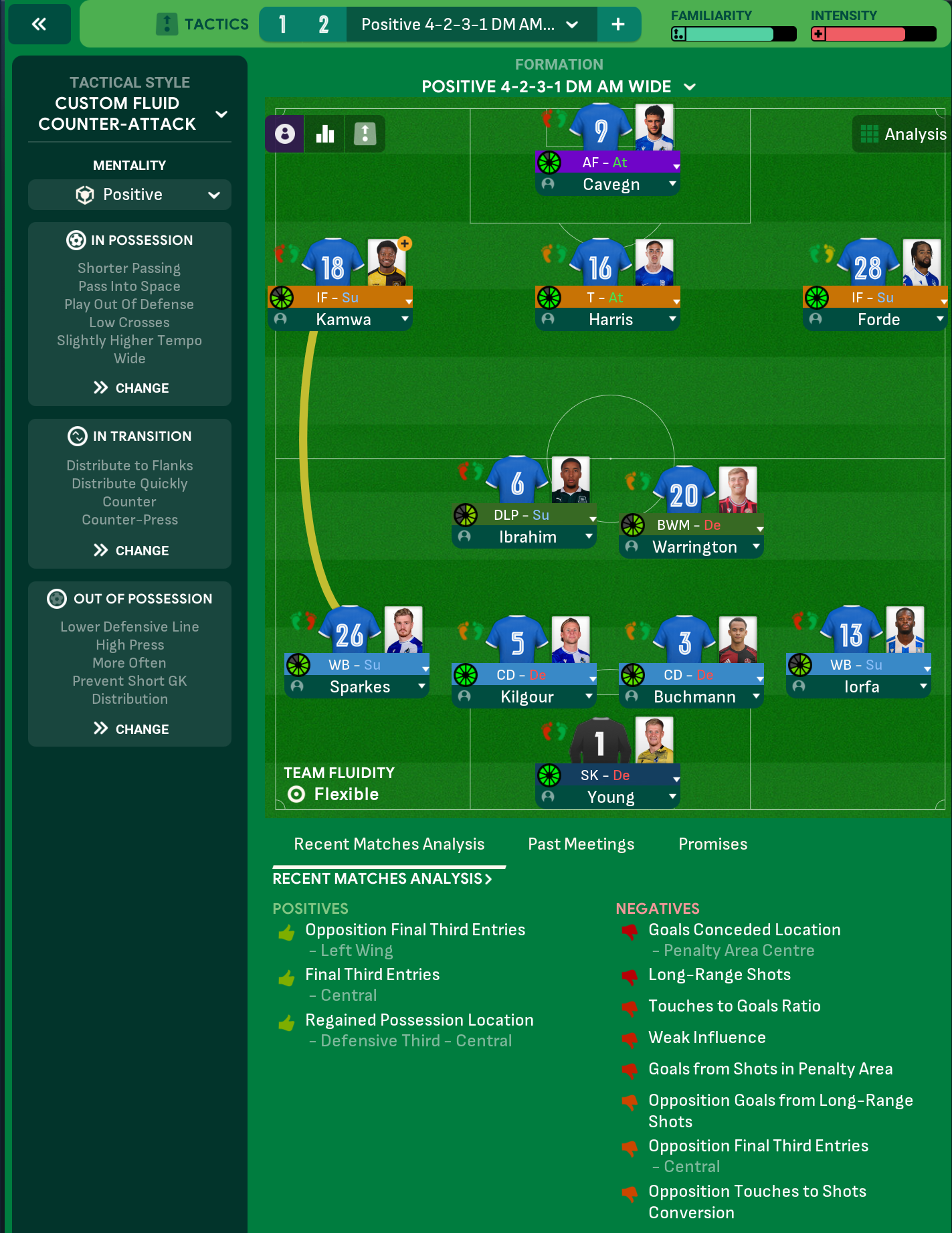

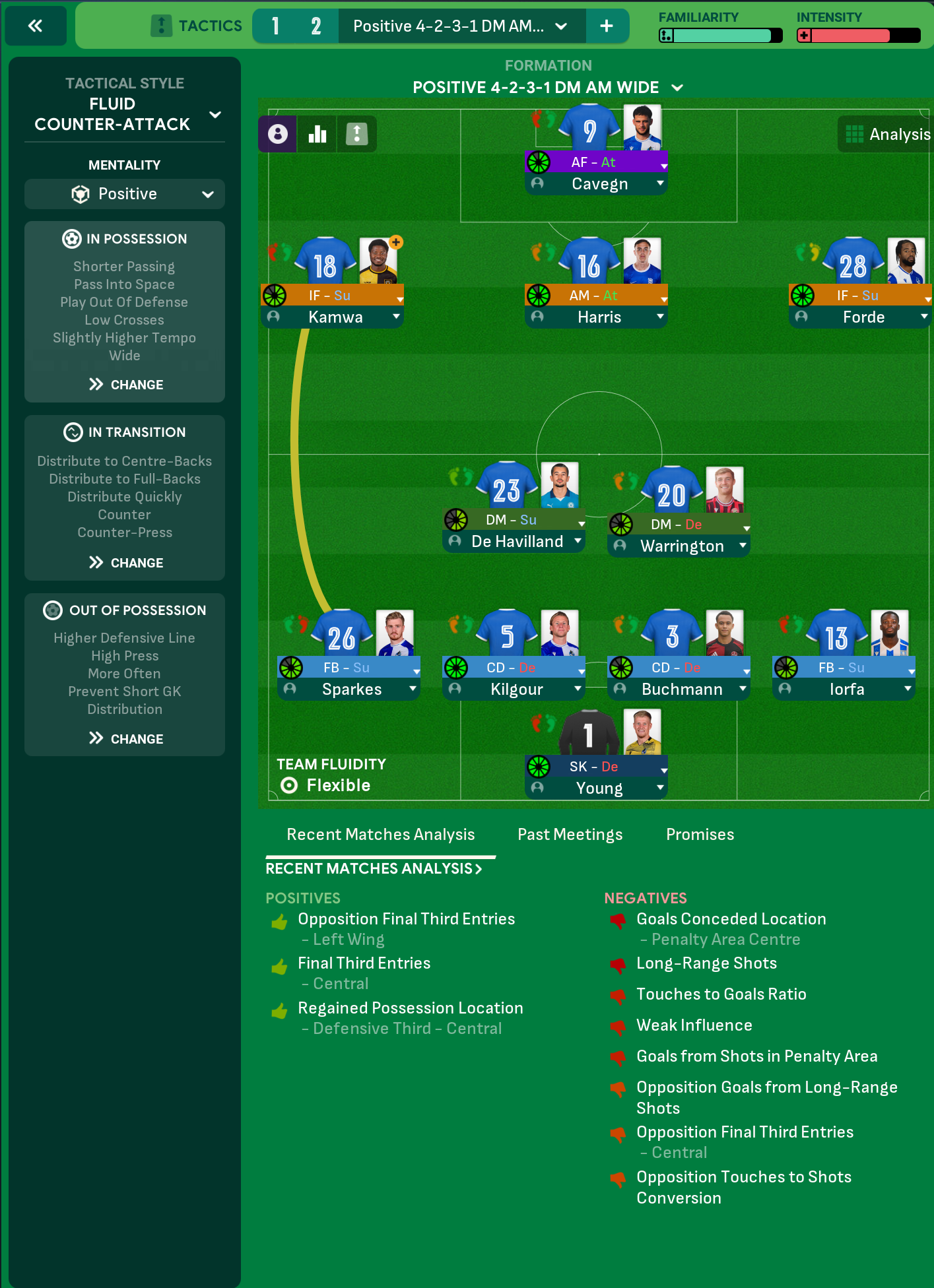
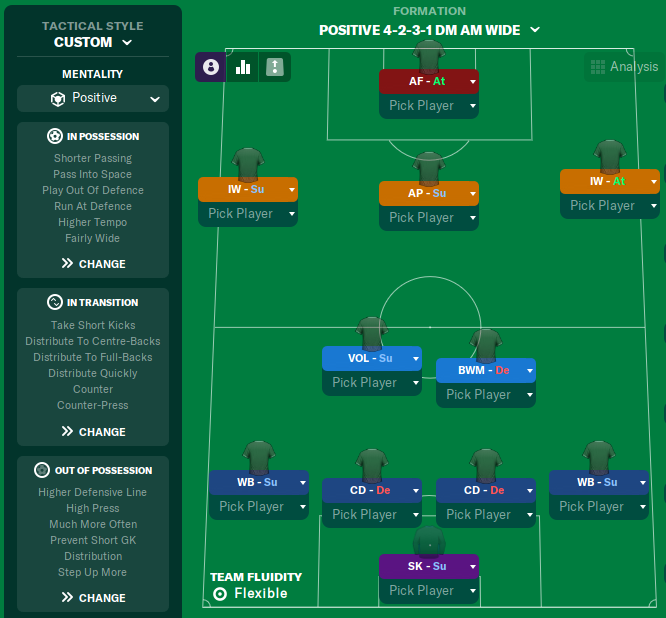
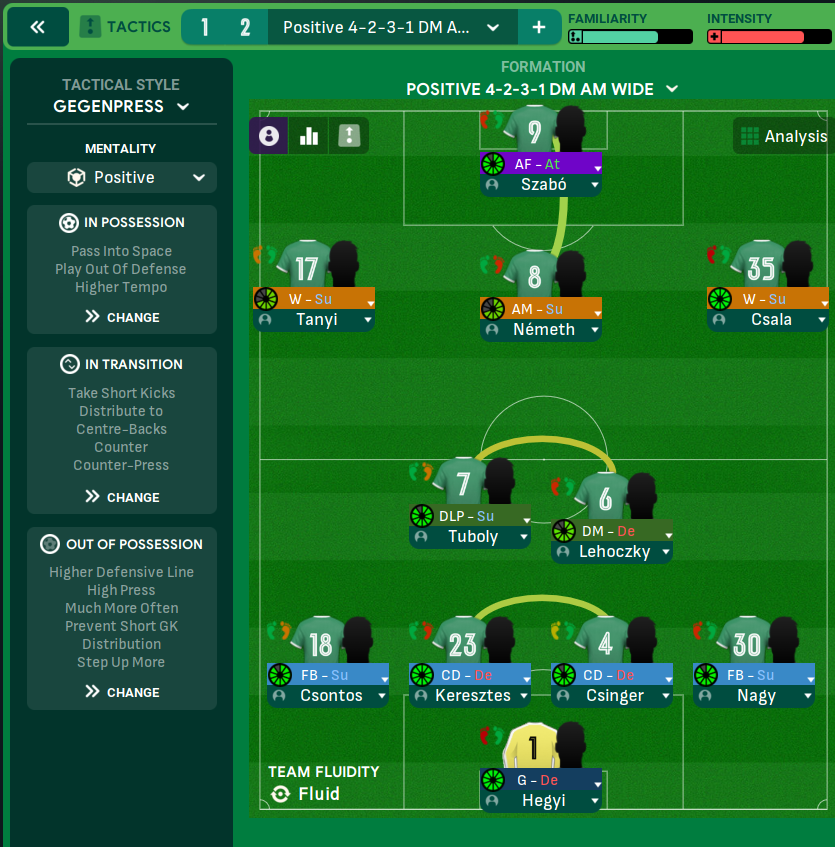
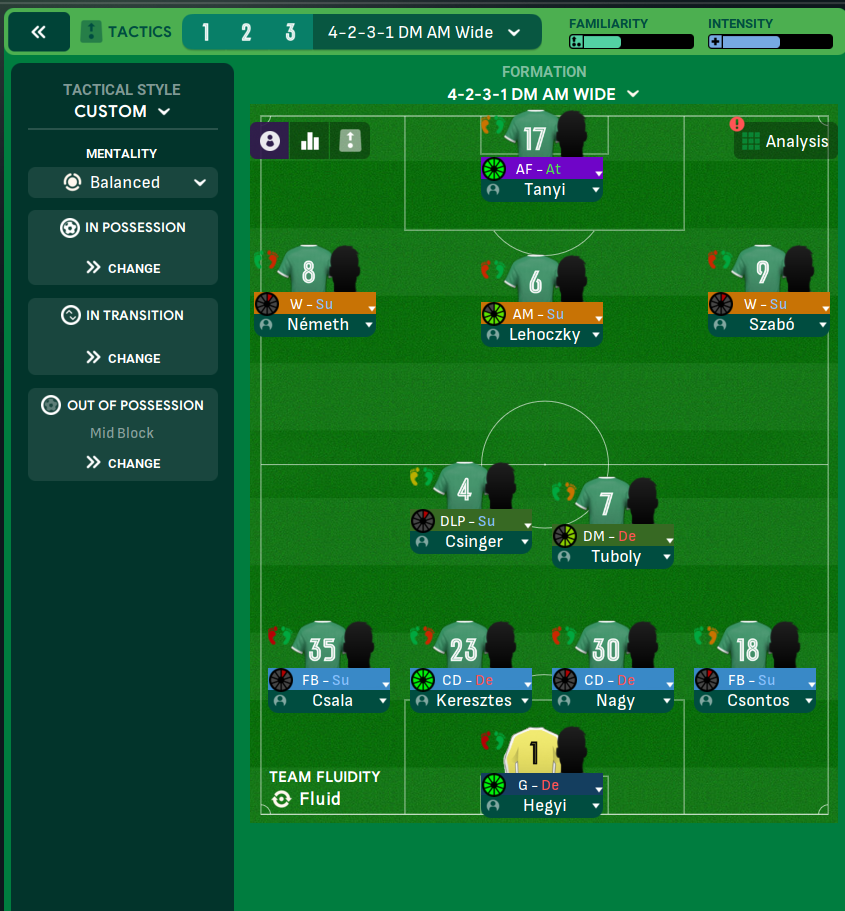
More Tiki-Taka tactics
Guides for this formation
The tactical theory behind the 4-2-3-1 DM Wide: roles, instructions, and the trade-offs that decide whether the system holds up.
Player pairings
Midfield Pairs in 4-2-3-1 and 4-4-2
Double pivots and flat pairs in 4-2-3-1 and 4-4-2: when each pairing works, when it collapses, and the AMC unicorn that rescues both.
Read guide
Playing styles
Gegenpressing: A Full Guide
Klopp-style gegenpressing in FM, including squad profile, line-and-press pairing, sustainable workload, and the antipatterns to avoid.
Read guide