Uploaded Tactic
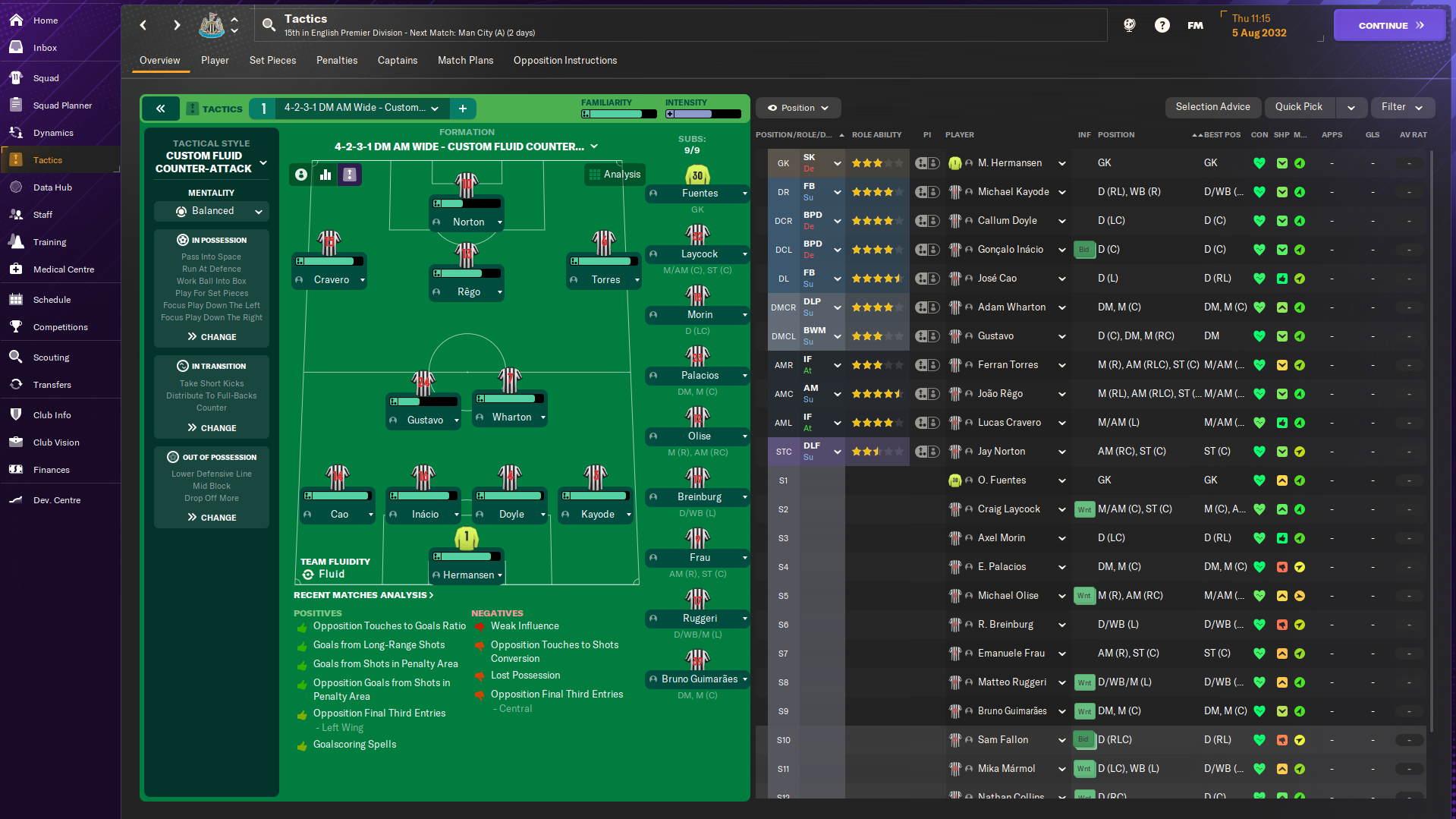
Formation & Style
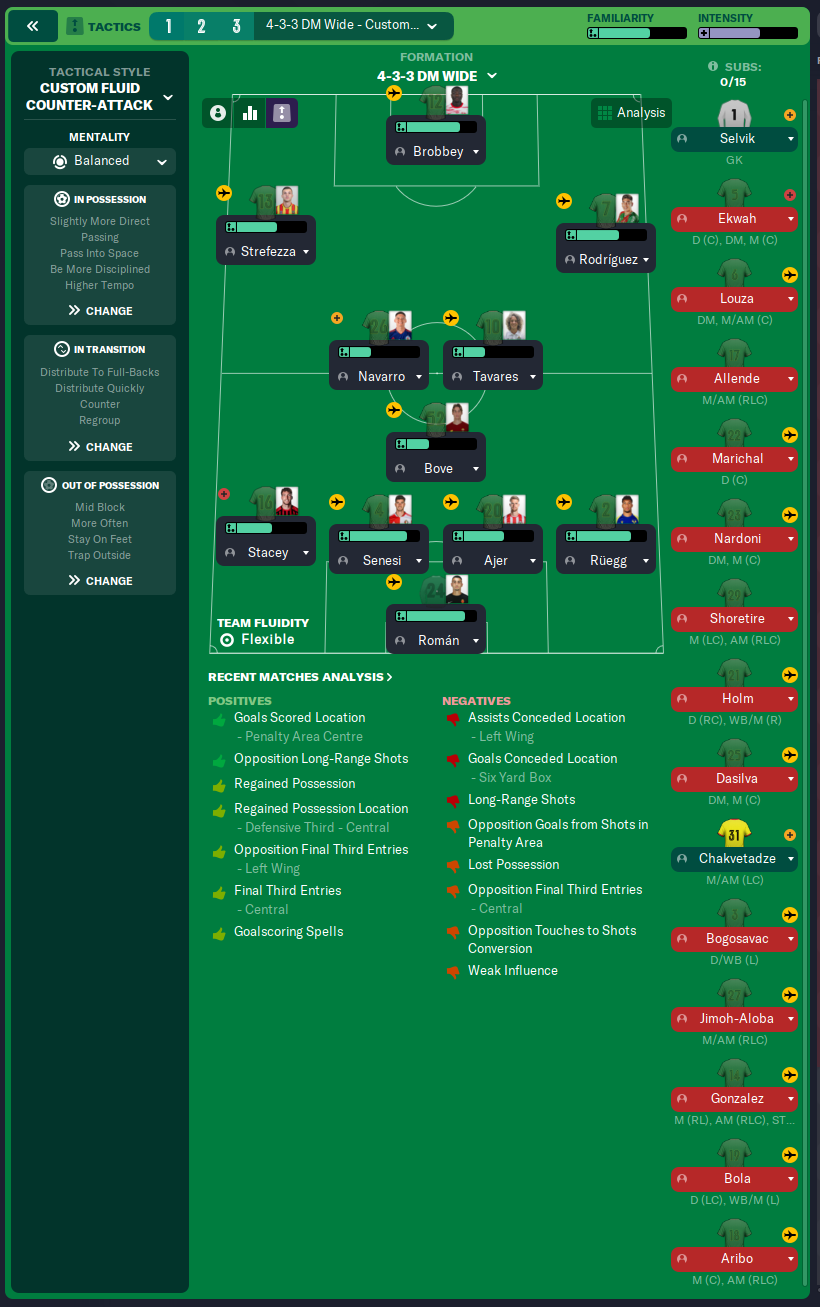
Tactical Style:Custom Fluid Counter-Attack
Mentality:Balanced
Formation:4-2-3-1 DM Wide
Team Fluidity:Fluid
In Possession
Pass Into Space
Work Ball Into Box
Play For Set Pieces
Focus Play Down The Left
Focus Play Down The Right
In Transition
Take Short Kicks
Distribute To Full-Backs
Counter
Out of Possession
Lower Defensive Line
Mid Block
Drop Off More
Team Shape Without Ball
Shape:Compact 4-2-3-1
Description:Defensive solidity with emphasis on team structure.
Evidence:Lower Defensive Line and Mid Block with roles like BWM and DLP to control midfield.
Team Shape With Ball
Shape:Fluid attacking 4-2-3-1
Description:Utilizing key players to spread the attack and exploit wide spaces.
Evidence:IFs on wings and an AM in the center to create diverse attacking threats.
Phase Description
Attacking Play
Utilizing width through inside forwards and quick transitions.
Defensive Transition
Focus on retaining shape and quickly countering.
Main Focus
Counter-attacks supported by wide play and set pieces.
Key Strengths
Dynamic Wing Play
Inside Forwards exploit width and cut inside, increasing goal threat.
Midfield Control
DLP aids in ball progression, while BWM provides defensive cover.
Counter-Attacking Threat
Quick transitions and direct play create goal-scoring opportunities.
Conflicting Directions
Weak Influence
Some attackers may struggle to convert chances from wide positions.
Over-Reliance on Width
Team may become predictable if attacks are concentrated down flanks.
BWM Exposure
BWM duties may lead to gaps in midfield if outnumbered in certain scenarios.
Tactical Suggestions
Consider a Second DLP
To enhance ball retention and ease transitions, having a second DLP could be beneficial.
Adjust Player Duties
Setting the IFs to Support roles may allow for additional link-up play and reduce isolation.
Reassess Defensive Structure
With a Mid Block, consider a more aggressive pressing strategy to regain possession.
Ask Questions About Your Lineup
Related Tactics
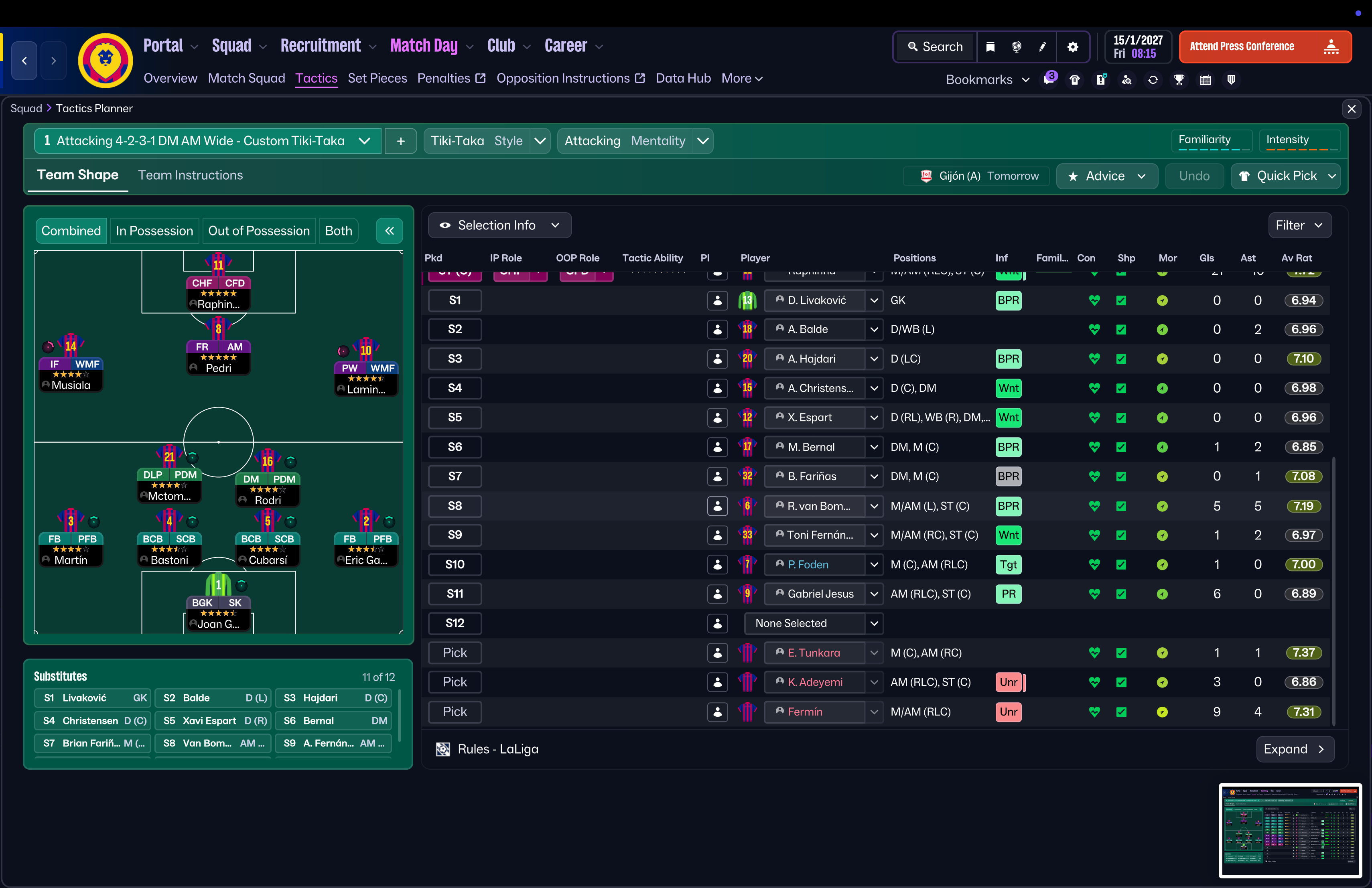
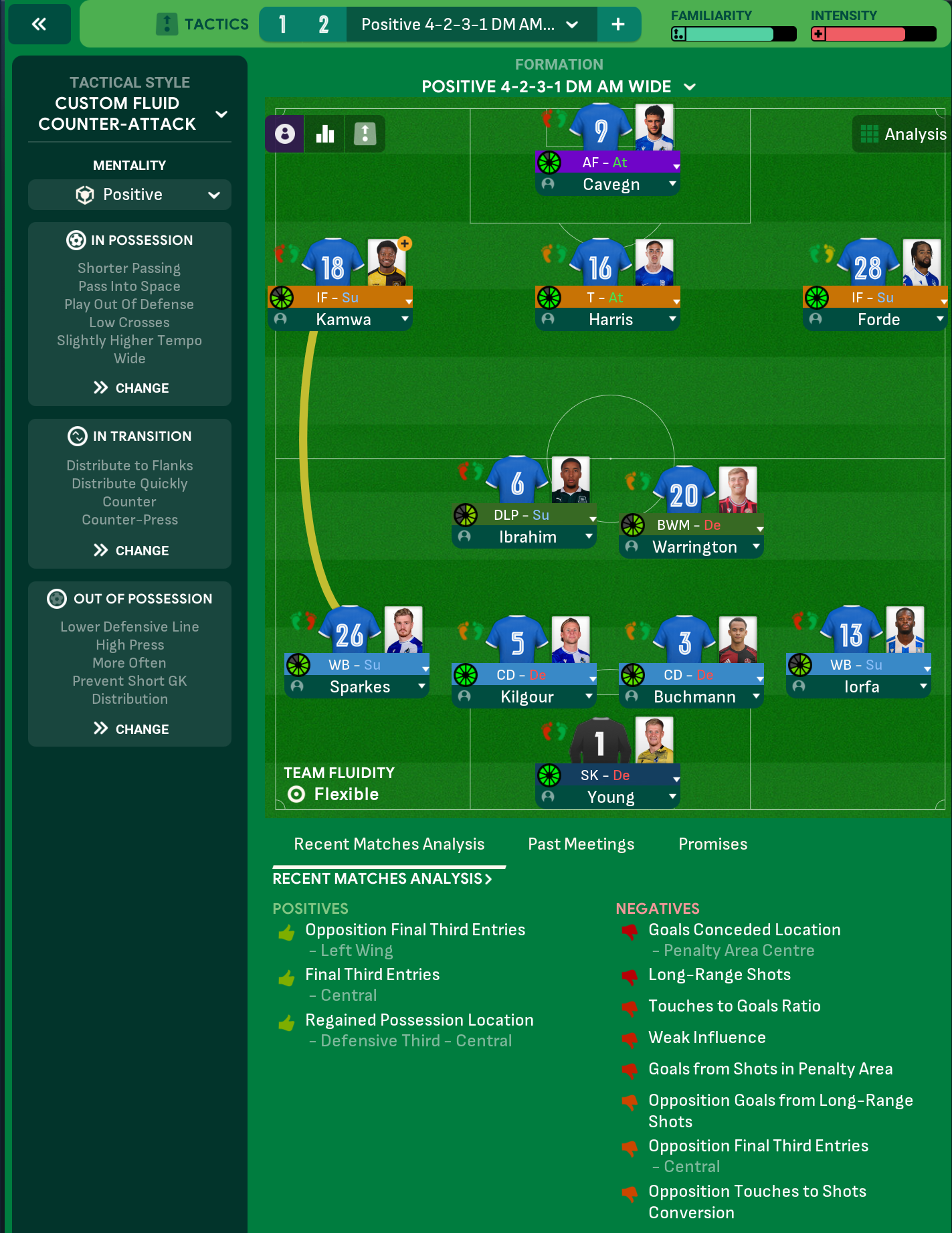
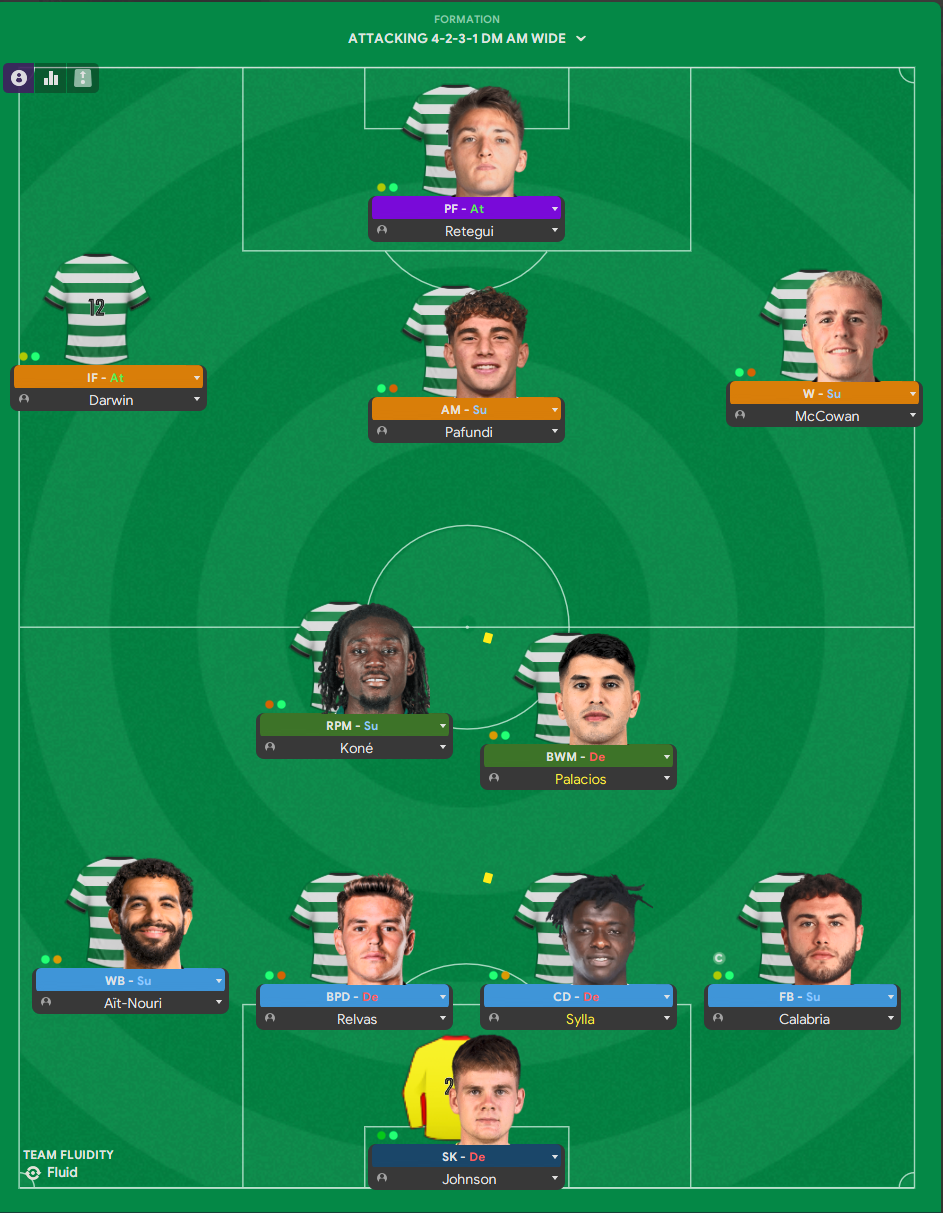
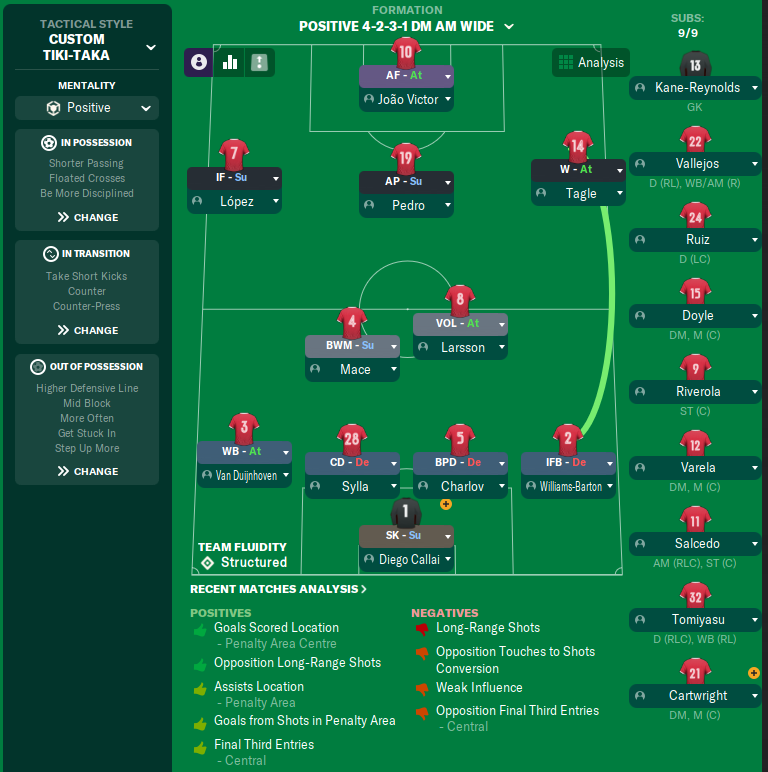
More Custom Fluid Counter-Attack tactics
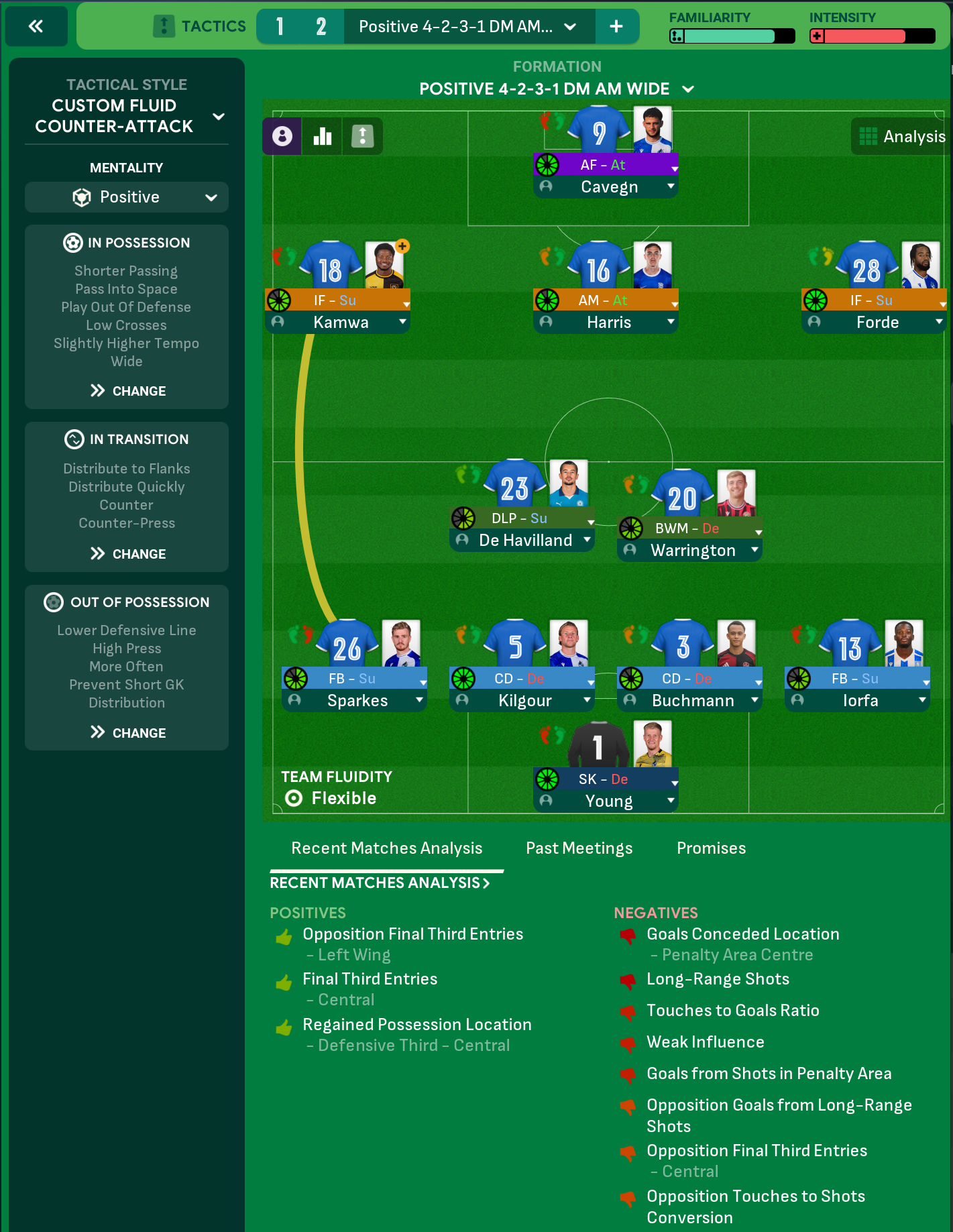
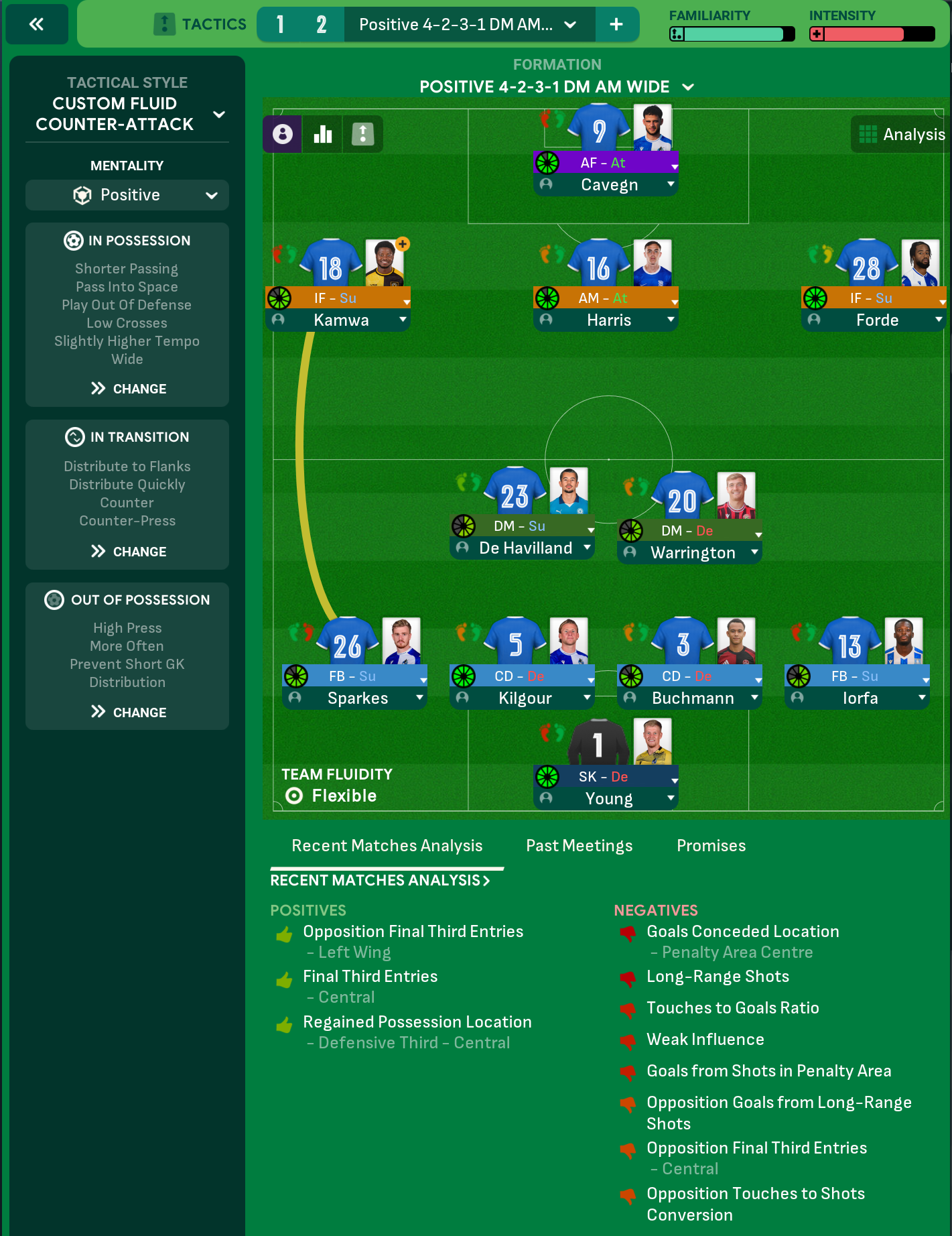
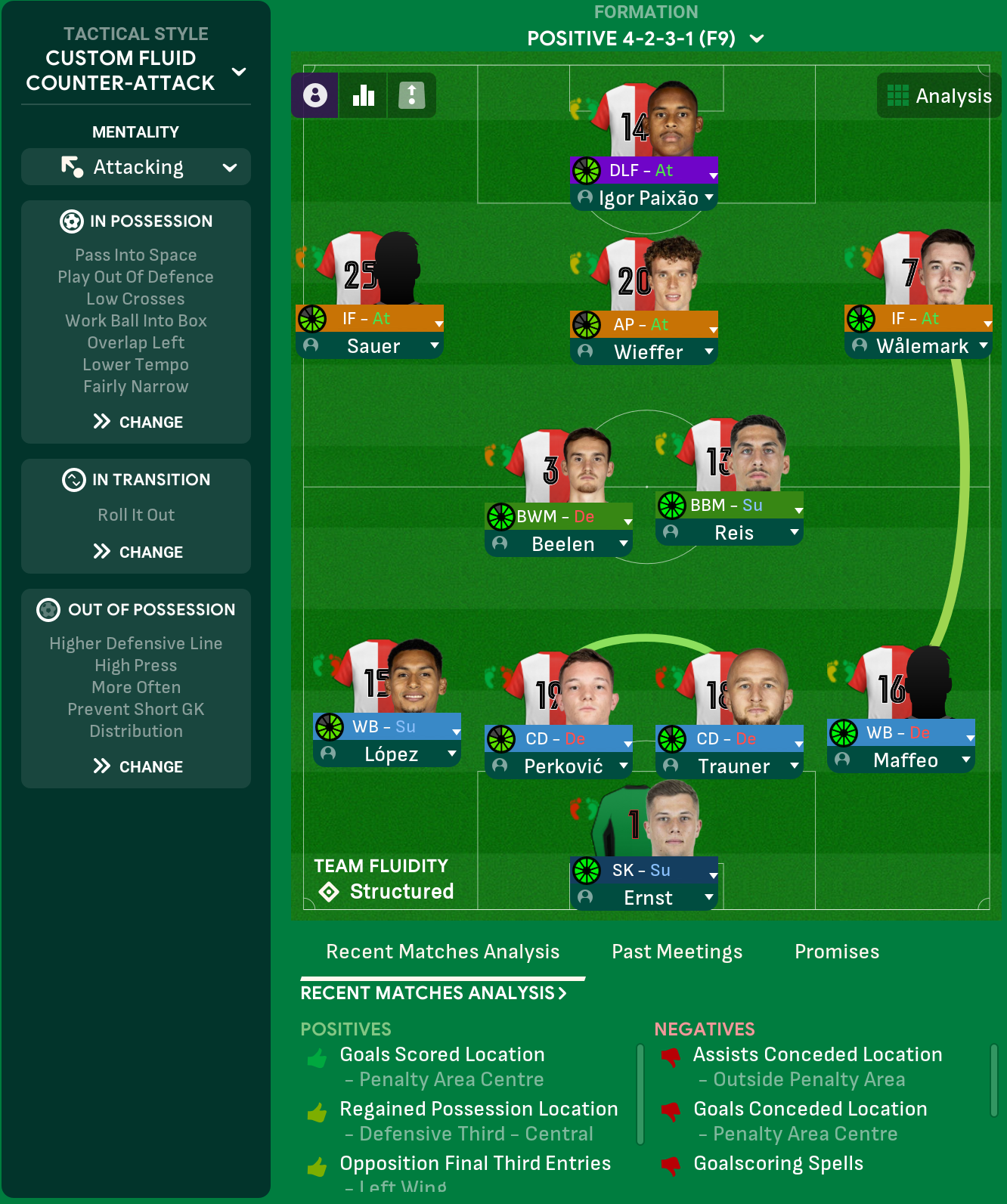
Guides for this formation
The tactical theory behind the 4-2-3-1 DM Wide: roles, instructions, and the trade-offs that decide whether the system holds up.
Player pairings
Midfield Pairs in 4-2-3-1 and 4-4-2
Double pivots and flat pairs in 4-2-3-1 and 4-4-2: when each pairing works, when it collapses, and the AMC unicorn that rescues both.
Read guide
Playing styles
Gegenpressing: A Full Guide
Klopp-style gegenpressing in FM, including squad profile, line-and-press pairing, sustainable workload, and the antipatterns to avoid.
Read guide