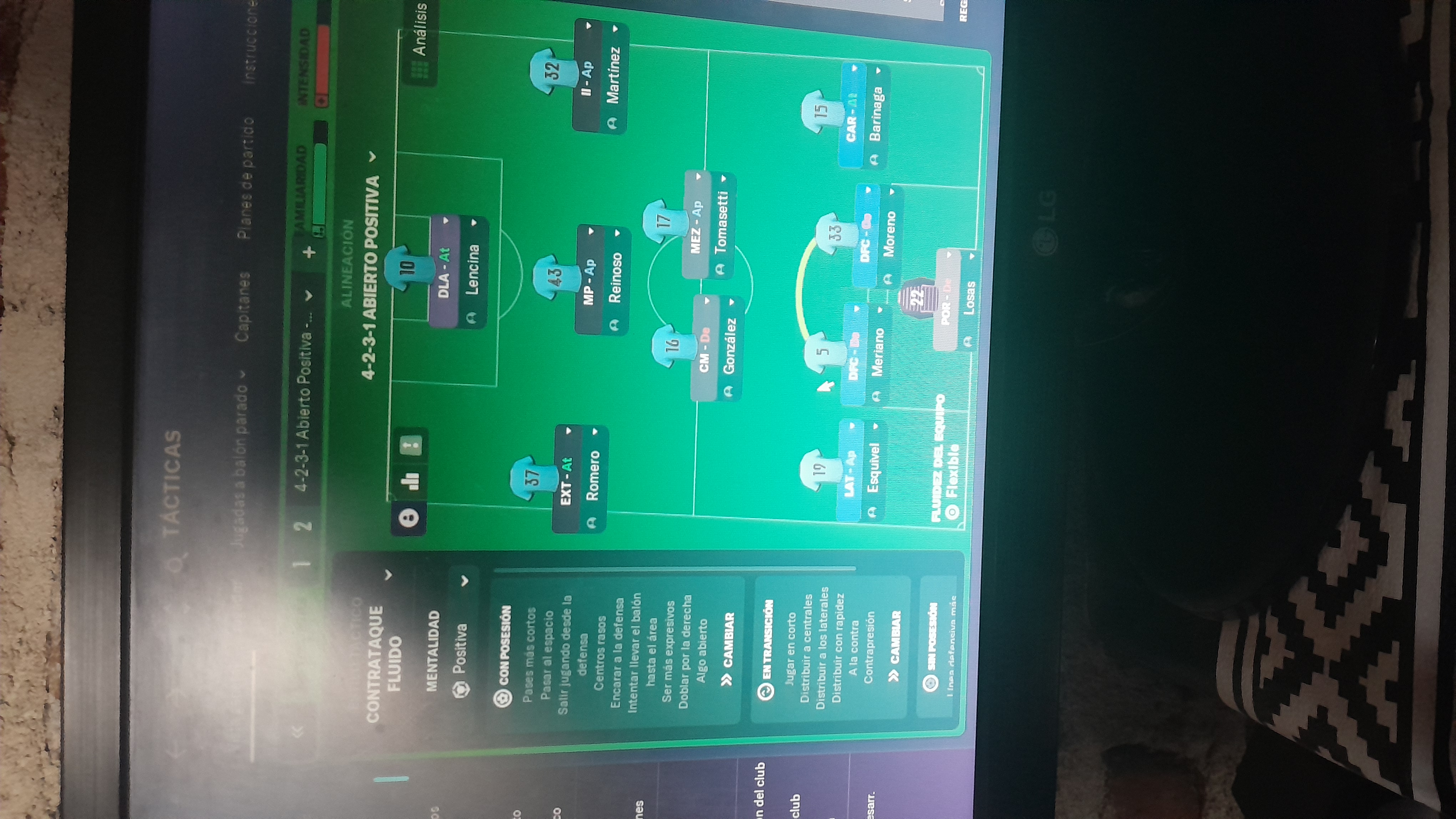
Uploaded Tactic
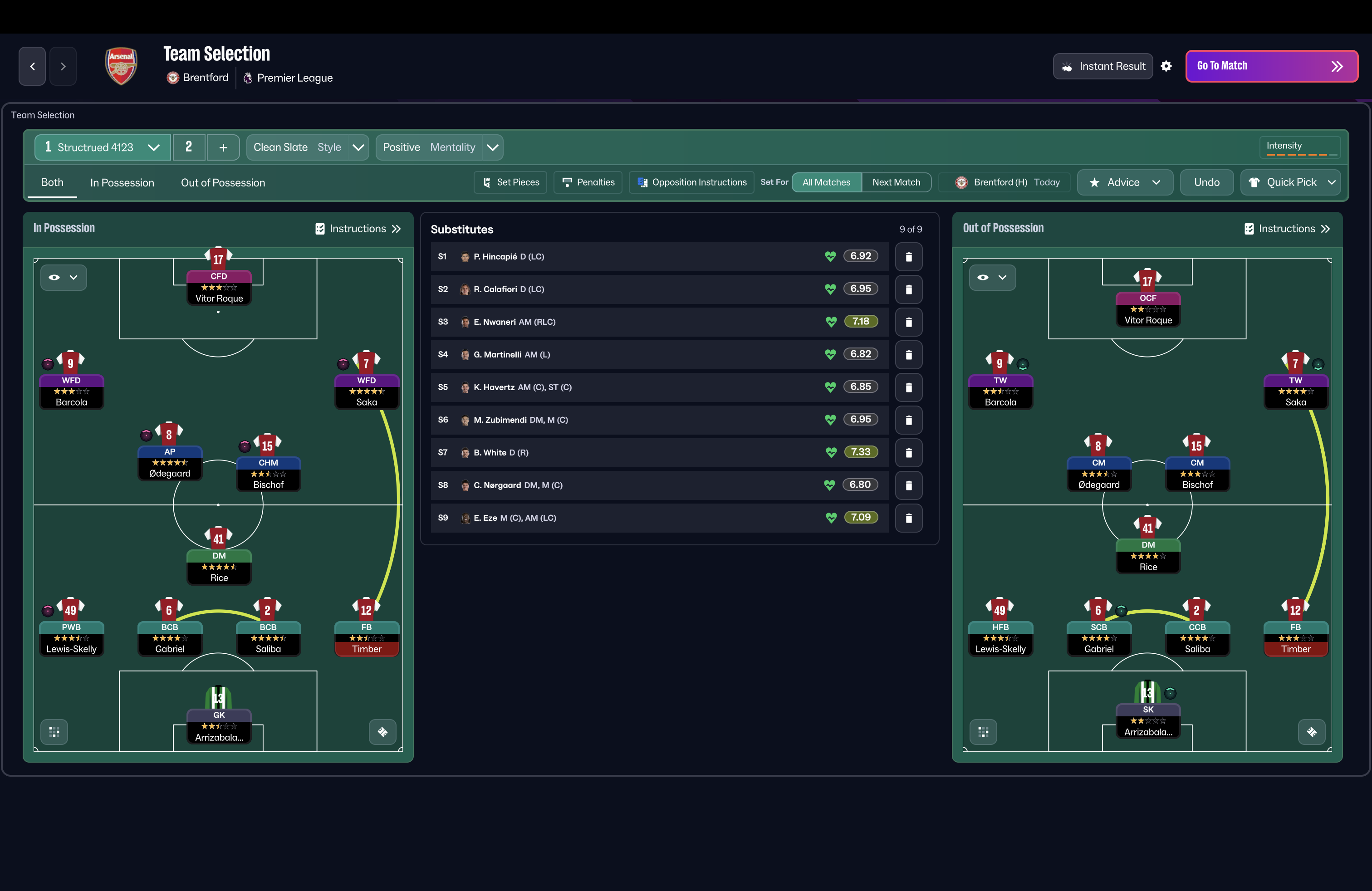
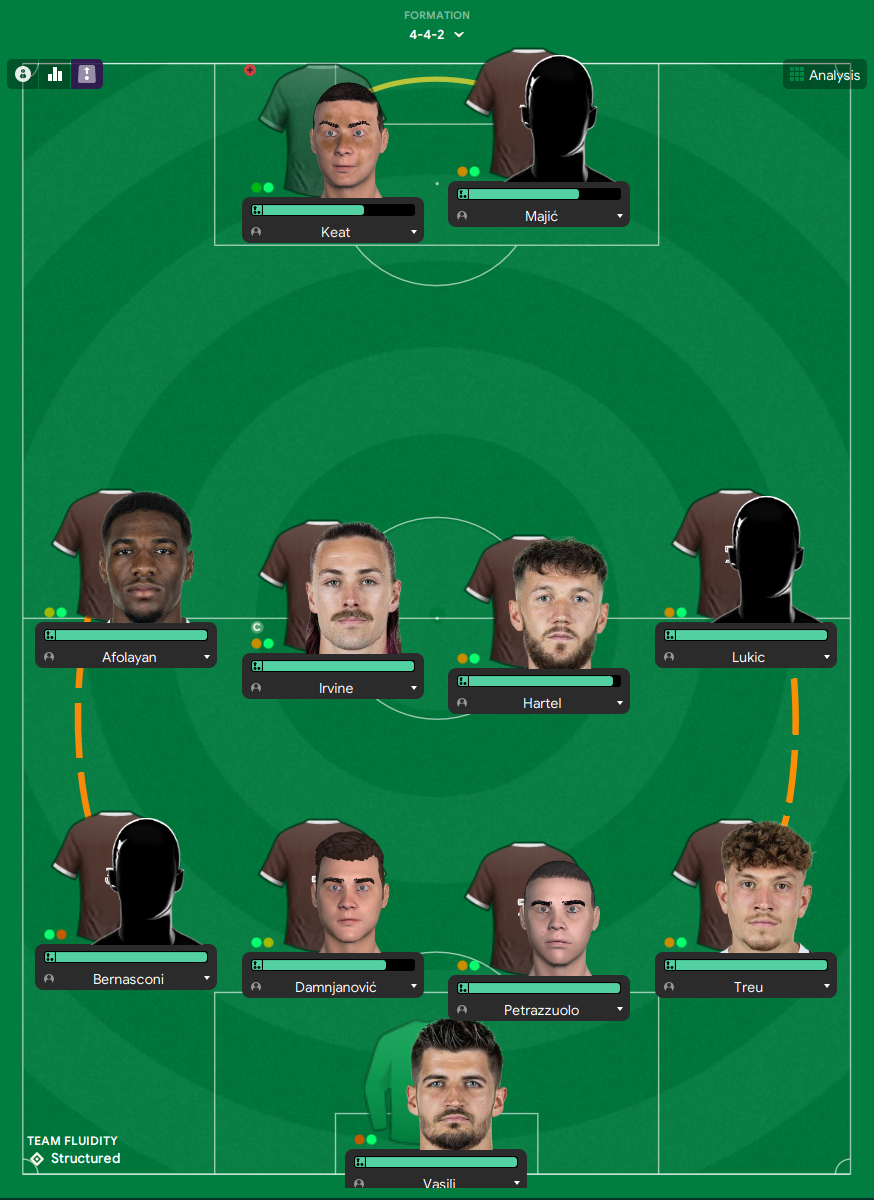
Formation & Style
Tactical Style:Structured
Mentality:Positive
Formation:4-2-3-1
Team Fluidity:2
In Possession
Play Out of Defence
Focus Play Down the Left
Work Ball Into Box
In Transition
Counter
Counter Press
Out of Possession
Higher Line of Engagement
Much Higher Defensive Line
Prevent Short GK Distribution
Team Shape Without Ball
Shape:4-2-3-1
Description:Compact four-man defence with two holding midfielders recycling possession.
Evidence:2 CBs at [2,2] and [2,3], DM at [3,3]
Team Shape With Ball
Shape:4-2-3-1
Description:Width provided by wingers, allowing versatility for overlapping runs.
Evidence:Wingers at [5,2] and [5,4], CF at [6,3].
Phase Description
Attacking Play
Fluid passing game with emphasis on wing play and quick buildup.
Defensive Transition
Rapid recovery out of possession with an emphasis on counter-pressing.
Main Focus
Creating width and space through wing play while maintaining central control.
Key Strengths
Wing Play
Utilizing wingers to stretch opposition defense, creating gaps for midfielders and the striker.
Central Control
Strong central midfield with support options allows fluid progression.
Defensive Stability
Having a dedicated DM offers protection to the backline while initiating play.
Conflicting Directions
Vulnerability to Counter-attacks
High line of engagement may leave defense exposed to quick counters.
Overreliance on Width
Dependence on wingers can lead to congested central areas if not managed well.
Similar Roles in Midfield
Two CMs with similar roles may lead to tactical redundancy.
Tactical Suggestions
Adjust Defensive Line
Consider lowering the defensive line to prevent exposure on counters.
Role Variety in Midfield
Introduce more varied roles in midfield to create different dynamics.
Encourage Central Play
Balance wing play with central focus to prevent predictability.
Ask Questions About Your Lineup
Related Tactics
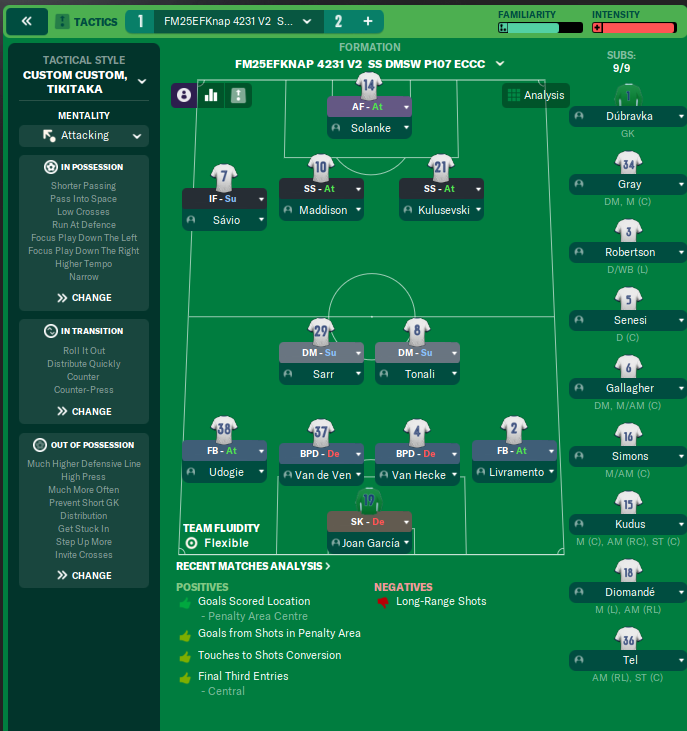
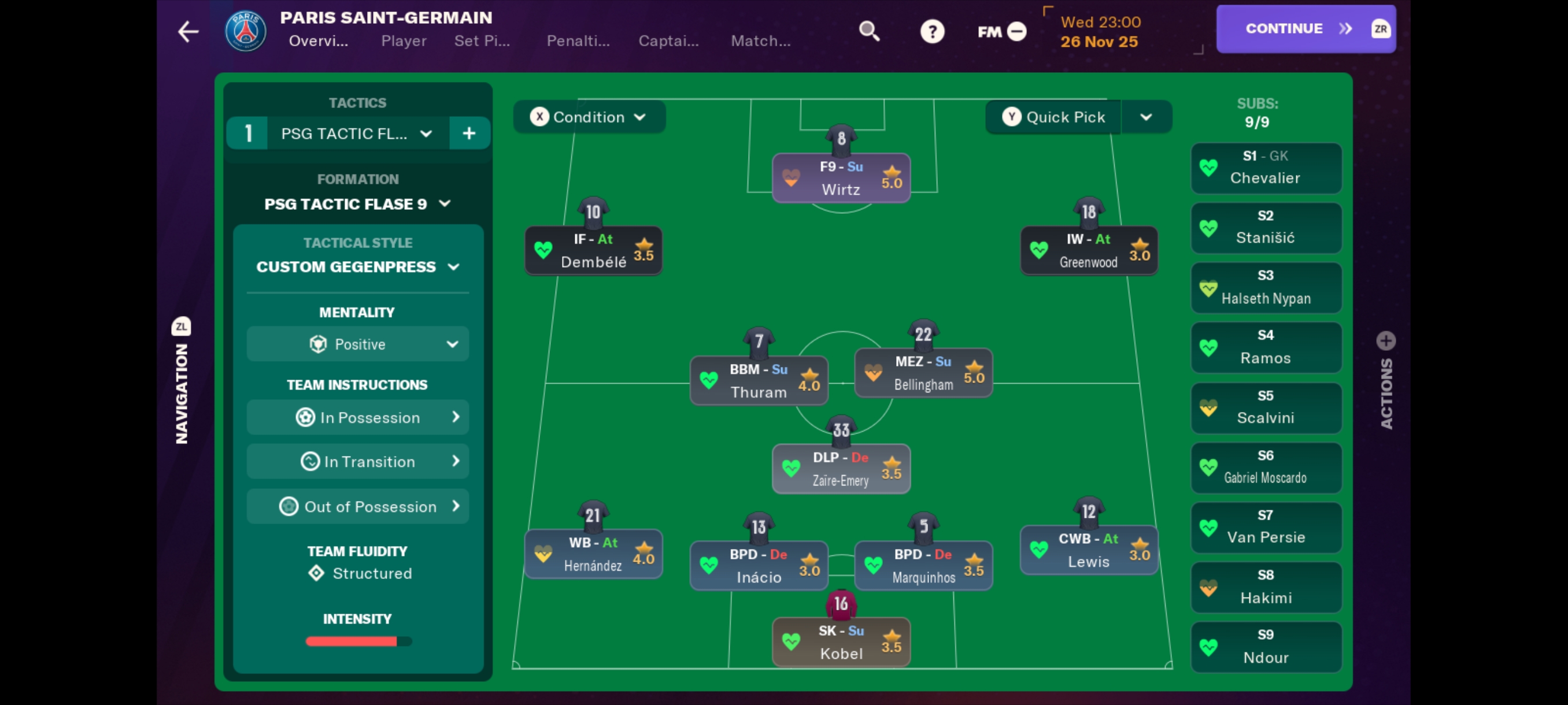
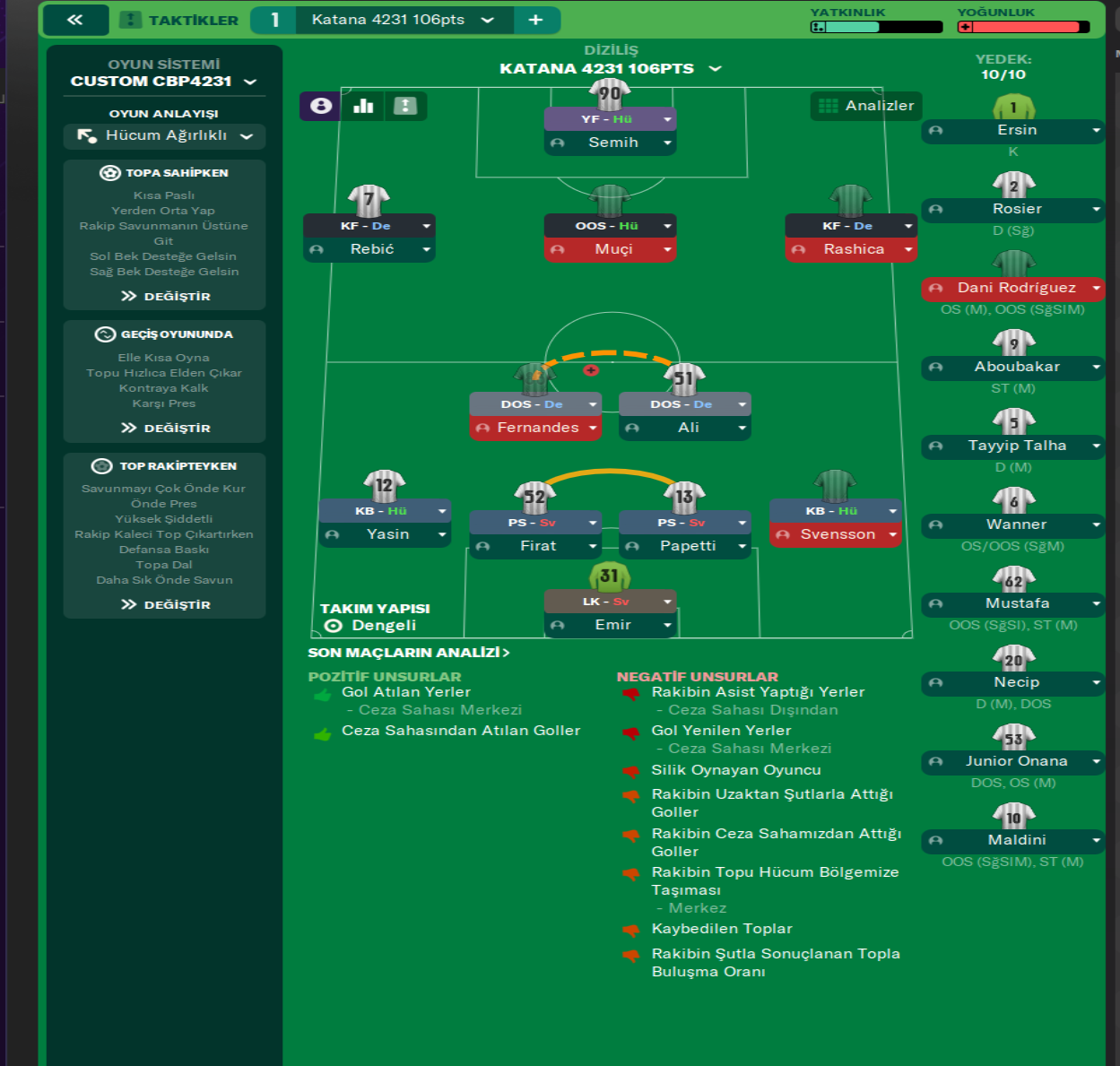
More Structured tactics
Guides for this formation
The tactical theory behind the 4-2-3-1: roles, instructions, and the trade-offs that decide whether the system holds up.
Player pairings
Midfield Pairs in 4-2-3-1 and 4-4-2
Double pivots and flat pairs in 4-2-3-1 and 4-4-2: when each pairing works, when it collapses, and the AMC unicorn that rescues both.
Read guide
Playing styles
Gegenpressing: A Full Guide
Klopp-style gegenpressing in FM, including squad profile, line-and-press pairing, sustainable workload, and the antipatterns to avoid.
Read guide