Uploaded Tactic
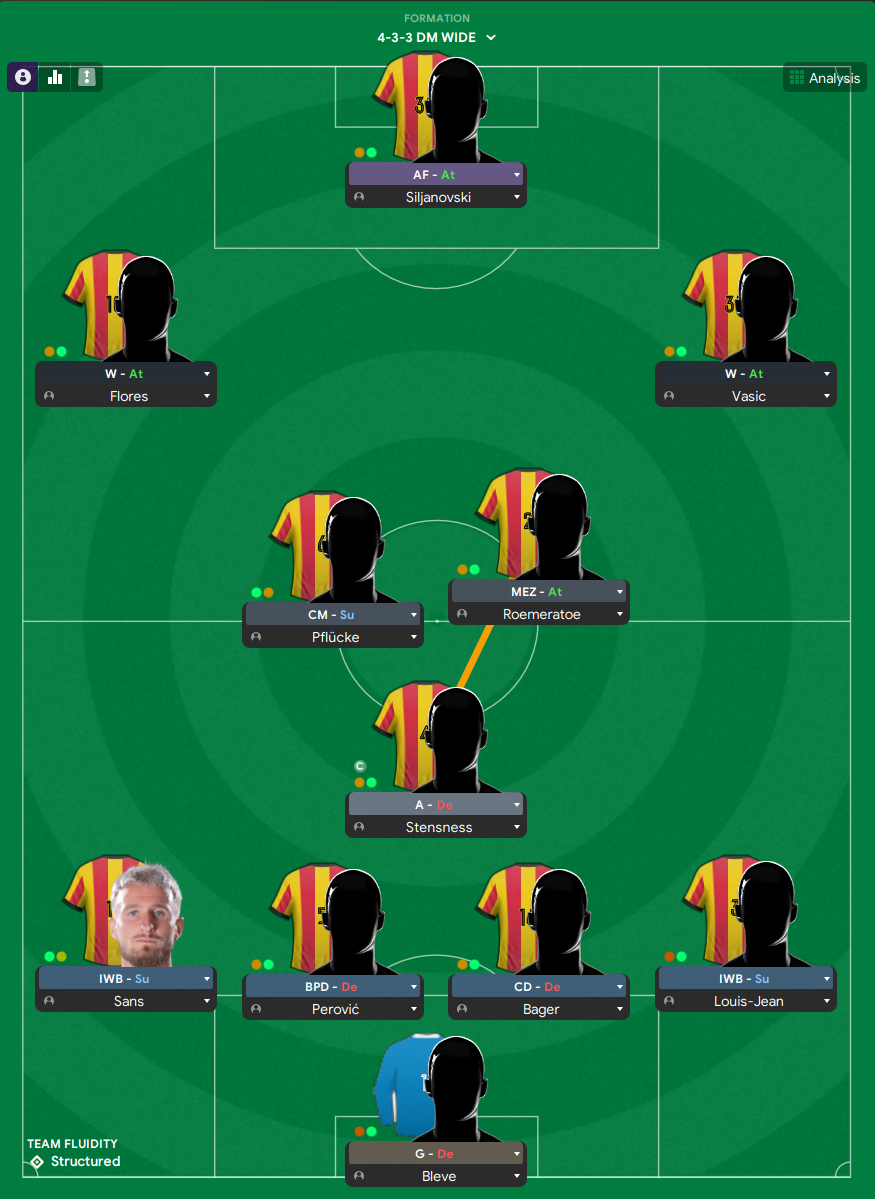
Formation & Style
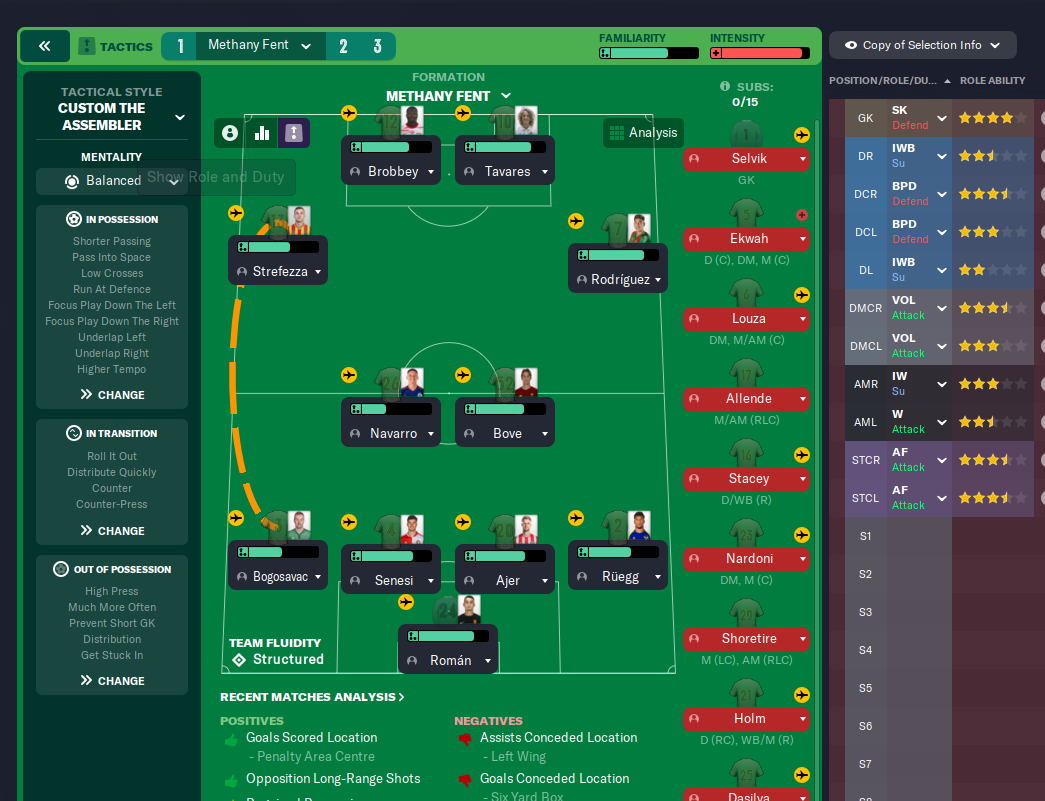
Tactical Style:Structured
Mentality:Balanced
Formation:4-2-3-1 Wide
Team Fluidity:Custom the Assembler
In Possession
Shorter Passing
Pass Into Space
Low Crosses
Run At Defence
Focus Play Down The Left
Focus Play Down The Right
Underlap Right
Higher Tempo
In Transition
Roll It Out
Distribute Quickly
Counter
Out of Possession
High Press
Much More Often
Prevent Short GK Distribution
Team Shape Without Ball
Shape:4-2
Description:Compact shape with two central midfielders dropping to support the back four.
Evidence:Two Volantes at [3,2] and [3,4], assisting the defensive duties.
Team Shape With Ball
Shape:4-3-3
Description:Spreading out to create width and options in attack with overlapping full-backs.
Evidence:Inverted Wing-Backs at [2,1] and [2,5] providing width.
Phase Description
Attacking Play
Utilizes width via Inside Wingers and Wingers to stretch the opponent's defense while focusing play down both flanks.
Defensive Transition
Relies on both Volantes to initiate counter-press while maintaining offensive positions.
Main Focus
Creating numerical superiority in the wide areas and exploiting space through underlapping runs.
Key Strengths
Width Utilization
The use of Wingers allows direct play and stretching the defense.
Attacking Flexibility
The combination of two Advanced Forwards offers multiple attacking threats.
High Press
Applying pressure to regain possession quickly.
Conflicting Directions
Middle Congestion
Two Volantes may congest the midfield if both push forward simultaneously.
Defensive Vulnerability
Potentially exposed flanks due to Inverted Wing-Backs.
Counter-Attacking Risks
A high press may leave gaps for counters.
Tactical Suggestions
Adjust Volante Duties
Consider making one Volante a Defensive Duty to maintain balance.
Full-Back Instruction Review
Review the support duties of the Inverted Wing-Backs for better defensive cover.
Use Link-up Play
Encourage more link-up play between the Inside Winger and Advanced Forward.
Ask Questions About Your Lineup
Related Tactics
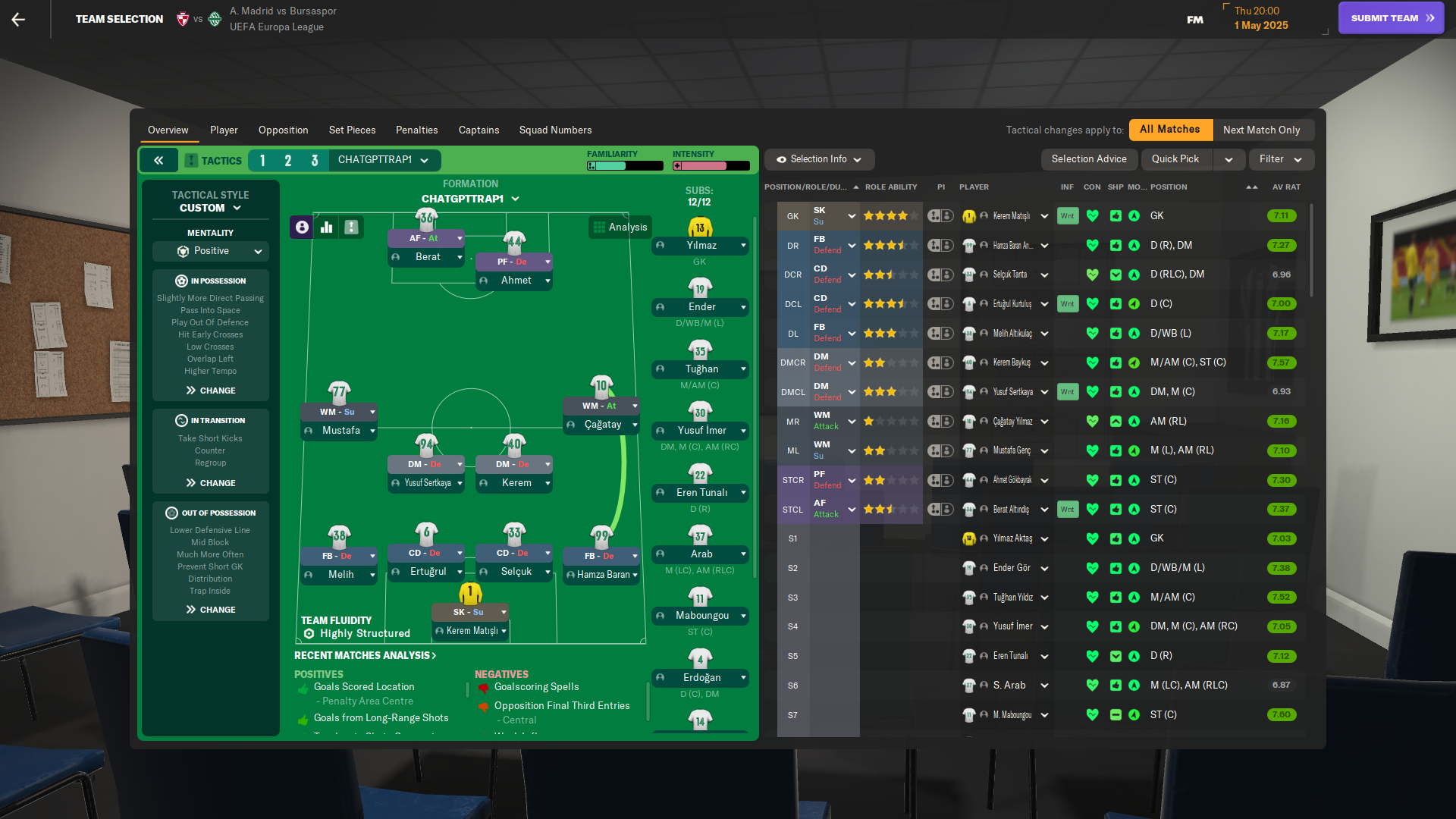
More Structured tactics
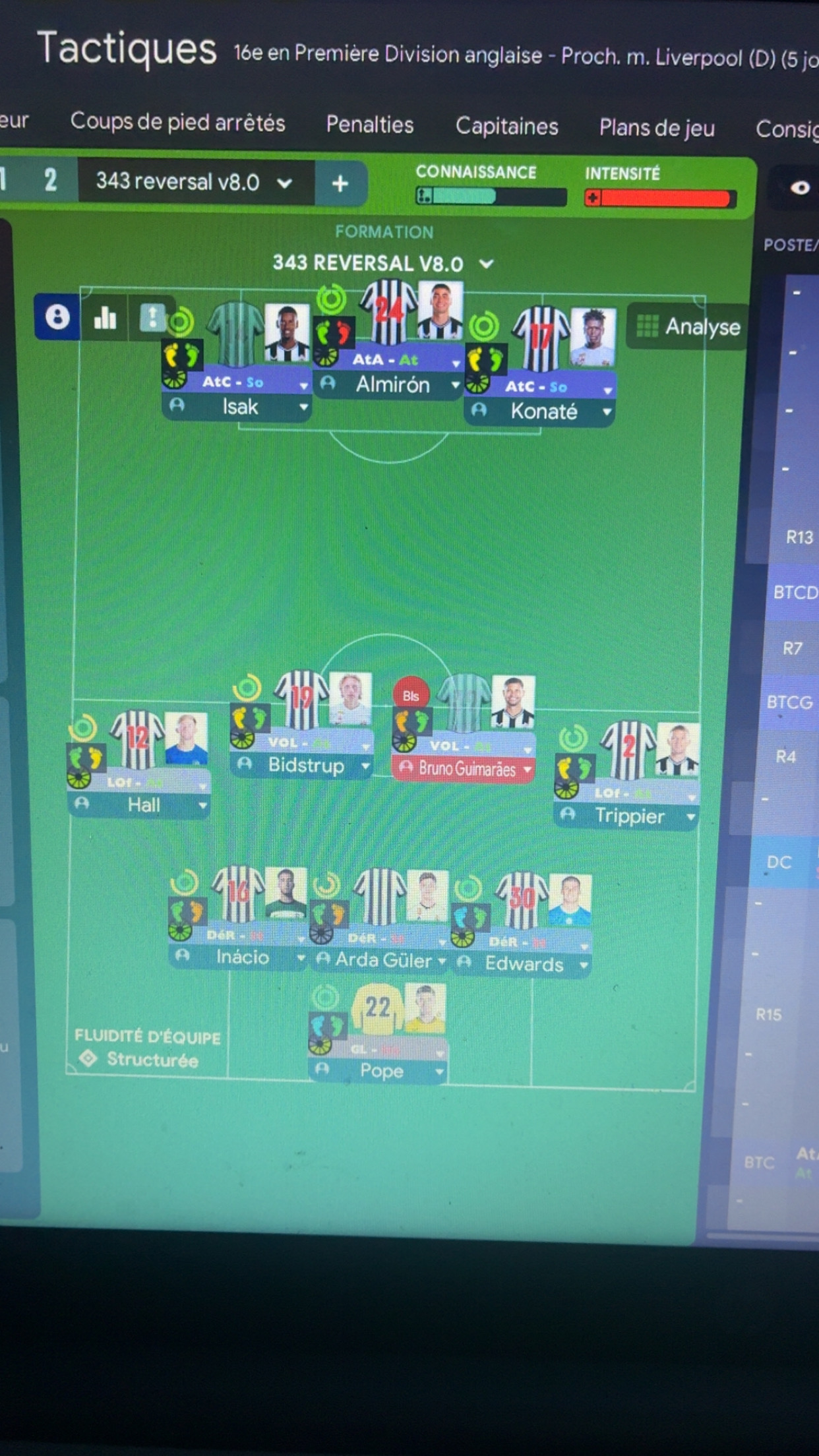
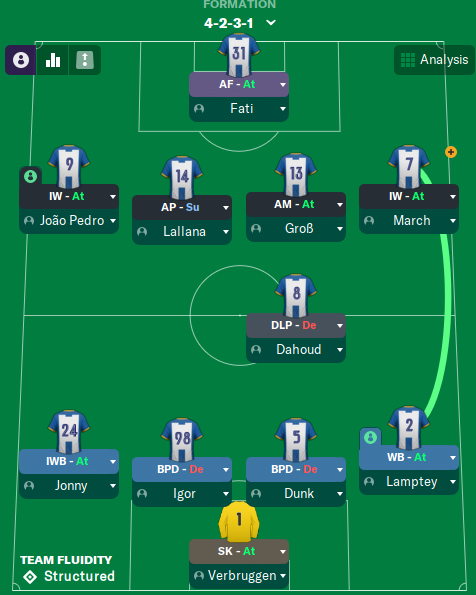
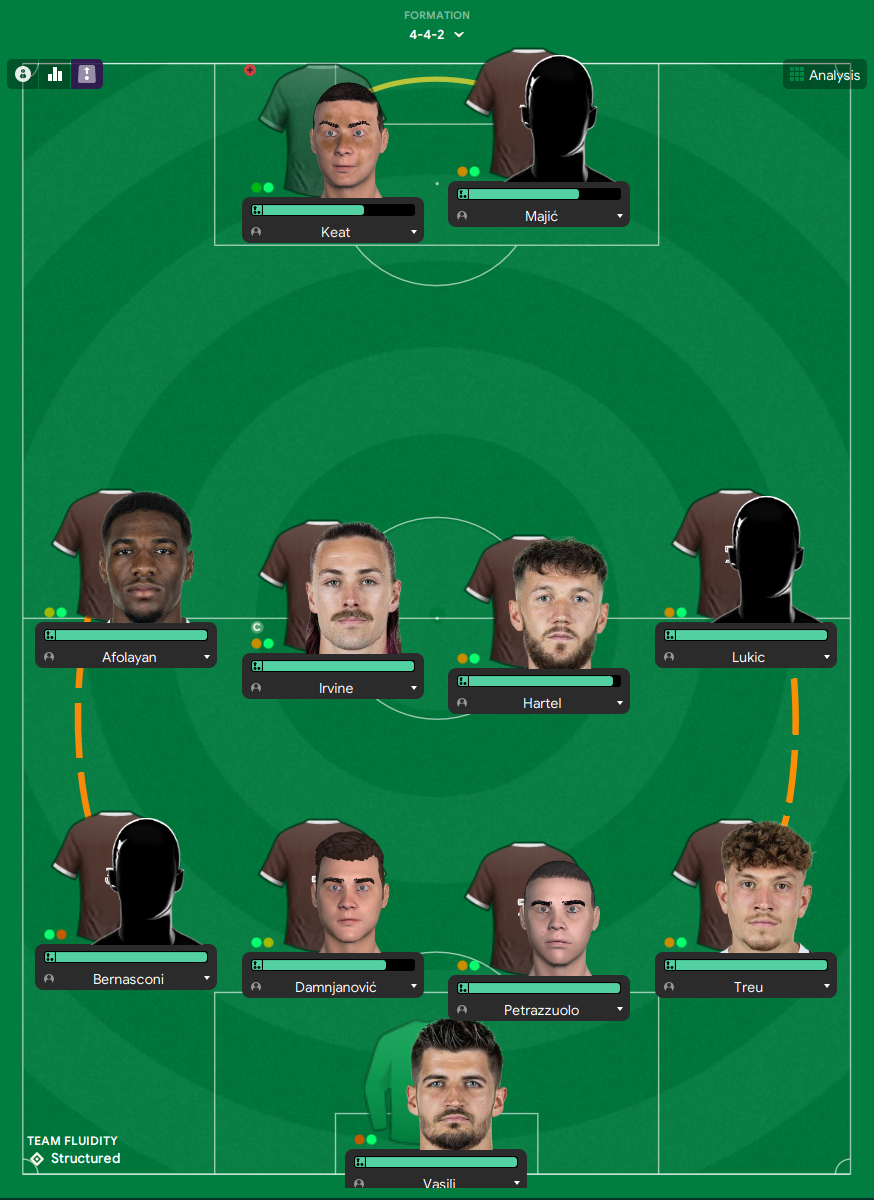
Guides for this formation
The tactical theory behind the 4-2-3-1 Wide: roles, instructions, and the trade-offs that decide whether the system holds up.
Player pairings
Midfield Pairs in 4-2-3-1 and 4-4-2
Double pivots and flat pairs in 4-2-3-1 and 4-4-2: when each pairing works, when it collapses, and the AMC unicorn that rescues both.
Read guide
Playing styles
Gegenpressing: A Full Guide
Klopp-style gegenpressing in FM, including squad profile, line-and-press pairing, sustainable workload, and the antipatterns to avoid.
Read guide