Uploaded Tactic
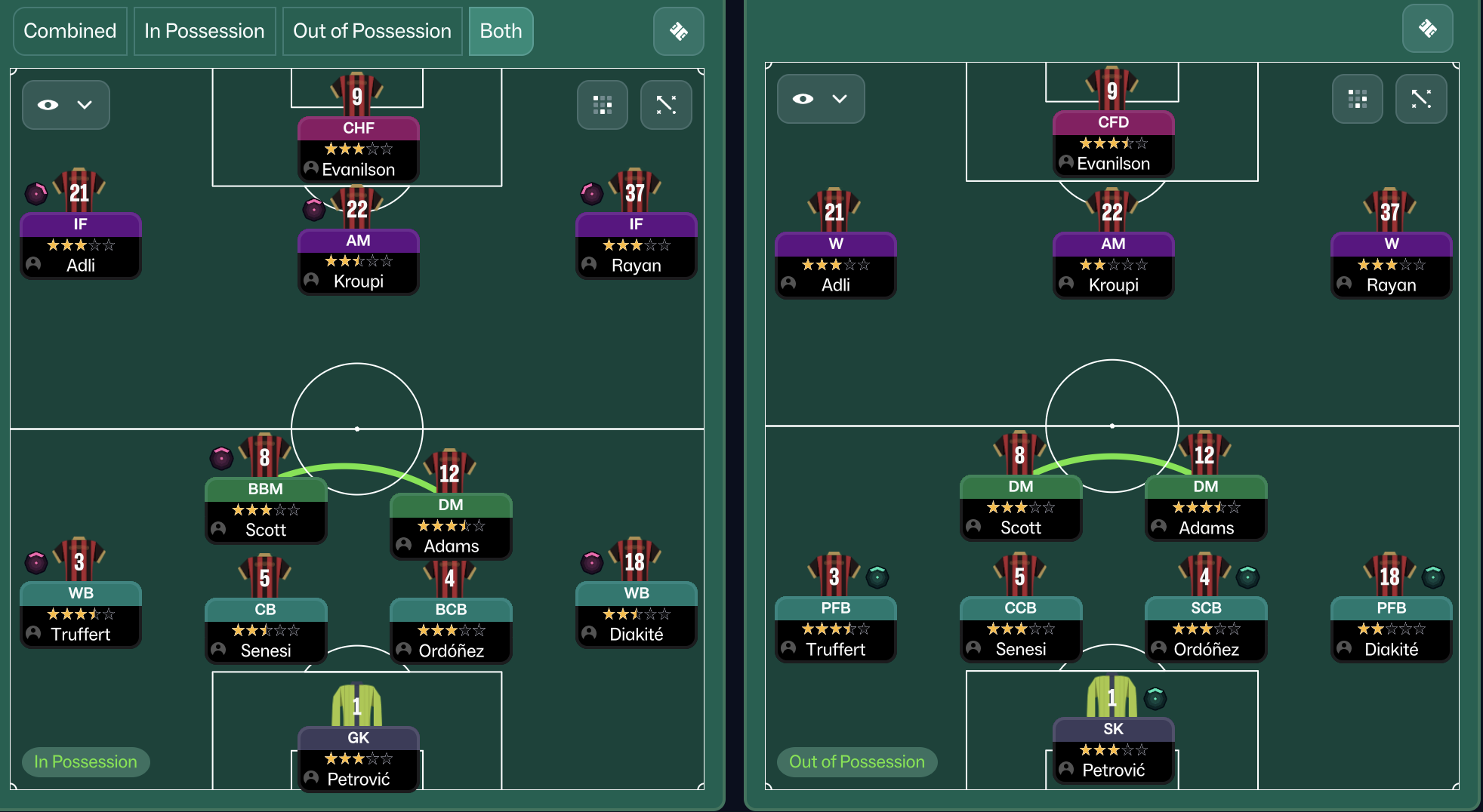
Formation & Style
Tactical Style:Control Possession
Mentality:Positive
Formation:4-2-3-1
Team Fluidity:Very Fluid
In Possession
Play Out of Defence
Pass Into Space
Work Ball Into Box
In Transition
Counter-Press
Distribute to Centre-Backs
Counter
Out of Possession
Higher Defensive Line
Higher Line of Engagement
Prevent Short GK Distribution
Team Shape Without Ball
Shape:Compact
Description:Team maintains compactness with two banks of four when out of possession.
Evidence:With a Higher Defensive Line and a Higher Line of Engagement, the team presses further up.
Team Shape With Ball
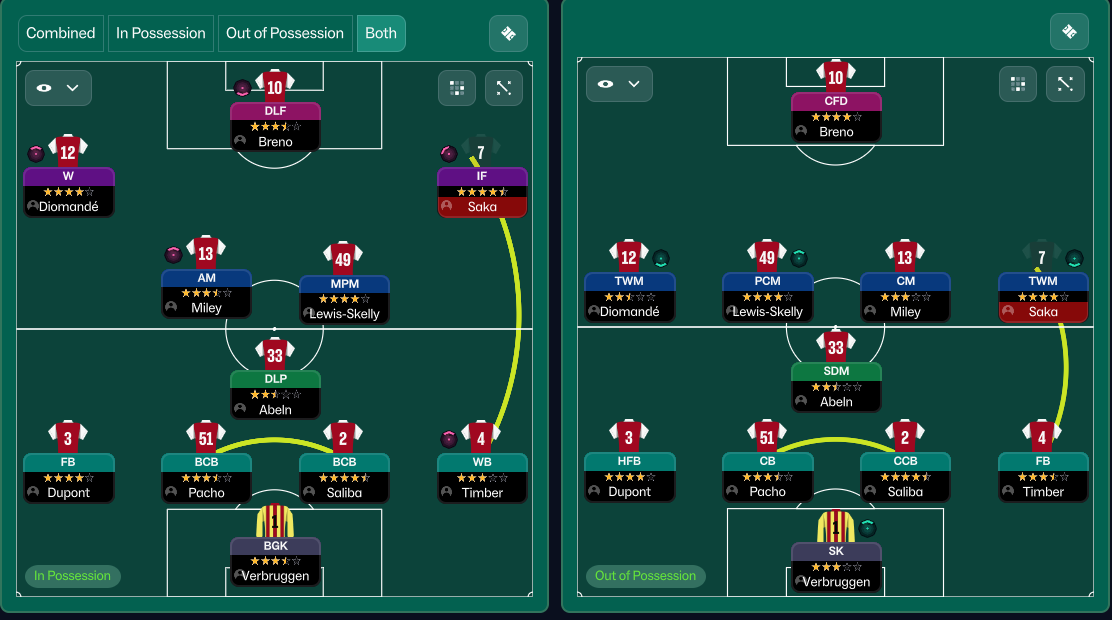
Shape:Fluid 4-2-3-1
Description:Dynamic movements and rotations among attacking players to exploit spaces.
Evidence:Roles such as AM-A and IF-A provide flexibility and adaptation in the final third.
Phase Description
Attacking Play
Fluid transitions focusing on short passing and quick movement to create space.
Defensive Transition
Quick recovery with high positioning to prevent counters.
Main Focus
Utilizing a range of attack options with a fluid formation.
Key Strengths
Strong Midfield Control
The combination of a Defensive Midfielder and a Box-to-Box Midfielder enhances midfield solidity.
Effective Wide Play
Utilization of width from Wing-Backs and Inside Forwards stretches the opponent's defense.
Versatile Forward Line
The flexibility of the Complete Forward and Attacking Midfielder enhances attacking variability.
Conflicting Directions
Risk of Overcrowding
The compact midfield may lead to congestion in possession phases, limiting creativity.
Vulnerability on Counters
High defensive line exposes the team to quick transitions from the opposition.
Dependence on Flanks
Over-reliance on wing play might lead to predictability in attacking strategies.
Tactical Suggestions
Consider Deep-Lying Playmaker
Adding a DLP can enhance distribution from deep and improve ball retention.
Adjust Defensive Line
Lowering the defensive line could mitigate vulnerabilities to counterattacks.
Incorporate a Target Man
Adding a Target Forward in a more traditional role could offer additional aerial threat.
Ask Questions About Your Lineup
Related Tactics

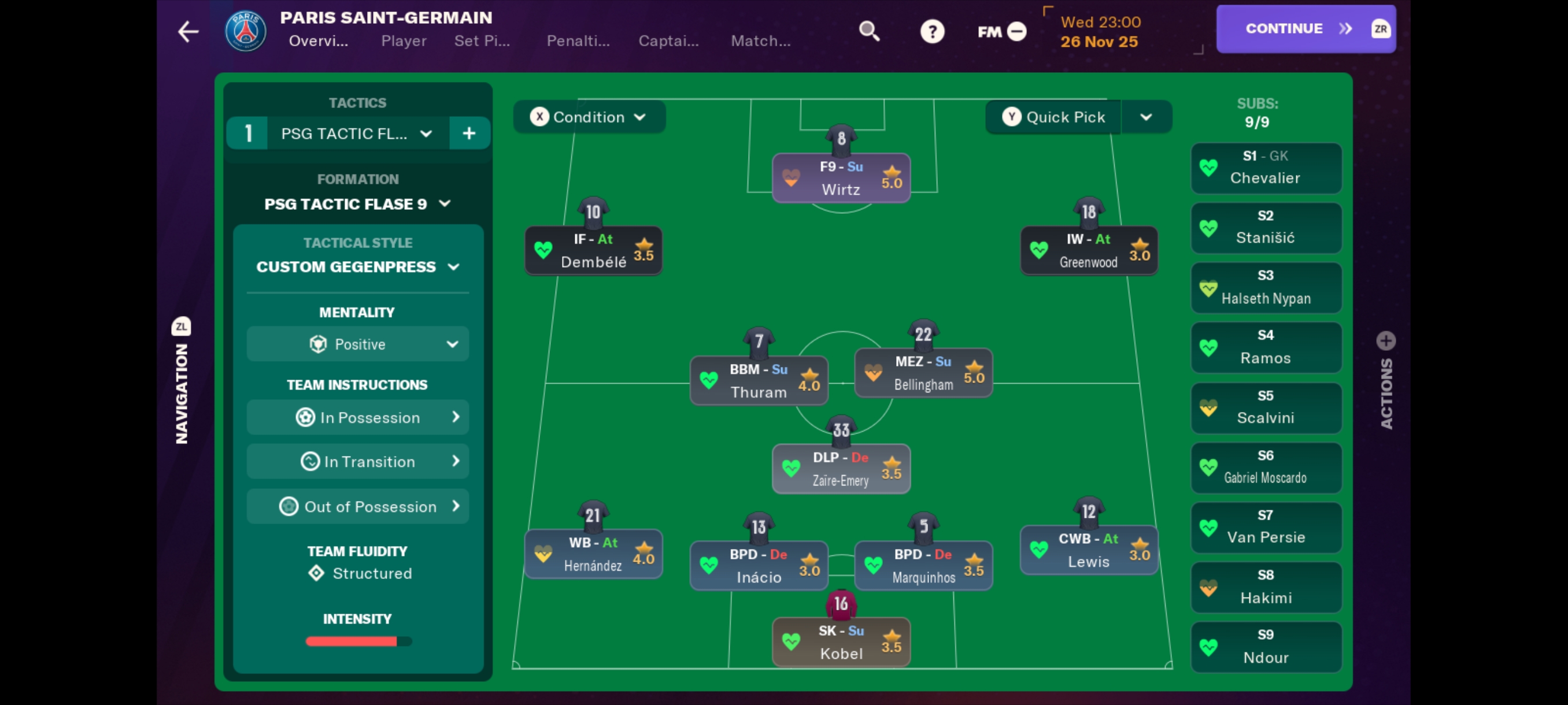
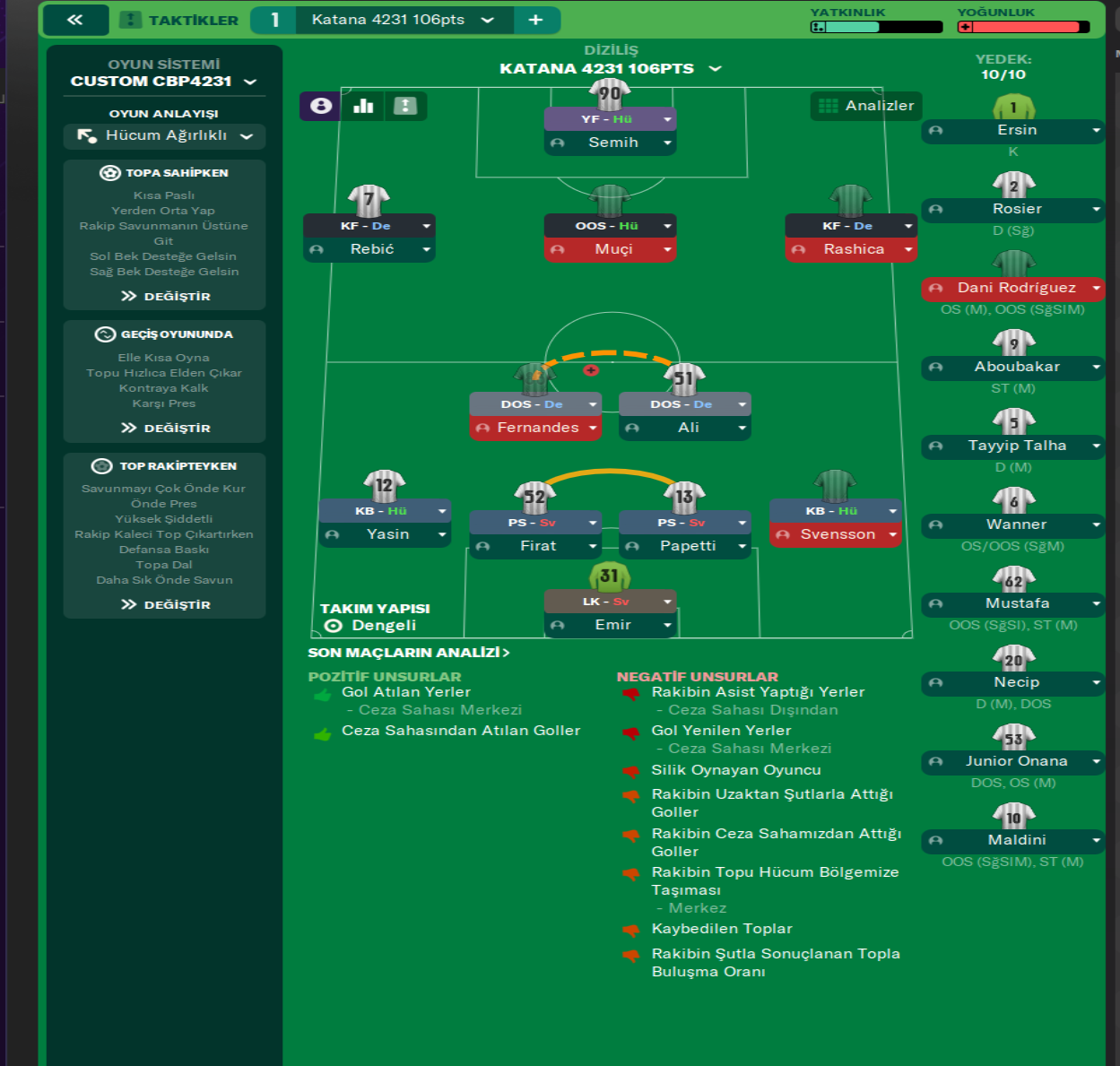
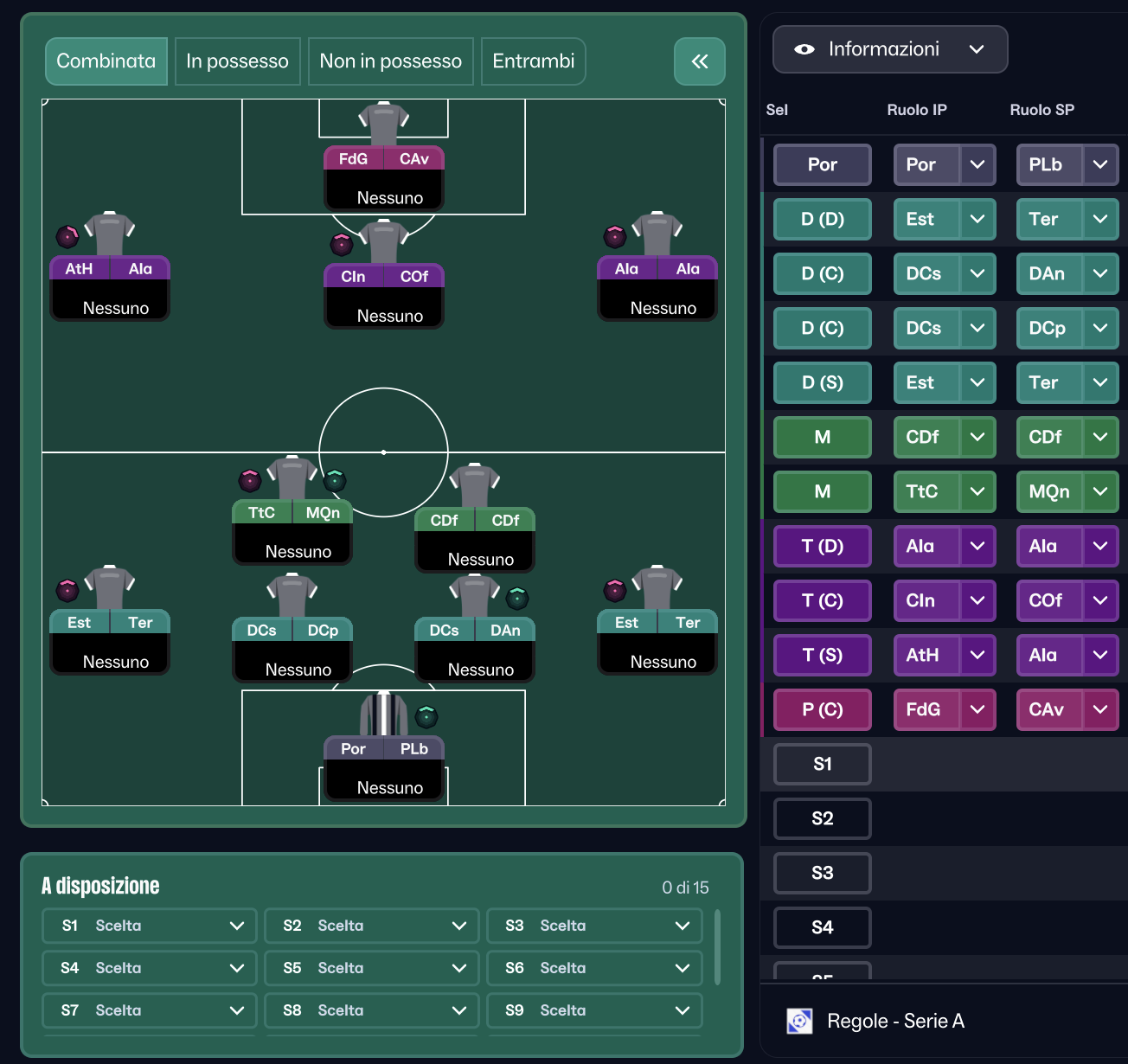
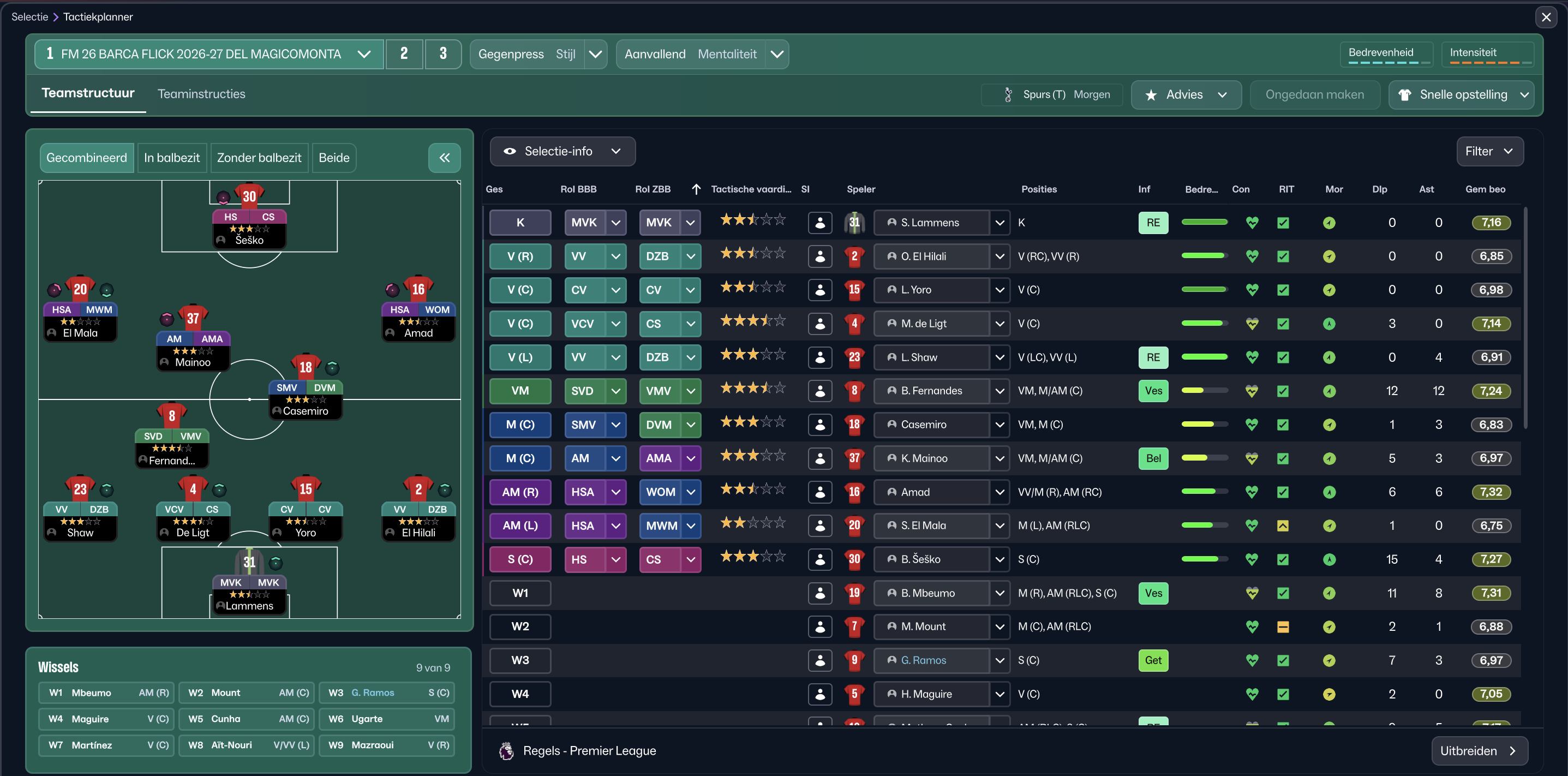
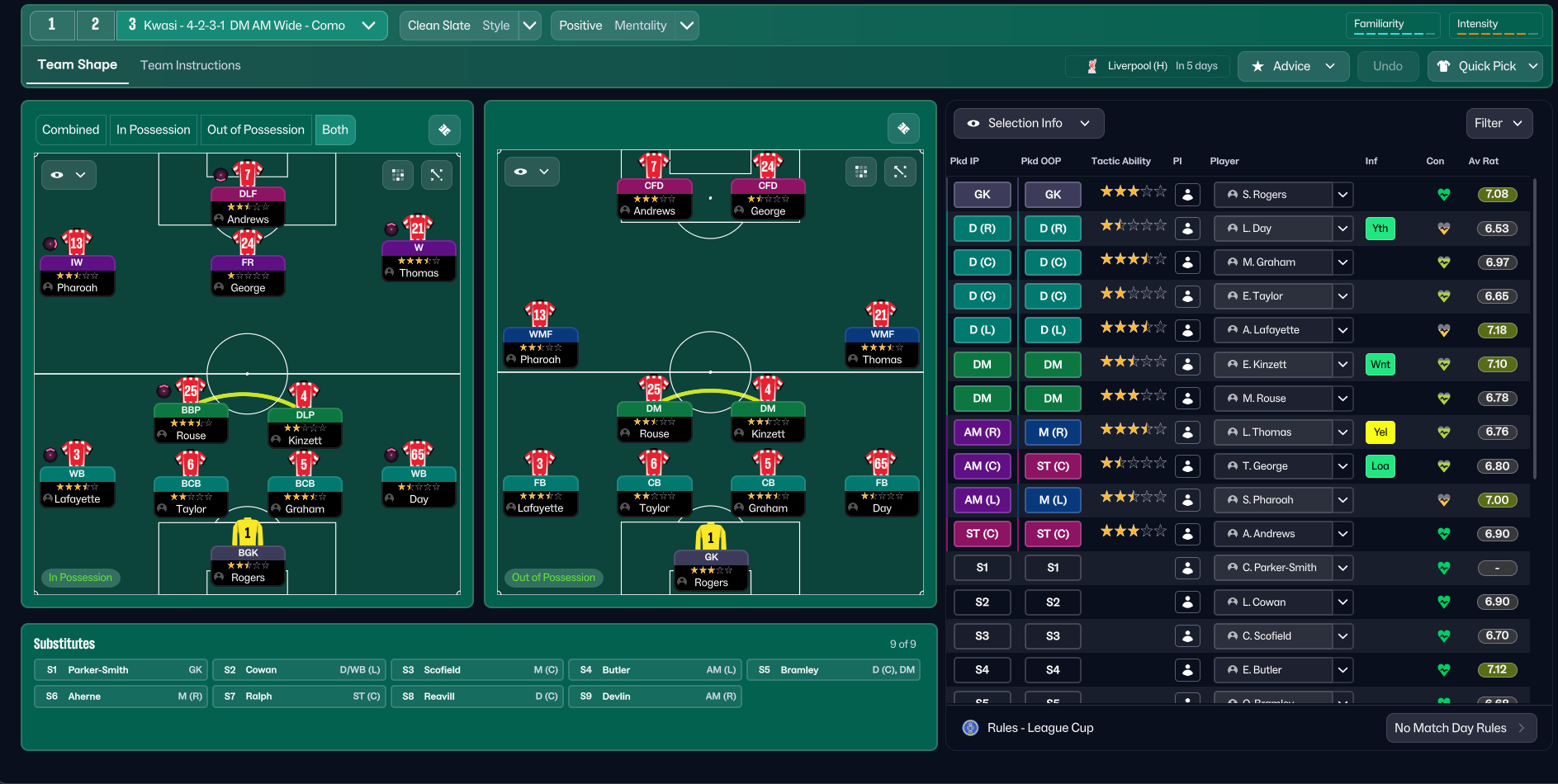
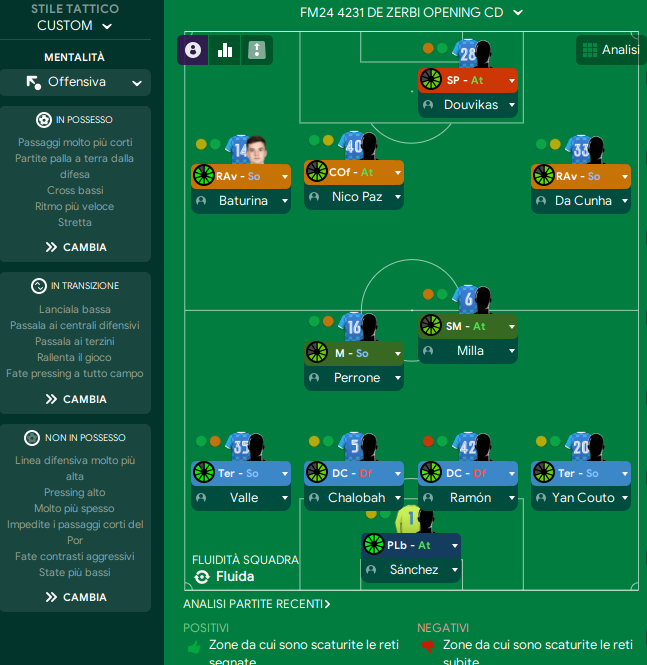
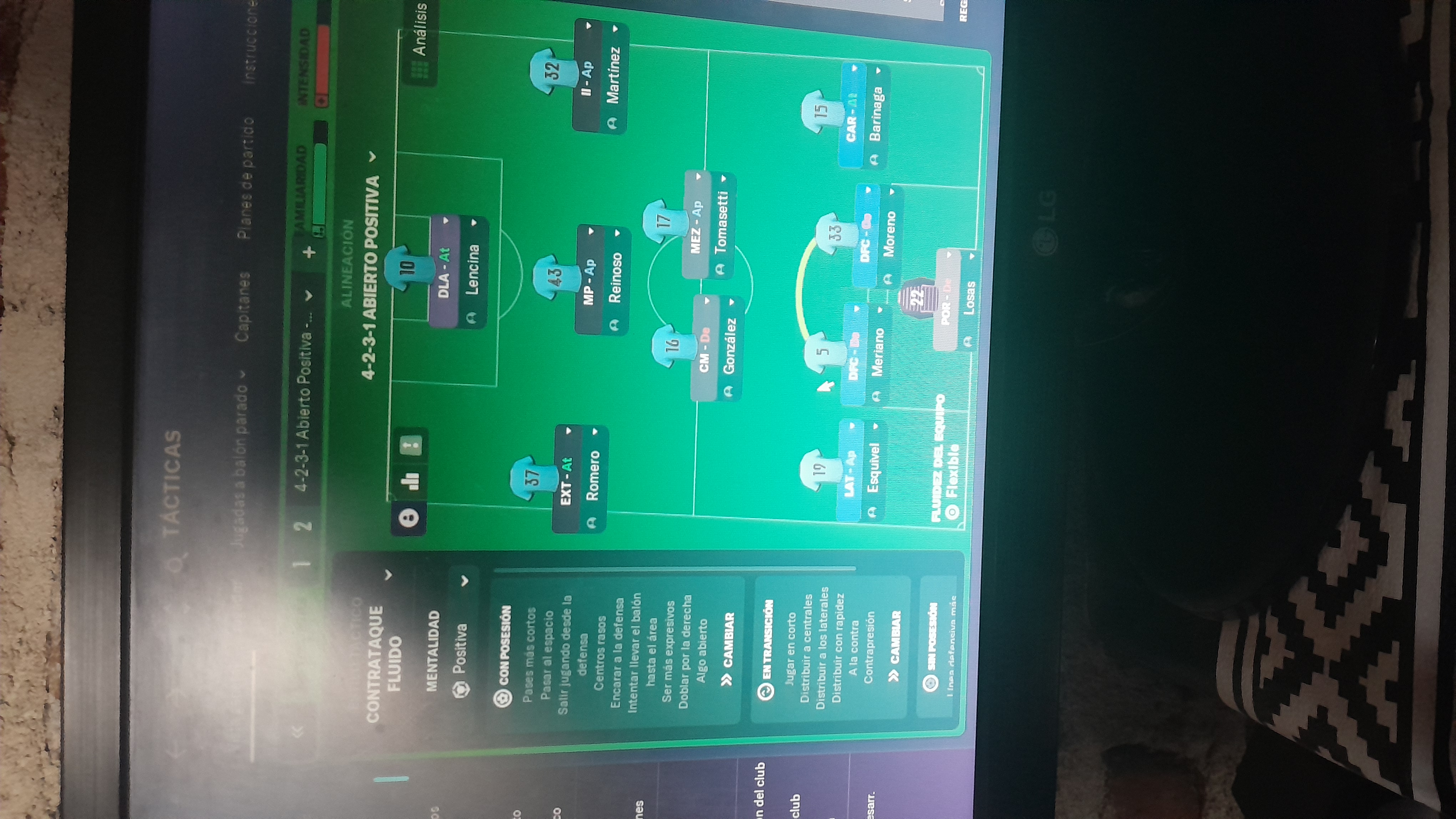
More Control Possession tactics
Guides for this formation
The tactical theory behind the 4-2-3-1: roles, instructions, and the trade-offs that decide whether the system holds up.
Player pairings
Midfield Pairs in 4-2-3-1 and 4-4-2
Double pivots and flat pairs in 4-2-3-1 and 4-4-2: when each pairing works, when it collapses, and the AMC unicorn that rescues both.
Read guide
Playing styles
Gegenpressing: A Full Guide
Klopp-style gegenpressing in FM, including squad profile, line-and-press pairing, sustainable workload, and the antipatterns to avoid.
Read guide