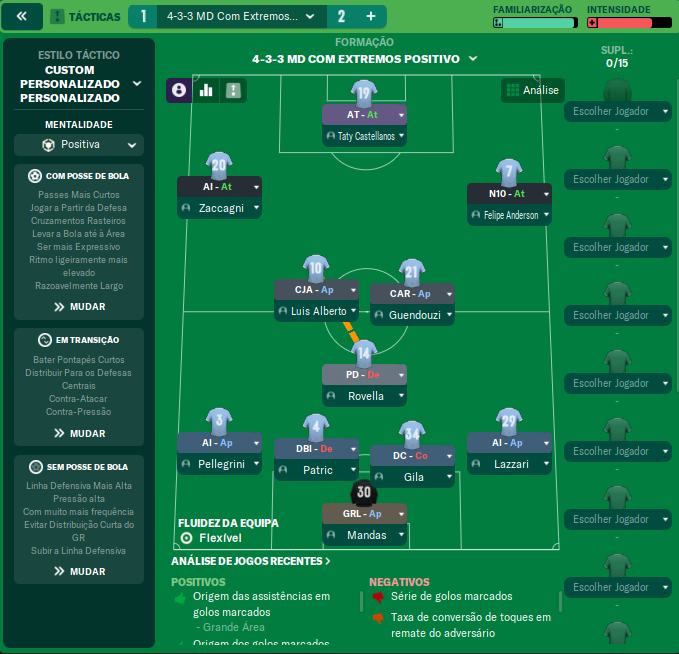
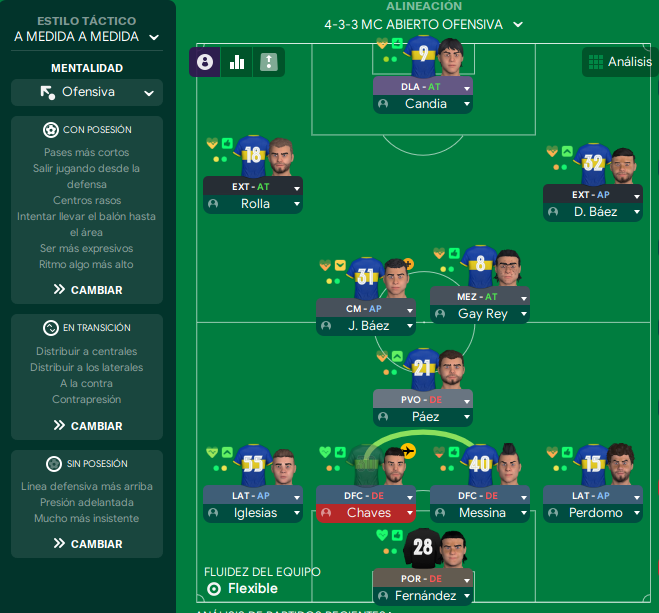
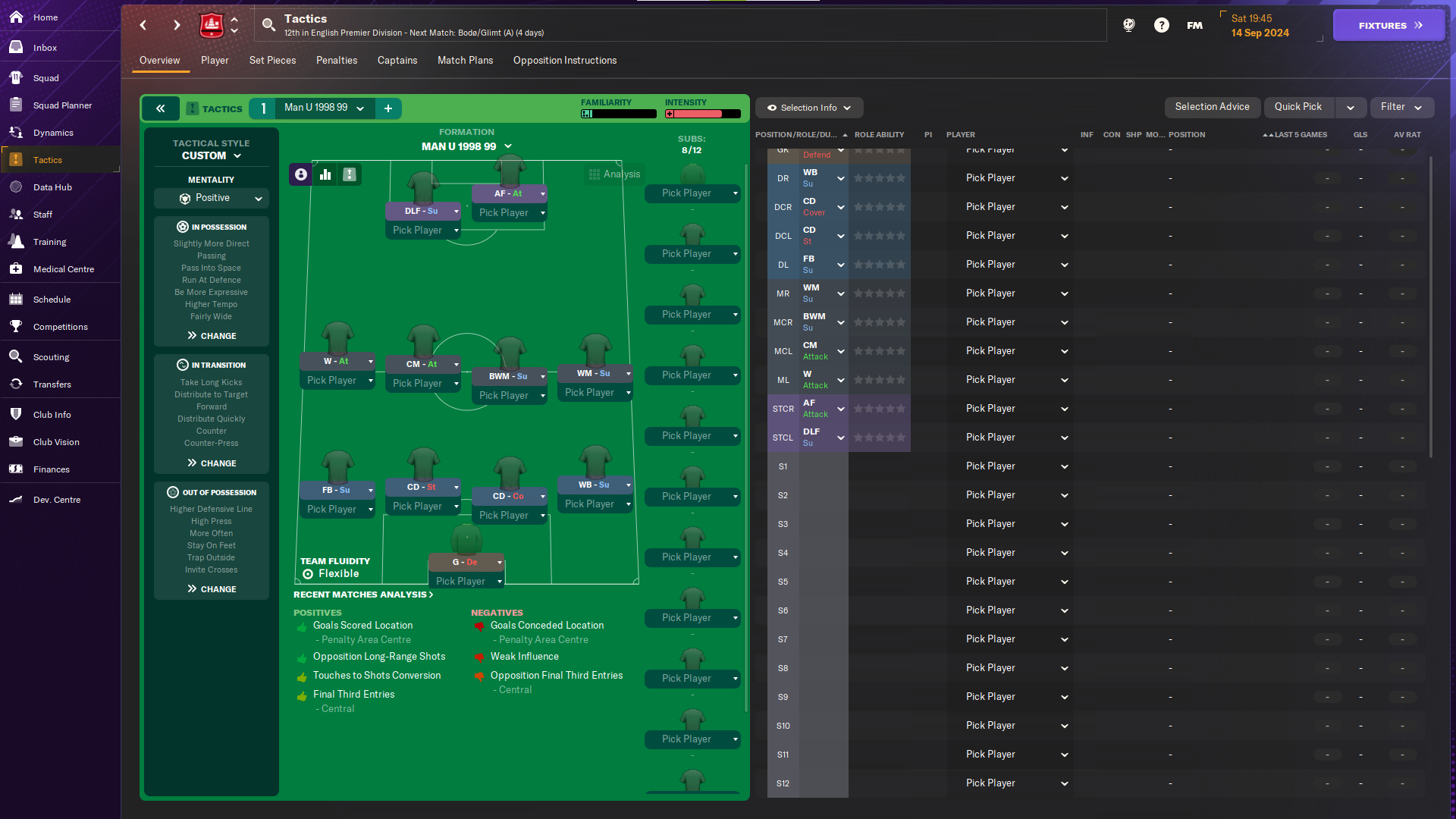
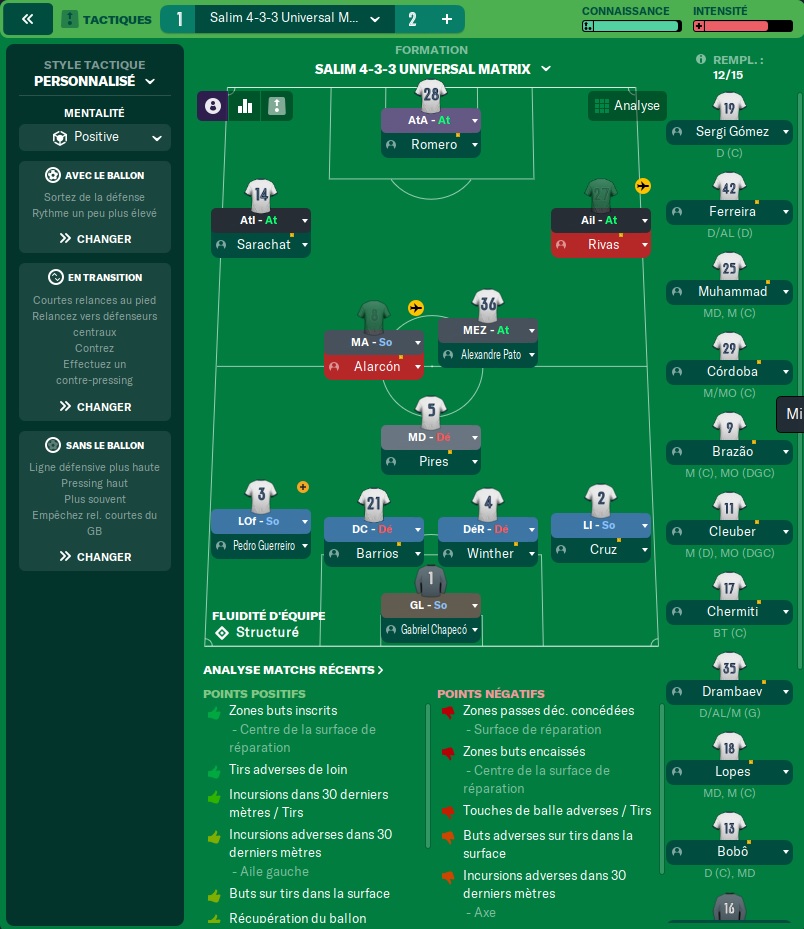
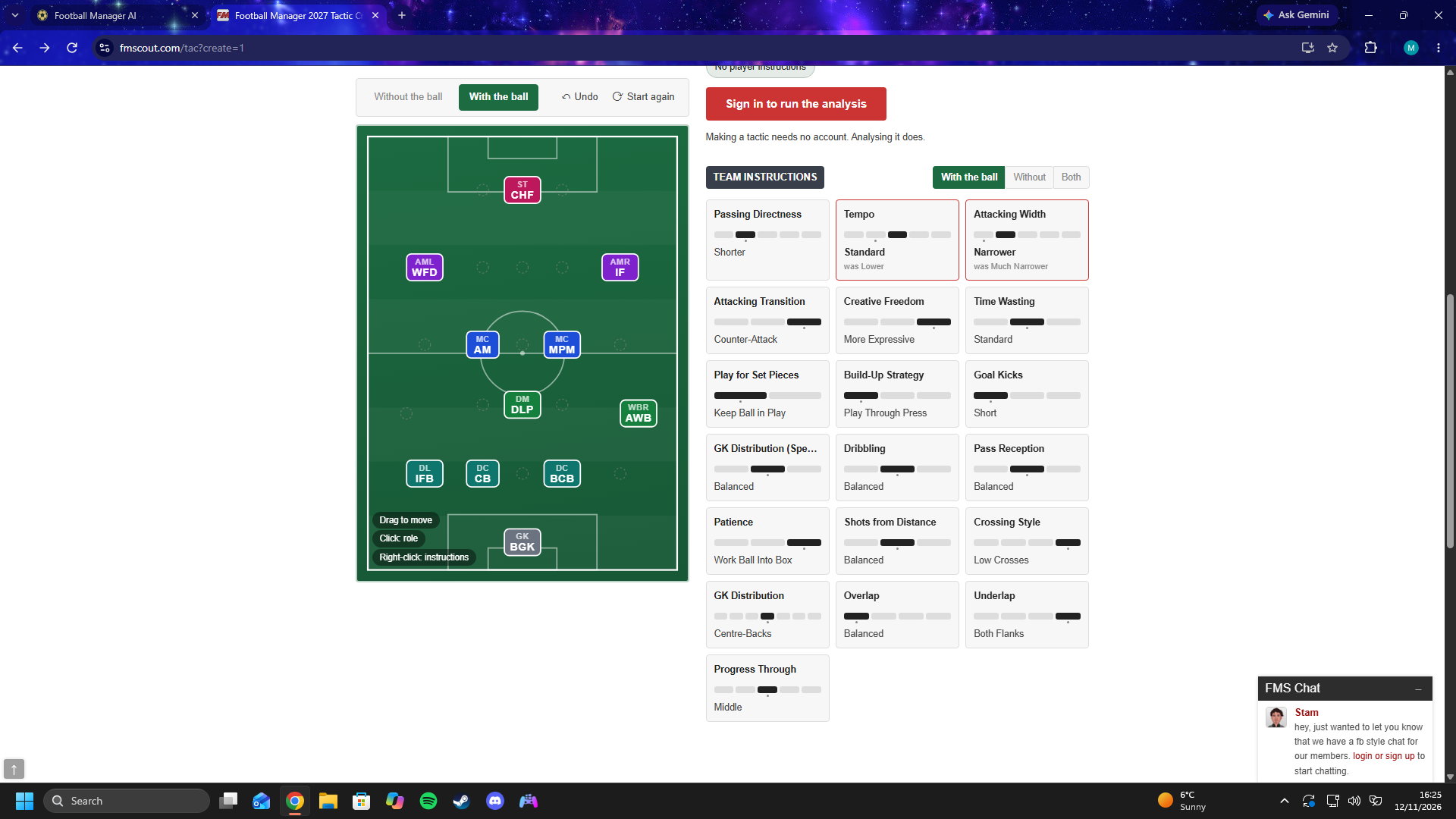
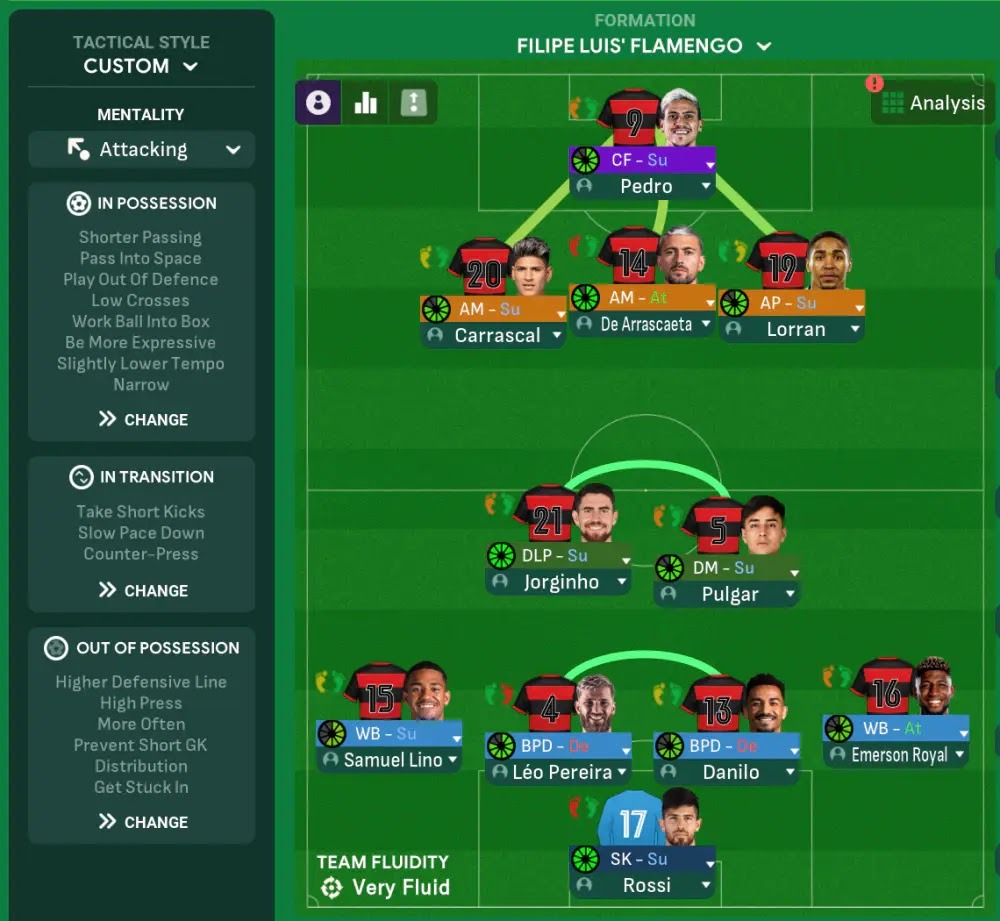
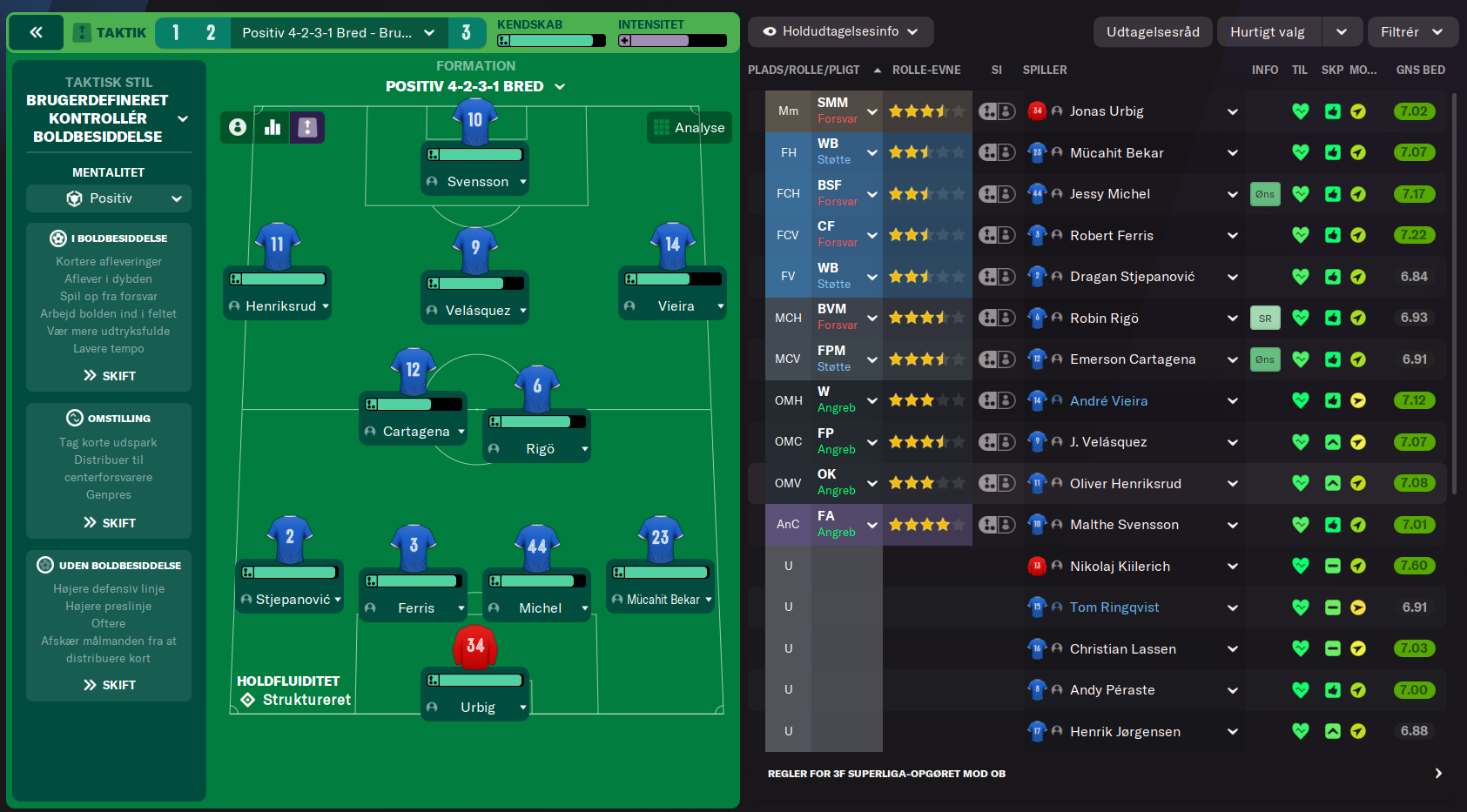
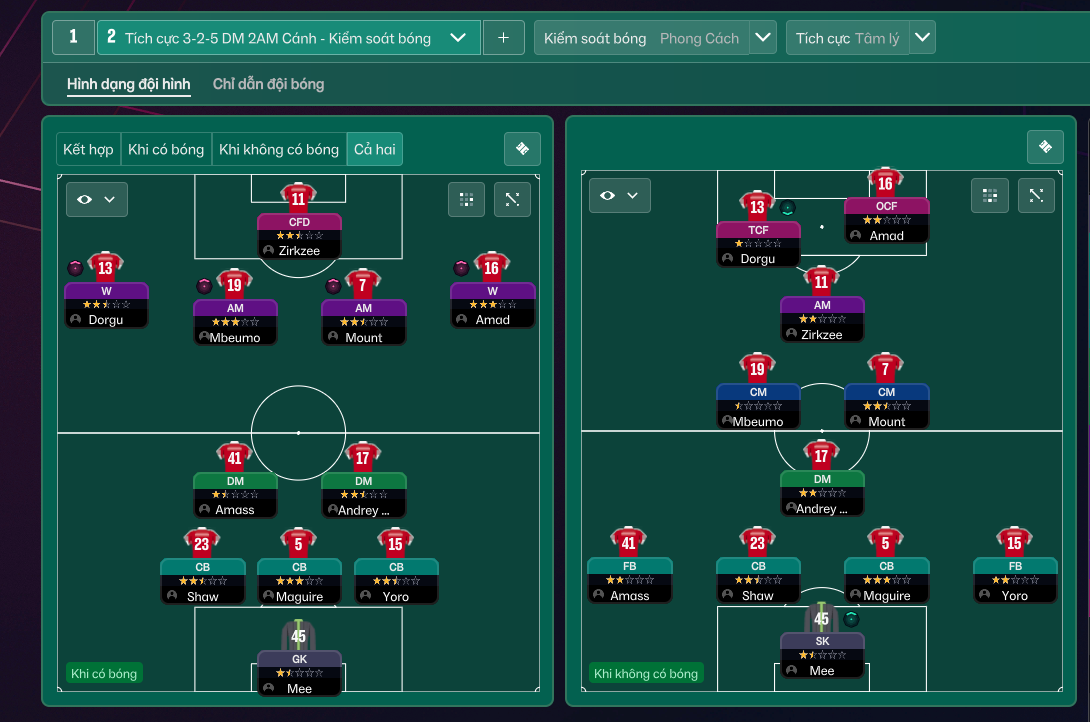
4-3-3
Control the game through possession and create high-quality chances. The arrangement allows for smooth transitions between attack and defence.
Loading tactical analysis...
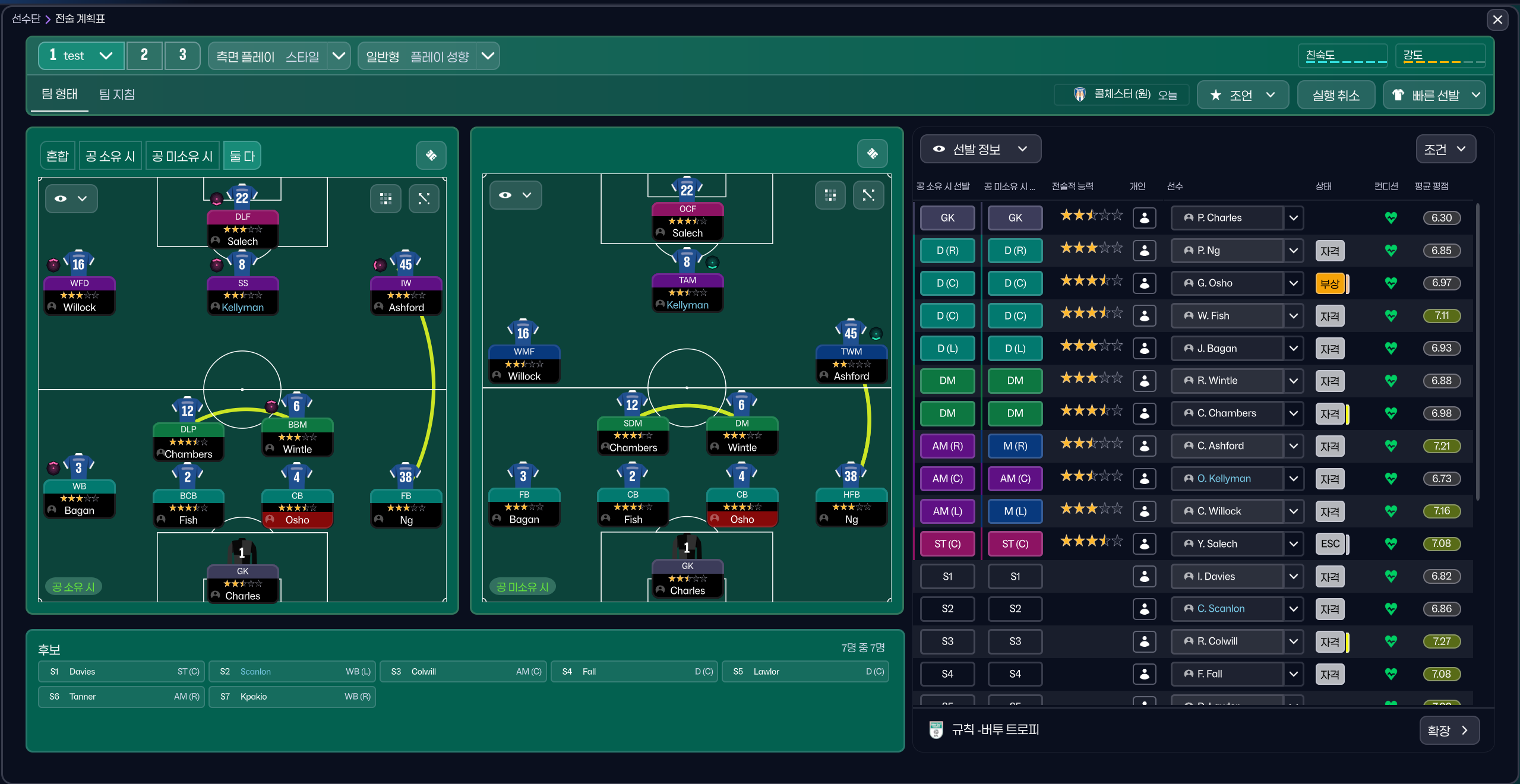
Control Possession
Positive
4-3-3
Structured
Play Out of Defence
Shorter Passes
Focus Play Through the Middle
Work Ball into Box
Counter-Press
Counter
Higher Defensive Line
Higher Line of Engagement
Prevent Short GK Distribution
GK
Goalkeeper
Defend
CB
Ball-Playing Defender
Defend
CB
Centre-Back
Defend
FB
Wing-Back
Attack
FB
Full-Back
Support
DM
Deep-Lying Playmaker
Support
CM
Box-to-Box Midfielder
Support
CM
Central Midfielder
Support
RW
Winger
Support
LW
Inside Forward
Attack
ST
Deep-Lying Forward
Support
Builds up play through short passes, looking to exploit spaces in the midfield.
Quickly transitions to a counter-press upon losing possession.
Control the game through possession and create high-quality chances.
Compact
Maintains a compact shape with a solid line of midfield support.
Triggered by the 'Higher Defensive Line' and 'Higher Line of Engagement'.
Fluid
Front three stretches the opposition while midfielders provide support.
Supported by 'Focus Play Through the Middle' and effective player roles.
The arrangement allows for smooth transitions between attack and defence.
DLP-S at [3,3] and BBM-S at [4,3] work in tandem for ball retention.
Wing-back plays an attack duty to provide width and crossing opportunities.
WB-A at [2,5] allows wingers to cut inside and exploit space.
High attacking duties could lead to gaps in midfield during transitions.
Importance of BBM-S at [4,3] leaving DM-S at [3,3] vulnerable.
Compact shape relies heavily on defending transitions effectively.
High line could be exploited by pacey opposition forwards.
Midfield
Potential vulnerability if opposition wins the ball quickly.
BBM-S and DLP-S may leave gaps.
Defence
Compact shape could be exploited by fast counter-attacks.
Higher Defensive Line invites through balls.
DLP-S and BBM-S
These roles complement each other for possession retention and forward progression.
Both operate in central areas, with DLP-S at [3,3] feeding BBM-S at [4,3].
FB and Winger
Full-back on attack provides width and crosses for winger cutting inside.
FB-A at [2,3] supports WM-S at [6,2].
How does the team plan to adapt against more defensive opponents?
What strategies will be implemented to counteract fast counter-attacks effectively?
Can substitutions be utilized to change the game if the current setup is not working?
The tactical theory behind the 4-3-3: roles, instructions, and the trade-offs that decide whether the system holds up.
Why circulation density and zonal occupation aren't the same thing in FM, and the half-space occupation rule that decides build-up.
Build the patient, control-the-tempo style without watching your opponents counter through the gaps you leave behind.
Routines, takers, and target picks. How to turn corners and free-kicks into a reliable third of your goal output.