Uploaded Tactic
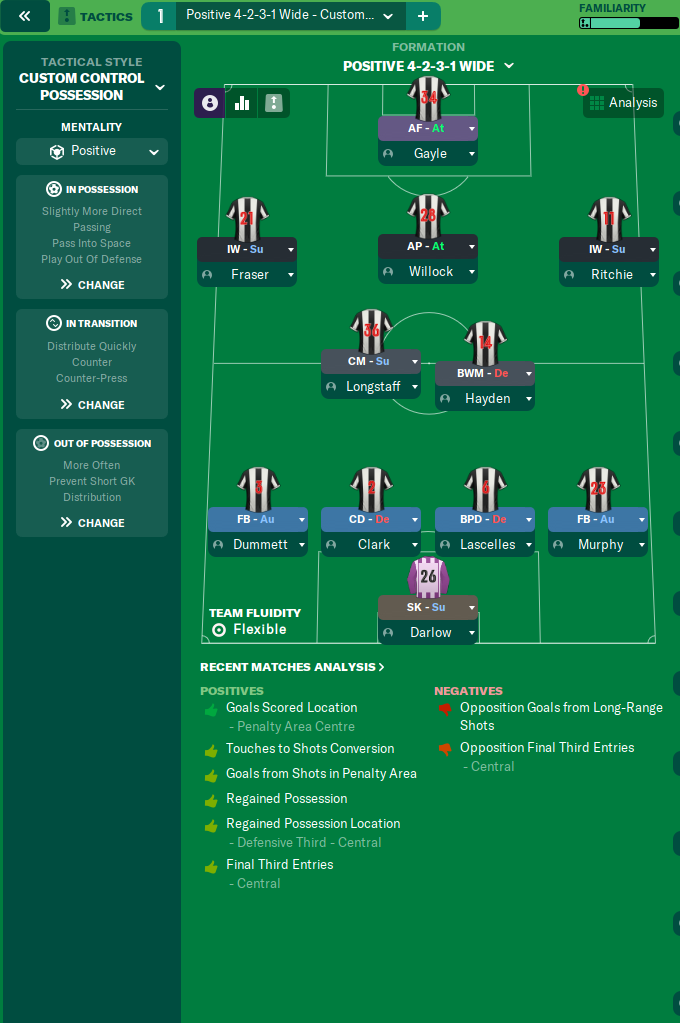
Formation & Style
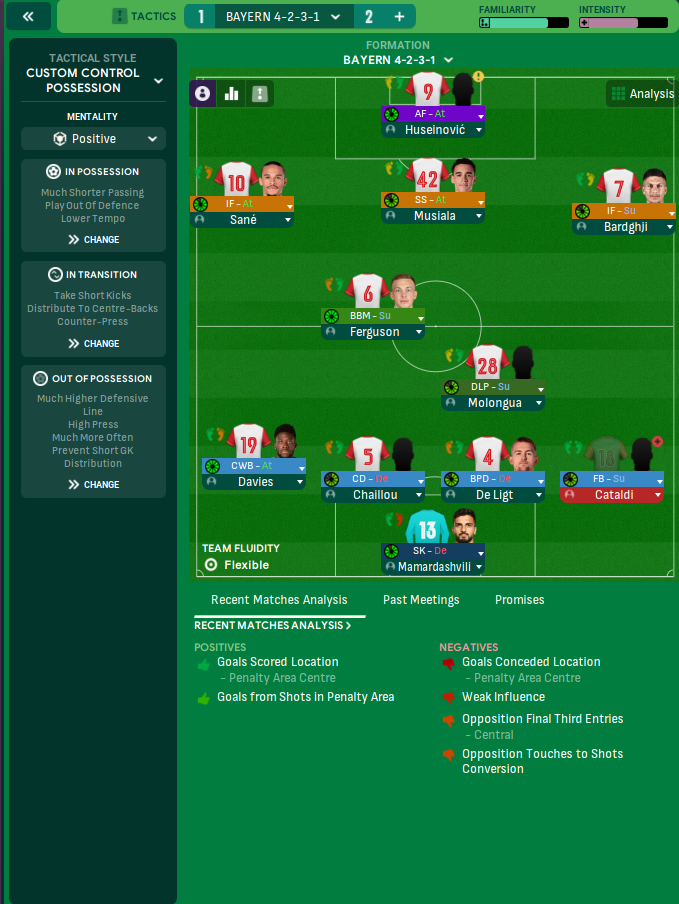
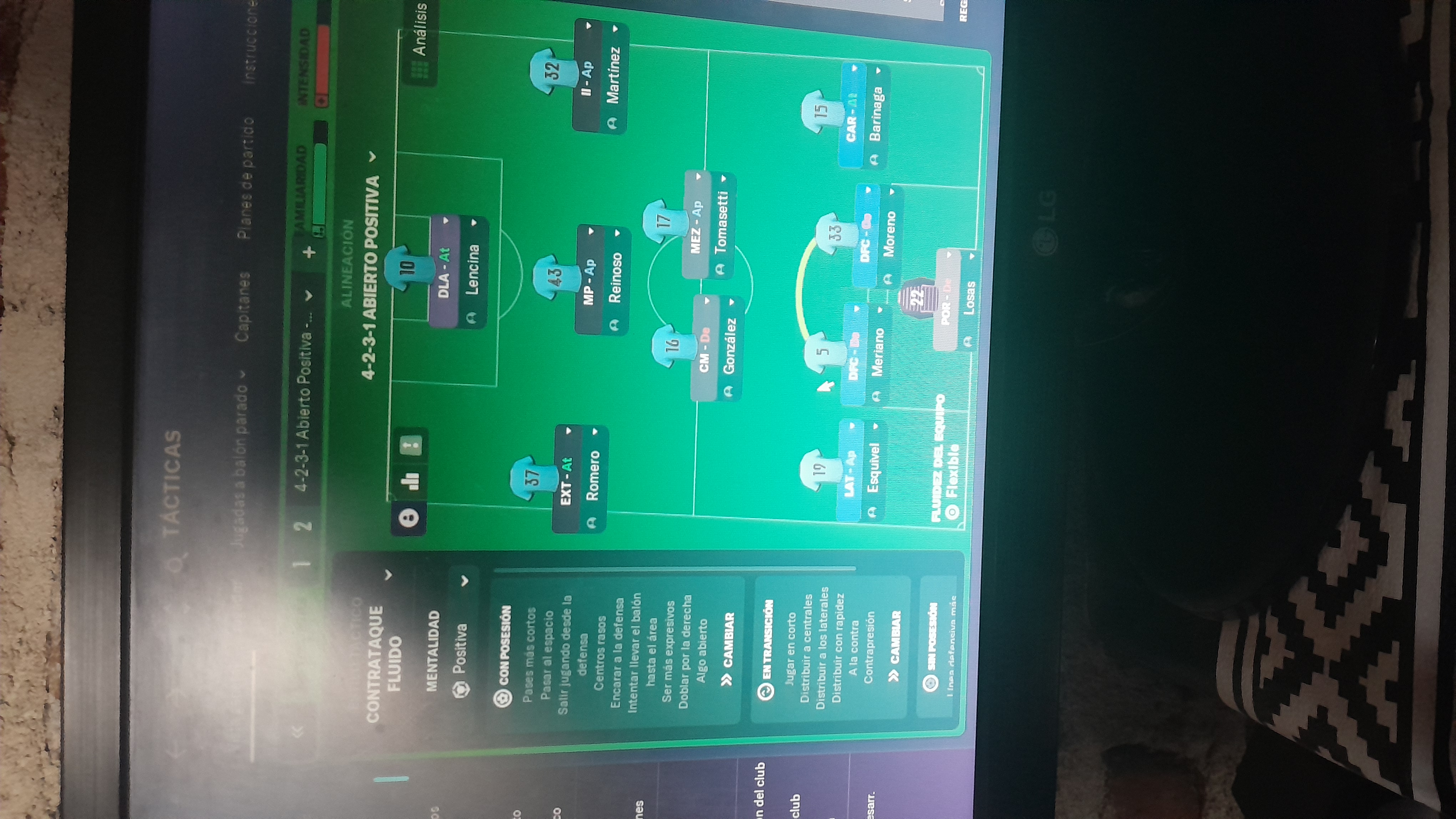
Tactical Style:Custom Control Possession
Mentality:Positive
Formation:4-2-3-1
Team Fluidity:Flexible
In Possession
Shorter Passing
Play Out Of Defence
Lower Tempo
In Transition
Take Short Kicks
Distribute To Centre-Backs
Counter-Press
Out of Possession
Much Higher Defensive Line
High Press
Much More Often Prevent Short GK Distribution
Team Shape Without Ball
Shape:High Block
Description:The team maintains a high defensive line pressing opponents aggressively when they have the ball.
Evidence:Much Higher Defensive Line, High Press
Team Shape With Ball
Shape:Fluid
Description:Utilizes width from the wing-backs while allowing midfielders to make runs into advanced positions.
Evidence:Complete Wing-Back (Davies at [2,1]) and Inside Forward (Sané at [5,1]) working cohesively.
Phase Description
Attacking Play
Focus on keeping possession with a structured build-up play directed through the midfield and wing-backs.
Defensive Transition
Quick transitions into pressing mode to regain possession immediately after losing the ball.
Main Focus
Control the game through possession while utilizing the width provided by the wing-backs.
Key Strengths
Dynamic Wing Play
Utilization of Complete Wing-Back in attack allows for width and overlapping runs.
Effective Central Midfield Control
Box-to-Box Midfielder provides energy and links play between defence and attack.
High Press Strategy
A high defensive line paired with aggressive pressing can lead to high turnovers.
Conflicting Directions
Transition Vulnerabilities
A high defensive line increases susceptibility to quick transitions from opponents.
Inconsistent Defensive Cover
Reliance on a single deep-lying playmaker may strain defensive solidity if bypassed.
Over-Reliance on Width
Dependence on wing play might leave central areas vulnerable, reducing overall offensive balance.
Tactical Suggestions
Reinforce Central Defence
Consider adding another defensive midfielder for better coverage against counter-attacks.
Utilize Stand-in Forward Options
Explore alternative striker roles to offer different attacking dynamics.
Adjust Defensive Line
Lowering the defensive line may mitigate vulnerabilities against pacey attackers.
Ask Questions About Your Lineup
Related Tactics
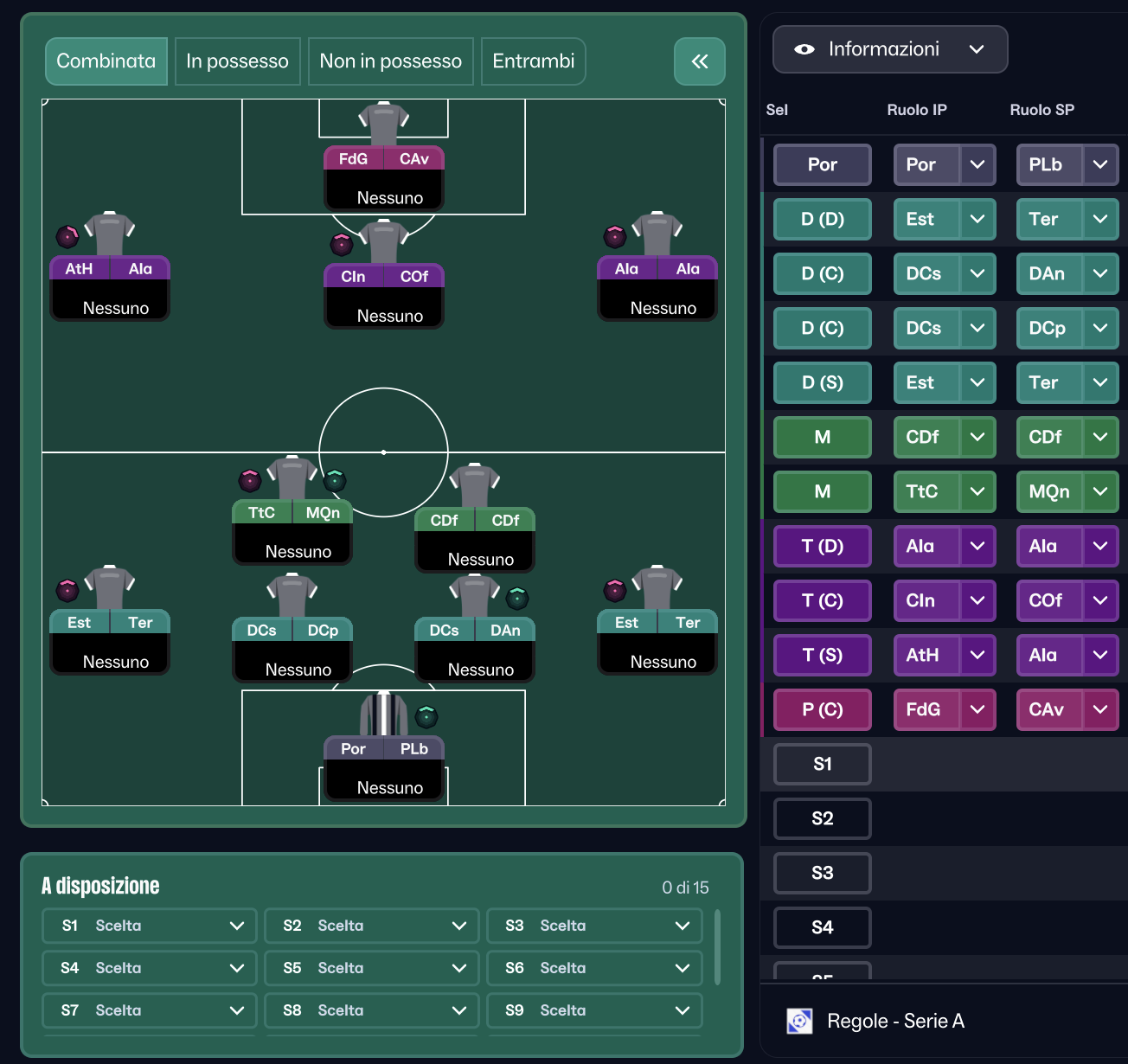
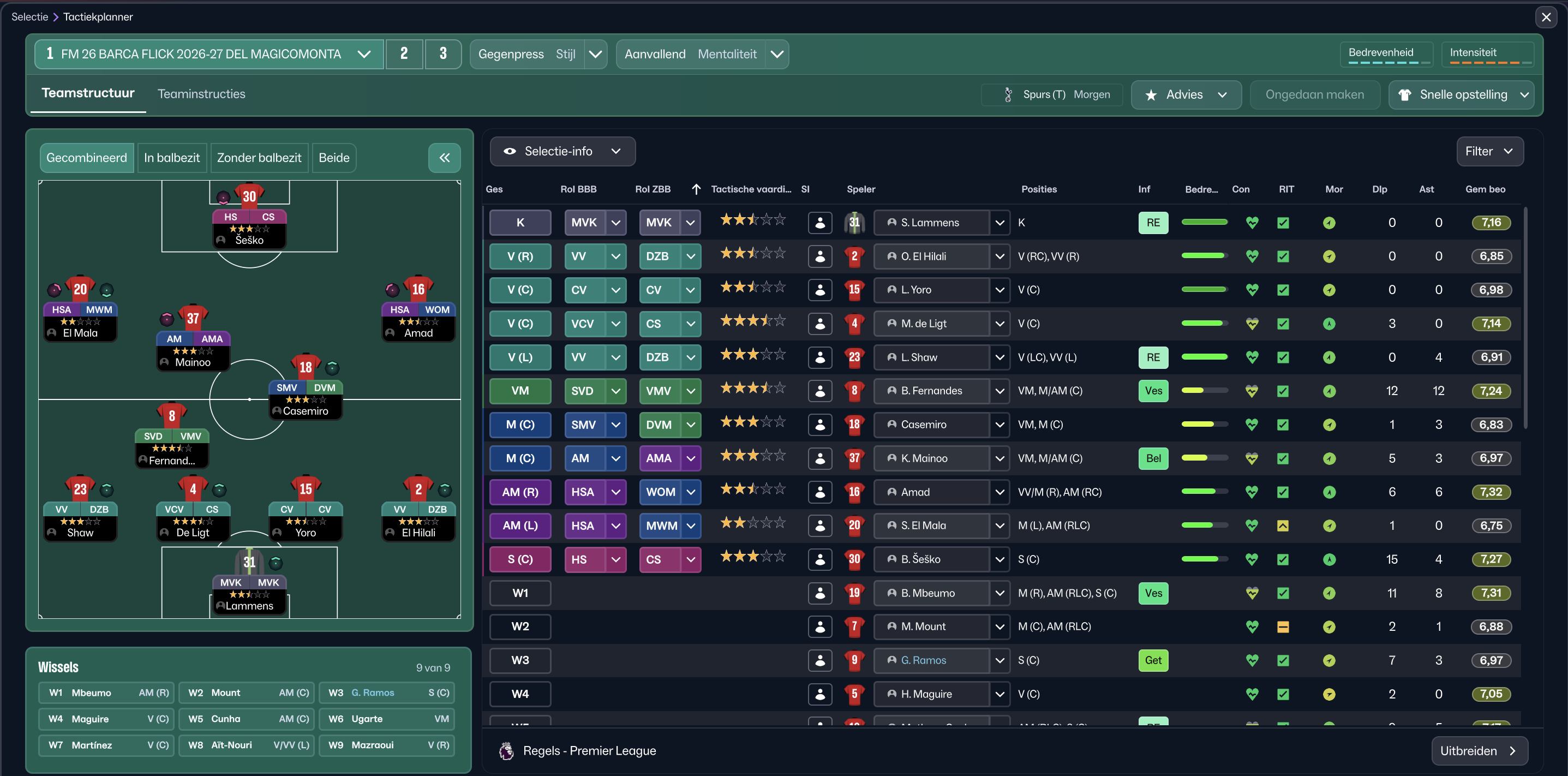
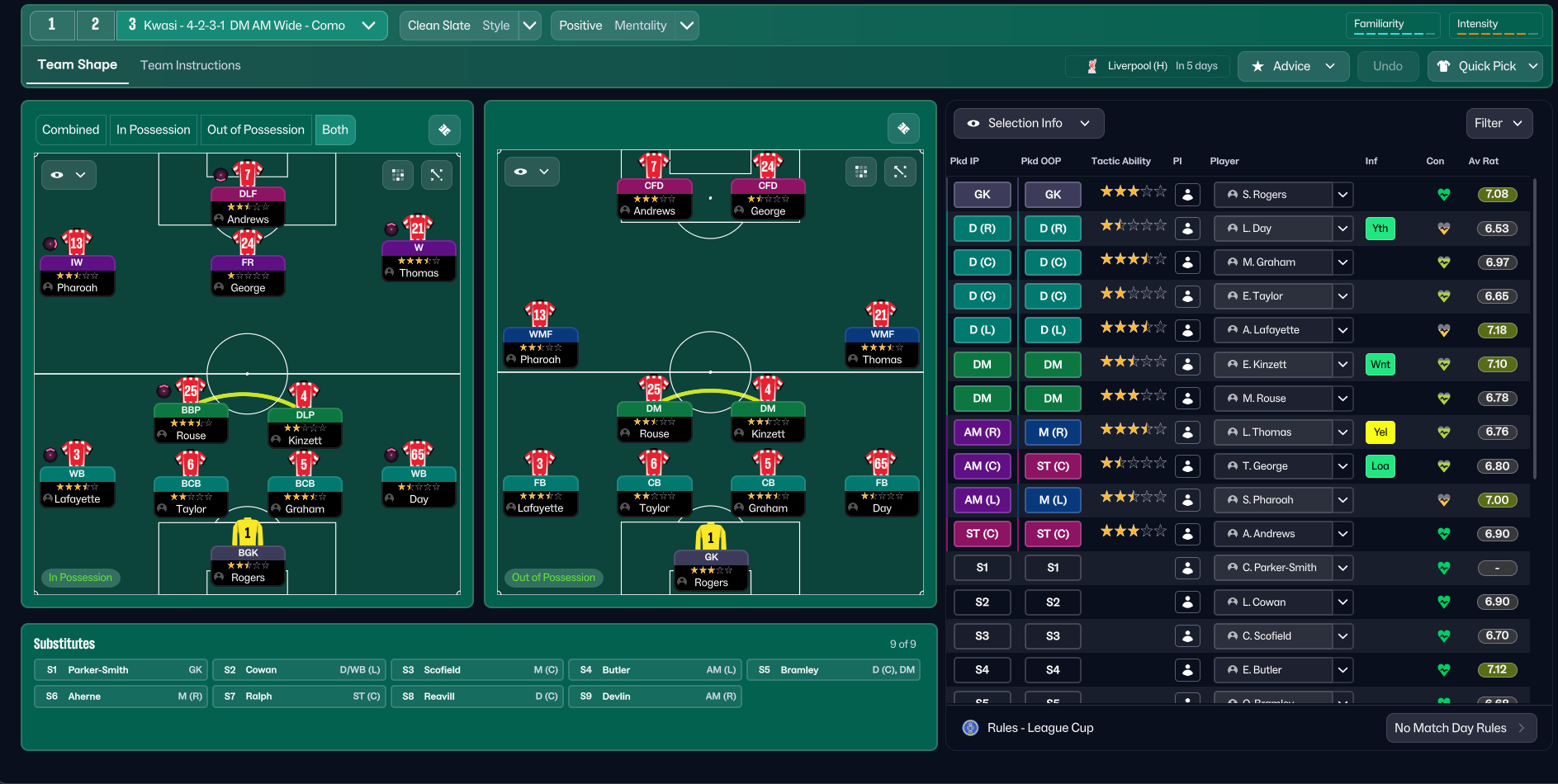
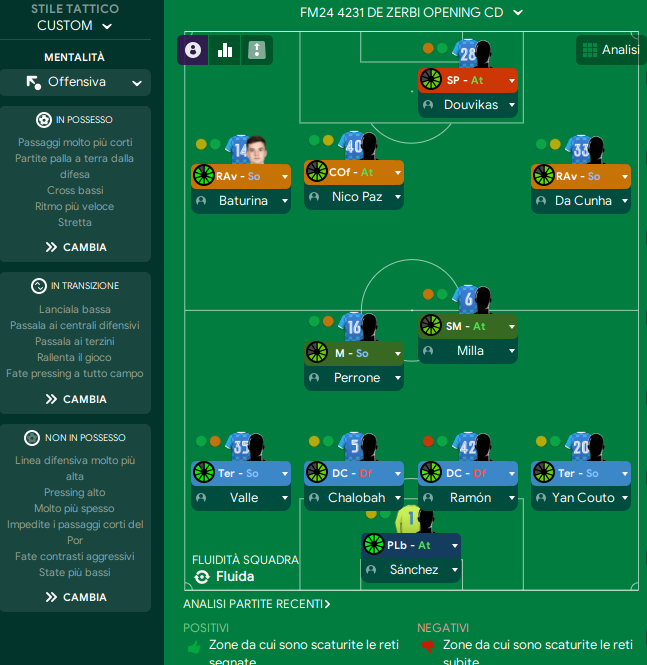
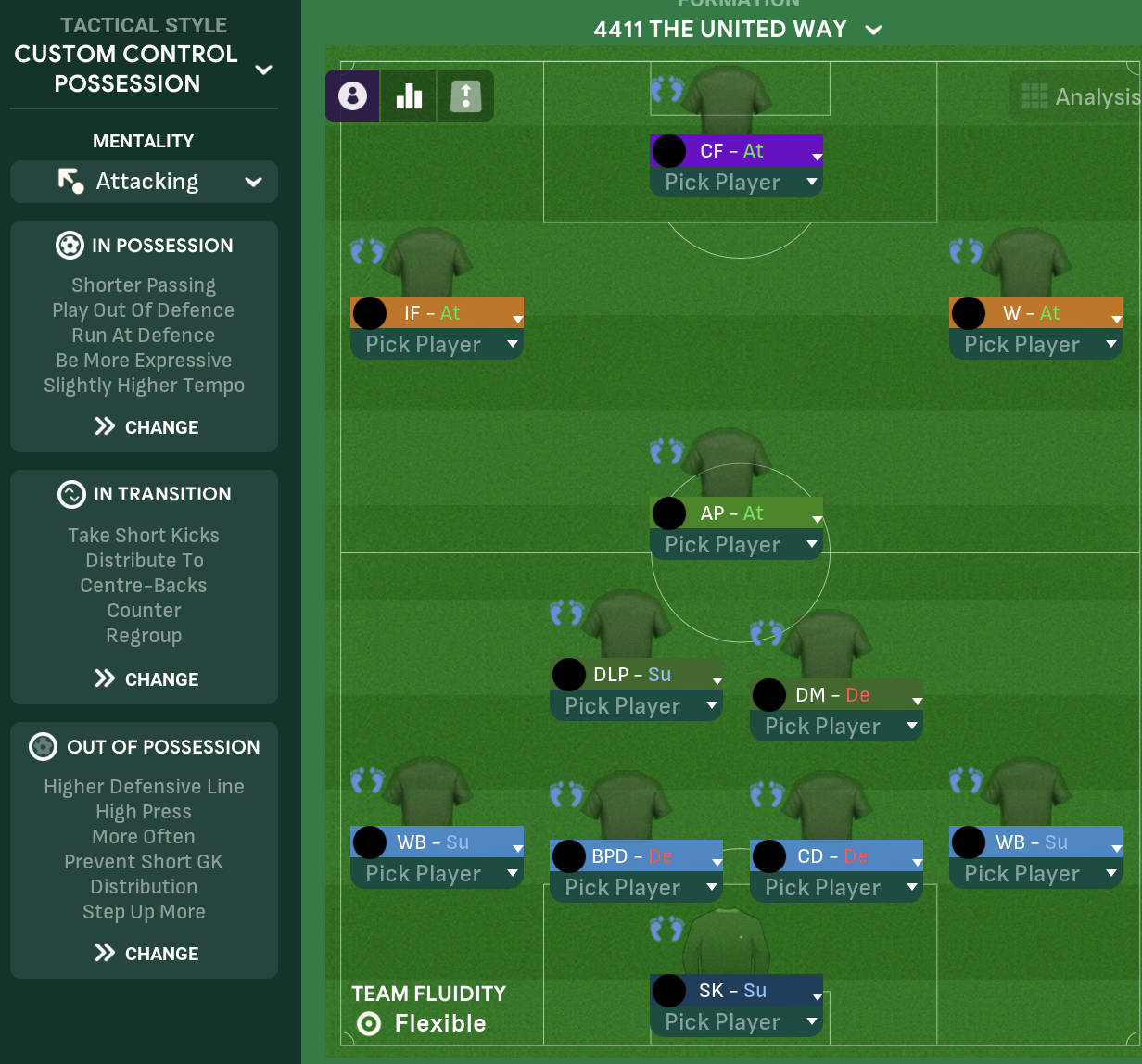
More Custom Control Possession tactics
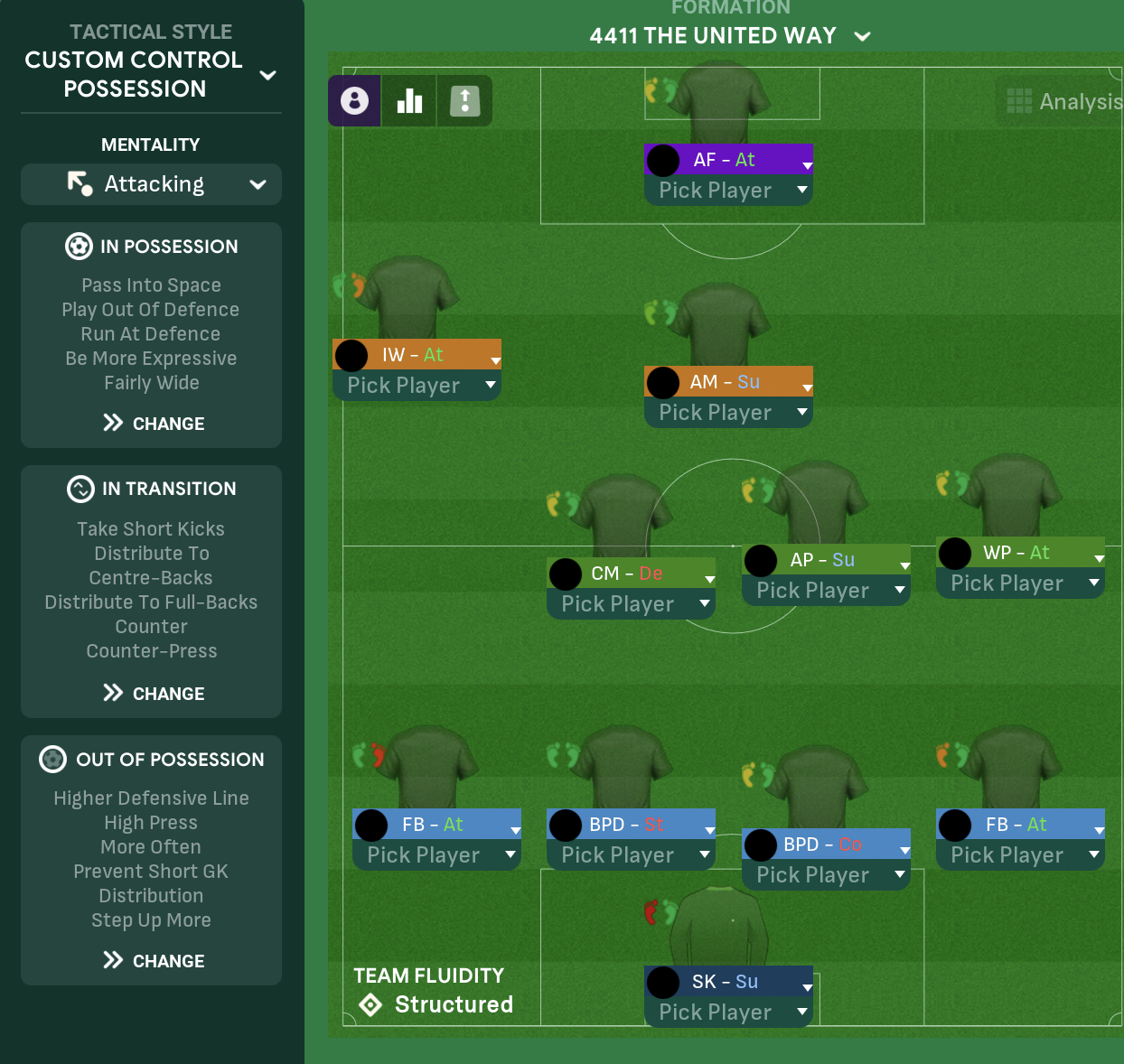
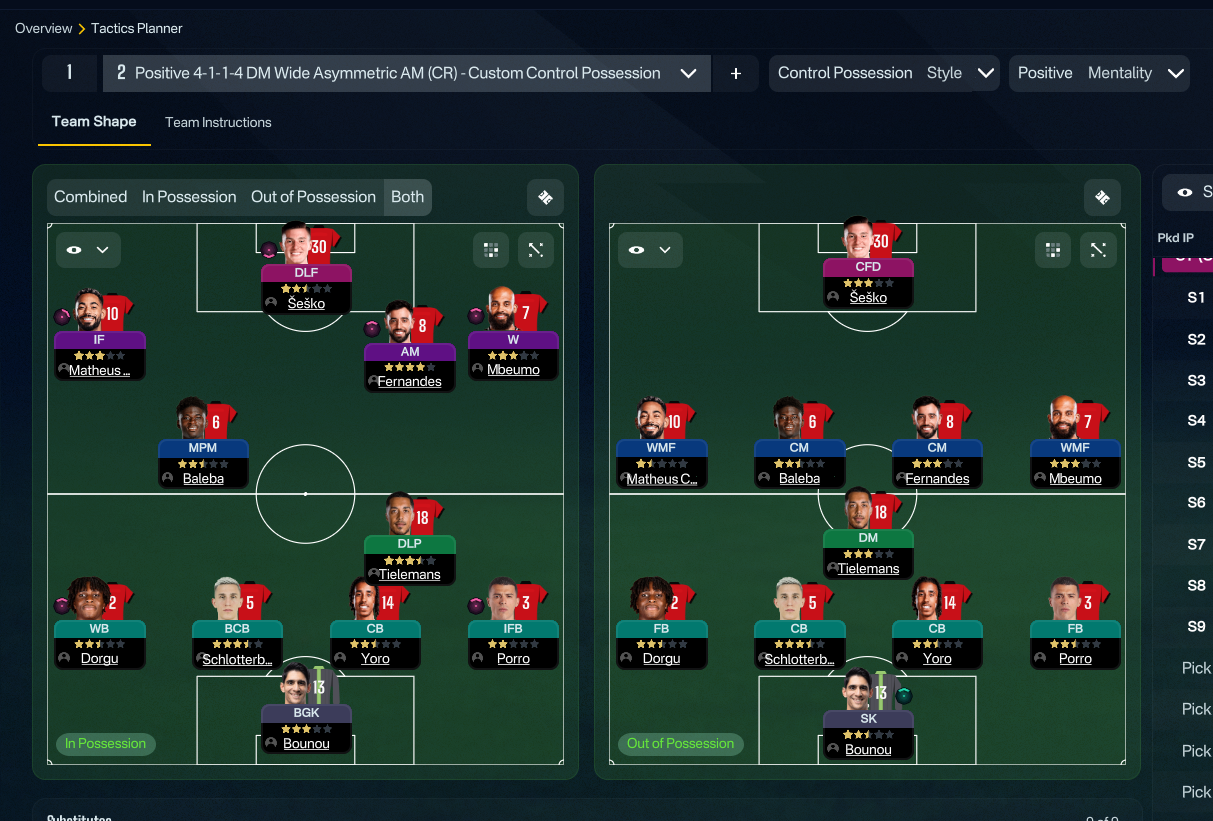
Guides for this formation
The tactical theory behind the 4-2-3-1: roles, instructions, and the trade-offs that decide whether the system holds up.
Player pairings
Midfield Pairs in 4-2-3-1 and 4-4-2
Double pivots and flat pairs in 4-2-3-1 and 4-4-2: when each pairing works, when it collapses, and the AMC unicorn that rescues both.
Read guide
Playing styles
Gegenpressing: A Full Guide
Klopp-style gegenpressing in FM, including squad profile, line-and-press pairing, sustainable workload, and the antipatterns to avoid.
Read guide