Uploaded Tactic
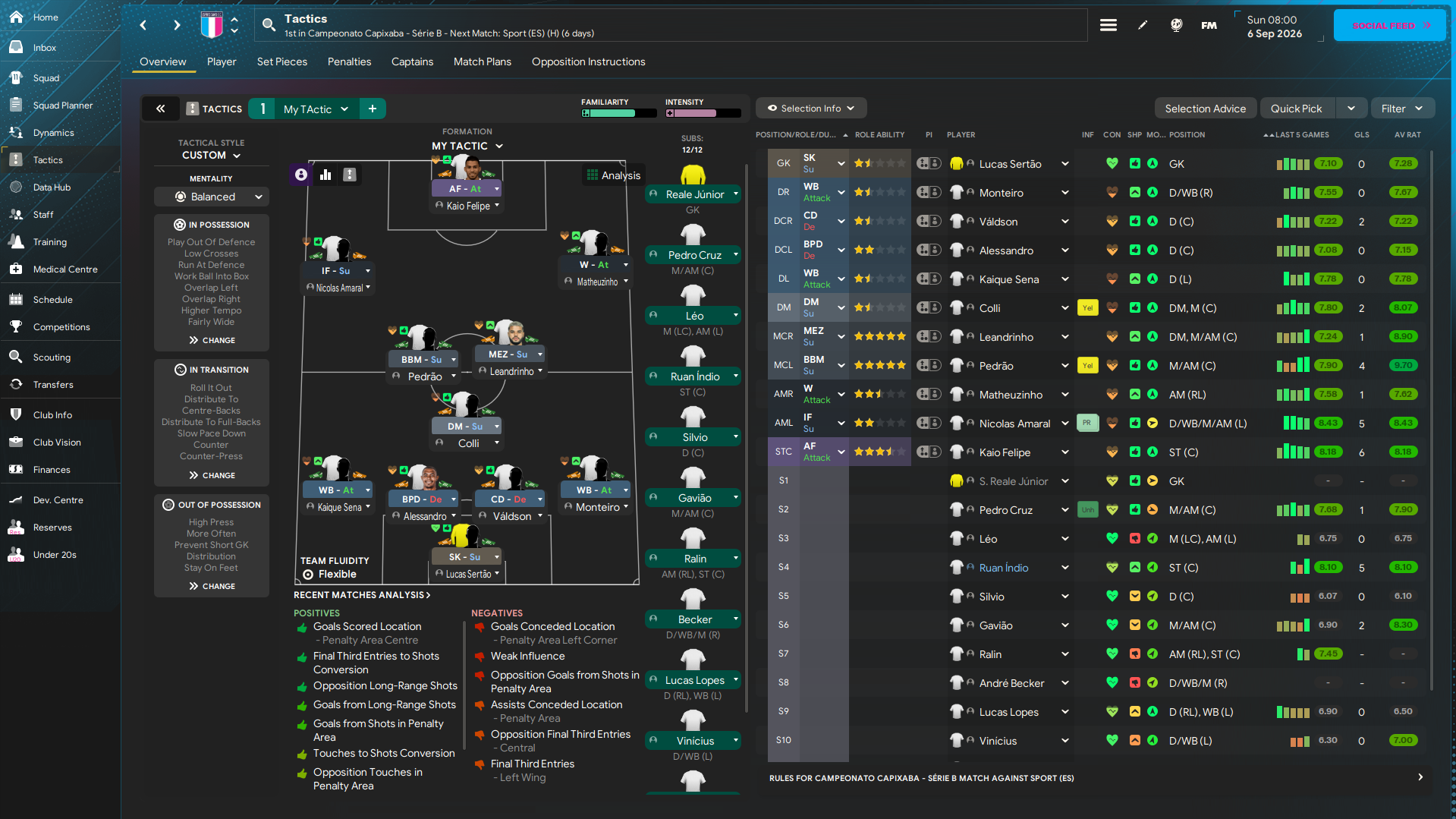
Formation & Style
Tactical Style:Custom
Mentality:Balanced
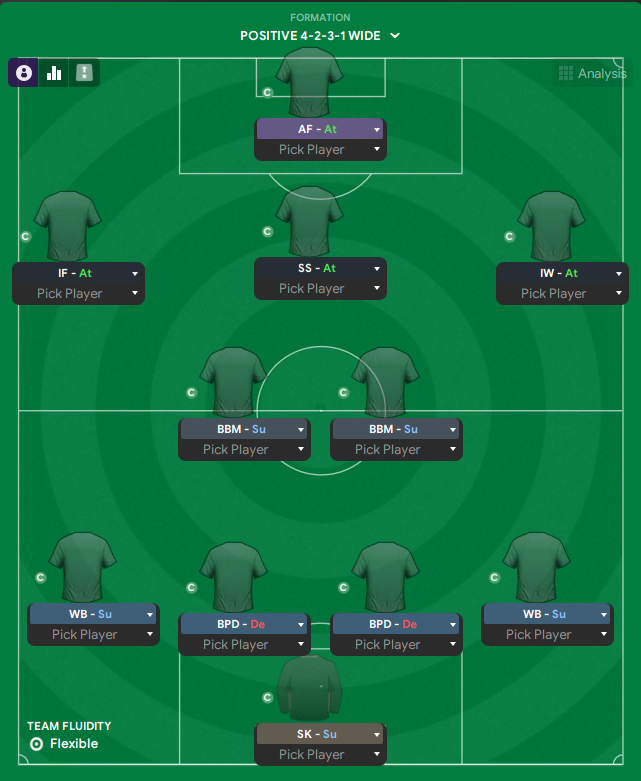
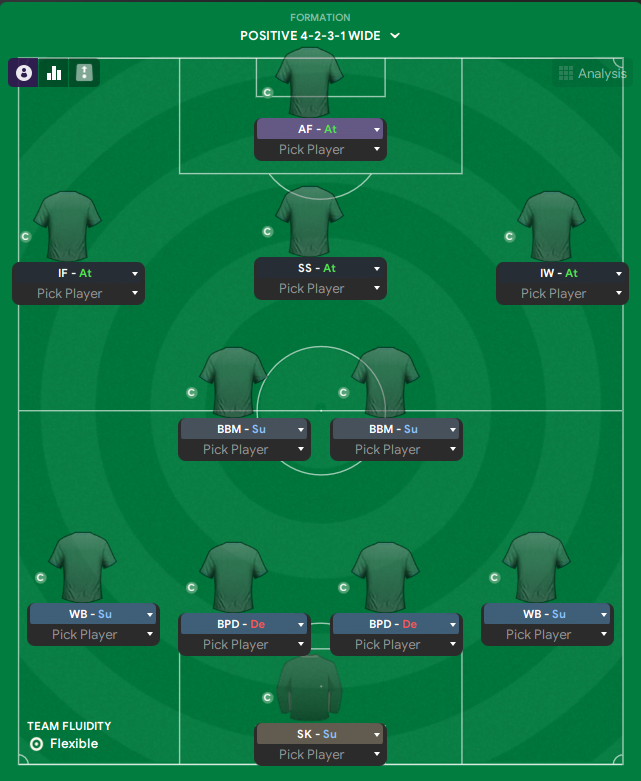
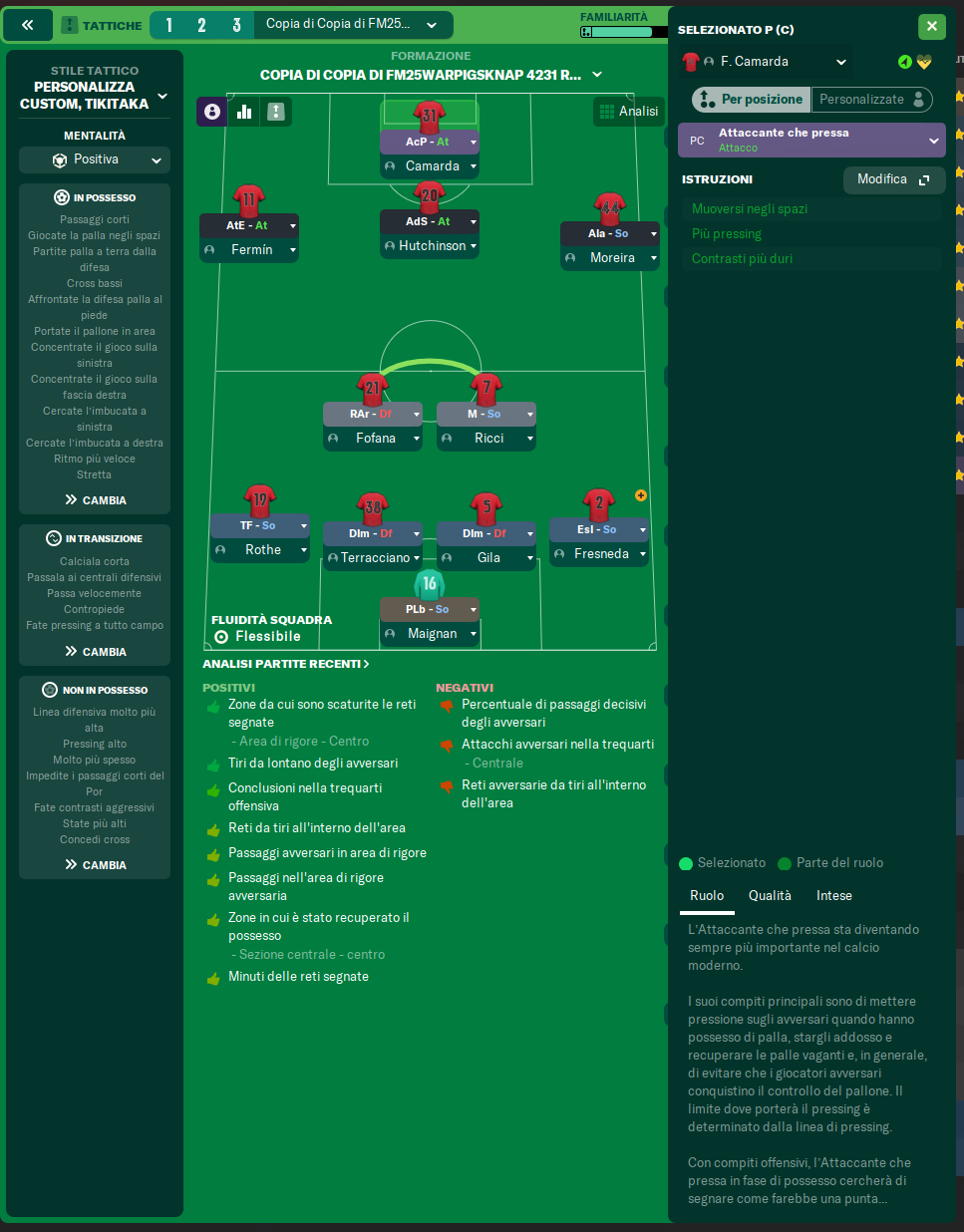
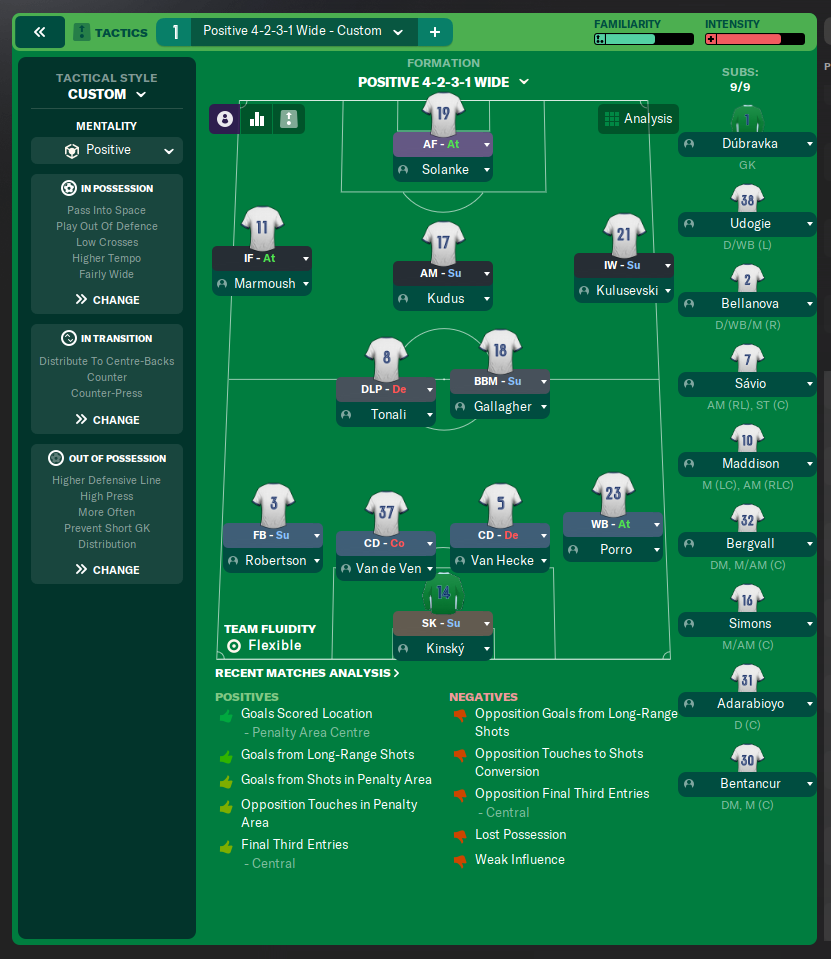
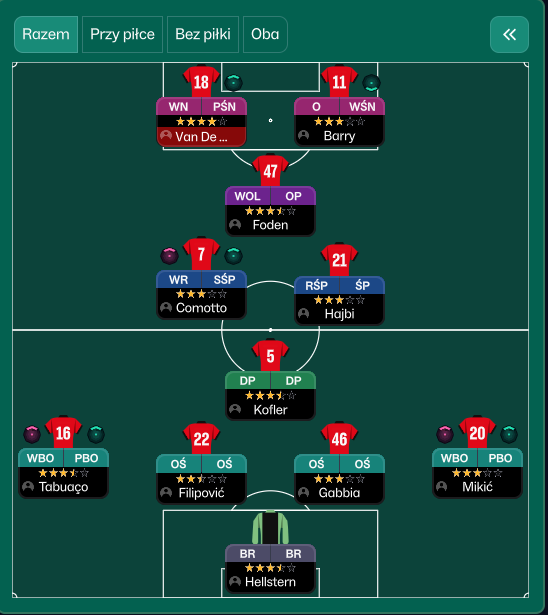
Formation:4-2-3-1 Wide
Team Fluidity:Flexible
In Possession
Play Out of Defence
Low Crosses
Work Ball Into Box
Overlap Left
Overlap Right
Higher Tempo
Fairly Wide
In Transition
Roll It Out
Distribute To Centre-Backs
Slow Pace Down
Counter-Press
Out of Possession
High Press
Much Higher Line of Engagement
Prevent Short GK Distribution
Team Shape Without Ball
Shape:4-2
Description:A compact shape with two defensive midfielders providing cover for the back line.
Evidence:DM at [3,3] with 'Deep-Lying Playmaker' to connect defence and midfield.
Team Shape With Ball
Shape:4-3
Description:Wingers stretch the defence while the central striker positions for finishing.
Evidence:Wing-Backs at [2,1] and [2,5] providing width and depth.
Phase Description
Attacking Play
Utilizes width through overlapping wing-backs and combines with central midfielders to create chances.
Defensive Transition
Engages in immediate counter-press after losing possession to regain control quickly.
Main Focus
Expose the opposition's defensive weaknesses through swift wing play.
Key Strengths
Dynamic Midfield
The combination of BBM and Mezzala allows for fluid transitions between defence and attack.
Wing-Back Utility
The attacking wing-backs can stretch the opponent's defence, creating space for forwards.
High Press
Force opposition errors and regain possession quickly in advanced areas.
Conflicting Directions
Weak Defensive Coverage
Team may struggle defensively with high pressing without effective recovery.
Limited Central Threat
The emphasis on wide play may lead to neglect in central areas.
Defensive Stability
Relying on high pressing can expose the backline if not executed efficiently.
Tactical Suggestions
Reinforce Central Midfield
Adding another central player could strengthen ball retention and transition.
Optimize Width
Overlapping wing-backs can be made less predictable by using varied crossing types.
Adjust Pressing Intensity
Alter pressing based on opposition strengths to reduce defensive vulnerabilities.
Ask Questions About Your Lineup
Related Tactics
Guides for this formation
The tactical theory behind the 4-2-3-1 Wide: roles, instructions, and the trade-offs that decide whether the system holds up.
Player pairings
Midfield Pairs in 4-2-3-1 and 4-4-2
Double pivots and flat pairs in 4-2-3-1 and 4-4-2: when each pairing works, when it collapses, and the AMC unicorn that rescues both.
Read guide
Playing styles
Gegenpressing: A Full Guide
Klopp-style gegenpressing in FM, including squad profile, line-and-press pairing, sustainable workload, and the antipatterns to avoid.
Read guide