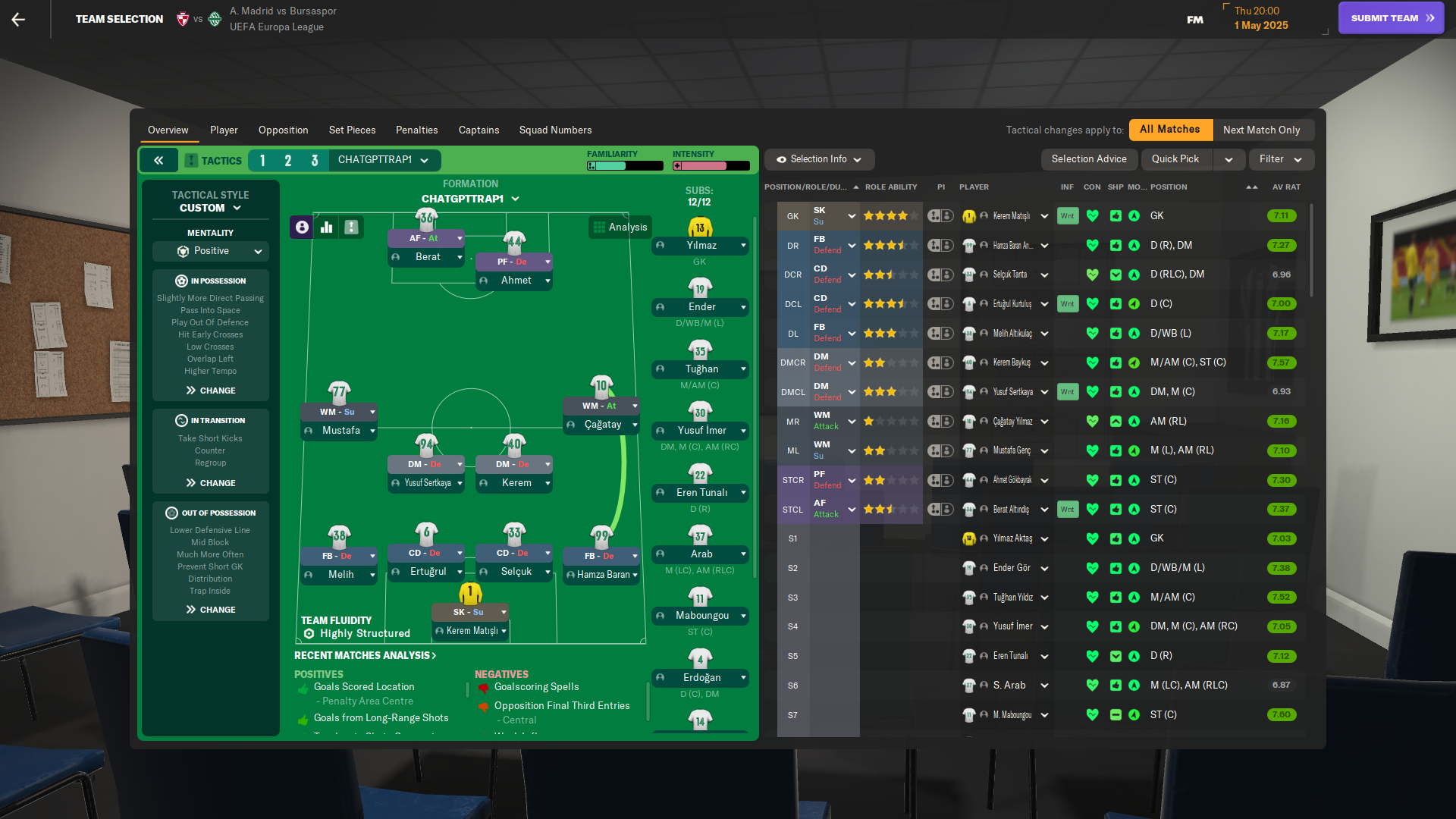
Uploaded Tactic
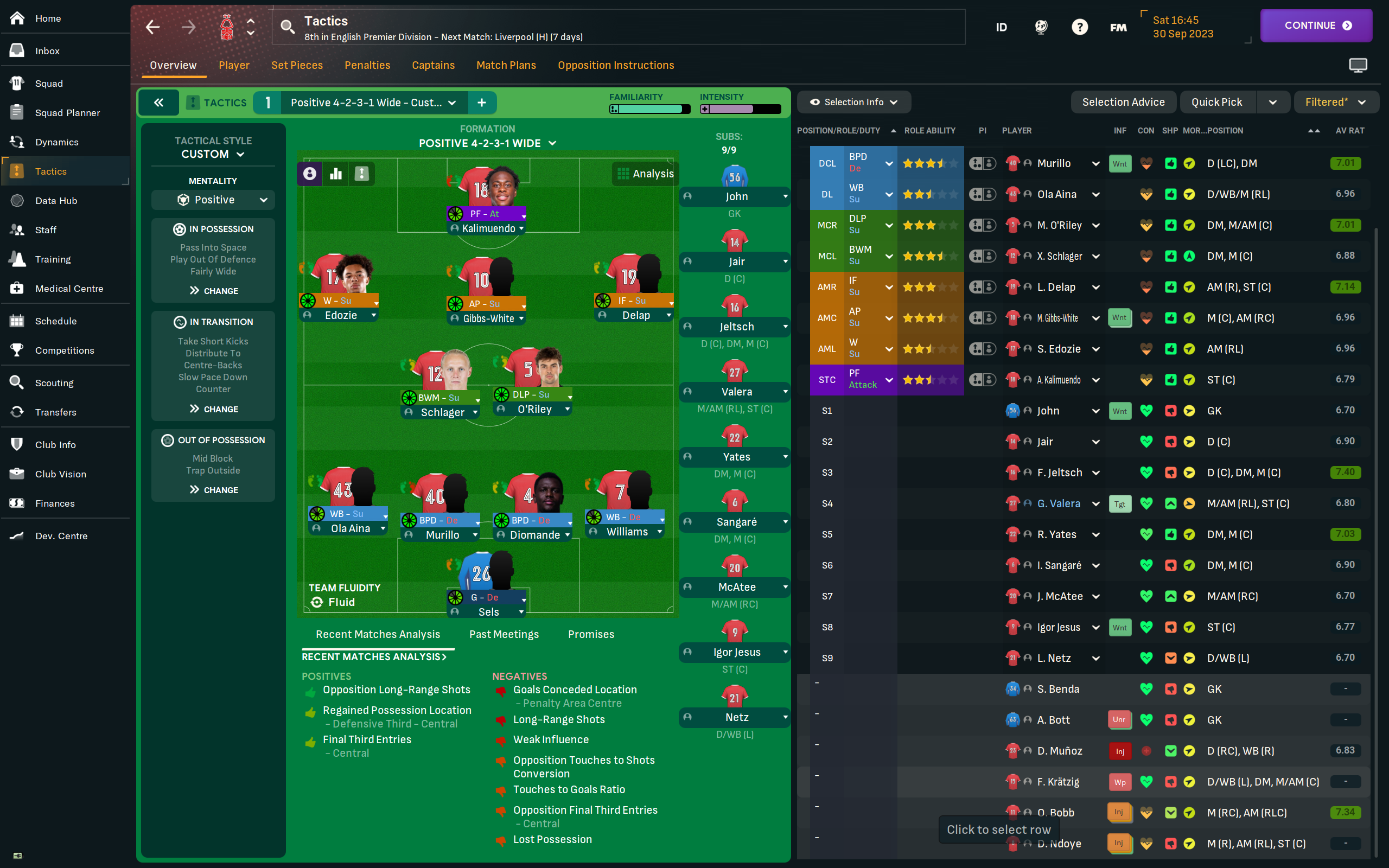
Formation & Style
Tactical Style:Custom
Mentality:Positive
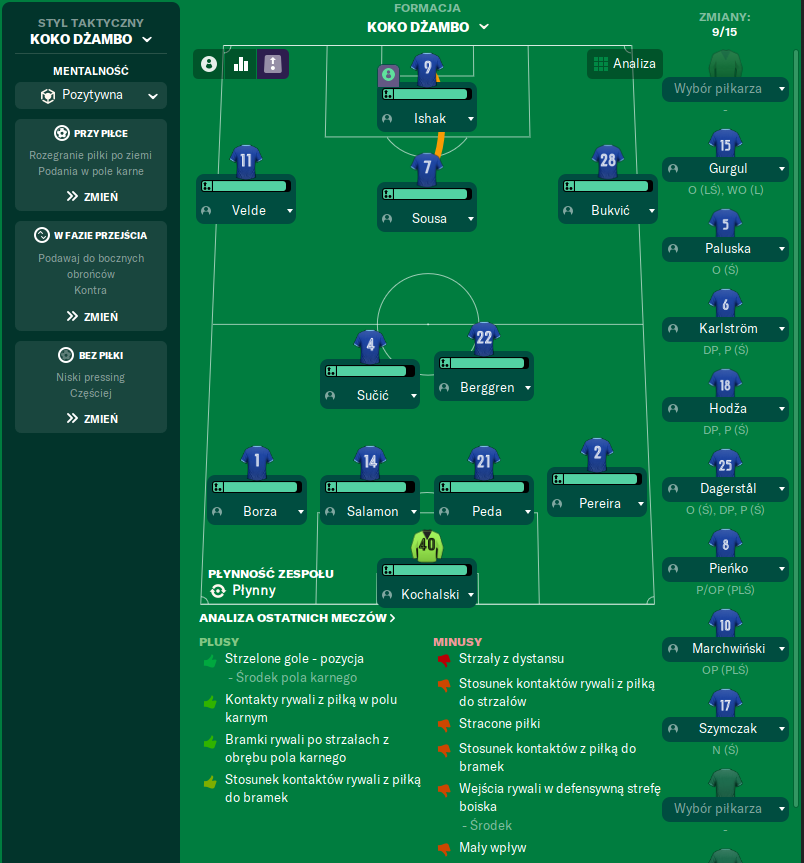
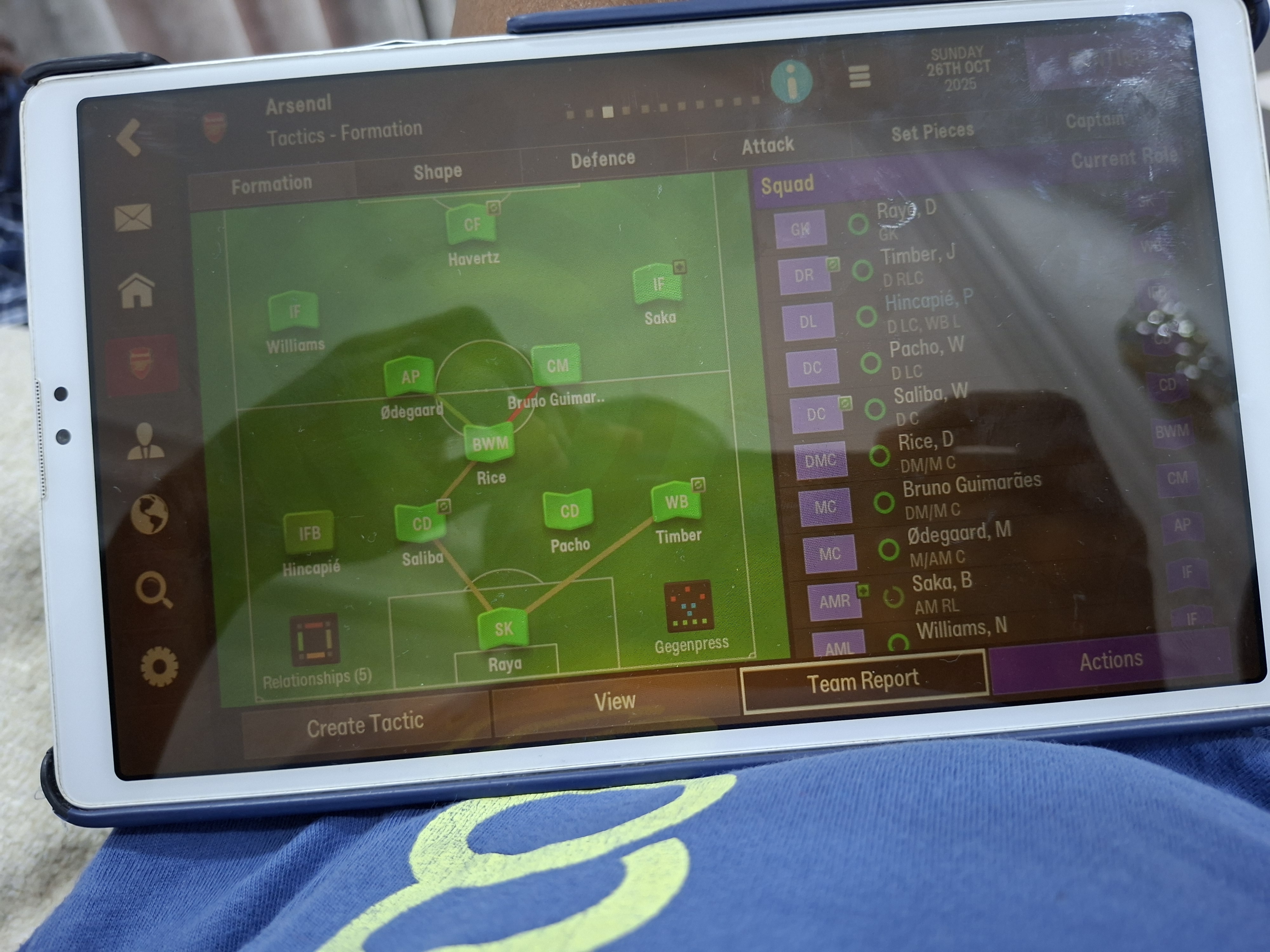
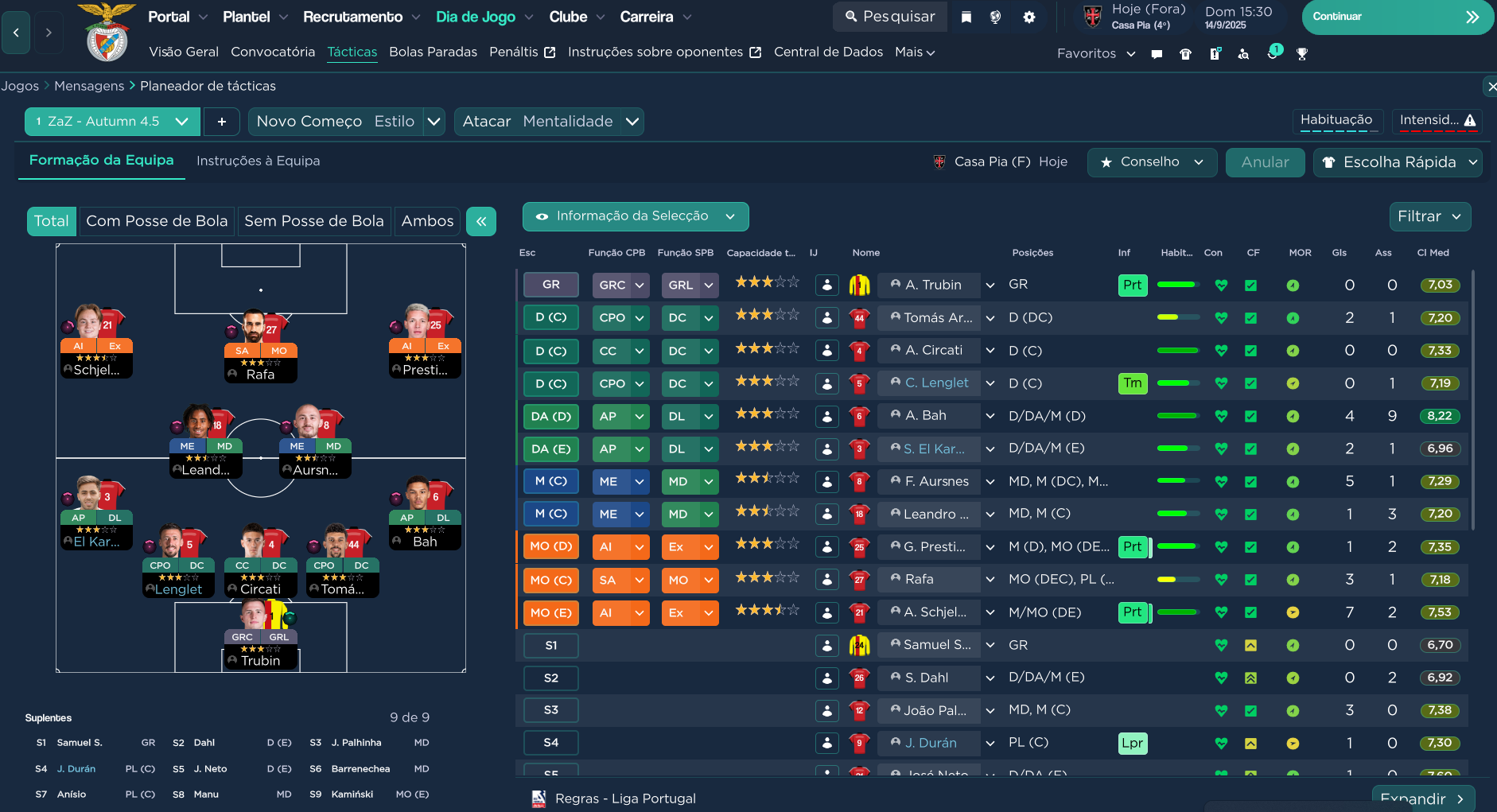
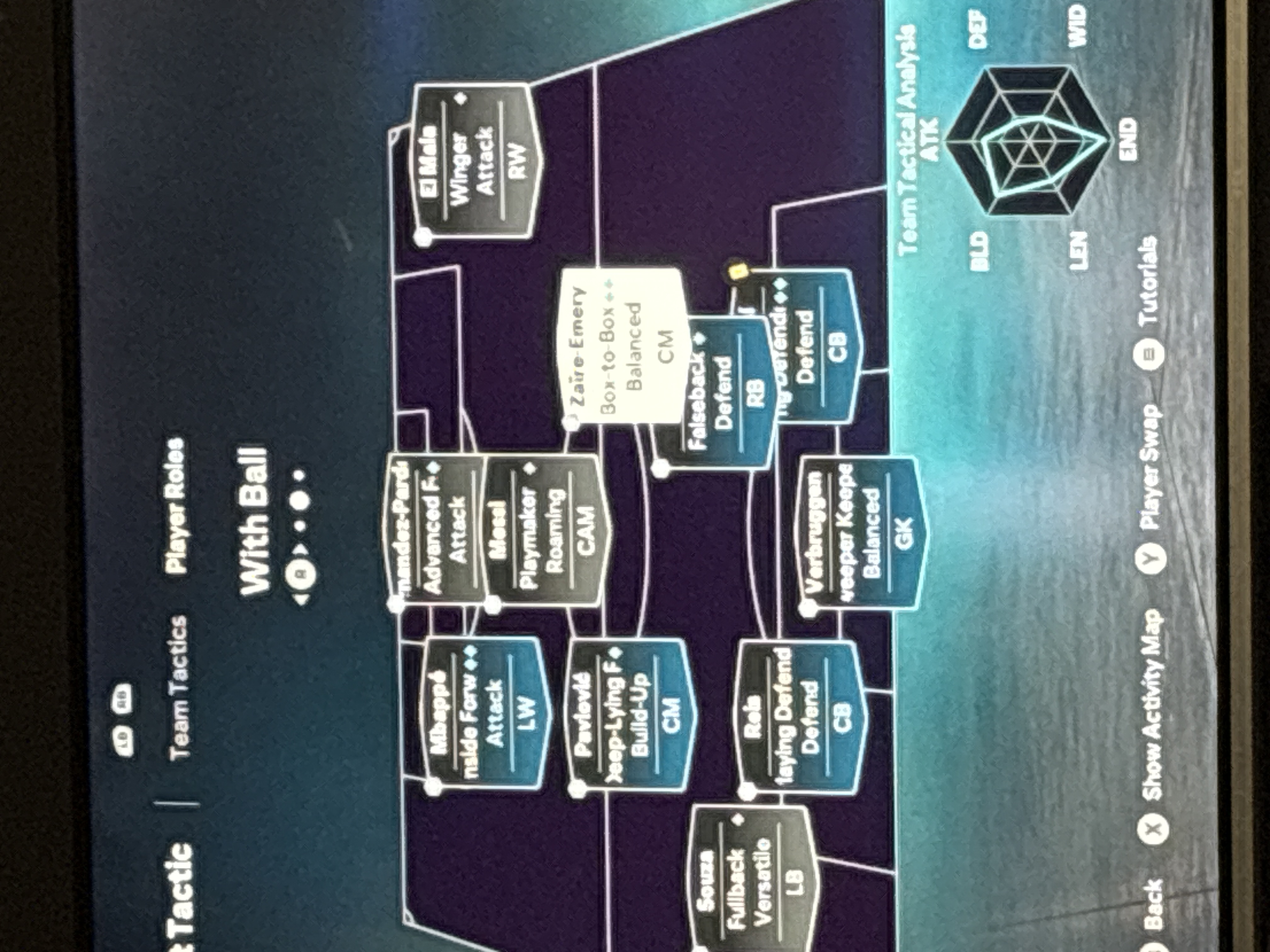
Formation:4-2-3-1 Wide
Team Fluidity:Fluid
In Possession
Pass Into Space
Play Out of Defence
Fairly Wide
In Transition
Take Short Kicks
Distribute to Centre-Backs
Slow Pace Down Counter
Out of Possession
Mid Block
Trap Outside
Team Shape Without Ball
Shape:4-2
Description:Mid-block 4-2 setup aims to control spaces in the central area and limit opponent penetration.
Evidence:Two defensive midfielders (BWM and DLP) at [3,2] and [3,3] complemented by a flat back four.
Team Shape With Ball
Shape:4-3
Description:Width is utilized effectively through wingers supported by an advanced playmaker.
Evidence:Three advanced players (IF, AP, W) at [5,1], [5,3], and [5,5] providing depth into the opposing half.
Phase Description
Attacking Play
Utilizes width and through balls to exploit space, aiming for frequent final third entries.
Defensive Transition
Transitioning to a mid-block with a focus on trapping opponents outside.
Main Focus
Pace and ball control in the final third.
Key Strengths
Utilization of Width
With two wide players and a wing-back, the tactic creates space for attacking movements.
Ball Retention
The presence of a Deep-Lying Playmaker supports ball distribution and transitions.
Flexible Attack Dynamics
The forwards provide varied attacking threats leading to unpredictability for defenders.
Conflicting Directions
Vulnerability to Set Pieces
The setup may struggle against teams with strong aerial presence during set pieces.
Central Penetration Risk
With a focus on trapping outside, central penetration from the opponent could be a vulnerability.
Long Range Shot Weakness
The defenders may not close down well against long-range attempts, exposing the keeper.
Tactical Suggestions
Enhancing Defensive Solidity
Consider adding a DM with a more defensive focus to prevent central penetrations.
Adjusting Wing Play
Resting some wingers may allow for a more compact formation against strong opponents.
Setting Up Counter-Attack
Incorporate a 'Counter' instruction to take advantage of pace during transitions.
Ask Questions About Your Lineup
Related Tactics
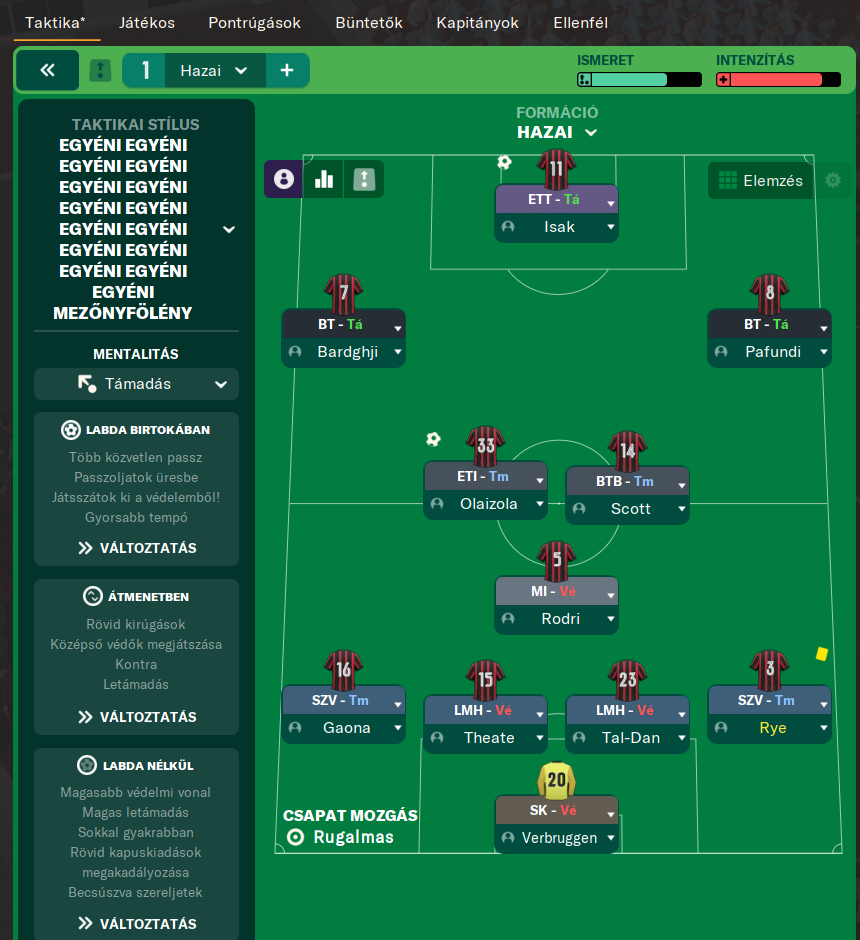
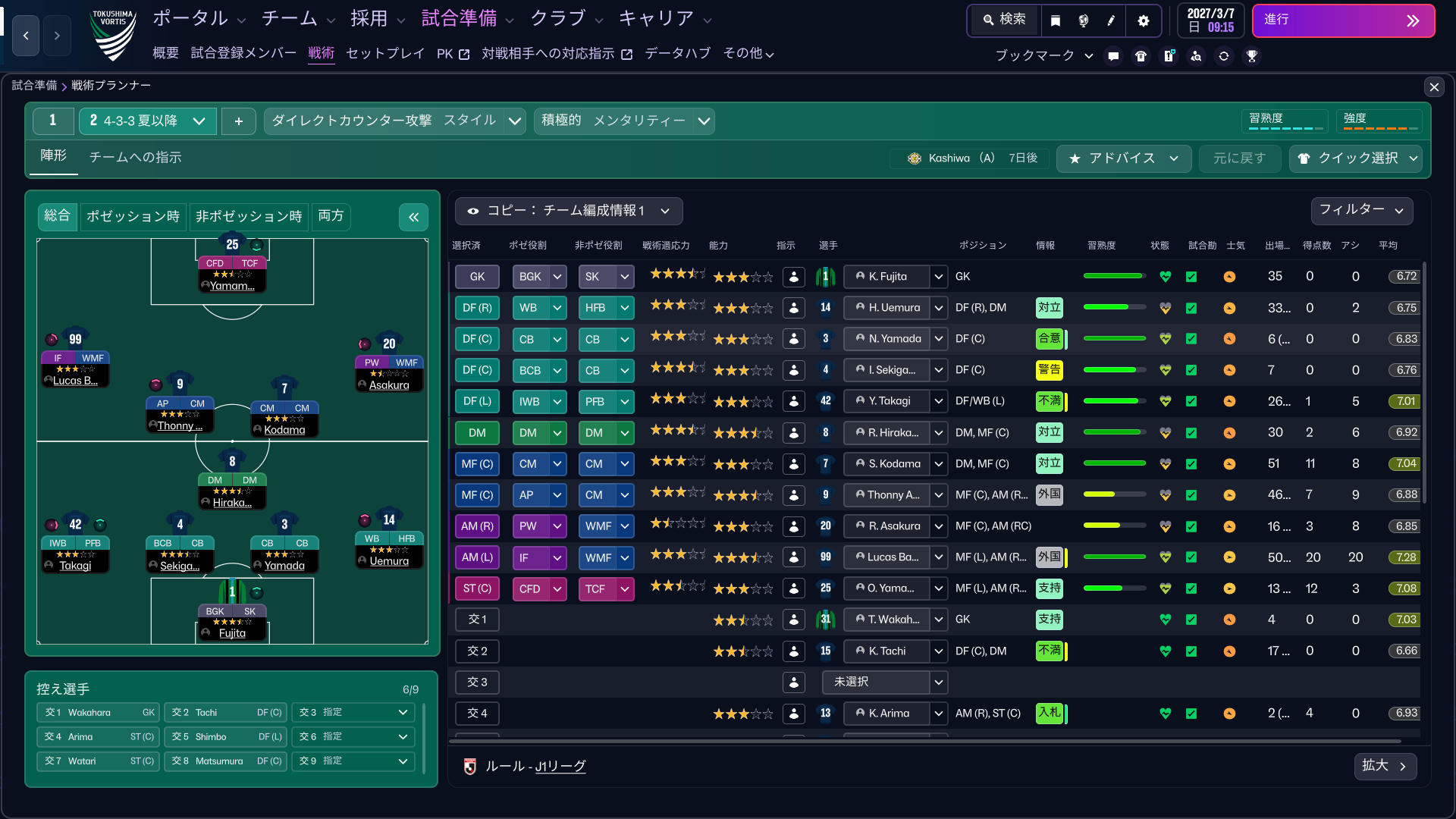
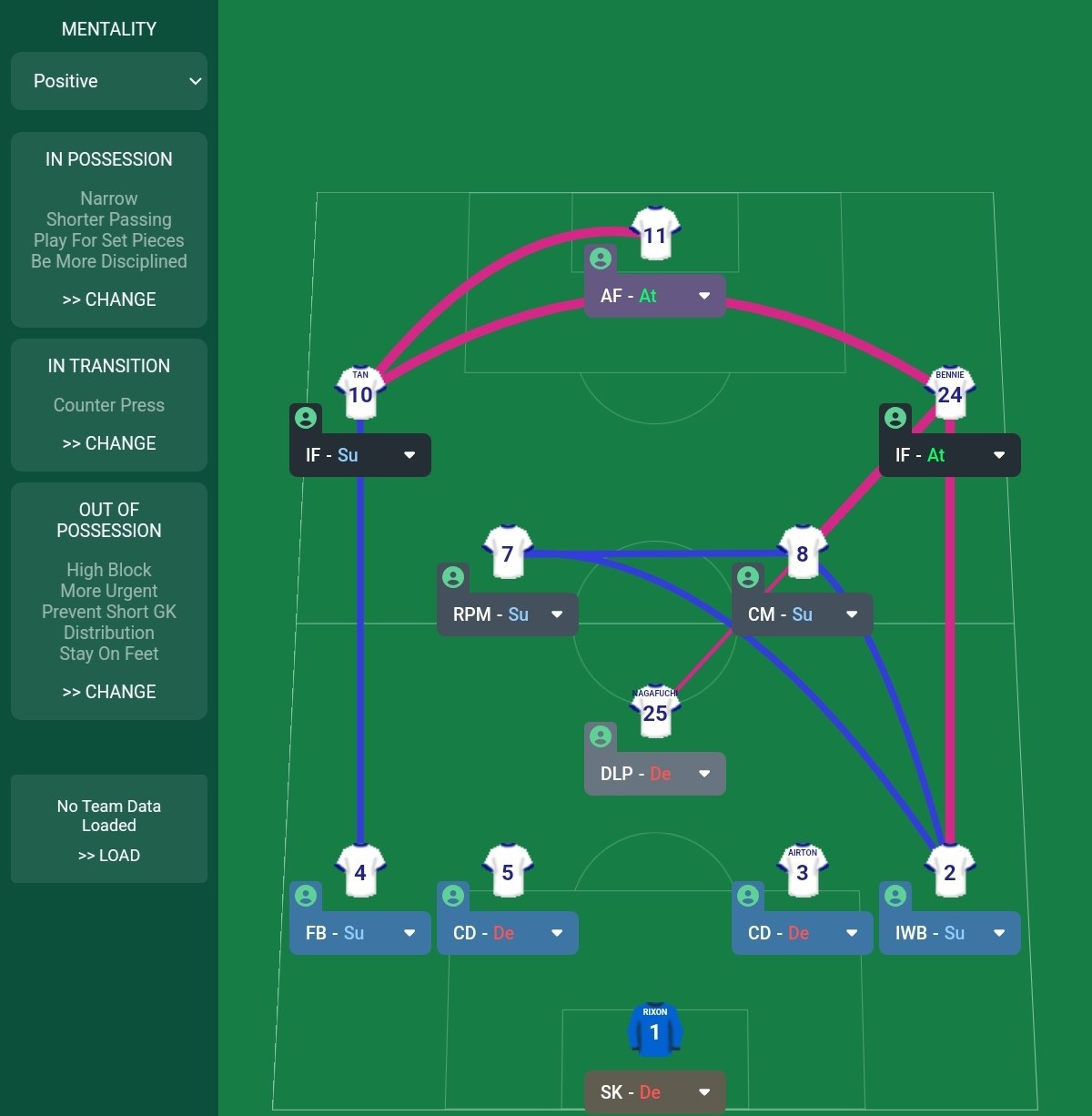
Guides for this formation
The tactical theory behind the 4-2-3-1 Wide: roles, instructions, and the trade-offs that decide whether the system holds up.
Player pairings
Midfield Pairs in 4-2-3-1 and 4-4-2
Double pivots and flat pairs in 4-2-3-1 and 4-4-2: when each pairing works, when it collapses, and the AMC unicorn that rescues both.
Read guide
Playing styles
Gegenpressing: A Full Guide
Klopp-style gegenpressing in FM, including squad profile, line-and-press pairing, sustainable workload, and the antipatterns to avoid.
Read guide