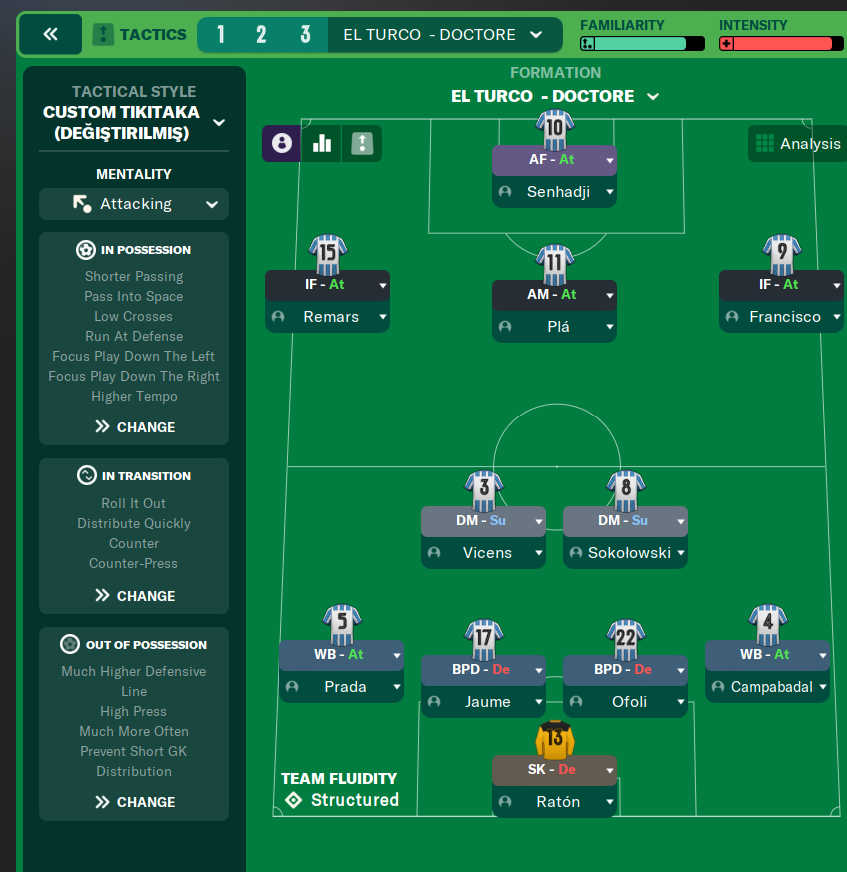
4-2-3-1 Wide
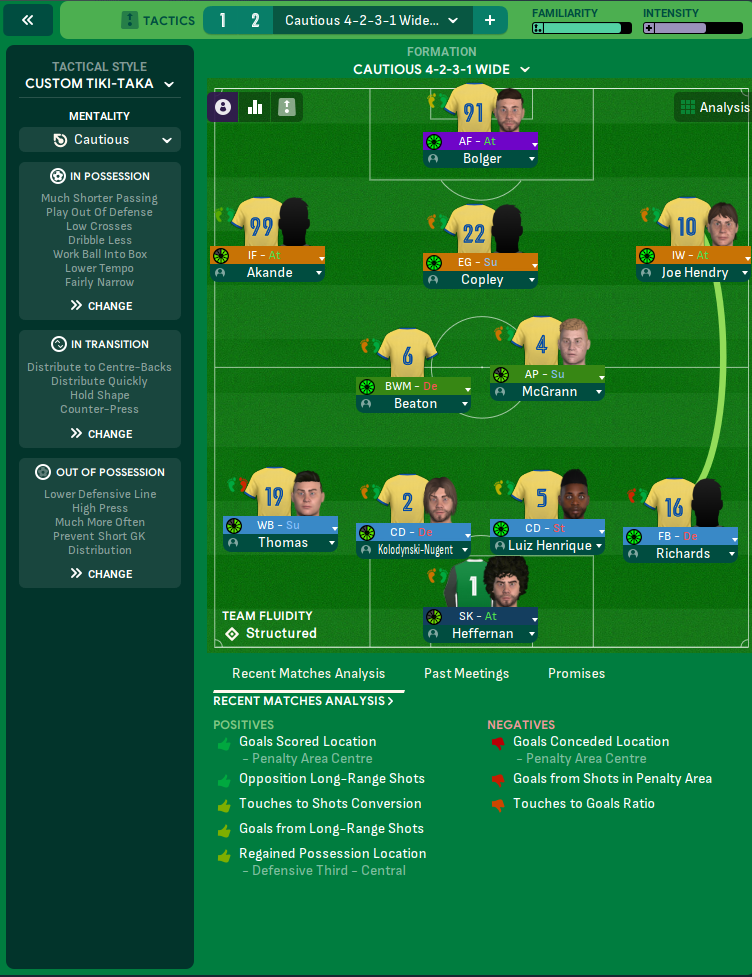
The use of 'Much Shorter Passing' allows for a patient and controlled build-up, minimizing risk.
Loading tactical analysis...
Custom Tiki-Taka
Cautious
4-2-3-1 Wide
Structured
Much Shorter Passing
Play Out of Defense
Lower Tempo
Distribute to Centre-Backs
Hold Shape
Lower Defensive Line
High Press
Prevent Short GK Distribution
ST
Advanced Forward
Attack
IF
Inside Forward
Attack
EG
Enganche
Support
BWM
Ball Winning Midfielder
Defend
AP
Advanced Playmaker
Support
WB
Wing Back
Support
FB
Full Back
Defend
The use of 'Much Shorter Passing' allows for a patient and controlled build-up, minimizing risk.
The 'Lower Defensive Line' combined with 'Holding Shape' creates a compact defensive structure, difficult for opponents to penetrate.
While a Cautious mentality helps maintain shape defensively, it may reduce the effectiveness of a high press, leading to passive defending.
Lowering the tempo may conflict with a high pressing style, as it can slow down transitions and counter-pressing opportunities.
How can we improve attacking transitions without compromising defensive shape?
Is there a necessity for a more aggressive pressing strategy?
Should adjustments be made to player roles to enhance creativity in midfield?
How can we improve the finishing from inside the penalty area?
What can be done to mitigate the goals conceded from central areas?
Should we consider substituting players based on form and fitness levels?
The tactical theory behind the 4-2-3-1 Wide: roles, instructions, and the trade-offs that decide whether the system holds up.
Klopp-style gegenpressing in FM, including squad profile, line-and-press pairing, sustainable workload, and the antipatterns to avoid.
Double pivots and flat pairs in 4-2-3-1 and 4-4-2: when each pairing works, when it collapses, and the AMC unicorn that rescues both.
FM27 keeps FM26's tactic system. Here is what stays the same, the small changes that can catch you out, and what the new Tactical Effectiveness system asks of you.