Uploaded Tactic
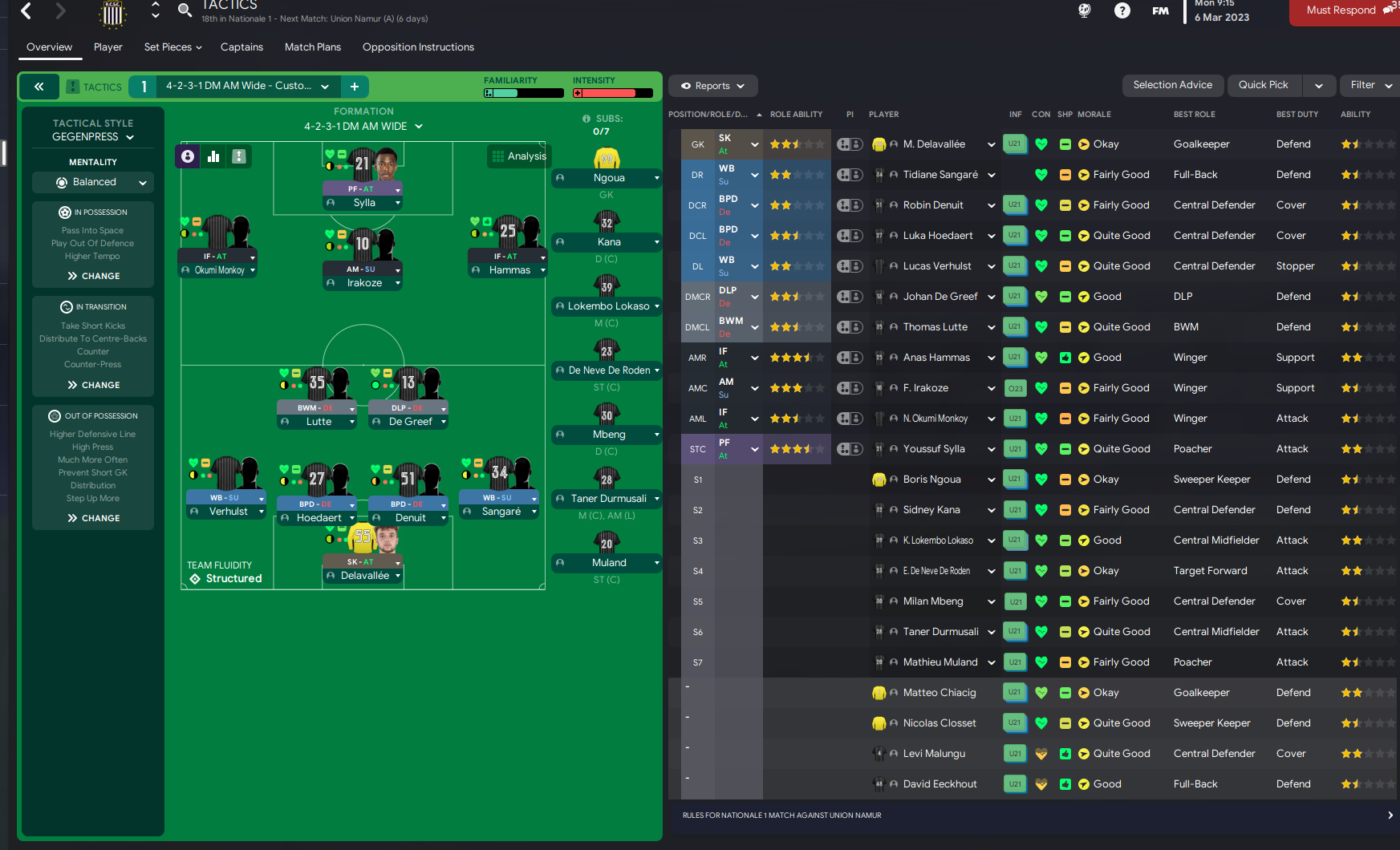
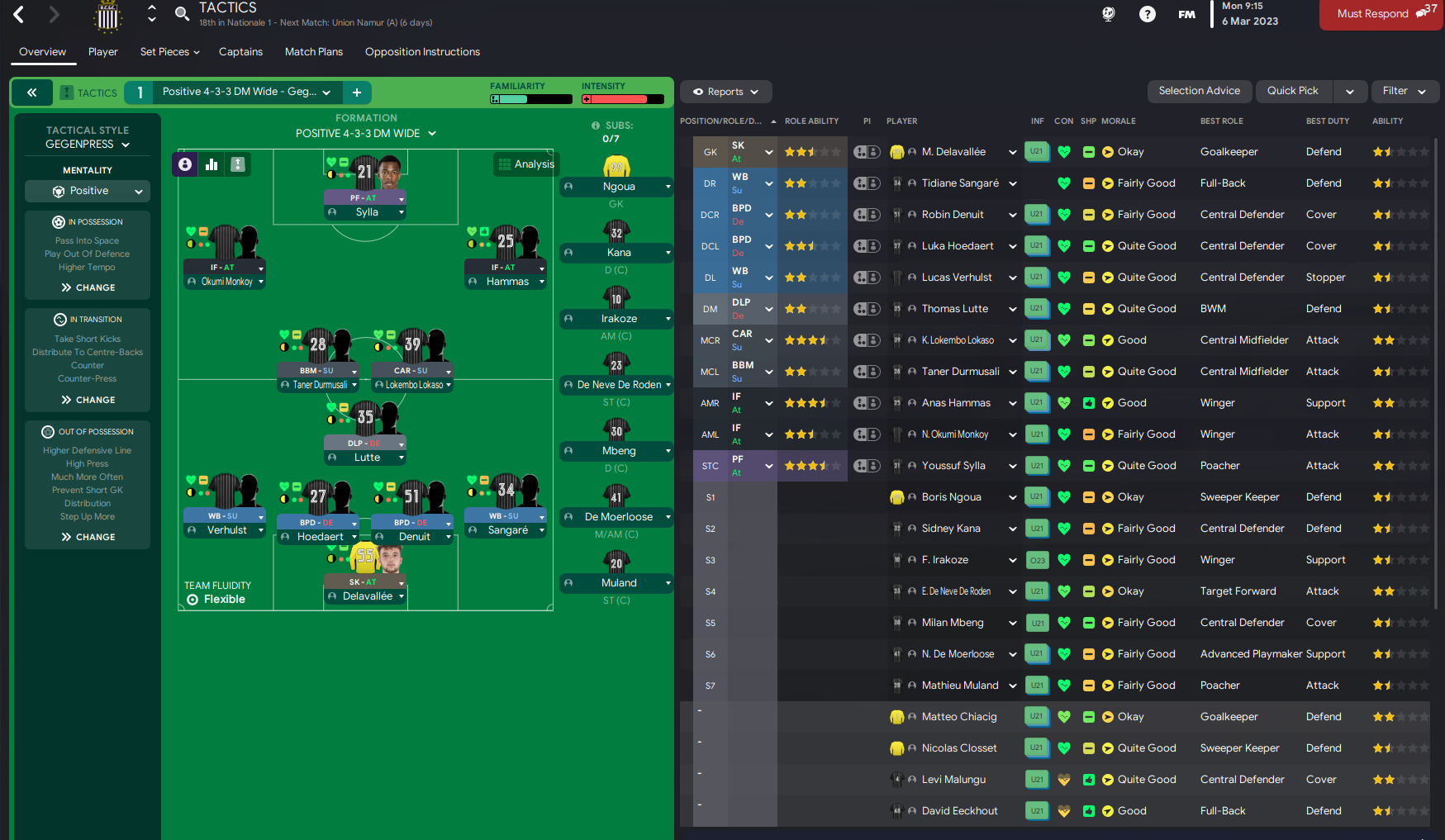
Formation & Style
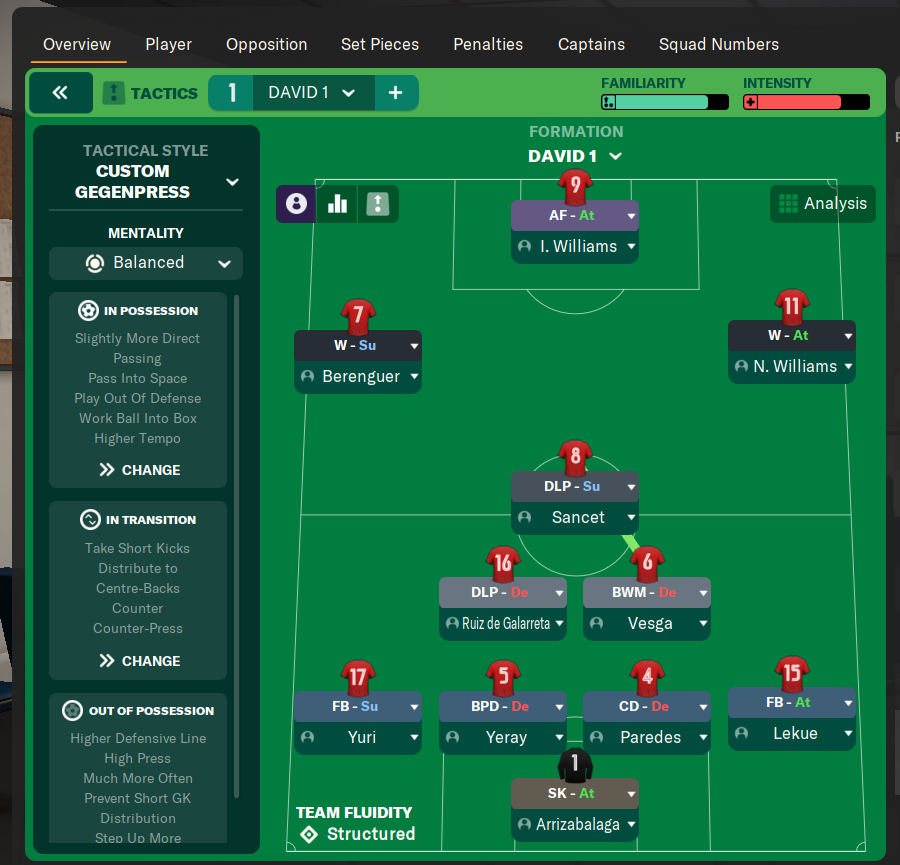
Tactical Style:Gegenpress
Mentality:Balanced
Formation:4-2-3-1 Wide
Team Fluidity:Structured
In Possession
Slightly More Direct Passing
Pass Into Space
Play Out Of Defence
Work Ball Into Box
Higher Tempo
In Transition
Take Short Kicks
Distribute to Centre-Backs
Counter
Counter-Press
Out of Possession
Higher Defensive Line
High Press
Much More Often
Prevent Short GK Distribution
Team Shape Without Ball
Shape:Compact
Description:The team maintains a compact shape, hindering opposition movements between the lines.
Evidence:Higher Defensive Line and High Press lead to a compact setup.
Team Shape With Ball
Shape:Fluid
Description:Interchanging positions among the front three players to create numerous attacking options.
Evidence:The use of wingers and an advanced forward promotes variety in attack.
Phase Description
Attacking Play
Utilizes width through the wingers while the central advanced forward seeks to exploit spaces created.
Defensive Transition
Immediate pressing to win back the ball, supported by a higher defensive line that maintains pressure.
Main Focus
Quick transitions supported by strong pressing and interplay through the midfield.
Key Strengths
Dynamic Attack
The wingers (AM) pull defenders wide, creating space for the advanced forward (AF) to exploit.
Solid Midfield Structure
The combination of a Ball-Winning Midfielder and Deep-Lying Playmaker fortifies the center.
Pressing Intensity
High pressing complemented by a compact defensive shape increases the chance of regaining possession.
Conflicting Directions
Potential Overload in Midfield
Possibility of being outnumbered if the opposition employs a midfield with more players.
Vulnerability to Quick Counters
High defensive line may leave the team exposed to quick opposition counters.
Wide Play Vulnerability
If wingers are caught high up the pitch, the flanks may be exposed.
Tactical Suggestions
Consider a More Defensive DM Role
Introducing a more defensive-minded player in the midfield could enhance stability.
Adjust Defensive Line Based on Opposition
Flexibility in the defensive line according to the opponent's attacking plays may help mitigate risk.
Promote Playmaker Involvement
Encourage more creative passing from the DLP-S to drive the team’s offense.
Ask Questions About Your Lineup
Related Tactics
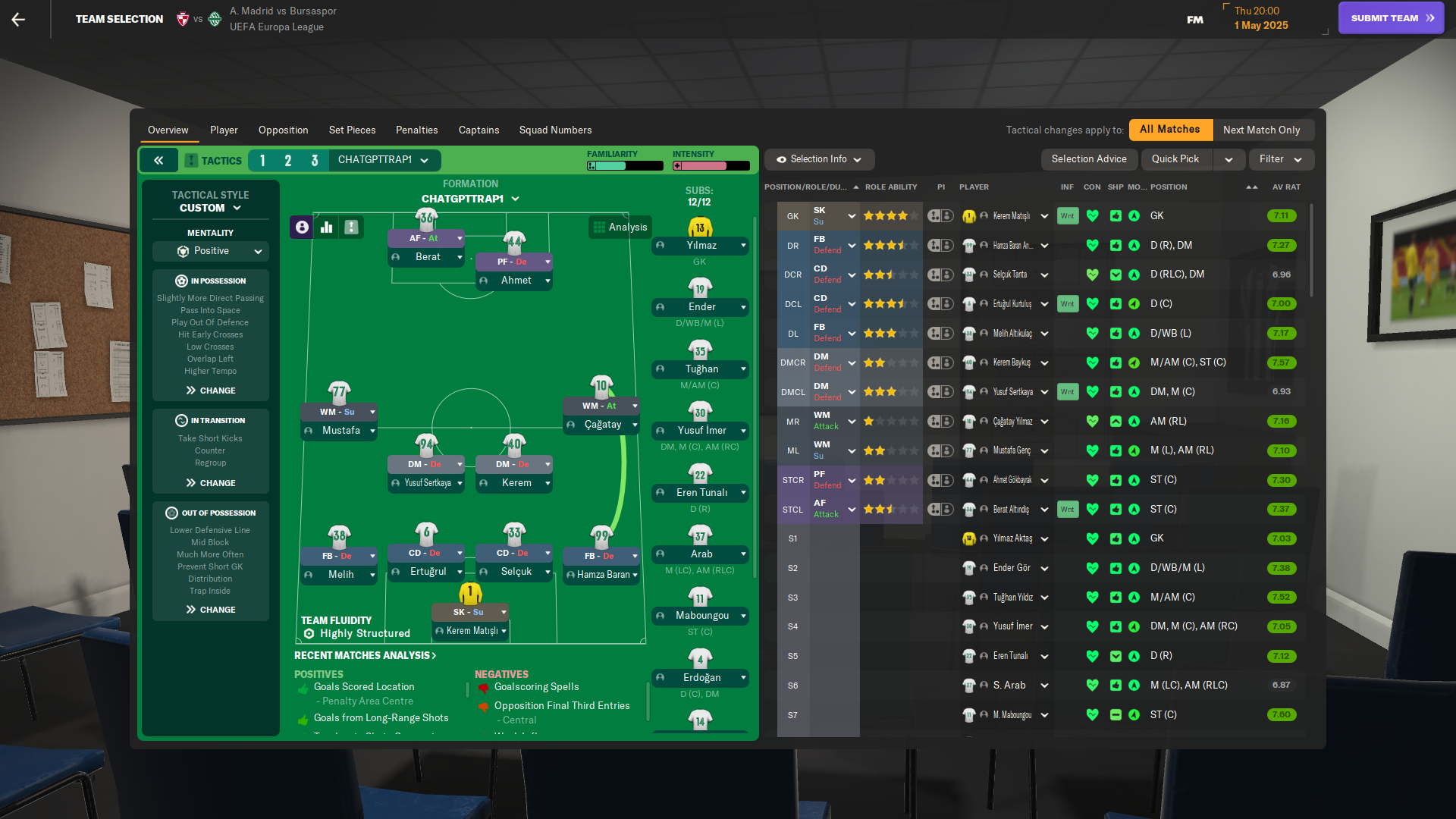
More Gegenpress tactics
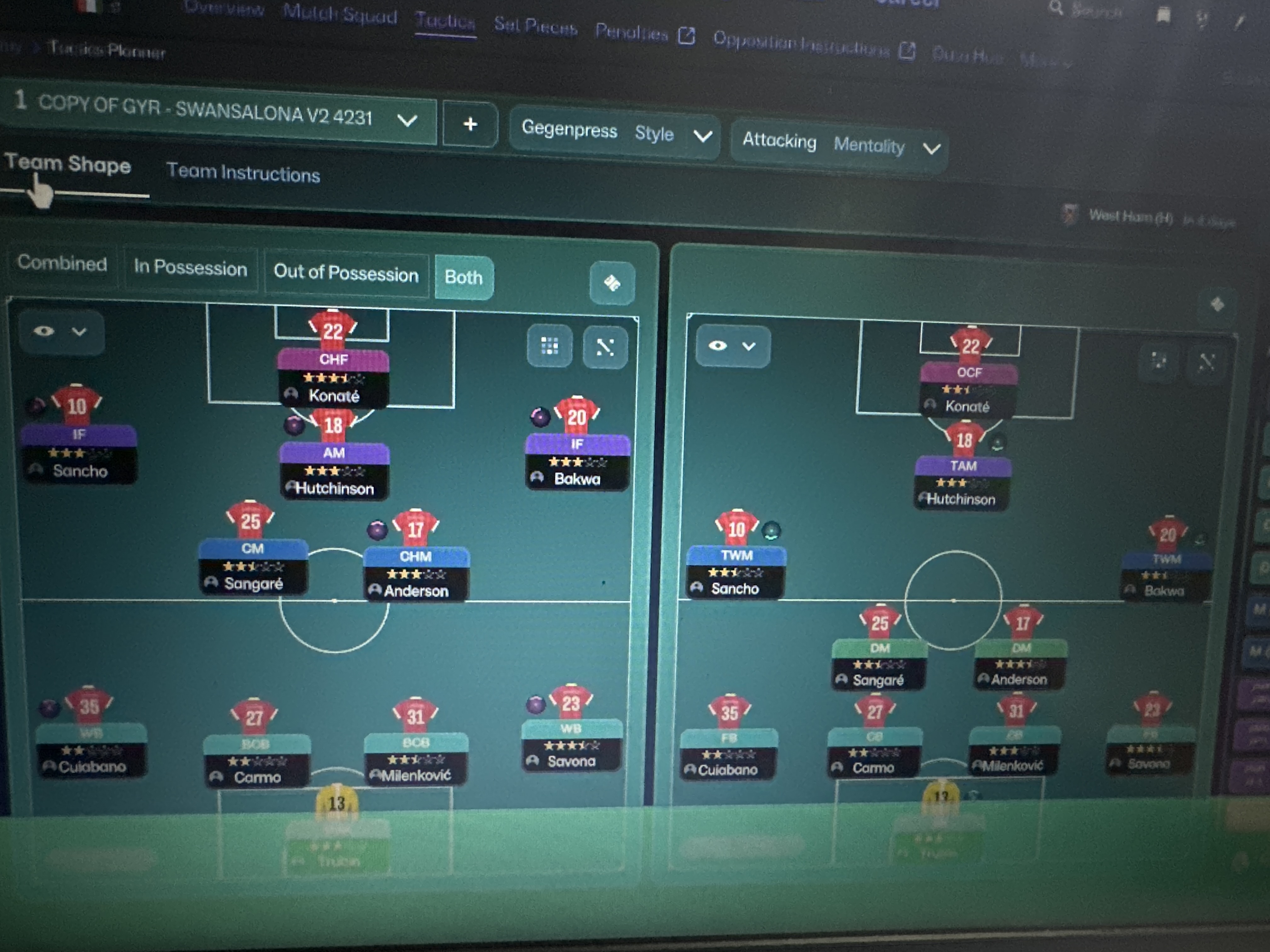
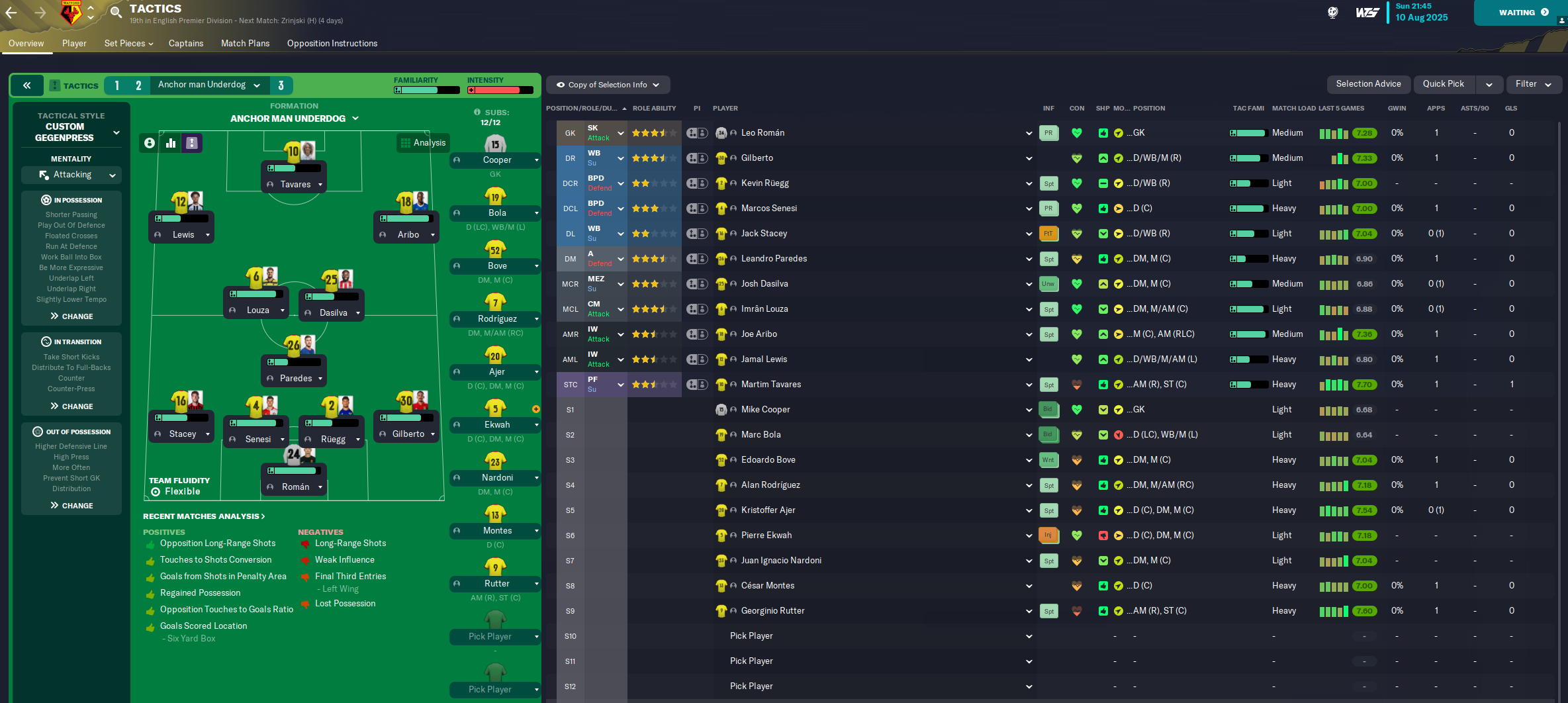
Guides for this formation
The tactical theory behind the 4-2-3-1 Wide: roles, instructions, and the trade-offs that decide whether the system holds up.
Player pairings
Midfield Pairs in 4-2-3-1 and 4-4-2
Double pivots and flat pairs in 4-2-3-1 and 4-4-2: when each pairing works, when it collapses, and the AMC unicorn that rescues both.
Read guide
Playing styles
Gegenpressing: A Full Guide
Klopp-style gegenpressing in FM, including squad profile, line-and-press pairing, sustainable workload, and the antipatterns to avoid.
Read guide