Uploaded Tactic
Formation & Style
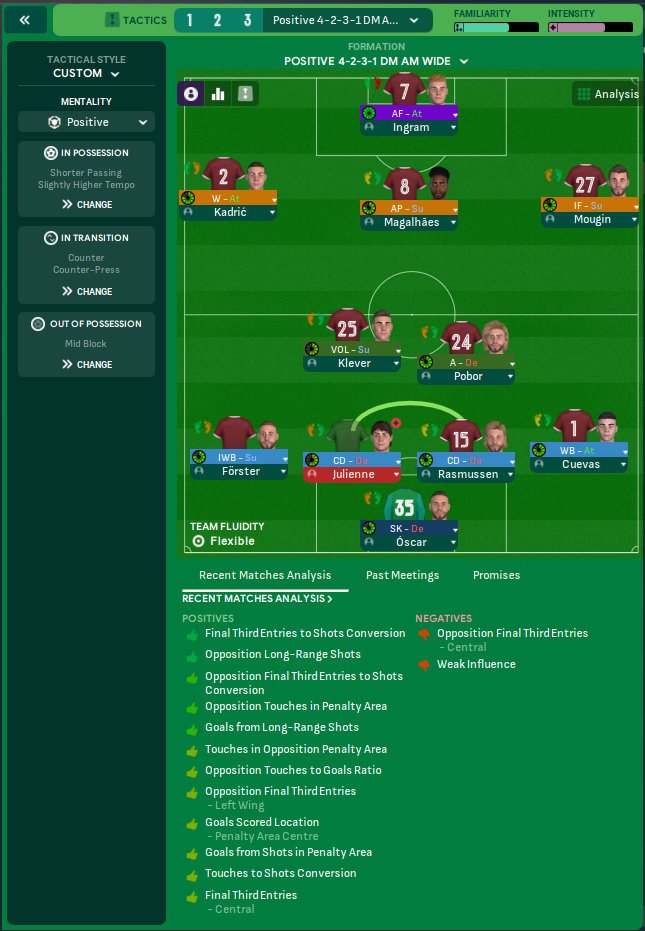
Tactical Style:Custom
Mentality:Positive
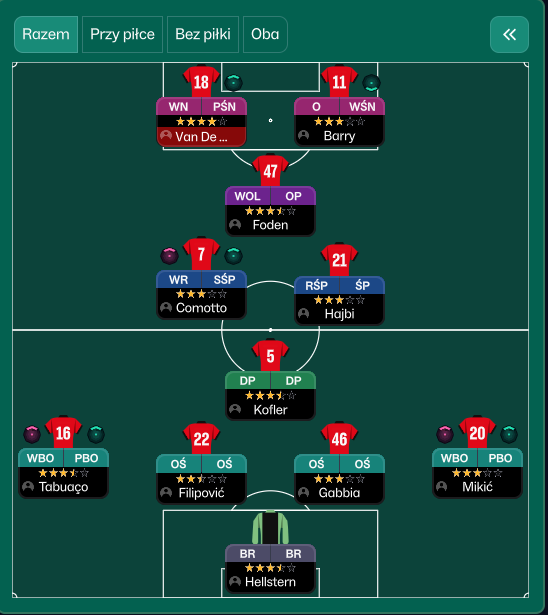
Formation:4-2-3-1 Wide
Team Fluidity:Flexible
In Possession
Shorter Passing
Slightly Higher Tempo
In Transition
Counter
Counter-Press
Out of Possession
Mid Block
Team Shape Without Ball
Shape:Mid Block
Description:Compact shape, allowing for both containment and opportunistic pressing.
Evidence:Mid Block instruction alongside CB's and DM's defensive roles.
Team Shape With Ball
Shape:Wide and Fluid
Description:Utilizes wing-backs and inside forwards to stretch the opposition, creating space for the advanced midfielders.
Evidence:Presence of IWB and WB along with AP and IF roles aiding in creating offensive overloads.
Phase Description
Attacking Play
Focuses on exploiting the flanks with a combination of width from the wing-backs and inside forwards.
Defensive Transition
Quick counter-pressing to regain possession after losing the ball.
Main Focus
Creating scoring opportunities through central play and wing distribution.
Key Strengths
Effective Wing Play
With an IWB and a WB, there is ample width which allows for better attacking options from the flanks.
Fluid Midfield Support
The Volante and Advanced Playmaker roles ensure dynamic movement and support both defensively and offensively.
Dynamic Striking Options
The Advanced Forward role is positioned to exploit spaces both centrally and across the line.
Conflicting Directions
Central Weakness
The setup has shown vulnerability in central defensive areas, especially against teams exploiting through balls.
Counter-Attack Vulnerability
While counter-pressing is employed, it might leave spaces behind when defenders step up to engage.
Overreliance on Wing Play
In narrow matches, the effectiveness may diminish if the flanks are nullified.
Tactical Suggestions
Enhance Central Defense
Consider employing a more physical central defender or utilizing a DM as a shield to strengthen the middle.
Increase Pressing Intensity
Adjust to higher pressing settings to regain possession quicker and maximize counter-attack potential.
Enhance Passing Options
Encourage more mixed passes to mitigate opposition setup against the current shorter passing strategy.
Ask Questions About Your Lineup
Related Tactics
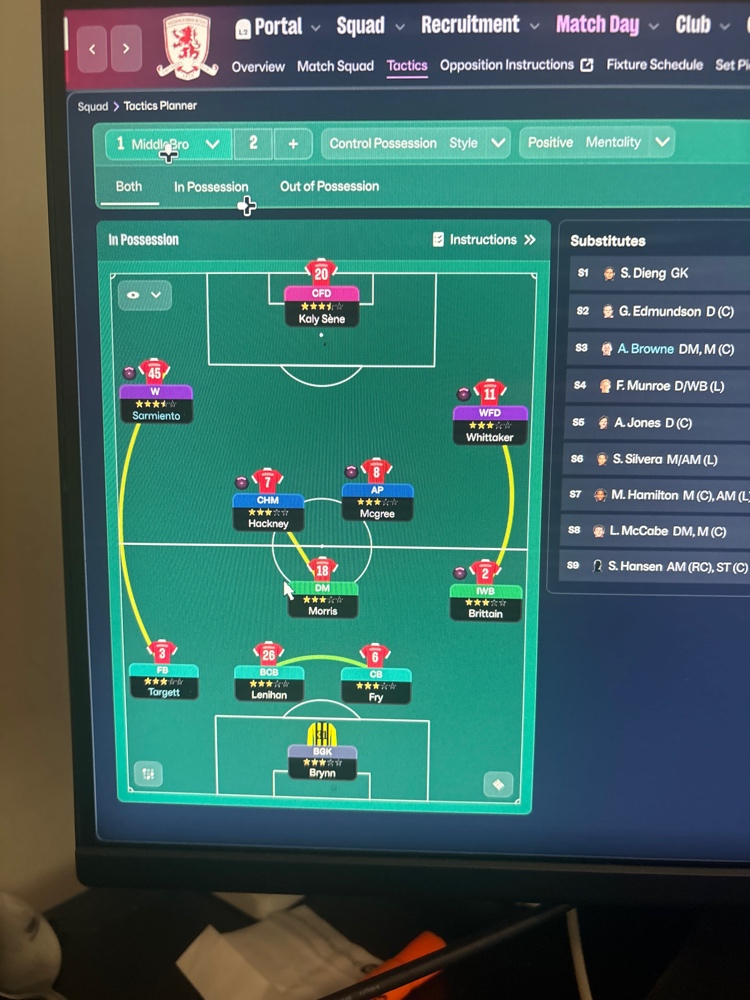
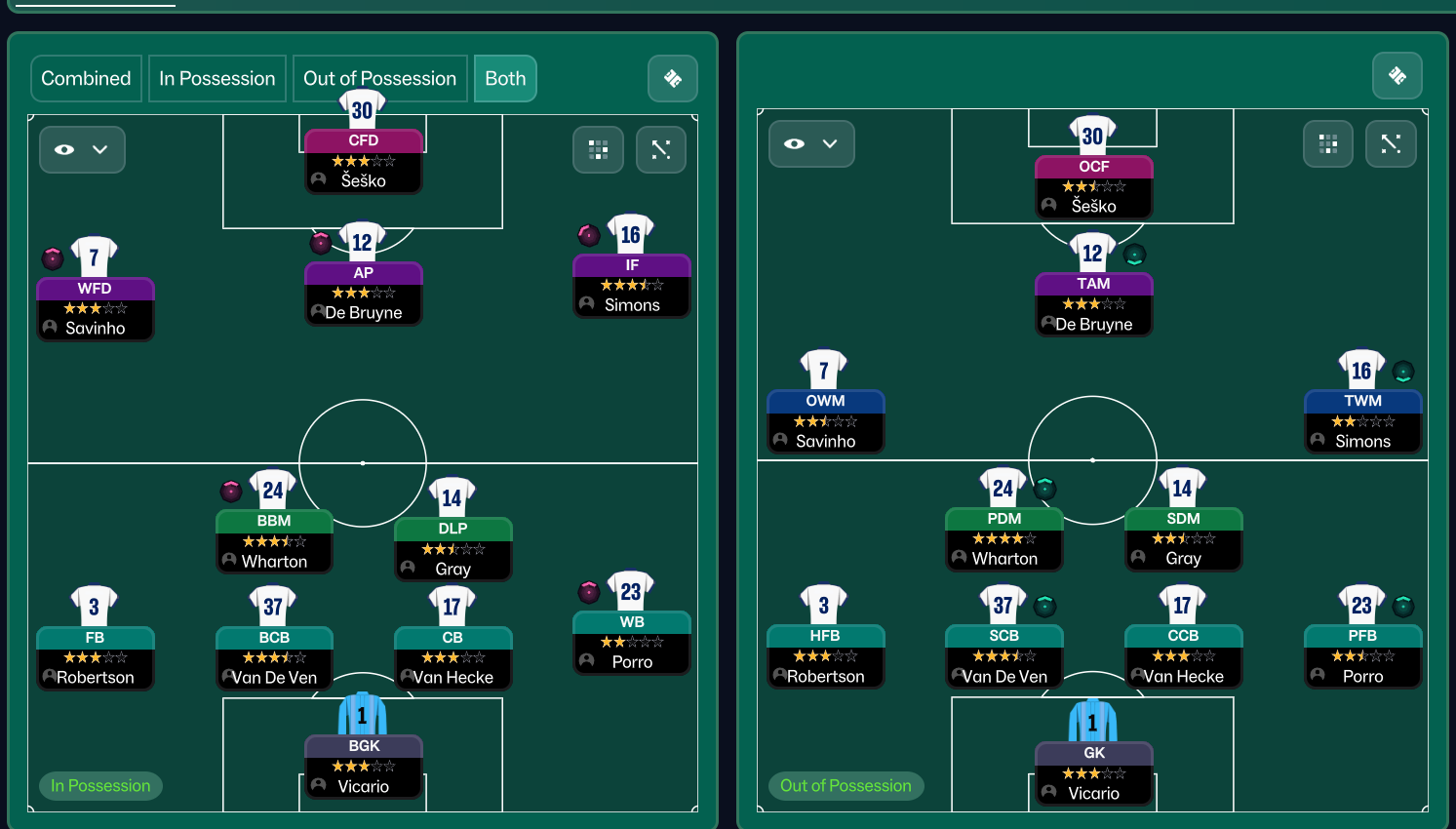
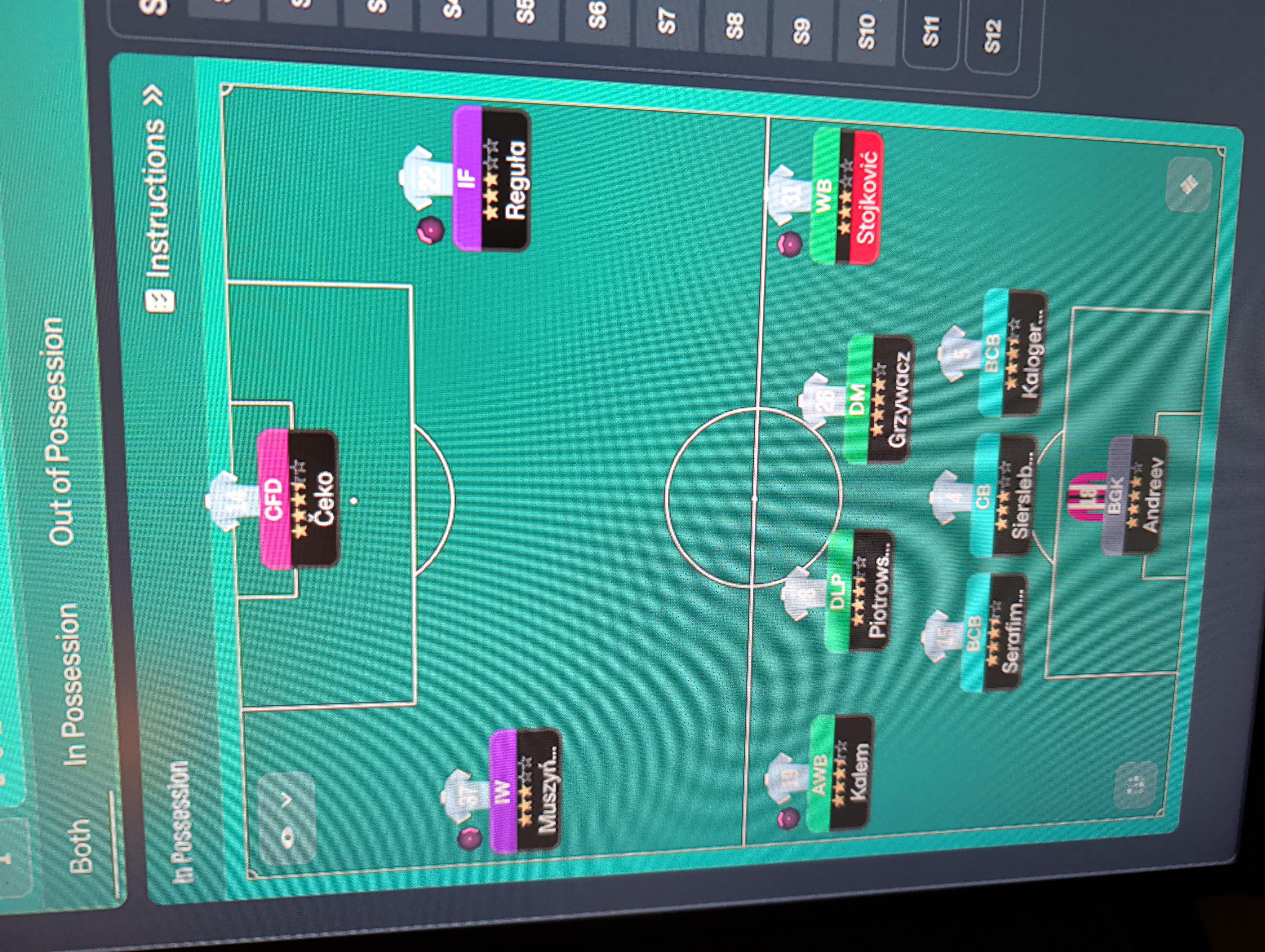
Guides for this formation
The tactical theory behind the 4-2-3-1 Wide: roles, instructions, and the trade-offs that decide whether the system holds up.
Player pairings
Midfield Pairs in 4-2-3-1 and 4-4-2
Double pivots and flat pairs in 4-2-3-1 and 4-4-2: when each pairing works, when it collapses, and the AMC unicorn that rescues both.
Read guide
Playing styles
Gegenpressing: A Full Guide
Klopp-style gegenpressing in FM, including squad profile, line-and-press pairing, sustainable workload, and the antipatterns to avoid.
Read guide