Uploaded Tactic
Formation & Style
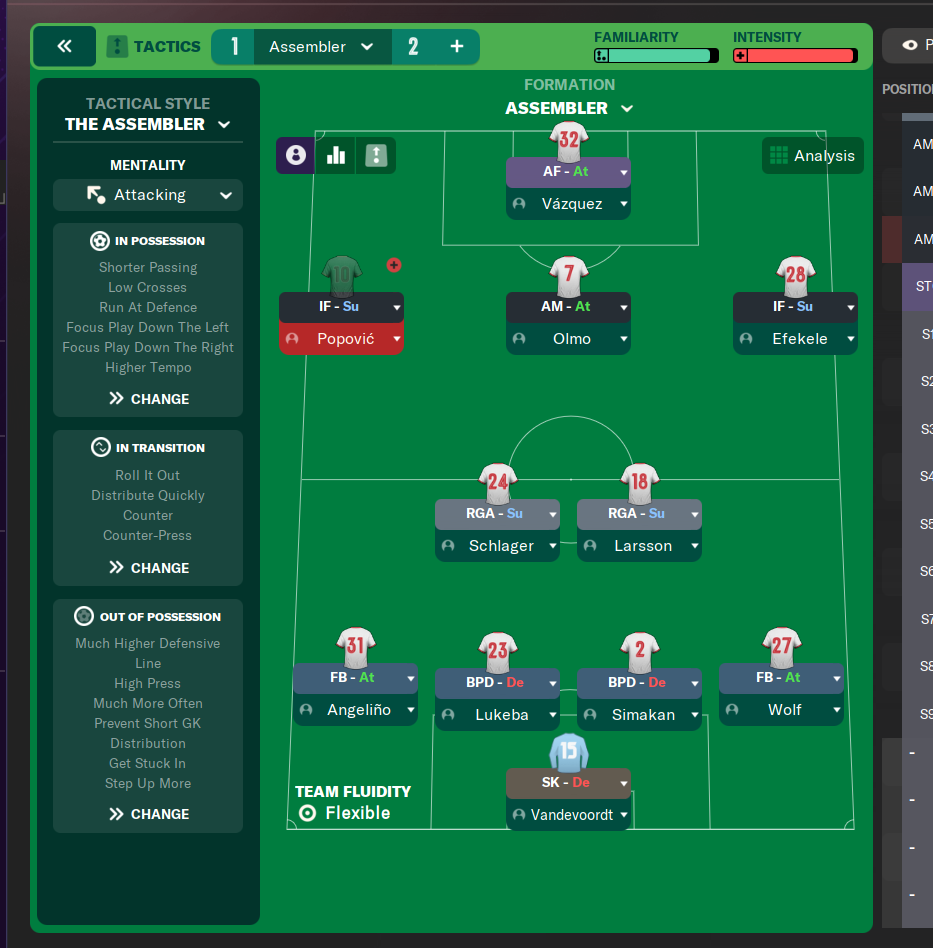
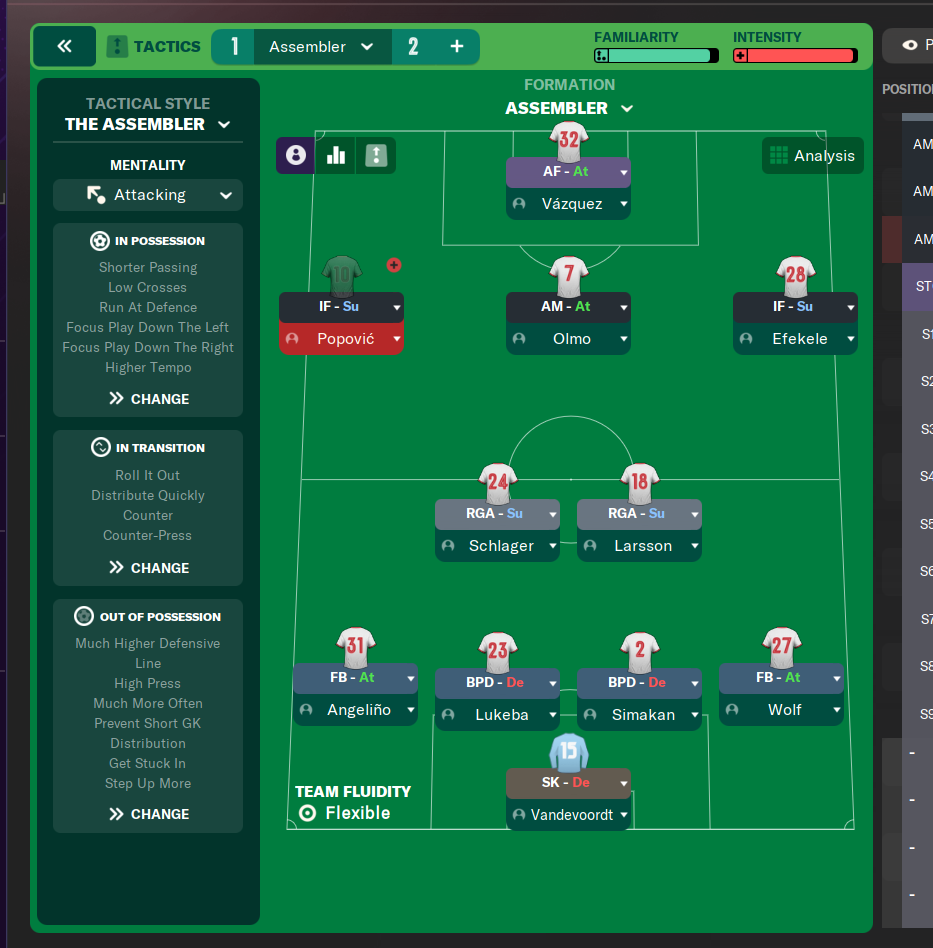
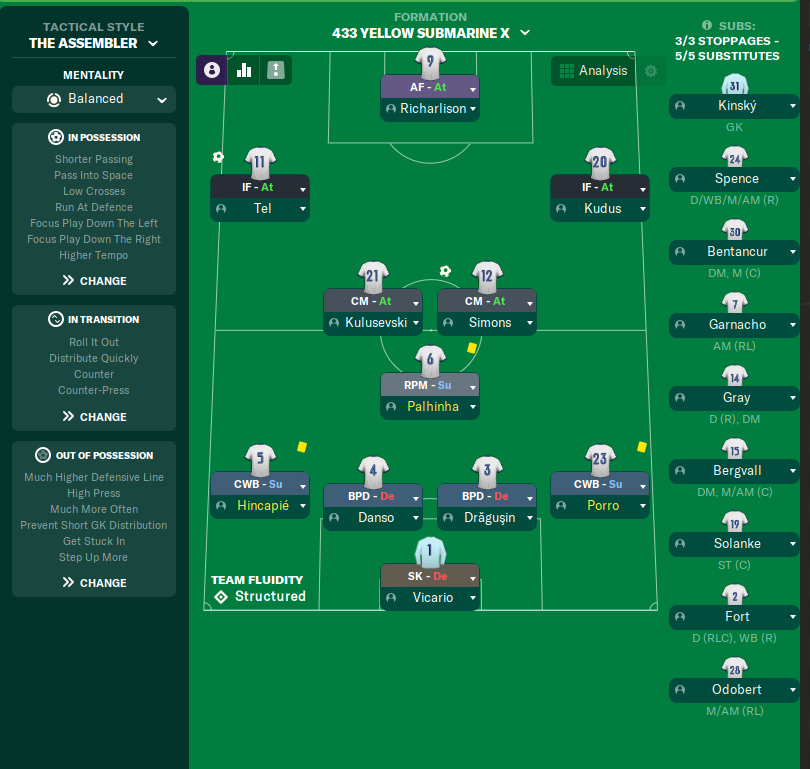
Tactical Style:The Assembler
Mentality:Attacking
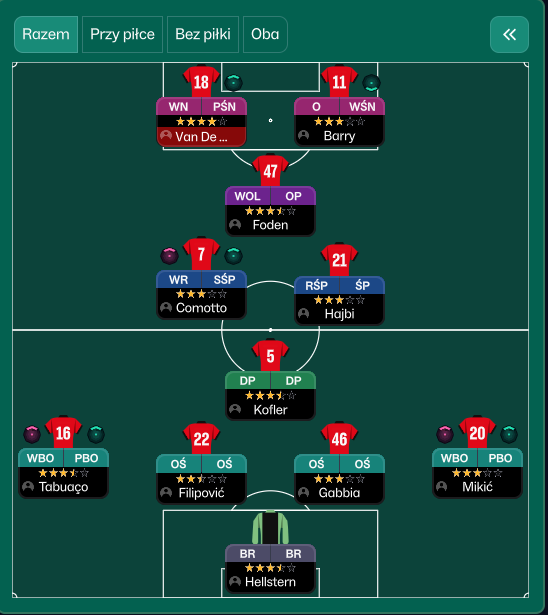
Formation:4-2-3-1 Wide
Team Fluidity:Flexible
In Possession
Shorter Passing
Low Crosses
Focus Play Down The Left
Focus Play Down The Right
Higher Tempo
In Transition
Roll It Out
Distribute Quickly
Counter
Counter-Press
Out of Possession
Much Higher Defensive Line
High Press
Much More Often Prevent Short GK Distribution
Get Stuck In
Step Up More
Team Shape Without Ball
Shape:4-2-3-1 Wide
Description:High defensive line complemented by a pressing approach aimed at regaining possession quickly.
Evidence:Much Higher Defensive Line and High Press from the out-of-possession instructions.
Team Shape With Ball
Shape:4-2-3-1 Wide
Description:A wide formation that emphasizes flank play with overlapping full-backs supporting inside forwards and an advanced forward.
Evidence:Focus Play Down The Left and Focus Play Down The Right combined with attacking full-backs.
Phase Description
Attacking Play
Utilizes shorter passing with an emphasis on attacking down the flanks, integrating overlapping full-backs.
Defensive Transition
Maintains aggressive pressing while transitioning quickly to counter-attacks.
Main Focus
Utilizes a dynamic midfield to facilitate ball progression and support offensive play.
Key Strengths
Dynamic Midfield
Two RGA-S players create versatility and fluidity in midfield, ensuring sustained pressure and creativity.
Width and Overlap
Attacking full-backs provide width, which can stretch opponents and create more space for attackers.
High Pressing System
The high defensive line paired with aggressive pressing can lead to quick turnovers in dangerous areas.
Conflicting Directions
High Line Vulnerabilities
While a high line aids in pressing, it can expose the defense to quick counter-attacks.
Potential Overcommitment
Players pushing up can leave gaps in defense, especially if midfielders don’t track back.
Pressing Fatigue
Constant pressing may lead to exhaustion, particularly in physically demanding matches.
Tactical Suggestions
Adjust Defensive Line
Consider lowering the defensive line to reduce vulnerability to fast counters while maintaining press.
Incorporate Depth
Utilize a deeper squad to manage fatigue and maintain pressing intensity throughout matches.
Balance Midfield Structure
Consider adjusting duty roles in midfield to include a more defend-focused player to support the defense.
Ask Questions About Your Lineup
Related Tactics
More The Assembler tactics
Guides for this formation
The tactical theory behind the 4-2-3-1 Wide: roles, instructions, and the trade-offs that decide whether the system holds up.
Player pairings
Midfield Pairs in 4-2-3-1 and 4-4-2
Double pivots and flat pairs in 4-2-3-1 and 4-4-2: when each pairing works, when it collapses, and the AMC unicorn that rescues both.
Read guide
Playing styles
Gegenpressing: A Full Guide
Klopp-style gegenpressing in FM, including squad profile, line-and-press pairing, sustainable workload, and the antipatterns to avoid.
Read guide