Uploaded Tactic
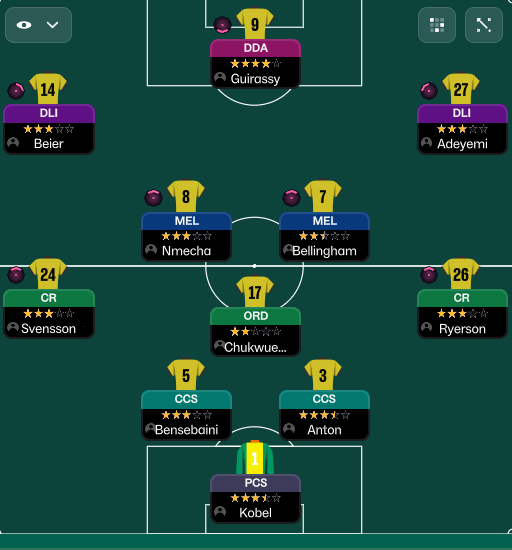
Formation & Style
Tactical Style:Balanced
Mentality:Positive
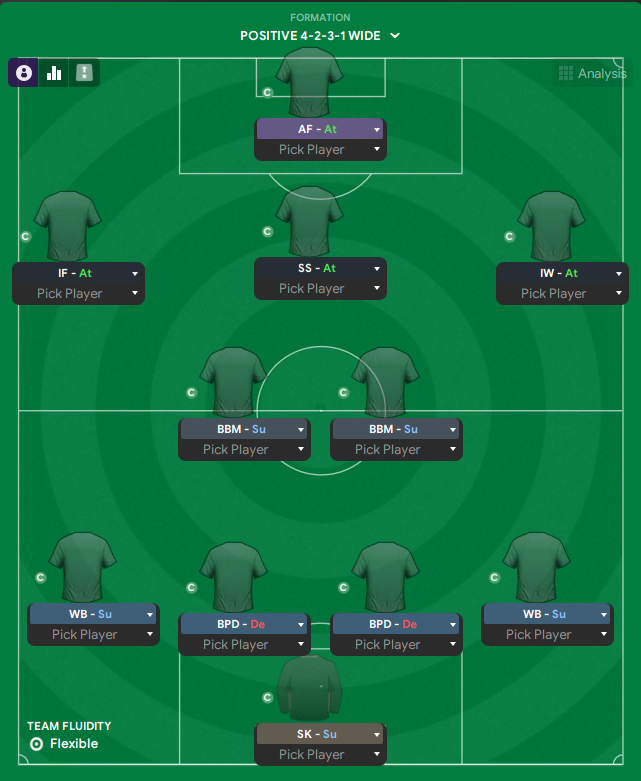
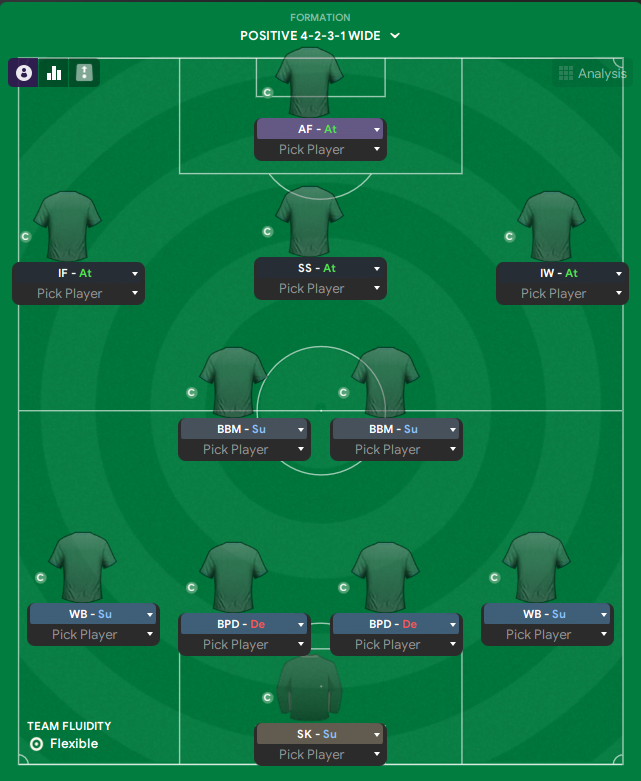
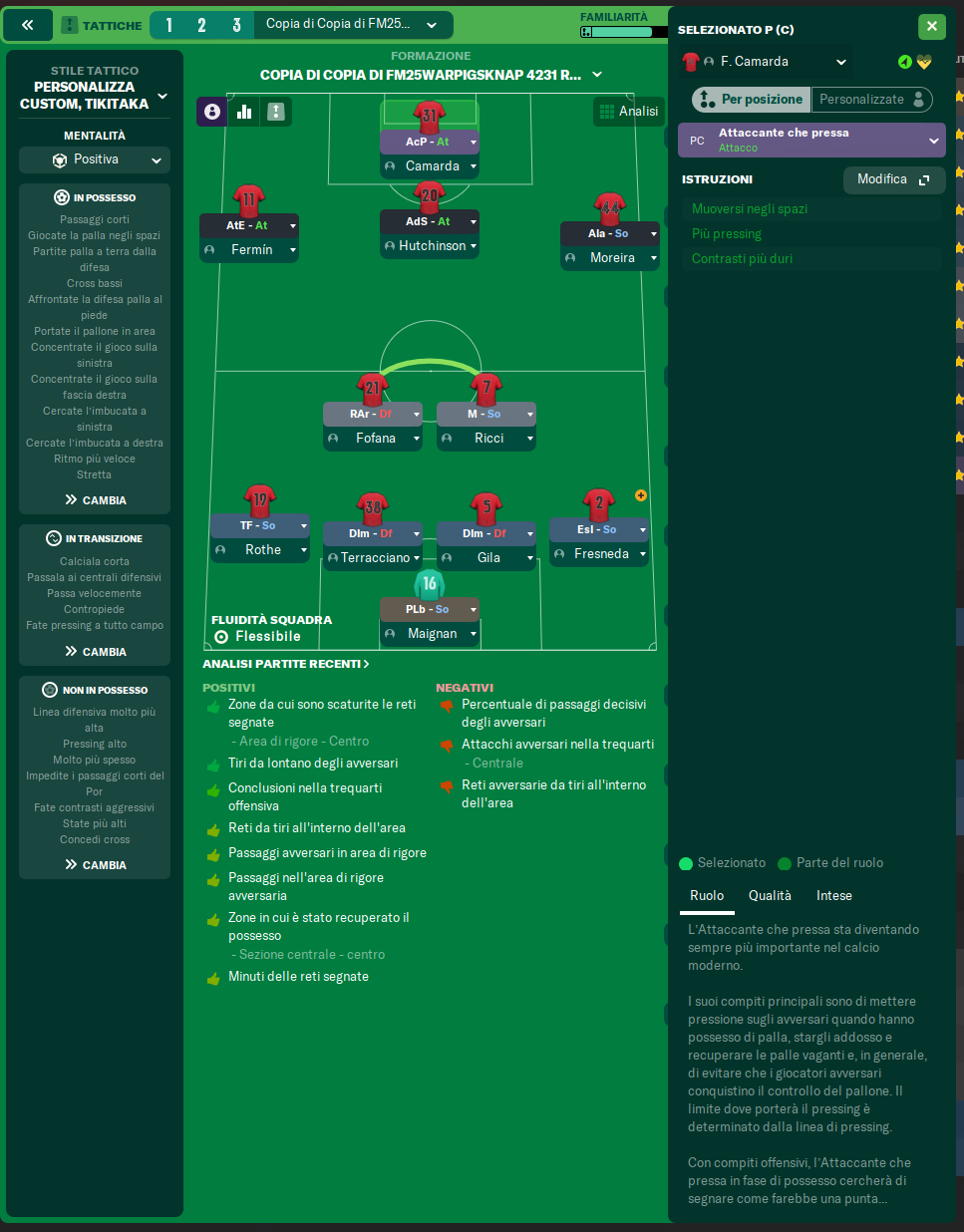
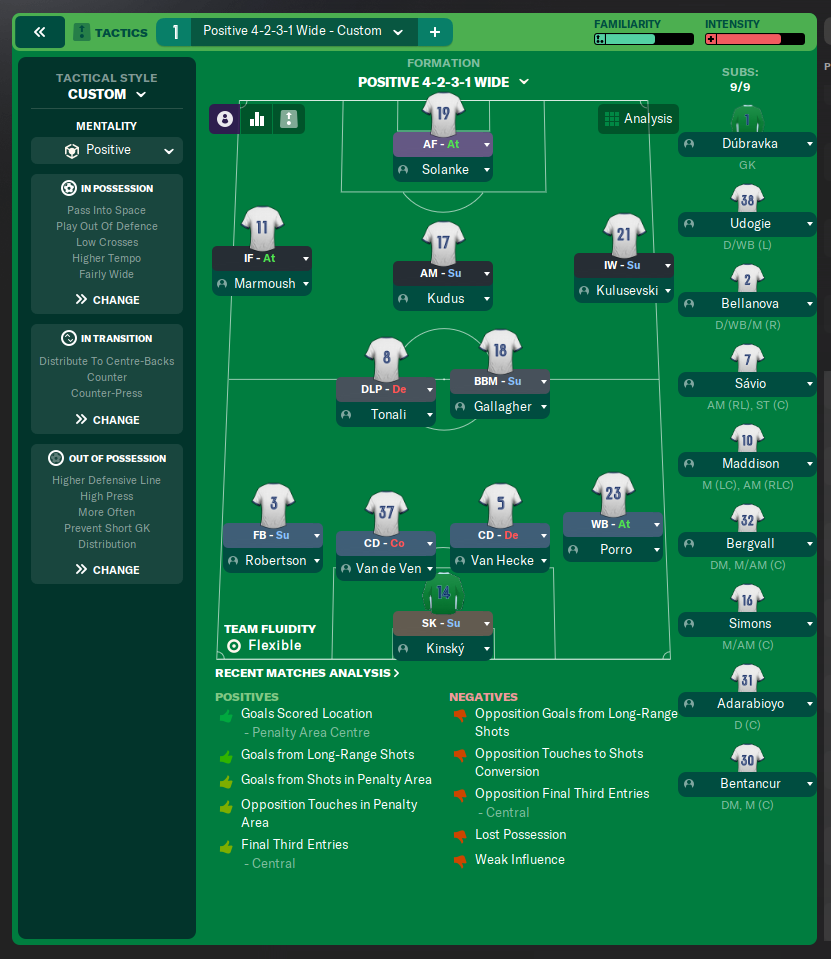
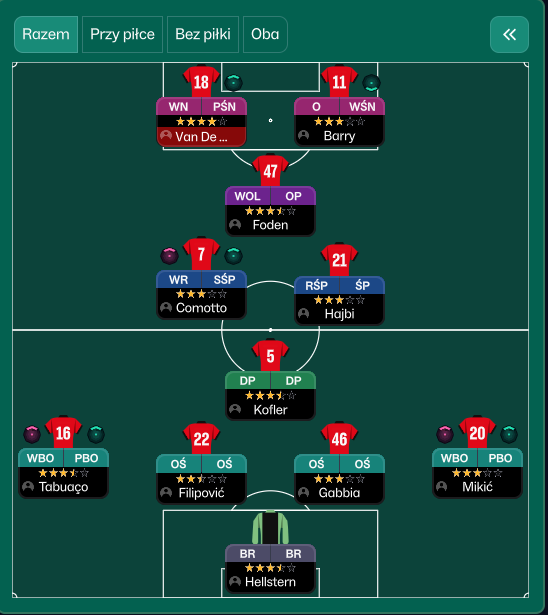
Formation:4-2-3-1 Wide
Team Fluidity:Structured
In Possession
Play Out of Defence
Exploit the Flanks
Be More Expressive
In Transition
Counter-Press
Counter
Out of Possession
Higher Defensive Line
Higher Line of Engagement
Get Stuck In
Team Shape Without Ball
Shape:4-2-3-1 Compact
Description:A narrow midfield and compact defensive block allow for effective pressing and deny spaces in central areas.
Evidence:The double pivot of the central midfielders supports the back four, while the wingers drop back to create a solid block.
Team Shape With Ball
Shape:4-2-3-1 Wide
Description:Focused on width through the wingers, the attack looks to stretch the opposition and create spaces for central players.
Evidence:The wingers maintain position high on the flanks, allowing the central players to exploit gaps between the lines.
Phase Description
Attacking Play
Build-up play focuses on progressing the ball through the midfield, using the wingers to create width. The advanced playmaker looks to link with the striker and attacking midfielders.
Defensive Transition
During transitions, players quickly aim to regain possession through counter-pressing, targeting opposition weaknesses.
Main Focus
Utilize the wide areas effectively to create goal-scoring opportunities.
Key Strengths
Fluid Midfield Play
The combination of DLP-S and CM-S allows for strong ball progression and control of the midfield.
Wide Threat
Wingers stretching the field helps to create more attacking opportunities and disrupt defensive lines.
High Press Capability
A higher line of engagement combined with counter-pressing can lead to quick turnovers.
Conflicting Directions
Vulnerability toCounter-Attacks
The high defensive line may expose spaces behind, making the team susceptible to rapid counters.
Central Congestion
With multiple players in central areas, it may lead to congestion and reduced space for attacking maneuvers.
Dependence on Wingers
Heavy reliance on wingers to create chances may limit creativity if they are marked tightly.
Tactical Suggestions
Consider Lower Defensive Line
A lower defensive line may reduce vulnerability to counter-attacks.
Increase Central Fluidity
Adjust player roles to include more flexibility in the midfield to support the attack.
Incorporate Alternative Attack Routes
Encourage overlapping runs from full-backs to support attacking plays, minimizing winger dependence.
Ask Questions About Your Lineup
Related Tactics
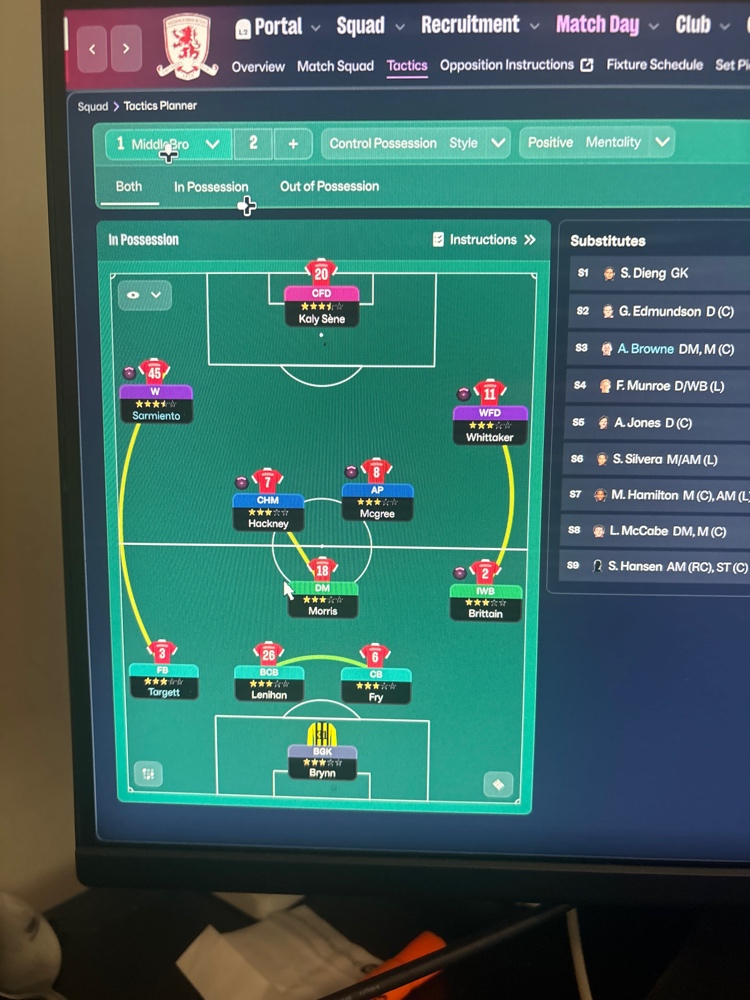
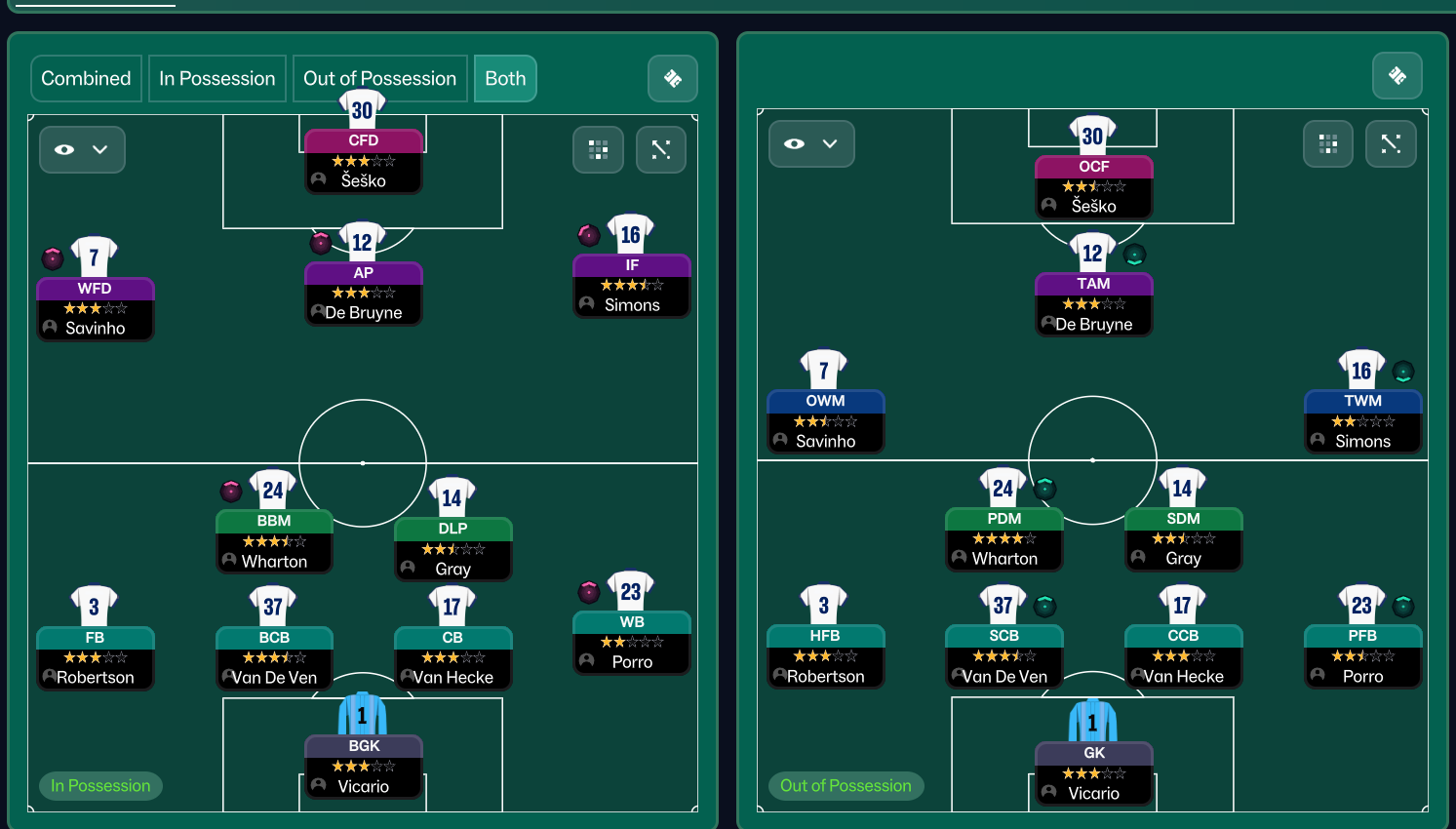
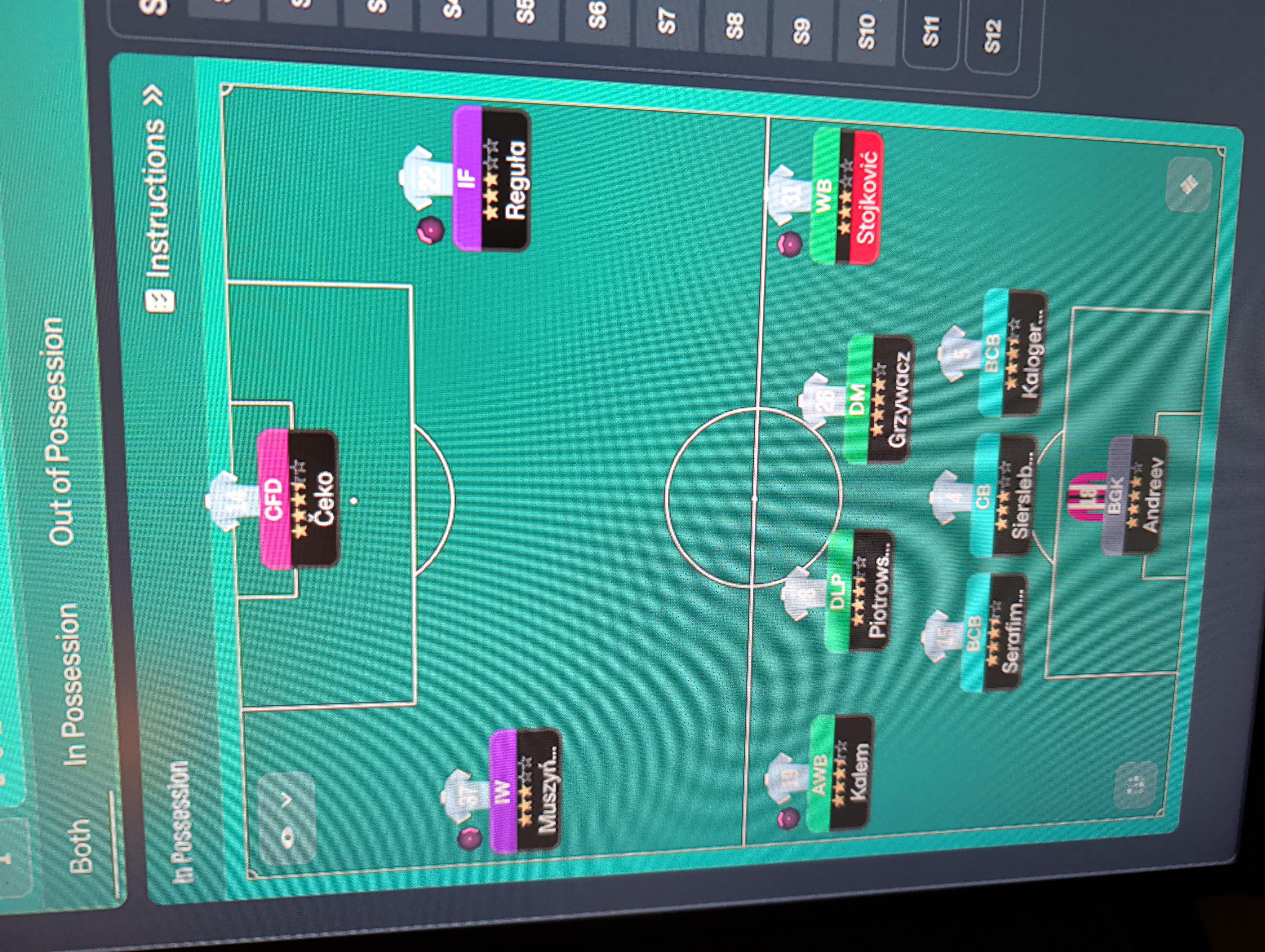
Guides for this formation
The tactical theory behind the 4-2-3-1 Wide: roles, instructions, and the trade-offs that decide whether the system holds up.
Player pairings
Midfield Pairs in 4-2-3-1 and 4-4-2
Double pivots and flat pairs in 4-2-3-1 and 4-4-2: when each pairing works, when it collapses, and the AMC unicorn that rescues both.
Read guide
Playing styles
Gegenpressing: A Full Guide
Klopp-style gegenpressing in FM, including squad profile, line-and-press pairing, sustainable workload, and the antipatterns to avoid.
Read guide