Uploaded Tactic
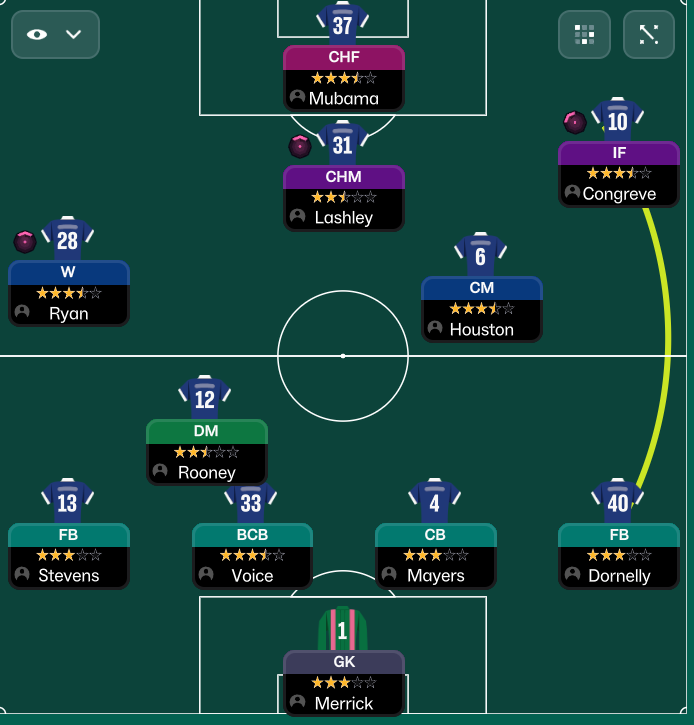
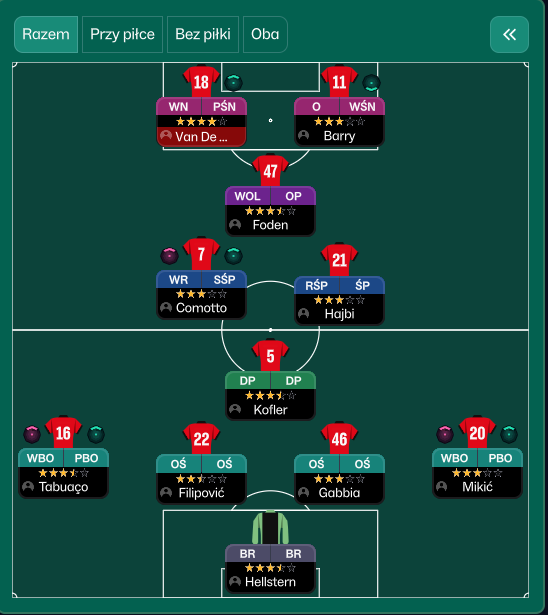
Formation & Style
Tactical Style:Balanced
Mentality:Positive
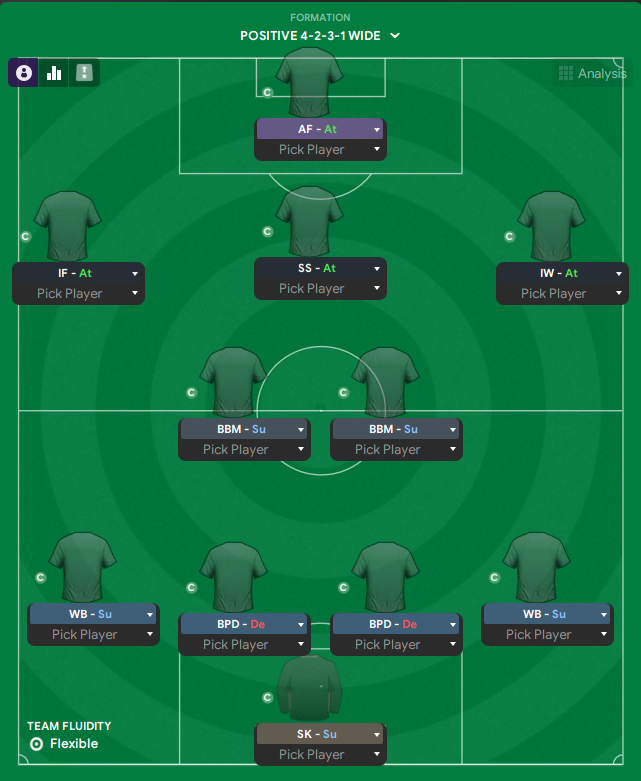
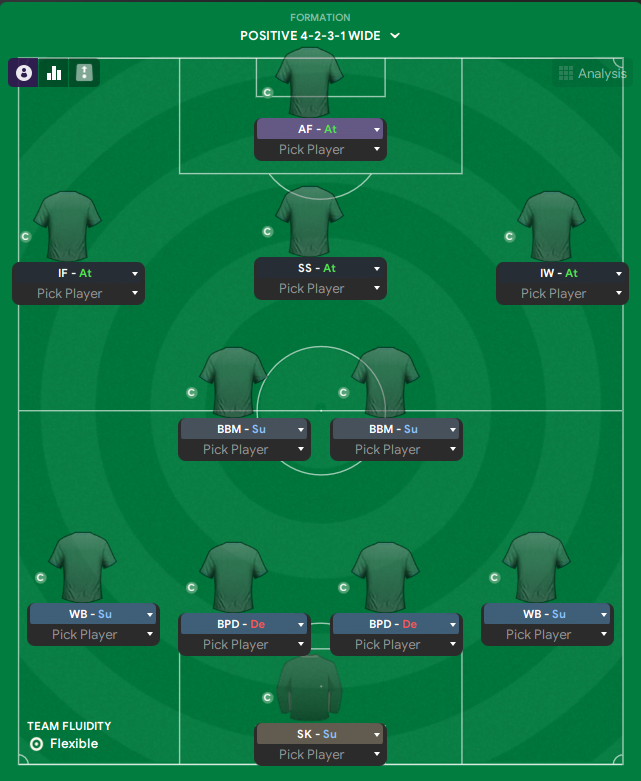
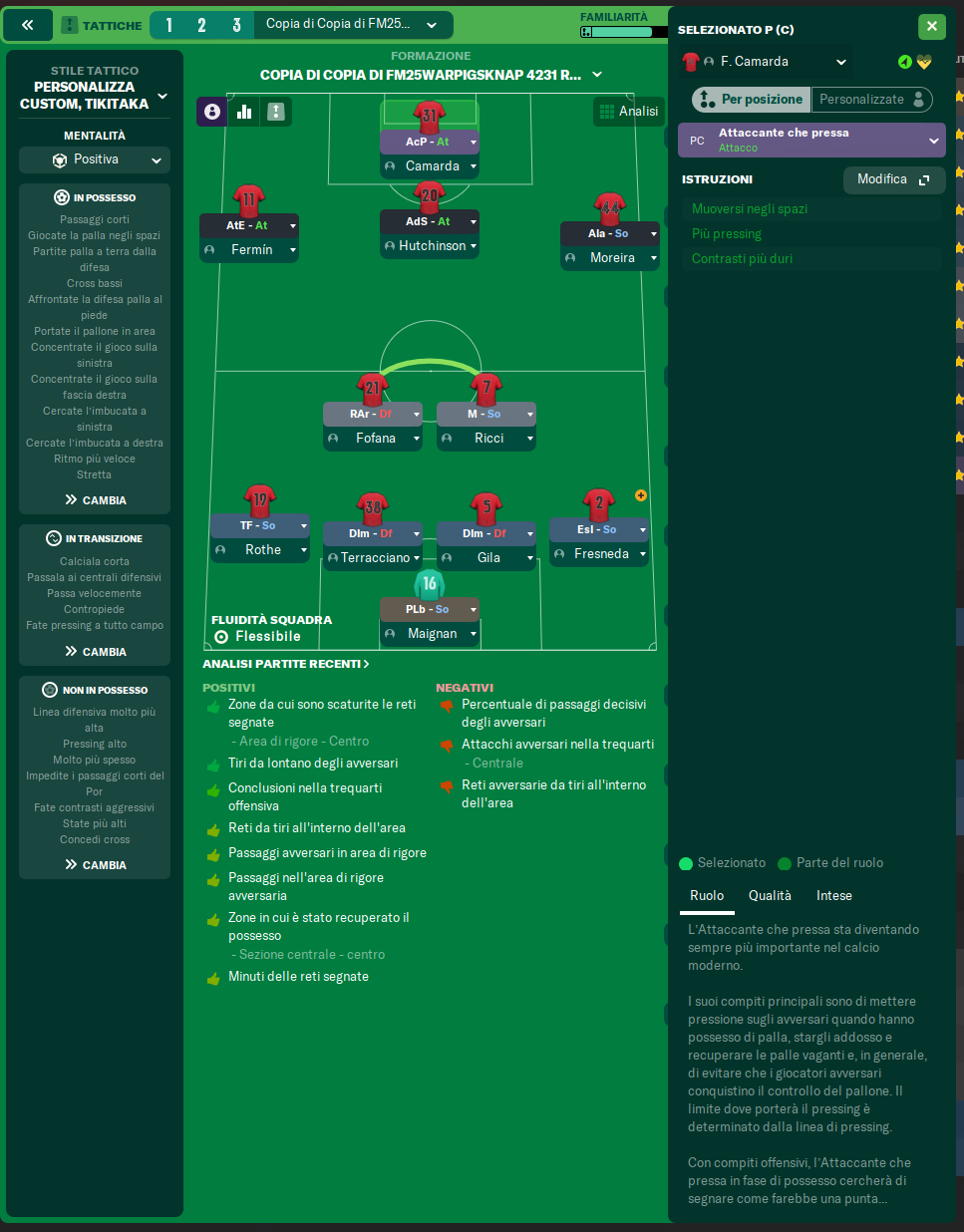
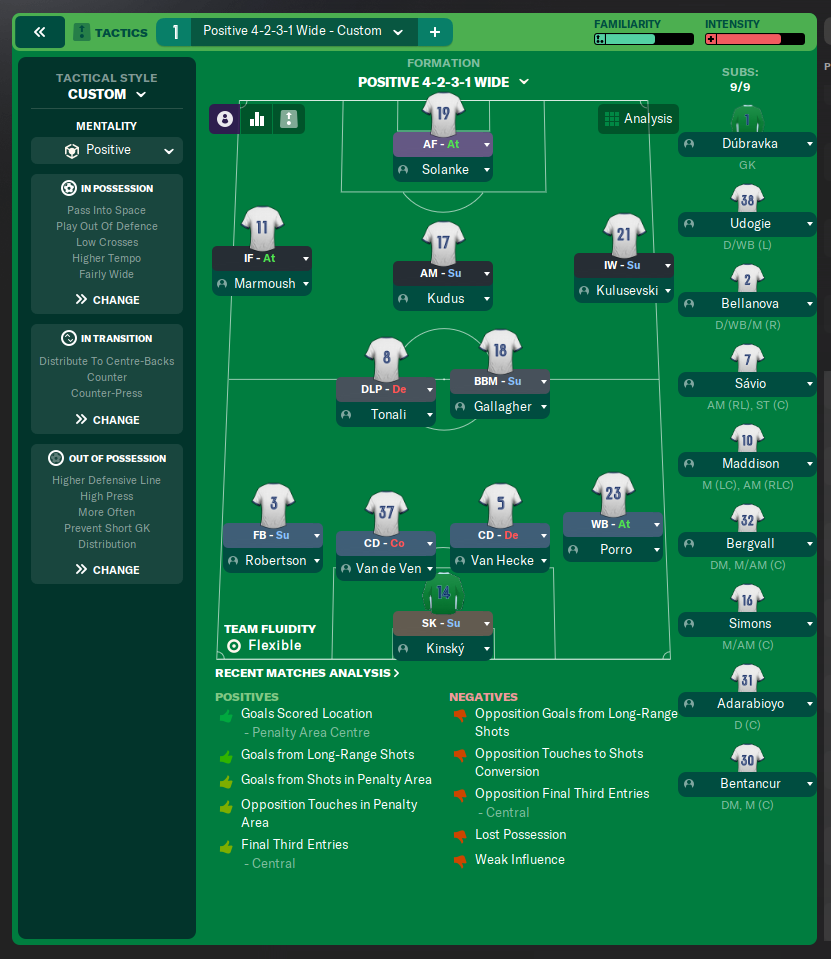
Formation:4-2-3-1 Wide
Team Fluidity:Structured
In Possession
Play Out of Defence
Short Passing
Focus Play Down the Right
In Transition
Counter
Counter-Press
Out of Possession
Higher Defensive Line
Higher Line of Engagement
Prevent Short GK Distribution
Team Shape Without Ball
Shape:Compact
Description:Maintains a lower backline to prevent through balls while pressing around the midfield.
Evidence:Higher Defensive Line and Higher Line of Engagement both indicate a structured defensive setup.
Team Shape With Ball
Shape:Fluid
Description:Encourages overlapping runs from full-backs and central movement from forwards to create space.
Evidence:Focus Play Down the Right and positioning of the W and IF indicate an emphasis on wing play.
Phase Description
Attacking Play
Utilizes width through wingers and inside forwards to exploit space, transitioning quickly from defence.
Defensive Transition
Instils quick reaction with a counter-press to recover possession immediately.
Main Focus
Creating space on the wings while a creative central midfielder controls the tempo.
Key Strengths
Width in Attack
Using W and IF allows for stretching the opposition.
Central Control
The CHM and CM can dominate the midfield, facilitating ball progression.
Defensive Solidity
Utilizing 2 CBs and a DM provides a strong defensive core.
Conflicting Directions
Narrowness
Concentrating play will lead to crowding in the middle and ineffective use of width.
Defensive Vulnerability to Counters
Higher Pressing exposes the backline to counter-attacks.
Overcommitment on Attack
Excessive attacking intent can leave gaps defensively.
Tactical Suggestions
Balance the Attack
Consider adjusting attacking mentality to ensure adequate support for the defence.
Strengthen Defensive Depth
Introduce a more defensive role in midfield to protect the backline.
Enhance Wing Play
Encourage overlaps from FBs while maintaining width.
Ask Questions About Your Lineup
Related Tactics
Guides for this formation
The tactical theory behind the 4-2-3-1 Wide: roles, instructions, and the trade-offs that decide whether the system holds up.
Player pairings
Midfield Pairs in 4-2-3-1 and 4-4-2
Double pivots and flat pairs in 4-2-3-1 and 4-4-2: when each pairing works, when it collapses, and the AMC unicorn that rescues both.
Read guide
Playing styles
Gegenpressing: A Full Guide
Klopp-style gegenpressing in FM, including squad profile, line-and-press pairing, sustainable workload, and the antipatterns to avoid.
Read guide