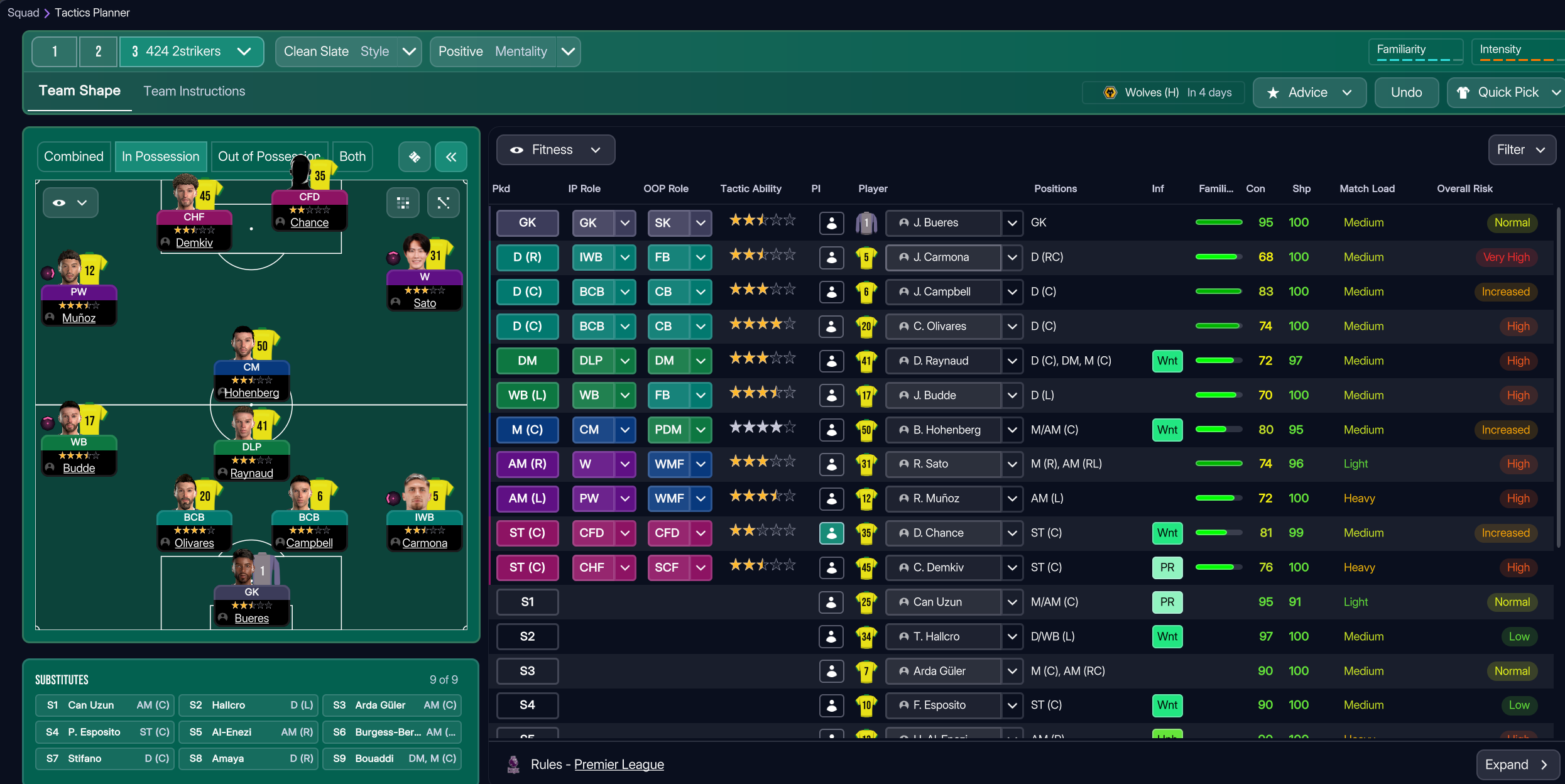
Uploaded Tactic
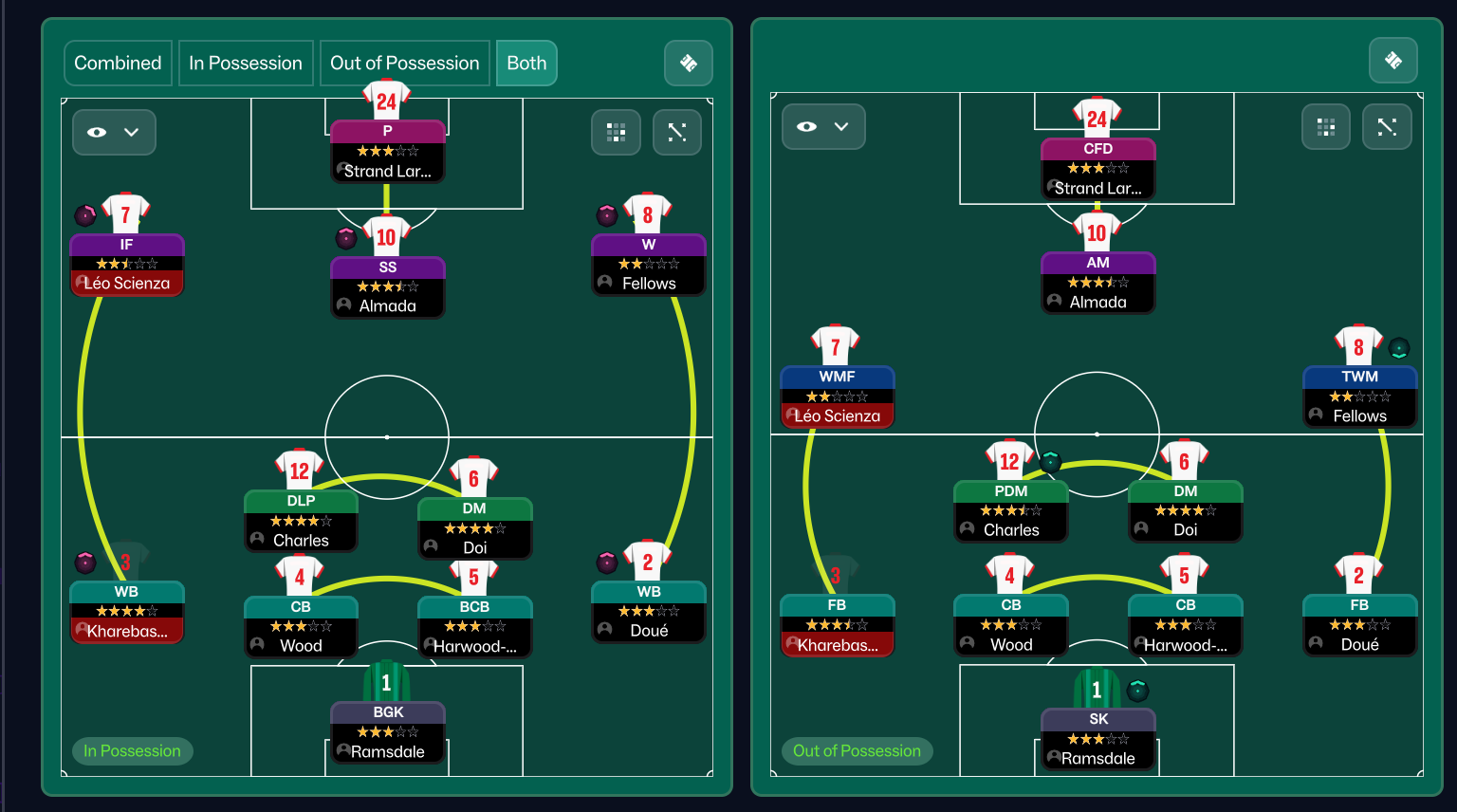
Formation & Style
Tactical Style:Fluid Counter-Attack
Mentality:Positive
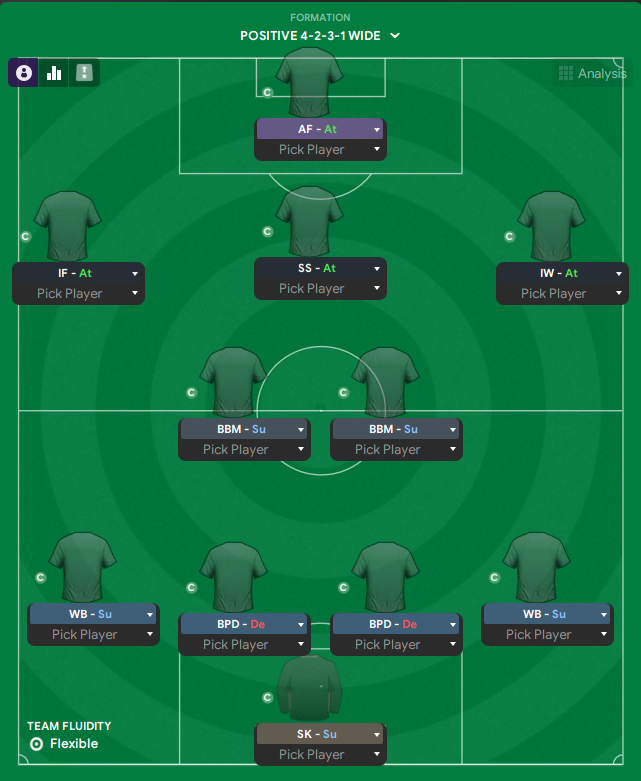
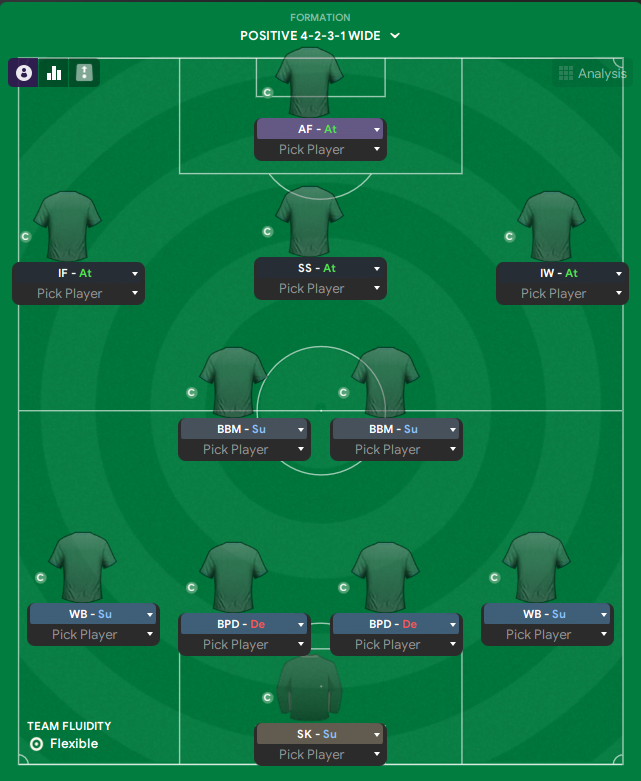
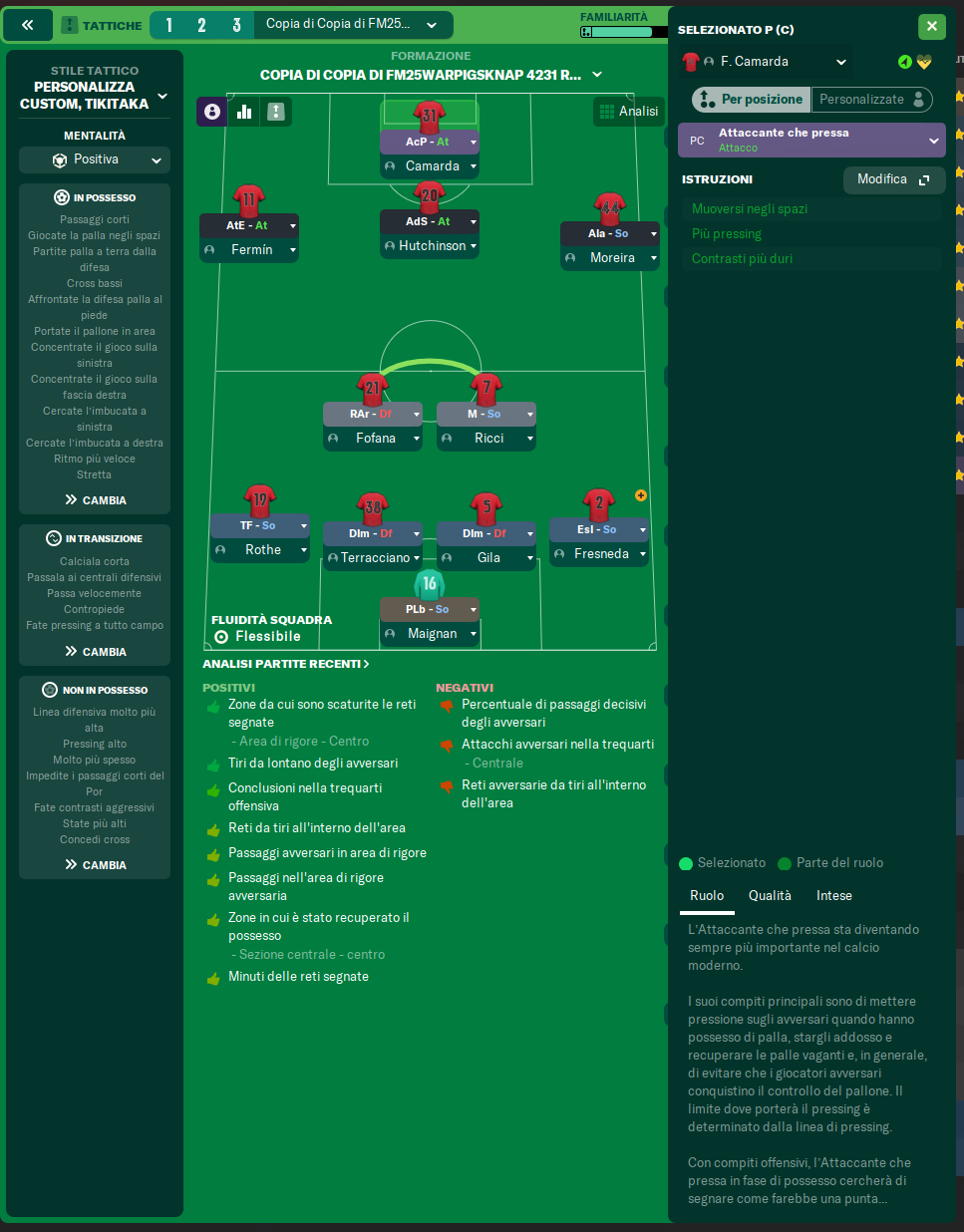
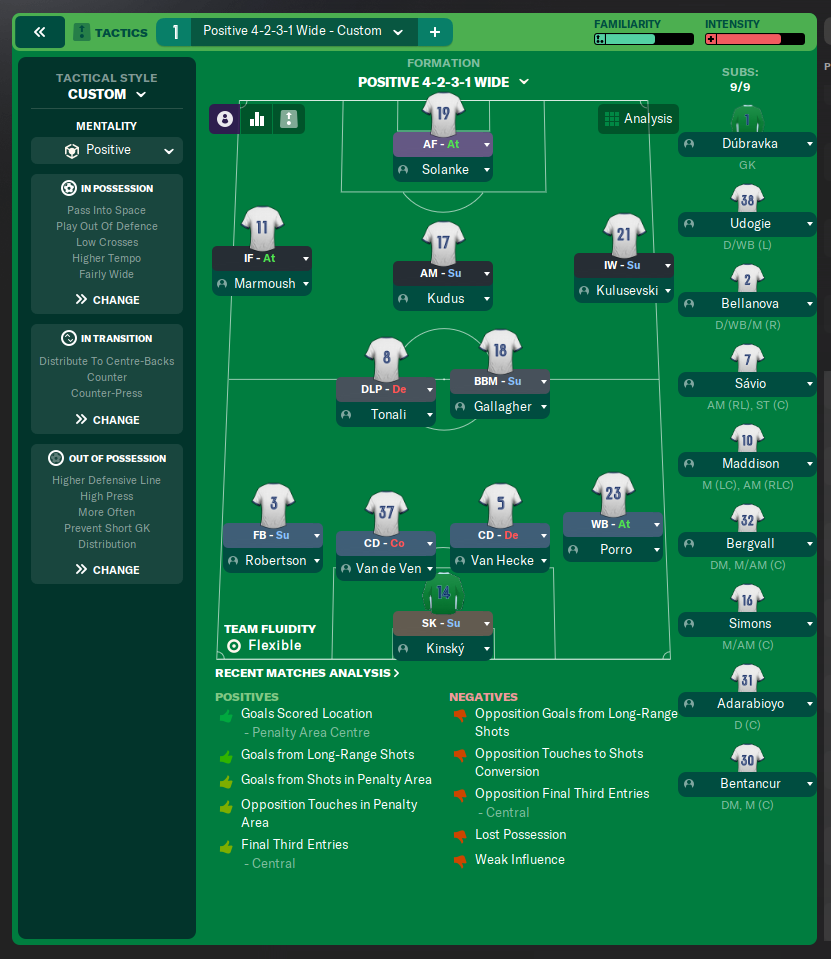
Formation:4-2-3-1 Wide
Team Fluidity:Flexible
In Possession
Play Out Of Defence
Focus Play Down the Left
Pass Into Space
In Transition
Counter-Press
Counter
Out of Possession
Higher Defensive Line
Normal Width
Much More Often Prevent Short GK Distribution
Team Shape Without Ball
Shape:4-4-2 Block
Description:A compact defensive shape with the midfielders dropping back to support the defense when out of possession.
Evidence:Two banks of four are established during defensive phases.
Team Shape With Ball
Shape:4-2-3-1
Description:Fluid attacking shape engaging wing-backs and central attackers for a potent forward threat.
Evidence:Four attackers providing multiple passing options through the center and wide channels.
Phase Description
Attacking Play
Quick transitions with width provided by the wing-backs and a strong focal point in the complete forward.
Defensive Transition
Immediate counter-pressing upon losing possession to regain control.
Main Focus
Utilizing the pace and movement of the inside forward and shadow striker to exploit defensive weaknesses.
Key Strengths
Dynamic Wing Play
The wing-backs (WB) provide width and support in attacks, stretching the opposition.
Central Attacking Threat
The combination of an attacking midfielder (AM) with inside forwards (IF) creates confusion in the opposition's defense.
Fluid Transition
Ability to transition quickly from defense to attack with multiple players involved.
Conflicting Directions
High Defensive Line Risk
Utilizing a higher defensive line may expose the back line to pacey counter-attacks.
Midfield Overload
Potential for midfield congestion if opponent uses a three-man midfield.
Dependence on Wing-Backs
Heavy reliance on wing-backs could lead to vulnerabilities if they are caught high up the pitch.
Tactical Suggestions
Tweak Defensive Line
Consider dropping the defensive line slightly to mitigate potential counterattack vulnerabilities.
Adjust Midfield Roles
Utilize a more balanced midfield configuration, possibly introducing a box-to-box role.
Explore Variations in Attack
Experiment with a more fluid attacking system, allowing players to interchange positions.
Ask Questions About Your Lineup
Related Tactics
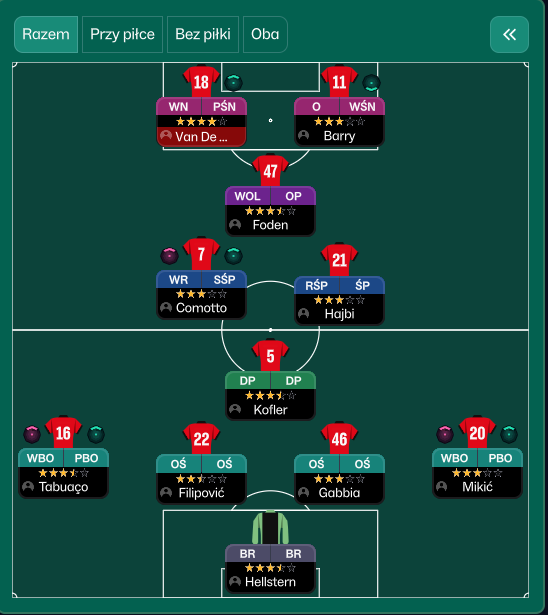
More Fluid Counter-Attack tactics
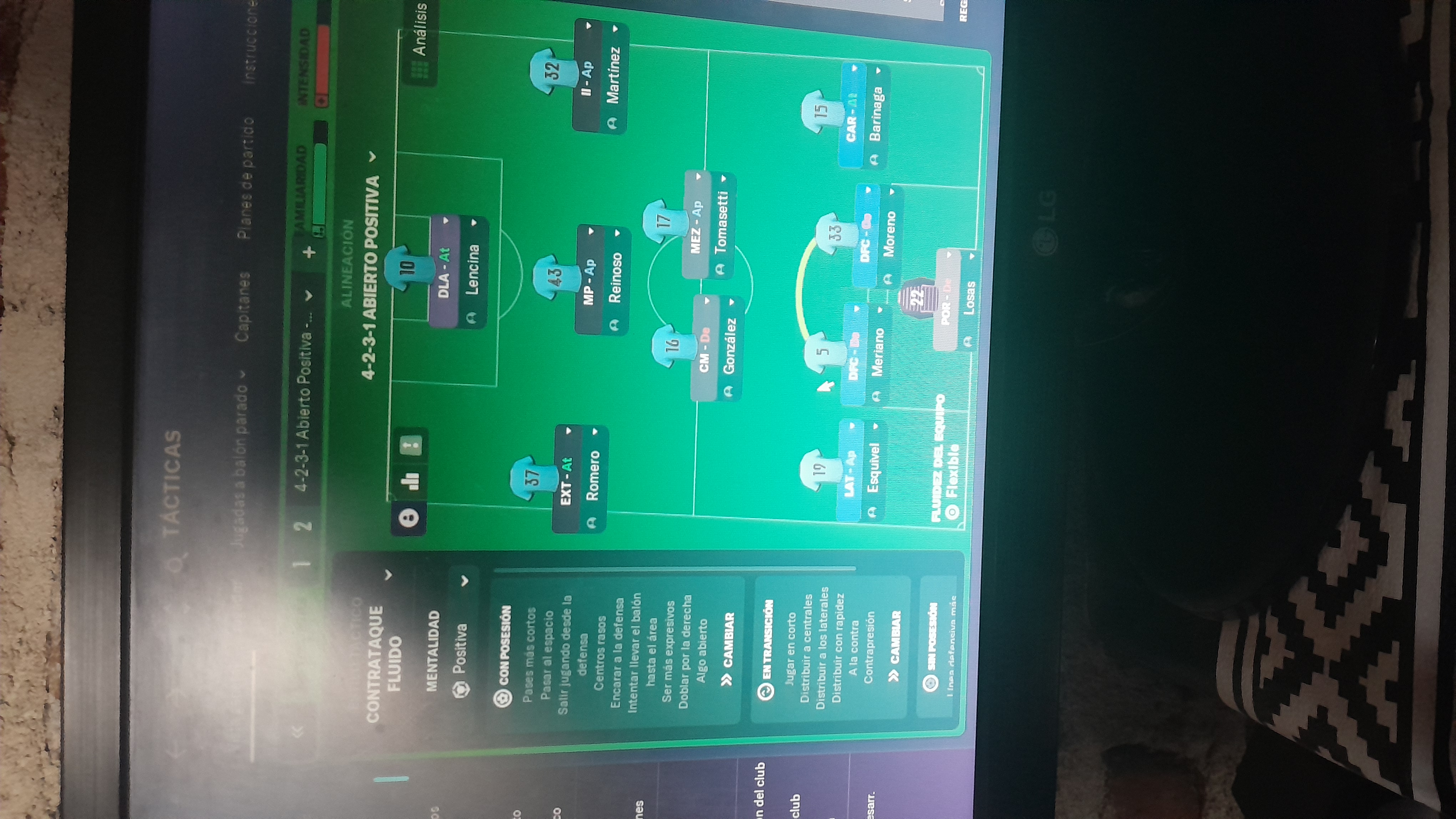
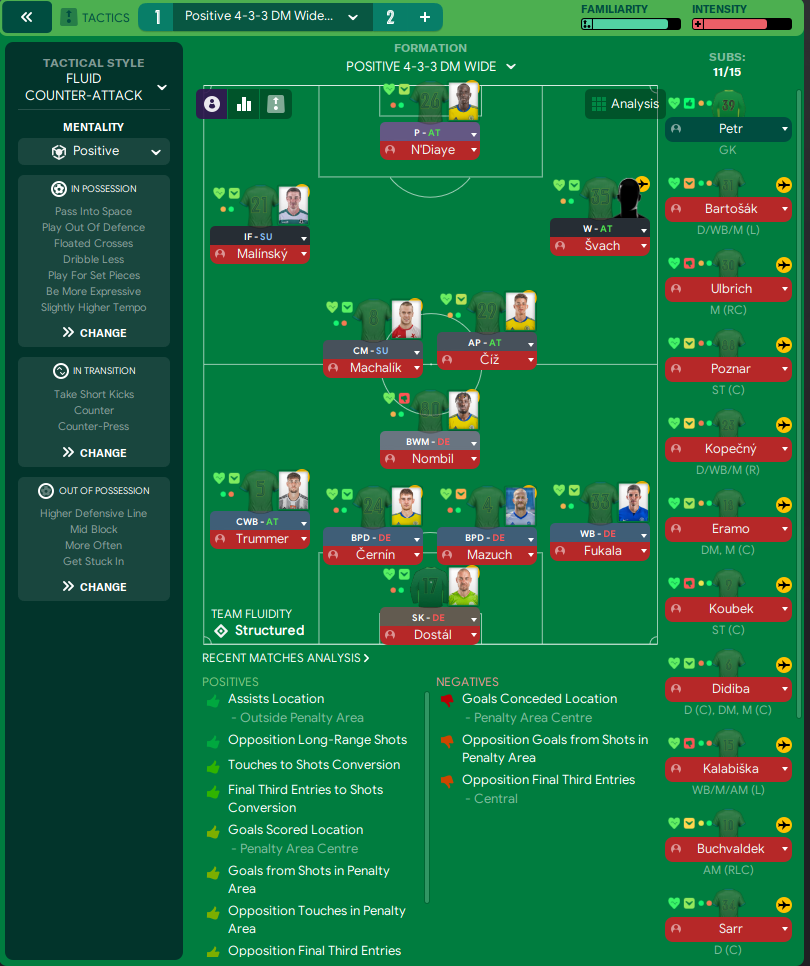
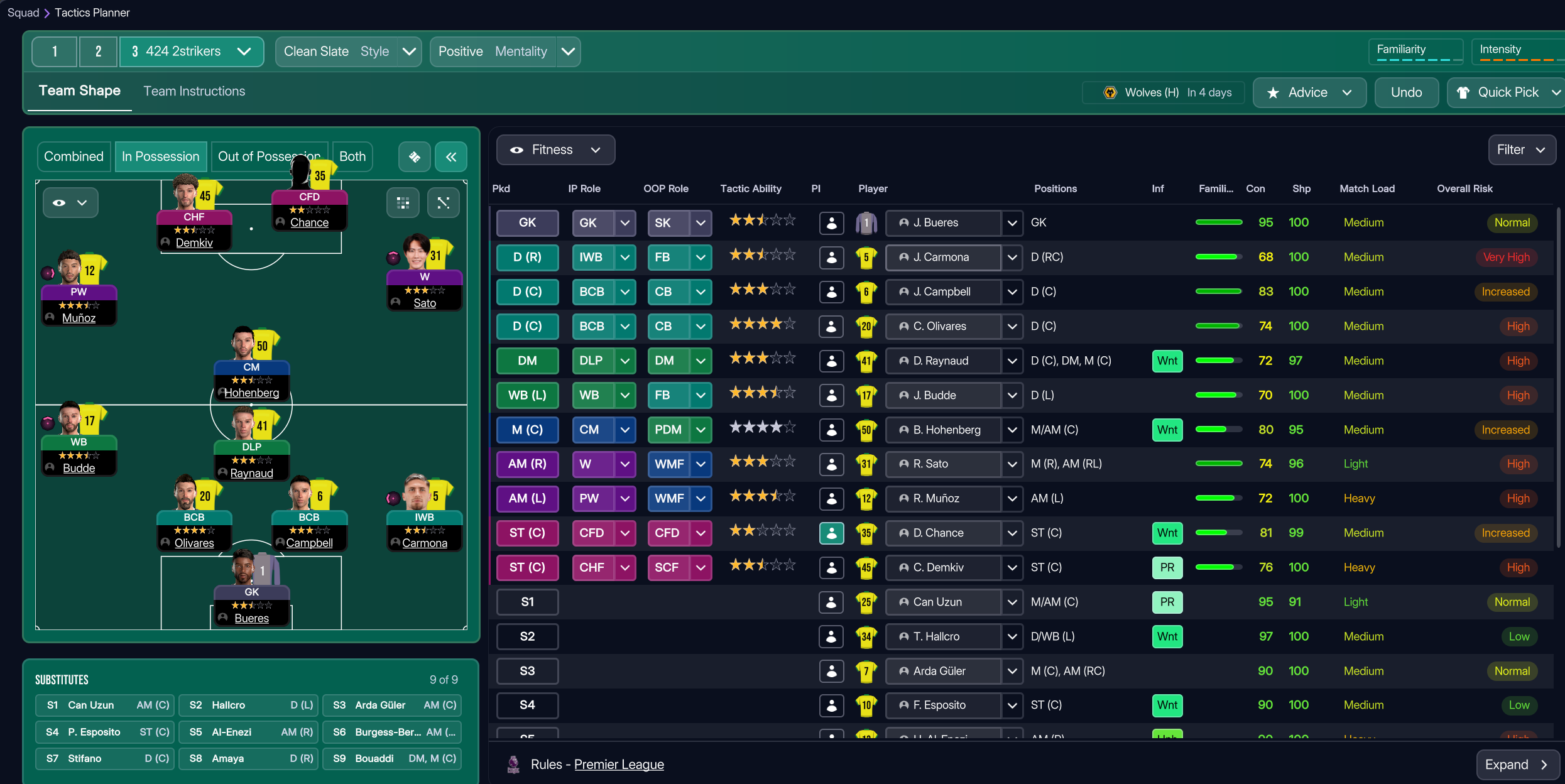
Guides for this formation
The tactical theory behind the 4-2-3-1 Wide: roles, instructions, and the trade-offs that decide whether the system holds up.
Player pairings
Midfield Pairs in 4-2-3-1 and 4-4-2
Double pivots and flat pairs in 4-2-3-1 and 4-4-2: when each pairing works, when it collapses, and the AMC unicorn that rescues both.
Read guide
Playing styles
Gegenpressing: A Full Guide
Klopp-style gegenpressing in FM, including squad profile, line-and-press pairing, sustainable workload, and the antipatterns to avoid.
Read guide