
4-2-3-1 Wide
The tactic utilizes various attacking roles, allowing for flexible offensive movements and creating spaces in the opposition's defense.
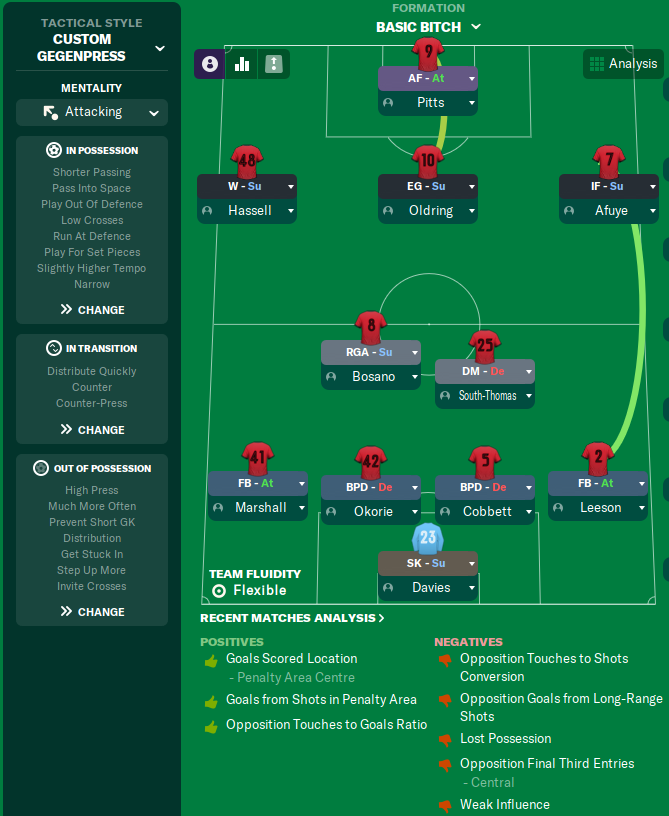
Loading tactical analysis...
Gegenpress
Attacking
4-2-3-1 Wide
Flexible
Shorter Passing
Play Out Of Defence
Run At Defence
Slightly Higher Tempo
Distribute Quickly
Counter
Counter-Press
High Press
Much More Often Prevent Short GK Distribution
Get Stuck In
Step Up More Inviting Press
ST
Advanced Forward
Attack
AMR
Winger
Support
AML
Inverted Forward
Support
AMC
Enganche
Support
CM
Regista
Support
DM
Deep Lying Playmaker
Defend
FB
Full-Back
Attack
BPD
Ball Playing Defender
Defend
GK
Sweeper Keeper
Support
The tactic utilizes various attacking roles, allowing for flexible offensive movements and creating spaces in the opposition's defense.
Employing a high press can quickly regain possession, forcing the opposition into mistakes and allowing for quick transitions into attack.
The 'Inverted Forward' might conflict with the high press if too isolated, risking a lack of support in central areas when pressing.
While the high press aims to disrupt the opposition, it may lead to vulnerability in transitions if players are caught out of position.
What is the team's effectiveness in counter-attacking situations?
Are the wingers consistently getting support from overlapping full-backs?
How often are goals being conceded on counter-attacks?
Are players effectively maintaining positions during pressing?
How well does the midfield manage transitions defensively?
Is the attacking midfielder creating sufficient chances for the forwards?
The tactical theory behind the 4-2-3-1 Wide: roles, instructions, and the trade-offs that decide whether the system holds up.
Double pivots and flat pairs in 4-2-3-1 and 4-4-2: when each pairing works, when it collapses, and the AMC unicorn that rescues both.
Klopp-style gegenpressing in FM, including squad profile, line-and-press pairing, sustainable workload, and the antipatterns to avoid.
FM27 keeps FM26's tactic system. Here is what stays the same, the small changes that can catch you out, and what the new Tactical Effectiveness system asks of you.











