Uploaded Tactic
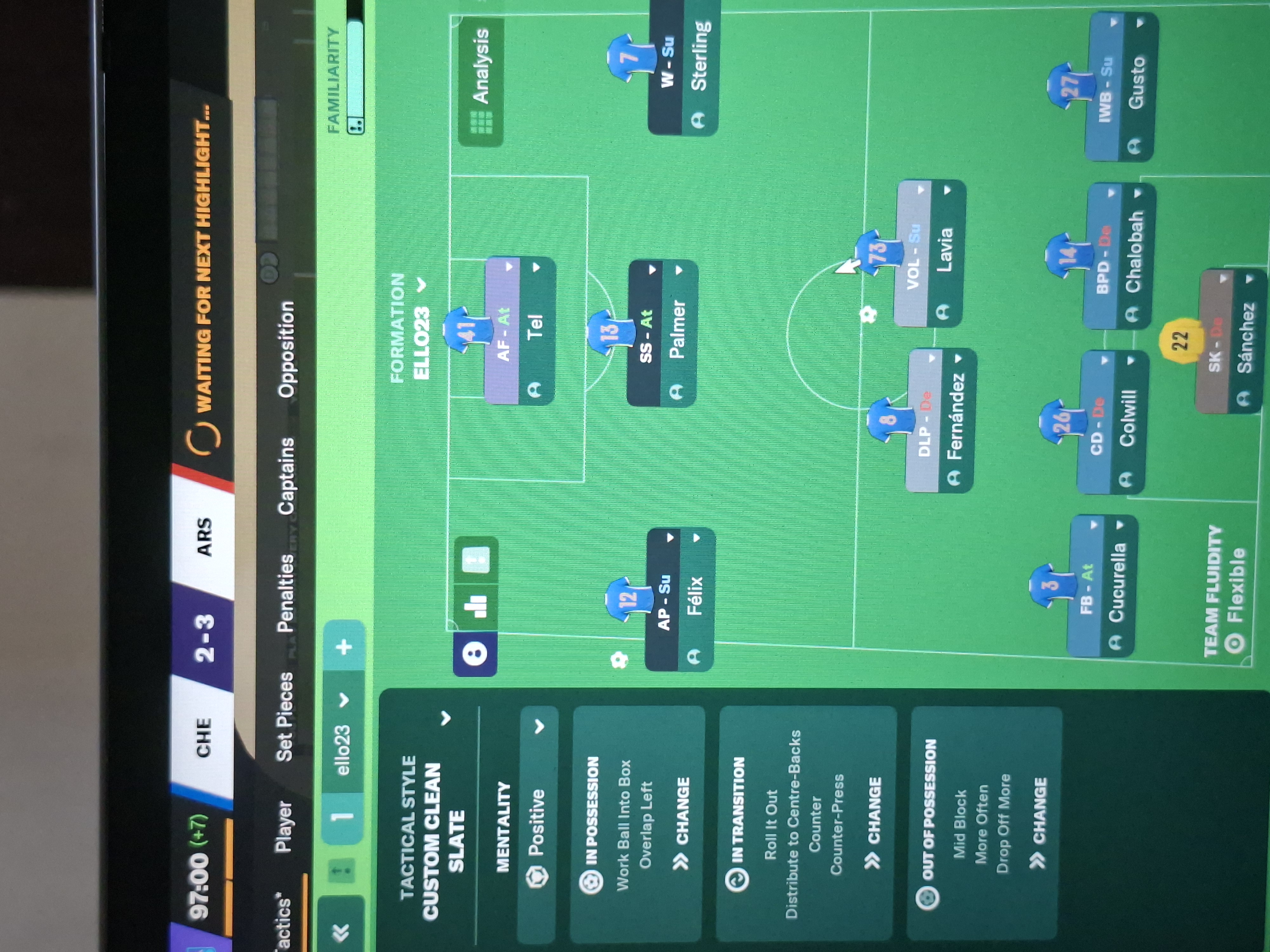
Formation & Style
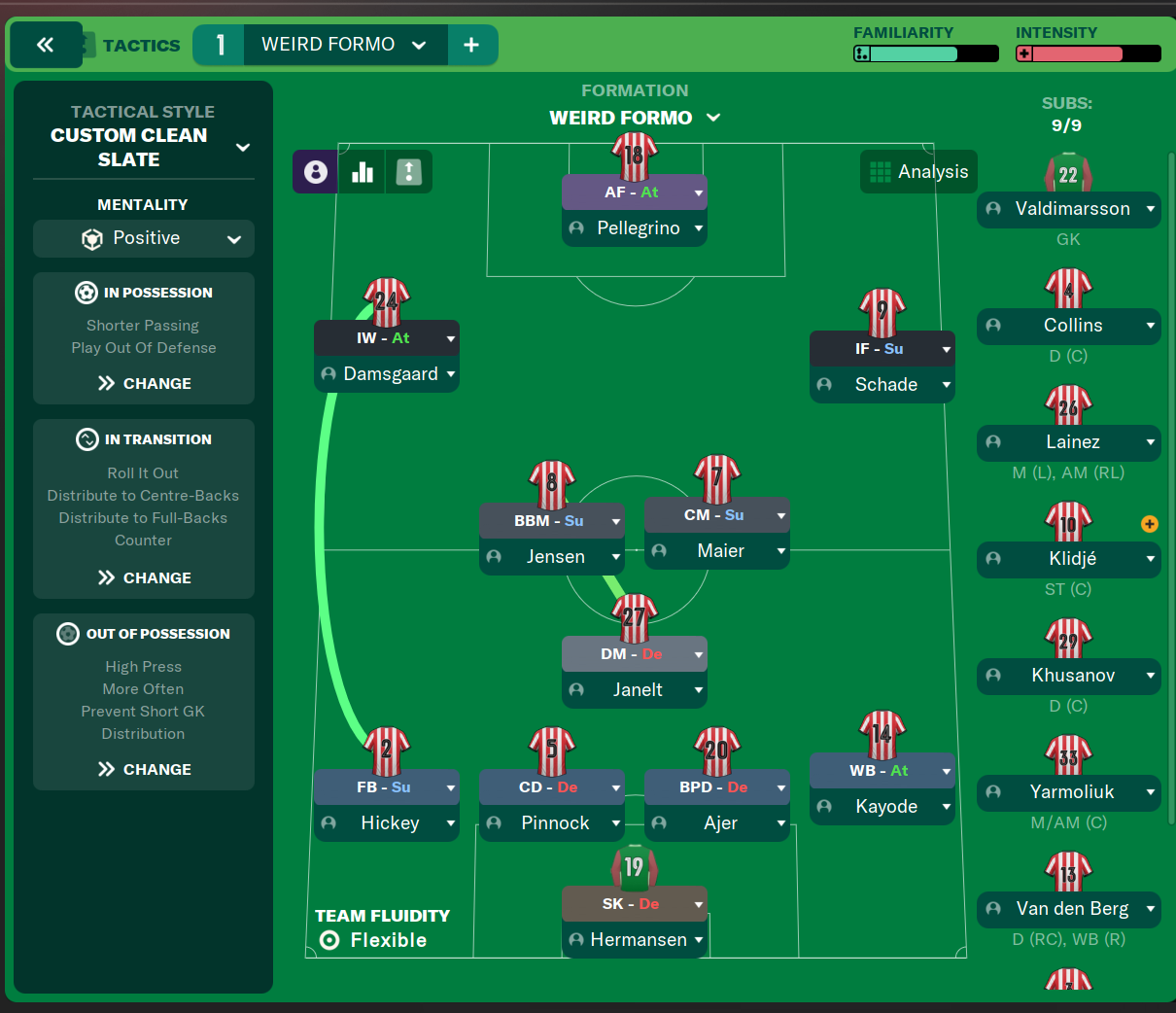
Tactical Style:Custom Clean Slate
Mentality:Positive
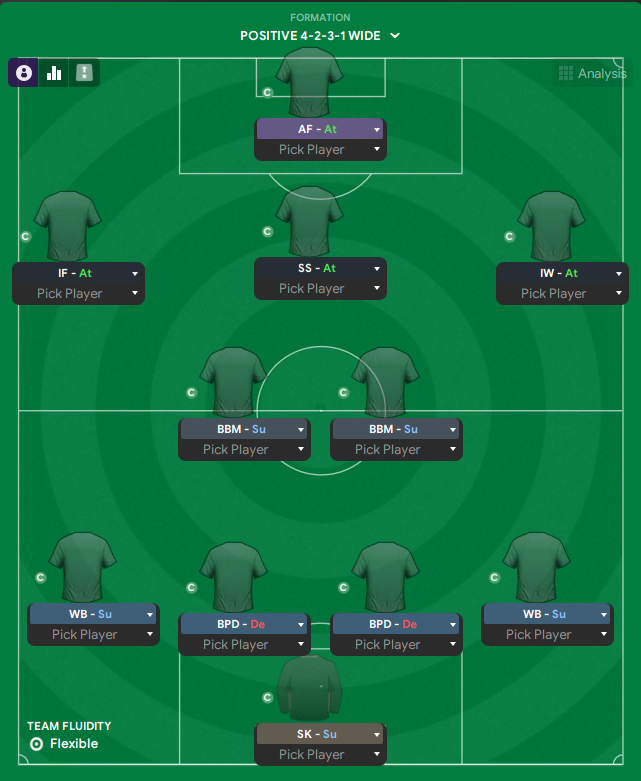
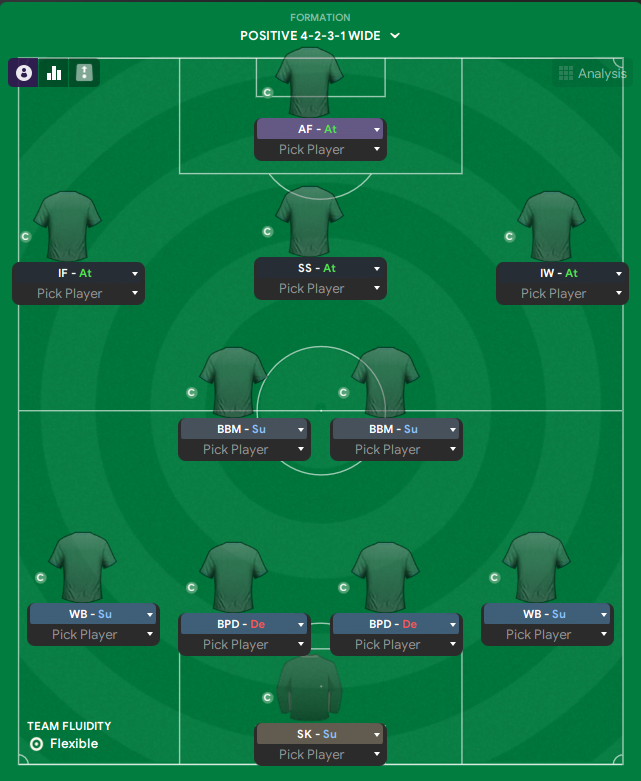
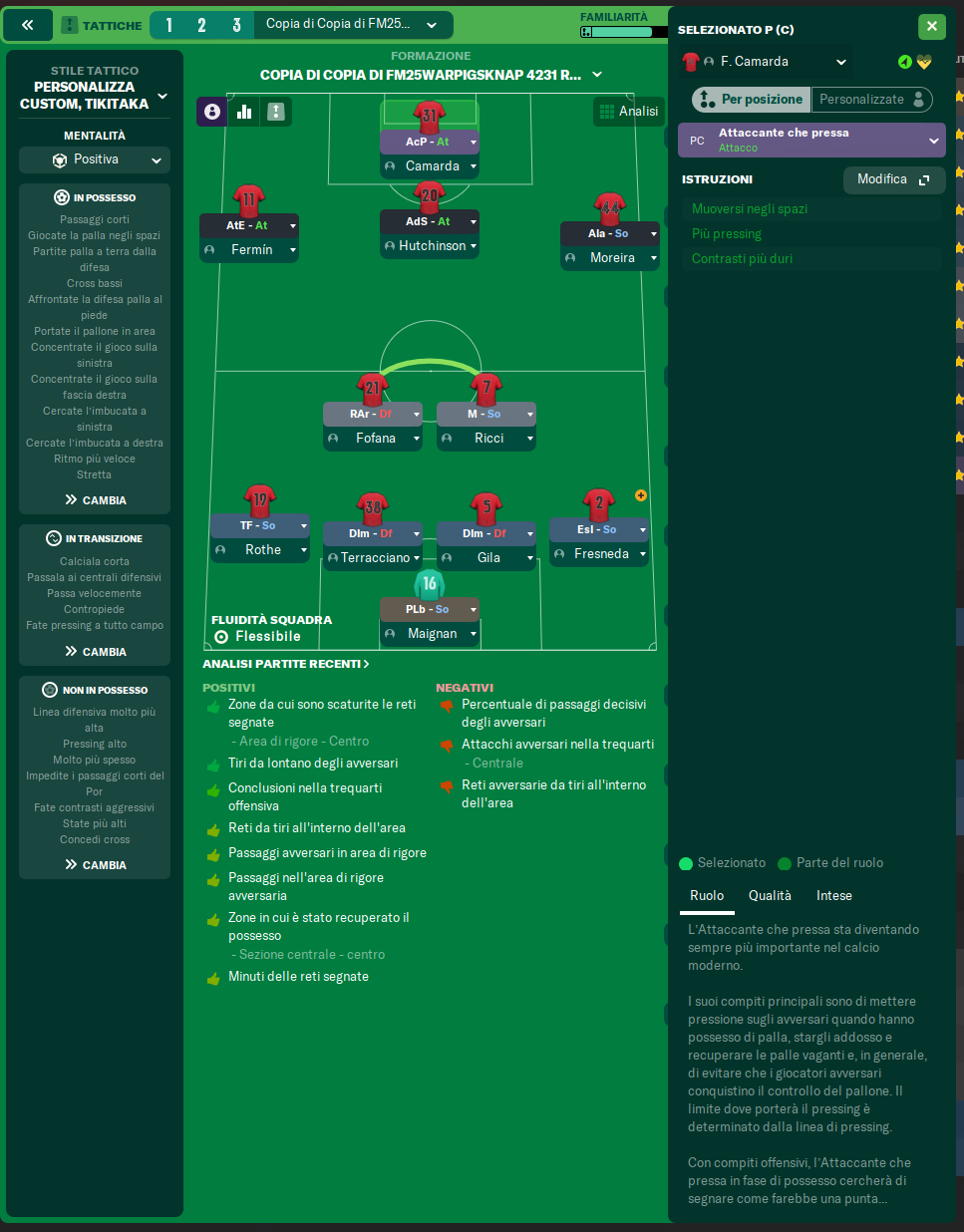
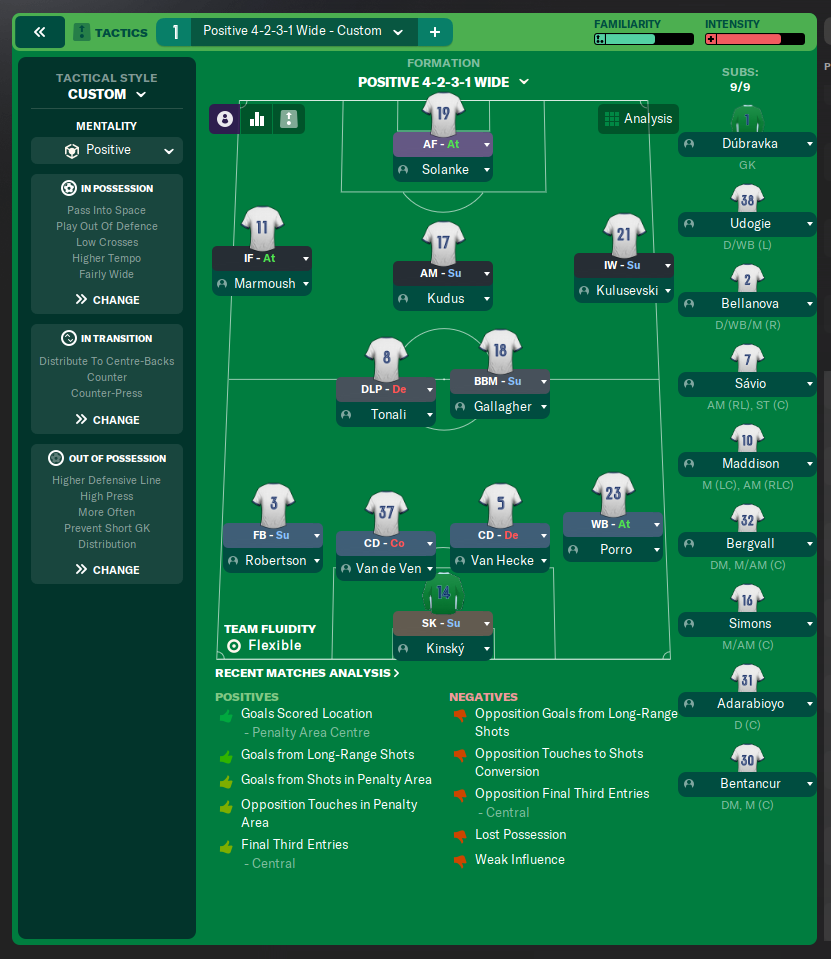
Formation:4-2-3-1 Wide
Team Fluidity:Flexible
In Possession
Work Ball Into Box
Overlap Left
In Transition
Roll It Out
Distribute to Centre-Backs
Counter
Counter-Press
Out of Possession
Mid Block
More Often
Drop Off More
Team Shape Without Ball
Shape:Mid Block
Description:The team adopts a mid block to delay opponent advances and force them into wide areas.
Evidence:Mid Block stance aligned with defensive roles such as CD and BPD offering support.
Team Shape With Ball
Shape:Wide Play
Description:Utilizing wingers and overlapping full-backs to stretch the opposing defense, creating spaces for the strikers.
Evidence:Overlay strategy suggests focusing on overlapping runs and wide play through wingers and full-backs.
Phase Description
Attacking Play
The team focuses on methodically creating chances through central play while utilizing width via the left flank.
Defensive Transition
Exploit opportunities to counter-attack and apply pressure immediately after losing possession.
Main Focus
To dominate possession while looking to create clear-cut opportunities through quick, incisive passing.
Key Strengths
Strong Attacking Versatility
The combination of an Advanced Forward supported by a Shadow Striker and Advanced Playmaker makes the attack unpredictable.
Central Control
With a Deep-Lying Playmaker and a Segundo Volante, the midfield is well equipped for both defensive duties and transitioning play.
Effective Full-Back Contributions
Attacking full-backs can contribute to both the defensive solidity and attacking width.
Conflicting Directions
High Defensive Line with Mid Block
While the team opts for a mid block, the mentality encourages pressing higher, potentially leading to vulnerabilities.
Overlap vs. Central Play
The overlap instruction on the left may conflict with the desire to play through the center effectively.
Counter-Pressing Philosophy
Counter-pressing requires immediate shutdown of opponent transitions which may disrupt the midfield structure.
Tactical Suggestions
Consider Adjusting Midfield Roles
Switching DLP to Support could enhance transition without sacrificing defensive stability.
Reassess Pressing Strategy
Align pressing strategy with defensive block to ensure no gaps appear in the back line.
Diversify Attack Methods
Encouraging right flank play could exploit unmarked space and create balanced attacking avenues.
Ask Questions About Your Lineup
Related Tactics
More Custom Clean Slate tactics
Guides for this formation
The tactical theory behind the 4-2-3-1 Wide: roles, instructions, and the trade-offs that decide whether the system holds up.
Player pairings
Midfield Pairs in 4-2-3-1 and 4-4-2
Double pivots and flat pairs in 4-2-3-1 and 4-4-2: when each pairing works, when it collapses, and the AMC unicorn that rescues both.
Read guide
Playing styles
Gegenpressing: A Full Guide
Klopp-style gegenpressing in FM, including squad profile, line-and-press pairing, sustainable workload, and the antipatterns to avoid.
Read guide