Uploaded Tactic
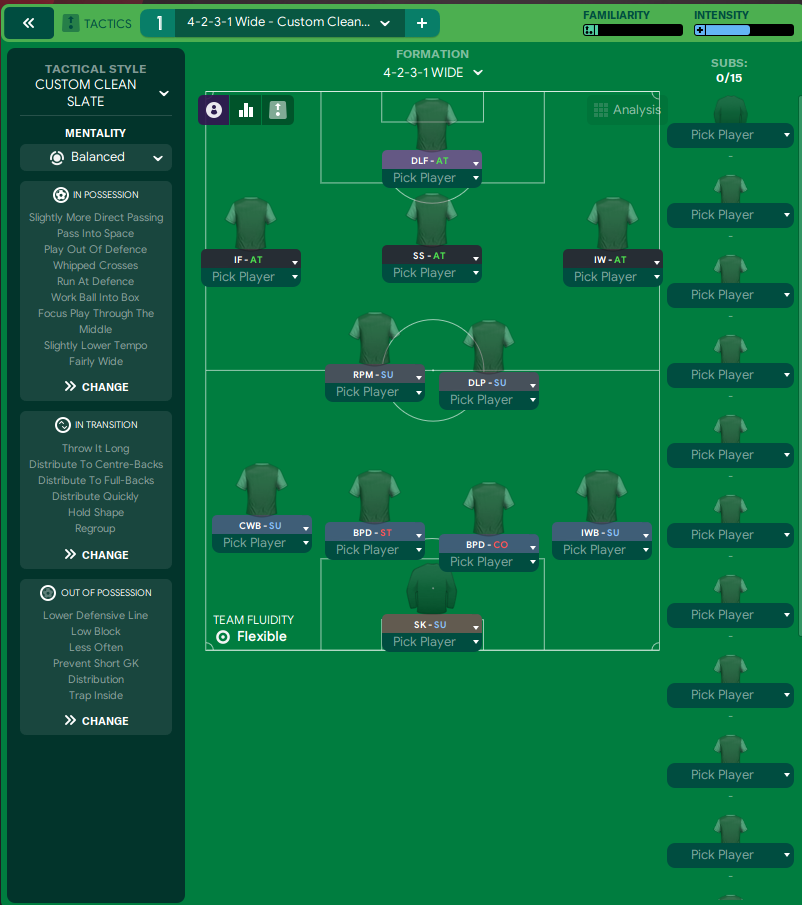
Formation & Style
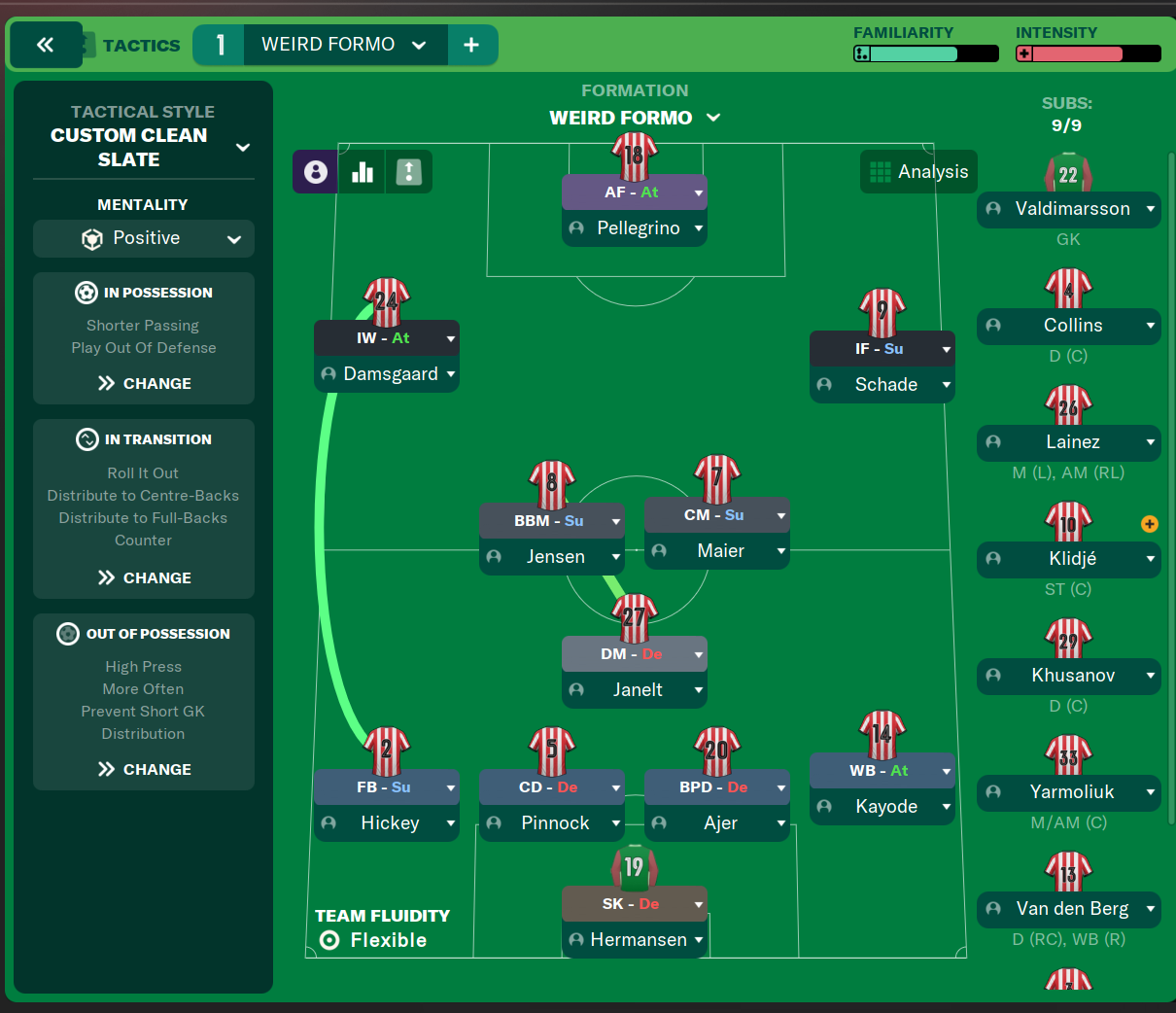
Tactical Style:Custom Clean Slate
Mentality:Balanced
Formation:4-2-3-1 Wide
Team Fluidity:Flexible
In Possession
Slightly More Direct Passing
Pass Into Space
Play Out Of Defence
Whipped Crosses
Run At Defence
Work Ball Into Box
Focus Play Through The Middle
Slightly Lower Tempo
In Transition
Throw It Long
Distribute To Centre-Backs
Distribute To Full-Backs
Distribute Quickly
Hold Shape
Regroup
Out of Possession
Lower Defensive Line
Low Block
Less Often
Prevent Short GK Distribution
Trap Inside
Team Shape Without Ball
Shape:4-2-3-1
Description:A compact defensive shape that ensures width is maintained via wing-backs, supporting the back four.
Evidence:Two BPDs in central defence along with lower defensive line tactics.
Team Shape With Ball
Shape:4-2-3-1
Description:A wide attacking setup aiming to stretch opposition defences while maintaining central penetration.
Evidence:Ranged attacking midfielders supported by wing-backs and a flexible attacking structure.
Phase Description
Attacking Play
Utilizes width and direct passing to penetrate defensive lines, focusing play through central channels.
Defensive Transition
Focuses on quickly regrouping and holding shape, enabling the team to regain defensive solidity.
Main Focus
Creating goal-scoring opportunities through combinations in midfield and wide play.
Key Strengths
Dynamic Midfield Combination
The pairing of a Roaming Playmaker and Deep-Lying Playmaker allows for fluid transitions and creative overloads.
Fluid Forward Line
The shadow striker and inside forward can interchange positions, creating confusion for defenders.
Versatile Wing-Backs
The Complete Wing-Back and Inverted Wing-Back roles provide width and allow for complex attacking rotations.
Conflicting Directions
Lower Defensive Line vs. Pressing
A low block may reduce pressure on the opposition but can lead to passive defending.
Inverted Wing-Back Role
Inverted Wing-Backs tend to occupy central spaces which may conflict with central midfield roles.
Balance in Mentality
A balanced mentality might limit offensive exuberance given the high attacking potential of the front three.
Tactical Suggestions
Adjust Mentality for Attacking Phase
Consider switching to an attacking mentality to better utilize the offensive capabilities.
Explore Wing Play Tactics
Use specific instructions like 'Stay Wide' for wide players to stretch opposition defenses more effectively.
Tactical Flexibility
Consider switching roles between the shadow striker and inside forward as the game develops to confuse defenses.
Ask Questions About Your Lineup
Related Tactics
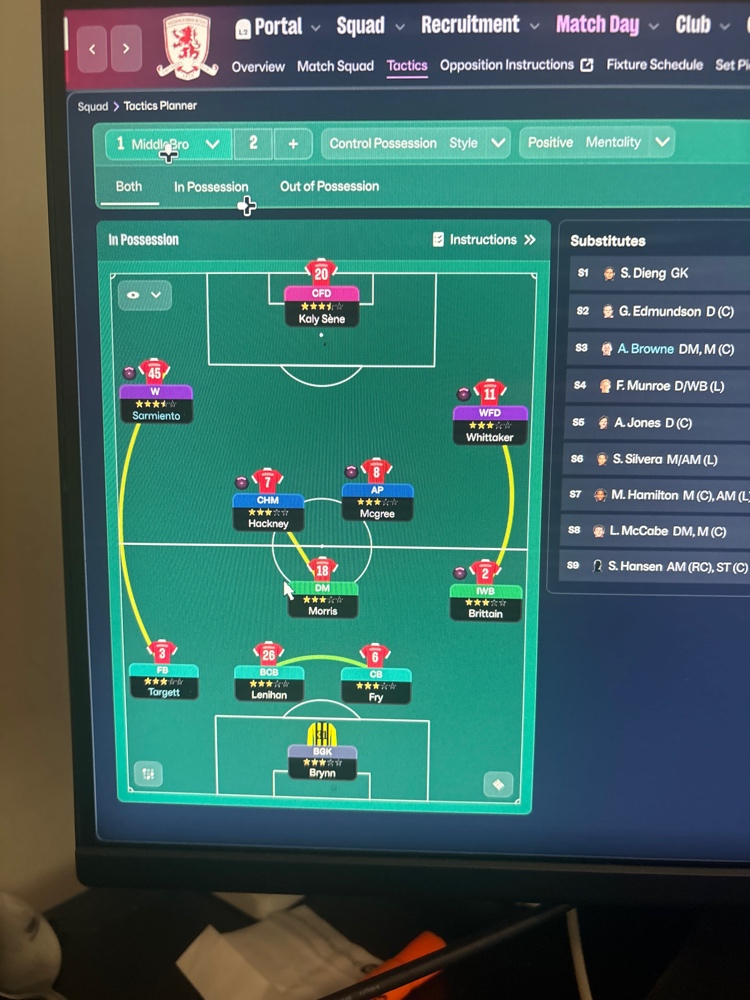
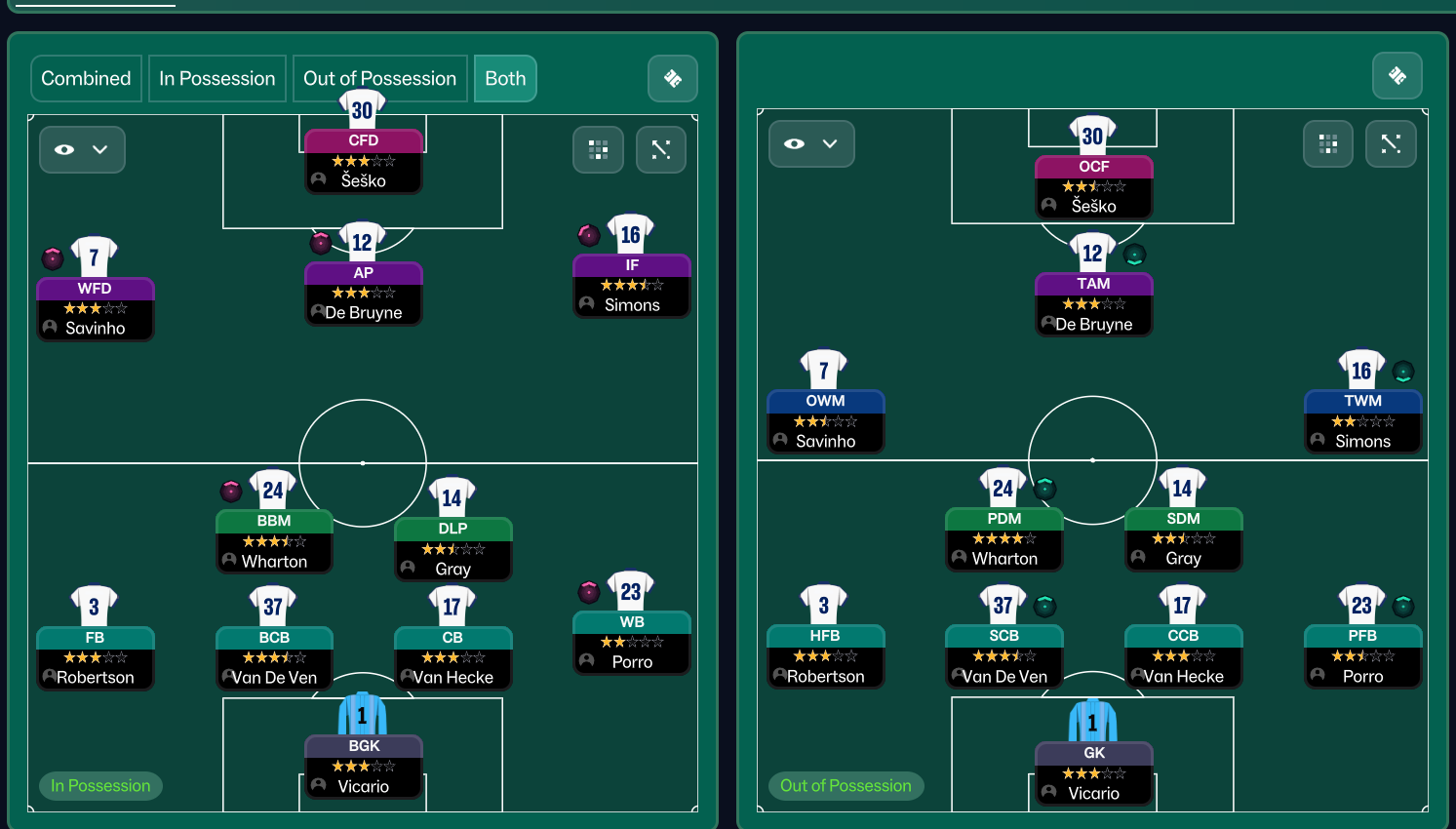
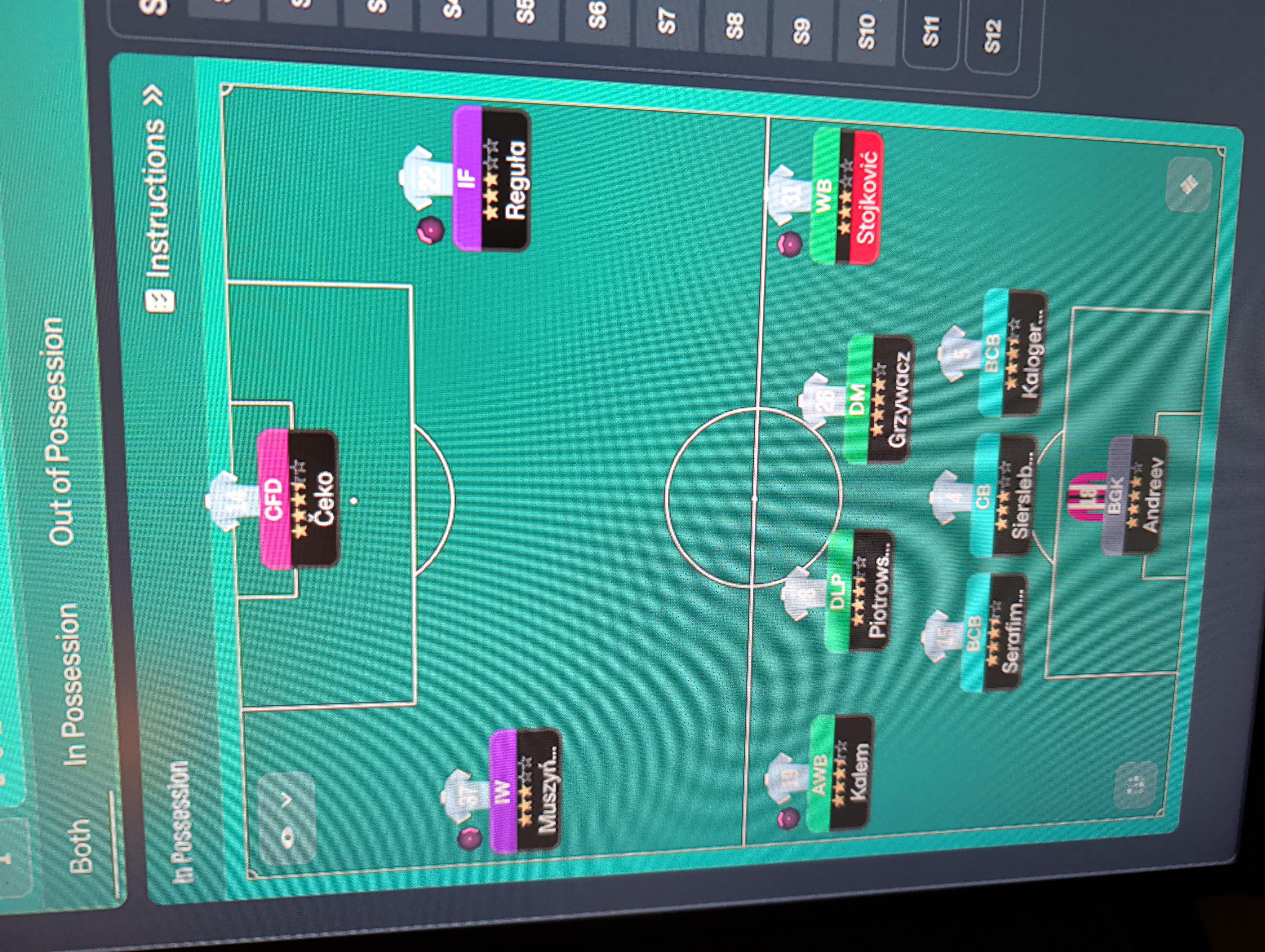
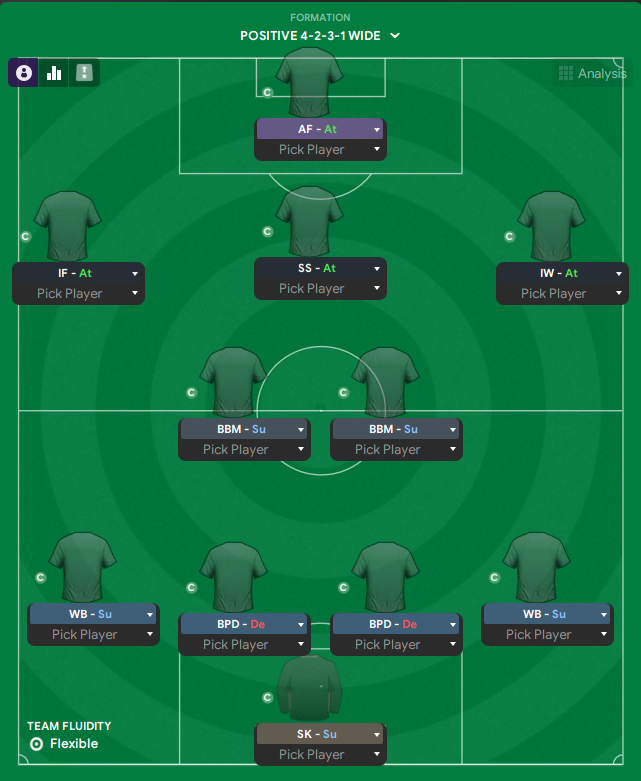
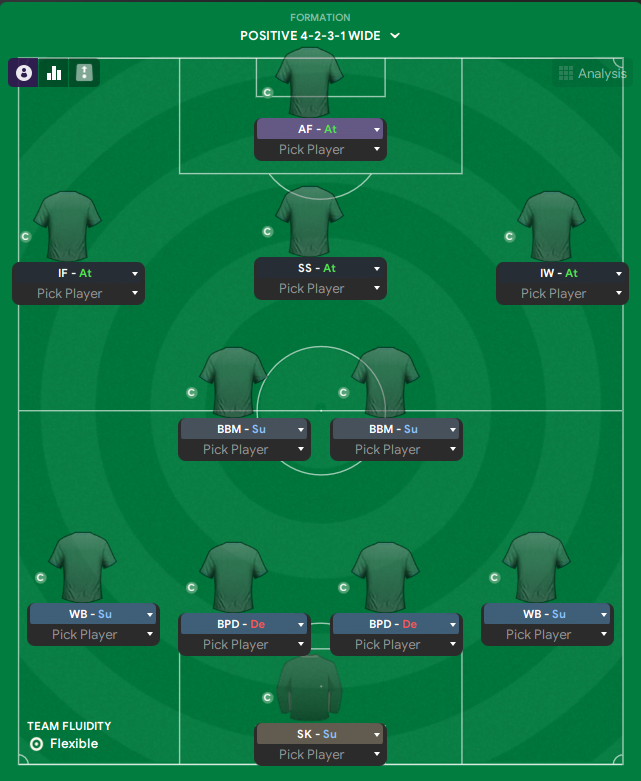
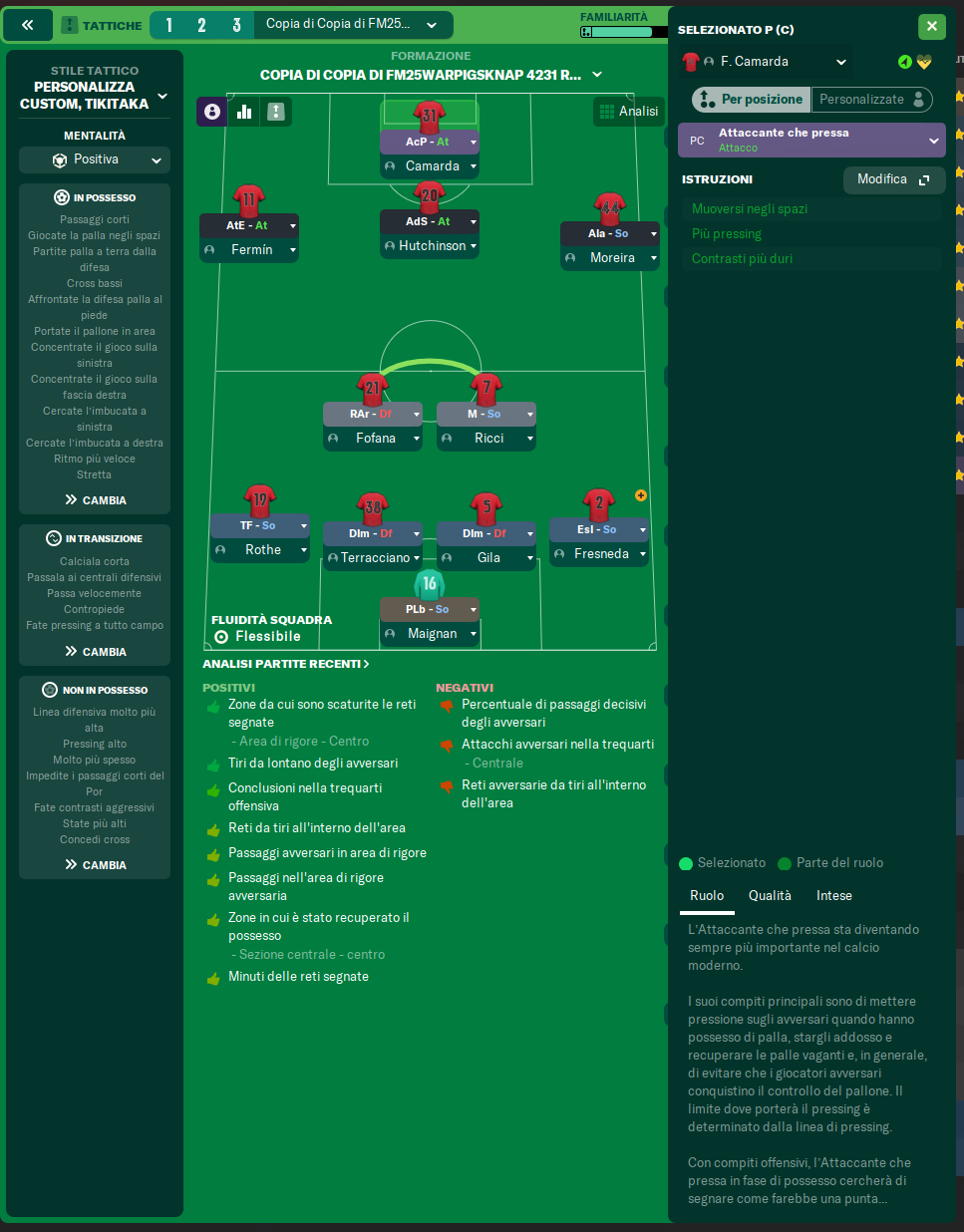
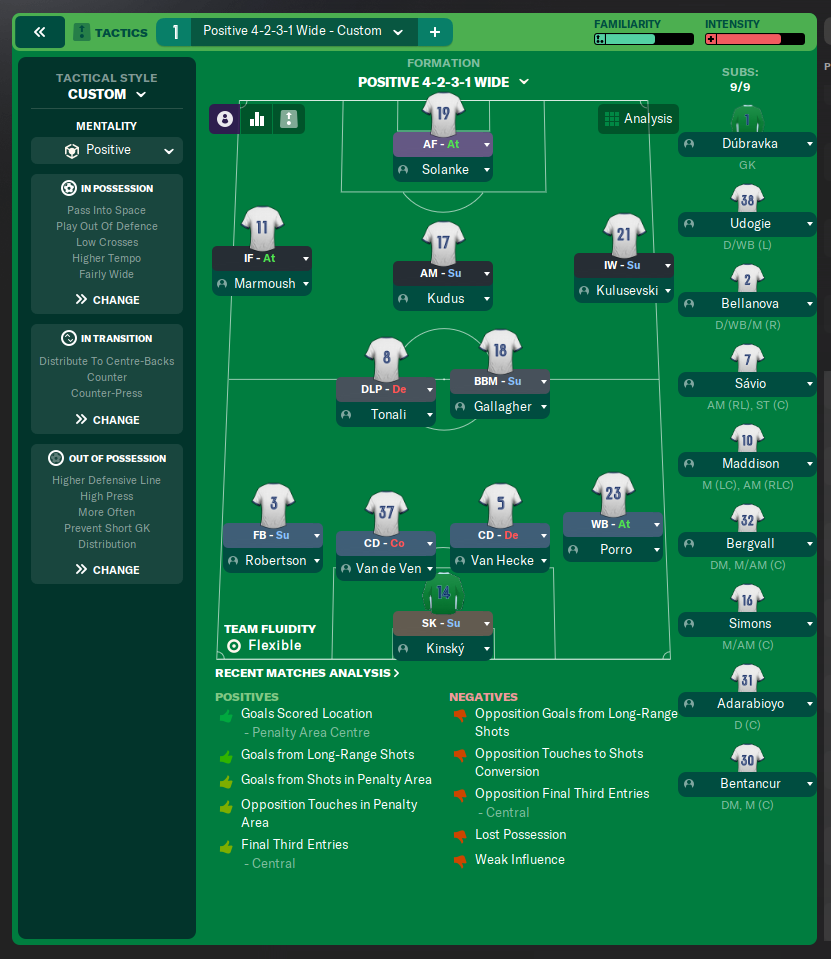
More Custom Clean Slate tactics
Guides for this formation
The tactical theory behind the 4-2-3-1 Wide: roles, instructions, and the trade-offs that decide whether the system holds up.
Player pairings
Midfield Pairs in 4-2-3-1 and 4-4-2
Double pivots and flat pairs in 4-2-3-1 and 4-4-2: when each pairing works, when it collapses, and the AMC unicorn that rescues both.
Read guide
Playing styles
Gegenpressing: A Full Guide
Klopp-style gegenpressing in FM, including squad profile, line-and-press pairing, sustainable workload, and the antipatterns to avoid.
Read guide