
4-2-3-1 Wide
The high press can disrupt opposition buildup, creating quick turnover opportunities.
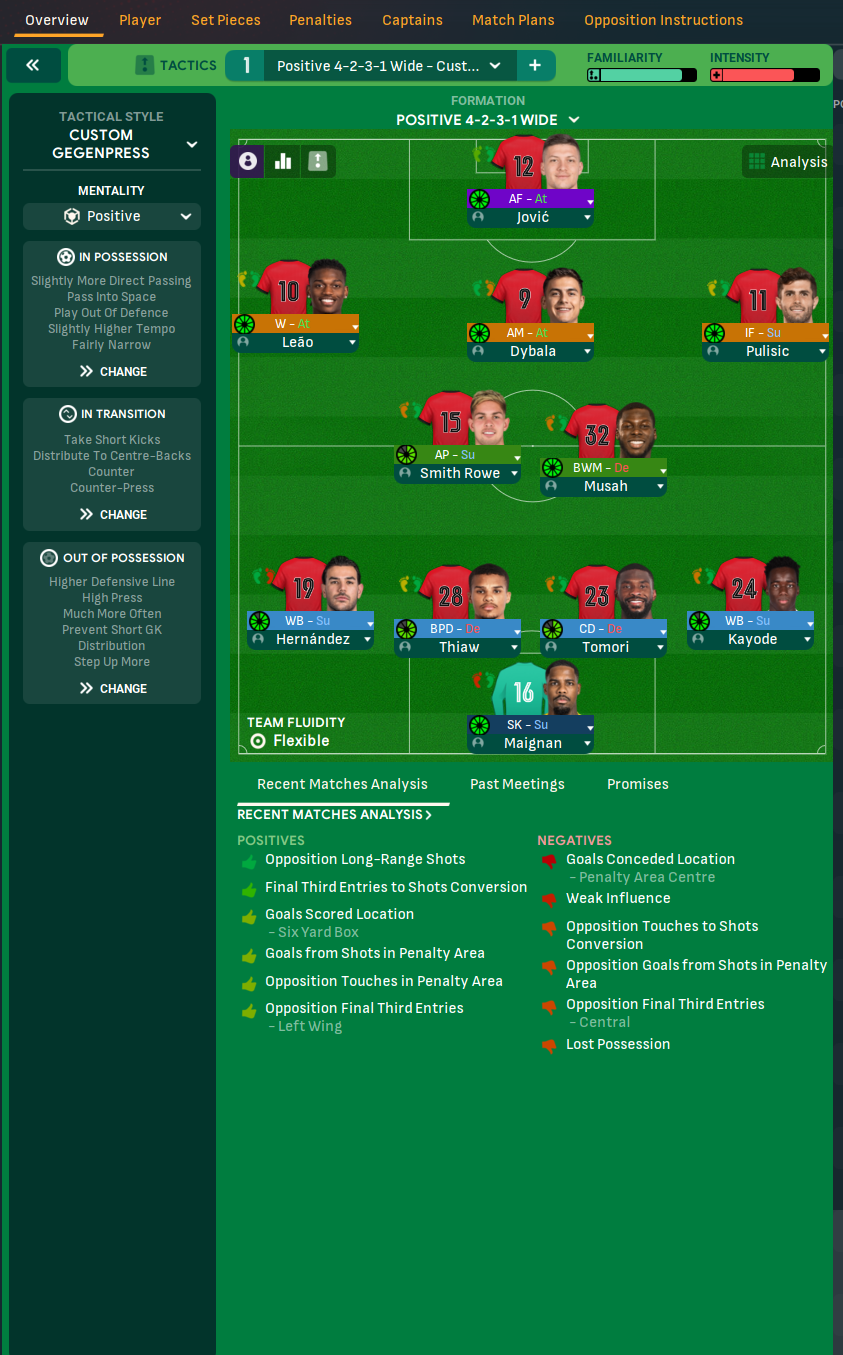
Loading tactical analysis...
Gegenpress
Positive
4-2-3-1 Wide
Flexible
Slightly More Direct Passing
Pass Into Space
Higher Tempo
Take Short Kicks
Distribute To Centre-Backs
Counter-Press
Higher Defensive Line
High Press
Much More Often
Prevent Short GK Distribution
ST
Advanced Forward
Attack
AM
Attacking Midfielder
Attack
W
Winger
Attack
BWM
Ball Winning Midfielder
Defend
AP
Advanced Playmaker
Support
The high press can disrupt opposition buildup, creating quick turnover opportunities.
Utilizing wingers and wing-backs spread the play, creating space for central players.
The high defensive line may be vulnerable to well-timed counter-attacks, exposing the backline.
With multiple attacking roles, a lack of defensive cover could lead to vulnerabilities in midfield.
How can we improve our defensive shape while maintaining high pressing?
Are our wide players effectively supporting central movements?
What adjustments can enhance our midfield control during transitions?
How can we defend against counter-attacks more effectively?
Is our attacking fluidity translating to goal-scoring opportunities?
Should we adopt a more conservative approach against teams with fast attackers?
The tactical theory behind the 4-2-3-1 Wide: roles, instructions, and the trade-offs that decide whether the system holds up.
Double pivots and flat pairs in 4-2-3-1 and 4-4-2: when each pairing works, when it collapses, and the AMC unicorn that rescues both.
Klopp-style gegenpressing in FM, including squad profile, line-and-press pairing, sustainable workload, and the antipatterns to avoid.
Protect a 1-0, chase a 1-0, hold a draw away. How to manage game state in FM through duties and roles, not by lurching to Defensive.











