Uploaded Tactic
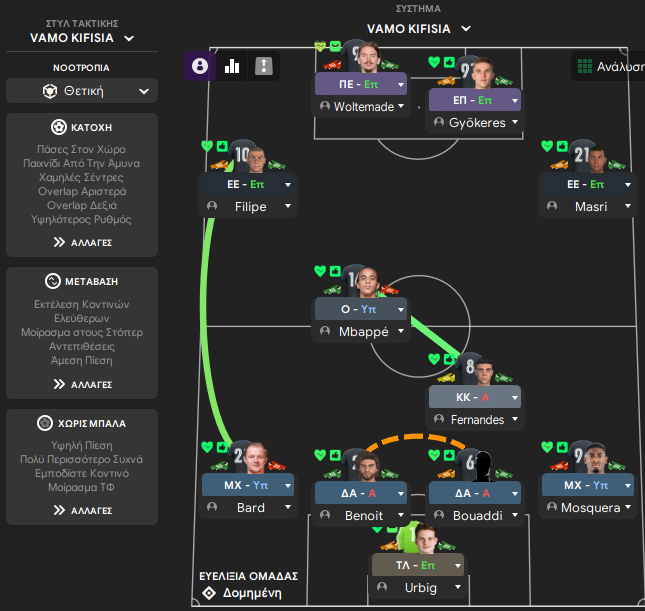
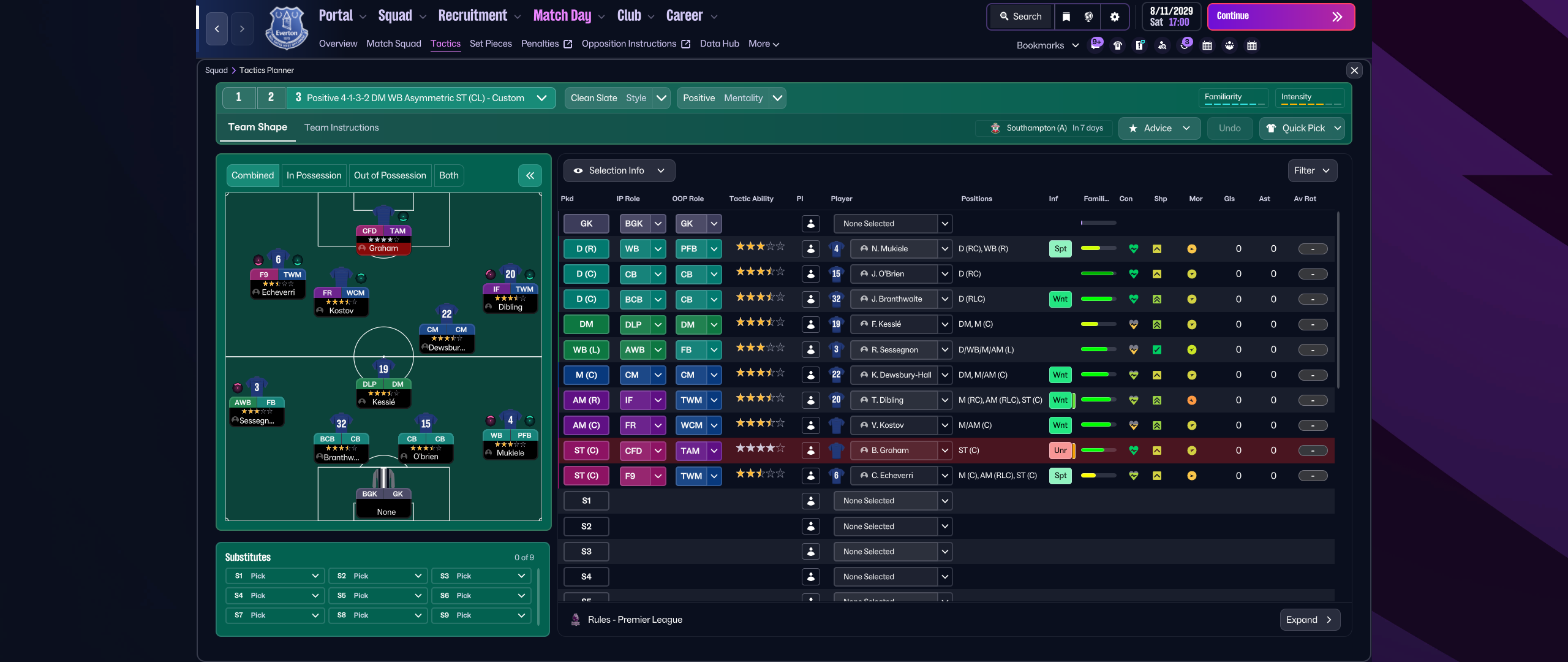
Formation & Style
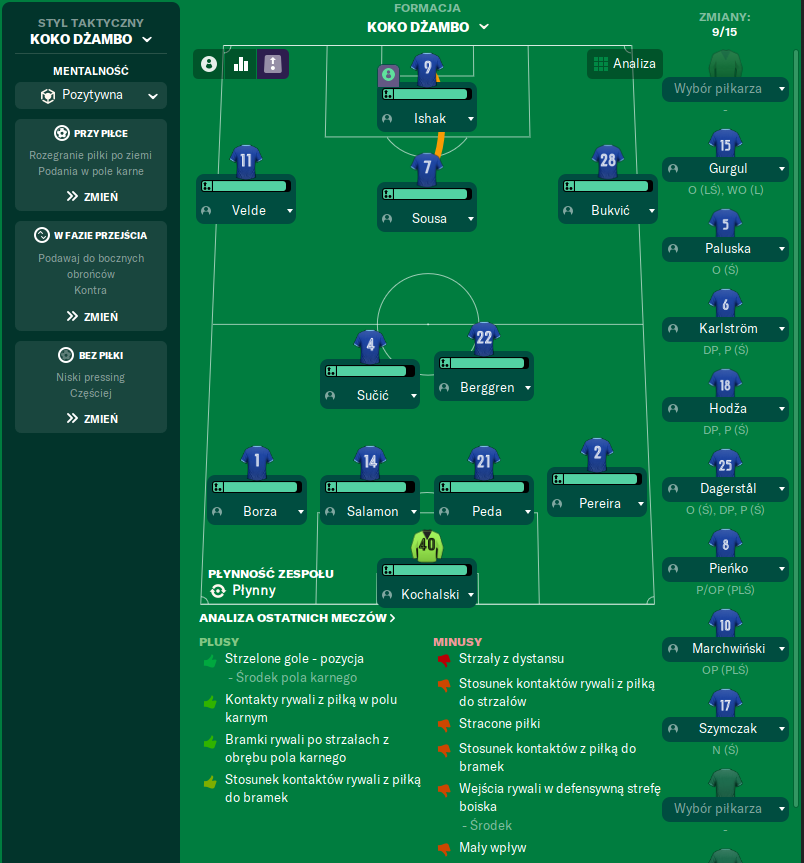
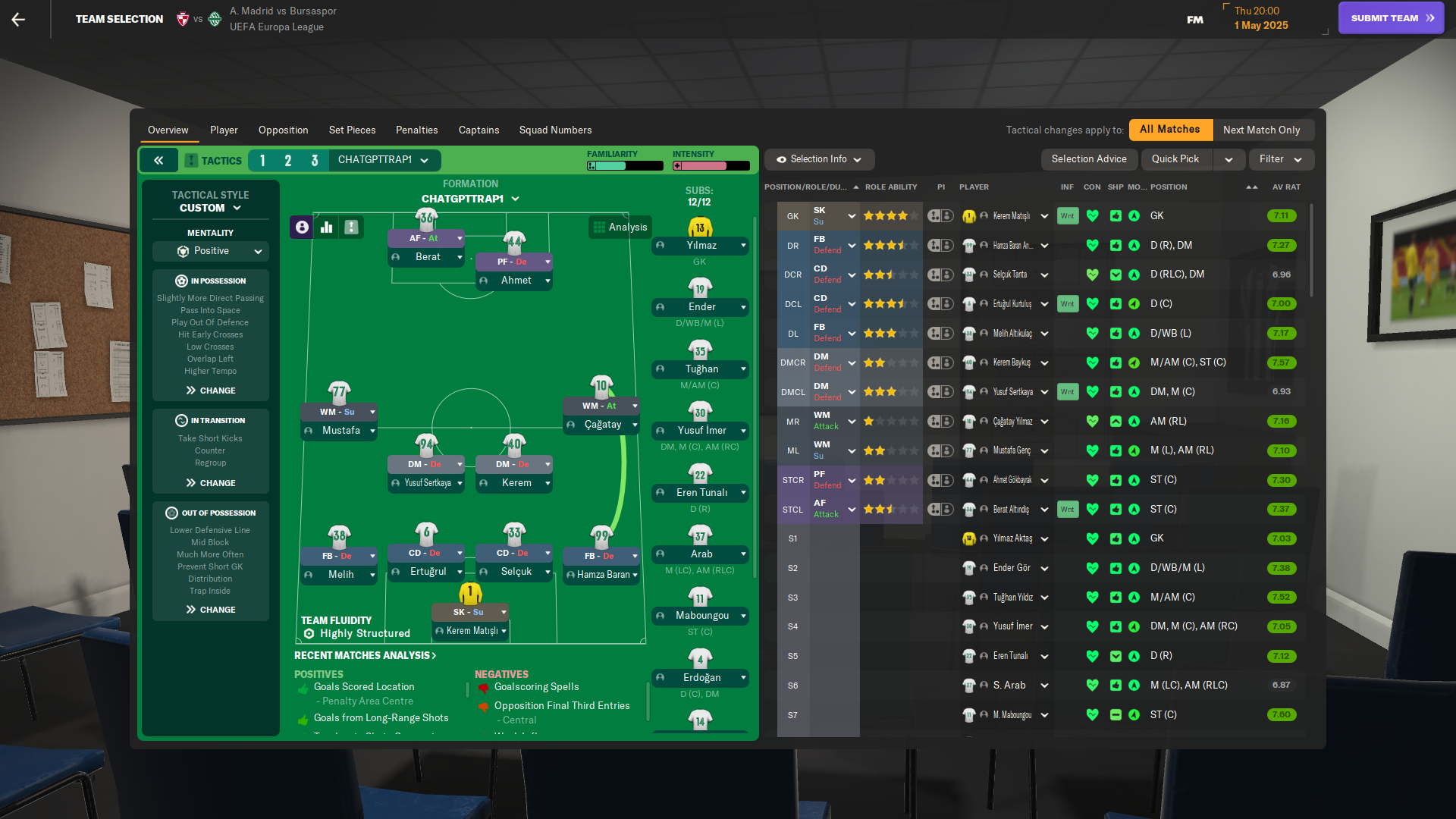
Tactical Style:Positive
Mentality:Positive
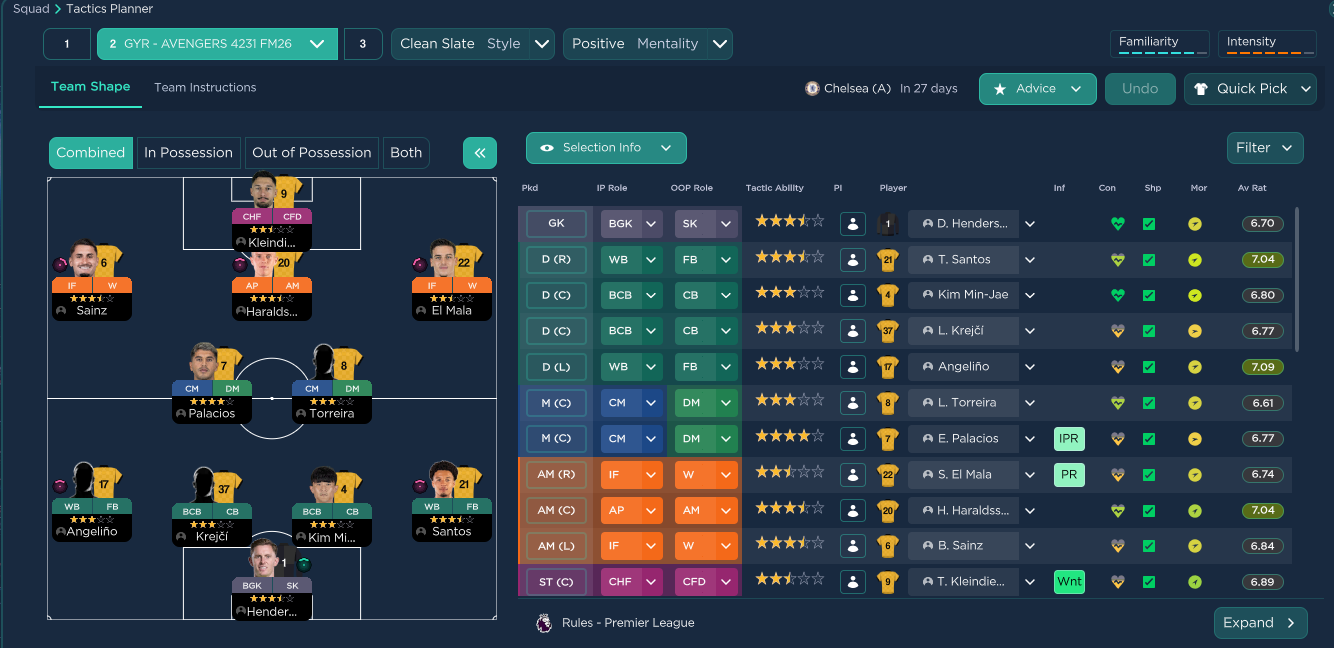
Formation:4-2-3-1 Wide
Team Fluidity:Flexible
In Possession
Short Passing
Lower Defensive Line
Overlap Left
In Transition
Counter-Press
Counter
Out of Possession
Higher Defensive Line
Tighter Marking
Team Shape Without Ball
No team shape without ball data available
Team Shape With Ball
No team shape with ball data available
Key Strengths
Creative Attackers
Utilizes skilled wingers and a complete forward to create multiple attacking avenues.
Solid Midfield Balance
The combination of a box-to-box midfielder and a deep-lying playmaker provides defensive cover while supporting the attack.
High Pressing Style
Encourages immediate retrieval of the ball after losing possession, disrupting opponent's play.
Overlapping Full-Backs
Full-backs provide width and support the wingers, creating overloads on the flanks.
Conflicting Directions
Defensive Line Issues
Higher defensive line could create vulnerabilities against fast counterattacks, given the pressing tactics.
Role Conflicts
The wingers’ attacking duties may clash with the need for defensive stability if full-backs push forward excessively.
Over-reliance on Wingers
If opposing teams neutralize the wingers, the formation may struggle to break down defenses.
Lack of Width from Midfield
The central midfield may become congested, limiting effective distribution to the flanks.
Tactical Suggestions
Adjust Defensive Line
Consider dropping the defensive line to mitigate counter-attack threats, especially from quick forwards.
Incorporate Inverted Wingers
Switch one winger to an inverted role to allow them to cut inside, creating more central spaces.
Enhance Midfield Freedom
Allow the box-to-box midfielder more freedom to join the attack, enhancing midfield dynamics.
Rotate Player Roles
Experiment with roles in the midfield to find optimal fit and maximize player strengths across the formation.
Ask Questions About Your Lineup
Related Tactics
More Positive tactics
Guides for this formation
The tactical theory behind the 4-2-3-1 Wide: roles, instructions, and the trade-offs that decide whether the system holds up.
Player pairings
Midfield Pairs in 4-2-3-1 and 4-4-2
Double pivots and flat pairs in 4-2-3-1 and 4-4-2: when each pairing works, when it collapses, and the AMC unicorn that rescues both.
Read guide
Playing styles
Gegenpressing: A Full Guide
Klopp-style gegenpressing in FM, including squad profile, line-and-press pairing, sustainable workload, and the antipatterns to avoid.
Read guide