Uploaded Tactic
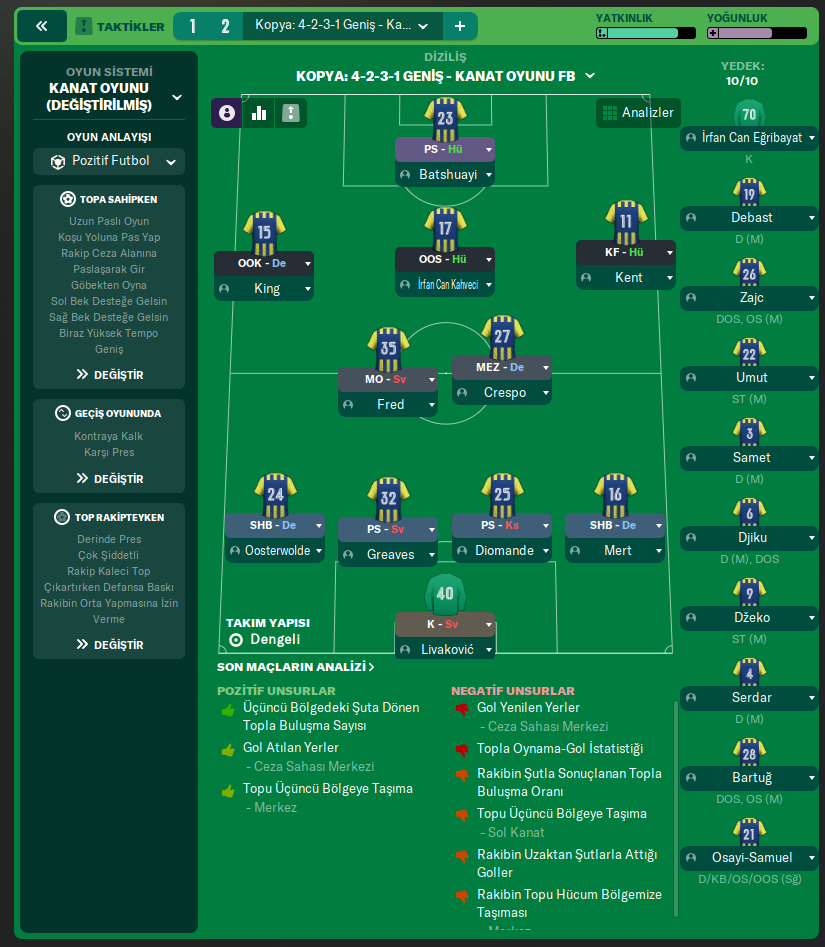
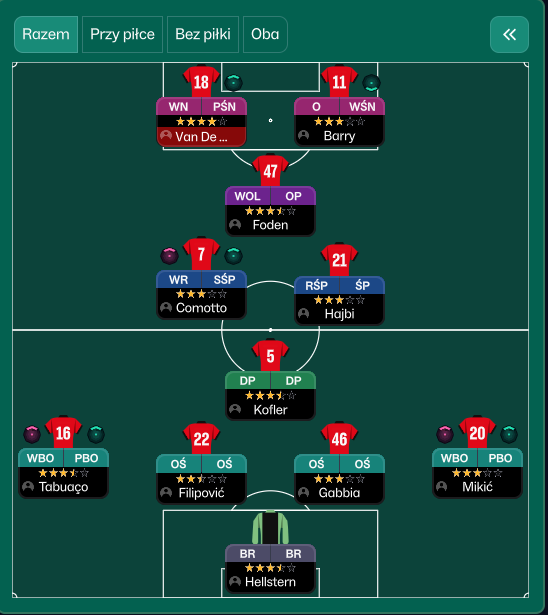
Formation & Style
Tactical Style:Winger Play
Mentality:Positive
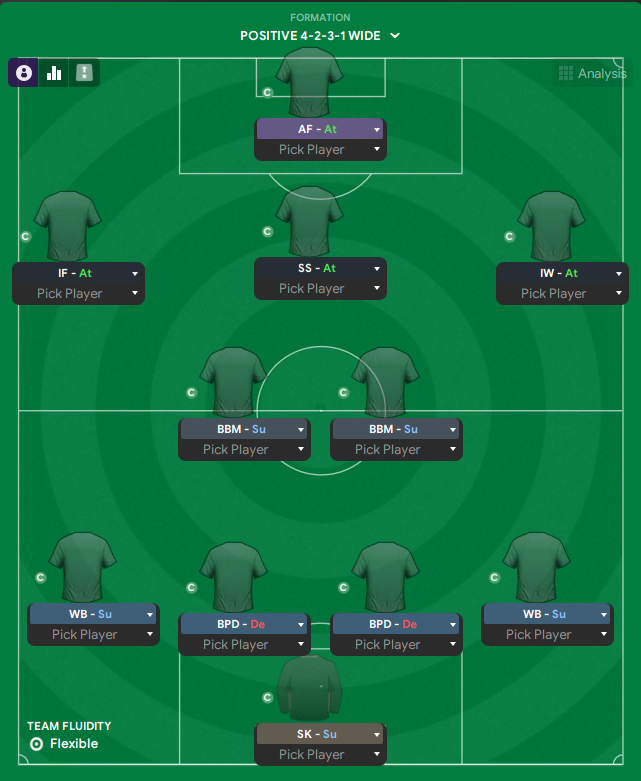
Formation:4-2-3-1 Wide
Team Fluidity:Balanced
In Possession
Play Out of Defence
Focus Play Down Both Flanks
Work Ball into Box
In Transition
Counter-Press
Counter
Out of Possession
Higher Defensive Line
Higher Line of Engagement
Prevent Short GK Distribution
Team Shape Without Ball
Shape:4-4-2
Description:Two banks of four providing a strong defensive structure.
Evidence:Two Centre-Backs and two defensive-minded Wing-Backs contribute to the solid defensive block.
Team Shape With Ball
Shape:4-3-3
Description:A fluid attacking setup with wingers and a central striker supported by midfield runners.
Evidence:Inside forwards creating a triangular shape with the striker, complemented by attacking midfield support.
Phase Description
Attacking Play
The team looks to exploit the flanks with inside forwards and wing-backs supporting the attack, focusing on building up play patiently.
Defensive Transition
Upon losing possession, the team applies immediate pressure to regain the ball quickly, characterized by a quick counter-press.
Main Focus
Utilizing wingers and wing-backs to create width and stretch the opponent's defense.
Key Strengths
Wide Play Threat
With both inside forwards and wing-backs, the team effectively stretches the opposition.
High Pressing Ability
The pressing forward helps initiate quick turnovers.
Balanced Midfield Play
The midfield combination offers both defensive security and attacking support.
Conflicting Directions
Vulnerability to Counter-Attacks
With higher defensive and engagement lines, quick counters may exploit the spaces left behind.
Lack of Central Presence
Focus on wide play may lead to congestion in central areas.
Dependence on Wing Play
Heavy reliance on wing play might become predictable.
Tactical Suggestions
Adjust Defensive Line
Consider lowering the defensive line to mitigate risks from counter-attacks.
Incorporate a Central Playmaker
Adding a more central playmaking role could enhance midfield creativity.
Reassess Wide Play Strategy
Diversifying attacking patterns could reduce predictability.
Ask Questions About Your Lineup
Related Tactics
Guides for this formation
The tactical theory behind the 4-2-3-1 Wide: roles, instructions, and the trade-offs that decide whether the system holds up.
Player pairings
Midfield Pairs in 4-2-3-1 and 4-4-2
Double pivots and flat pairs in 4-2-3-1 and 4-4-2: when each pairing works, when it collapses, and the AMC unicorn that rescues both.
Read guide
Playing styles
Gegenpressing: A Full Guide
Klopp-style gegenpressing in FM, including squad profile, line-and-press pairing, sustainable workload, and the antipatterns to avoid.
Read guide