Uploaded Tactic
Formation & Style
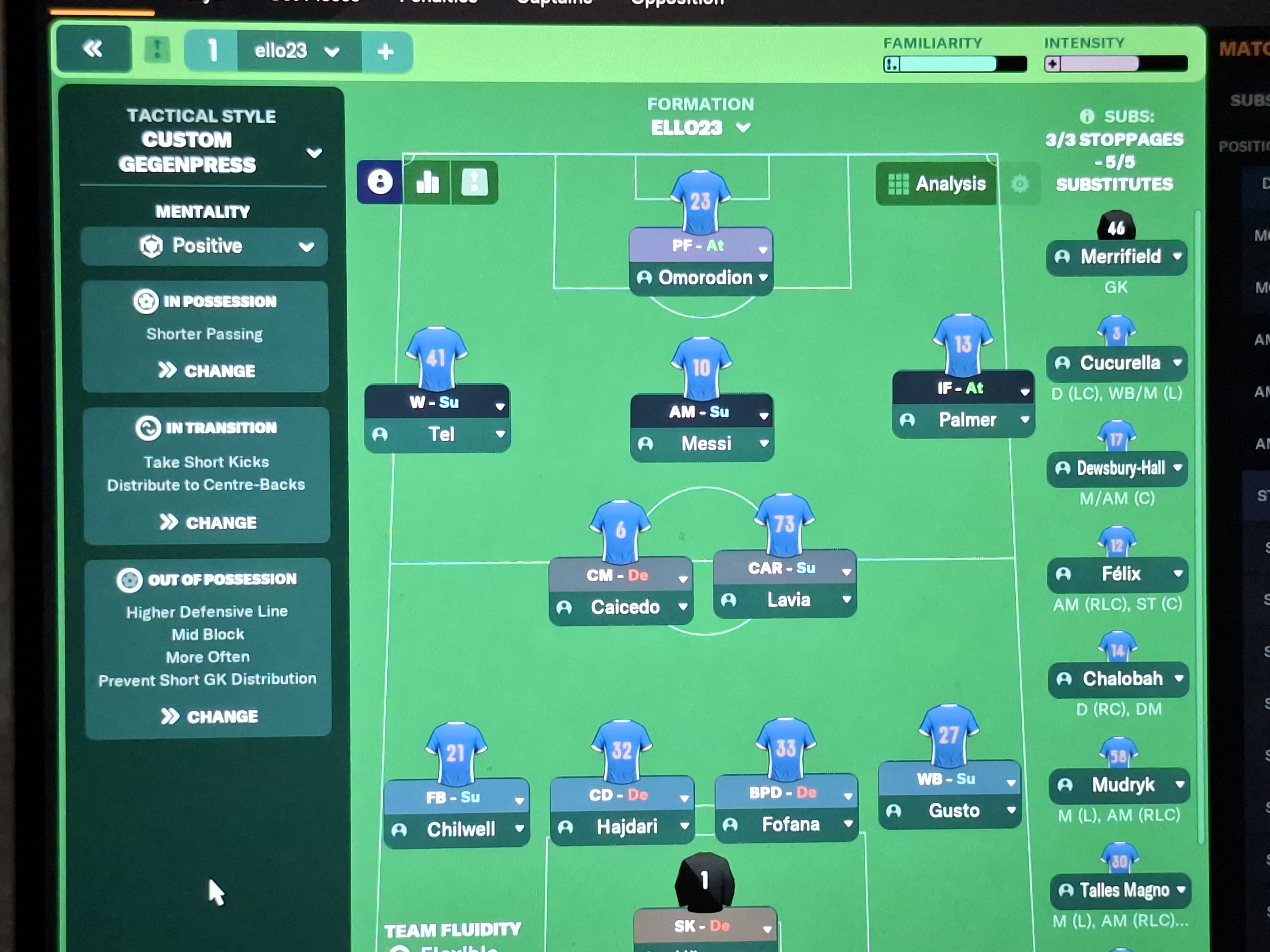
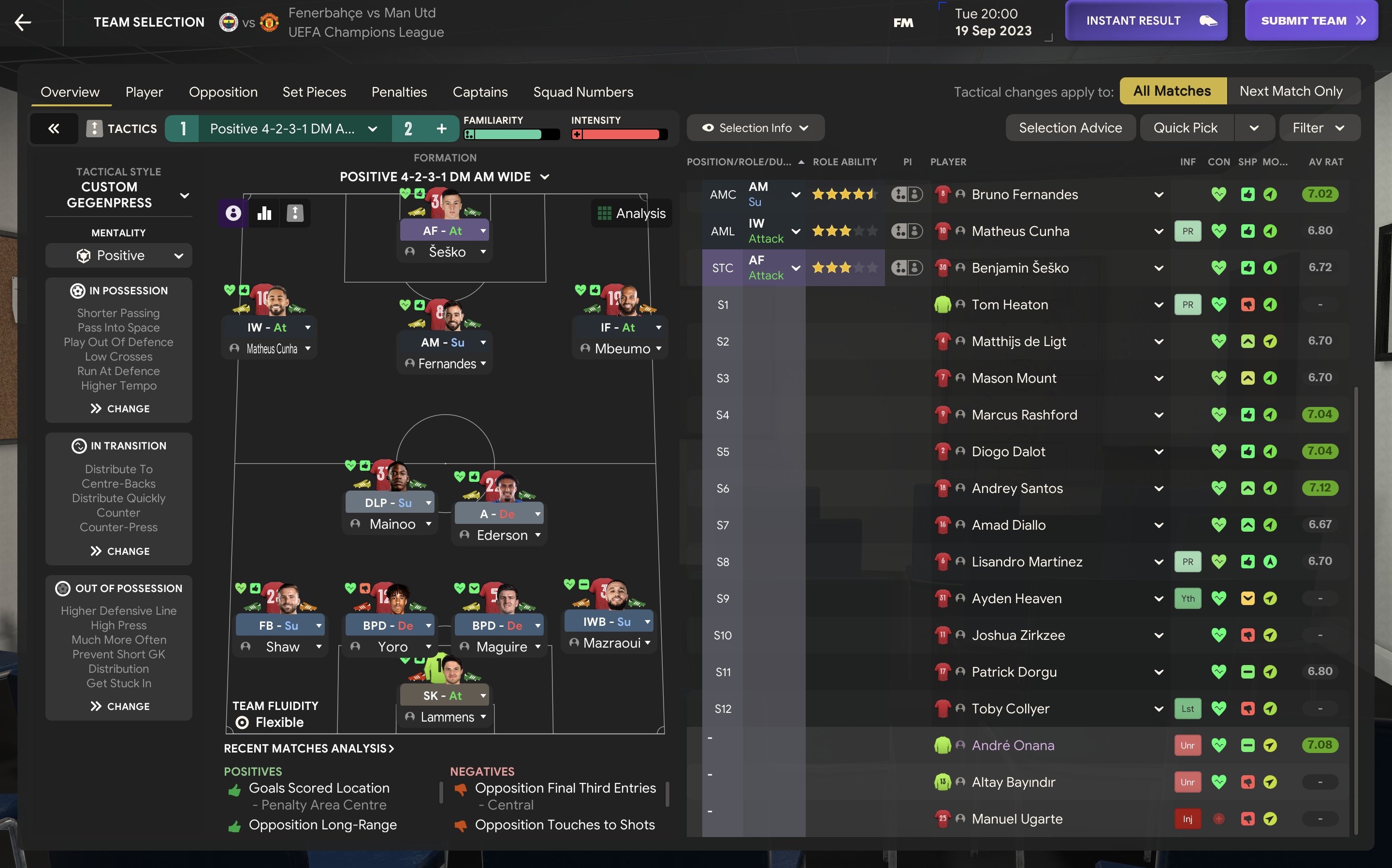
Tactical Style:Custom Gegenpress
Mentality:Positive
Formation:4-2-3-1 Wide
Team Fluidity:Fluid
In Possession
Shorter Passing
In Transition
Take Short Kicks
Distribute to Centre-Backs
Out of Possession
Higher Defensive Line
Mid Block
More Often Prevent Short GK Distribution
Team Shape Without Ball
Shape:4-2
Description:Compact midfield block, organized and ready to intercept opposition play.
Evidence:Two defensive midfielders (Lavia - CAR-Su [3,3] and Caicedo - CM-Su [4,3]) provide protection.
Team Shape With Ball
Shape:4-3
Description:Utilizing width and overlapping runs to stretch the opponent's defensive line.
Evidence:The inside forwards (Palmer - IF-A [6,2] and Omorodion - PF-A [6,3]) create spaces for full-backs to overlap.
Phase Description
Attacking Play
Focus on quick transitions using shorter passing to exploit spaces.
Defensive Transition
Pressing high to win the ball back quickly, preventing the opposition from building.
Key Strengths
Dynamic Pressing
The gegenpress approach allows for quick regains of possession through intense pressing.
Unpredictable Attack
With multiple attacking options and different roles in the front line, the attack remains fluid.
Solid Defensive Base
Having a BPD and NCB provides both ball distribution and defensive solidity.
Conflicting Directions
Lack of Width in Midfield
With only one wide midfielder (FB [Chilwell - FB-Su [2,1]]) and the central midfield being rather compact, this can lead to predictable play.
Vulnerability to Counterattacks
A higher defensive line may expose the team to quick transitions from the opposition.
Over-reliance on Pressing
If the pressing fails, the team can be caught off guard and gaps can develop, especially in midfield.
Tactical Suggestions
Consider more width in midfield
Incorporating additional width via wingers could stretch the opposition further and facilitate better passing lanes.
Adjust defensive line width
Narrowing the defensive line may help cover against counters more effectively.
Introduce a more balanced role for Lavia
Consider changing the Carrilero to a Box-to-Box Midfielder (BBM) to ensure support in transitions and across the pitch.
Ask Questions About Your Lineup
Related Tactics
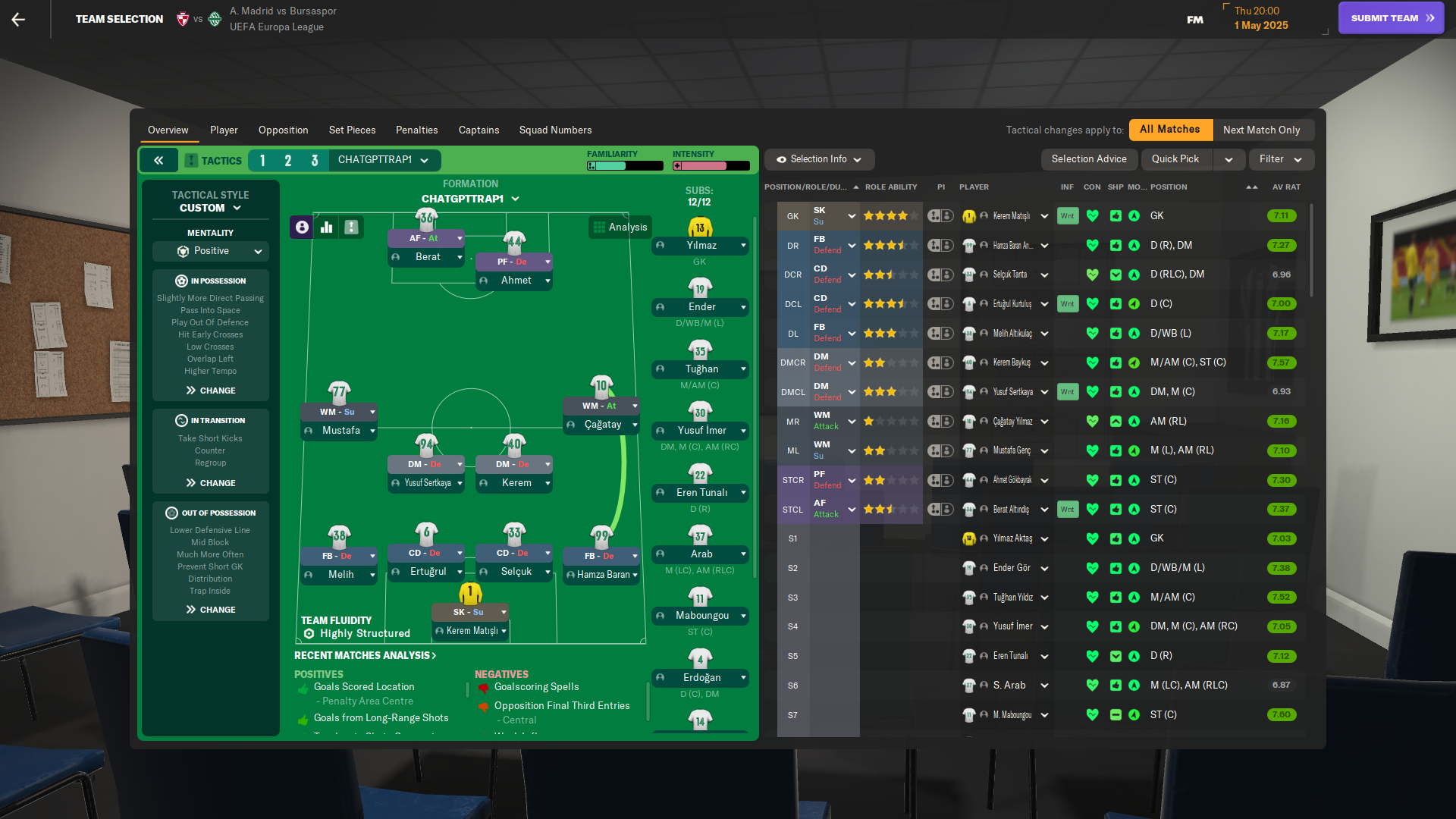
More Custom Gegenpress tactics
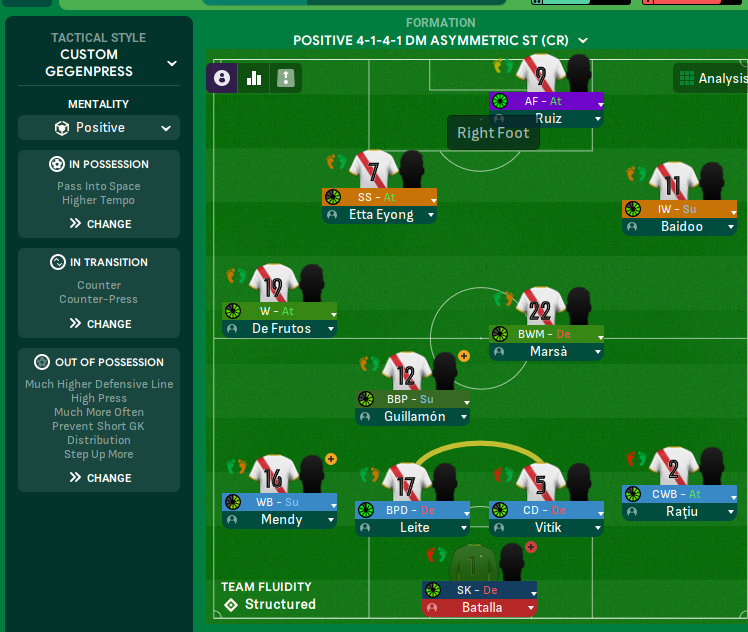
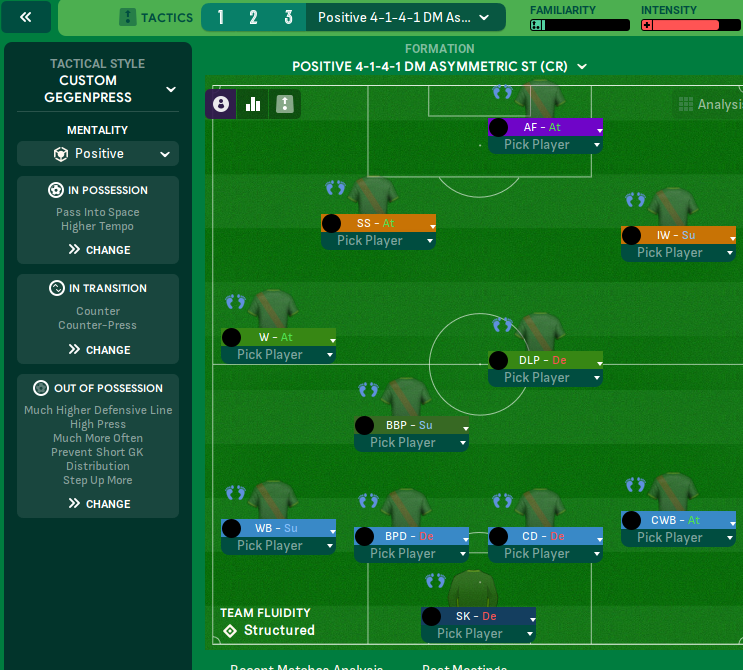
Guides for this formation
The tactical theory behind the 4-2-3-1 Wide: roles, instructions, and the trade-offs that decide whether the system holds up.
Player pairings
Midfield Pairs in 4-2-3-1 and 4-4-2
Double pivots and flat pairs in 4-2-3-1 and 4-4-2: when each pairing works, when it collapses, and the AMC unicorn that rescues both.
Read guide
Playing styles
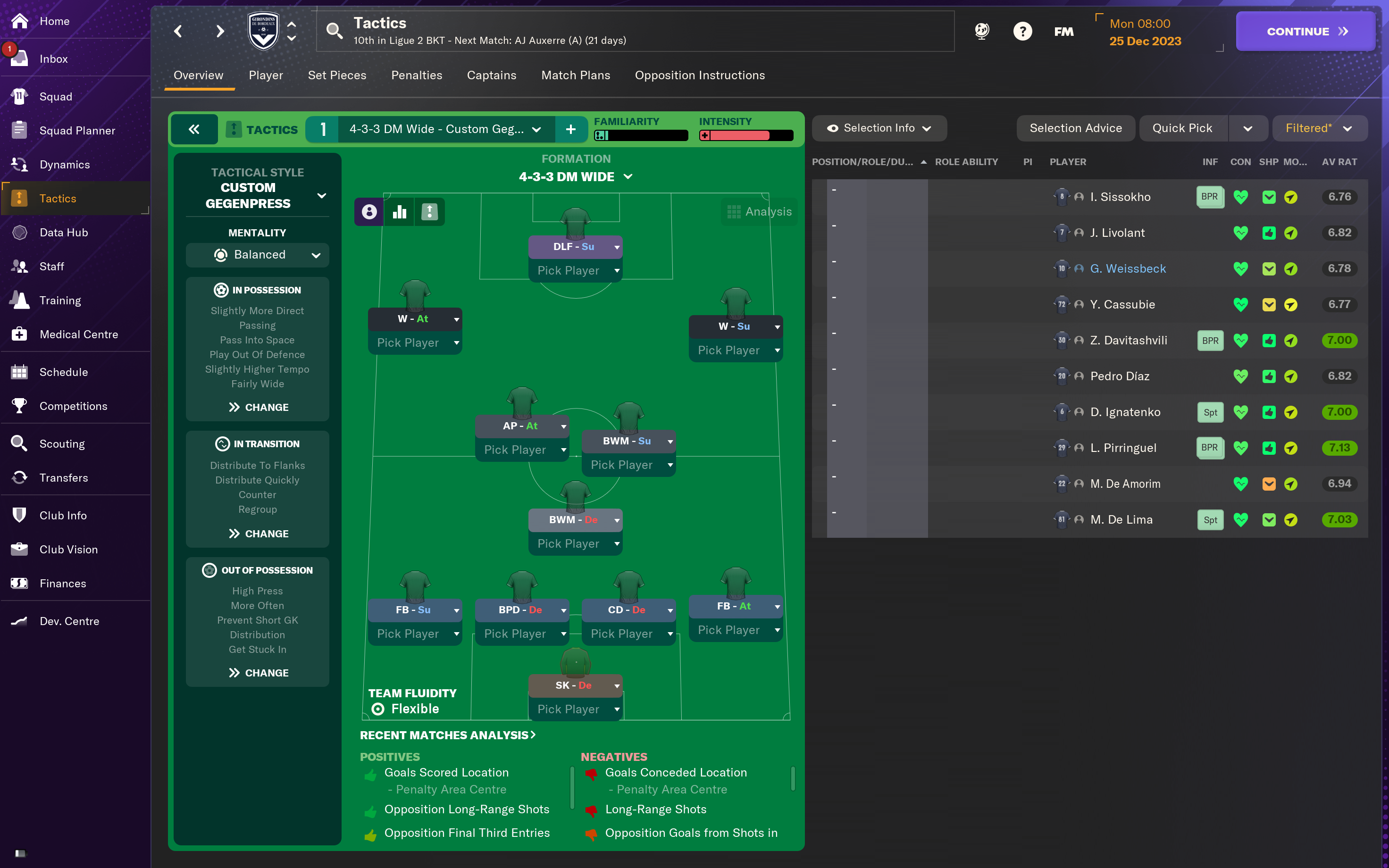
Gegenpressing: A Full Guide
Klopp-style gegenpressing in FM, including squad profile, line-and-press pairing, sustainable workload, and the antipatterns to avoid.
Read guide