Uploaded Tactic
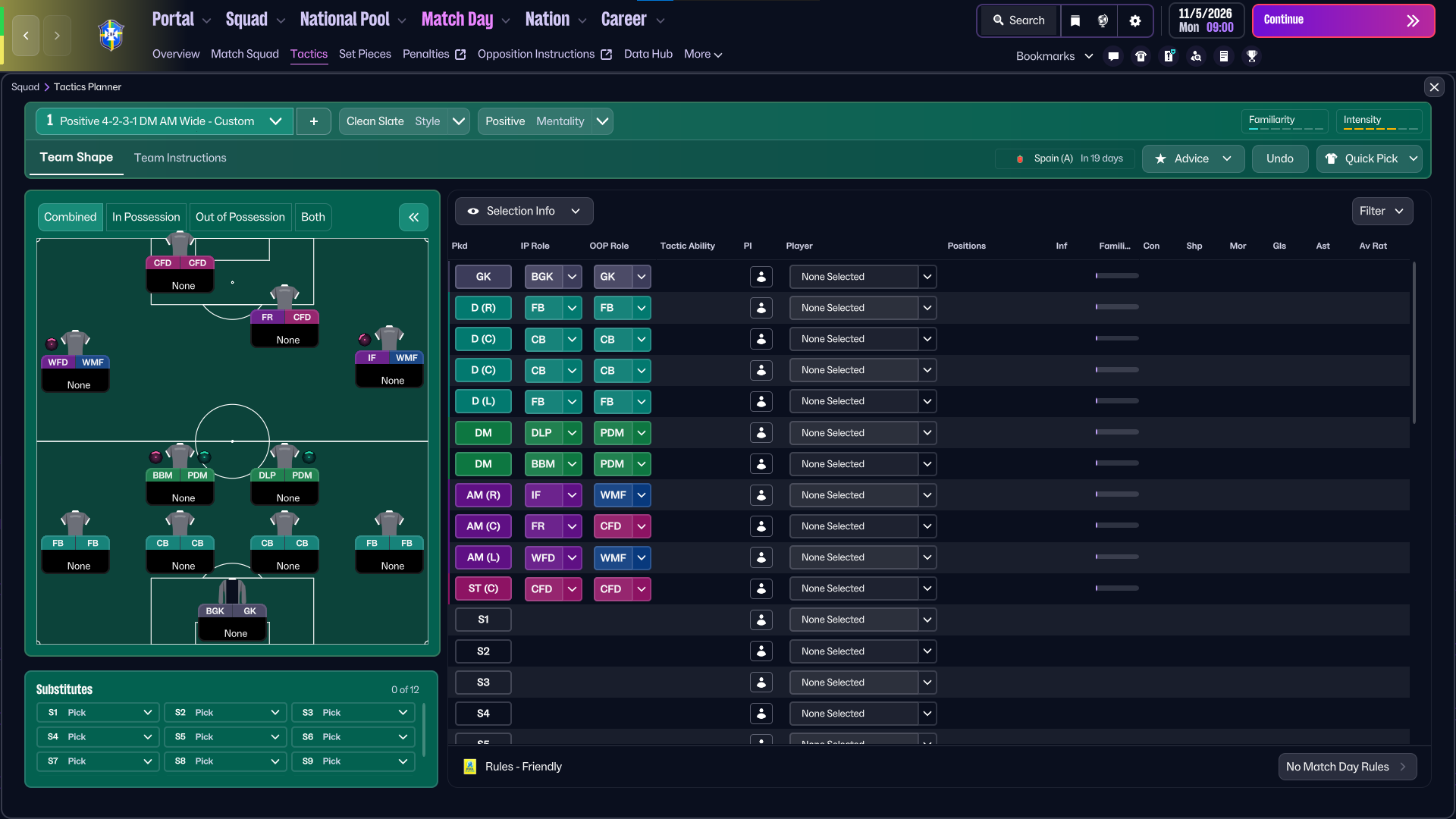
Formation & Style
Tactical Style:Positive
Mentality:Positive
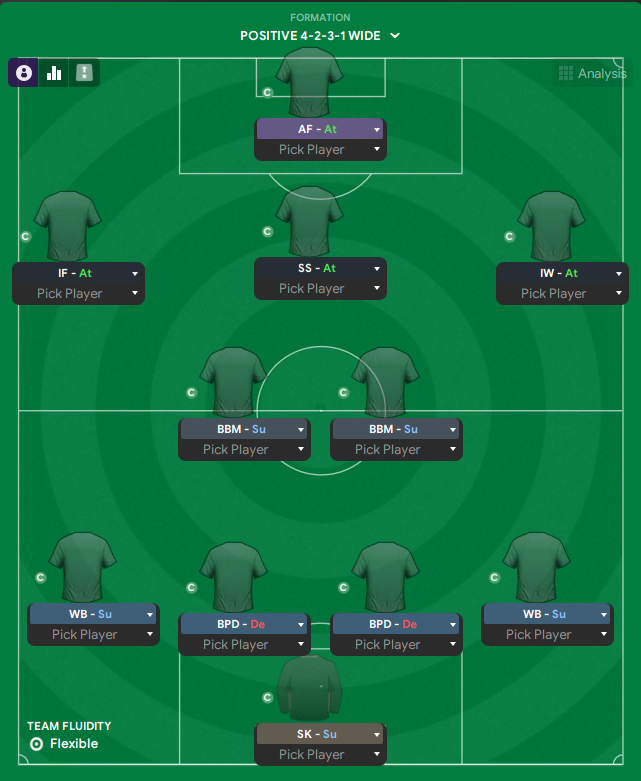
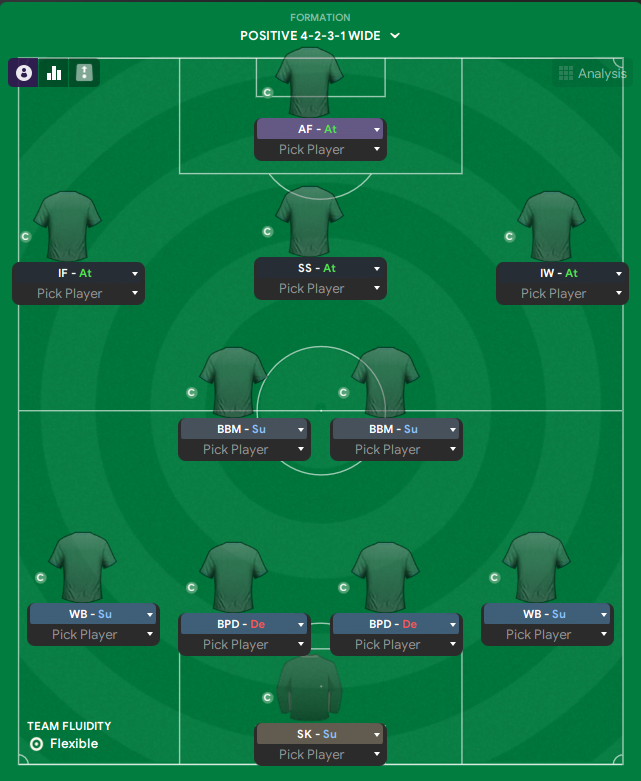
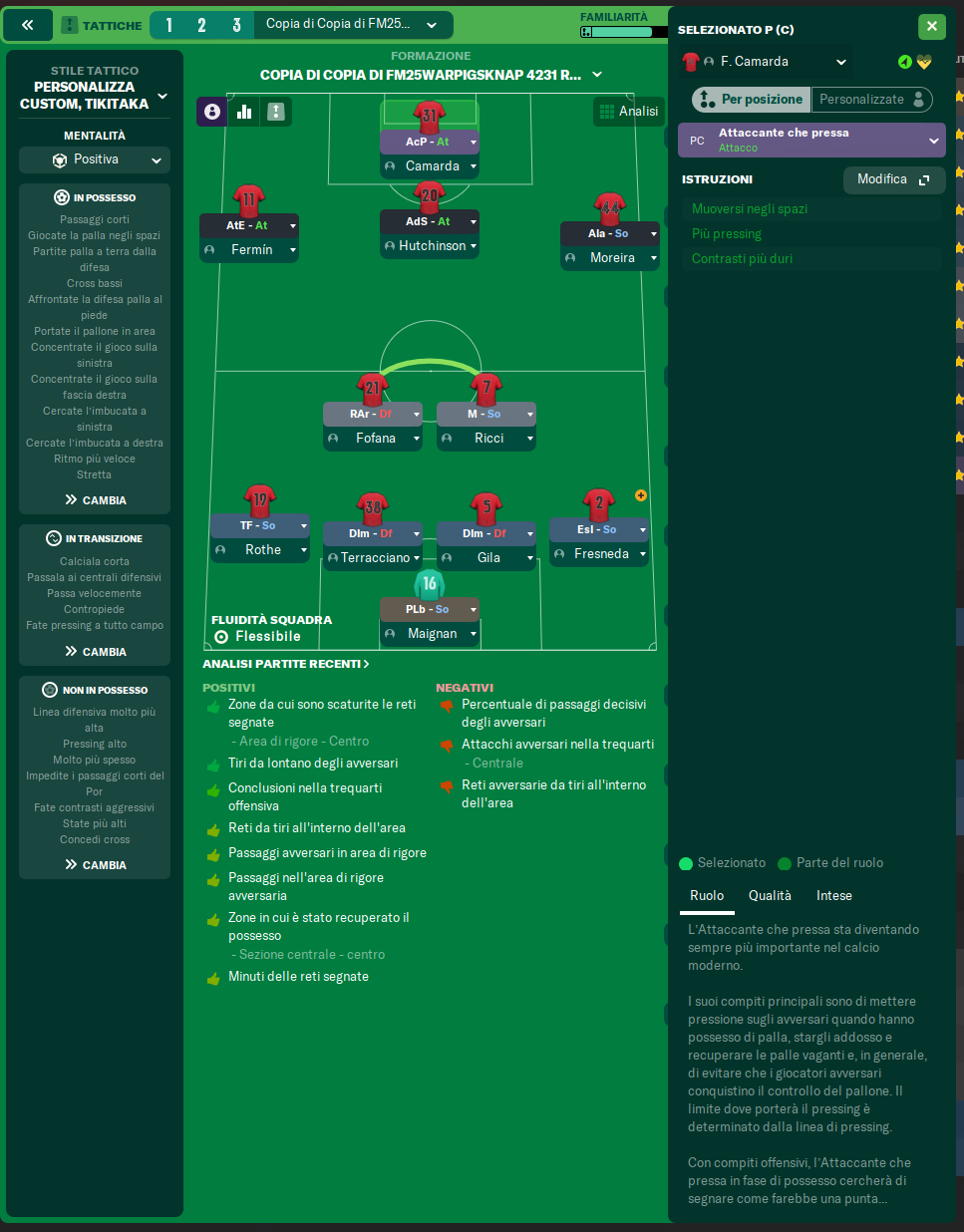
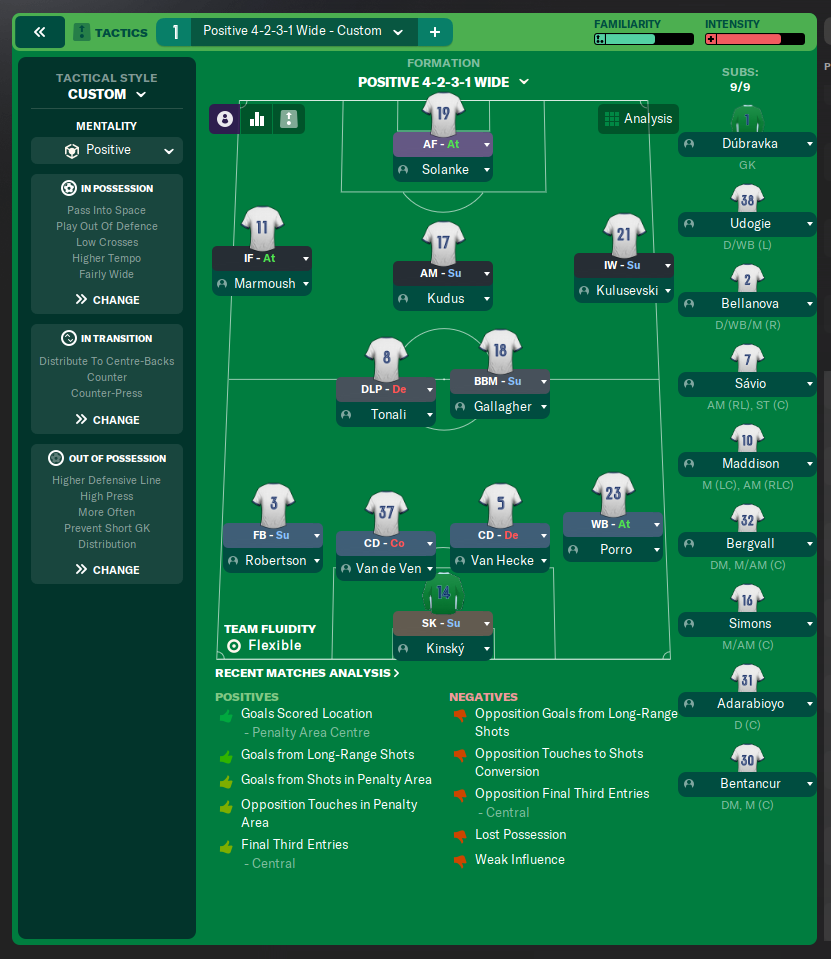
Formation:4-2-3-1 Wide
Team Fluidity:Structured
In Possession
Play Out of Defence
Shorter Passing
Focus Play Down the Left
Focus Play Down the Right
Work Ball Into Box
Higher Tempo
In Transition
Counter
Counter-Press
Out of Possession
Higher Defensive Line
Higher Line of Engagement
Prevent Short GK Distribution
Trigger Press More Often
Team Shape Without Ball
Shape:Pressing
Description:Focused on engaging the opponent higher up the pitch to disrupt their build-up play.
Evidence:Higher Defensive Line with 'Prevent Short GK Distribution' indicates an intention to press.
Team Shape With Ball
Shape:Wide
Description:Utilizes the full width of the pitch to stretch the opponent's defensive structure, creating passing lanes.
Evidence:Focus Play Down Both Sides emphasizes the spaciousness provided by the Full-Backs and Inside Forwards.
Phase Description
Attacking Play
Utilizes width with overlapping Full-Backs and Inside Forwards to create goal-scoring opportunities.
Defensive Transition
Quickly regains shape with a focus on pressing and immediate counter-pressing to win back possession.
Main Focus
Utilizing the attacking midfielders and full-backs in wide areas to penetrate the opponent's defense.
Key Strengths
Attacking Width
The formation employs Full-Backs and Inside Forwards to maintain width, stretching the opponent's defence.
Midfield Balance
A double pivot of a Deep-Lying Playmaker and Ball-Winning Midfielder provides both defensive cover and playmaking.
Pressing Ability
Utilizes a higher line of engagement and pressing to recover the ball quickly.
Conflicting Directions
Overcommitment
The high pressing nature risks leaving gaps in the backline if opponents bypass the initial press.
Space Between Lines
The wide play may create spaces for the opposition to exploit through the center.
Reliance on Individual Brilliance
The formation's success heavily leans on the attacking players performing well individually.
Tactical Suggestions
Consider a More Compact Midfield
Adjust the midfield roles to ensure better coverage in central areas, potentially switching one DM to a more attacking role.
Utilize the Bench Strategically
Make use of substitutions to maintain intensity, especially for wide roles as they tire quickly.
Match Tactical Flexibility
Be prepared to adjust the instructions based on the opponent's formation and strengths.
Ask Questions About Your Lineup
Related Tactics
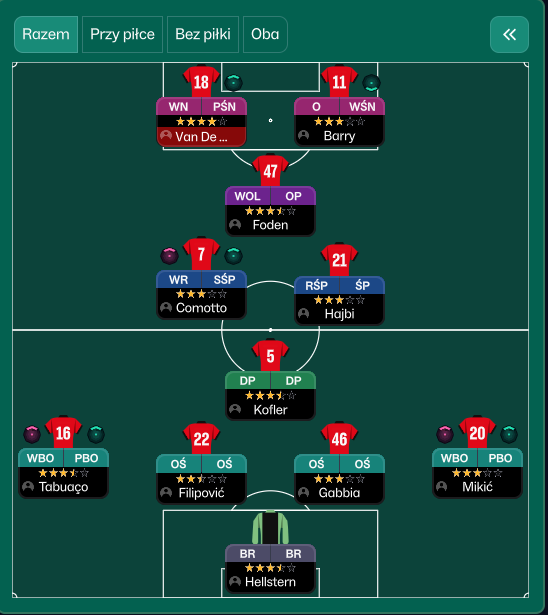
More Positive tactics
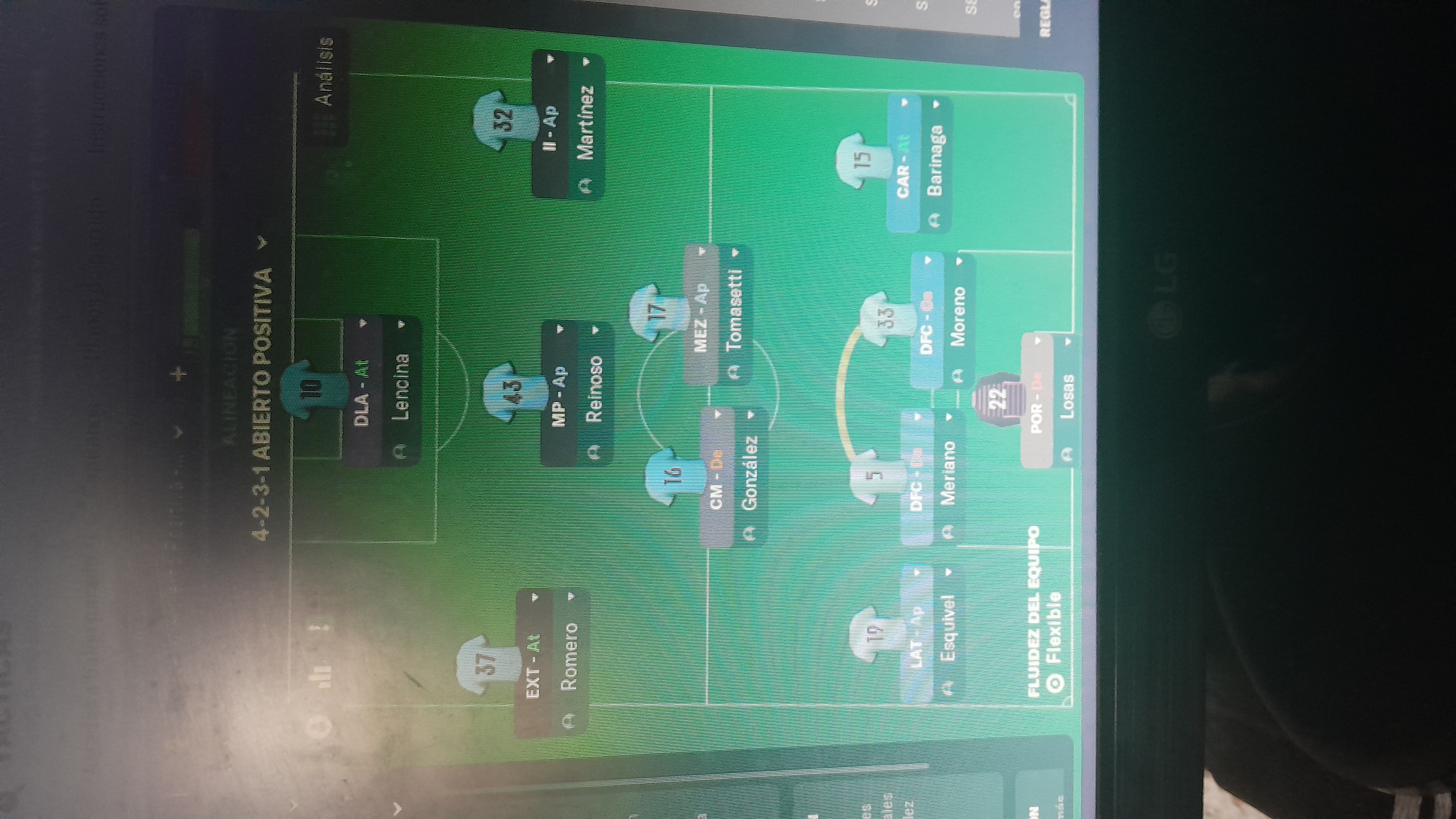
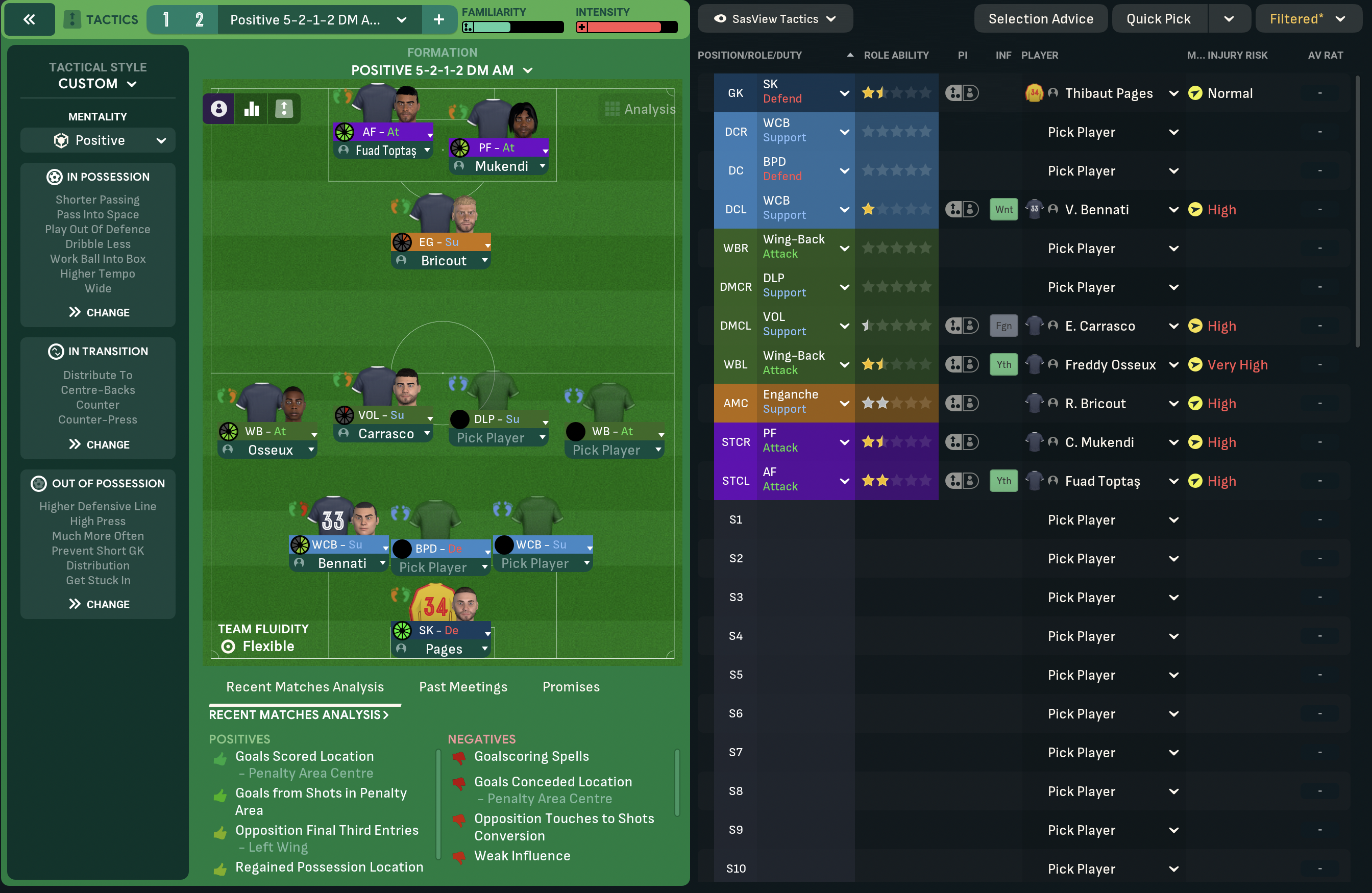
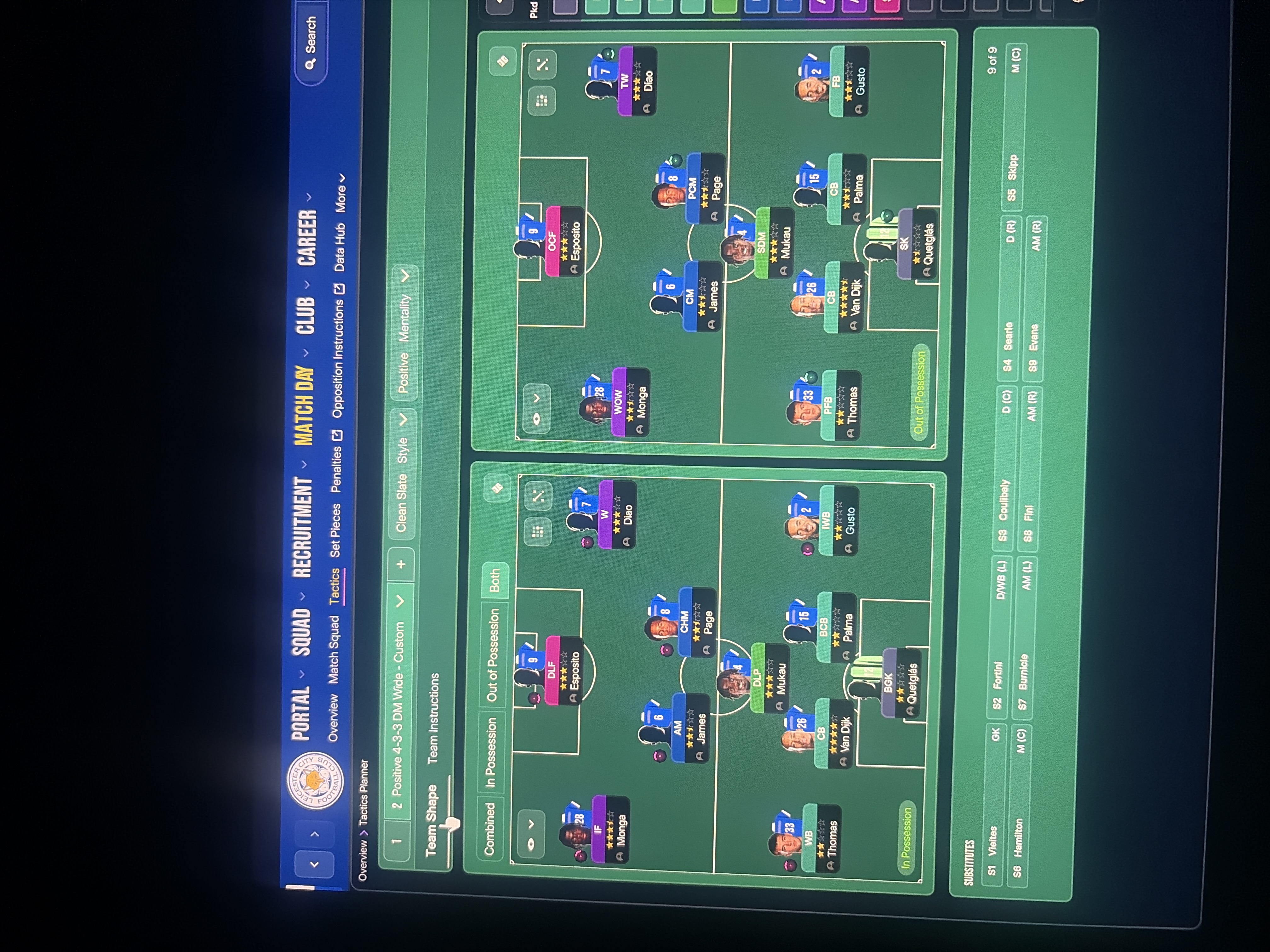
Guides for this formation
The tactical theory behind the 4-2-3-1 Wide: roles, instructions, and the trade-offs that decide whether the system holds up.
Player pairings
Midfield Pairs in 4-2-3-1 and 4-4-2
Double pivots and flat pairs in 4-2-3-1 and 4-4-2: when each pairing works, when it collapses, and the AMC unicorn that rescues both.
Read guide
Playing styles
Gegenpressing: A Full Guide
Klopp-style gegenpressing in FM, including squad profile, line-and-press pairing, sustainable workload, and the antipatterns to avoid.
Read guide