Uploaded Tactic
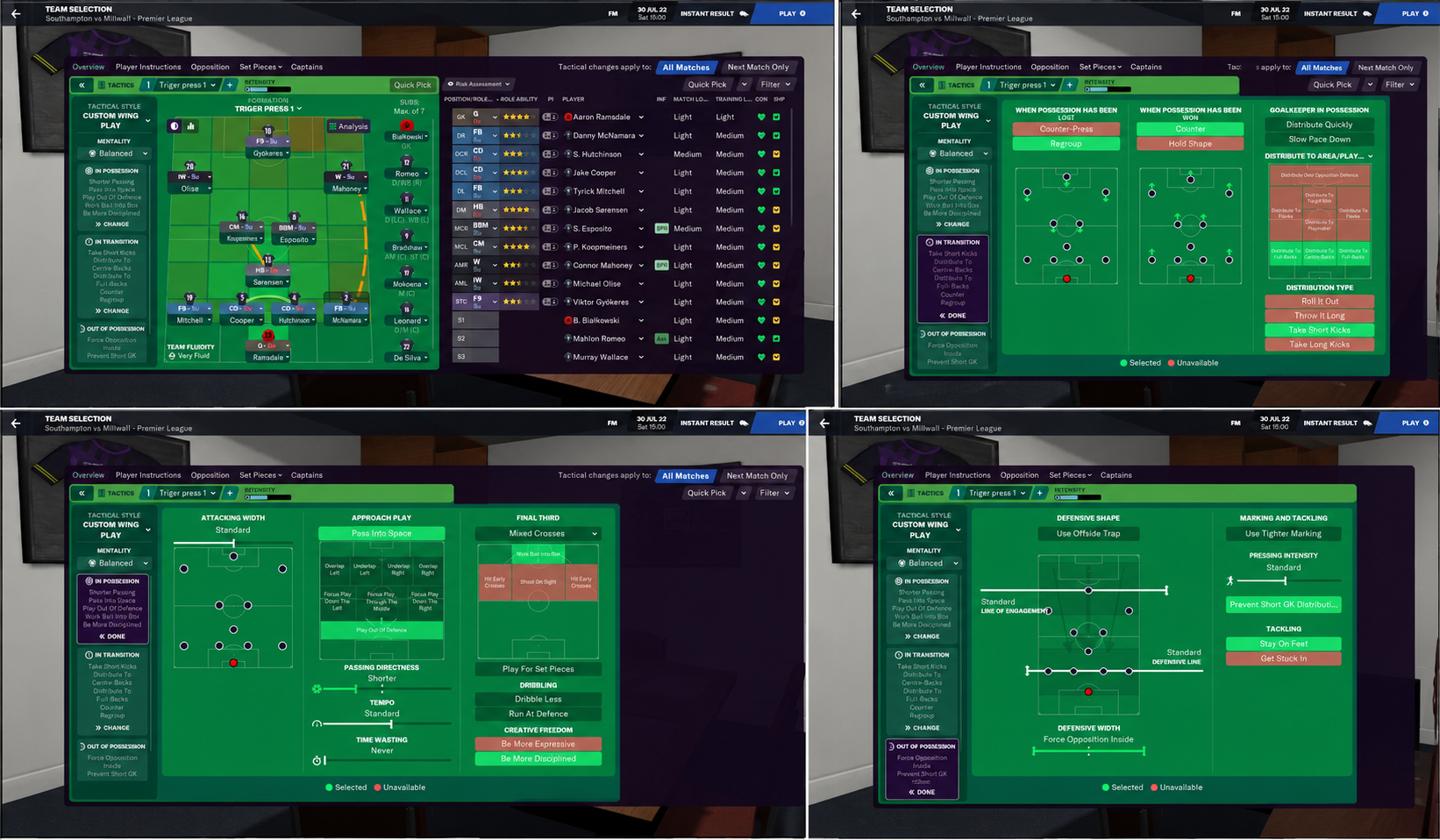
Formation & Style
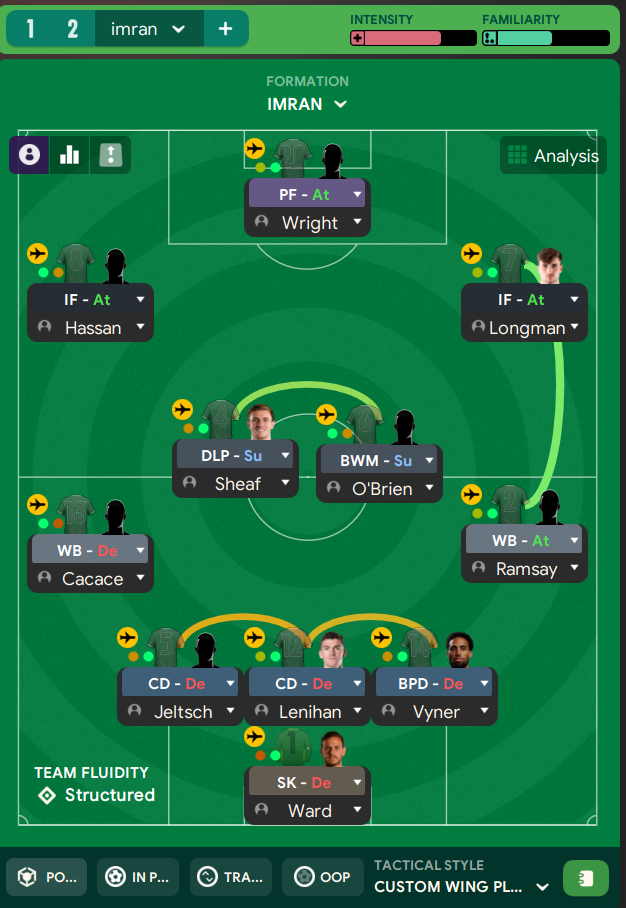
Tactical Style:Custom Wing Play
Mentality:Balanced
Formation:4-2-3-1 Wide
Team Fluidity:Very Fluid
In Possession
Take Short Kicks
Counter-Press
Pass Into Space
Be More Expressive
Be More Direct
In Transition
Counter
Regroup
Out of Possession
Use Offside Trap
Standard Defensive Line
Standard Line of Engagement
Prevent Short GK Distribution
Force Opposition Inside
Team Shape Without Ball
Shape:4-4-2
Description:The team shifts into a 442 structure when defending, with wide players tucking in.
Evidence:Defensive duties for the full-backs and solidity from two NCBs.
Team Shape With Ball
Shape:4-2-3-1
Description:In possession, the formation transitions to a 4-2-3-1 with emphasis on wide creativity.
Evidence:Advanced playmaker supporting inside forward and complete forward.
Phase Description
Attacking Play
The team focuses on creating space and exploiting width, with a direct approach supported by wing play.
Defensive Transition
Upon losing possession, the team aims to regroup quickly to minimize counter-attacks.
Main Focus
Utilizing the flanks for offensive plays while maintaining a solid backline.
Key Strengths
Wing Play Exploitation
Utilizing full-backs on support and inside forwards creates width and options.
Defensive Resilience
Two NCBs add strength to the defense, reducing exposure to direct attacks.
Balanced Midfield
Box-to-Box and Ball-Winning Midfielder provide both support and defensive coverage.
Conflicting Directions
High Pressing
The current tactics do not emphasize pressing, potentially allowing opponents time on the ball.
Transition Vulnerabilities
Regrouping may leave gaps in midfield during transitions, especially against fast countering teams.
Over-reliance on Width
Exploitation of wing play may be limited if full-backs are caught out of position.
Tactical Suggestions
Implement a Trigger Press
Engaging in high pressing may regain possession more effectively.
Adjust Transition Strategy
Implement a higher line of engagement to counter opposing attacks effectively.
Strengthen Central Control
Consider adding a Regista role in midfield to retain possession and control central areas.
Ask Questions About Your Lineup
Related Tactics
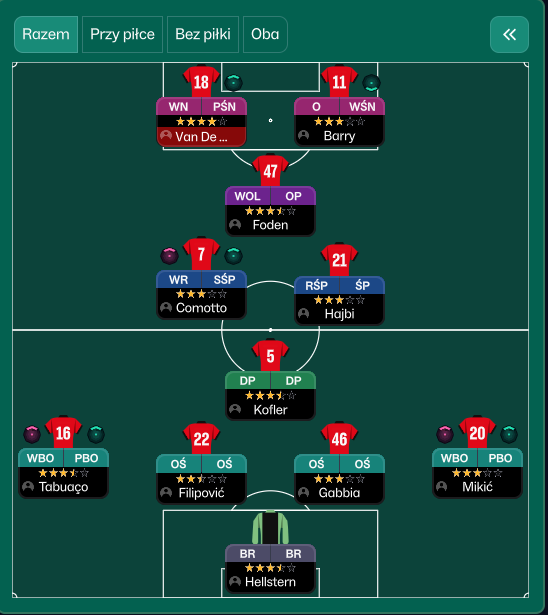
More Custom Wing Play tactics
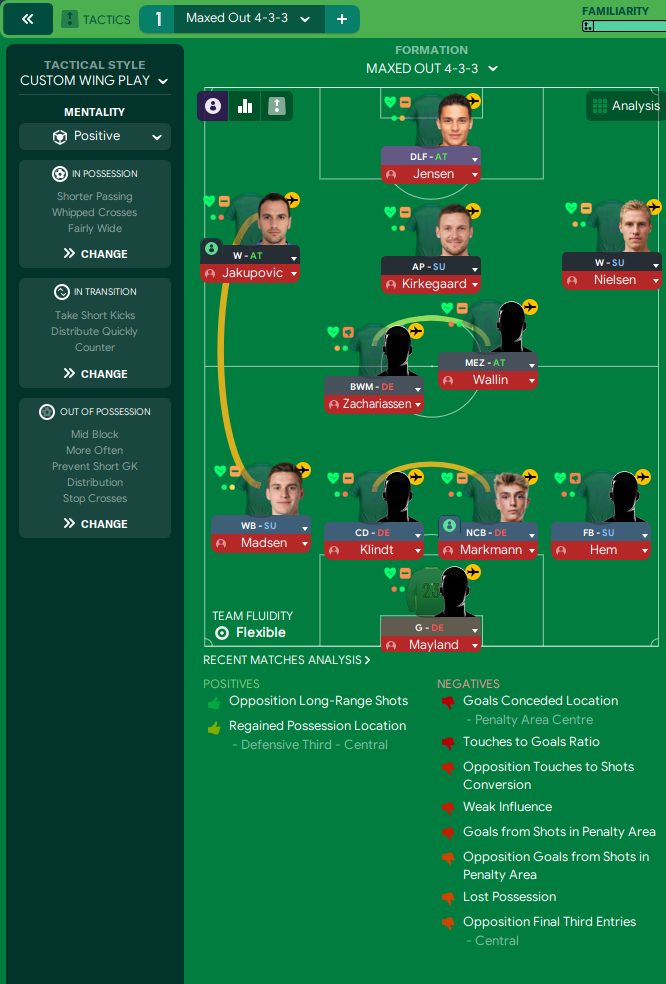
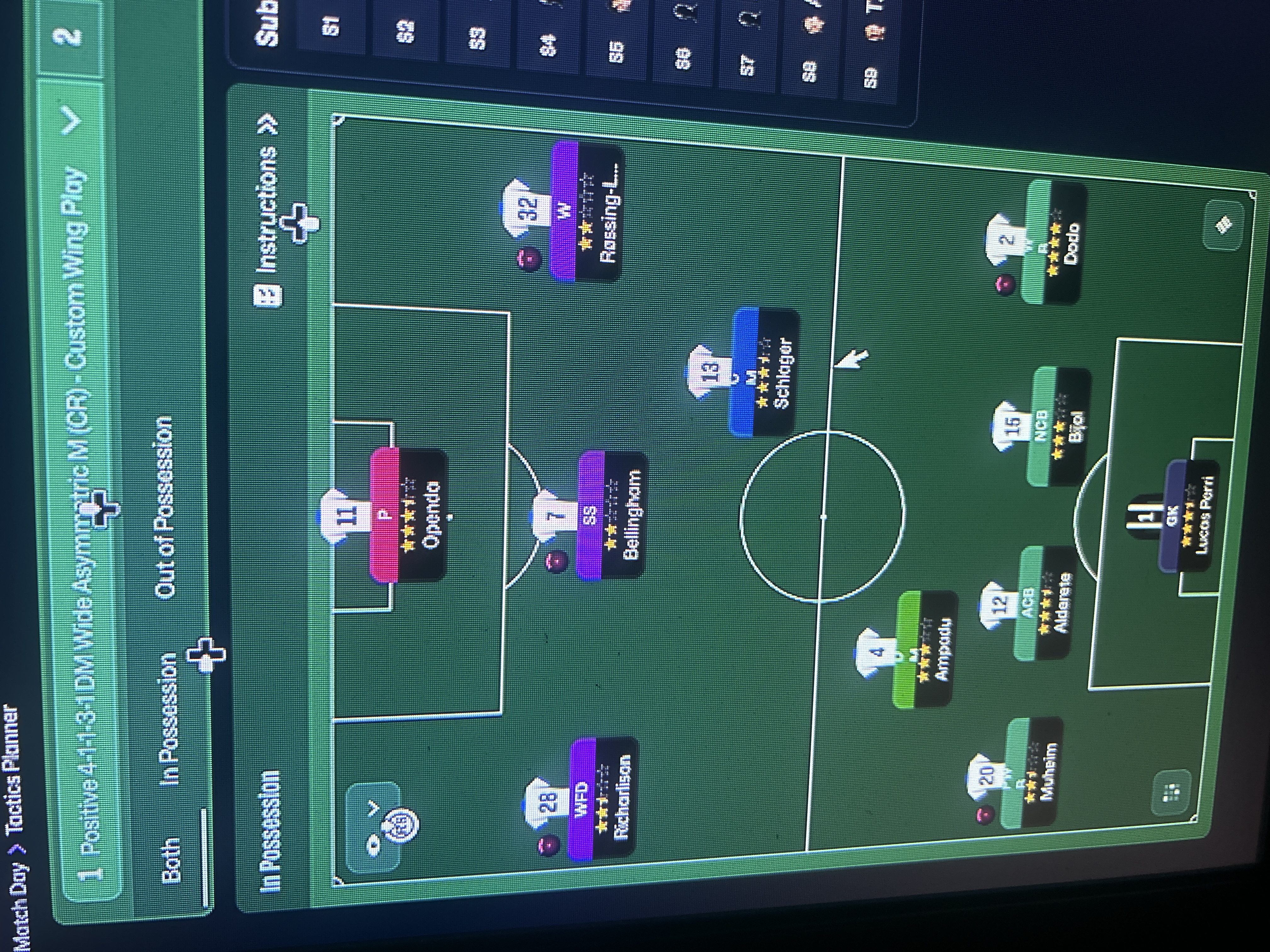
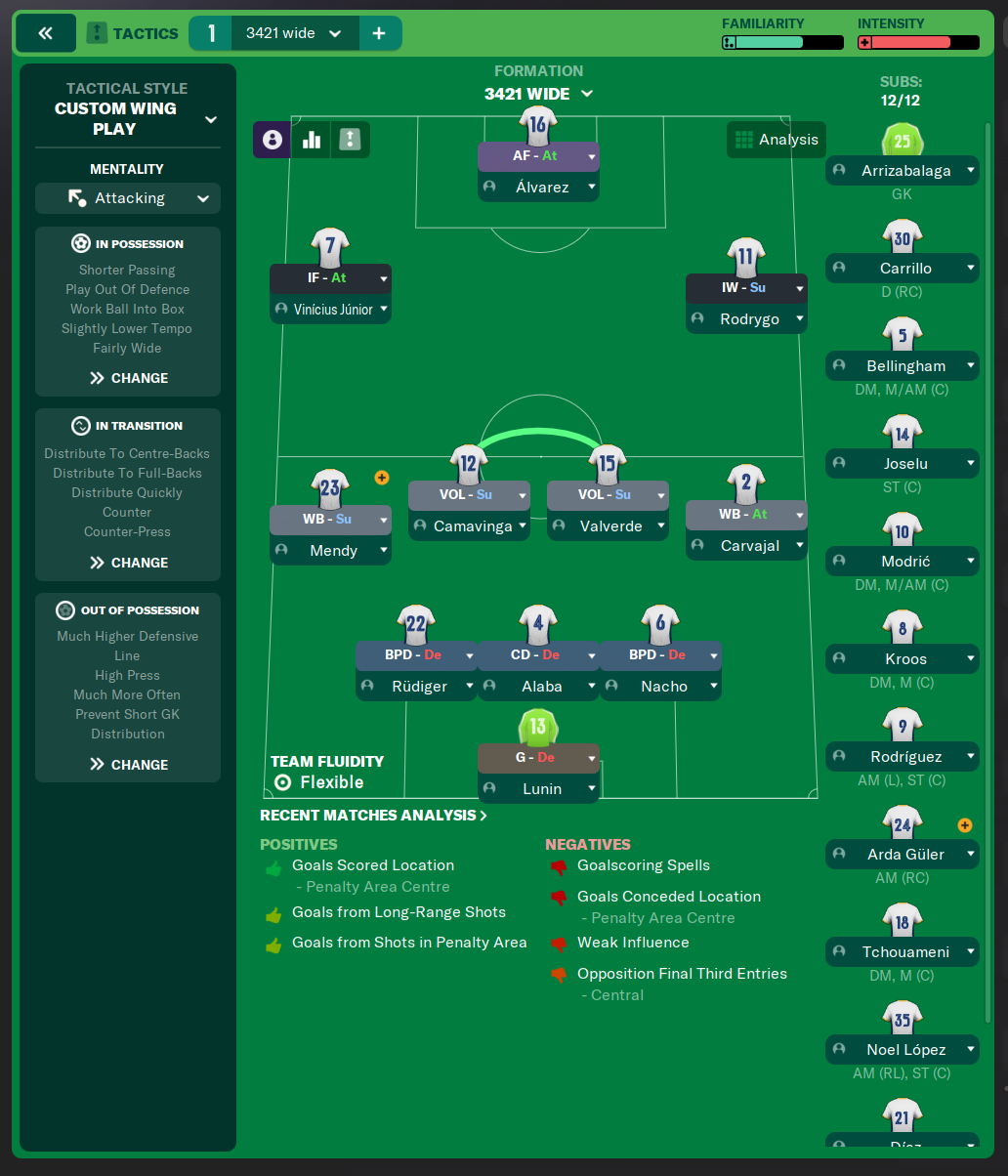
Guides for this formation
The tactical theory behind the 4-2-3-1 Wide: roles, instructions, and the trade-offs that decide whether the system holds up.
Player pairings
Midfield Pairs in 4-2-3-1 and 4-4-2
Double pivots and flat pairs in 4-2-3-1 and 4-4-2: when each pairing works, when it collapses, and the AMC unicorn that rescues both.
Read guide
Playing styles
Gegenpressing: A Full Guide
Klopp-style gegenpressing in FM, including squad profile, line-and-press pairing, sustainable workload, and the antipatterns to avoid.
Read guide