Uploaded Tactic
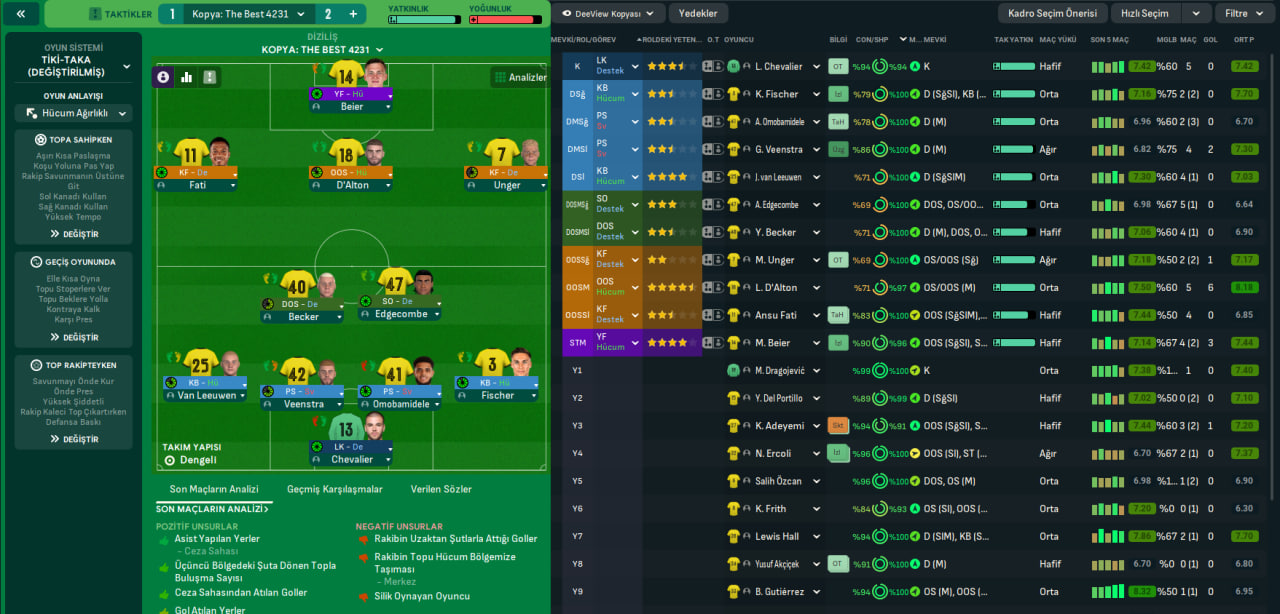
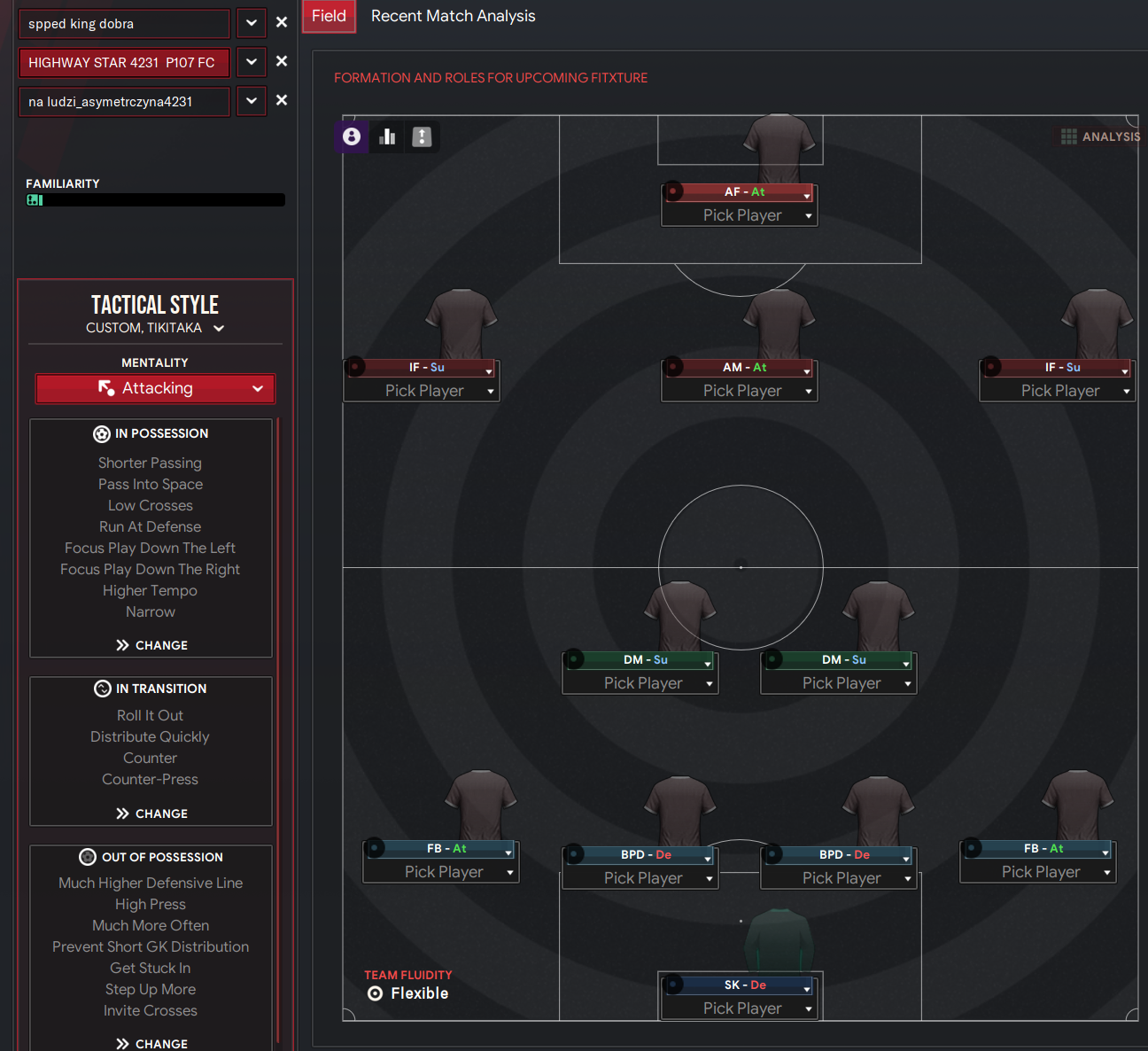
Formation & Style
Tactical Style:Tiki-Taka
Mentality:Attacking
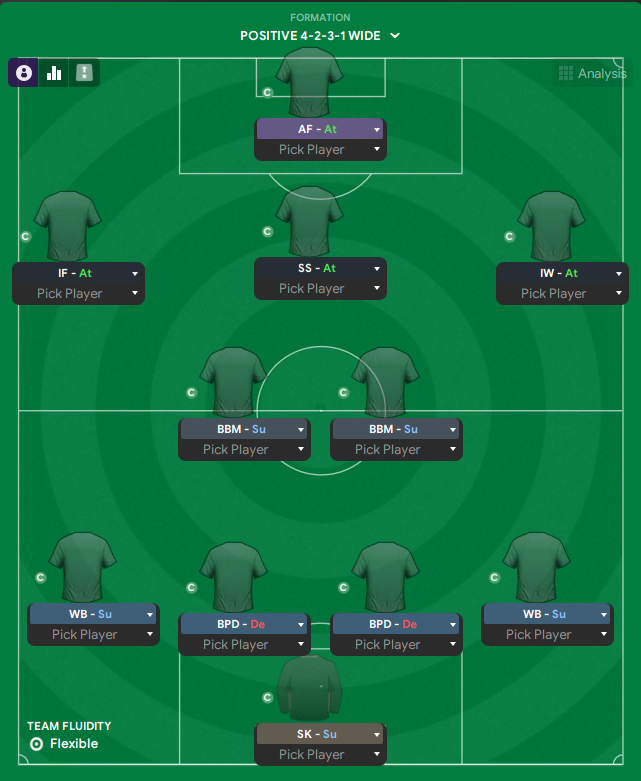
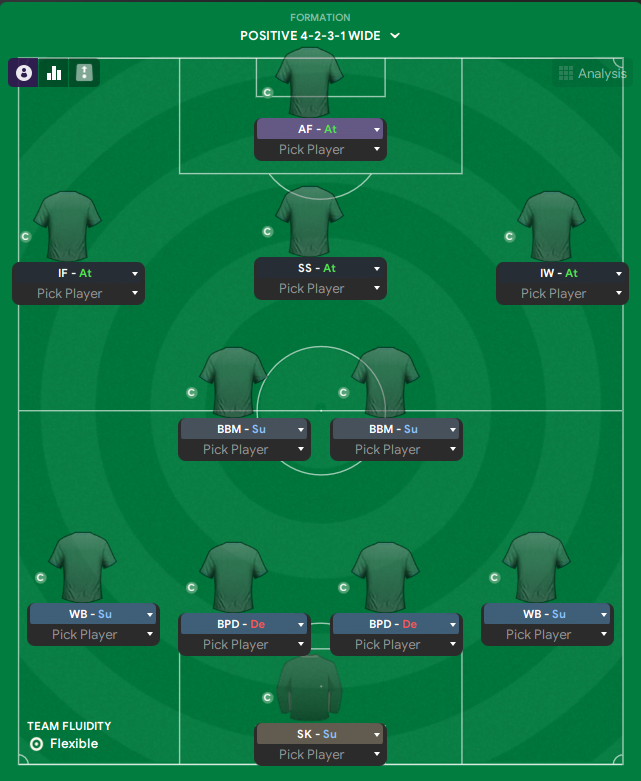
Formation:4-2-3-1 Wide
Team Fluidity:Balanced
In Possession
Shorter Passing
Work Ball Into Box
Play Out Of Defence
In Transition
Counter-Press
Counter
Out of Possession
Higher Defensive Line
More Urgent Pressing
Team Shape Without Ball
Shape:Compact
Description:Defensive line maintains a tight shape, looking to press the opponent in midfield areas.
Evidence:DC-NCB at [2,2], DM-S at [3,3], and high pressing strategy.
Team Shape With Ball
Shape:Fluid
Description:Compact and mobile front line, utilizing quick transitions and varying attacking roles.
Evidence:IF-A at [6,1] and IW-A at [6,2] create width and space for the ST-PF at [6,3].
Phase Description
Attacking Play
Focus on intricate passing and movement to break down opposition defence, utilizing width from wing-backs and inside forwards.
Defensive Transition
Quickly press to regain possession after losing the ball, attempting to stifle counter-attacks.
Main Focus
Maintain ball possession while looking for openings in the opponent's defence.
Key Strengths
Fluid Midfield Play
The midfield trio works cohesively to support both defence and attack with intelligent passing options.
Dynamic Attack
The attacking setup provides varied threats from different angles, with multiple players capable of scoring.
High Pressing
The team is positioned to initiate an immediate press upon losing possession, disrupting opposition play.
Conflicting Directions
Defensive Vulnerability
The high defensive line combined with an attacking mentality can lead to gaps that opposing attackers can exploit.
Increased Risk on Counter
A focus on attack can expose the back line to quick counter-attacks, especially with wing-backs committing forward.
Over-Reliance on Possession
While possession play is essential, being overly focused on short passing may slow down attacks against a well-organized defence.
Tactical Suggestions
Adjust Defensive Line
Lowering the defensive line could help reduce vulnerability to counters and maintain shape.
Exploit Flanks More
Encourage wing-backs to overlap with forwards, adding width to attacks and creating 1v1 situations.
Include More Direct Passing
Introducing some direct passing strategies can increase tempo against teams that press high.
Ask Questions About Your Lineup
Related Tactics
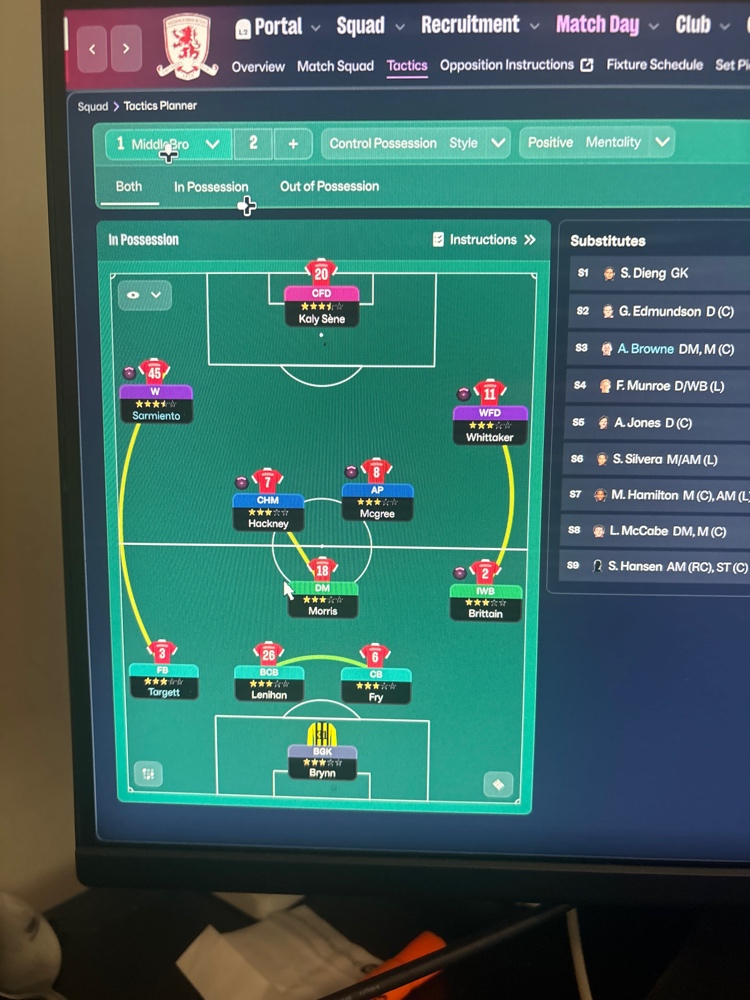
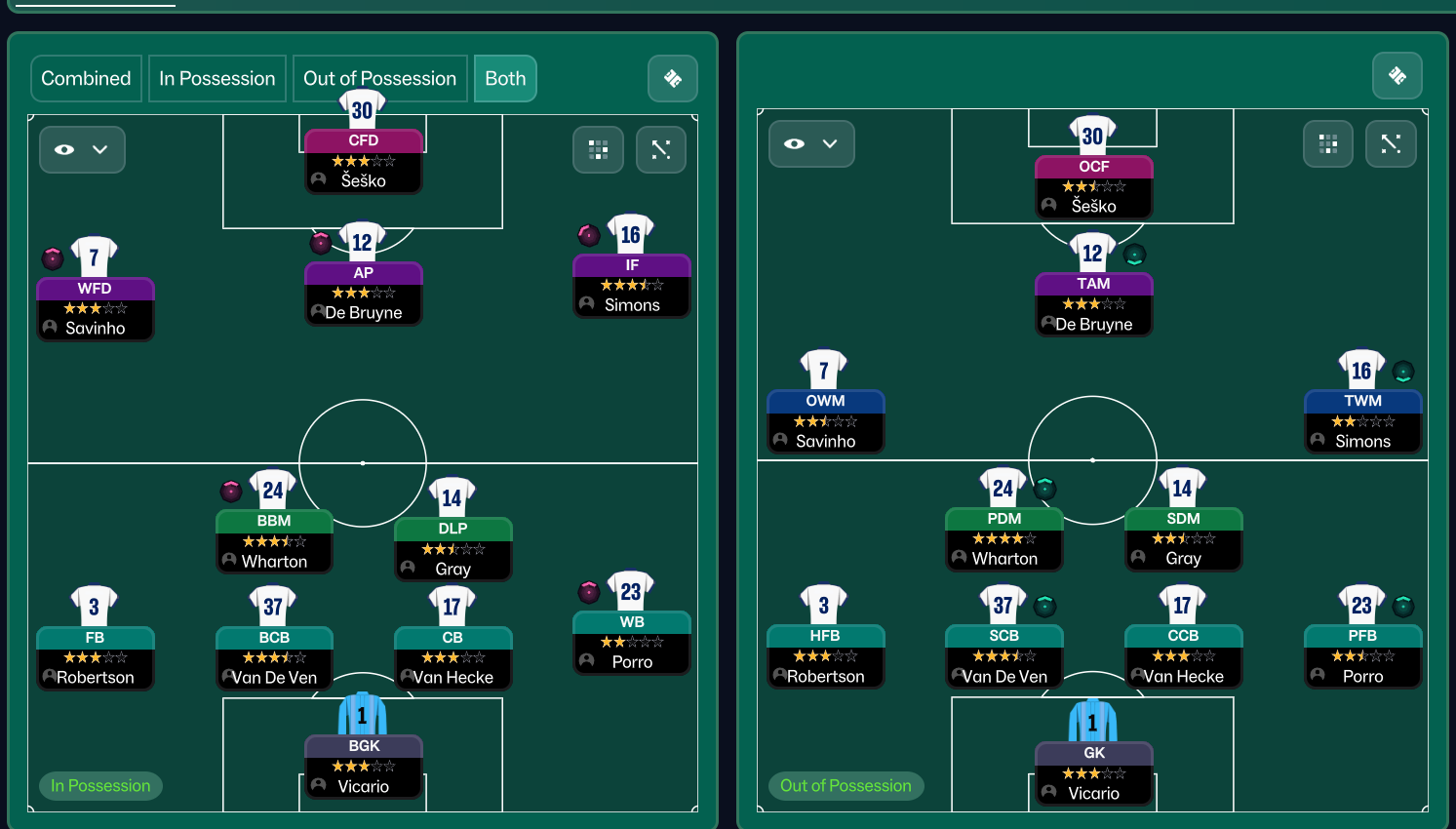
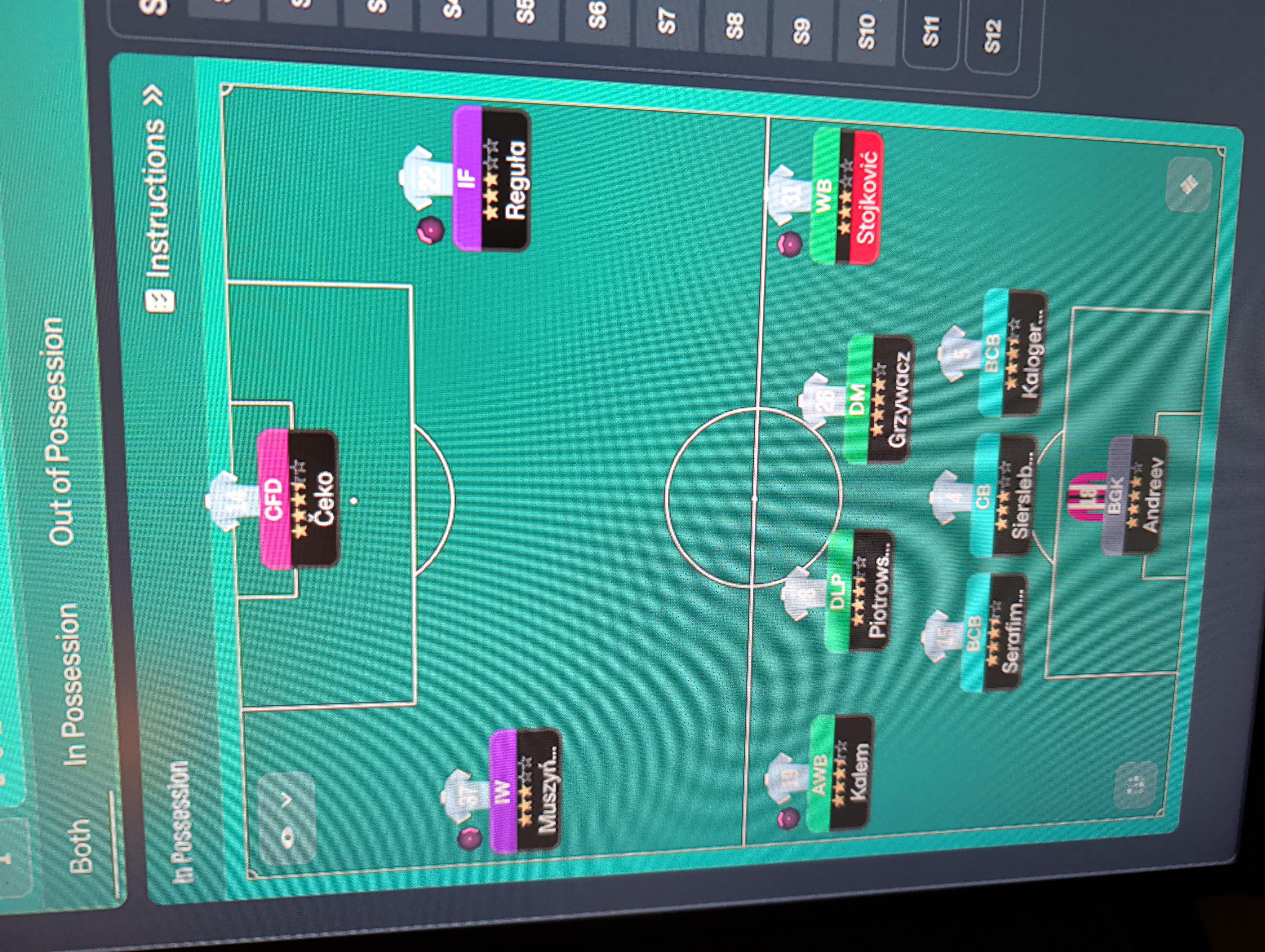
More Tiki-Taka tactics
Guides for this formation
The tactical theory behind the 4-2-3-1 Wide: roles, instructions, and the trade-offs that decide whether the system holds up.
Player pairings
Midfield Pairs in 4-2-3-1 and 4-4-2
Double pivots and flat pairs in 4-2-3-1 and 4-4-2: when each pairing works, when it collapses, and the AMC unicorn that rescues both.
Read guide
Playing styles
Gegenpressing: A Full Guide
Klopp-style gegenpressing in FM, including squad profile, line-and-press pairing, sustainable workload, and the antipatterns to avoid.
Read guide