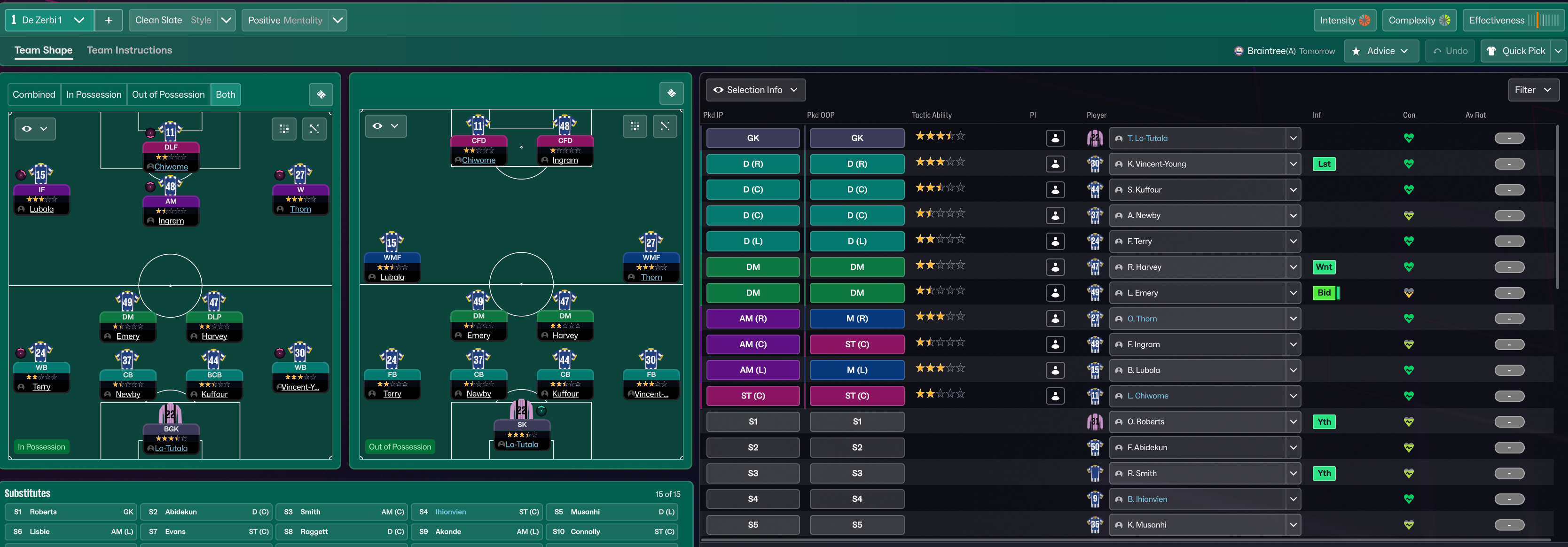
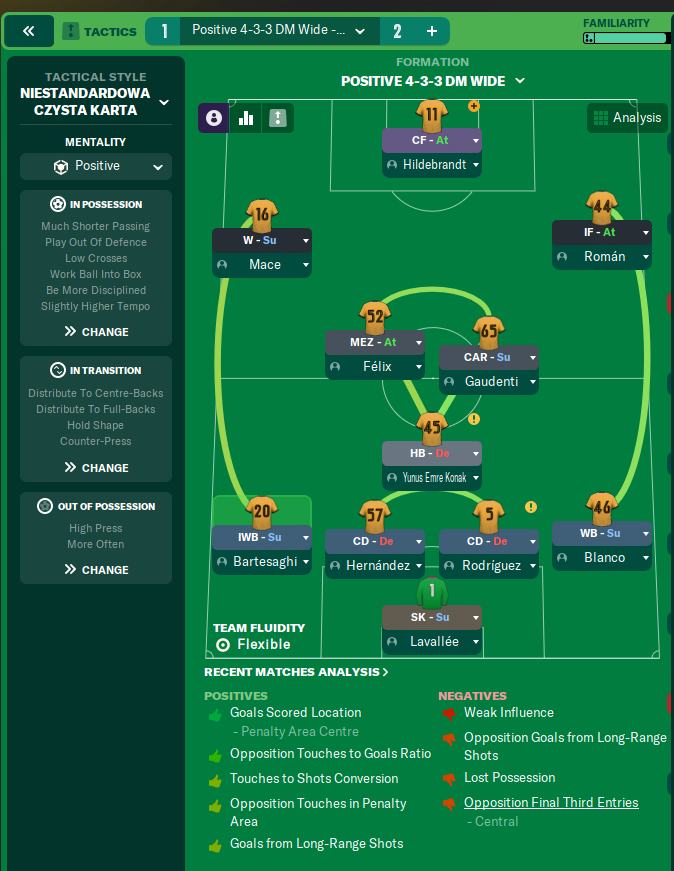
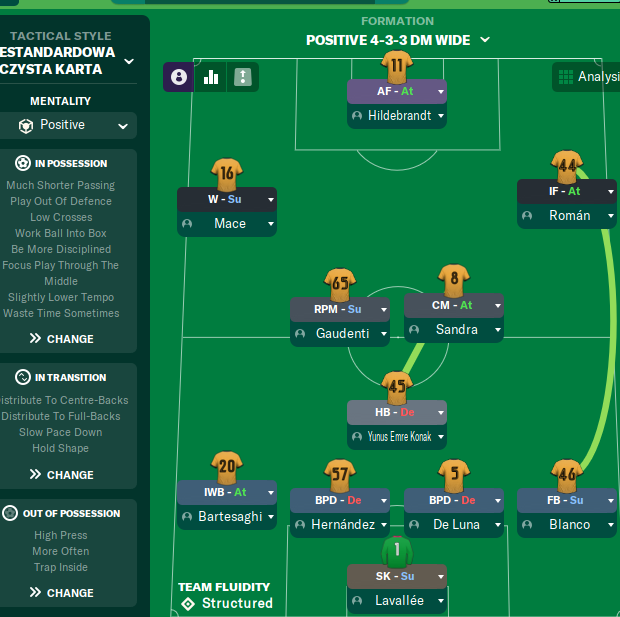
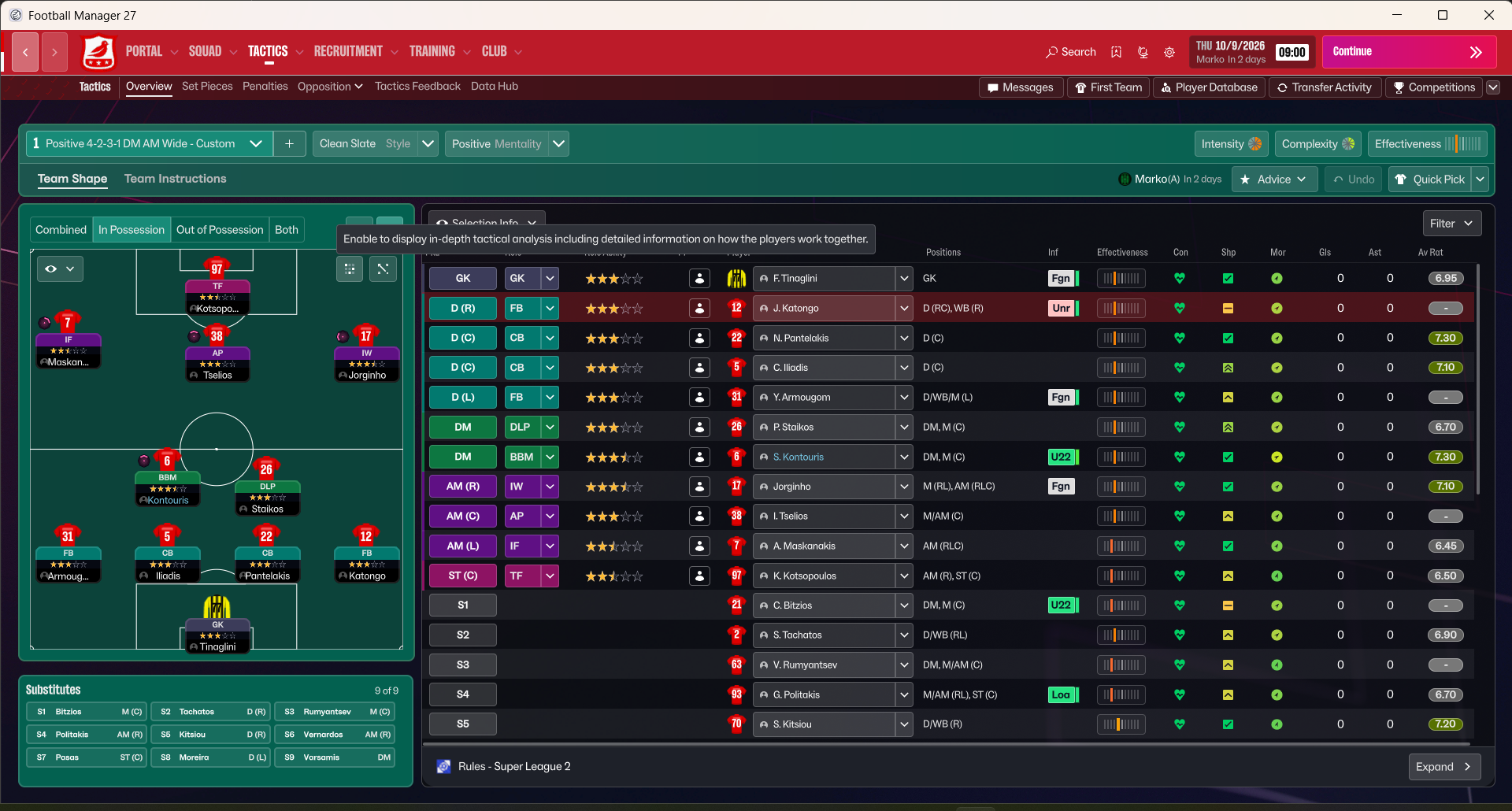
4-2-3-1 Wide
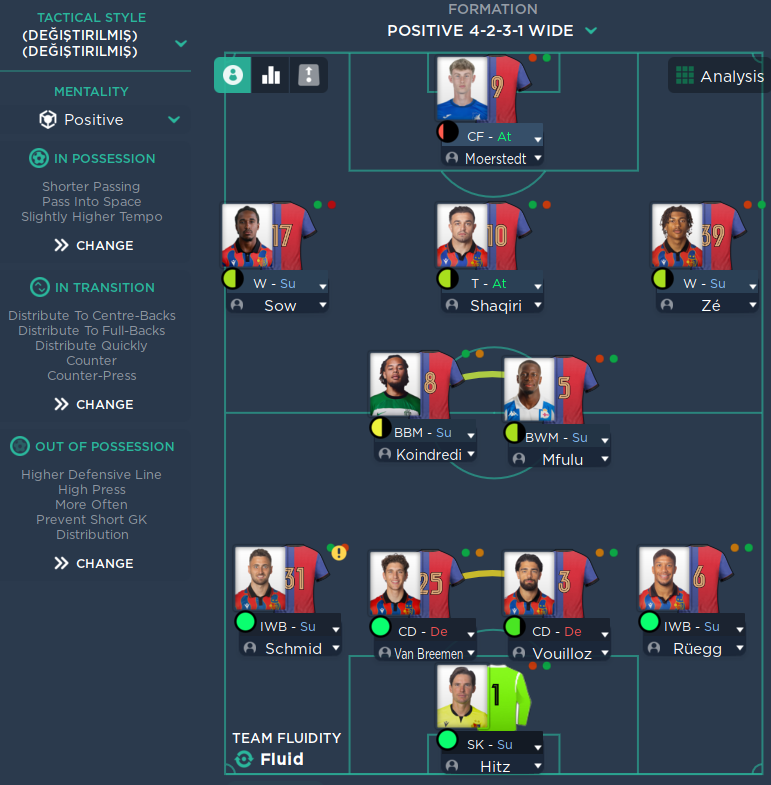
The combination of a Trequartista and Wingers creates numerous attacking options and spaces to exploit.
Loading tactical analysis...
Positive
Positive
4-2-3-1 Wide
Fluid
Shorter Passing
Pass Into Space
Slightly Higher Tempo
Distribute To Centre-Backs
Distribute To Full-Backs
Distribute Quickly
Counter-Press
Higher Defensive Line
High Press
More Often
Prevent Short GK Distribution
CF
Advanced Forward
Attack
W
Winger
Support
T
Trequartista
Attack
BBM
Box-to-Box Midfielder
Support
BWM
Ball Winning Midfielder
Support
IWB
Inverted Wing-Back
Support
CD
Central Defender
Defend
SK
Sweeper Keeper
Defend
The combination of a Trequartista and Wingers creates numerous attacking options and spaces to exploit.
The tactic emphasizes a high press to recover possession quickly and can catch opponents off-guard during transitions.
The high defensive line may leave gaps when pressing, exposing the backline to quick counter-attacks from the opposition.
A higher tempo approach may clash with shorter passing instructions, potentially leading to misplaced passes.
How are the players coping with the high pressing intensity?
Are the Wingers providing sufficient width during games?
How often are the defenders exposed on the break?
Is the Trequartista finding enough space to operate effectively?
Are the midfielders keeping a good balance between attack and defense?
How successful has the pressing strategy been in winning back possession?
The tactical theory behind the 4-2-3-1 Wide: roles, instructions, and the trade-offs that decide whether the system holds up.
Klopp-style gegenpressing in FM, including squad profile, line-and-press pairing, sustainable workload, and the antipatterns to avoid.
Double pivots and flat pairs in 4-2-3-1 and 4-4-2: when each pairing works, when it collapses, and the AMC unicorn that rescues both.
The pairing rule for Defensive Line and Line of Engagement, all 9 combinations, and the gap that costs goals.