Uploaded Tactic
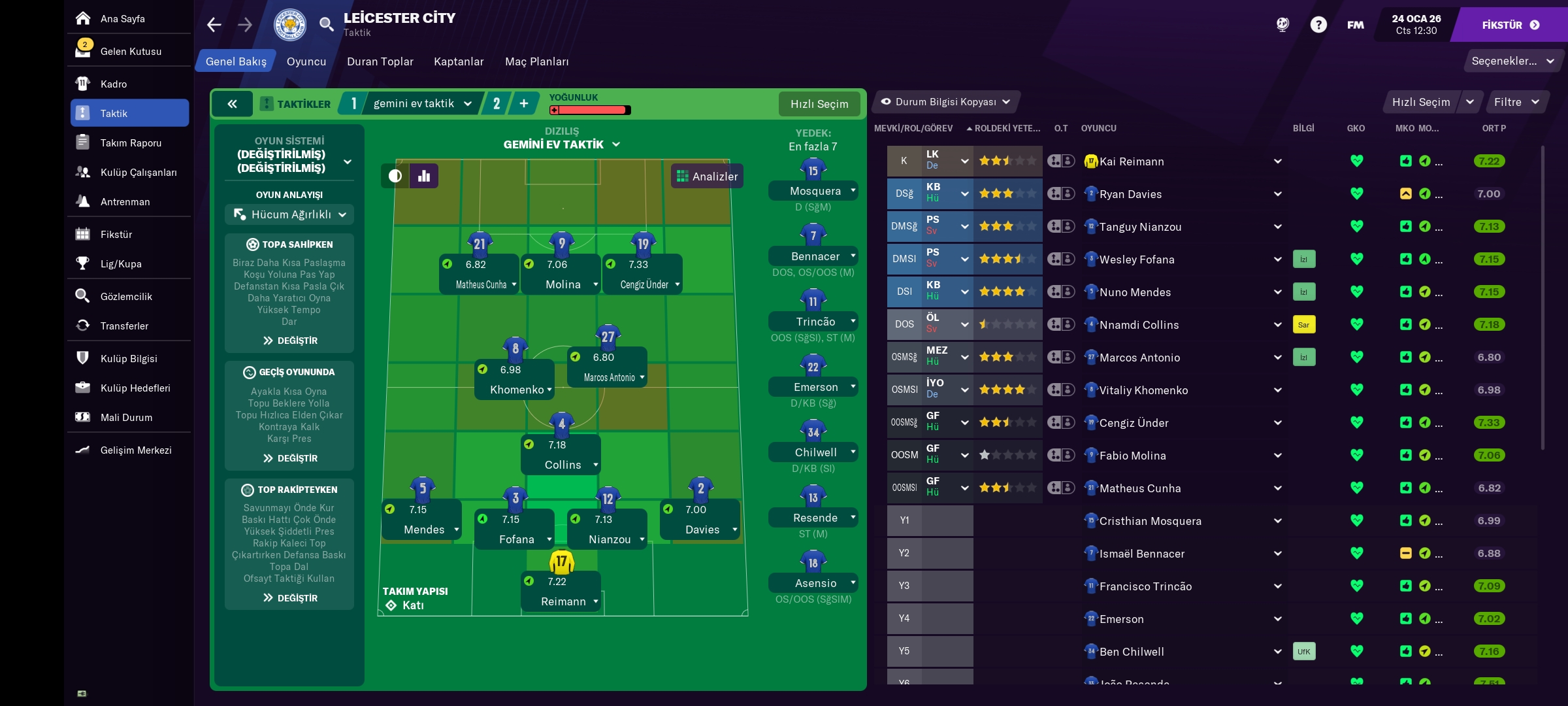
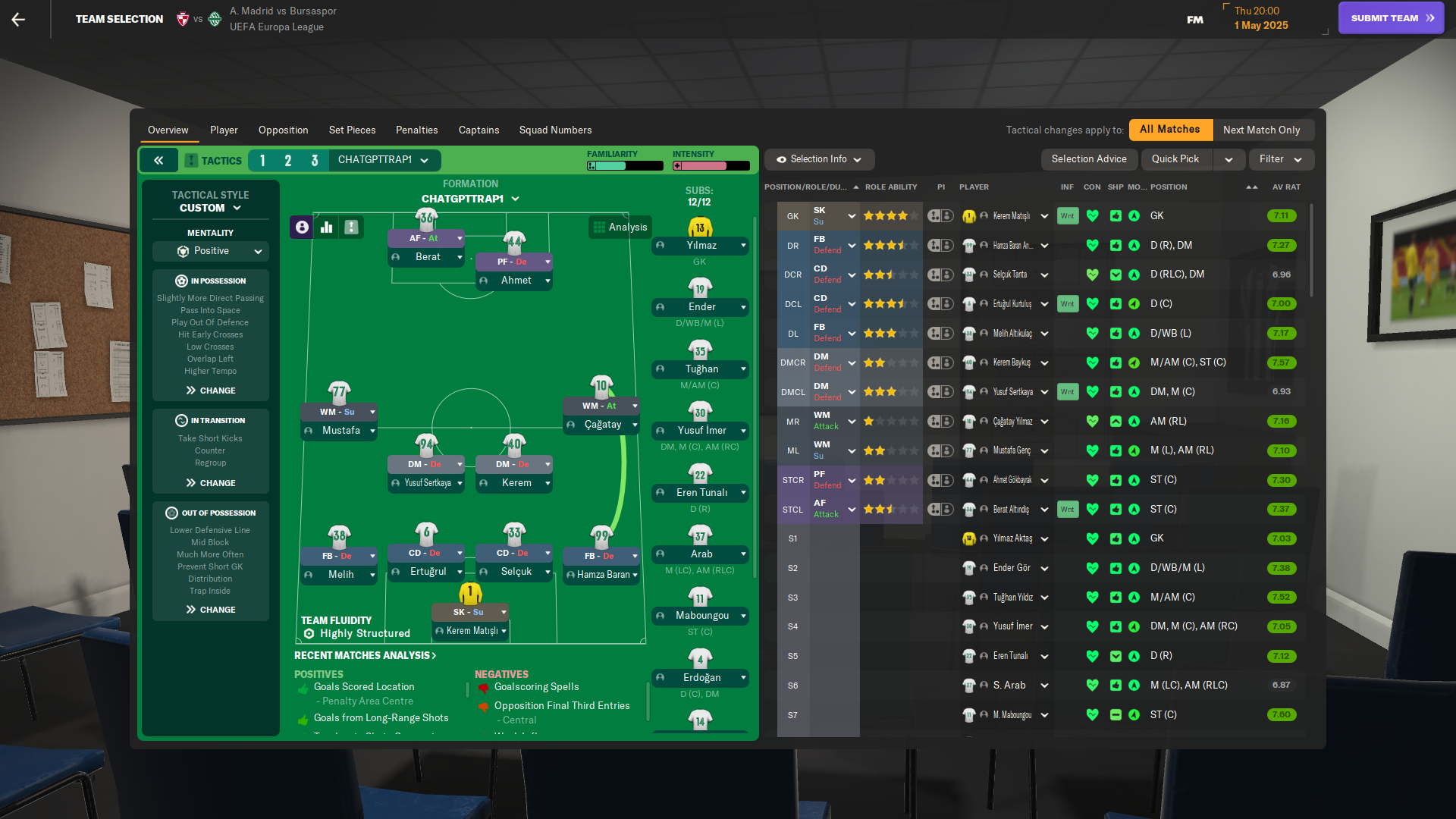
Formation & Style
Tactical Style:Possession Focus
Mentality:Attacking
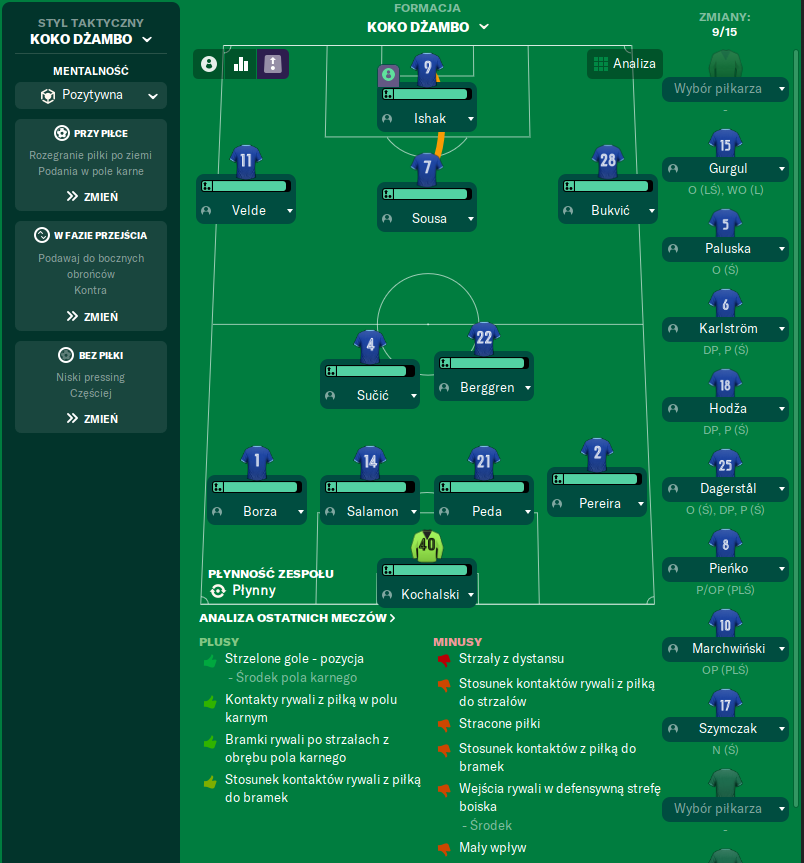
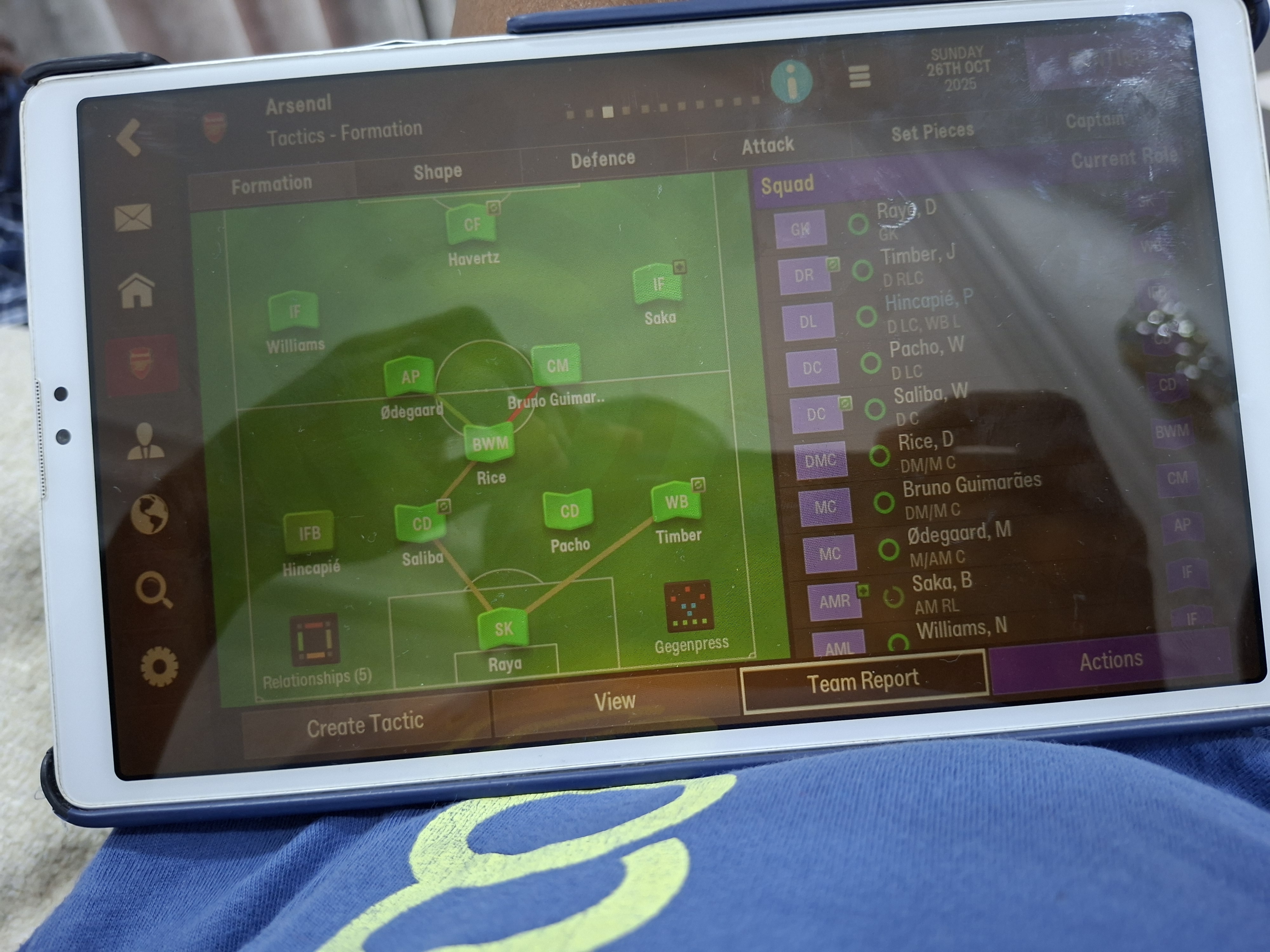
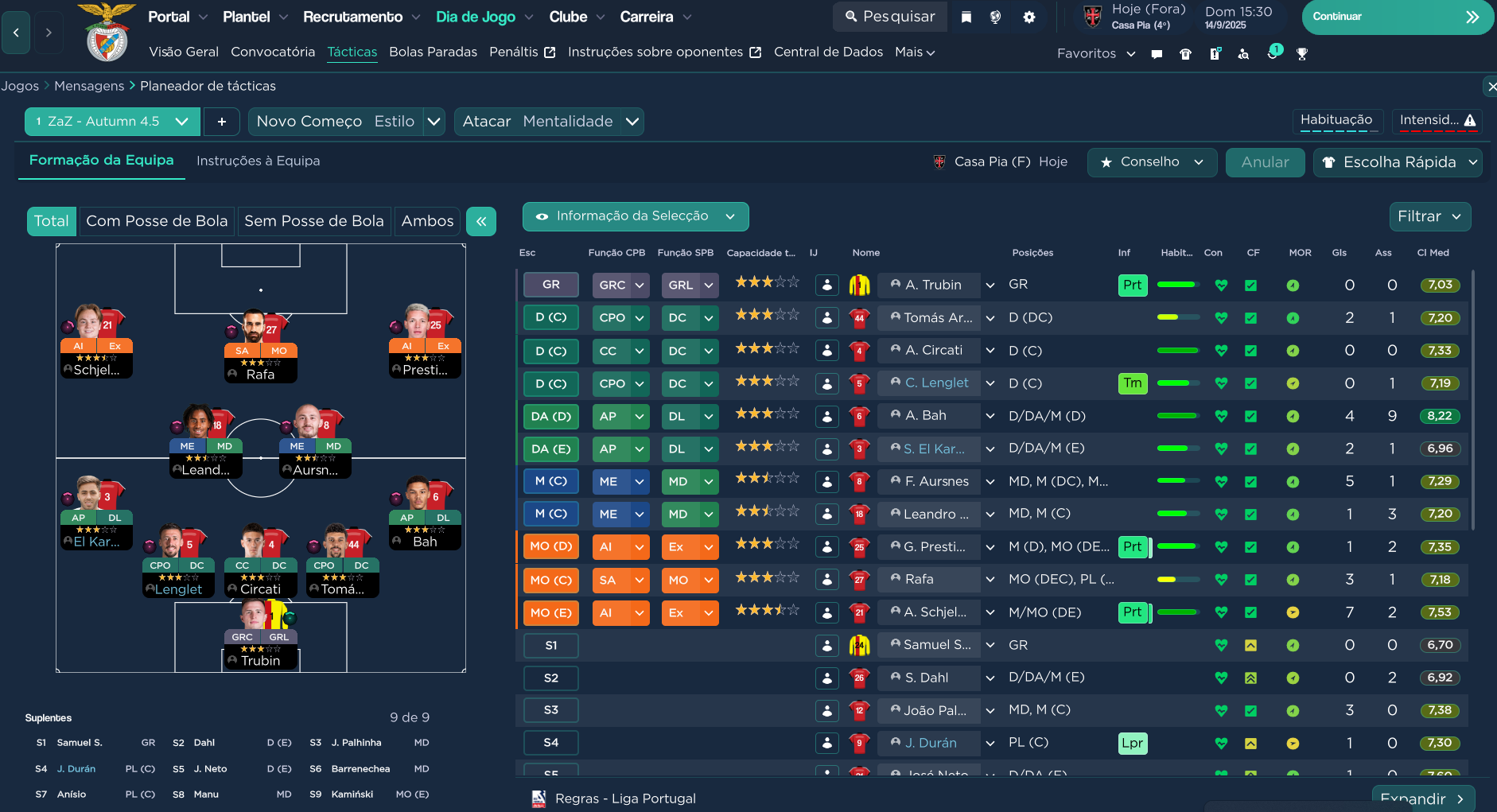
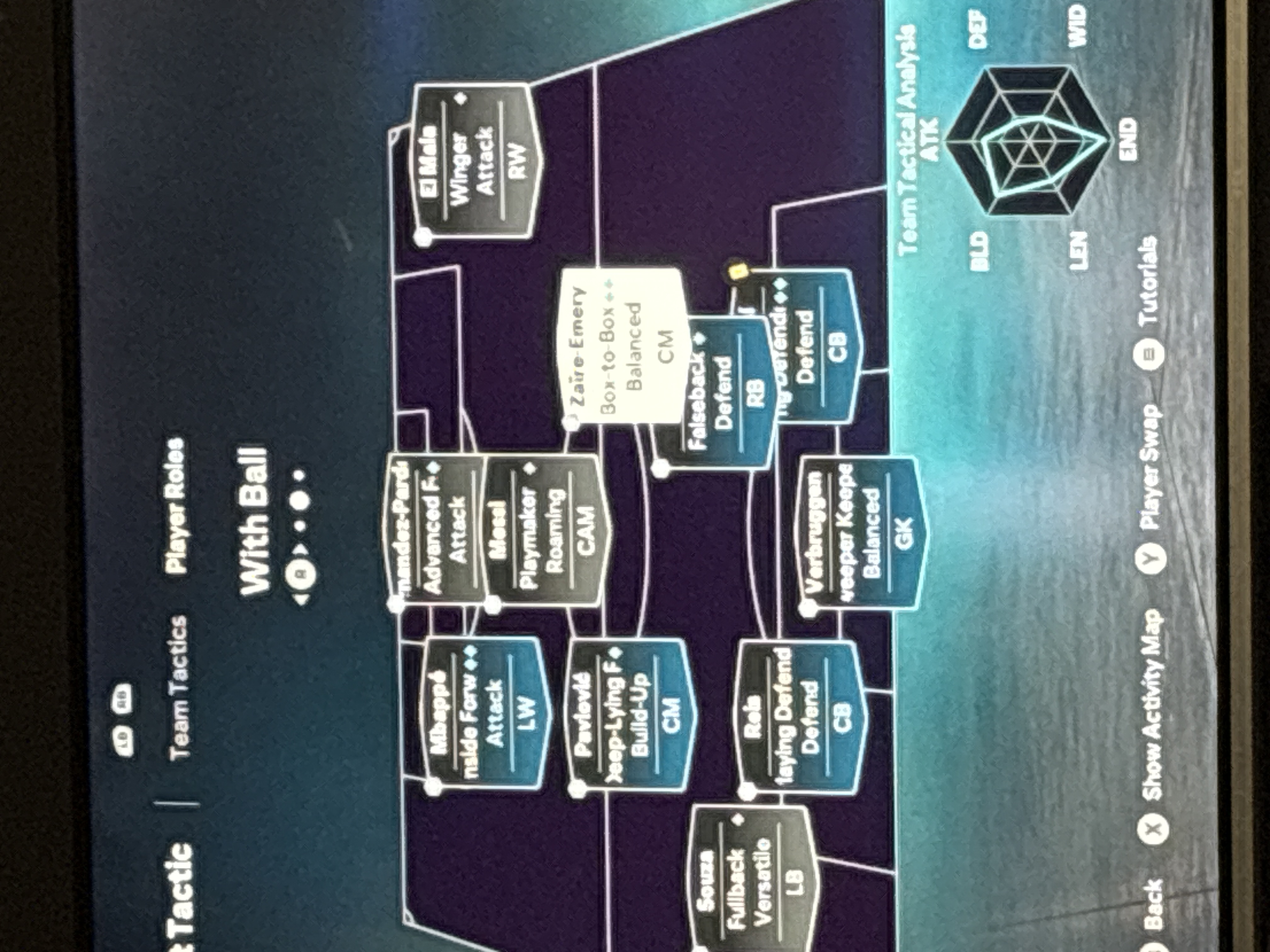
Formation:4-2-3-1 Wide
Team Fluidity:Structured
In Possession
Play Out of Defence
Shorter Passing
Higher Tempo
In Transition
Counter Press
Counter
Out of Possession
Higher Defensive Line
Much Higher Line of Engagement
Prevent Short GK Distribution
Team Shape Without Ball
Shape:Compact
Description:Defenders positioned to engage in one-on-one situations while holding the line.
Evidence:Two solid centre-backs at [2,2] and [2,3] support a deeper defensive strategy.
Team Shape With Ball
Shape:Wider than normal
Description:Utilizes wing-backs pushing forward to support wingers and strike partnerships.
Evidence:Wing-Backs at [2,1] and [2,5] combined with Inside Forwards at [5,2] and [5,4].
Phase Description
Attacking Play
Utilizes wide players to stretch opposition and create central overloads.
Defensive Transition
Quickly transitions to press opposition immediately after losing possession.
Main Focus
Maintaining ball possession, providing creativity and width.
Key Strengths
Wide Play
The use of wing-backs creates width and stretches the opposition.
Defensive Solidity
Strong defensive pairing with a balance of ball-playing ability.
Dynamic Midfield
The midfield configuration allows for both defensive cover and attacking support.
Conflicting Directions
Overcommitting Full-Backs
If wing-backs push too far up, it may leave spaces for counter-attacks.
Lack of Defensive Cover
Midfielders may get caught up in attacks and neglect defensive duties.
High Line Vulnerability
A higher defensive line might lead to susceptibility against fast counters.
Tactical Suggestions
Reassess Defensive Duties
Consider adjusting wing-back duties to Support to maintain defensive balance.
Improve Defensive Midfield Awareness
Ensure the Deep-Lying Playmaker remains aware of defensive responsibilities.
Utilize Substitutions Strategically
Introduce fresh legs in the midfield late in the game to maintain intensity.
Ask Questions About Your Lineup
Related Tactics
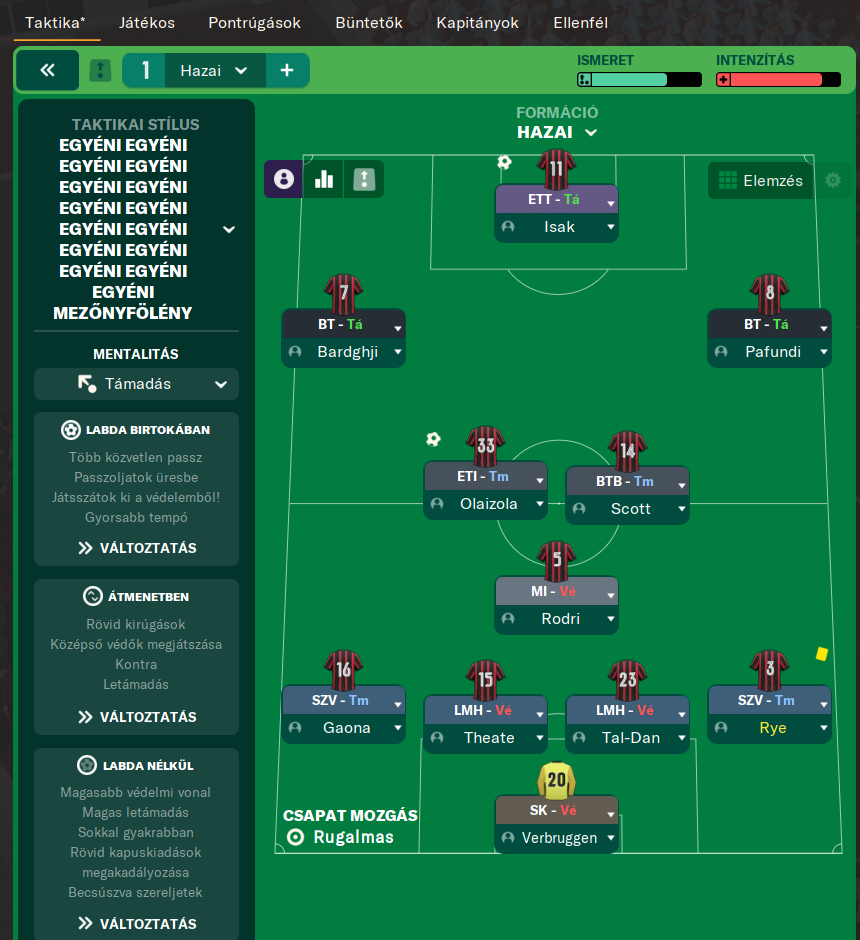
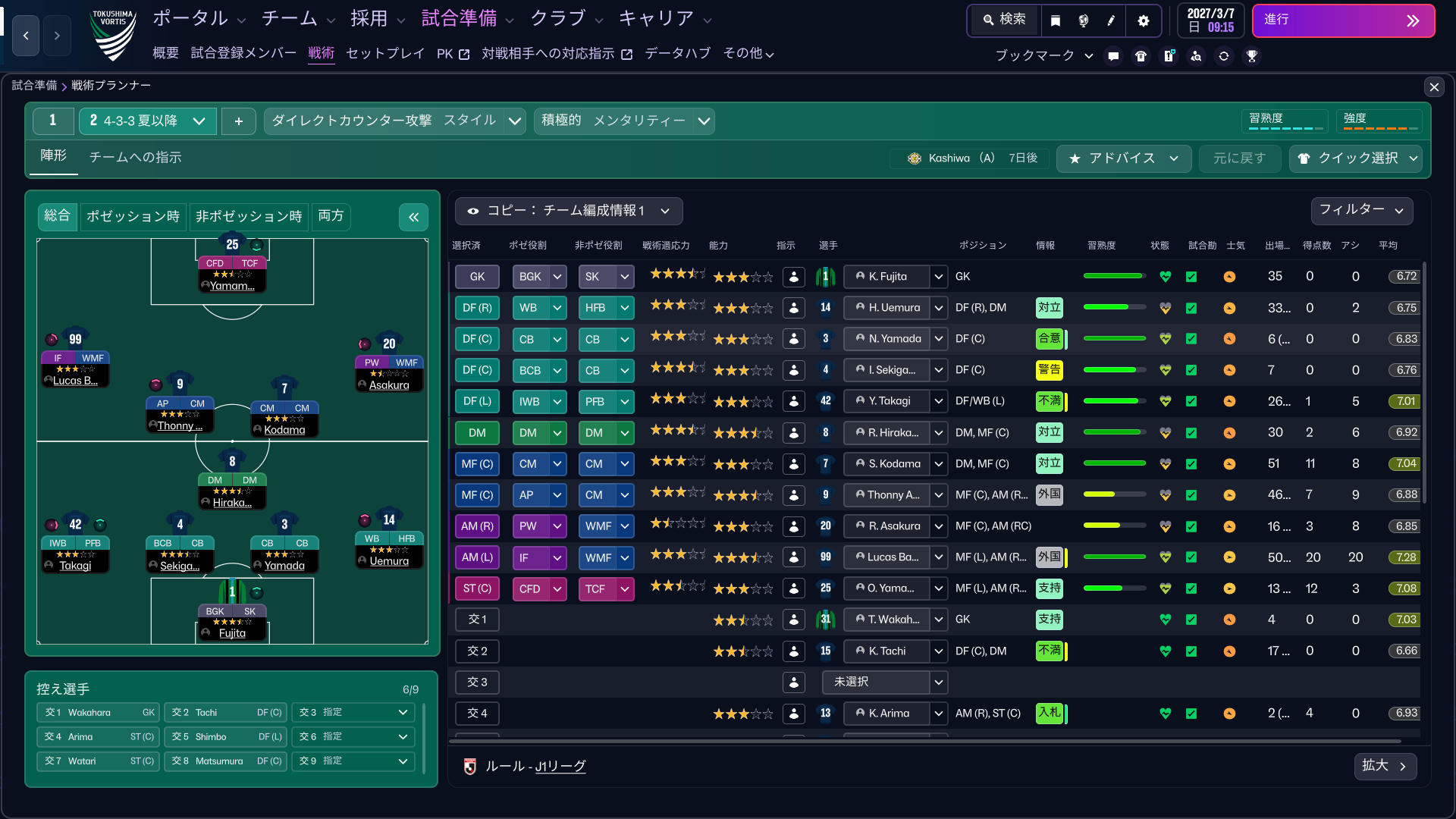
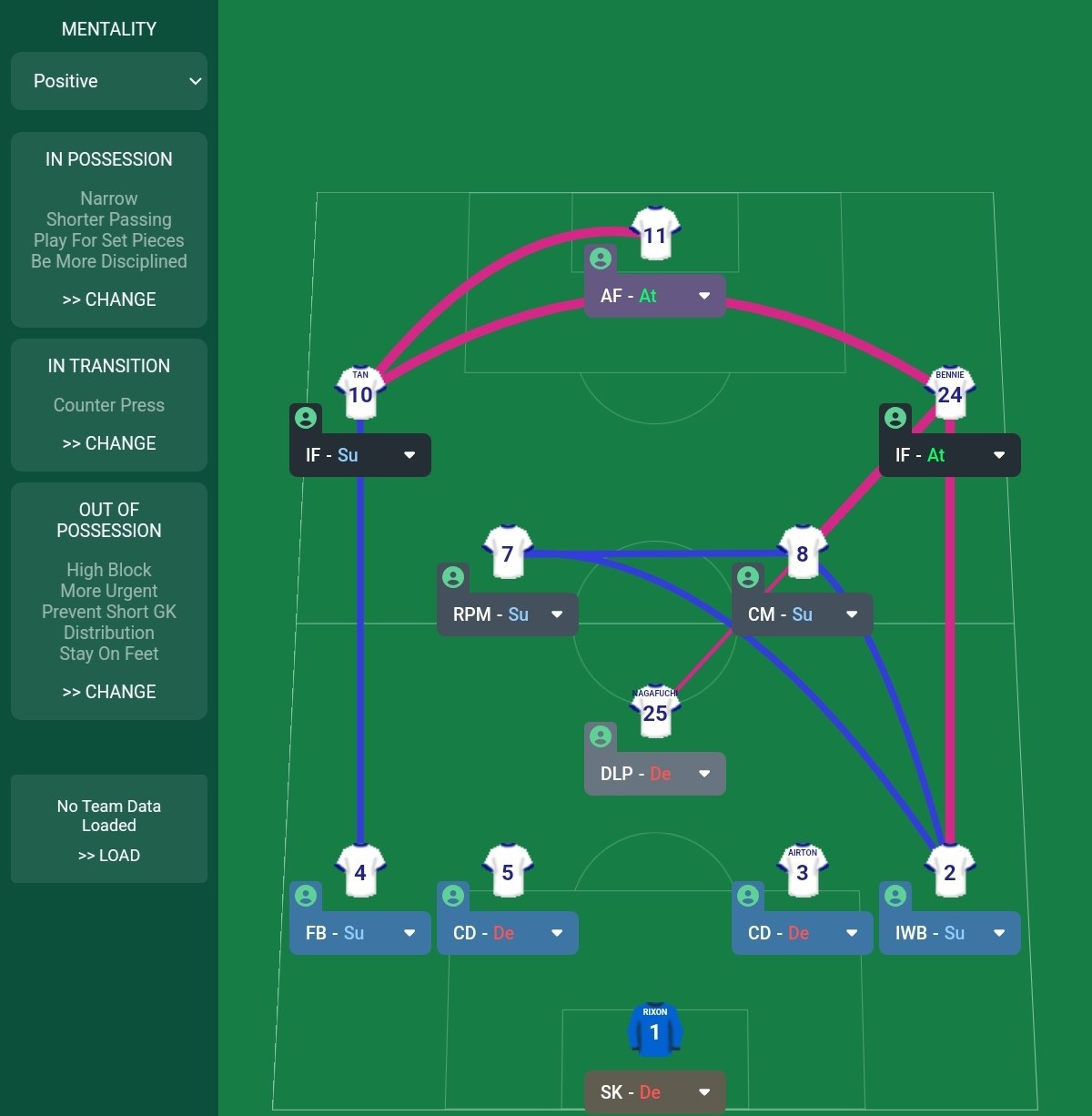
Guides for this formation
The tactical theory behind the 4-2-3-1 Wide: roles, instructions, and the trade-offs that decide whether the system holds up.
Player pairings
Midfield Pairs in 4-2-3-1 and 4-4-2
Double pivots and flat pairs in 4-2-3-1 and 4-4-2: when each pairing works, when it collapses, and the AMC unicorn that rescues both.
Read guide
Playing styles
Gegenpressing: A Full Guide
Klopp-style gegenpressing in FM, including squad profile, line-and-press pairing, sustainable workload, and the antipatterns to avoid.
Read guide