Uploaded Tactic
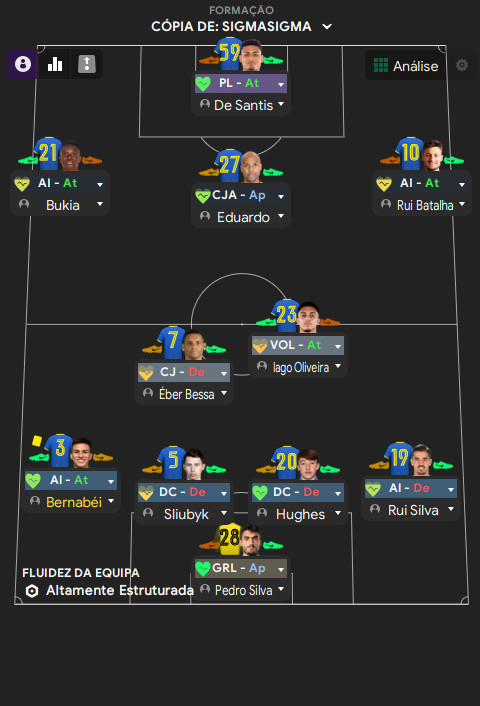
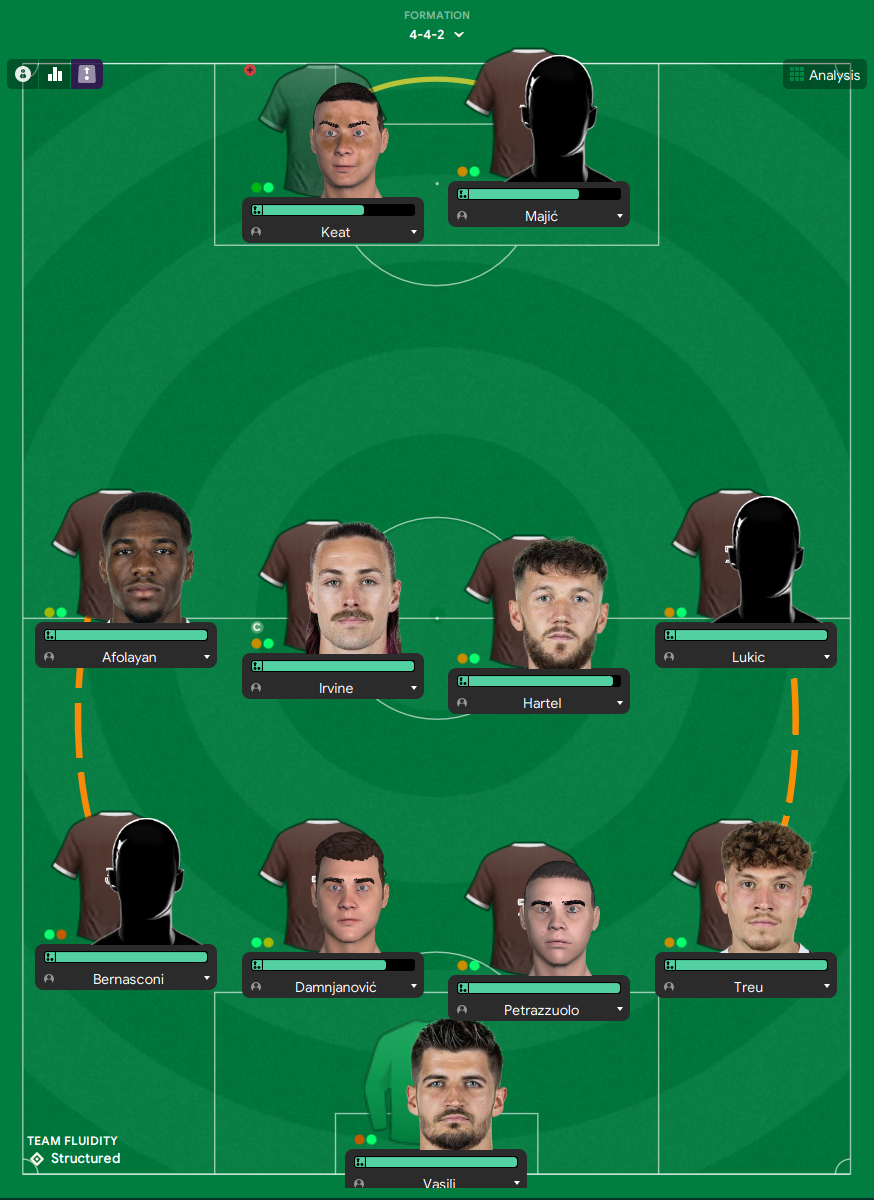
Formation & Style
Tactical Style:Structured
Mentality:Attacking
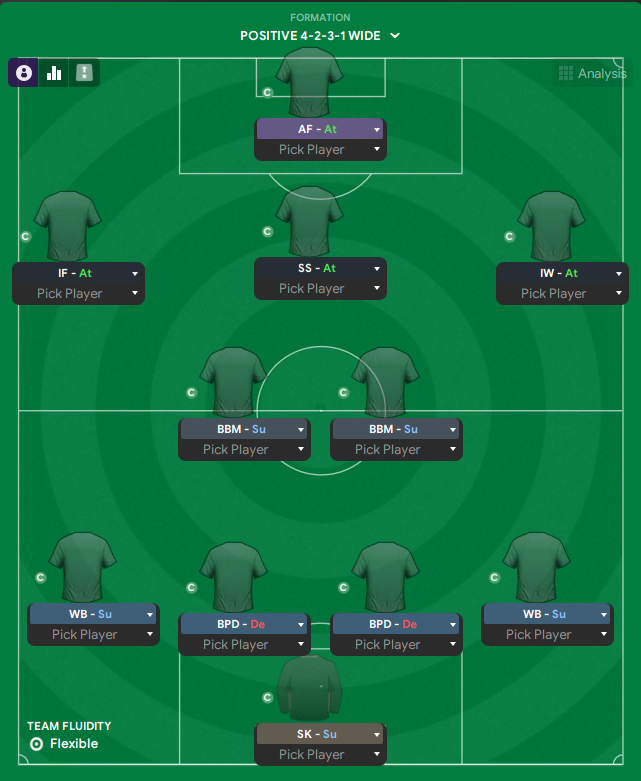
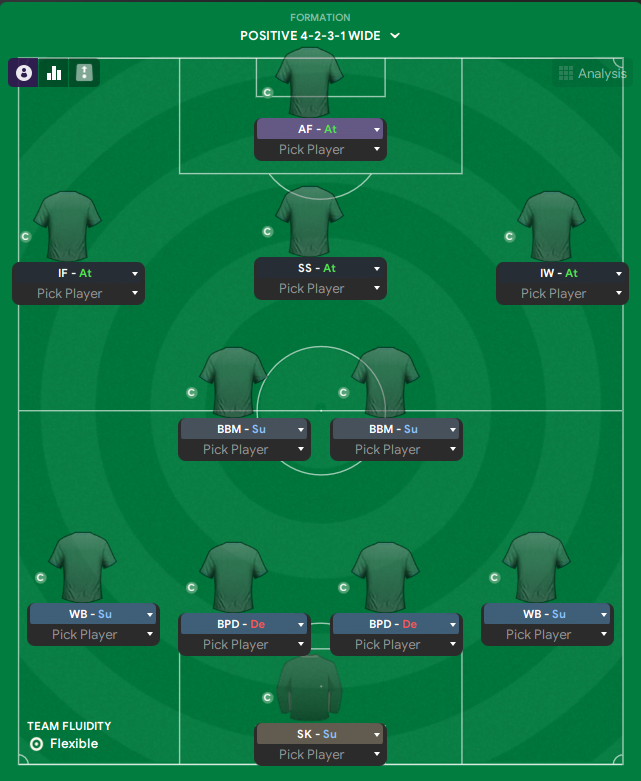
Formation:4-2-3-1 Wide
Team Fluidity:Highly Structured
In Possession
Width: Fairly Wide
Pass Into Space
Play out of Defence
In Transition
Counter-Press
Counter
Out of Possession
High Press
Urgent Pressing
Team Shape Without Ball
Shape:Compact
Description:Defenders maintain a compact shape to limit space between lines, while full-backs support the attack when possession is secured.
Evidence:Two central defenders (Sliubyk, Hughes) at [2,3] and [2,4] focus on cutting out attacks.
Team Shape With Ball
Shape:Fluid
Description:Attacking players interchange positions, especially the Inside Forwards and Advanced Playmaker creating spaces.
Evidence:AM and AML positions with attacking duties (Rui Batalha, Bukia) at [6,2] and [6,4] actively seek to create chances.
Phase Description
Attacking Play
Rapid transitions with an emphasis on wing play and through balls. Players are instructed to create overloads on the flanks.
Defensive Transition
Immediate pressure to regain possession after losing the ball, with a focus on closing down quickly.
Main Focus
Utilizing width and pace to break defenses down and finding the striker in dangerous positions.
Key Strengths
Fluid Attack
The fluid movement among front players can confuse defenders and create space.
Wide Play Ability
Utilization of Complete Wing-Backs enhances width and attacking options.
Counter-Pressing Strategy
Immediate pressure on losing possession allows for quick recovery situations.
Conflicting Directions
High Defensive Line
The attacking mentality paired with a high press can leave the defense vulnerable to quick counter-attacks.
Attacking Full-Backs
While they add to the attack, their positioning risks creating gaps for opposing wingers to exploit.
Volante Role Positioning
The Volante's attacking role might push him too far forward, compromising midfield balance.
Tactical Suggestions
Adjust Defensive Line
Consider lowering the defensive line to mitigate risks associated with counter-attacks.
Midfield Fluidity
Consider changing role duty of Central Midfielder to balancing duty to enhance defensive cover.
Utilize Box-to-Box Midfielder
Introducing a Box-to-Box Midfielder could balance both attacking and defensive responsibilities.
Ask Questions About Your Lineup
Related Tactics
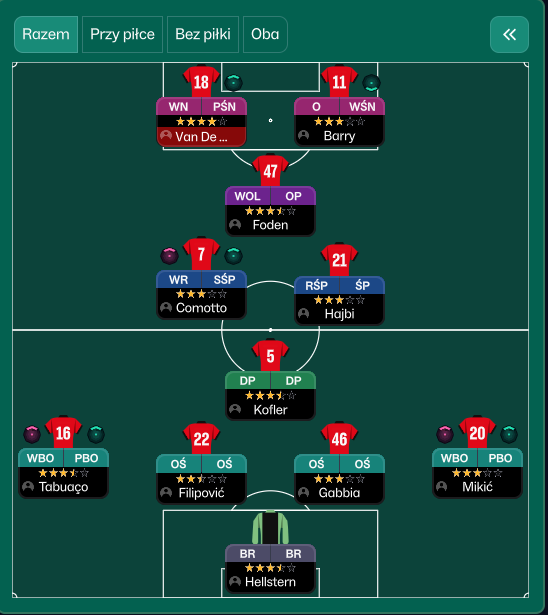
More Structured tactics
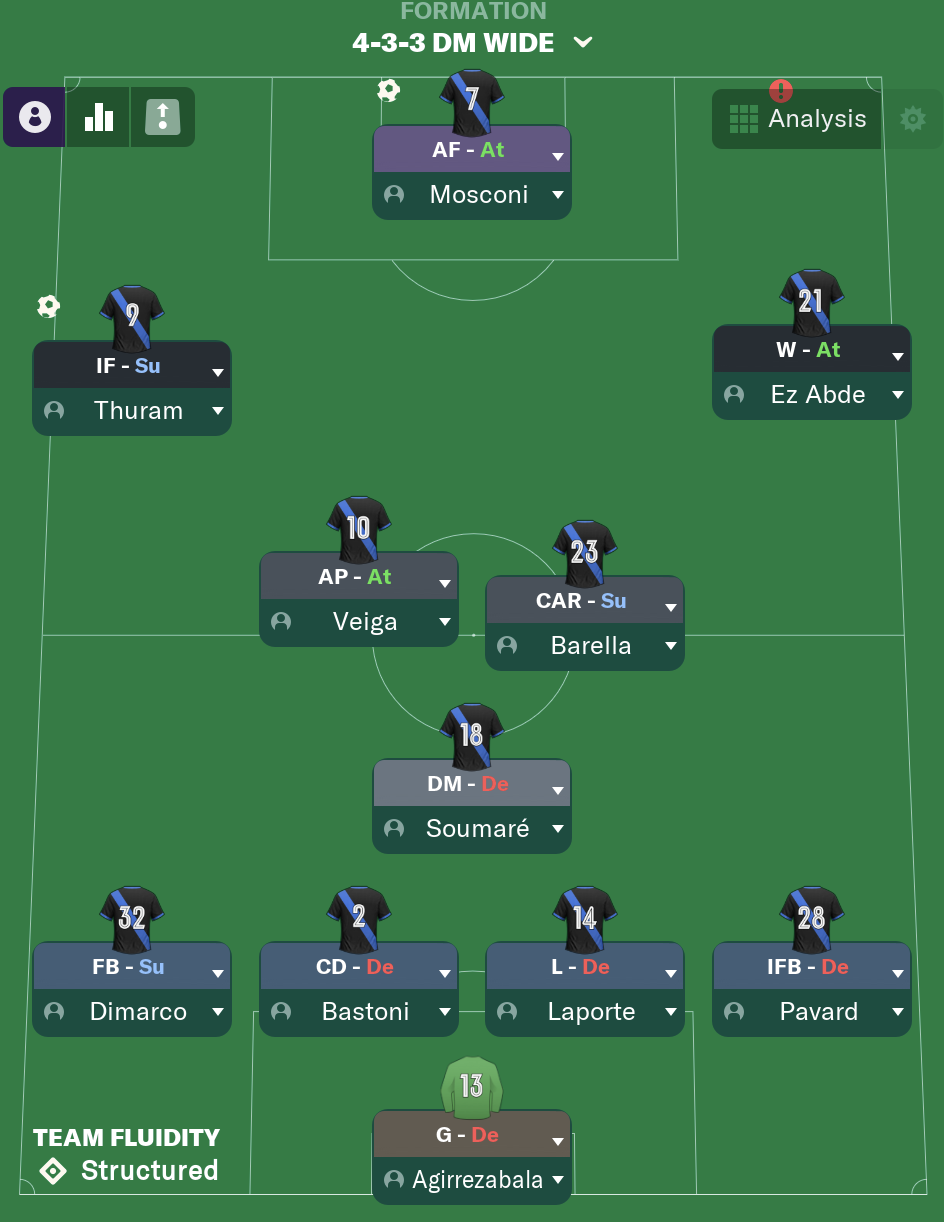
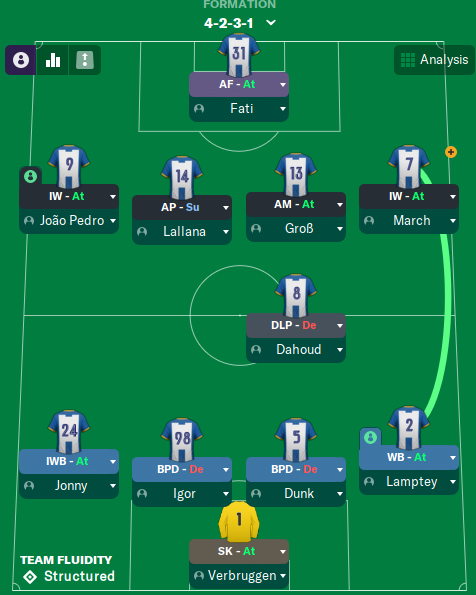
Guides for this formation
The tactical theory behind the 4-2-3-1 Wide: roles, instructions, and the trade-offs that decide whether the system holds up.
Player pairings
Midfield Pairs in 4-2-3-1 and 4-4-2
Double pivots and flat pairs in 4-2-3-1 and 4-4-2: when each pairing works, when it collapses, and the AMC unicorn that rescues both.
Read guide
Playing styles
Gegenpressing: A Full Guide
Klopp-style gegenpressing in FM, including squad profile, line-and-press pairing, sustainable workload, and the antipatterns to avoid.
Read guide