
4-2-3-1 Wide
The attacking mentality combined with players running at the defense maximizes scoring opportunities.
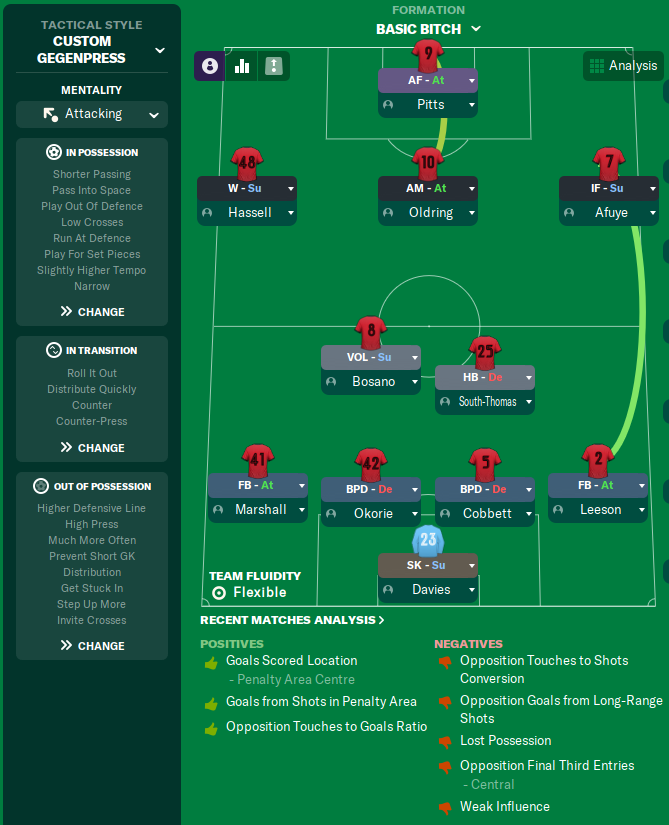
Loading tactical analysis...
Gegenpress
Attacking
4-2-3-1 Wide
Flexible
Shorter Passing
Pass Into Space
Play Out Of Defence
Run At Defence
Low Crosses
Higher Tempo
Roll It Out
Distribute Quickly
Counter
Counter-Press
Higher Defensive Line
High Press
More Often Prevent Short GK Distribution
Get Stuck In
Step Up More
Invite Crosses
ST
Advanced Forward
Attack
AM
Attacking Midfielder
Attack
W
Winger
Support
VOL
Volante
Support
HB
Half Back
Defend
The attacking mentality combined with players running at the defense maximizes scoring opportunities.
The high press and counter-press tactics disrupt the opponent's build-up and win back possession quickly.
An overly aggressive pressing style can leave gaps in defense, especially against counter-attacking teams.
Shortened passing with a high tempo may lead to rushed decisions and loss of possession in critical areas.
How can we maintain defensive structure while attacking?
Are the current roles maximizing the players' strengths?
Should adjustments be made based on opponent strengths?
How can we improve our conversion rate of shots to goals?
Is the high press causing more problems than it solves?
Are your full-backs providing adequate defensive cover?
The tactical theory behind the 4-2-3-1 Wide: roles, instructions, and the trade-offs that decide whether the system holds up.
Double pivots and flat pairs in 4-2-3-1 and 4-4-2: when each pairing works, when it collapses, and the AMC unicorn that rescues both.
Klopp-style gegenpressing in FM, including squad profile, line-and-press pairing, sustainable workload, and the antipatterns to avoid.
The five seconds after losing the ball decide most matches. Counter-press, drop-and-recover, and how to know which one you should be doing.











