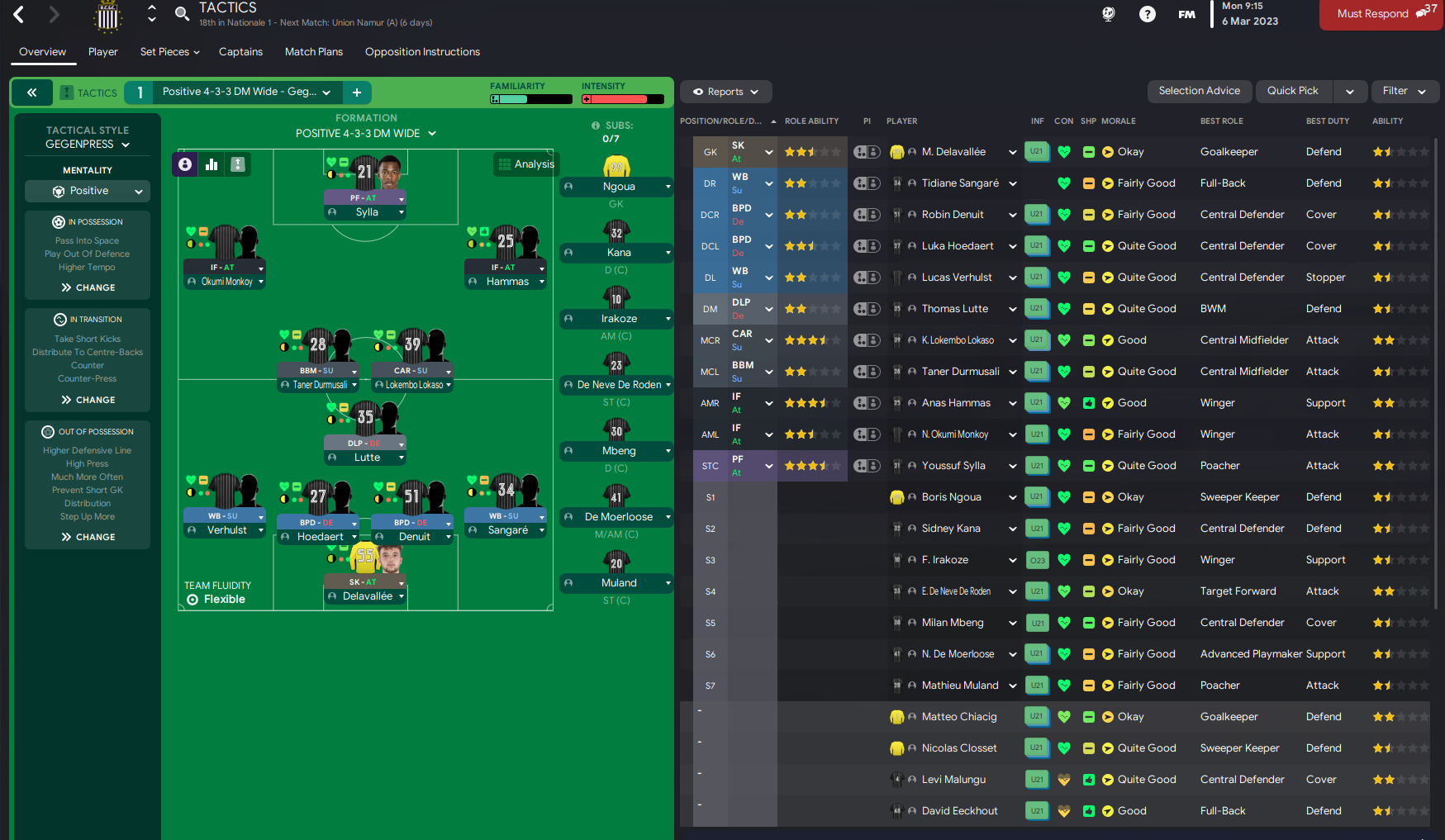
Uploaded Tactic
Formation & Style
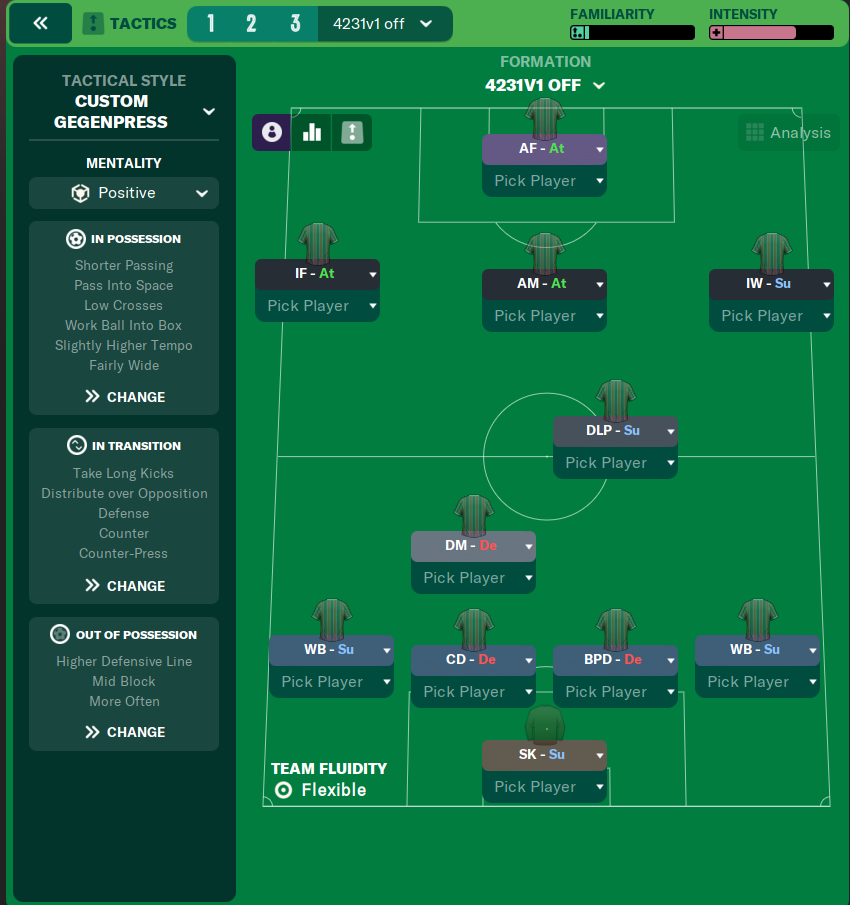
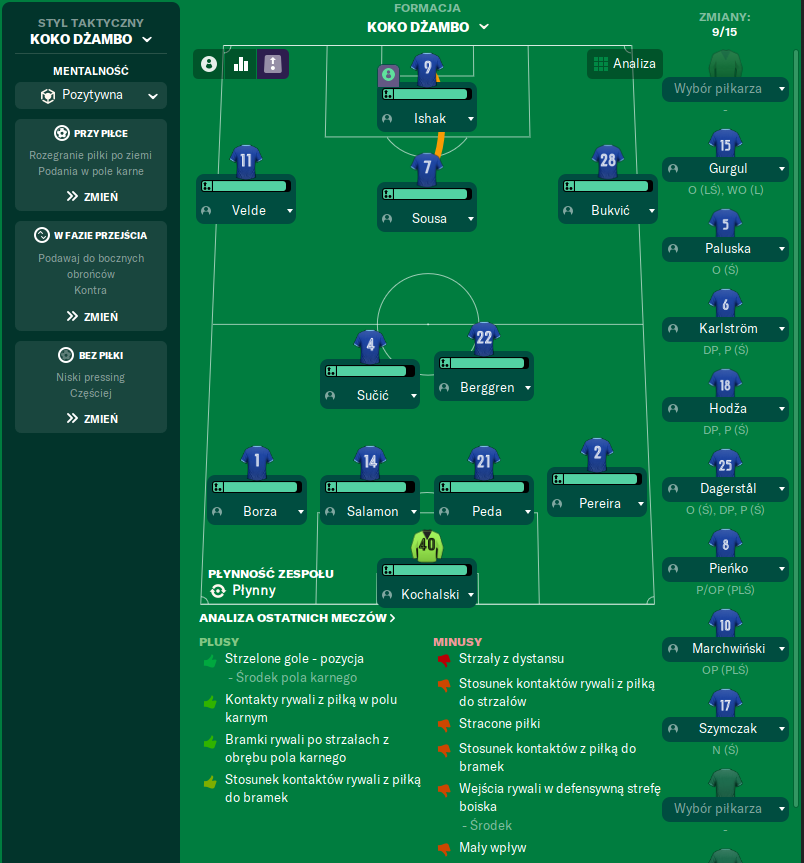
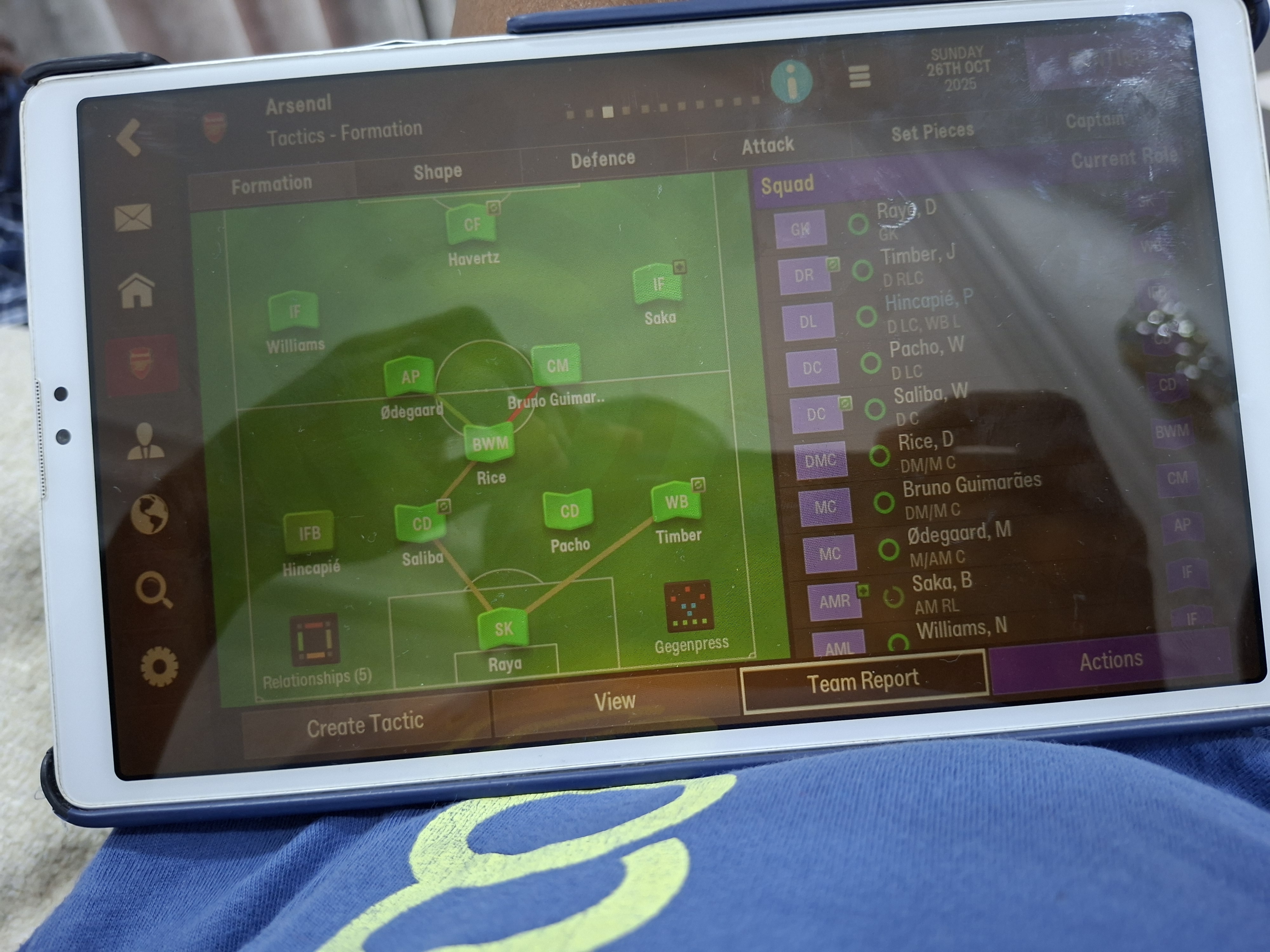
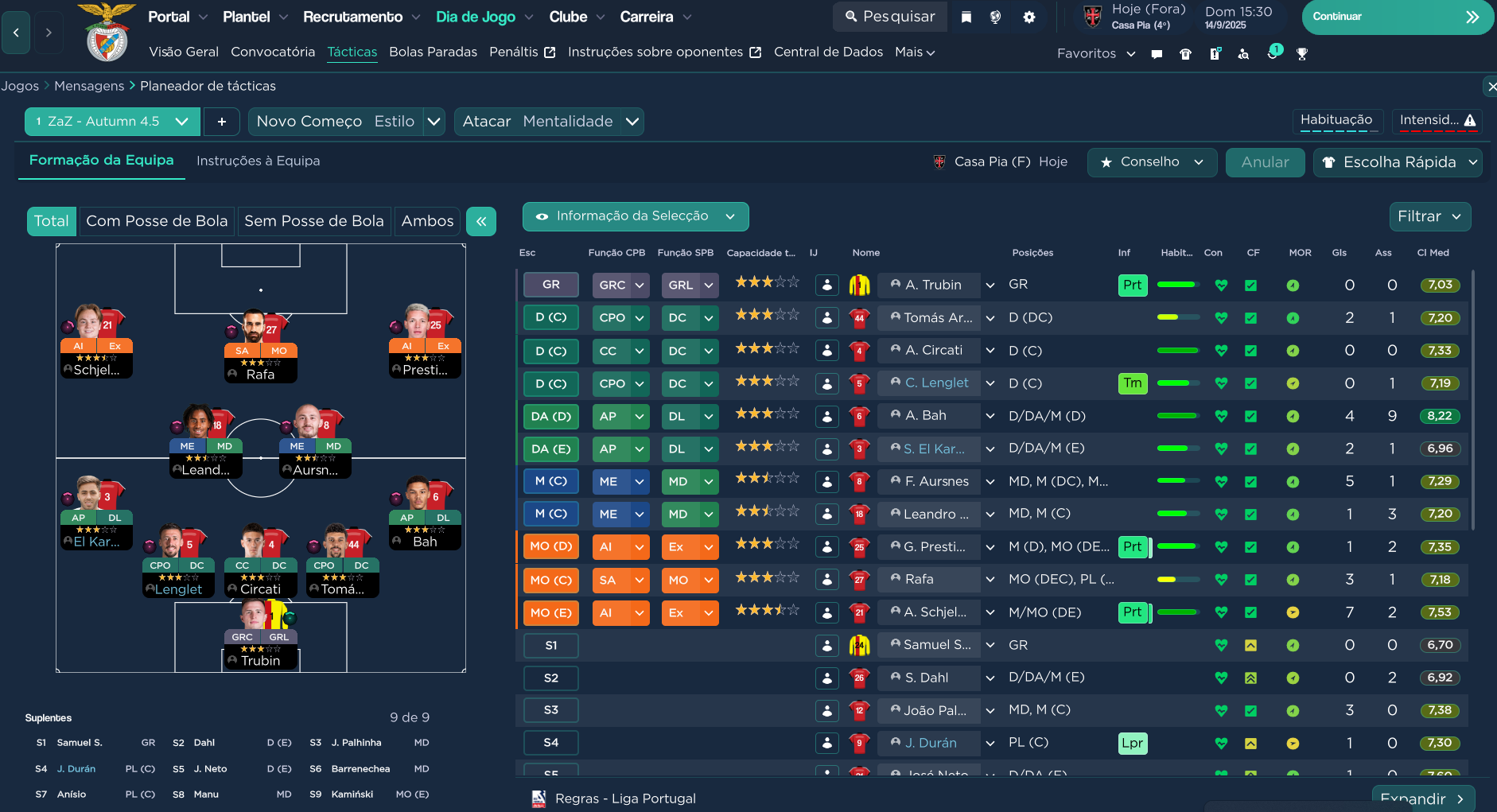
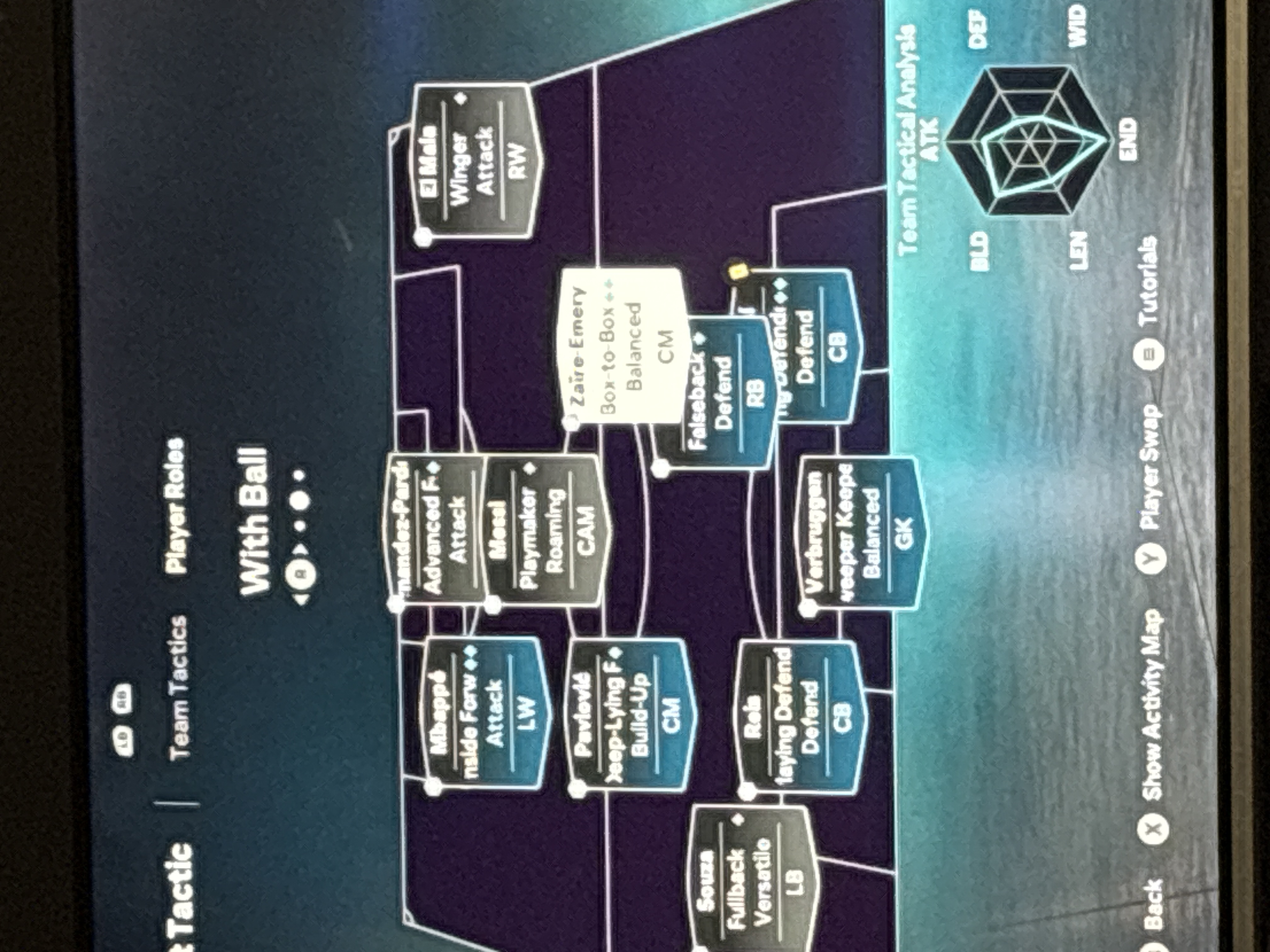
Tactical Style:Gegenpress
Mentality:Positive
Formation:4-2-3-1 Wide
Team Fluidity:Flexible
In Possession
Shorter Passing
Pass Into Space
Low Crosses
Work Ball Into Box
Slightly Higher Tempo
Fairly Wide
In Transition
Take Long Kicks
Distribute over Opposition Defense
Counter
Counter-Press
Out of Possession
Higher Defensive Line
Mid Block
More Often
Team Shape Without Ball
No team shape without ball data available
Team Shape With Ball
No team shape with ball data available
Key Strengths
Dynamic Attacking Play
The combination of Inside Forwards, an Advanced Forward, and a Central Attacking Midfielder creates dynamic attacking options, allowing for varied penetration into the oppositional defense.
High Pressing Game
Utilizing Gegenpressing principles enhances the team's ability to regain possession quickly after losing the ball, putting immediate pressure on opposition defenders.
Fluid Midfield
The presence of a Deep-Lying Playmaker and a Defensive Midfielder provides a solid foundation in midfield, allowing for both creative play and defensive stability.
Wide Play Opportunities
With Wing Backs and an Inside Winger, the tactic leverages width effectively, stretching the opposition defense and creating gaps for attacks.
Conflicting Directions
Long Kicks vs. Shorter Passing
The decision to take long kicks may conflict with the overall philosophy of shorter passing, leading to inconsistencies in build-up play that could frustrate the team’s rhythm.
High Defensive Line with Counter Strategy
While a higher defensive line supports aggressive pressing, it may leave the defense vulnerable to quick counter-attacks if the pressing fails or if possession is lost.
Mixed Mentality with Counter Play
The Positive mentality may sometimes impede quick transitions as players may look to overplay, counteracting the desired quick counter-pressing movements.
Support Duties in Defensive Roles
Having multiple players on support duties (e.g., Ball Playing Defender and Wing Backs) may reduce defensive solidity, as there might be insufficient cover when pressed.
Tactical Suggestions
Adjust Kicking Strategy
Consider changing the goalkeeping kicking strategy to align with the shorter passing approach for a more cohesive build-up from the back.
Defensive Adjustments
If facing counter-attacks frequently, try adopting a more cautious mentality or reverting to a balanced structure to ensure better cover.
Reassess Player Duties
Evaluate if some players can switch from support to attack duties to enhance attacking pressure and ensure a better transition during offensive phases.
Expand Tactical Flexibility
Consider incorporating a variety of tactical changes in-game to adapt to different opponents and situations, possibly switching to a more direct approach when needed.
Ask Questions About Your Lineup
Related Tactics
More Gegenpress tactics
Guides for this formation
The tactical theory behind the 4-2-3-1 Wide: roles, instructions, and the trade-offs that decide whether the system holds up.
Player pairings
Midfield Pairs in 4-2-3-1 and 4-4-2
Double pivots and flat pairs in 4-2-3-1 and 4-4-2: when each pairing works, when it collapses, and the AMC unicorn that rescues both.
Read guide
Playing styles
Gegenpressing: A Full Guide
Klopp-style gegenpressing in FM, including squad profile, line-and-press pairing, sustainable workload, and the antipatterns to avoid.
Read guide