Uploaded Tactic
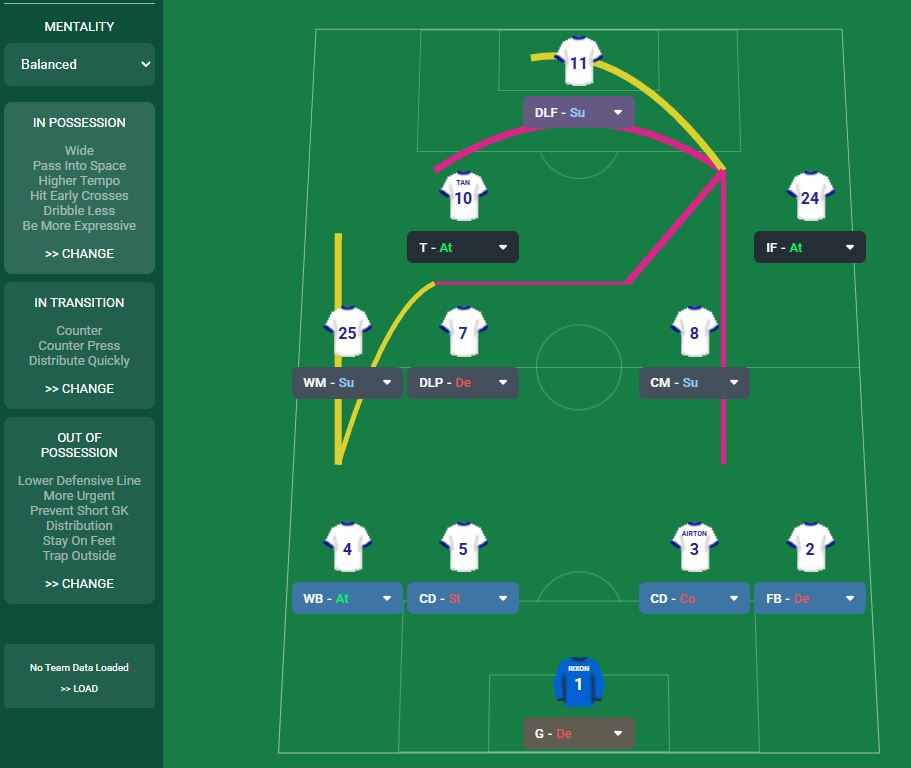
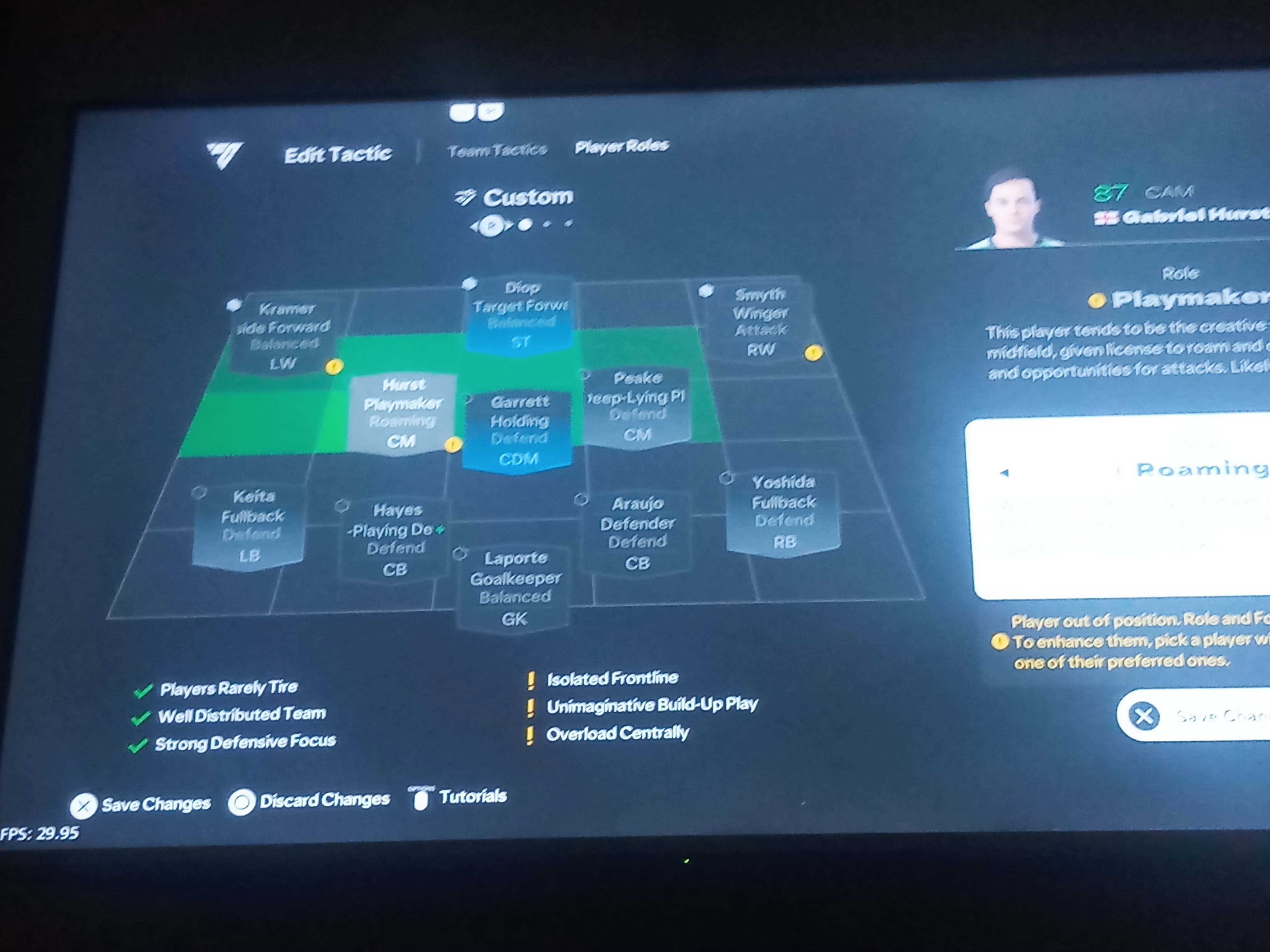
Formation & Style
Tactical Style:Balanced
Mentality:Balanced
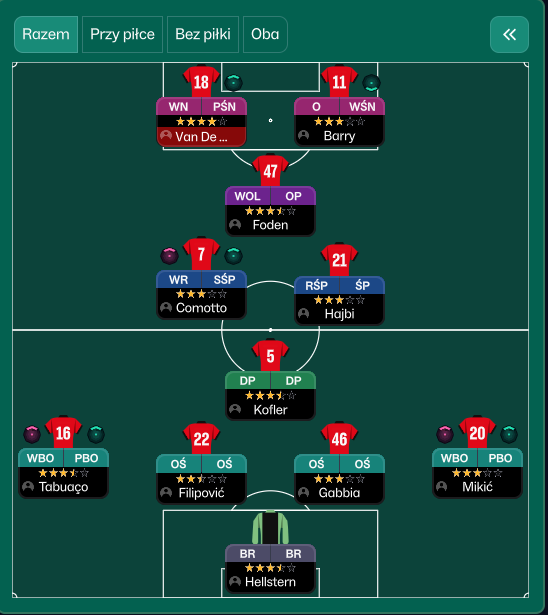
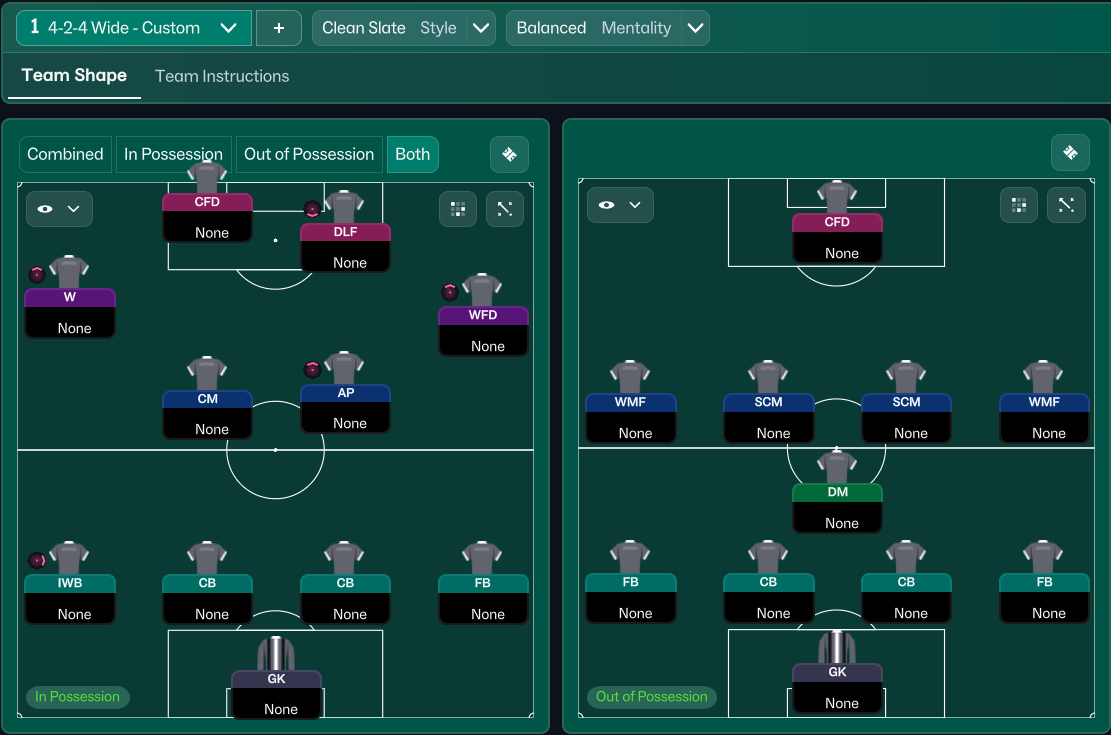
Formation:4-2-3-1 Wide
Team Fluidity:Structured
In Possession
Wide
Pass Into Space
Higher Tempo
Hit Early Crosses
Dribble Less
Be More Expressive
In Transition
Counter
Counter Press
Distribute Quickly
Out of Possession
Lower Defensive Line
More Urgent
Prevent Short GK Distribution
Stay On Feet
Trap Outside
Team Shape Without Ball
Shape:4-4-2
Description:Defensive structure allows for compactness while maintaining pressing angles.
Evidence:Lower Defensive Line + 4 defenders with CD-S and FB-D at [2,1], [2,2], [2,3], [2,4]
Team Shape With Ball
Shape:4-2-3-1
Description:Staggered attacking structure creates overloads in central areas and width.
Evidence:Wide Men and Inside Forward with DLF distributing from [6,2] and [5,2]
Phase Description
Attacking Play
Focus on exploiting space wide and quick transitions to the front players.
Defensive Transition
Counter-pressing upon losing possession to regain quickly.
Main Focus
Utilizing width to stretch the opponent's defense while maintaining tempo.
Key Strengths
Wide Play and Depth
Utilizing WM-S and IF-A allows penetration from wider areas into goalscoring positions.
Central Playmaking
DLP-D controls the rhythm from deeper, distributing effectively.
Balanced Pressing Strategy
Engagement after losing possession is proactive and high-energy.
Conflicting Directions
High-Tempo Play with Balance
Higher tempo may conflict with maintaining possession under pressure.
Wide Play vs Central Work
While stretching wide, could limit support centrally.
Pressing vs Defensive Line
High pressing may expose the defence if balls are lost carelessly.
Tactical Suggestions
Think About Flexibility in Attack
Consider having a player as a secondary striker or roaming attacker for better depth.
Adjust Defensive Line Height
Evaluate changing the defensive line on opponent strengths to avoid being caught out.
Create More Fluid Midfield Play
Implement the use of a roaming midfielder or one more box-to-box presence.
Ask Questions About Your Lineup
Related Tactics
More Balanced tactics
Guides for this formation
The tactical theory behind the 4-2-3-1 Wide: roles, instructions, and the trade-offs that decide whether the system holds up.
Player pairings
Midfield Pairs in 4-2-3-1 and 4-4-2
Double pivots and flat pairs in 4-2-3-1 and 4-4-2: when each pairing works, when it collapses, and the AMC unicorn that rescues both.
Read guide
Playing styles
Gegenpressing: A Full Guide
Klopp-style gegenpressing in FM, including squad profile, line-and-press pairing, sustainable workload, and the antipatterns to avoid.
Read guide