Uploaded Tactic
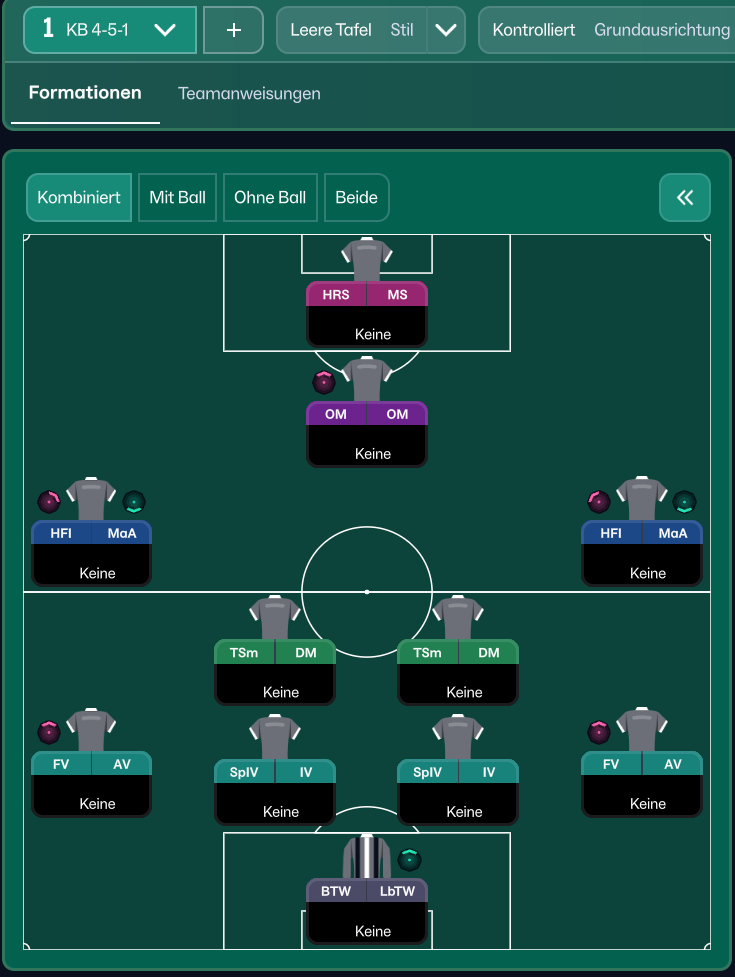
Formation & Style
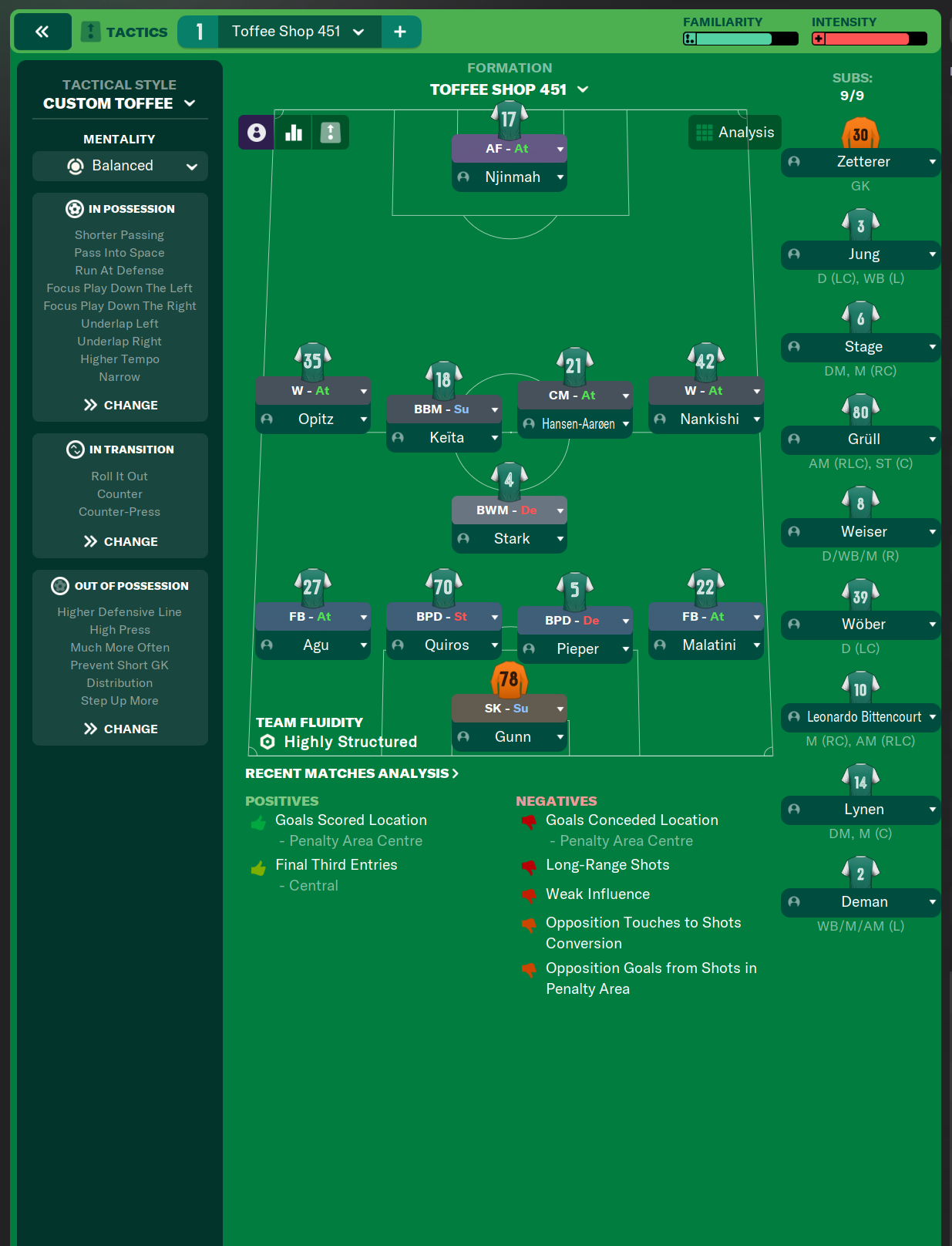
Tactical Style:Balanced
Mentality:Control
Formation:4-5-1
Team Fluidity:Structured
In Possession
Work Ball Into Box
Retain Possession
Play Out of Defence
In Transition
Counter
Counter-Press
Out of Possession
Higher Line of Engagement
Higher Defensive Line
Prevent Short GK Distribution
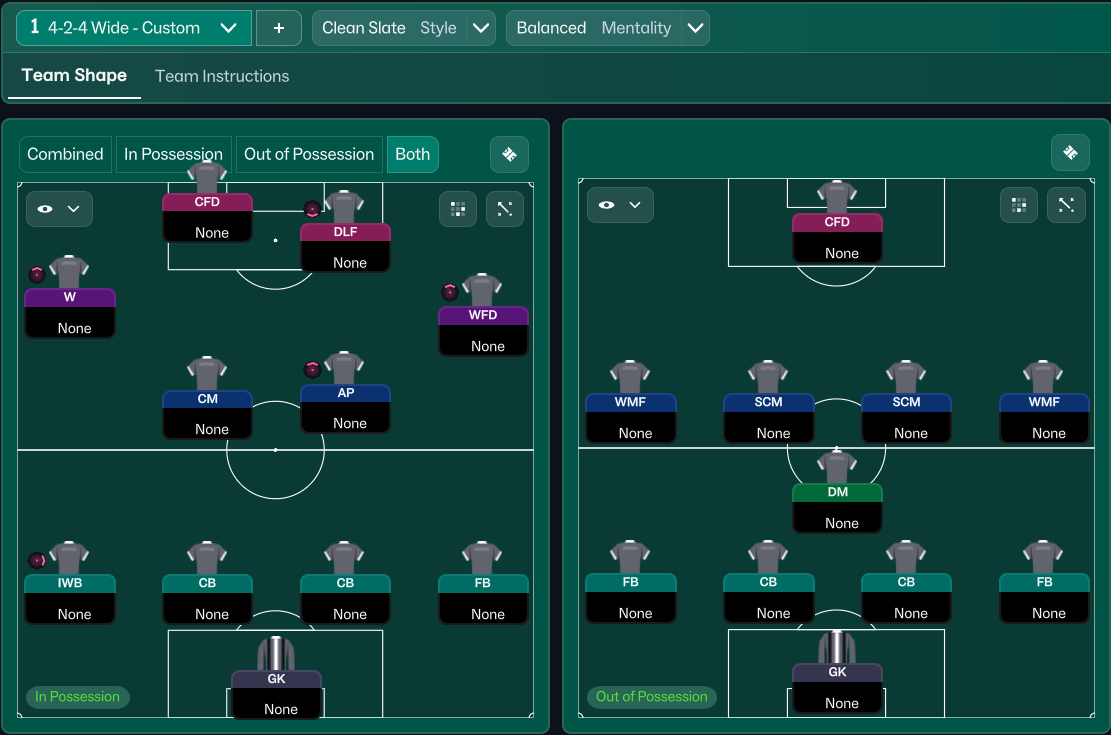
Team Shape Without Ball
Shape:Compact
Description:The team remains organized and compact to limit space for opposing players.
Evidence:Two defensive midfielders protect the backline while wing-backs can retreat quickly.
Team Shape With Ball
Shape:Fluid
Description:Utilizes width created by wing-backs and an attacking midfielder working with the striker.
Evidence:Wing-backs push forward to provide additional width in attack, creating space.
Phase Description
Attacking Play
Focus on building from the back through the midfield, utilizing wing-backs for width.
Defensive Transition
Transition quickly to a compact shape to thwart opponent counter-attacks.
Main Focus
Maintaining ball possession and creating high-quality chances.
Key Strengths
Compact Defensive Structure
The defense is organized with a strong central presence.
Width and Depth in Attack
The wing-backs provide both width and an option to stretch the opposition.
Midfield Control
Three midfielders maintain possession and control the game's tempo.
Conflicting Directions
Overcommitment of Wing-Backs
If wing-backs push too high, the team may become vulnerable to counter-attacks.
Isolated Striker
Relying on a lone striker can lead to isolation if midfield support is lacking.
Predictable Build-Up
Can become predictable if reliant solely on wing-backs for width.
Tactical Suggestions
Increase Midfield Support
Encourage midfielders to make more forward runs to support the striker.
Adjust Wing-Back Duties
Consider switching one wing-back to a more defensive duty to balance the formation.
Improve Forward Link-Up Play
Implement instruction for attacking midfielder to support the striker better.
Ask Questions About Your Lineup
Related Tactics
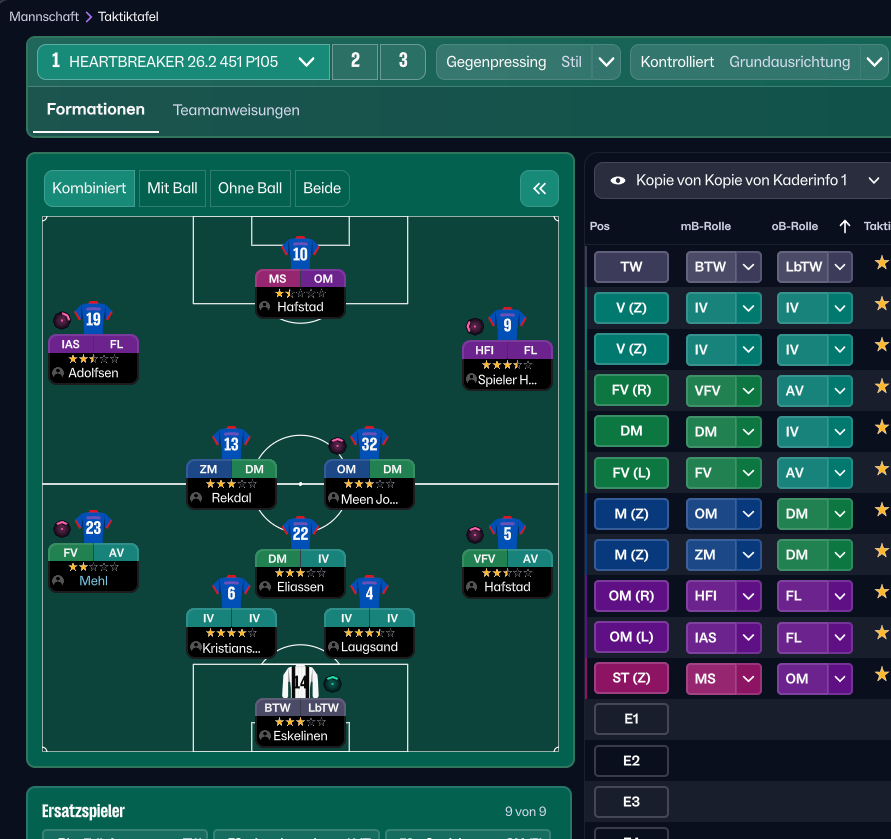
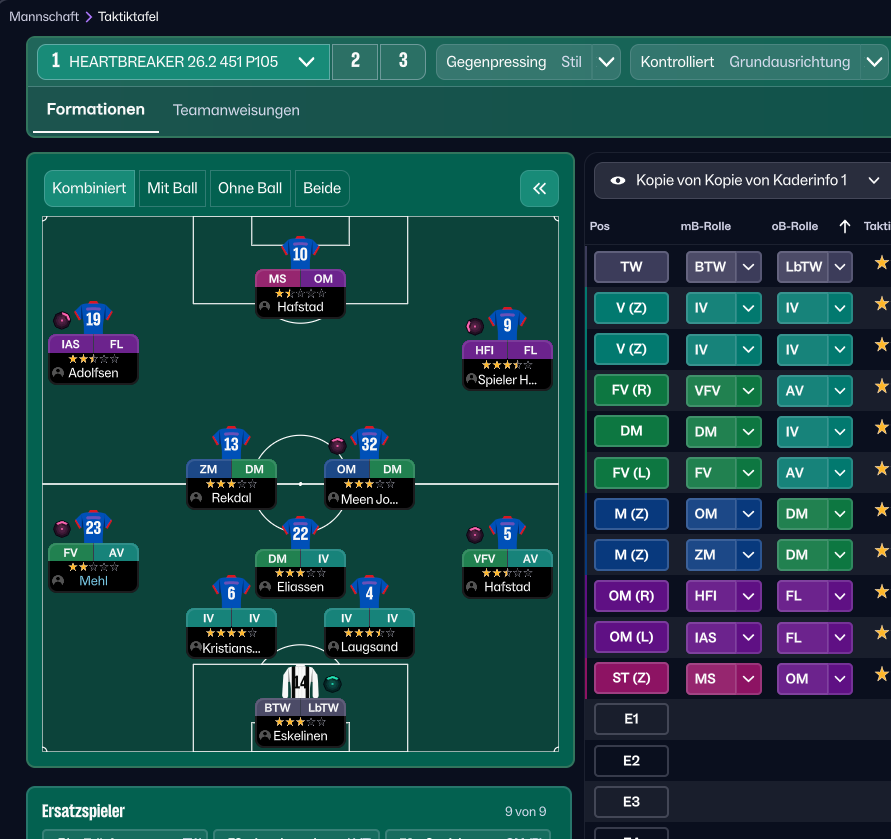
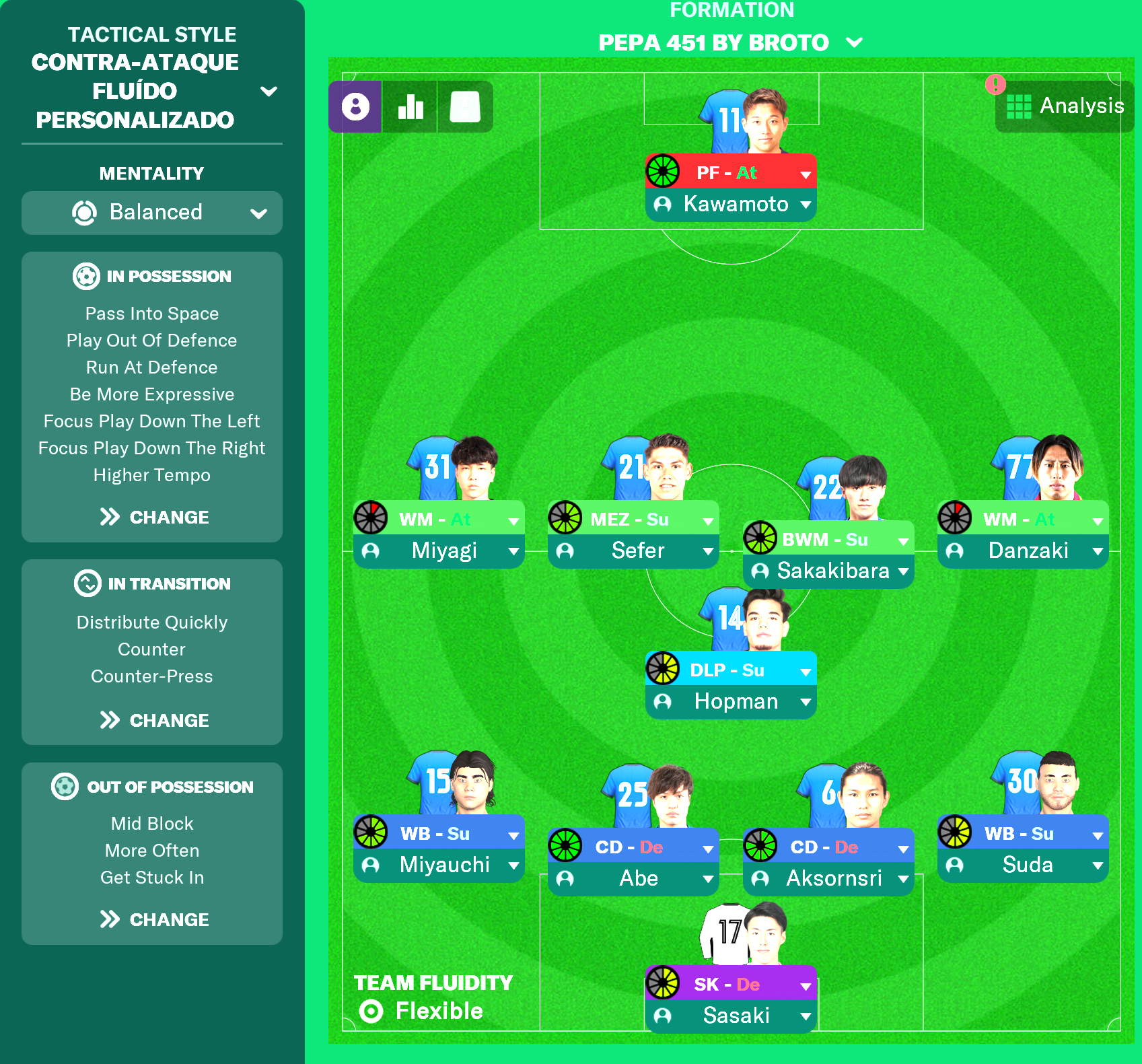
More Balanced tactics
Guides for this formation
The tactical theory behind the 4-5-1: roles, instructions, and the trade-offs that decide whether the system holds up.
Playing styles
Low Block: Park the Bus
The deliberate underdog tactic in FM: formation choices, duty distribution, and why Counter-Press is exactly wrong inside a low block.
Read guide
Playing styles
Counter-Attacking Excellence
Sit deep, win the ball, and break in three passes. The roles, instructions, and squad profile that make it work.
Read guide