Uploaded Tactic
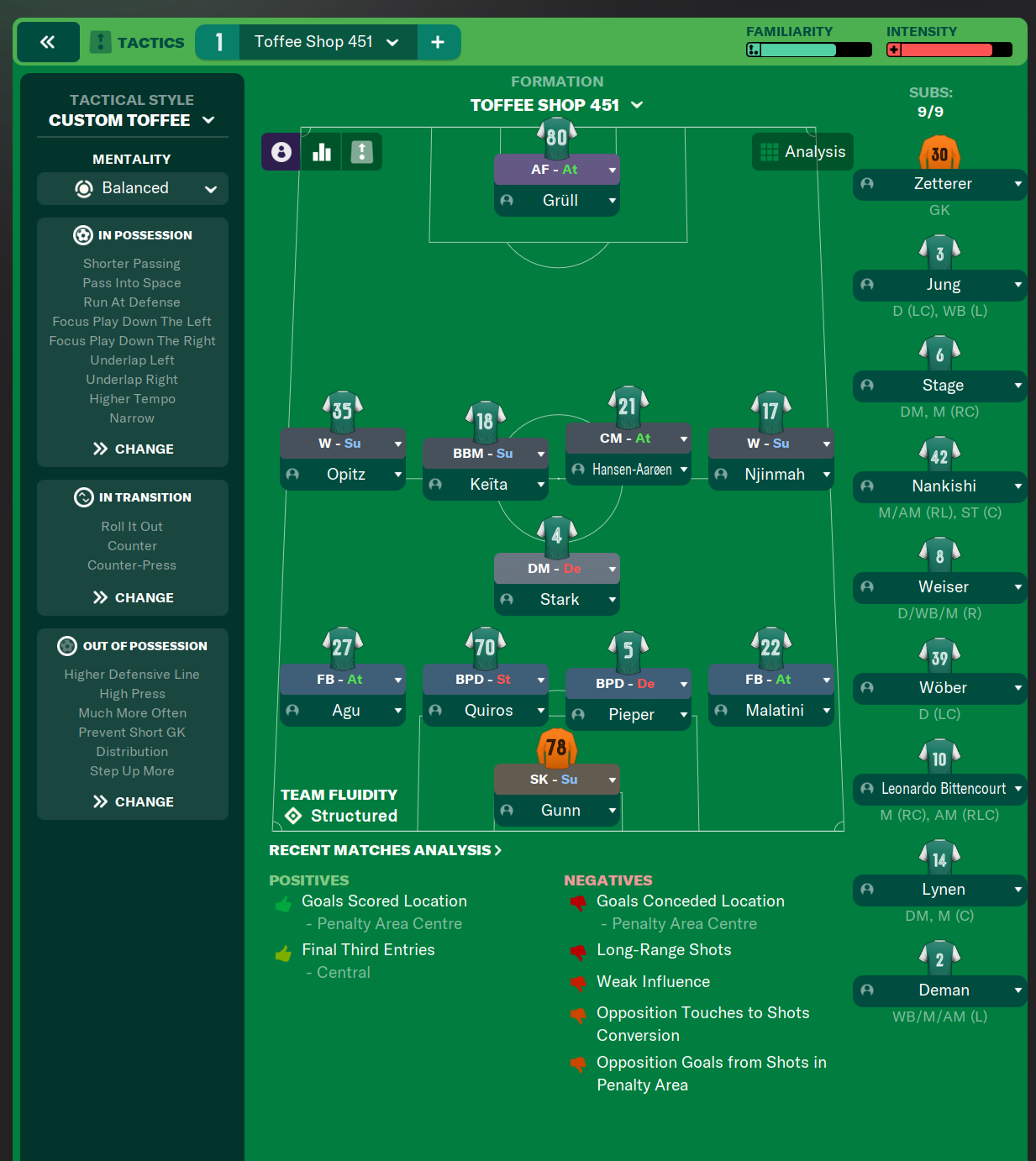
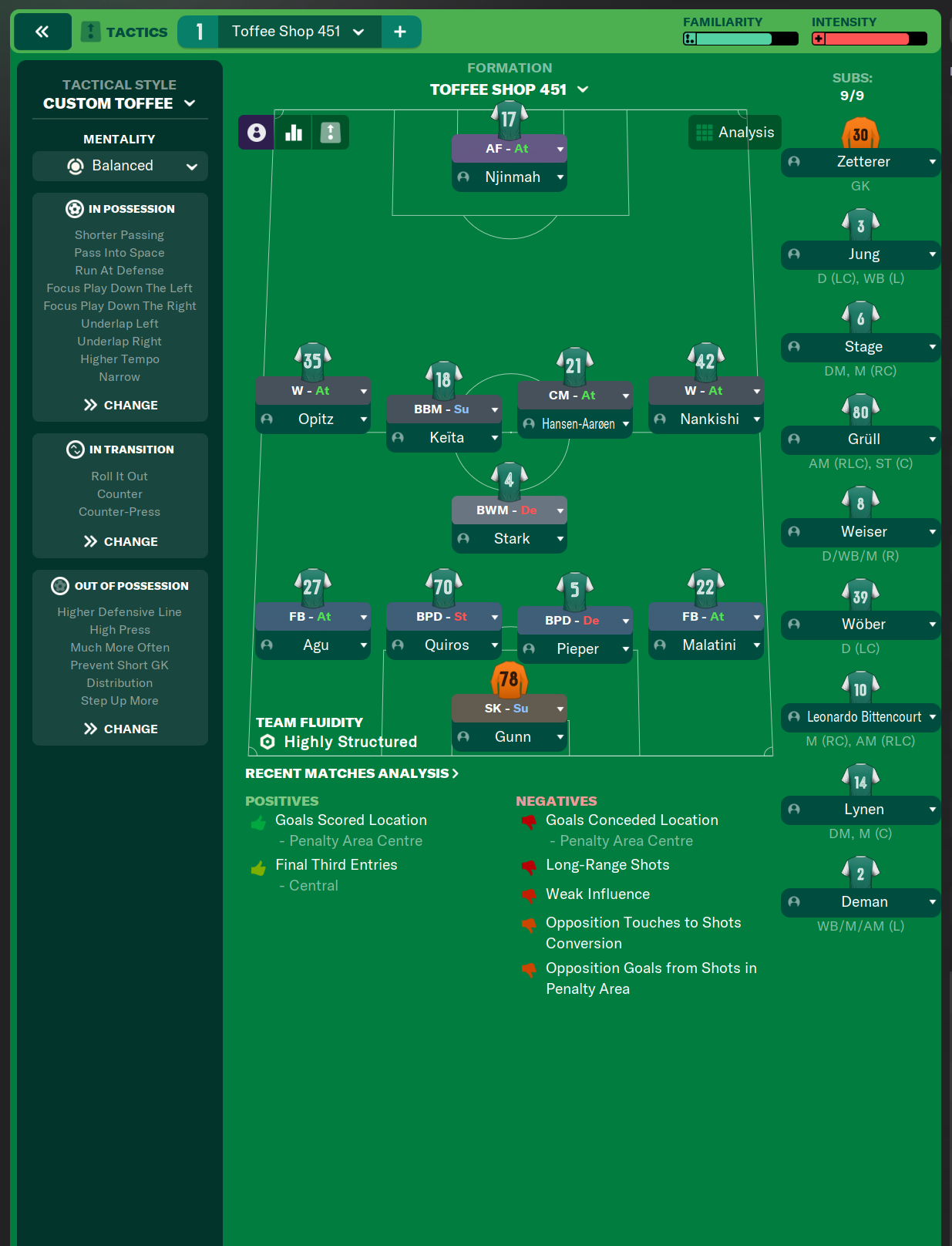
Formation & Style
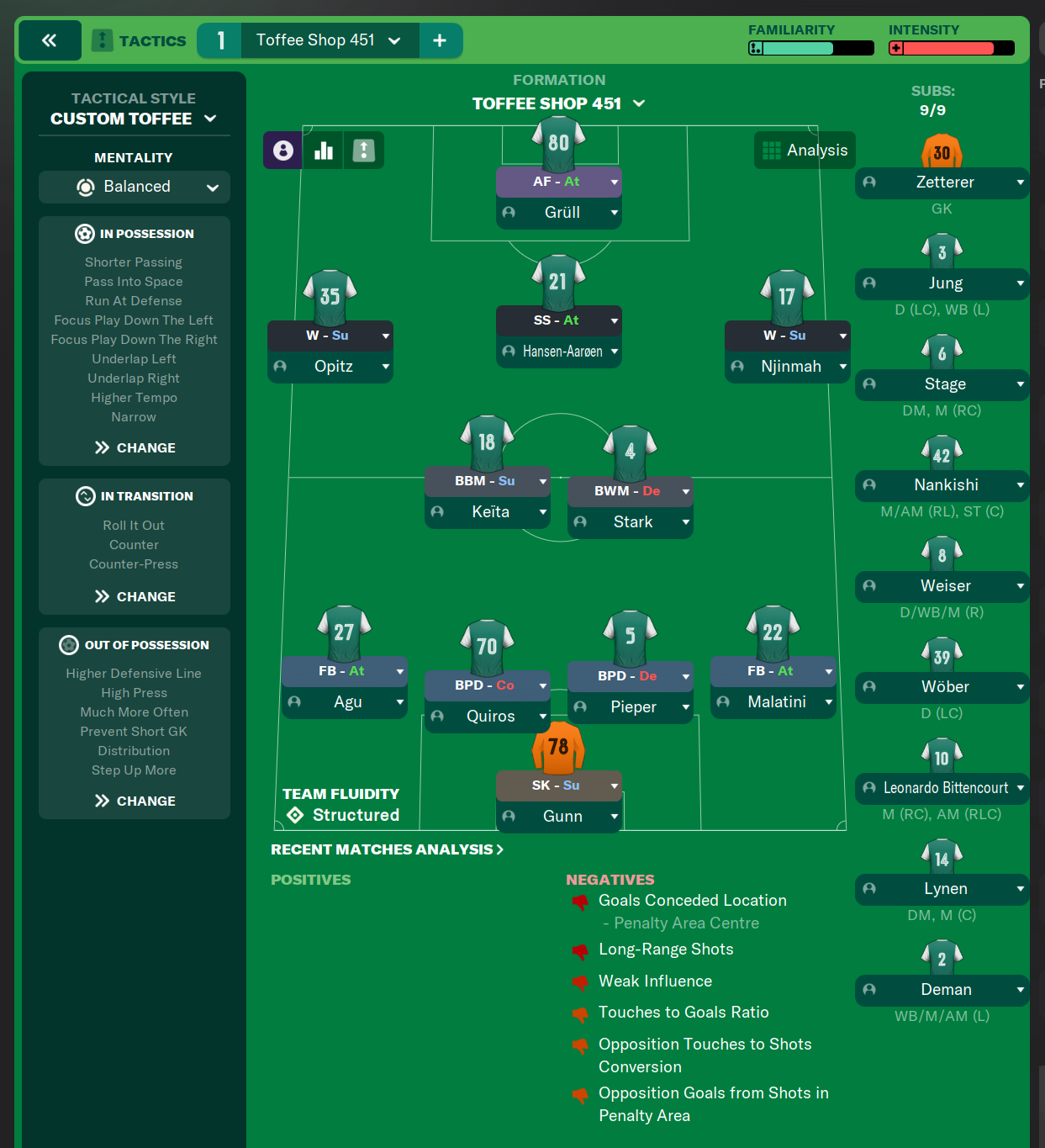
Tactical Style:Custom Toffee
Mentality:Balanced
Formation:4-5-1
Team Fluidity:Structured
In Possession
Shorter Passing
Pass Into Space
Run At Defense
Focus Play Down The Left
Focus Play Down The Right
Underlap Left
Underlap Right
Higher Tempo
In Transition
Roll It Out
Counter
Counter-Press
Out of Possession
Higher Defensive Line
High Press
Much More Often Prevent Short GK Distribution
Step Up
Team Shape Without Ball
Shape:4-1-4-1
Description:Compact formation that supports a high press with wingers and full-backs engaged in the defensive phase.
Evidence:FBs at [2,1] and [2,5] and DM at [3,3] ready to support.
Team Shape With Ball
Shape:4-3-3
Description:Promotes width with wingers while the forward stays high to exploit spaces.
Evidence:Wingers at [5,1] and [5,5], AF at [6,3].
Phase Description
Attacking Play
Focusing on short passing and running at the defense, with wingers underlapping to create spaces for the attacking midfielder and forwards.
Defensive Transition
Quickly transitioning into a high press while maintaining a structured shape to prevent opposition counters.
Main Focus
Maintaining possession while ensuring entries into the final third are strategically directed.
Key Strengths
Midfield Versatility
The combination of a Box-to-Box Midfielder and a Deep-Lying Playmaker allows for dynamic transitions and support in both attack and defense.
High Press
The commitment to a high press can disrupt opposition build-up and create immediate scoring opportunities.
Wide Play
Utilizing wingers effectively stretches the opposition, creating space for the central areas.
Conflicting Directions
Inconsistent Defensive Engagement
While a high press is employed, the presence of a Deep-Lying Playmaker may leave gaps that opponents can exploit if caught on a quick counter.
Higher Defensive Line Concerns
The commitment to a higher defensive line could lead to vulnerability against fast-breaking attackers.
Wide Defensive Coverage
Full-backs engaging in wide play may leave gaps centrally if not adequately supported by wingers.
Tactical Suggestions
Reinforce Defensive Midfield
Consider adding a more defensively minded player in the midfield to bolster defensive coverage against counter-attacks.
Adjust Defensive Line Height
Experimenting with lowering the defensive line can mitigate risks associated with counter-attacks.
Focus on Central Play
Encouraging more central penetrative play can help exploit weaknesses in opposing defenses and reduce reliance on wide play.
Ask Questions About Your Lineup
Related Tactics
Guides for this formation
The tactical theory behind the 4-5-1: roles, instructions, and the trade-offs that decide whether the system holds up.
Playing styles
Low Block: Park the Bus
The deliberate underdog tactic in FM: formation choices, duty distribution, and why Counter-Press is exactly wrong inside a low block.
Read guide
Playing styles
Counter-Attacking Excellence
Sit deep, win the ball, and break in three passes. The roles, instructions, and squad profile that make it work.
Read guide