Uploaded Tactic
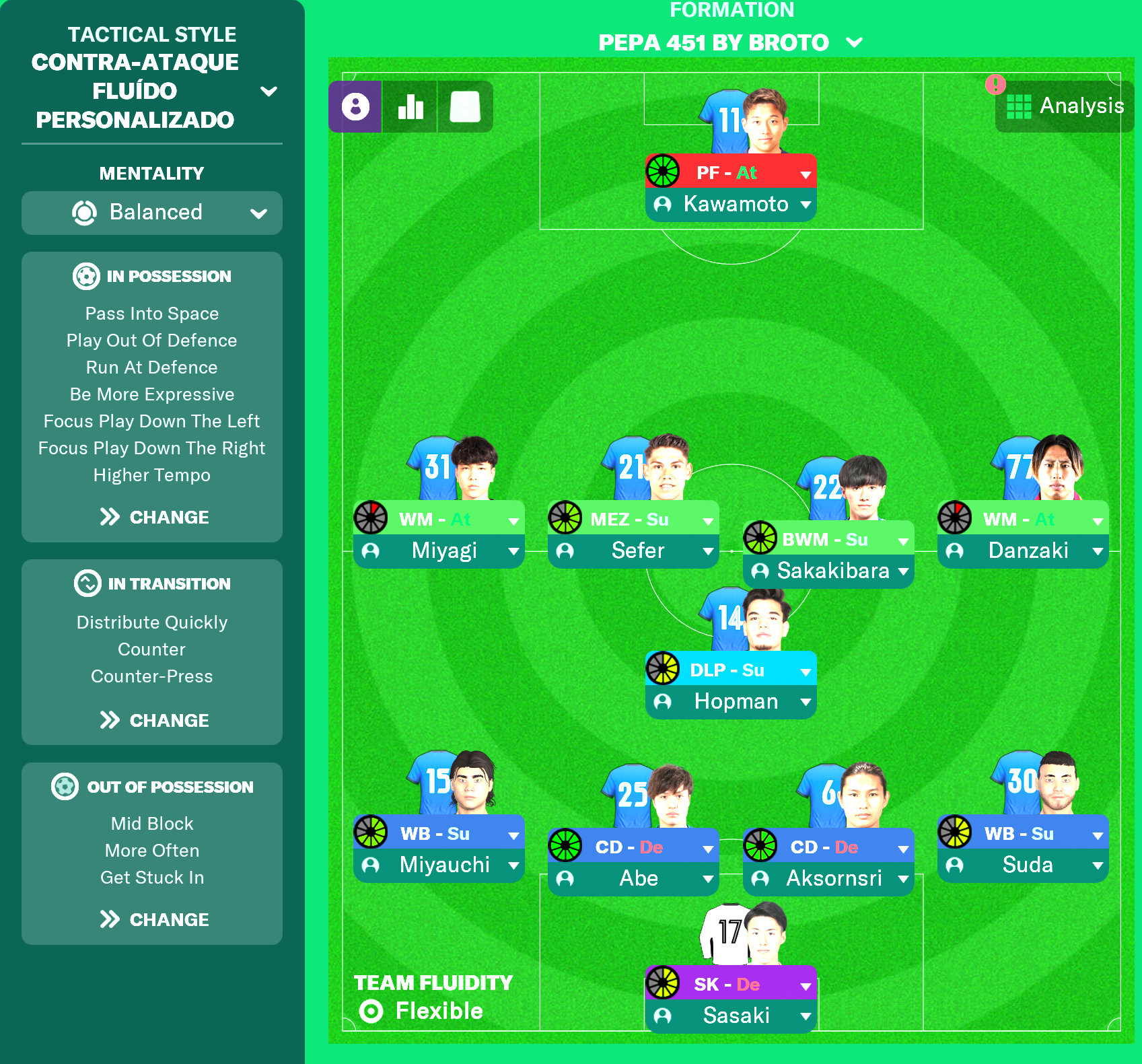
Formation & Style
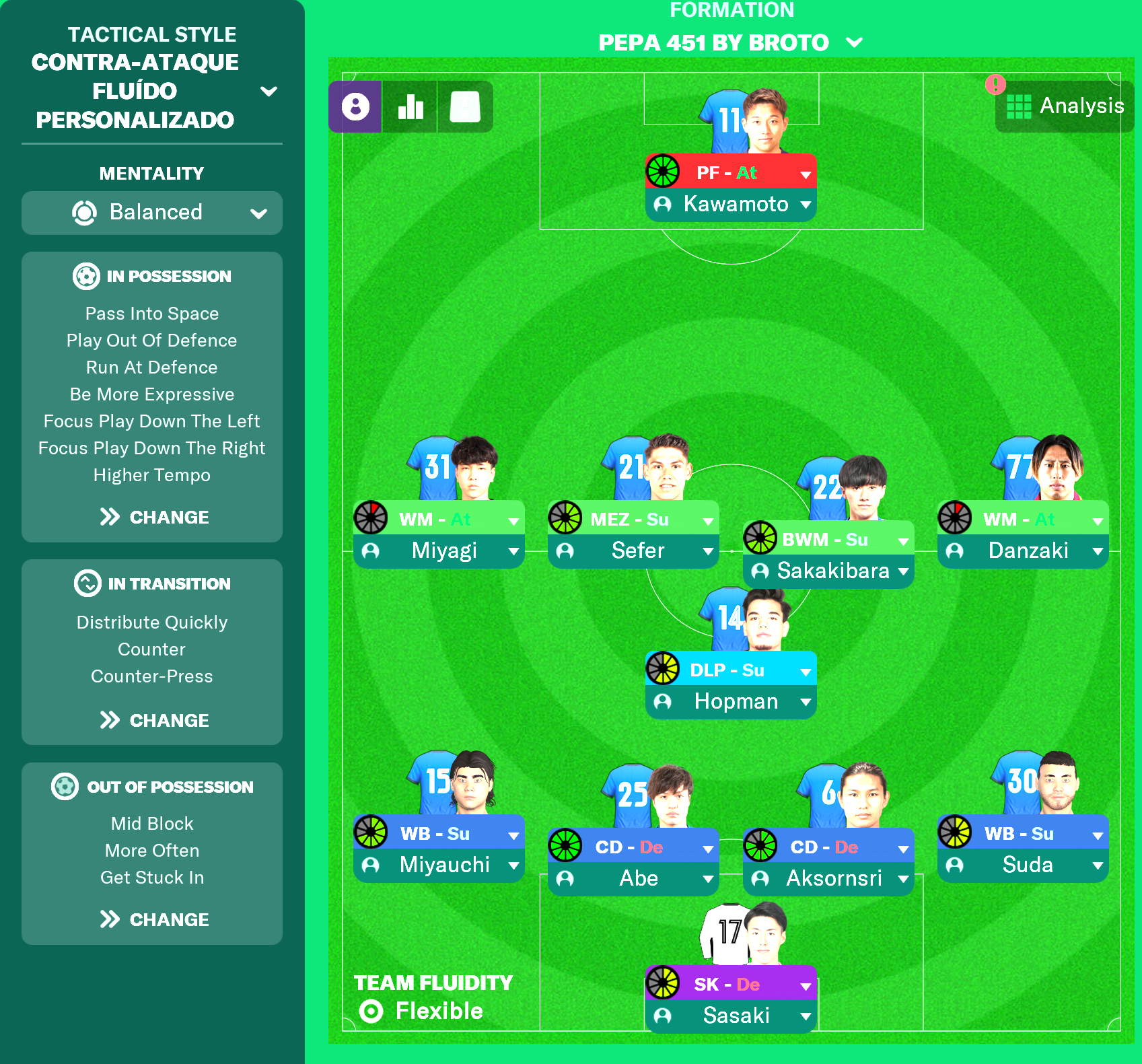
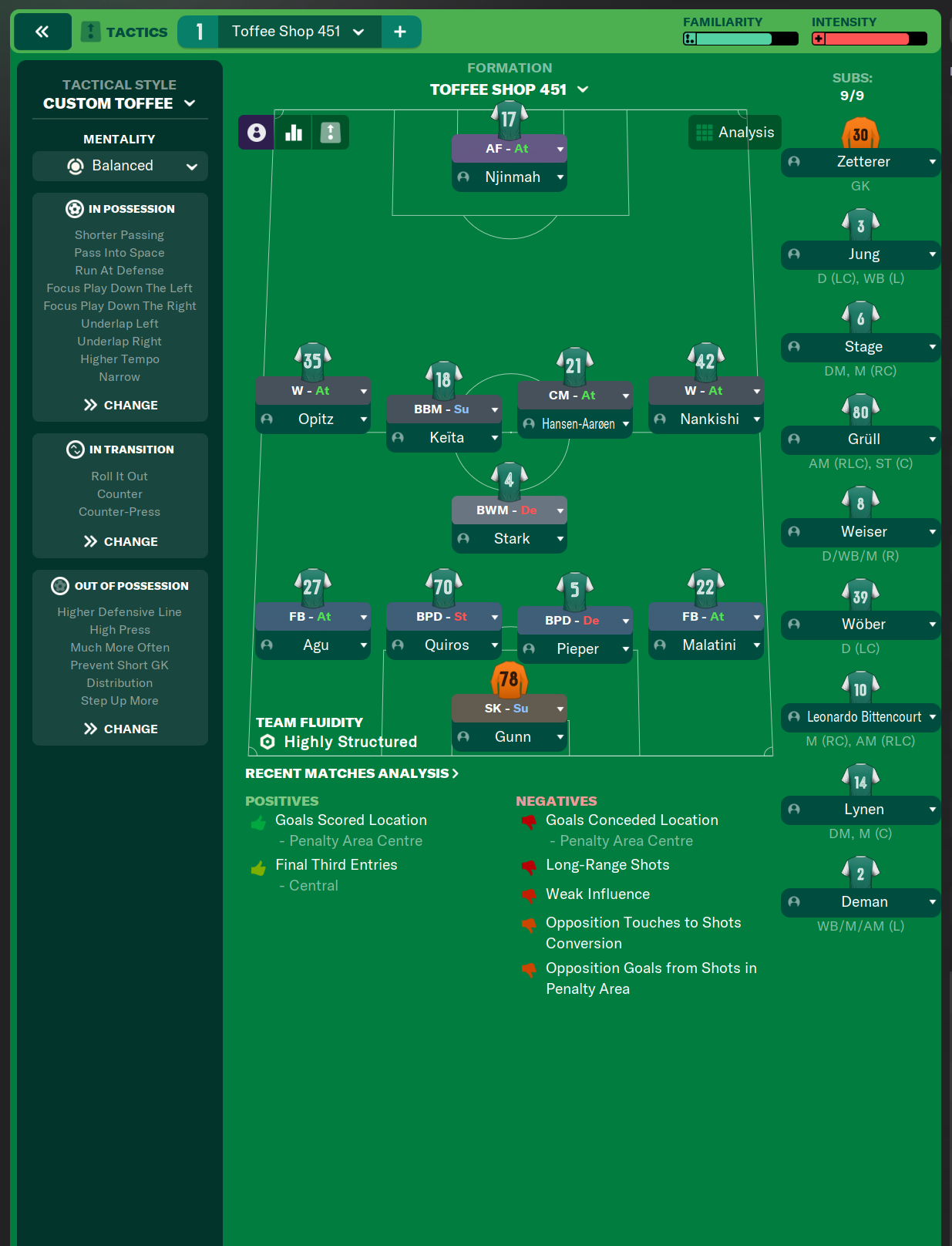
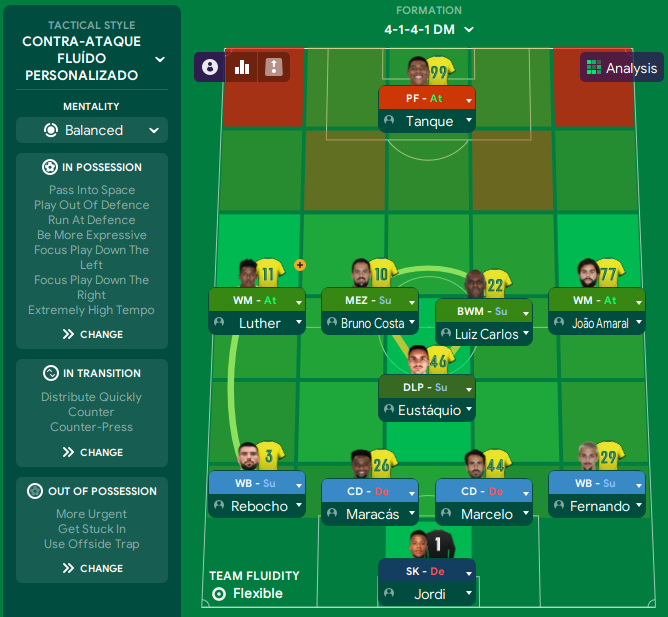
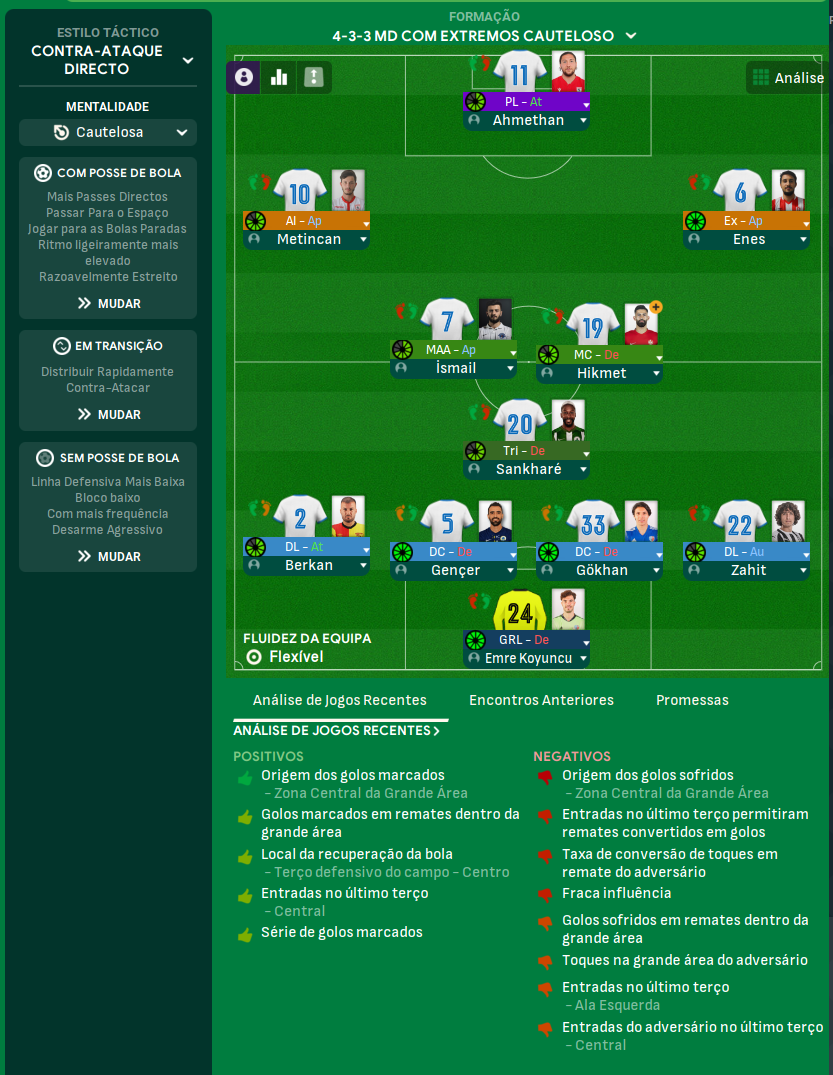
Tactical Style:Contra-Attack
Mentality:Balanced
Formation:4-5-1
Team Fluidity:Flexible
In Possession
Pass Into Space
Play Out of Defence
Run At Defence
Be More Expressive
Focus Play Down The Left
Focus Play Down The Right
Higher Tempo
In Transition
Distribute Quickly
Counter
Counter-Press
Out of Possession
Mid Block
More Often
Get Stuck In
Team Shape Without Ball
Shape:4-1-4-1
Description:A structured mid-block shape with compactness to limit space between lines.
Evidence:Mid Block instruction combined with two banks of four.
Team Shape With Ball
Shape:4-3-3
Description:Utilizing wingers to stretch the pitch and attract defenders, creating space for the central striker.
Evidence:Wingers on attack duty indicated by WM roles at [6,1] and [6,5].
Phase Description
Attacking Play
Utilizes pace on the wings, often targeting space behind opposing defenders through quick passes and runs.
Defensive Transition
Focuses on quick recovery and counter-pressing to regain possession high up the pitch.
Main Focus
Creating opportunities via wide play and exploiting spaces through wingers.
Key Strengths
Wide Attacking Threat
With wingers on attack duty, the team can stretch opposing defenses effectively.
Balance in Midfield
Mix of defensive and creative roles offers stability and adaptability in midfield, enhancing ball retention and transition.
Counter-Attacking Potential
Quick transitions can exploit defensive weaknesses of opponents, especially when recovering the ball quickly.
Conflicting Directions
Counter-Press vs. Mid Block
While the team looks to press quickly when losing the ball, the mid-block may lead to slower transitions defensively.
High Tempo with Cautious Mid Block
A higher tempo can lead to turnovers if the mid-block doesn't recover effectively.
Utilizing Width with Central Overload
While attacking wide is beneficial, having only one striker may limit options in central areas.
Tactical Suggestions
Increase Central Presence
Consider adding a second striker or changing the Mezzala to support more central attacking opportunities.
Adjust Pressing Intensity
Reduce pressing intensity during defensive transitions to maintain shape.
Balance Wing Attacks
Ensure both wingers can interchange or switch positions to confuse defenses and open space.
Ask Questions About Your Lineup
Related Tactics
More Contra-Attack tactics
Guides for this formation
The tactical theory behind the 4-5-1: roles, instructions, and the trade-offs that decide whether the system holds up.
Playing styles
Low Block: Park the Bus
The deliberate underdog tactic in FM: formation choices, duty distribution, and why Counter-Press is exactly wrong inside a low block.
Read guide
Playing styles
Counter-Attacking Excellence
Sit deep, win the ball, and break in three passes. The roles, instructions, and squad profile that make it work.
Read guide