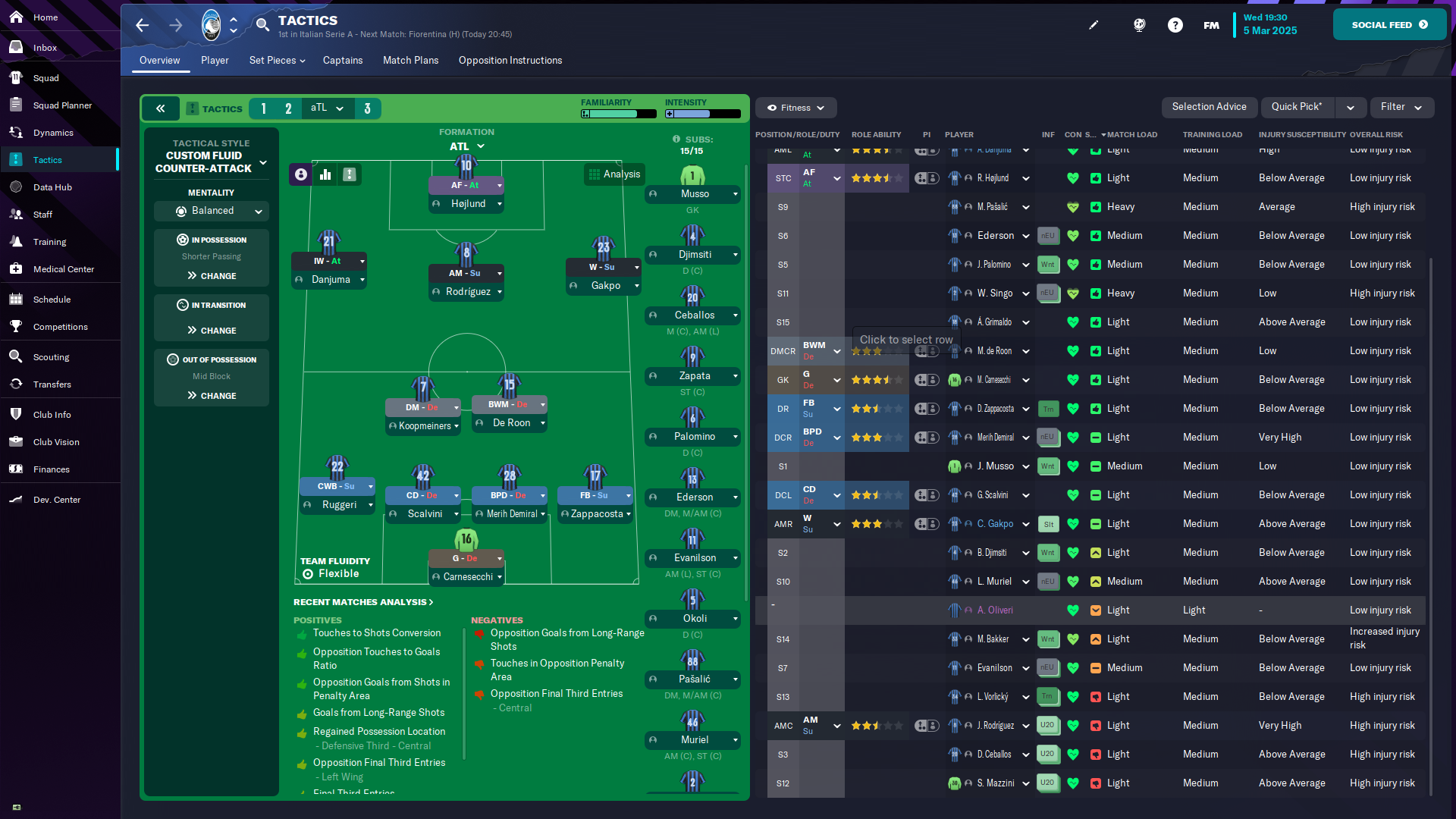
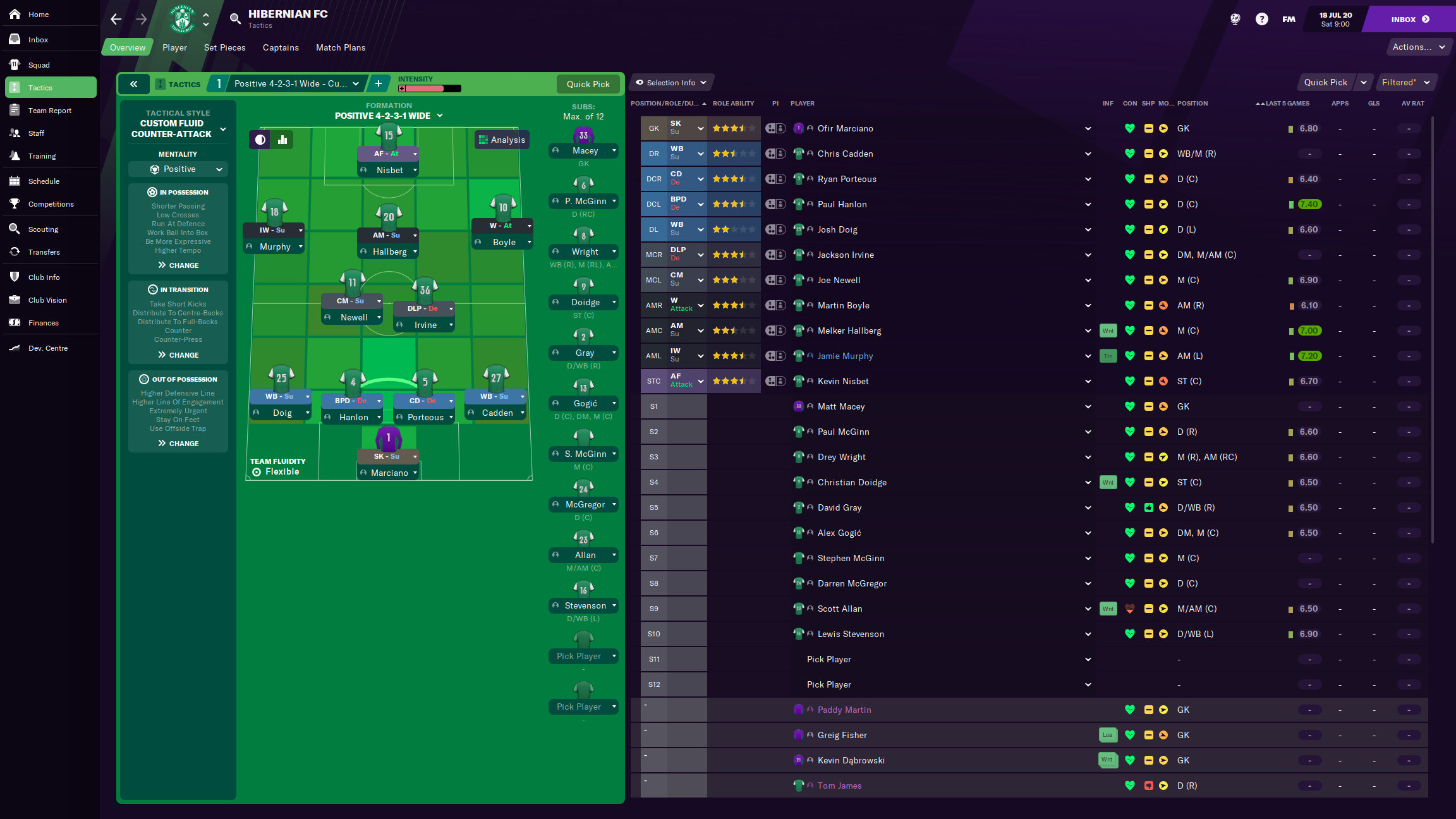
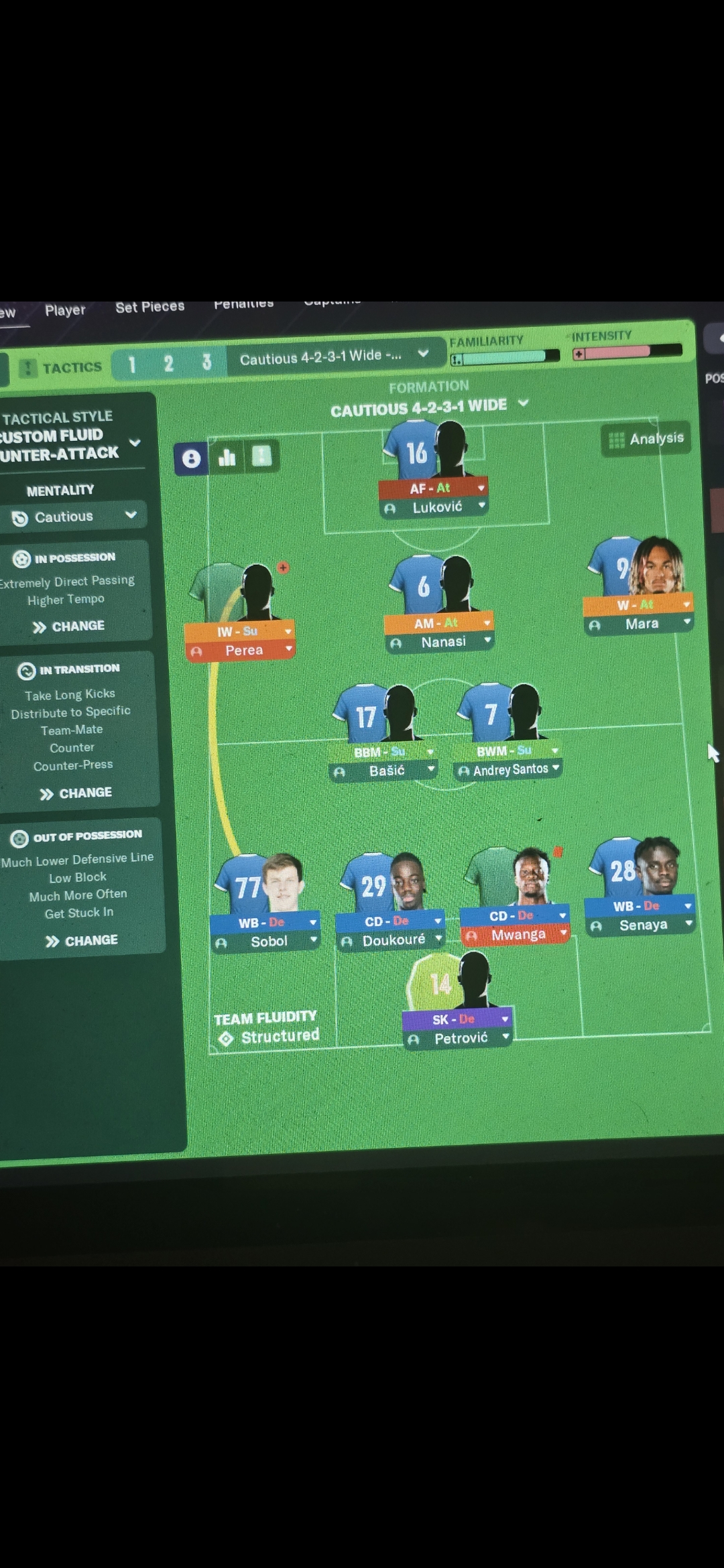
4-2-3-1 Wide
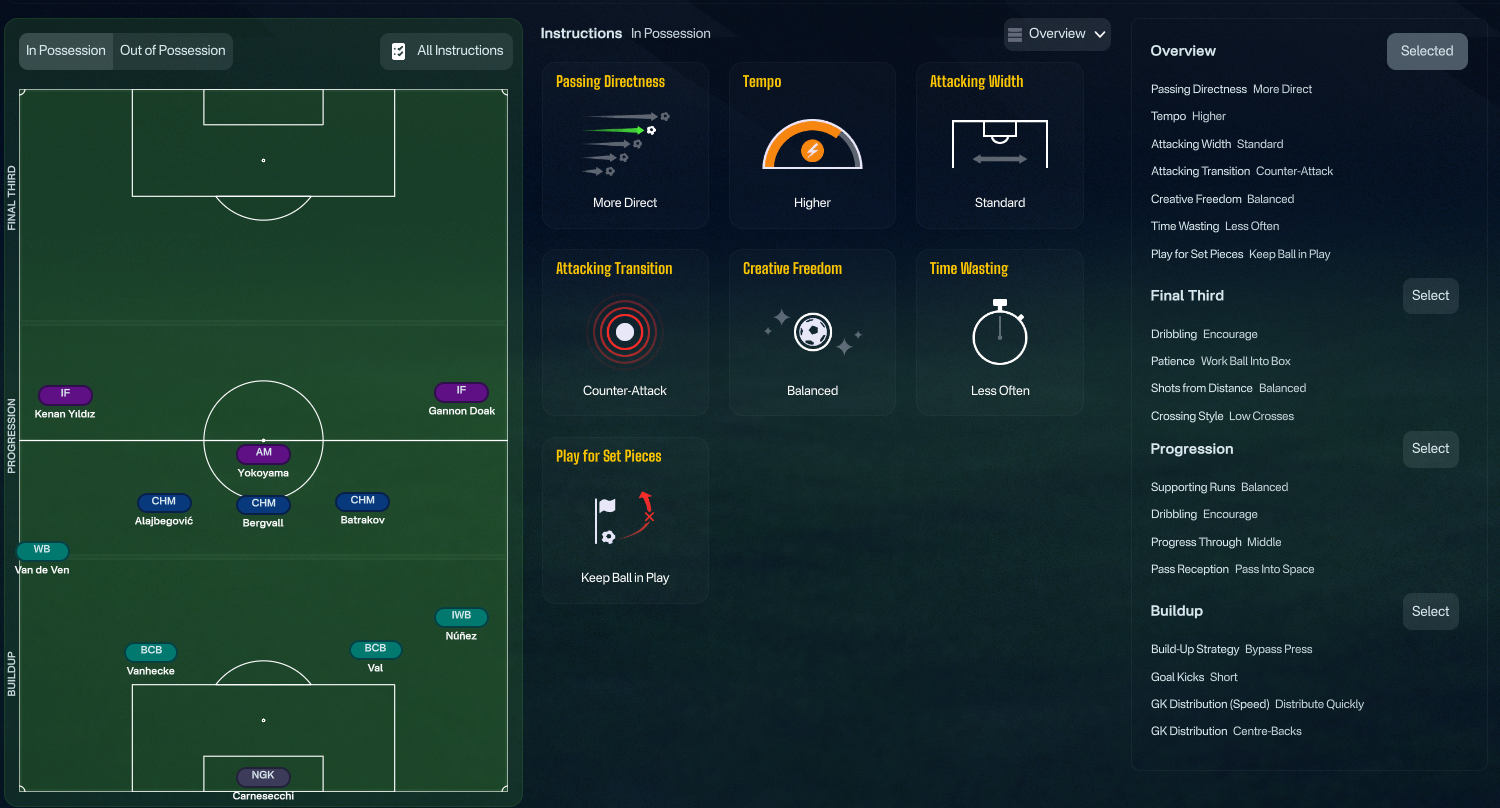
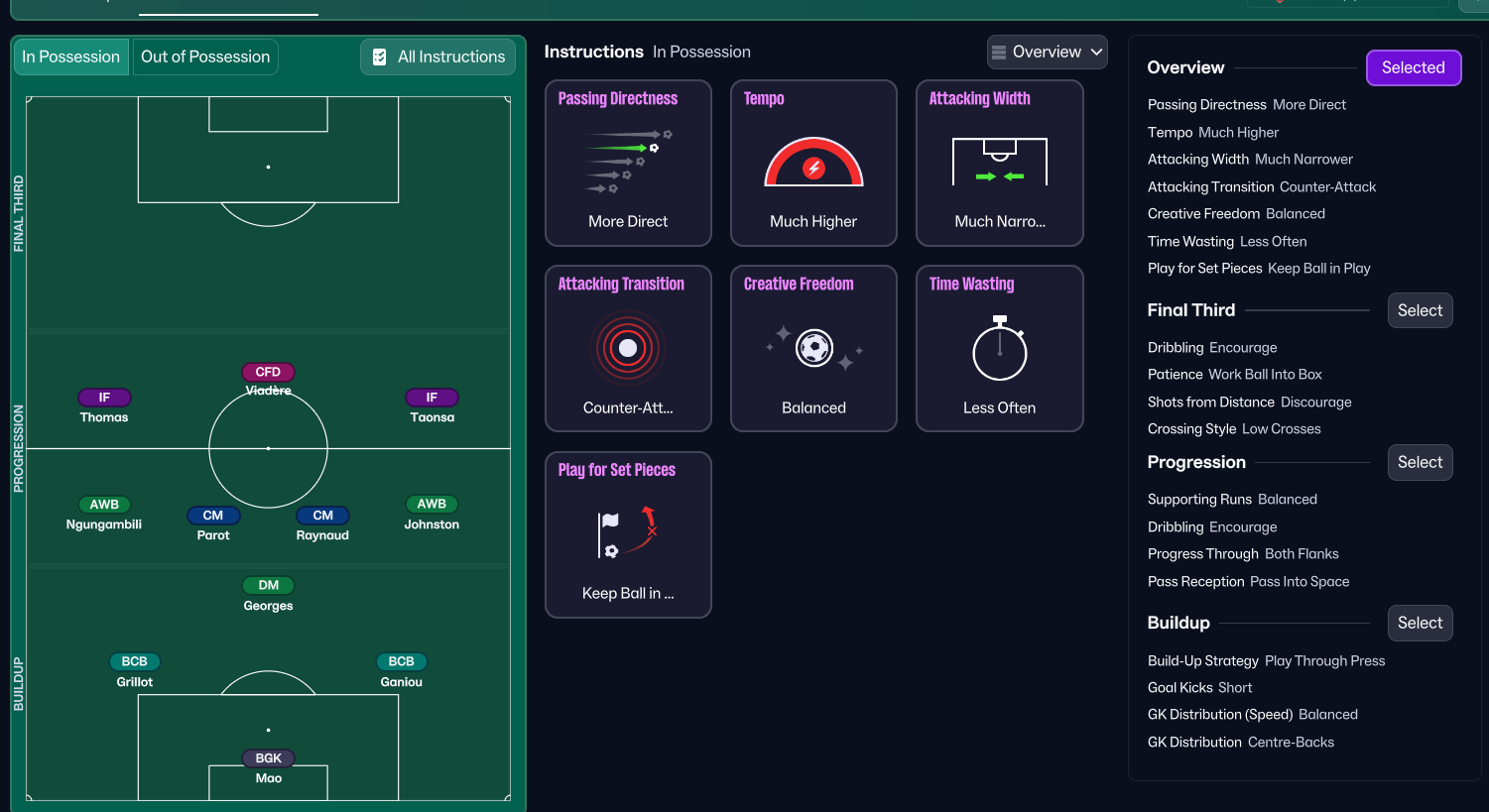
Utilizes direct passing and a high tempo to exploit spaces left by the opposition during transitions.
Loading tactical analysis...
Counter-Attack
Cautious
4-2-3-1 Wide
Structured
Extremely Direct Passing
Higher Tempo
Distribute to Specific Team-Mate
Counter-Press
Much Lower Defensive Line
Low Block
Much More Often
Get Stuck In
ST
Advanced Forward
Attack
RW
Winger
Attack
AM
Attacking Midfielder
Attack
CM
Box to Box Midfielder
Support
CDM
Ball Winning Midfielder
Support
DL
Wing Back
Defend
DC
Central Defender
Defend
GK
Sweeper Keeper
Defend
Utilizes direct passing and a high tempo to exploit spaces left by the opposition during transitions.
The low block combined with a cautious mentality provides a strong defensive foundation.
The cautious mentality may limit overall attacking intent despite the very direct passing style.
Player roles like Winger and Advanced Forward may not fully utilize the structured fluidity if not given enough license to express themselves.
How does the width of play affect your current defensive setup?
Are your attacking players effectively utilizing their roles in the current formation?
What adjustments can be made to better balance defense and attack?
Is the team generating enough goal-scoring opportunities from counter-attacks?
How do your midfielders support both offense and defense in current roles?
What are the weaknesses of the opposition that can be exploited with adjustments in tactics?
The tactical theory behind the 4-2-3-1 Wide: roles, instructions, and the trade-offs that decide whether the system holds up.
Double pivots and flat pairs in 4-2-3-1 and 4-4-2: when each pairing works, when it collapses, and the AMC unicorn that rescues both.
Klopp-style gegenpressing in FM, including squad profile, line-and-press pairing, sustainable workload, and the antipatterns to avoid.
Routines, takers, and target picks. How to turn corners and free-kicks into a reliable third of your goal output.