
4-3-3 DM Wide
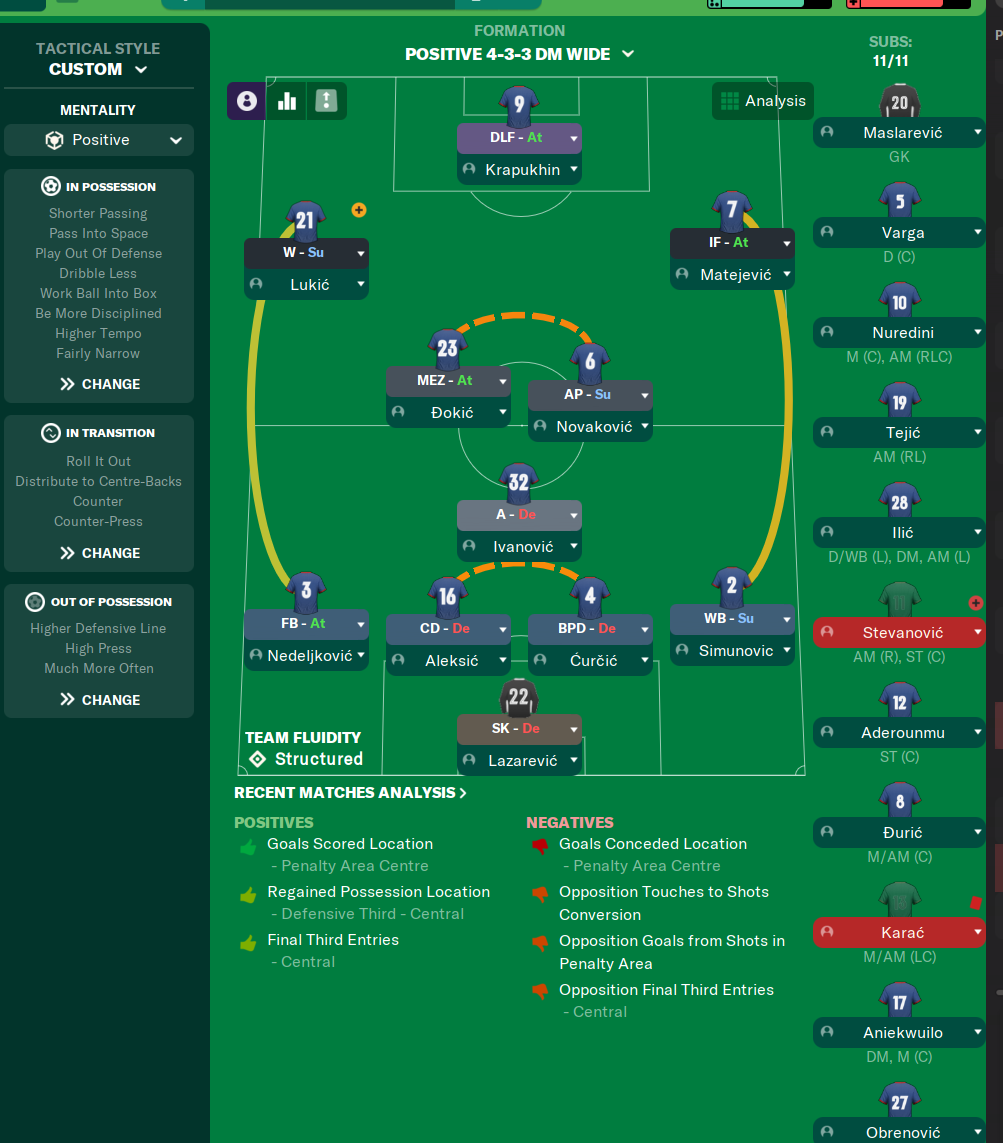
Maintaining possession while creating high-quality chances through structured build-up play. The combination of inside forwards and a deep-lying forward…
Loading tactical analysis...
Custom
Positive
4-3-3 DM Wide
Structured
Shorter Passing
Pass Into Space
Play Out of Defence
Dribble Less
Work Ball Into Box
Be More Disciplined
Higher Tempo
Fairly Narrow
Roll It Out
Distribute to Centre-Backs
Counter
Counter-Press
Higher Defensive Line
High Press
Much More Often
GK
Sweeper Keeper
Defend
FB
Full-Back
Attack
CB
Centre-Back
Defend
CB
Ball-Playing Defender
Defend
WB
Wing-Back
Support
DM
Anchor
Defend
CM
Mezzala
Attack
CM
Advanced Playmaker
Support
RW
Inside Forward
Attack
CF
Deep-Lying Forward
Attack
LW
Inside Forward
Attack
Utilises a high-tempo passing game with an emphasis on width and quick transitions. The use of inside forwards and a deep-lying forward allows for fluid movement and penetration into the final third.
On losing possession, the team employs a counter-press to regain the ball quickly, aiming to disrupt opposition transitions.
Maintaining possession while creating high-quality chances through structured build-up play.
Compact Line
A compact shape with high pressing to limit space for opposition players.
Higher Defensive Line and High Press instructions combined with an Anchoring DM at [3,3].
Fluid Movement
Fast ball movement and dynamic runs from inside forwards create space and opportunities.
Inside Forwards at [6,2] and [6,4] combined with a Mezzala at [4,3] enhancing attacking support.
The combination of inside forwards and a deep-lying forward enhances goal-scoring opportunities with fluid movement.
IF-A at [6,2] and [6,4] with DLF-A at [6,3] allows interchangeability in attacking movements.
A midfield setup that combines defensive and attacking capabilities ensures control over the center.
DM-A at [3,3] with MEZ-A at [4,3] and AP-S at [4,4] provides both stability and creativity.
While pressing high, the team may be susceptible to quick counter-attacks if possession is lost.
Higher Defensive Line combined with High Press leaves space behind the defense.
The midfield structure may crowd the center, stifling progression unless full-backs stay wide.
A narrower approach may hinder natural width provided by FB-A at [2,1] and WB-S at [2,5].
Defence
A high defensive line can lead to vulnerabilities, particularly against quick counter-attacks.
Higher Defensive Line instruction and the need to recover quickly could lead to goal concession.
Midfield
Concentration of players in central areas might lead to congestion, limiting transition speed.
Presence of two rammed central midfielders can stifle play toward the flanks.
Mezzala and Inside Forwards
Mezzala (at [4,3]) supports the attacking internal movements of inside forwards, creating confusion.
MEZ-A adds extra layer with striking runs to exploit space opened by IF-A.
Full-Backs and Inside Forwards
Full-backs provide width while inside forwards cut inside, leading to potential overloads.
FB-A at [2,1] stretching defenses allows room for IF-A at [6,2].
How can we enhance creativity in the final third?
What adjustments can prevent vulnerability on counter-attacks?
Is the team's pressing intensity effective against all opponents?
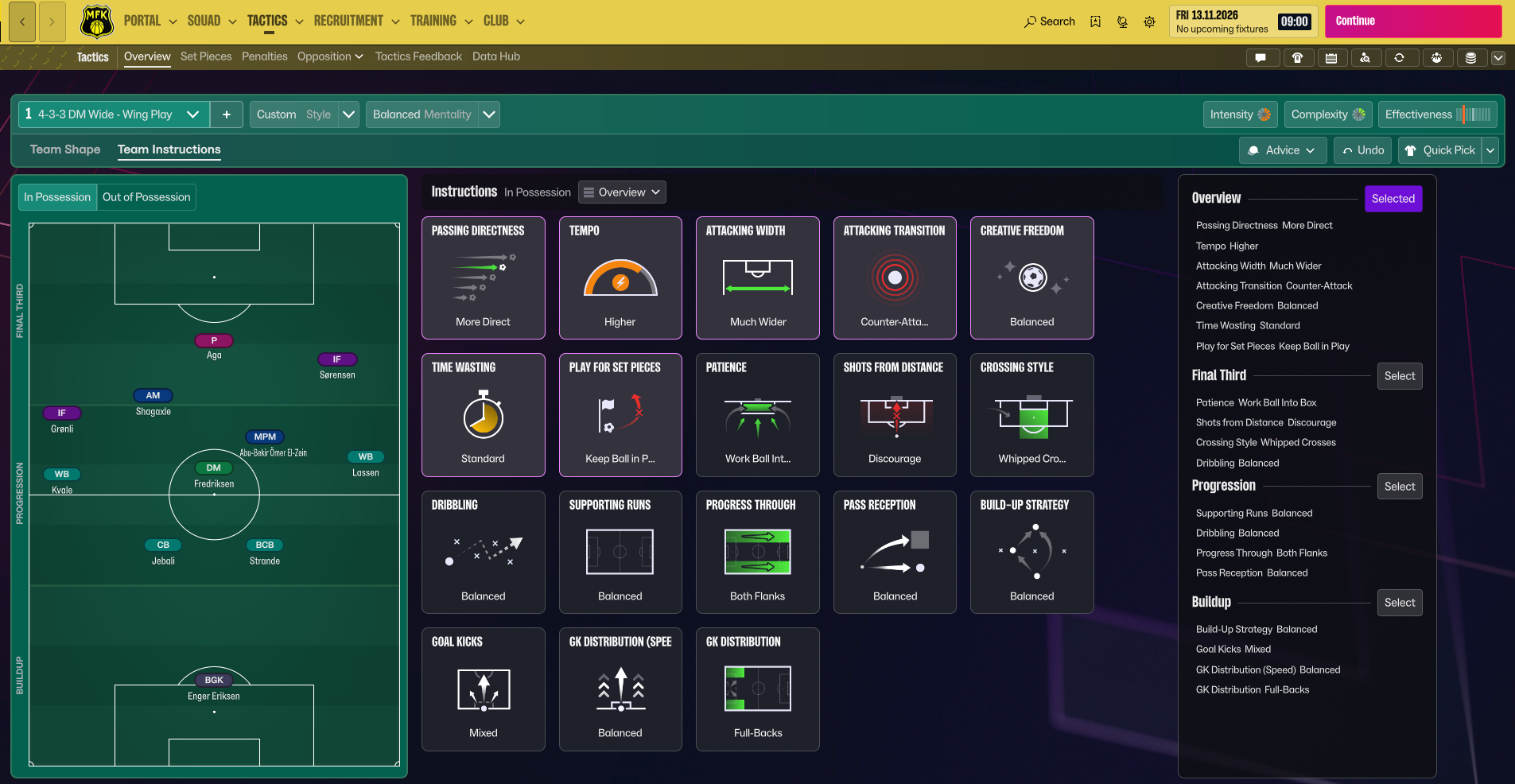
wing play
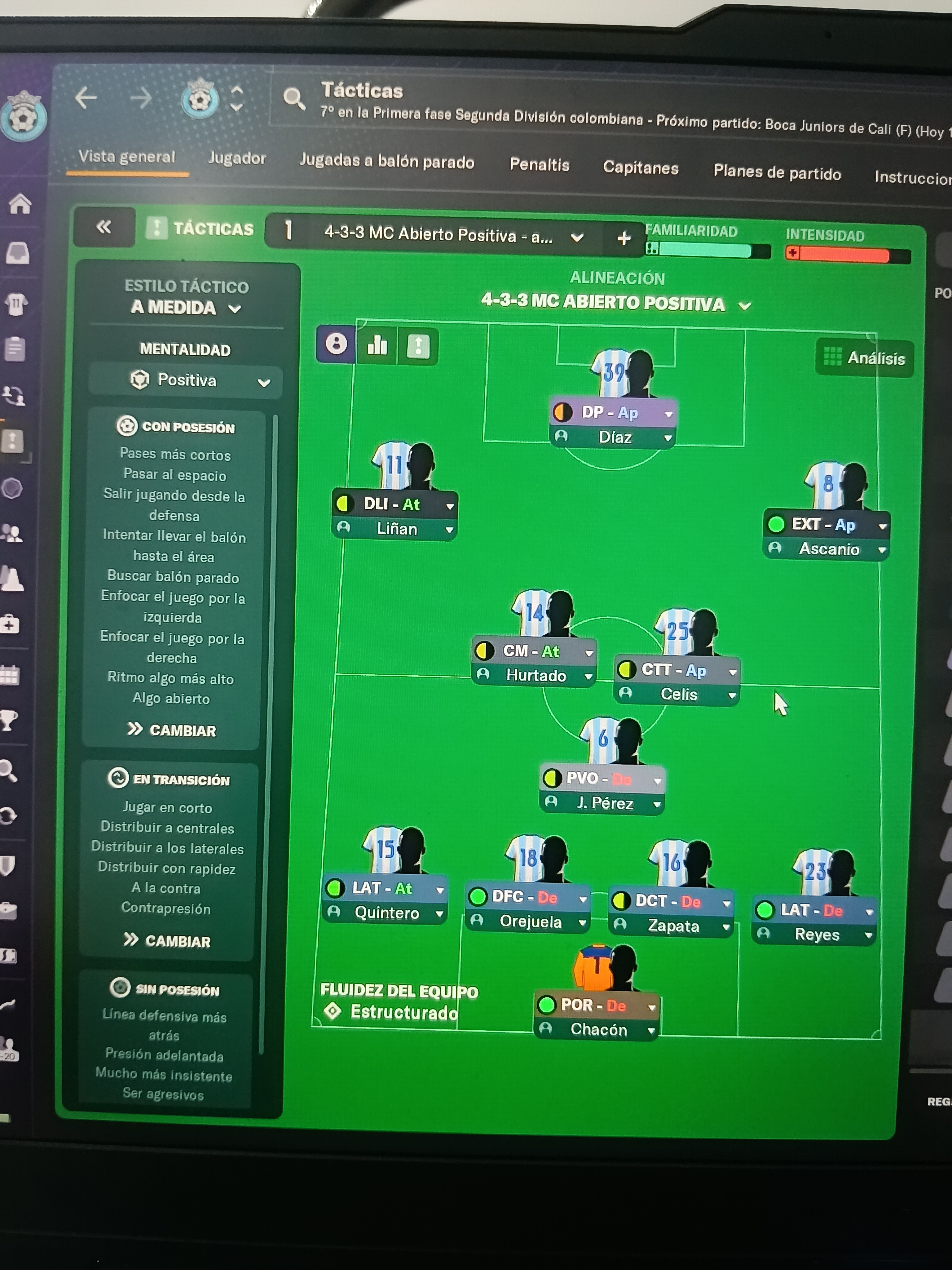
Gegenpress
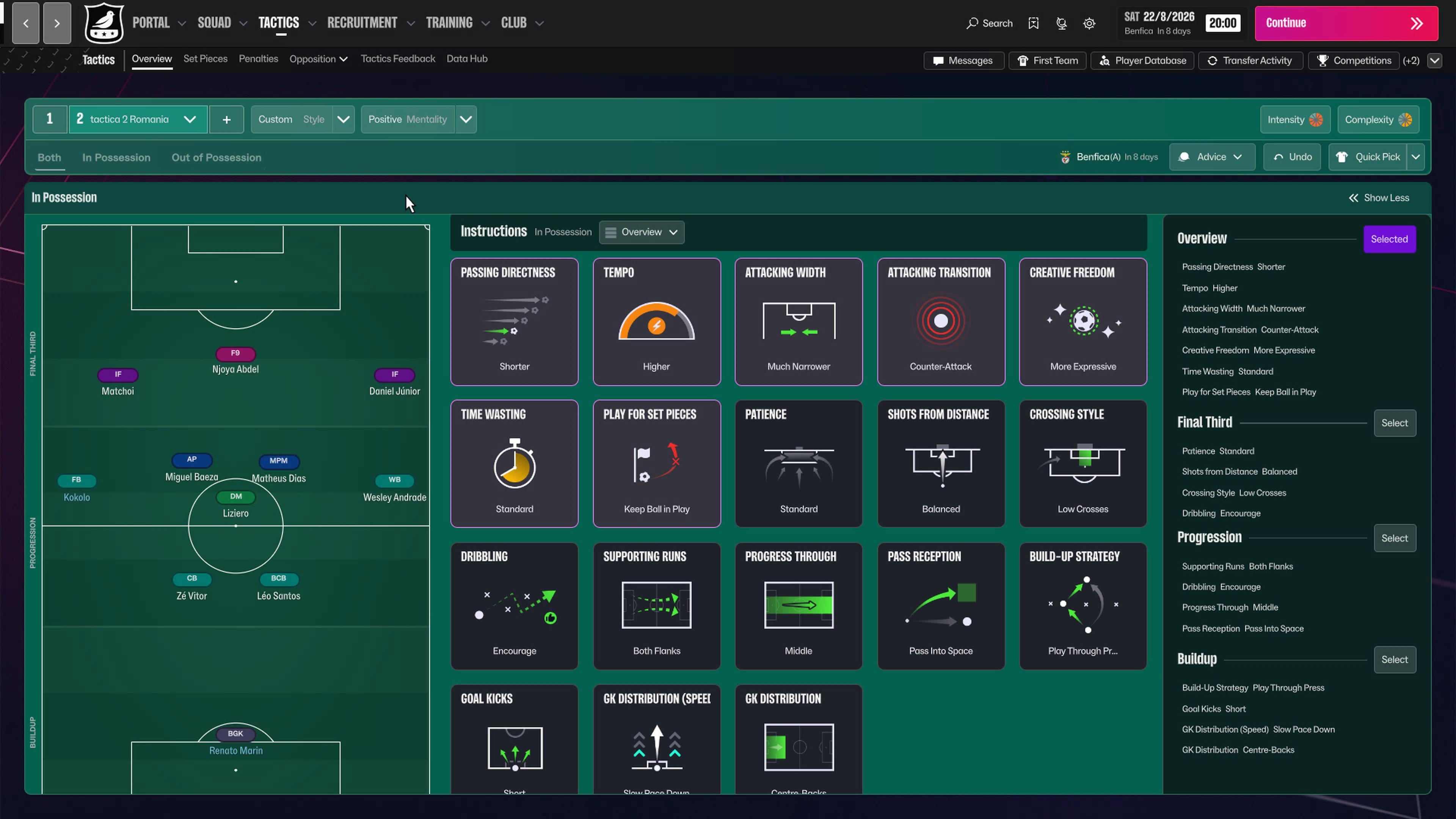
vertical tiki taka
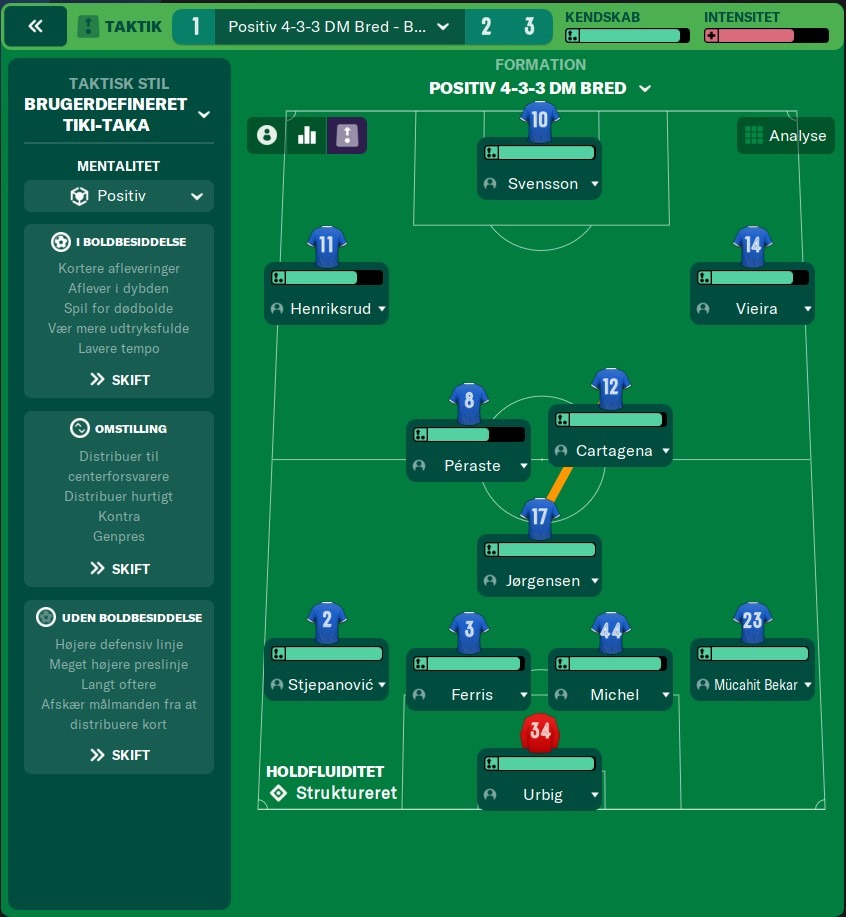
Tiki-Taka
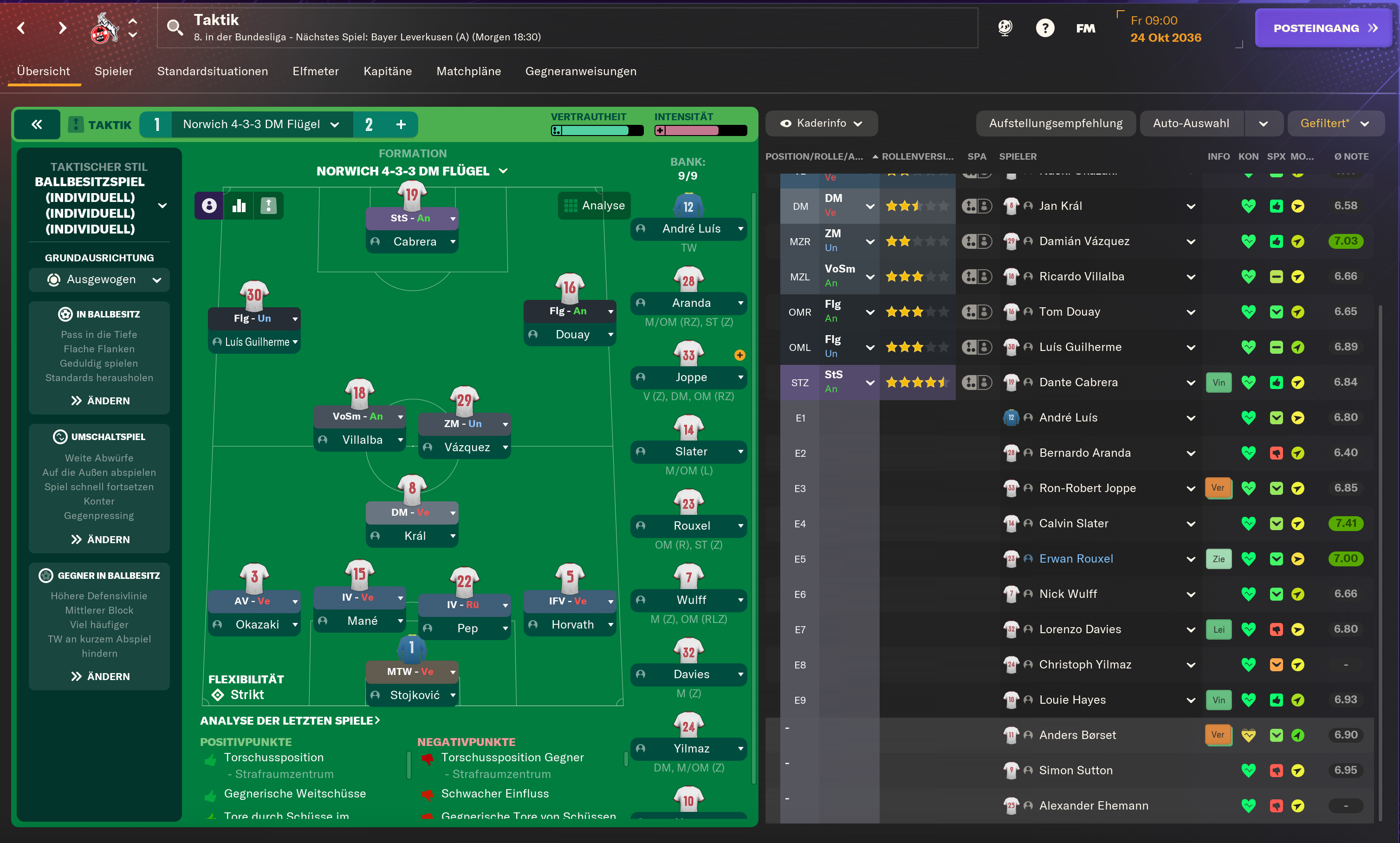
Wing Play
Vertical Tiki-Taka
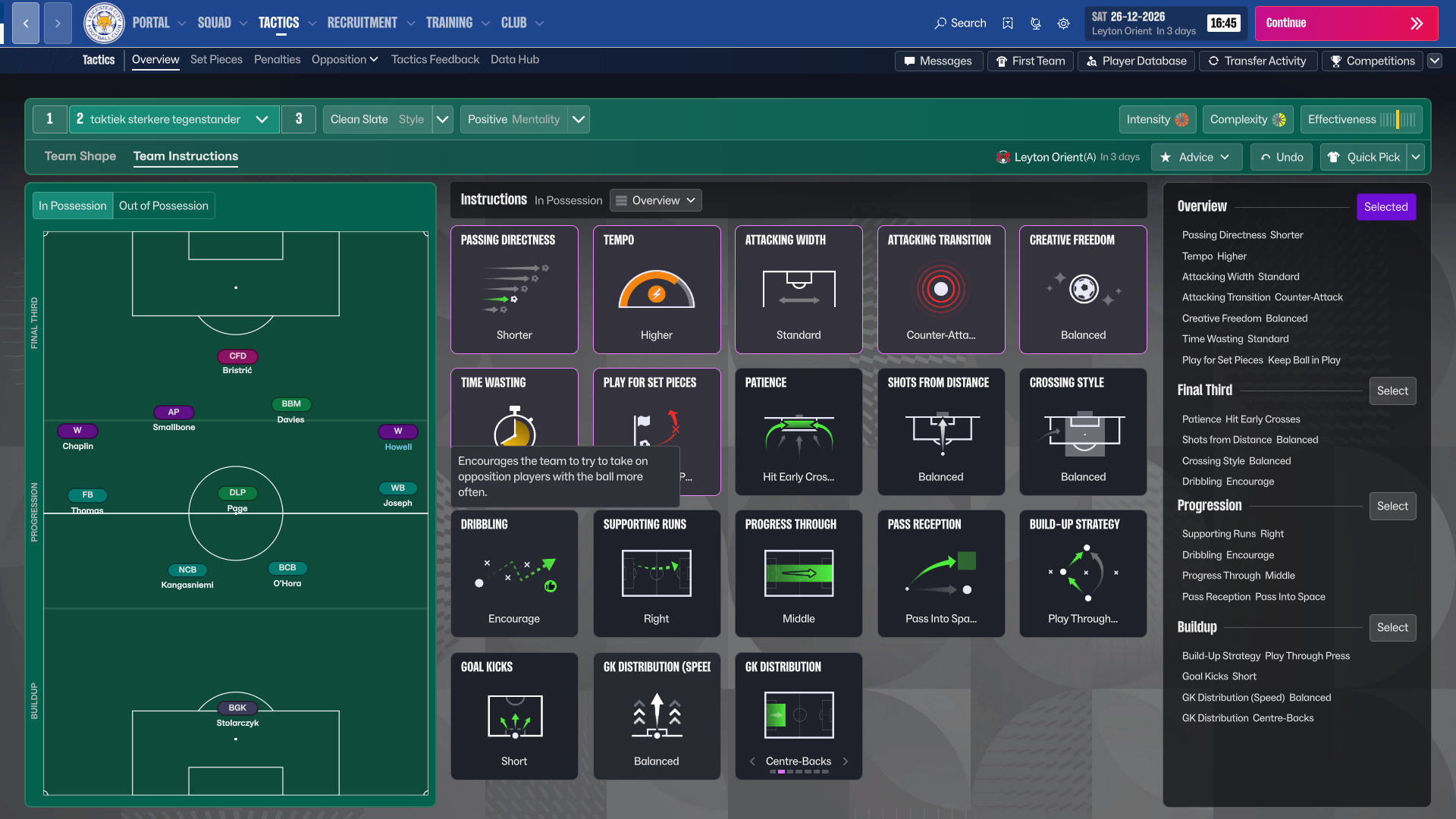
clean slate
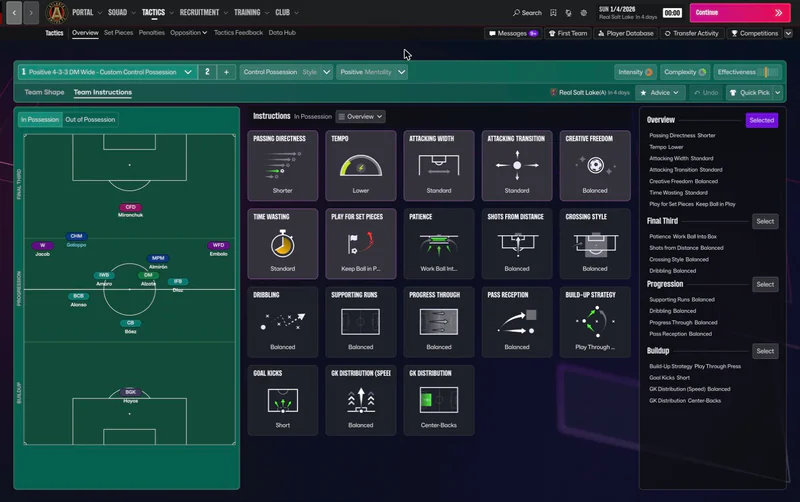
control possession
The tactical theory behind the 4-3-3 DM Wide: roles, instructions, and the trade-offs that decide whether the system holds up.
Klopp-style gegenpressing in FM, including squad profile, line-and-press pairing, sustainable workload, and the antipatterns to avoid.
Why circulation density and zonal occupation aren't the same thing in FM, and the half-space occupation rule that decides build-up.
The five seconds after losing the ball decide most matches. Counter-press, drop-and-recover, and how to know which one you should be doing.