
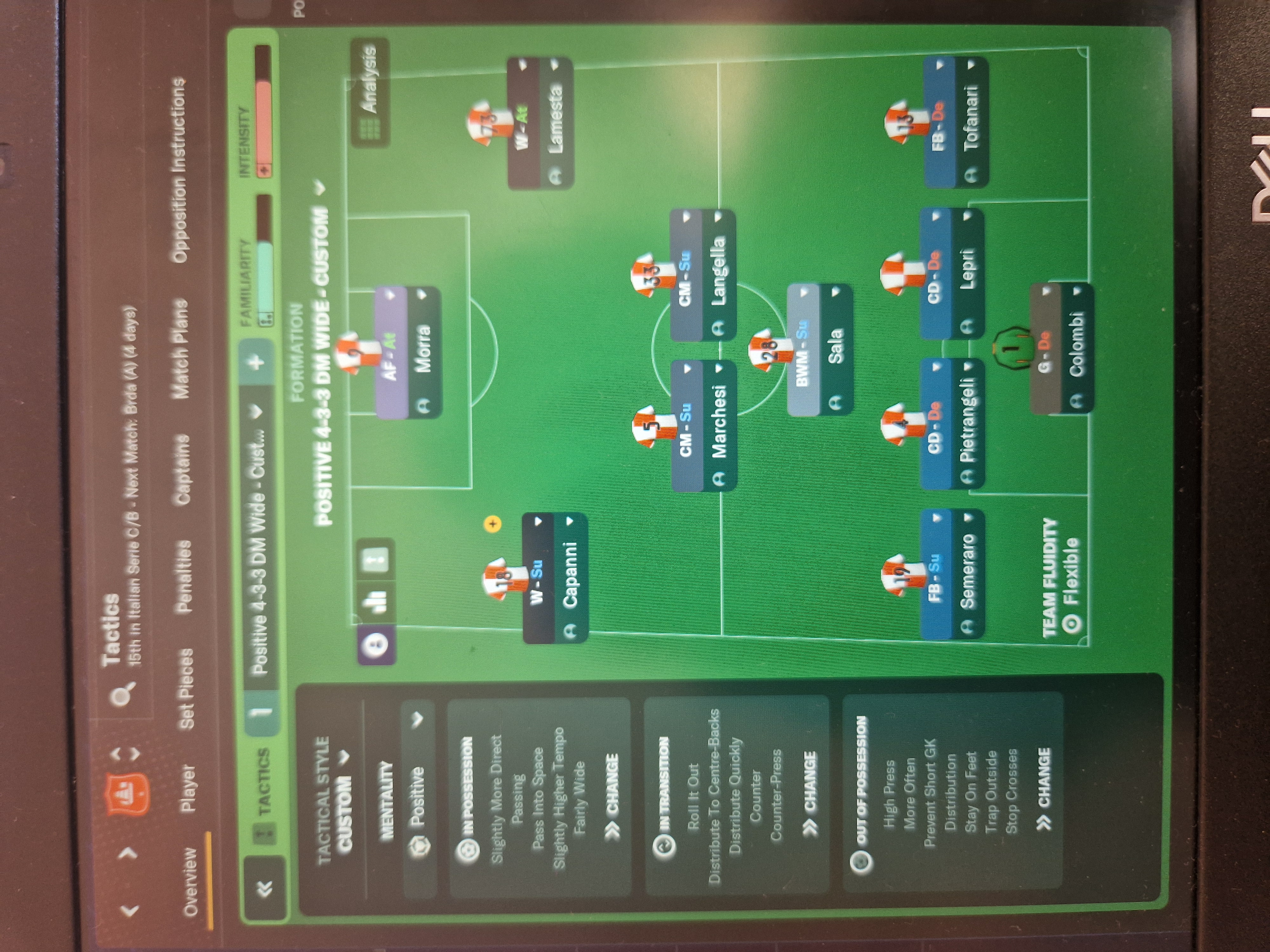
4-3-3 DM Wide
To dominate possession while utilizing width, engaging in direct passing and exploiting spaces created by overlapping runs. Utilizing wingers effectively…
Loading tactical analysis...
Custom
Positive
4-3-3 DM Wide
Flexible
Slightly More Direct
Passing
Pass Into Space
Slightly Higher Tempo
Fairly Wide
Roll It Out
Distribute To Centre-Backs
Distribute Quickly
Counter
Counter-Press
High Press
More Often
Prevent Short GK Distribution
Stay On Feet
Trap Outside
Stop Crosses
GK
G
De
DF
FB
Su
DF
CD
De
DF
CD
De
DF
FB
Su
DM
BWM
Su
CM
CM
Su
CM
CM
Su
AM
W
At
AM
W
Su
ST
AF
At
The team aims to utilize width through wingers to stretch the play and create space for the central players while focusing on direct passing into space.
Upon losing the ball, the team quickly transitions to counter-press, applying immediate pressure to recover possession.
To dominate possession while utilizing width, engaging in direct passing and exploiting spaces created by overlapping runs.
Flat Back 4
The defensive shape is organized and compact, allowing for a structured approach to both containment and counter-pressing.
The usage of a conventional back four with two full-backs and two centre-backs ensures organized defense.
4-3-3 Formation
With an attacking forward leading, supported by wingers, the shape allows for versatility in attack and width.
The presence of wingers combined with an advanced forward demonstrates the team's emphasis on a wide attacking style.
Utilizing wingers effectively to create width enables the team to stretch defenses and exploit space.
W-Su at [6,1] and W-At at [6,2] help create a dynamic attacking threat.
The squad's aggressive pressing after losing the ball facilitates quick recovery of possession.
Counter-Pressing emphasized in the transition phase enhances immediate ball recovery.
An emphasis on direct passing may conflict with a need for slower, controlled build-up play.
Slightly More Direct passing could lead to decisions that bypass midfield control.
A high pressing intensity may result in exhaustion if the team lacks depth or substitutes.
High Press instruction combined with a demanding mental mindset could overstretch player stamina.
Wide Areas
Exploitation of spaces in wide areas can lead to vulnerabilities during quick counters.
The high positioning of full-backs could be at risk if possession is lost, particularly against teams valuing counter-play.
Midfield Overload
Opponents can exploit midfield gaps if the three midfielders are outnumbered.
Configurations against formations with a higher number of central midfielders might destabilize control.
BWM-Su and CM-Su
The Ball-Winning Midfielder's defensive actions will complement the Central Midfielders' support play.
BWM-Su at [3,3] effectively balances defensive duties with CM-Su at [4,2] and [4,3].
FB-Su and Winger
Full-Backs enhancing the width allow wingers greater freedom and space to operate.
FB-Su at [2,1] synergizes with W-At at [6,2] to provide overlapping opportunities.
How often should full-backs join the attack?
Should the team optimize depth in midfield?
What adjustments are necessary if the opponent plays a different formation?
wing play
Gegenpress
vertical tiki taka
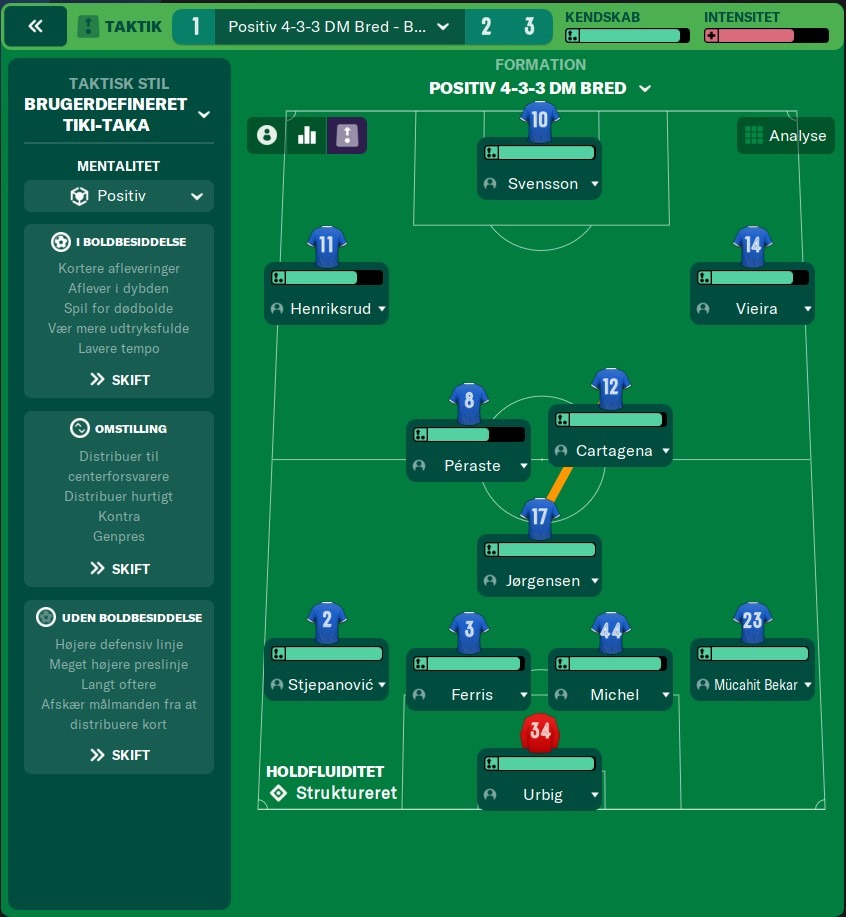
Tiki-Taka
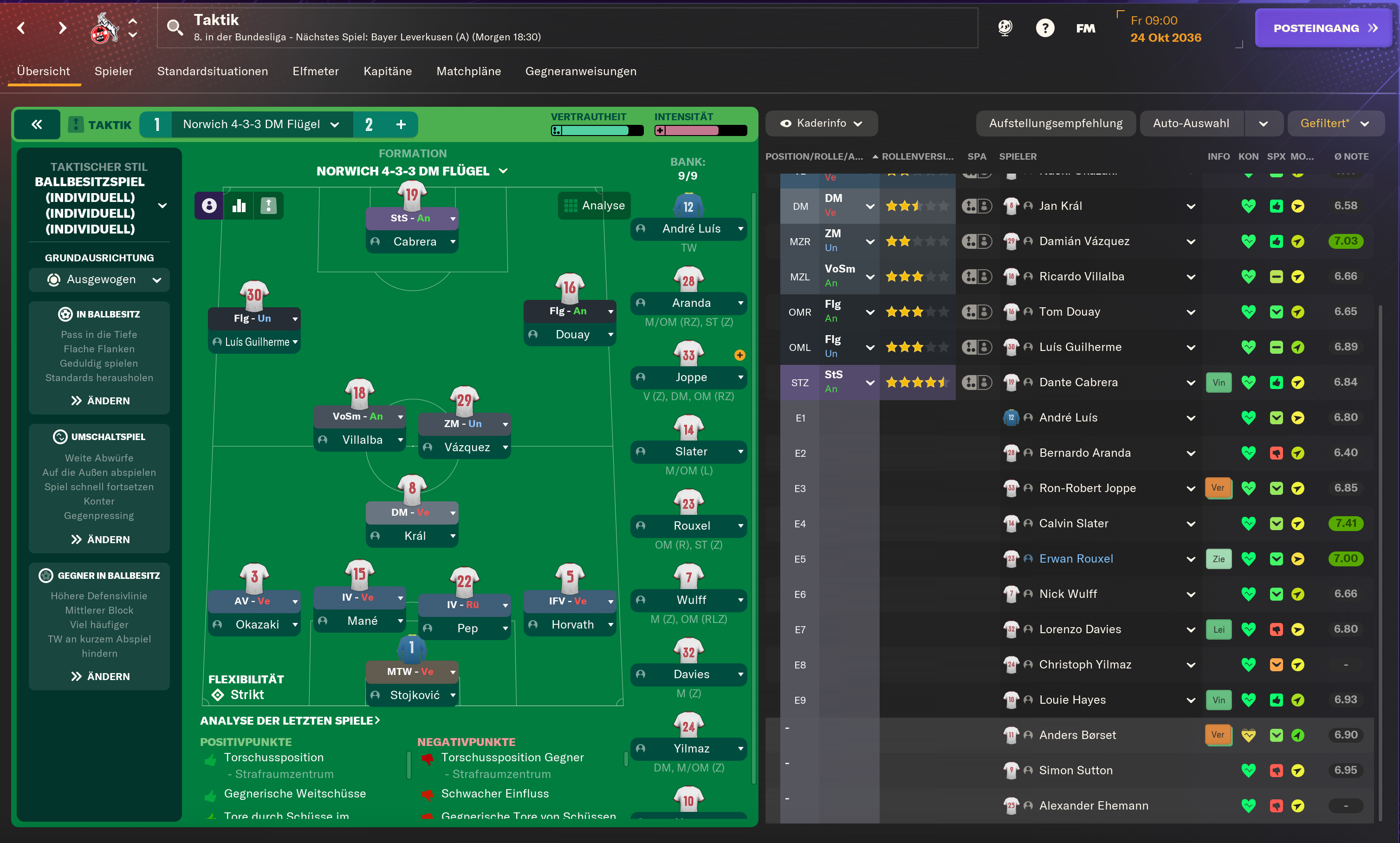
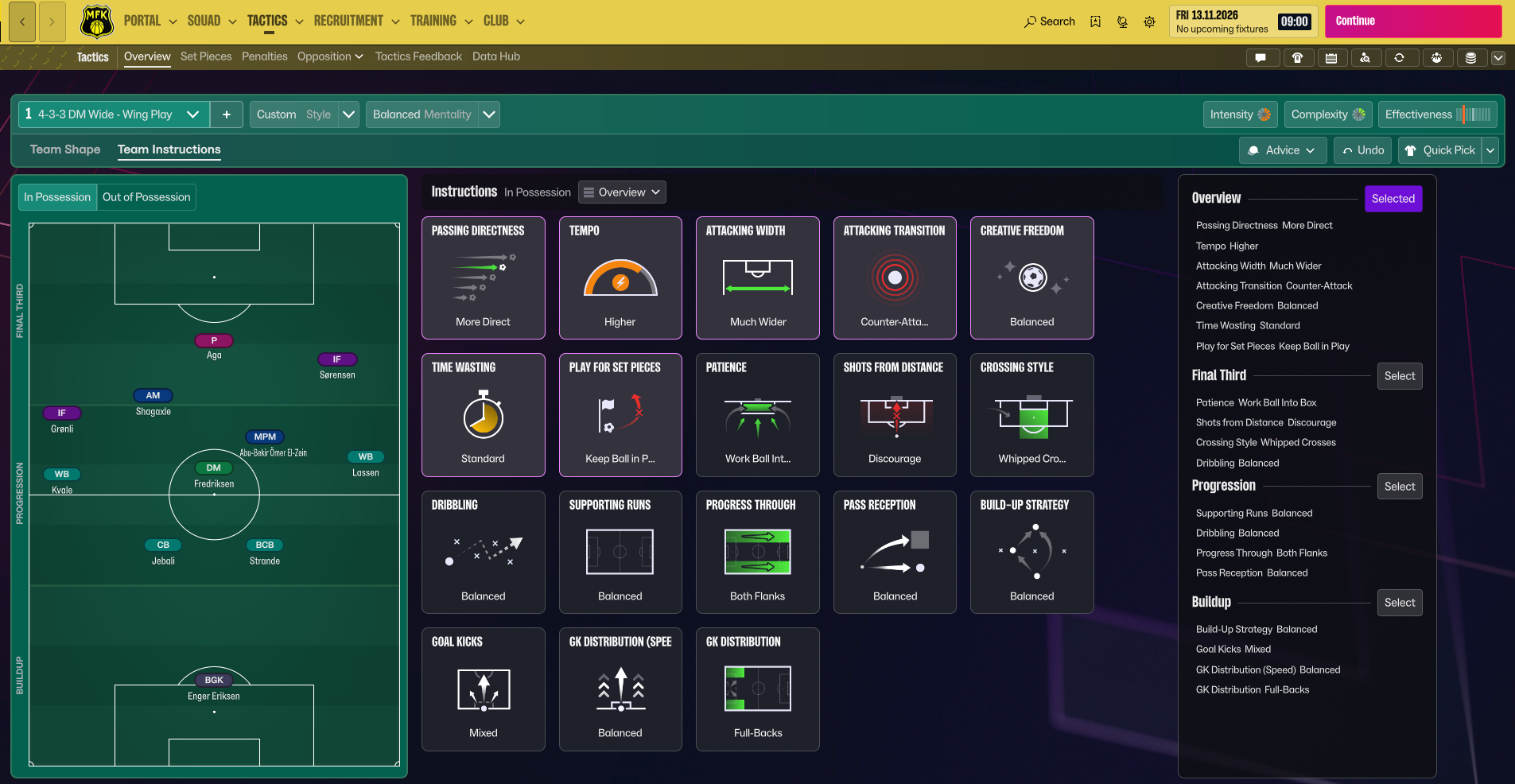
Wing Play
Vertical Tiki-Taka
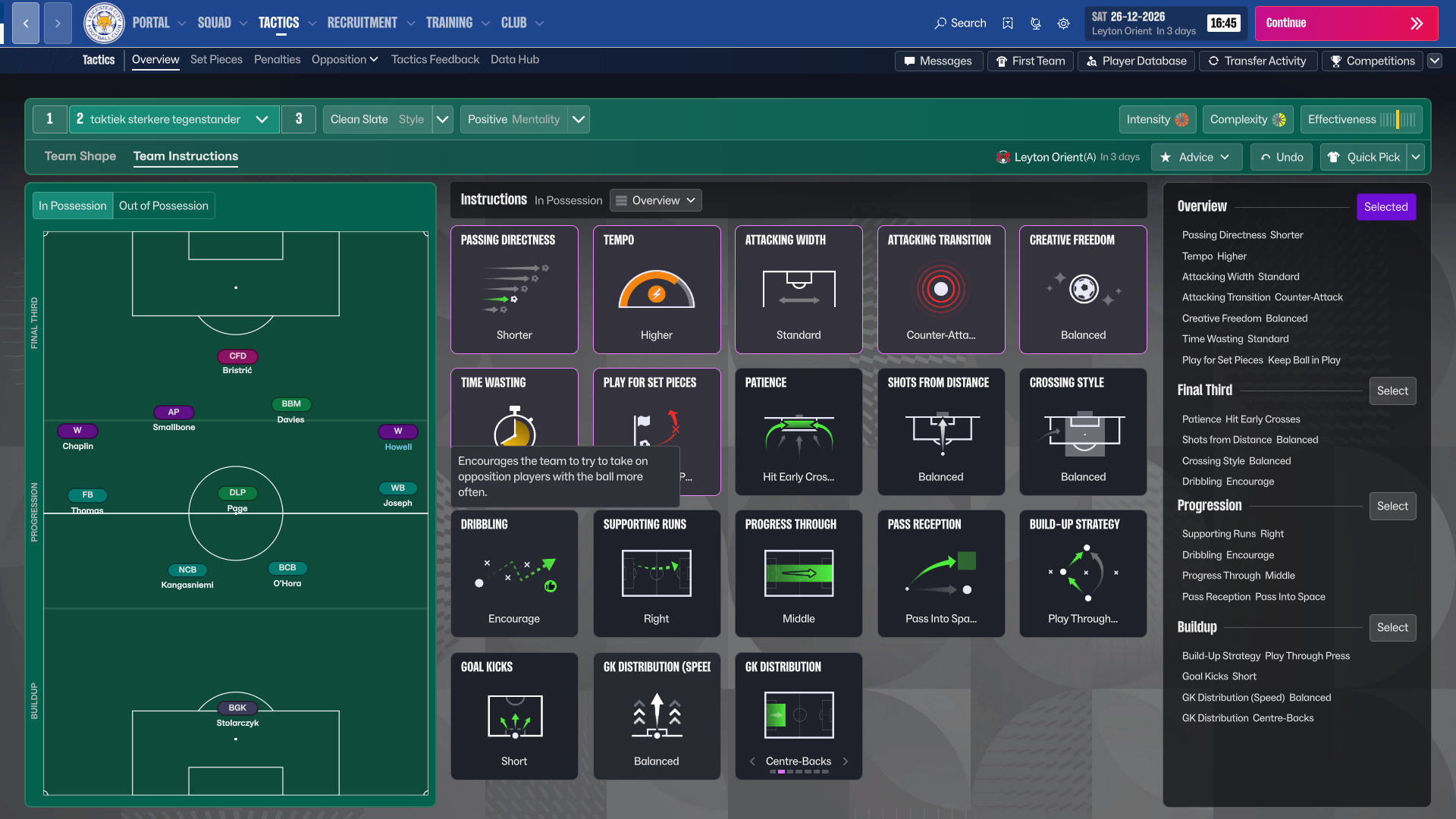
clean slate
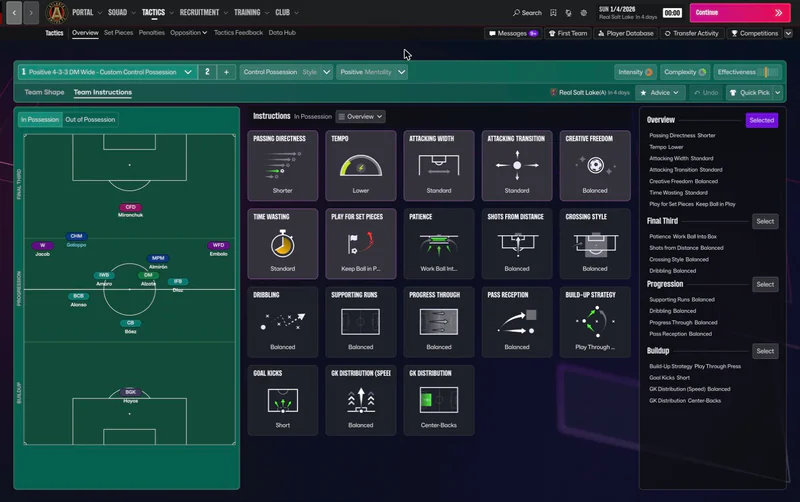
control possession
The tactical theory behind the 4-3-3 DM Wide: roles, instructions, and the trade-offs that decide whether the system holds up.
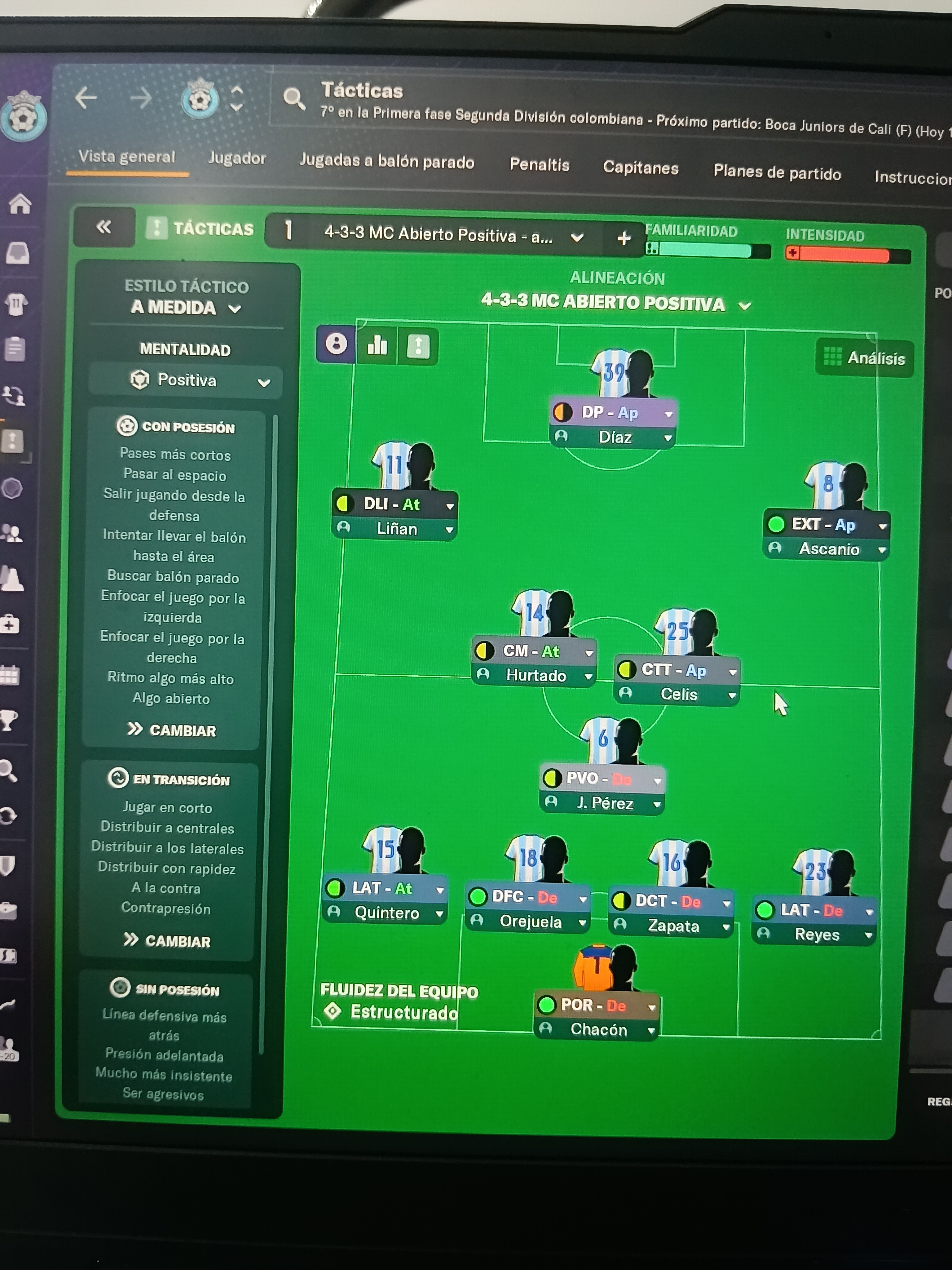
Klopp-style gegenpressing in FM, including squad profile, line-and-press pairing, sustainable workload, and the antipatterns to avoid.
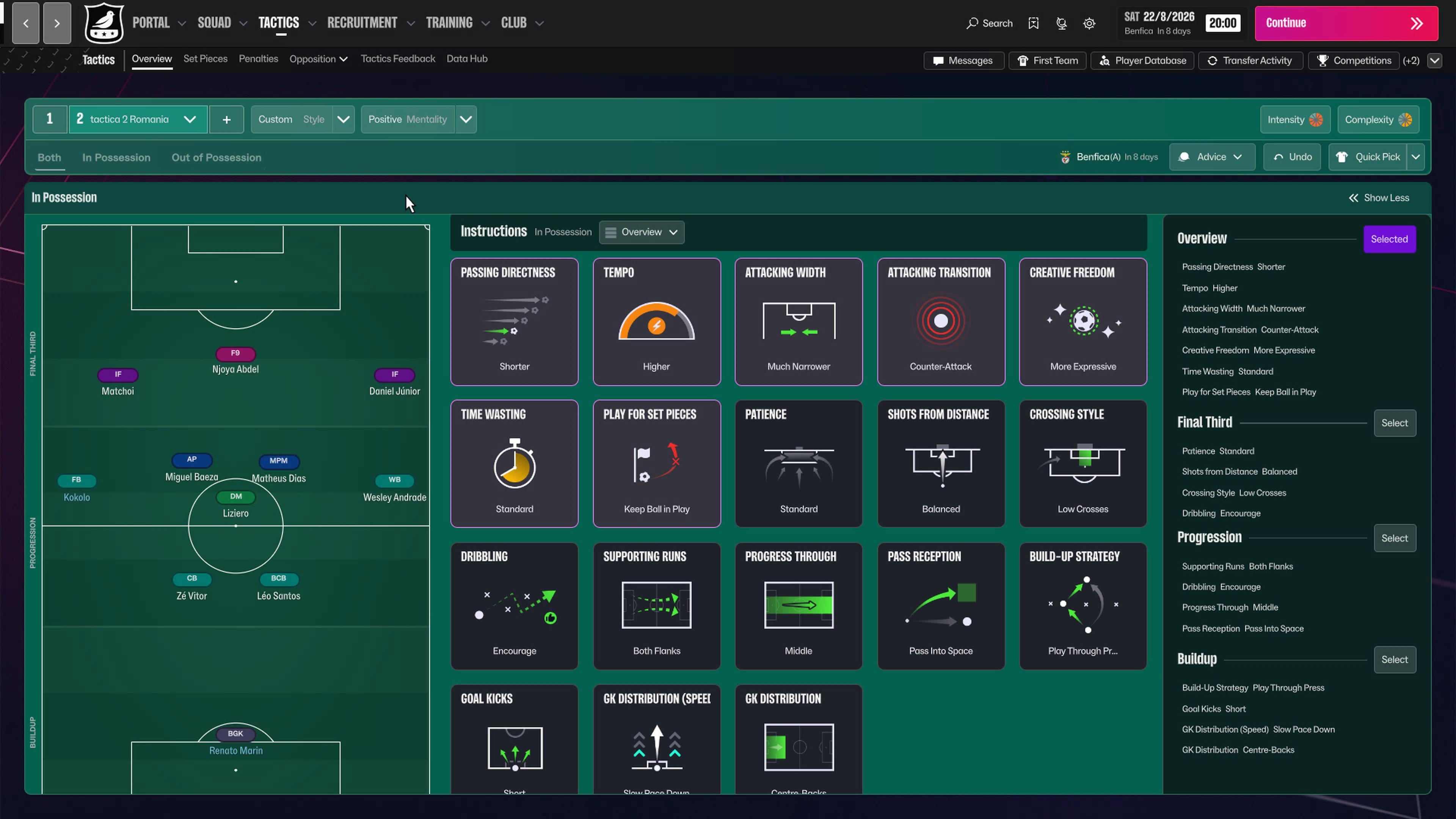
Why circulation density and zonal occupation aren't the same thing in FM, and the half-space occupation rule that decides build-up.
FM27 keeps FM26's tactic system. Here is what stays the same, the small changes that can catch you out, and what the new Tactical Effectiveness system asks of you.