Uploaded Tactic
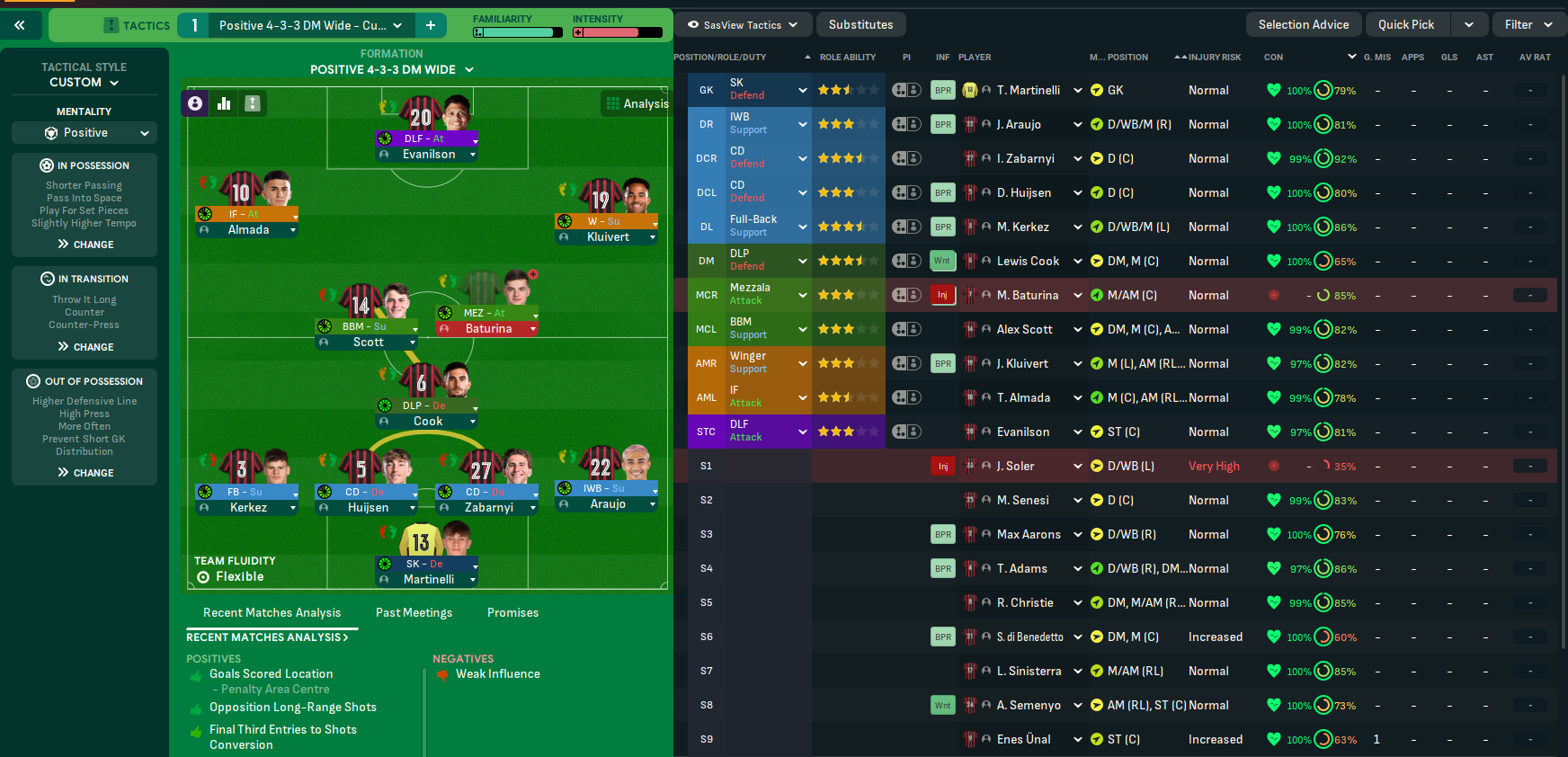
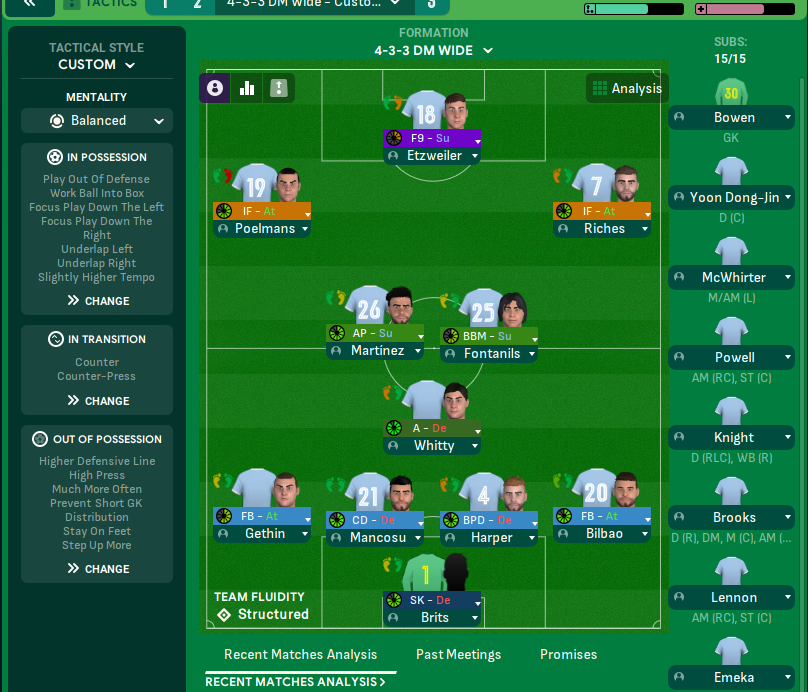
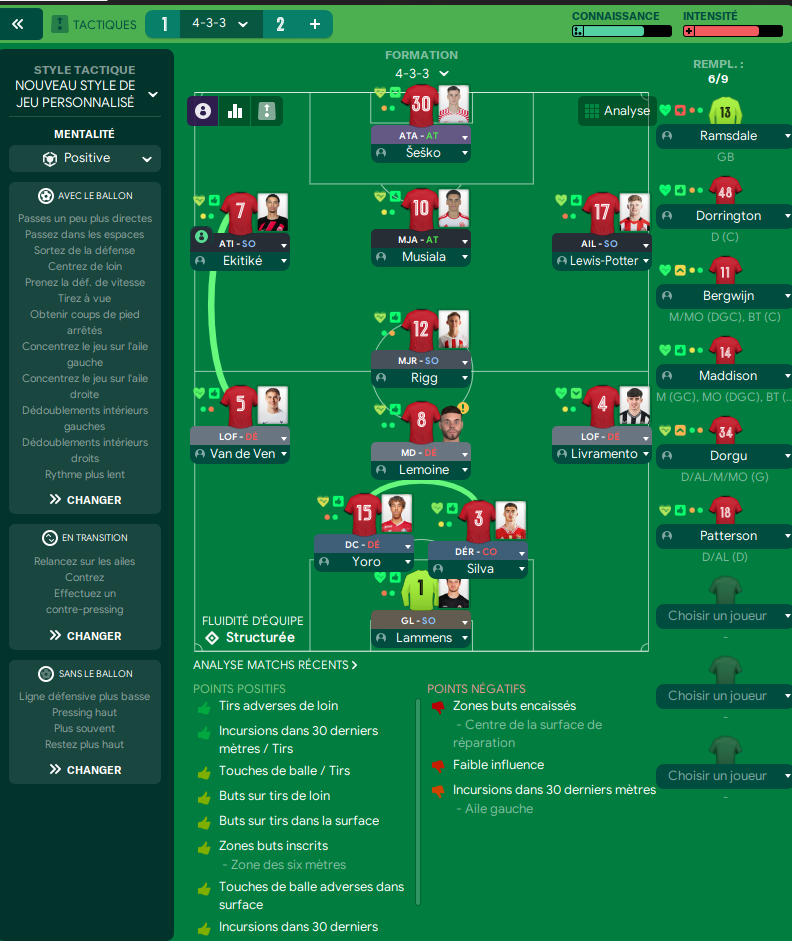
Formation & Style
Tactical Style:Positive
Mentality:Positive
Formation:4-3-3 DM Wide
Team Fluidity:Flexible
In Possession
Shorter Passing
Pass Into Space
Play For Set Pieces
Slightly Higher Tempo
In Transition
Throw It Long
Counter
Counter-Press
Out of Possession
Higher Defensive Line
High Press
More Often
Prevent Short GK Distribution
Team Shape Without Ball
No team shape without ball data available
Team Shape With Ball
No team shape with ball data available
Key Strengths
Dynamic Midfield
Utilizes a mix of attacking and supporting roles, allowing fluidity and creativity in midfield.
Pressure on Opponents
A high press combined with counter-pressing helps in winning the ball quickly and disturbing opponent buildup.
Wide Threats
The width added by wing-backs and wingers creates space for central players to exploit.
Set-Piece Opportunities
The tactic focuses on playing for set pieces, which can be a valuable scoring opportunity.
Conflicting Directions
Inverted Forward vs. Wide Play
The Inverted Forward may cut inside too often, potentially limiting the width provided by the Winger.
High Defensive Line with Sweeper Keeper
With a high defensive line, there might be a greater risk of being caught on the counter, which challenges the Sweeper Keeper's role.
Box to Box Midfielder Balance
The Box to Box Midfielder and Mezzala may overlap in their roles, leading to positional confusion.
Role Balance in Attack
Too many attacking duties in midfield could leave the defense exposed, especially during transitions.
Tactical Suggestions
Adjust Inverted Forward Role
Consider switching the Inverted Forward to a traditional Winger to maintain width and stretch the opposition.
Stabilize Midfield Balance
Evaluate the Box to Box Midfielder's role and consider switching to a more defensive role if it leads to a lack of balance.
Tempo Adjustments
If players struggle with high tempo, consider reducing the tempo slightly to maintain possession better.
Enhanced Defensive Support
Ensure that at least one midfield player is assigned a more defensive duty to offer cover during counter-attacks.
Ask Questions About Your Lineup
Related Tactics
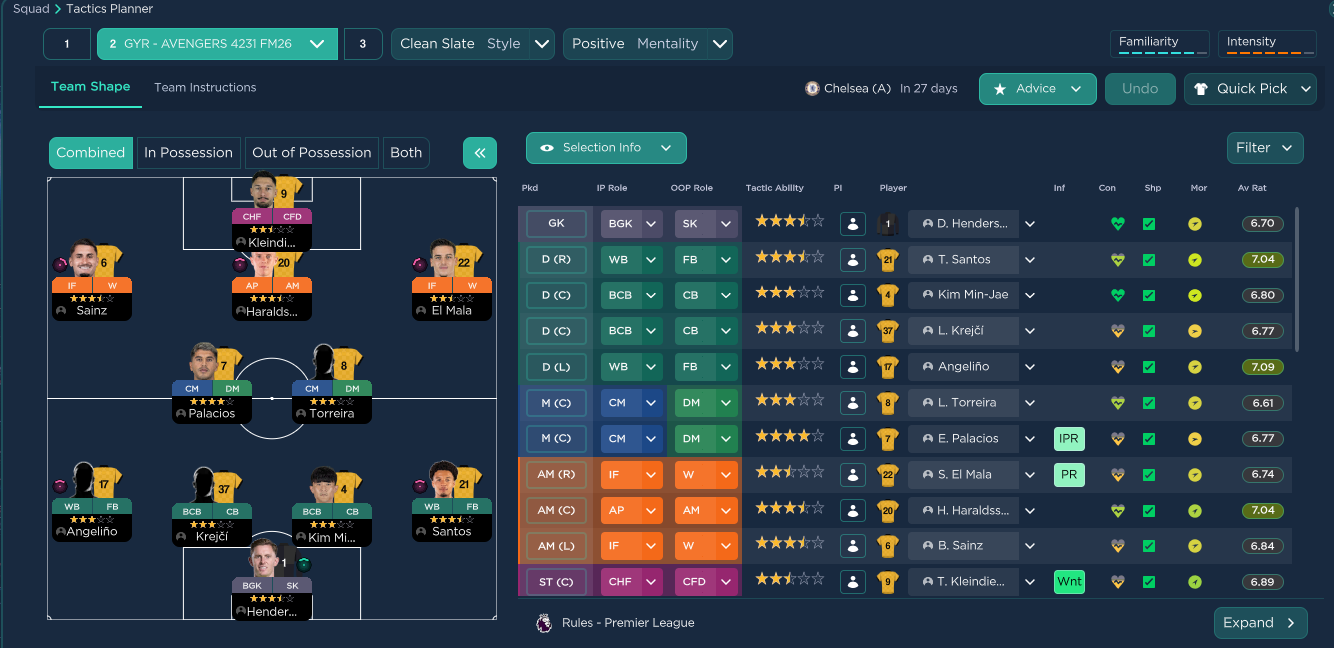
More Positive tactics
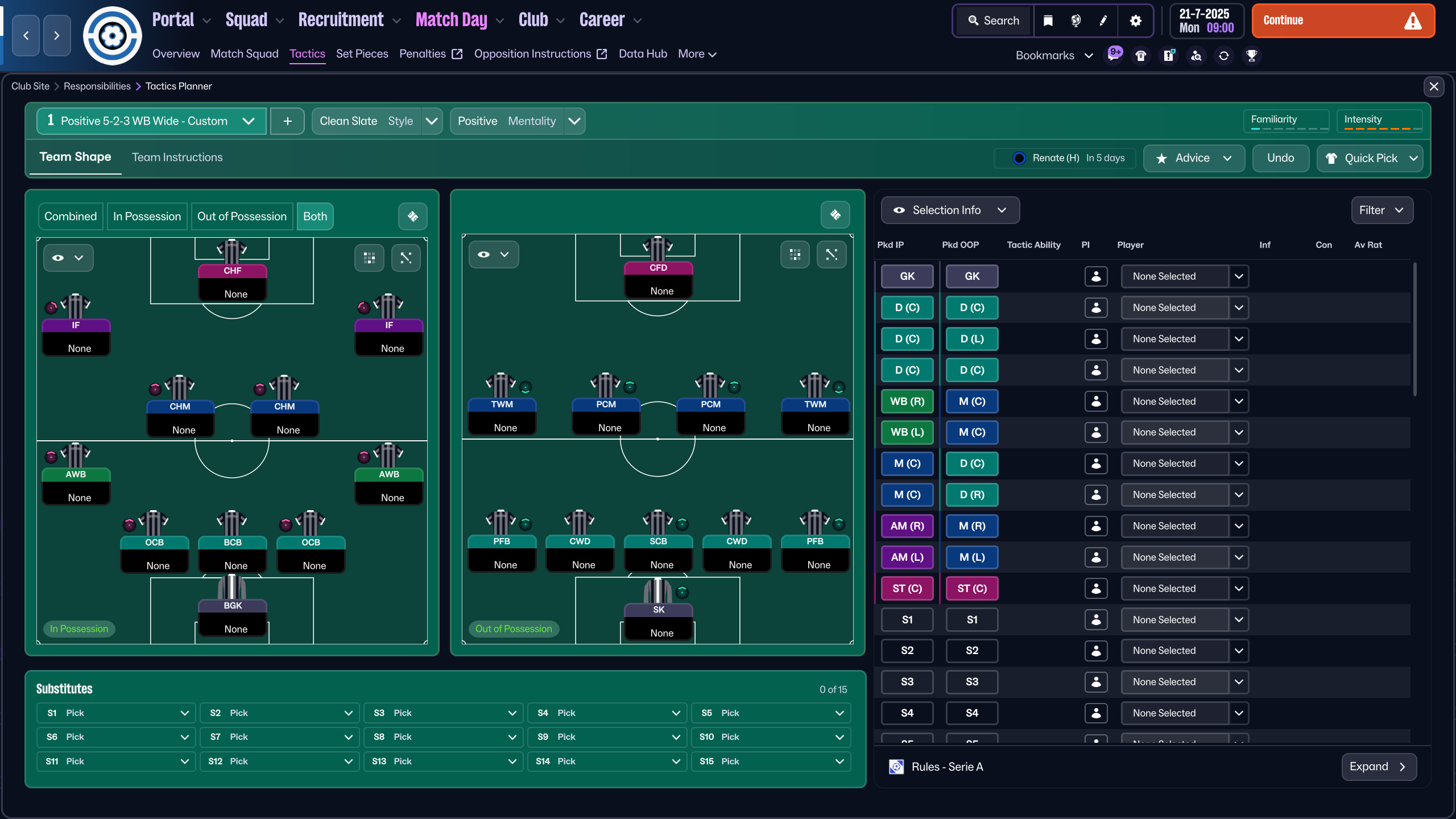
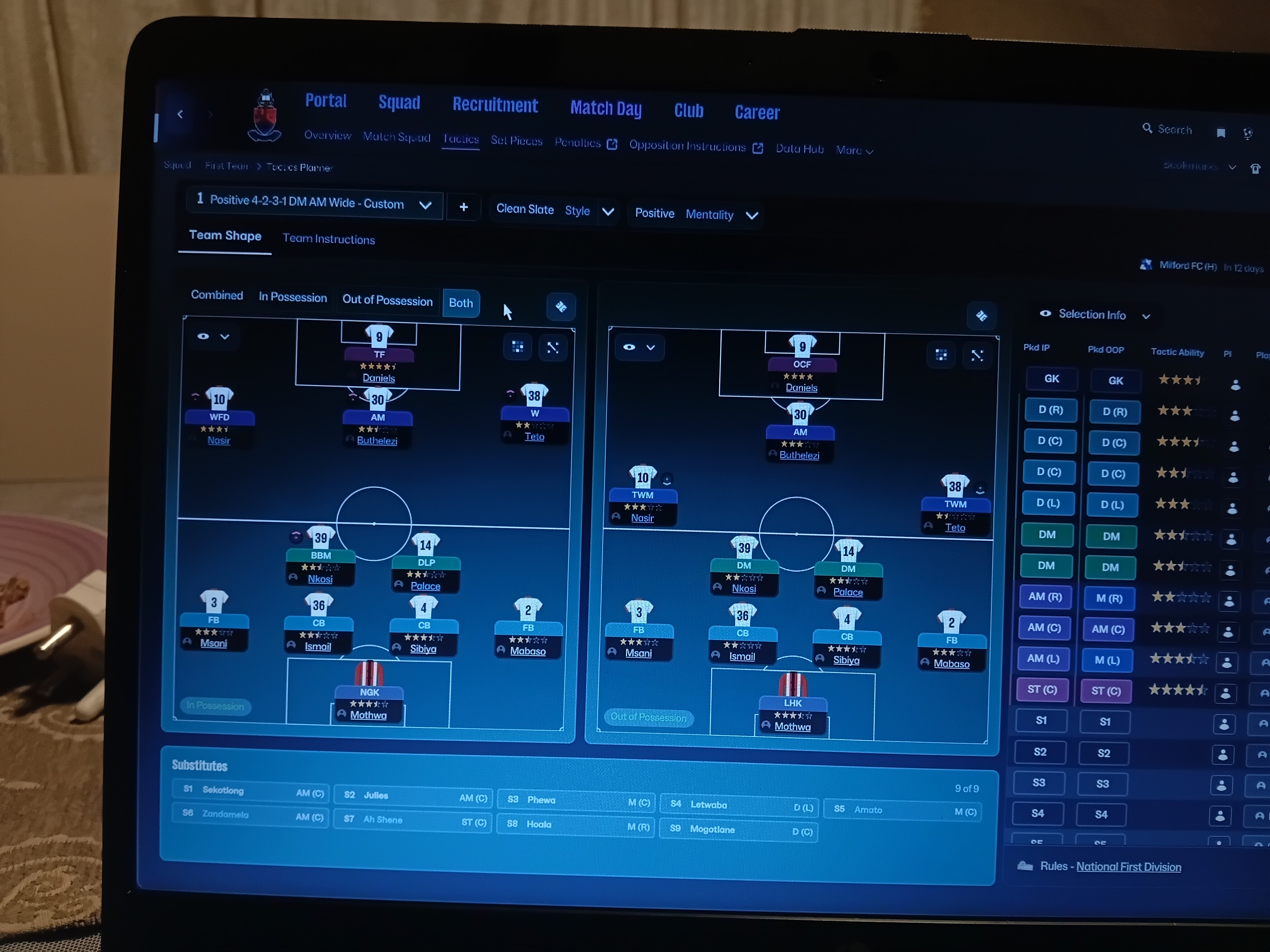
Guides for this formation
The tactical theory behind the 4-3-3 DM Wide: roles, instructions, and the trade-offs that decide whether the system holds up.
Foundations
Understanding the 4-3-3 Formation
Master the classic 4-3-3: player roles, tactical variations, and the trade-offs that decide whether it sings or stalls.
Read guide
Player pairings
Midfield Trios
Holder, runner, creator: the role distribution rule for three-man midfields, the AMC variants, and the antipatterns that break them.
Read guide
Playing styles
Gegenpressing: A Full Guide
Klopp-style gegenpressing in FM, including squad profile, line-and-press pairing, sustainable workload, and the antipatterns to avoid.
Read guide