Uploaded Tactic
Formation & Style
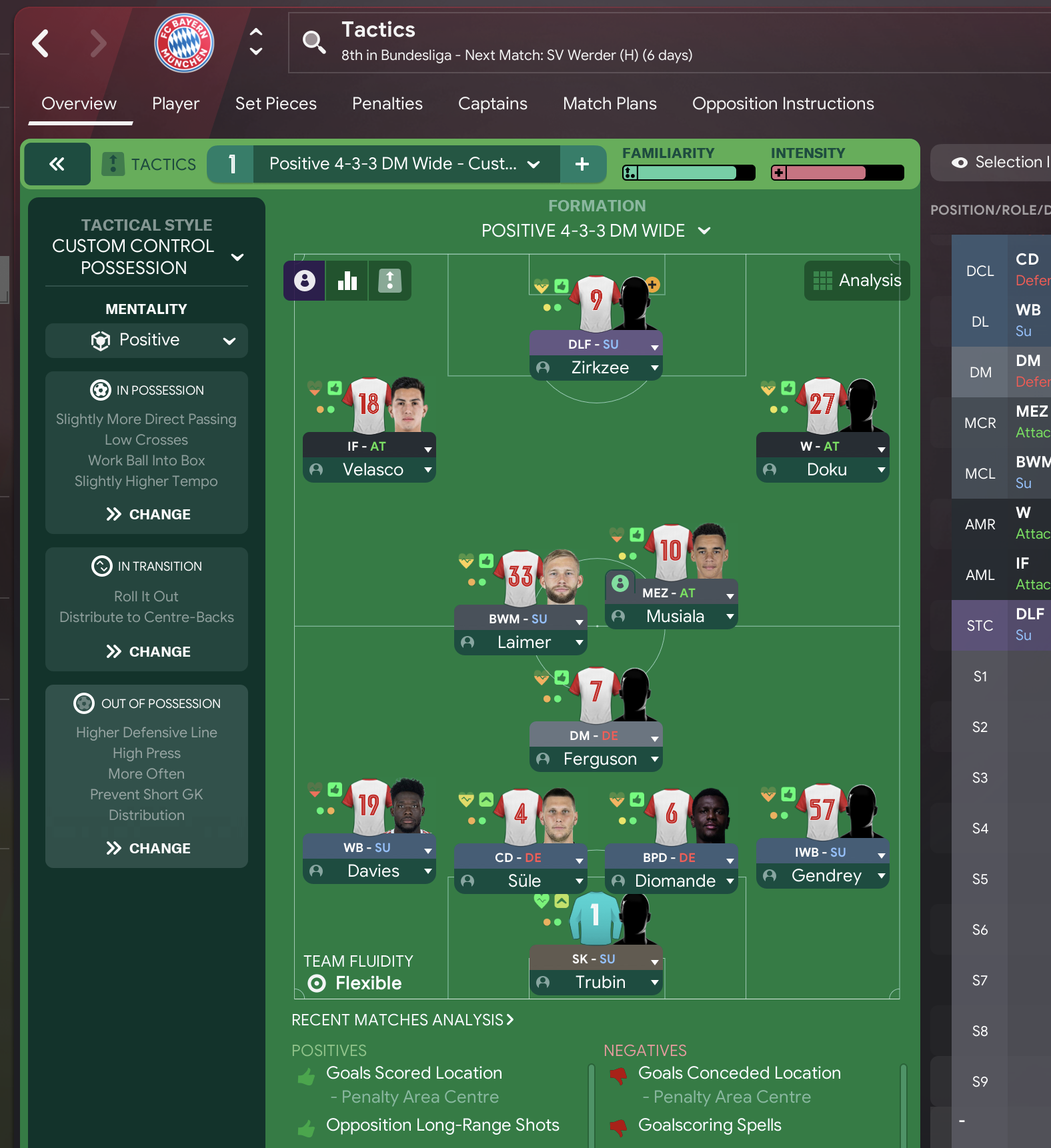
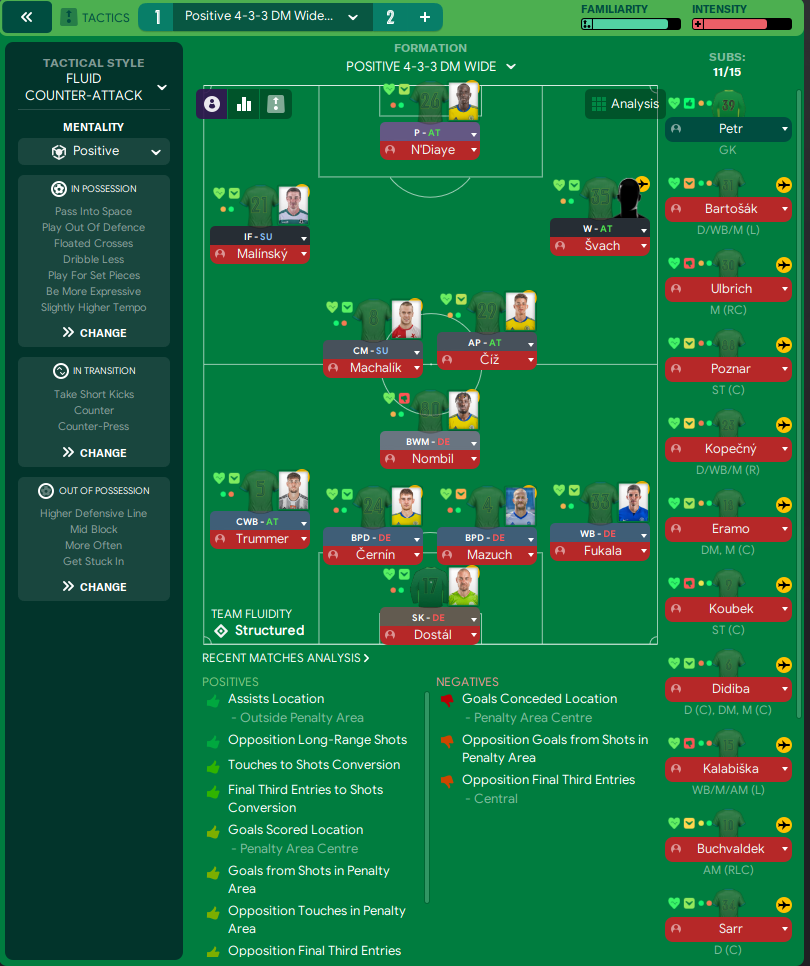
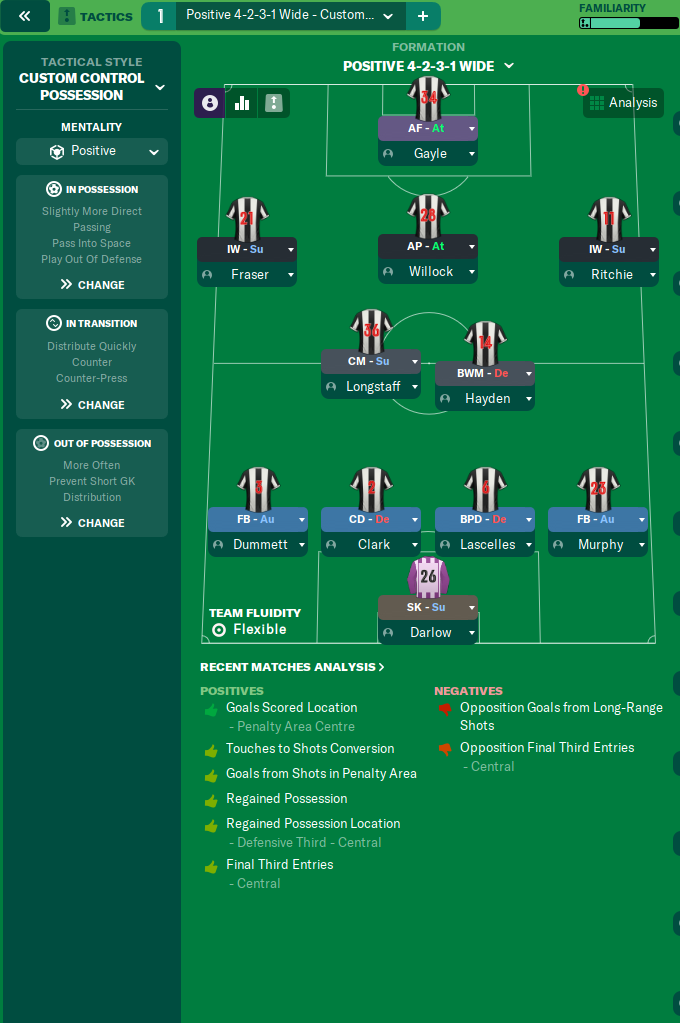
Tactical Style:Custom Control Possession
Mentality:Positive
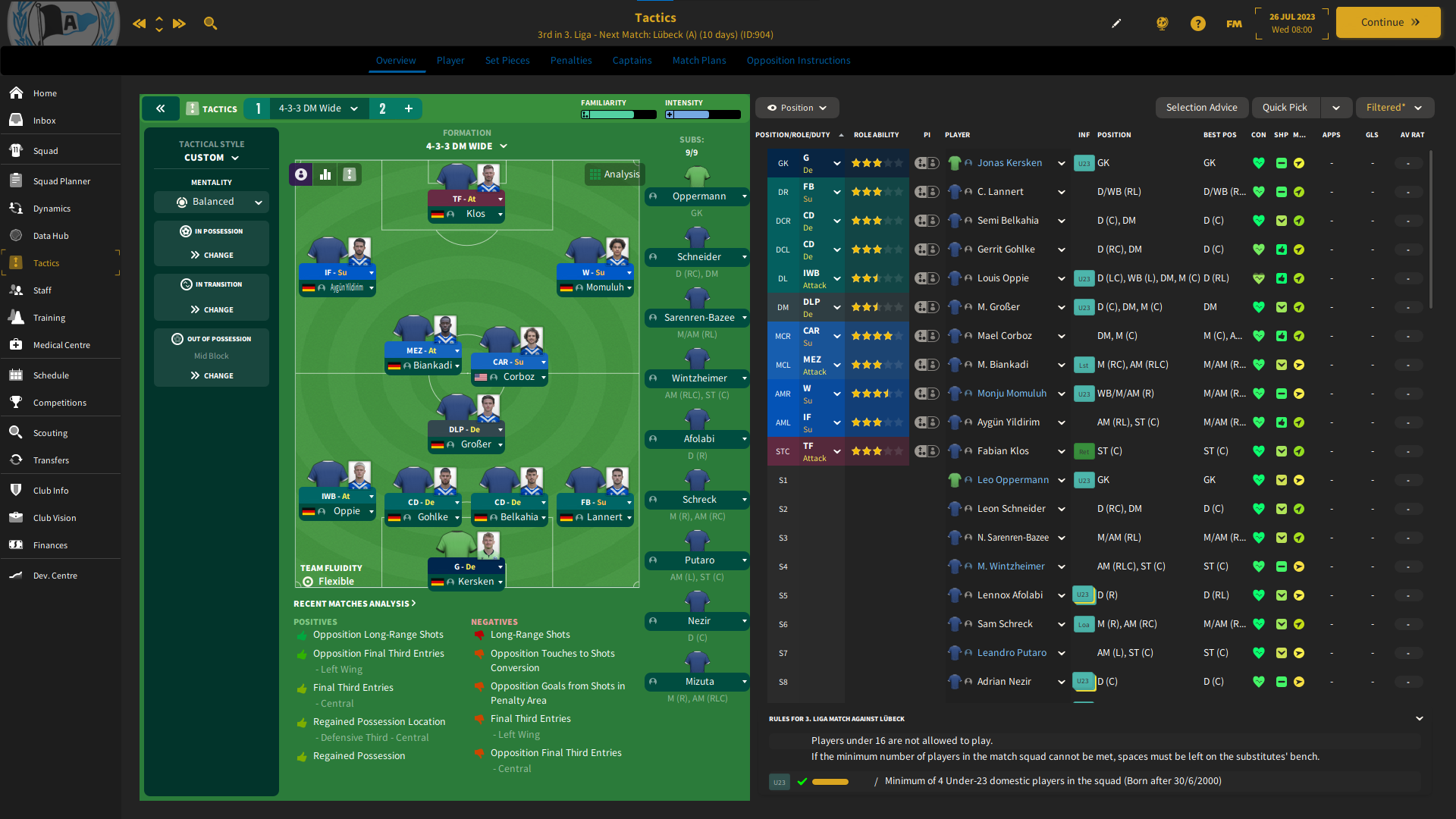
Formation:4-3-3 DM Wide
Team Fluidity:Flexible
In Possession
Slightly More Direct Passing
Work Ball Into Box
Slightly Higher Tempo
In Transition
Roll It Out
Distribute to Centre-Backs
Out of Possession
Higher Defensive Line
High Press
Prevent Short GK Distribution
Team Shape Without Ball
Shape:4-3
Description:Defensive line set up to compact space in central areas, with wing-backs ready to track opposing wide players.
Evidence:CB and BPD roles provide stability at [2,2] and [2,3], while DM at [3,3] offers protection.
Team Shape With Ball
Shape:3-3-3
Description:Dynamic overlapping play, focusing on utilizing attacking width while maintaining central presence for build-up play.
Evidence:IF at [5,2] and W at [5,3] spread the field, supported by DLF [6,3] and MEZ at [4,3].
Phase Description
Attacking Play
Utilizes width from wingers and overlaps from wing-backs, aiming for high possession and quick penetration into the opponent's box.
Defensive Transition
Emphasis on a swift return to defensive shape, focusing on immediate pressure and maintaining a compact formation when losing possession.
Main Focus
Control of the midfield and exploitation of the wide areas to create goal-scoring opportunities.
Key Strengths
Effective Width
The use of wingers and wing-backs improves space creation.
Midfield Stability
Three-man midfield allows for effective ball retention and defensive coverage.
High Press
Aggressive pressing tactics help in regaining possession quickly.
Conflicting Directions
Potential Vulnerability to Counters
High defensive line may expose the team to quick counter-attacks.
Overloading Central Areas
With three midfielders, opponents could exploit wide areas if wings are not adequately supported.
Dependency on Wide Play
Heavy reliance on wide play could be neutralized by tight-marking tactics from opponents.
Tactical Suggestions
Adjust Defensive Line Height
Consider lowering the defensive line to mitigate counter-attack risks.
Incorporate Central Support
Utilize a more central attack strategy to ensure adaptable patterns of play.
Focus on Defensive Cover
Ensure midfield covers for advancing wing-backs to avoid being exposed.
Ask Questions About Your Lineup
Related Tactics
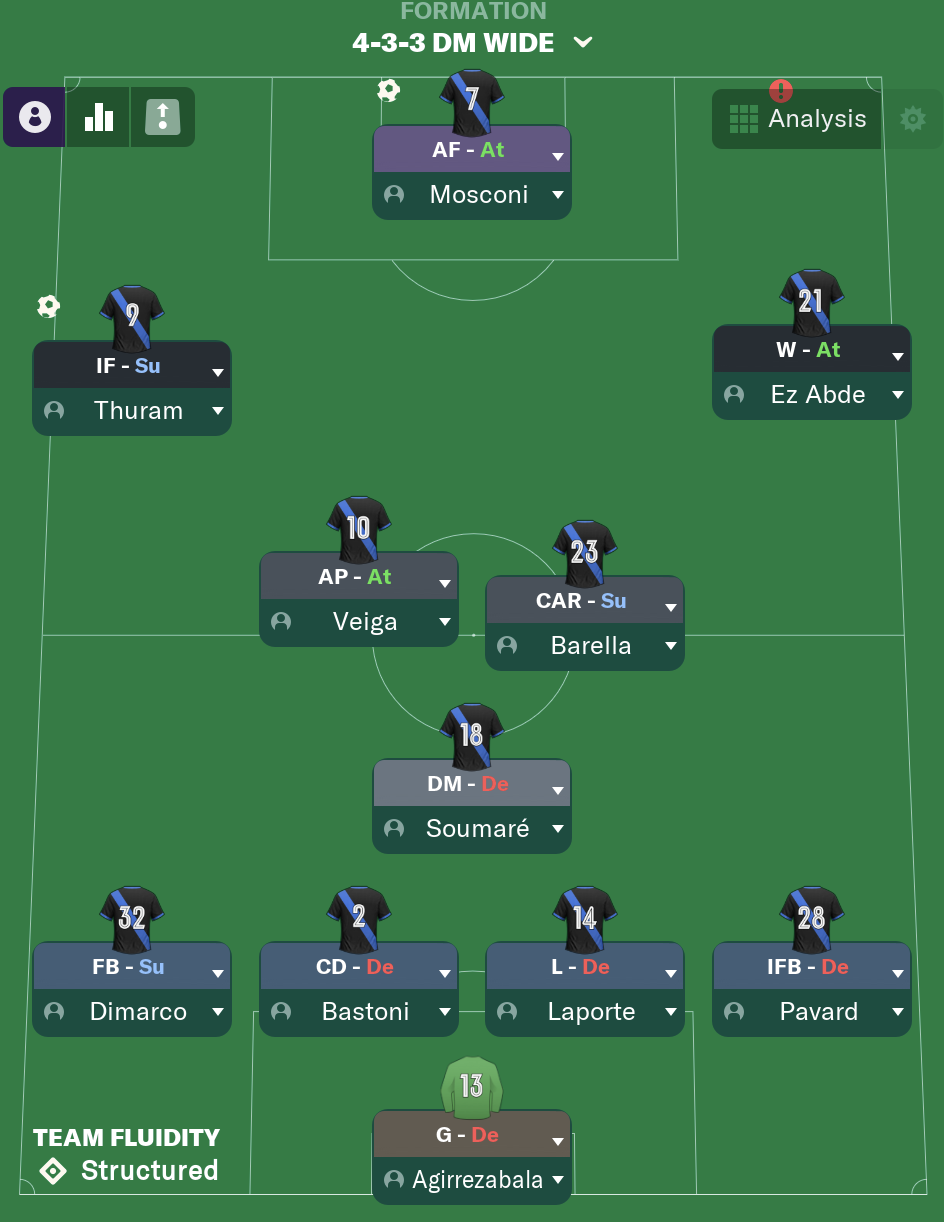
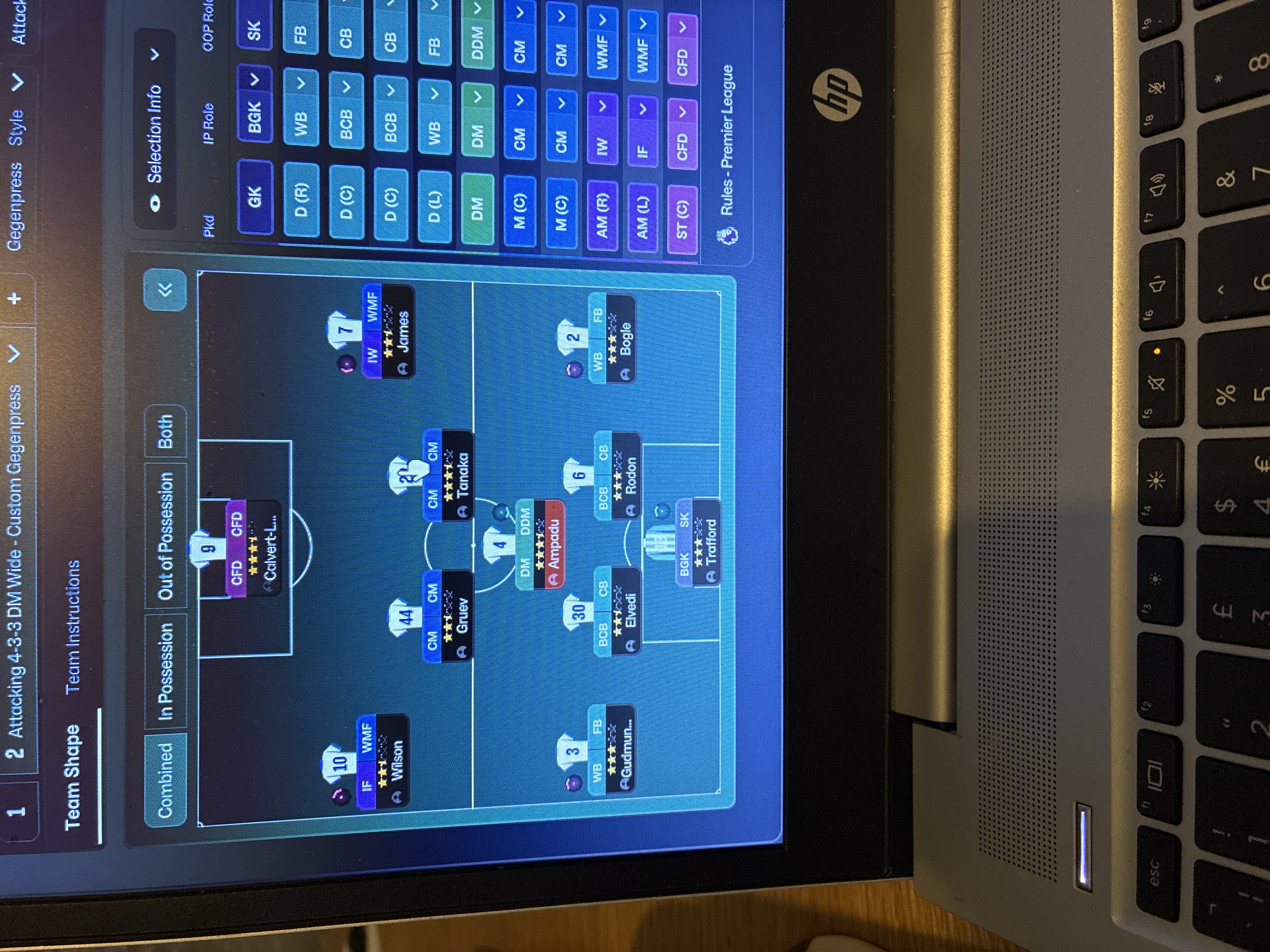
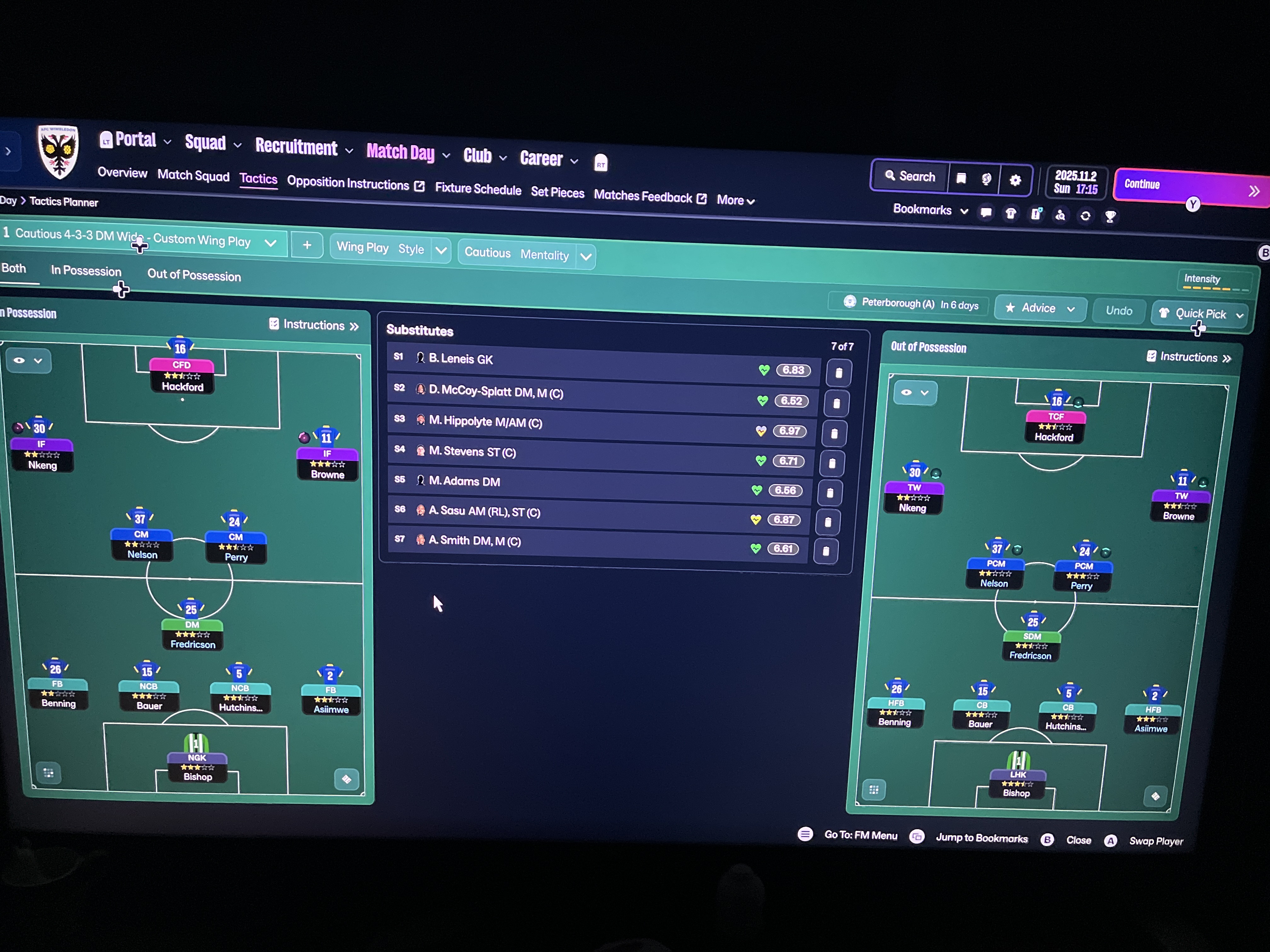
More Custom Control Possession tactics
Guides for this formation
The tactical theory behind the 4-3-3 DM Wide: roles, instructions, and the trade-offs that decide whether the system holds up.
Foundations
Understanding the 4-3-3 Formation
Master the classic 4-3-3: player roles, tactical variations, and the trade-offs that decide whether it sings or stalls.
Read guide
Player pairings
Midfield Trios
Holder, runner, creator: the role distribution rule for three-man midfields, the AMC variants, and the antipatterns that break them.
Read guide
Playing styles
Gegenpressing: A Full Guide
Klopp-style gegenpressing in FM, including squad profile, line-and-press pairing, sustainable workload, and the antipatterns to avoid.
Read guide