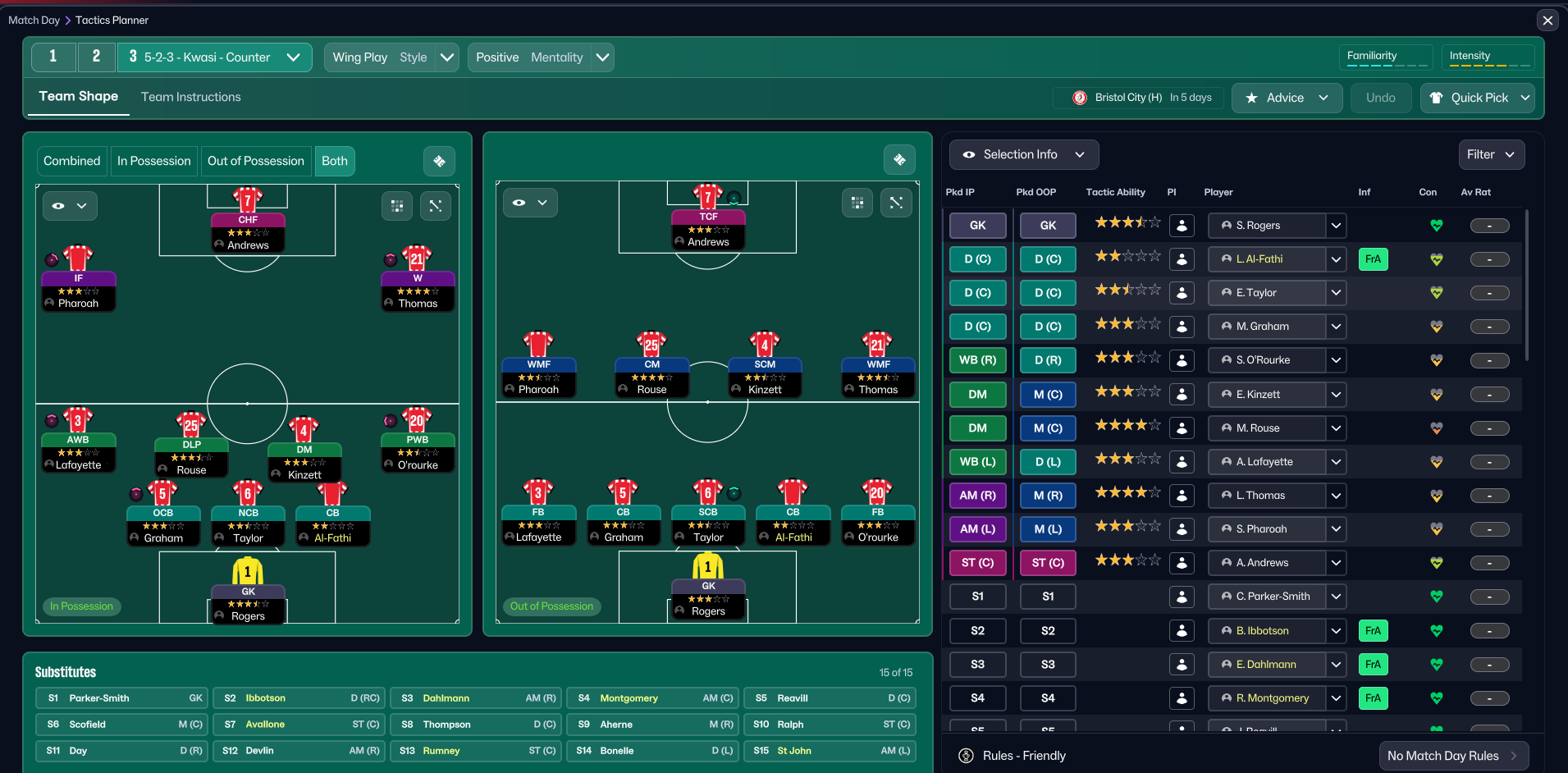
Uploaded Tactic
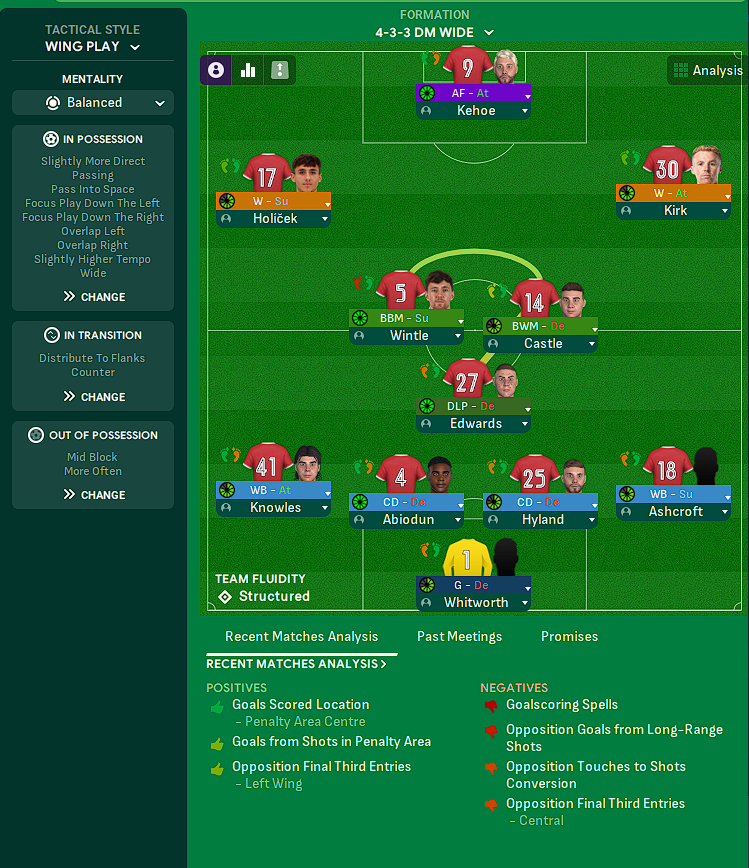
Formation & Style
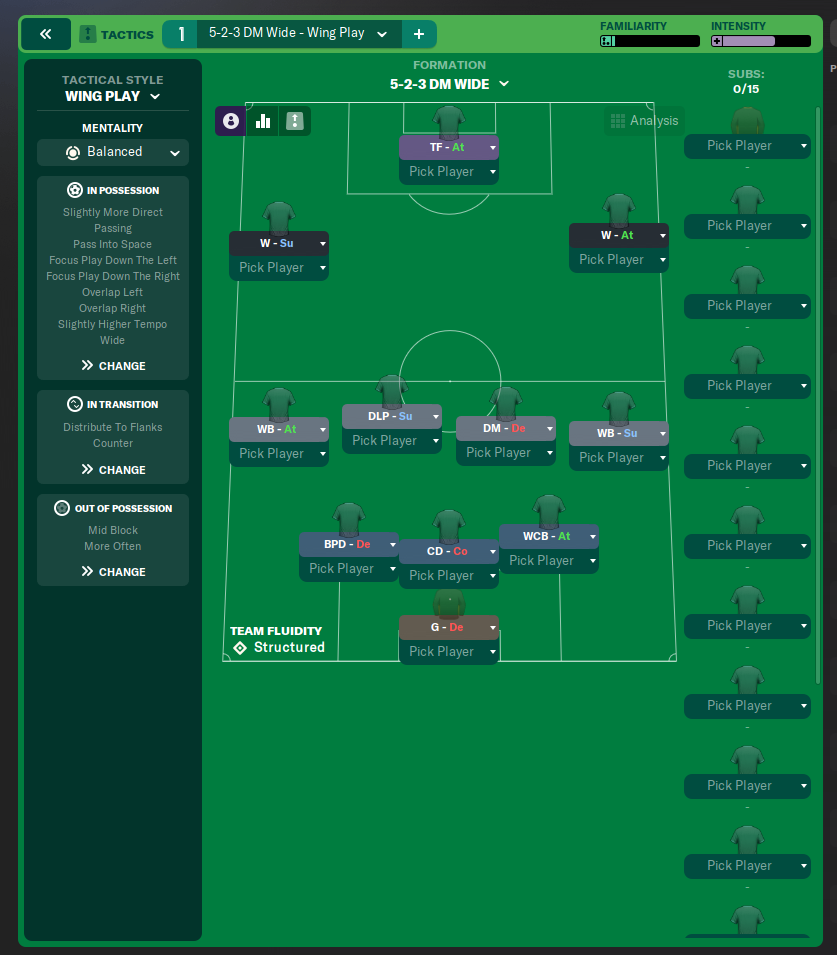
Tactical Style:Wing Play
Mentality:Balanced
Formation:4-3-3 DM Wide
Team Fluidity:Structured
In Possession
Slightly More Direct Passing
Pass Into Space
Focus Play Down The Left
Focus Play Down The Right
Overlap Left
Slightly Higher Tempo
Wide
In Transition
Distribute To Flanks Counter
Out of Possession
Mid Block
More Often
Team Shape Without Ball
Shape:Mid Block
Description:The team holds a compact shape with emphasis on maintaining a solid line of defense while inviting pressure.
Evidence:Mid Block strategy with two centre-backs and a DM supports this shape.
Team Shape With Ball
Shape:Wide
Description:Utilizes width from the wing-backs and wingers to stretch the opposition and create crossing opportunities.
Evidence:Wingers operating as wide players, wing-backs on attack duty enhance width.
Phase Description
Attacking Play
Utilizes width from wing-backs and wide forwards to stretch the opposition and create space for central attacking movements.
Defensive Transition
Quick recovery into a mid-block formation, looking to disrupt opposition build-up and counter from flanks.
Main Focus
Creating chances through wide play while maintaining solidity in the midfield.
Key Strengths
Utilization of Space
The team effectively uses the flanks, allowing players like Holiček and Kirk to create width and stretch opposition defenses.
Strong Midfield Support
The midfield trio allows for both defensive cover and attacking support, creating a balanced dynamic.
Effective Counter-Attacking
Counter-attack strategy is supported by having wing-backs who can quickly transition forward.
Conflicting Directions
Vulnerability to Central Attacks
The midfield may struggle to close down central areas effectively when counter-attacked quickly.
Reduced Offensive Pressure on Central Areas
With emphasis on width, there may be a neglect of heavily pressuring central attacking play.
Transition Gaps
The midfield's deep positioning might create gaps during transitions, leading to potential counter threats.
Tactical Suggestions
Increase Central Pressure
Adjusting some instructions to apply more pressure centrally can reduce vulnerability.
Greater Flexibility in Midfield Roles
Changing the BWM-D role to a more offensive duty can enhance transitions and link-up play.
Adjust Wing-Back Duties
Switch one wing-back to 'support' may create balance and provide additional cover in defense.
Ask Questions About Your Lineup
Related Tactics
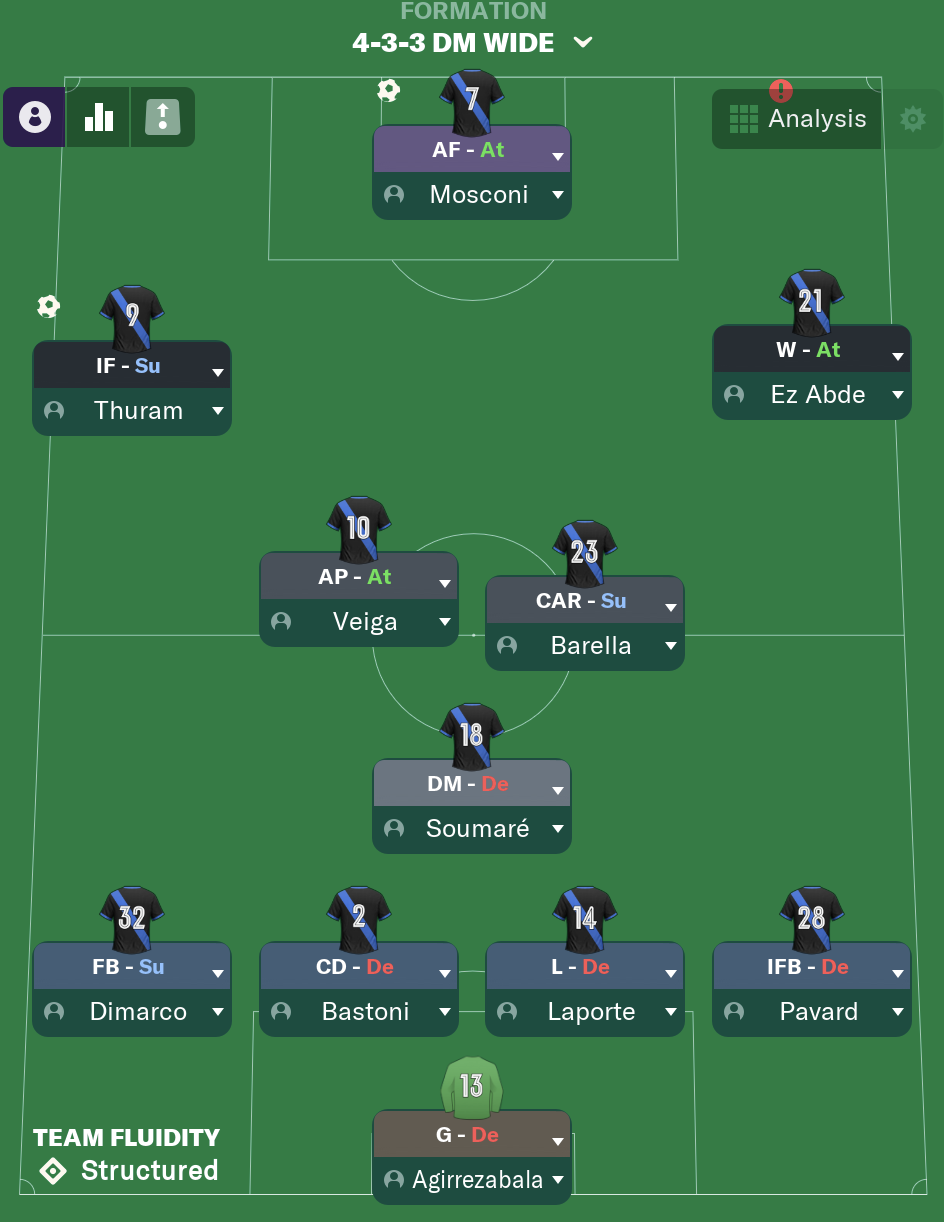
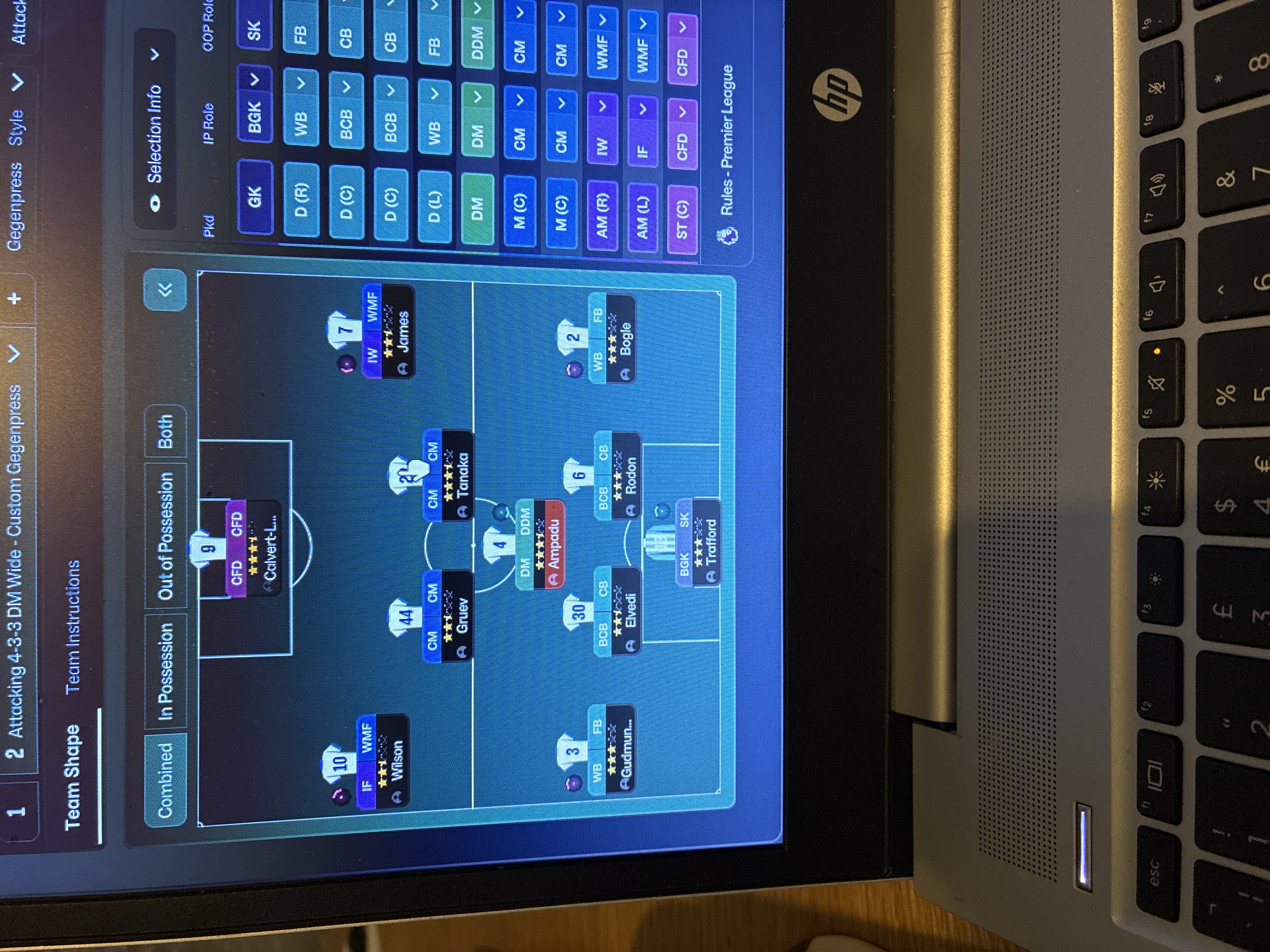
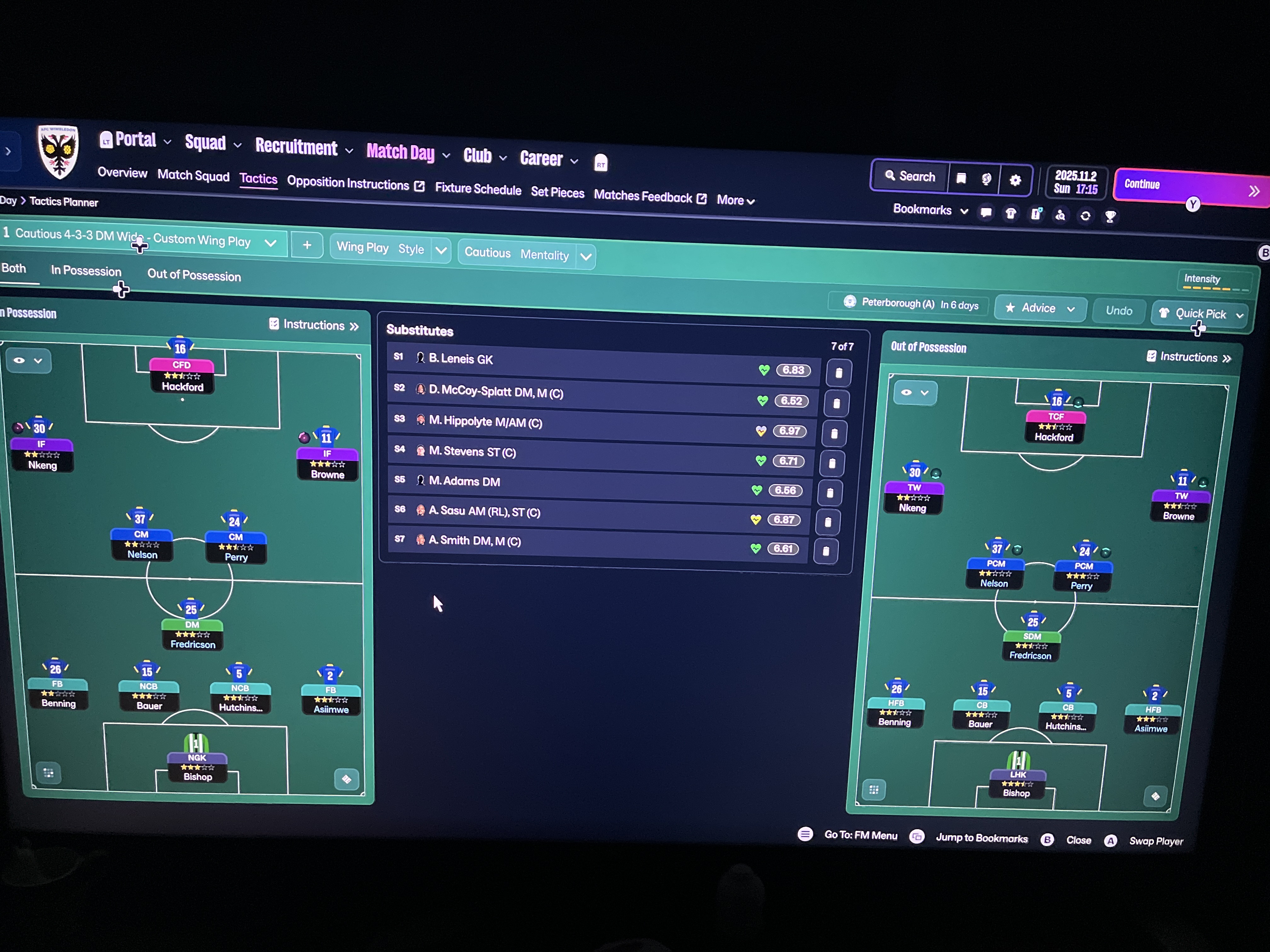
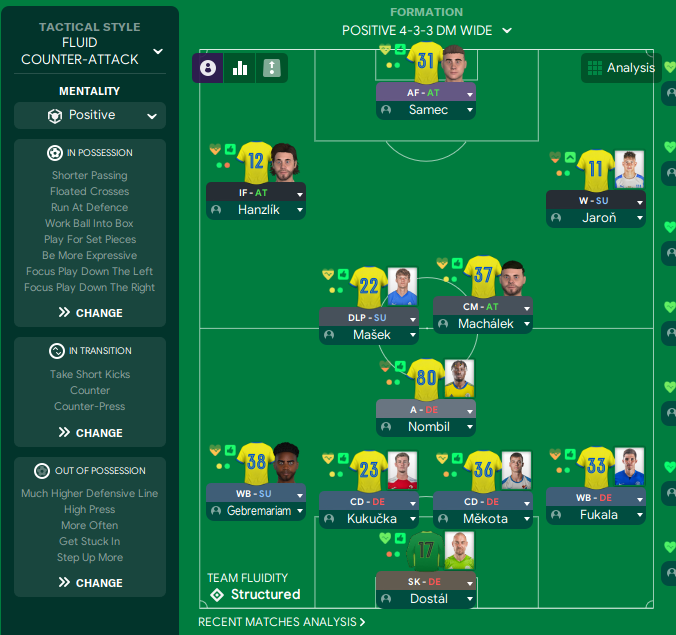
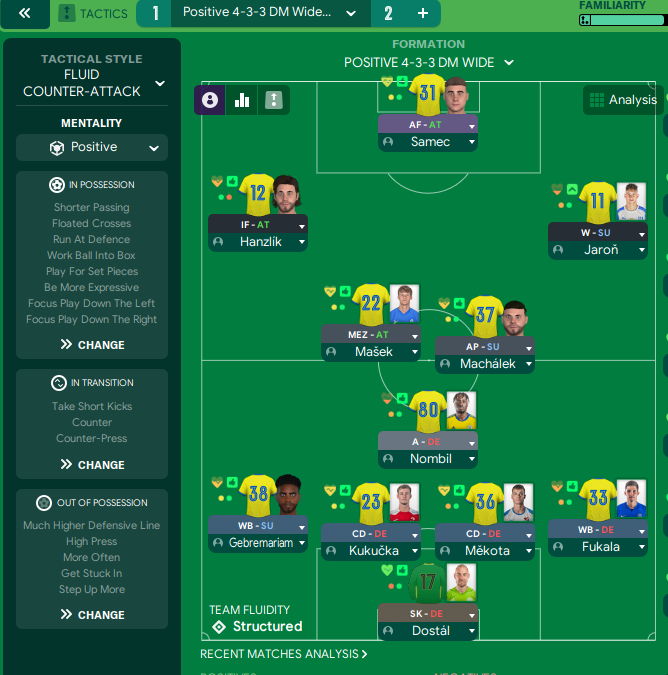
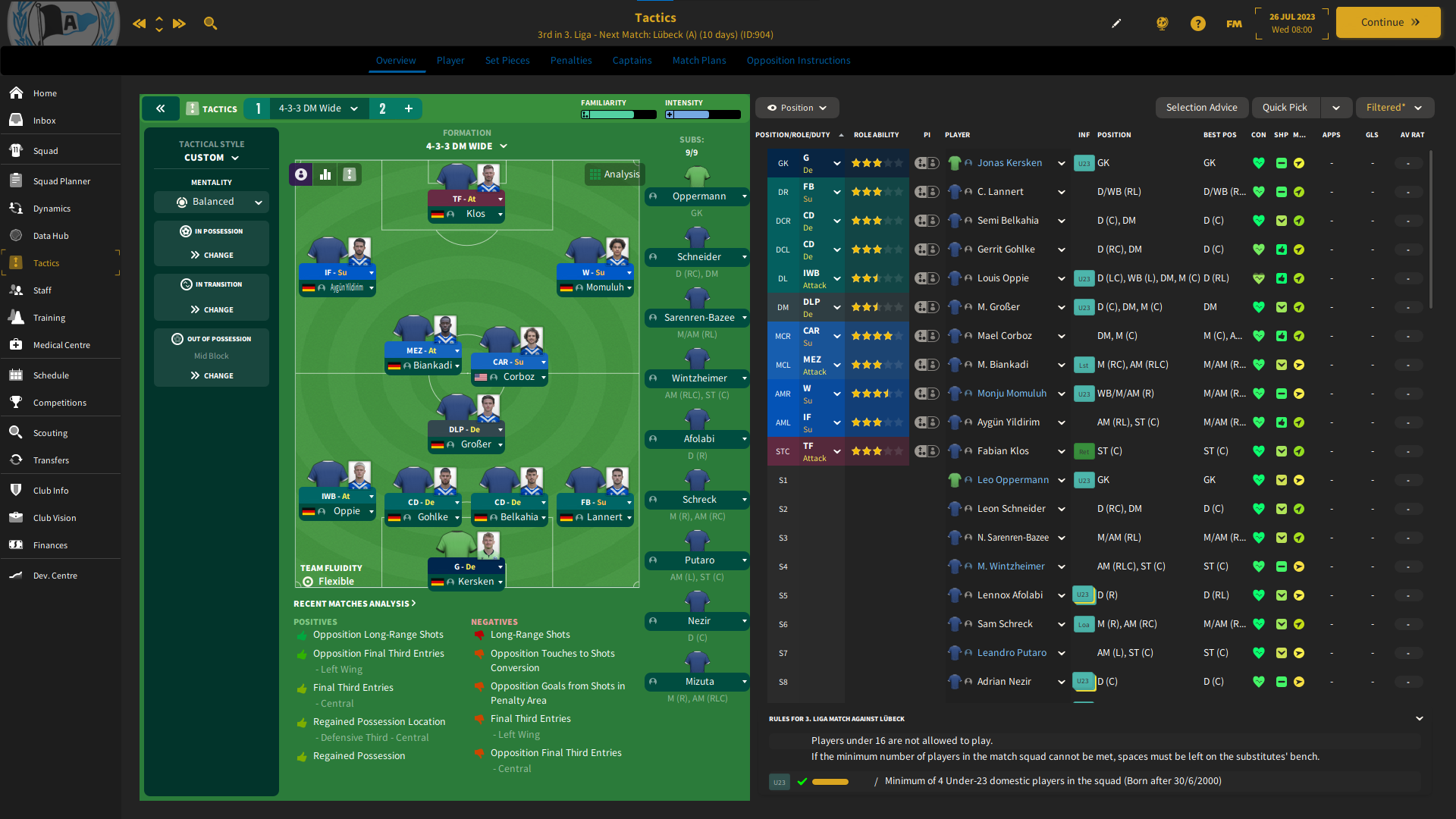
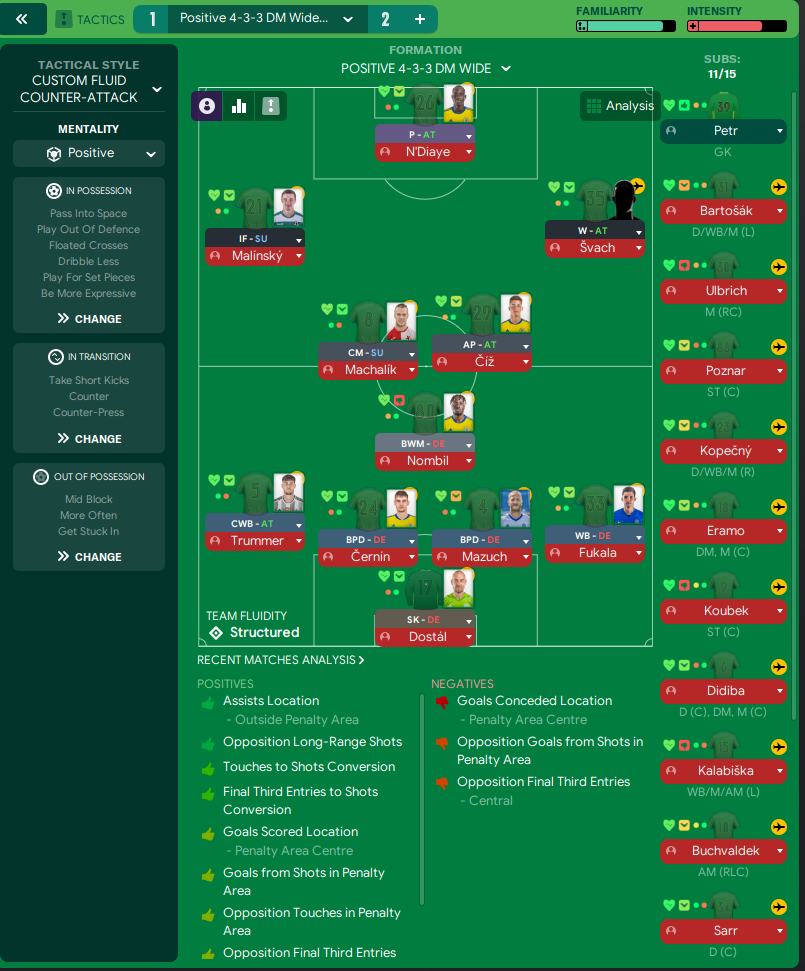
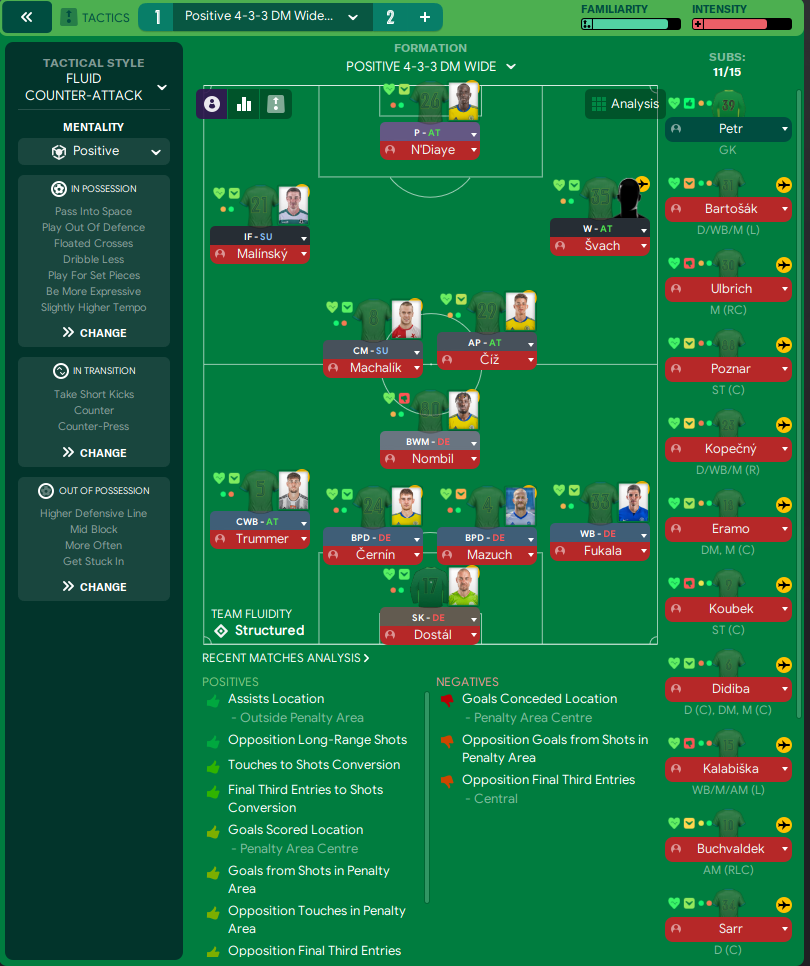
More Wing Play tactics
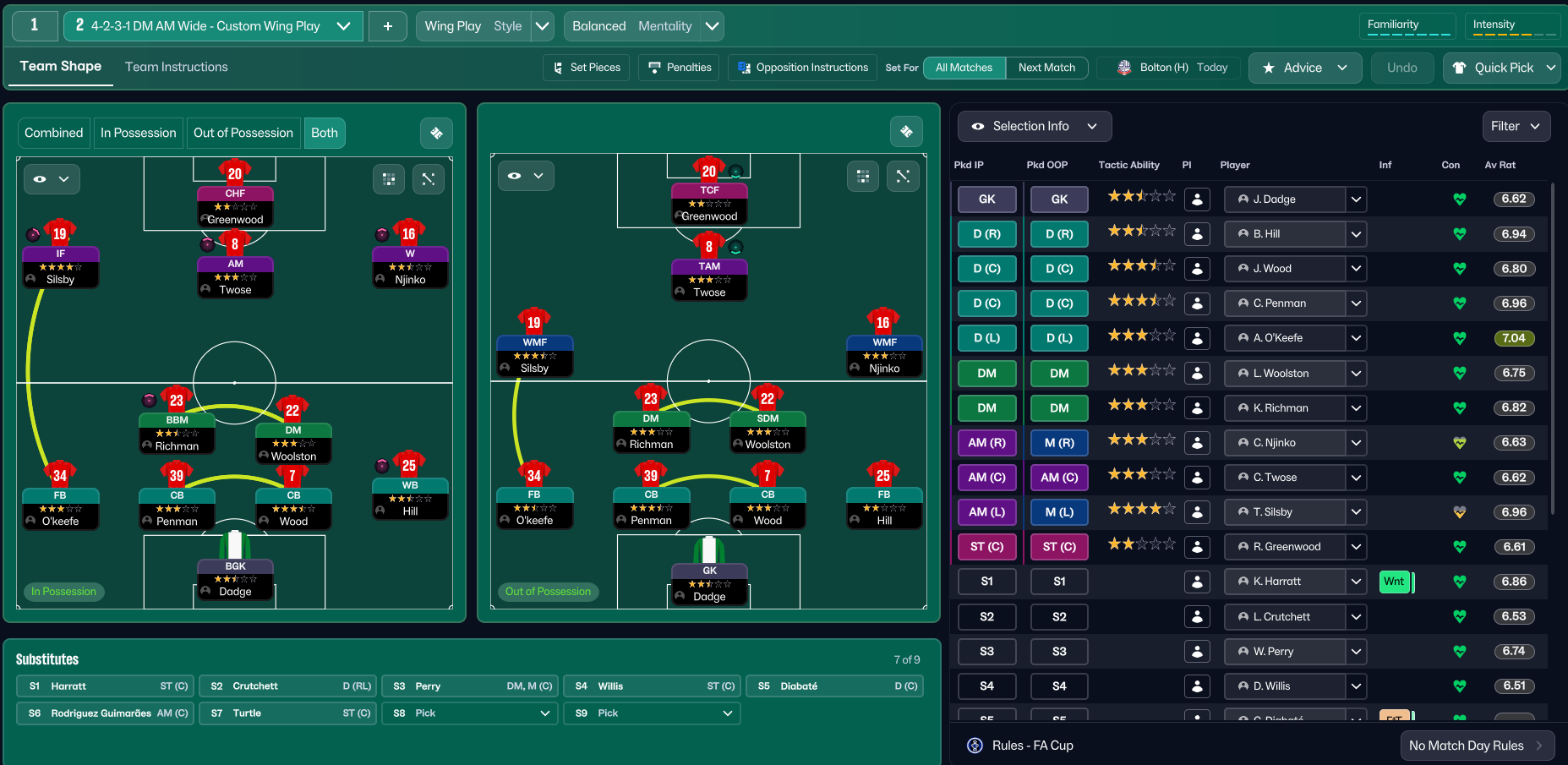
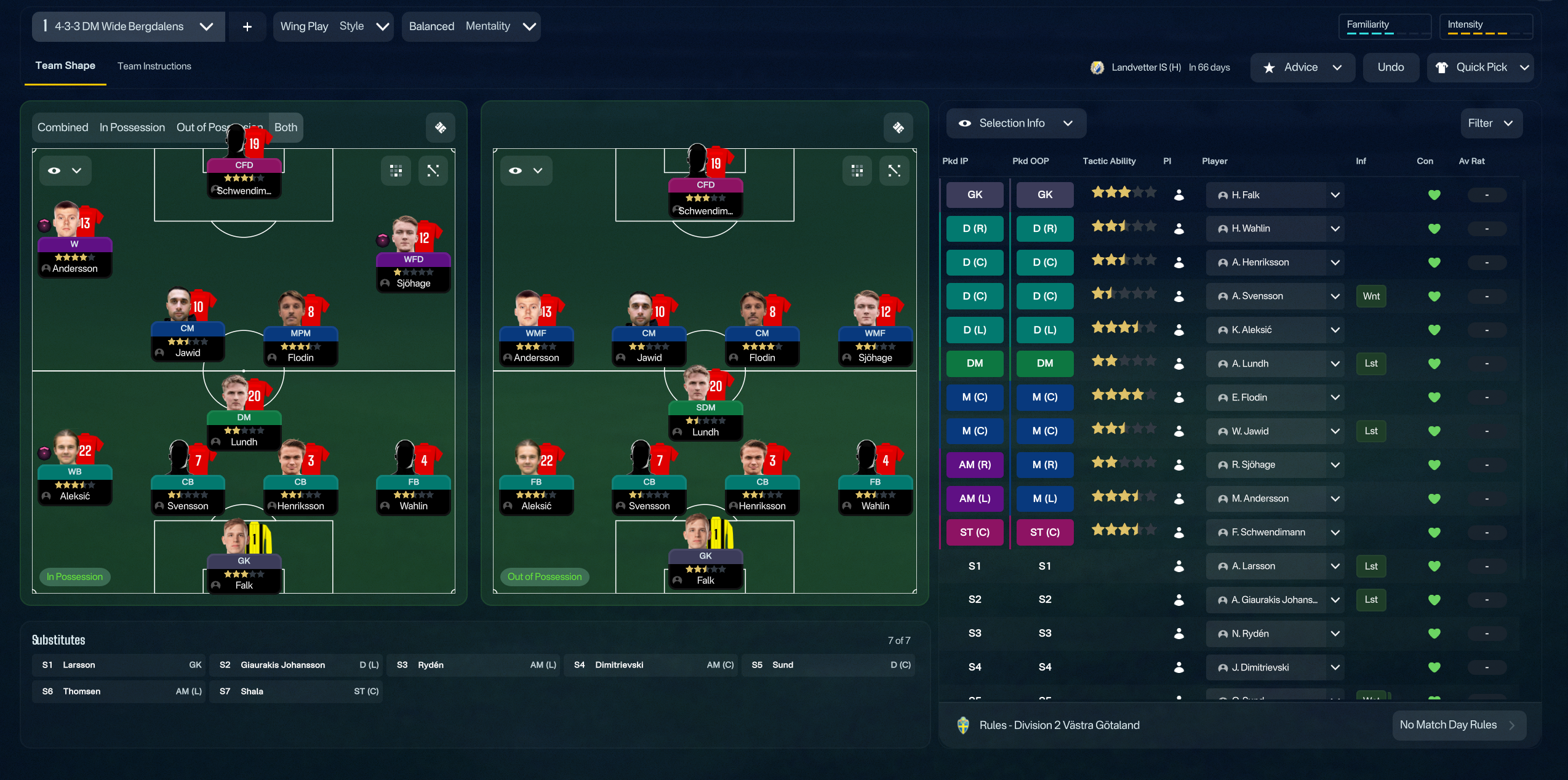
Guides for this formation
The tactical theory behind the 4-3-3 DM Wide: roles, instructions, and the trade-offs that decide whether the system holds up.
Foundations
Understanding the 4-3-3 Formation
Master the classic 4-3-3: player roles, tactical variations, and the trade-offs that decide whether it sings or stalls.
Read guide
Player pairings
Midfield Trios
Holder, runner, creator: the role distribution rule for three-man midfields, the AMC variants, and the antipatterns that break them.
Read guide
Playing styles
Gegenpressing: A Full Guide
Klopp-style gegenpressing in FM, including squad profile, line-and-press pairing, sustainable workload, and the antipatterns to avoid.
Read guide