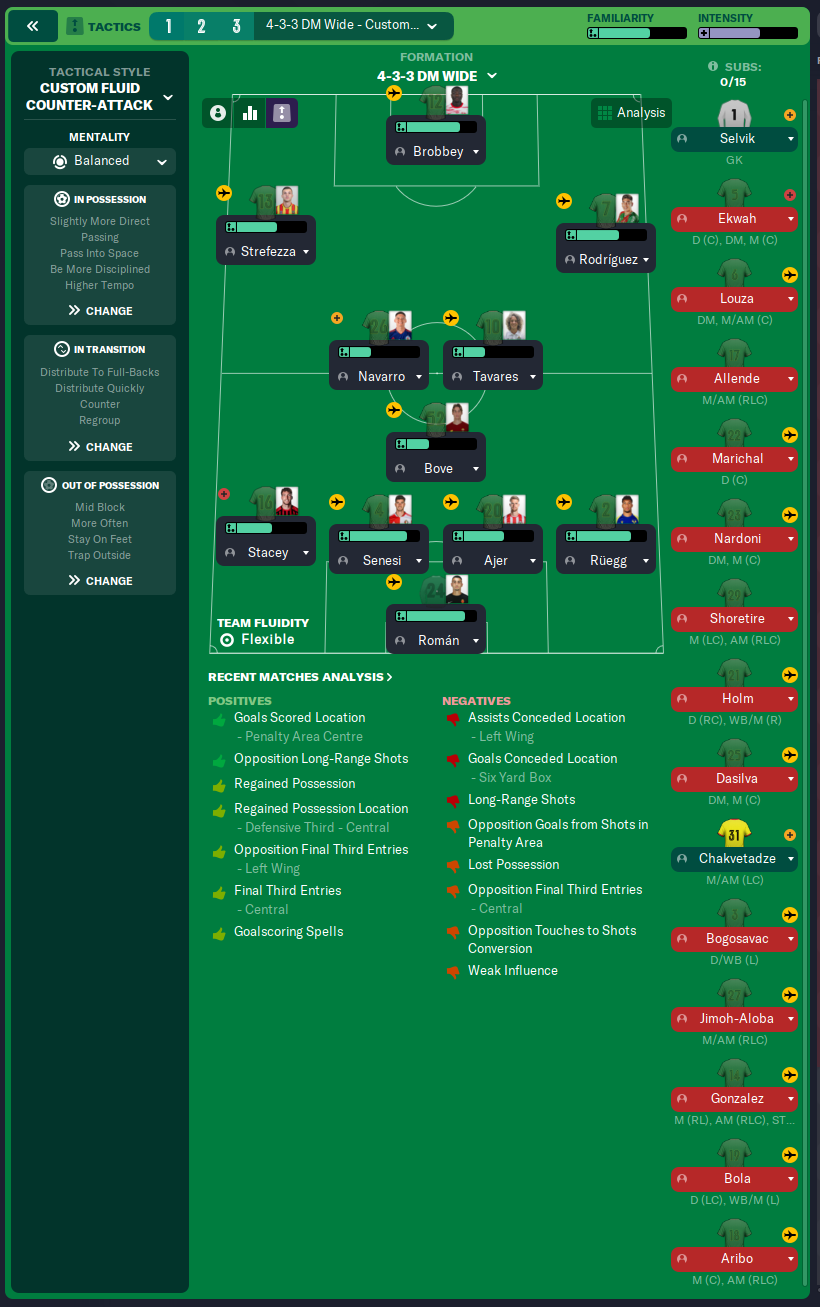
Uploaded Tactic
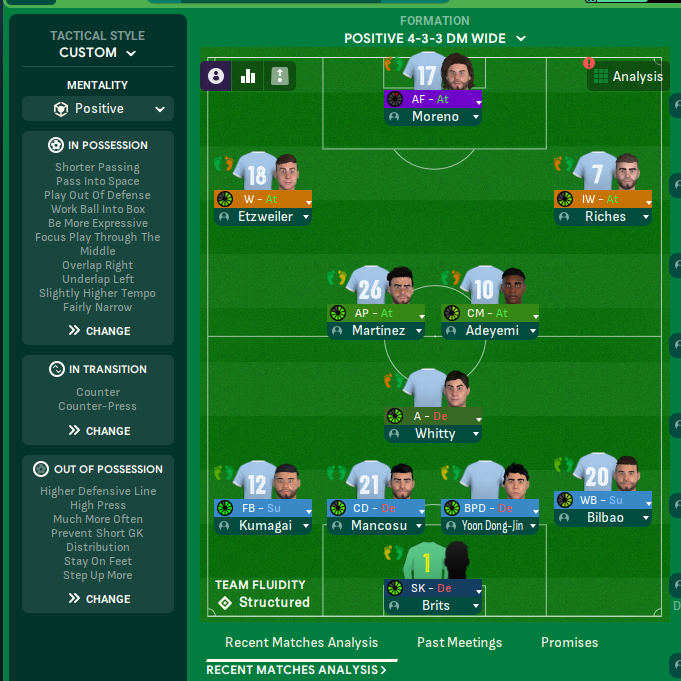
Formation & Style
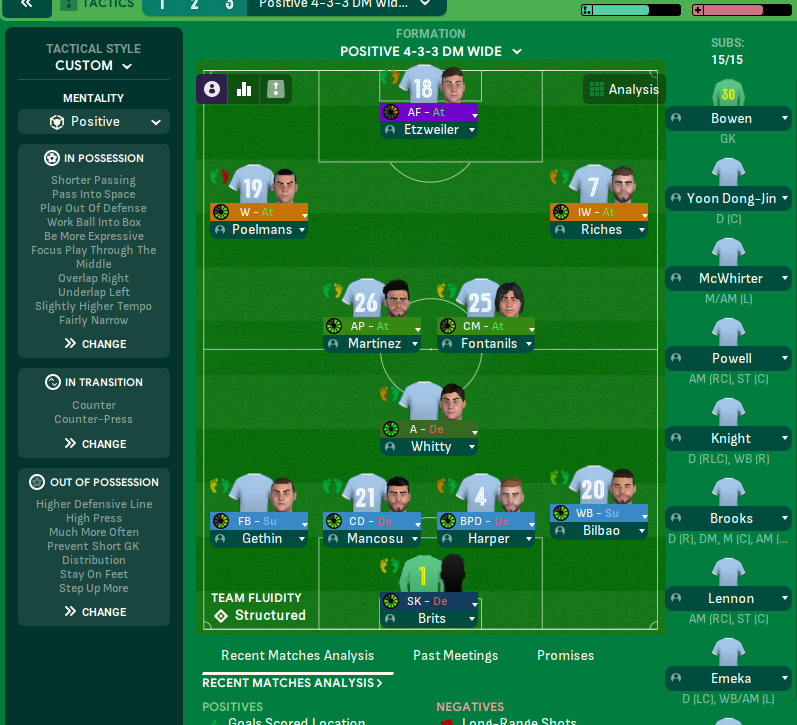
Tactical Style:Custom
Mentality:Positive
Formation:4-3-3 DM Wide
Team Fluidity:Structured
In Possession
Shorter Passing
Pass Into Space
Play Out of Defence
Work Ball Into Box
Be More Expansive
Focus Play Through The Middle
Overlap Right
Underlap Left
Slightly Higher Tempo
Fairly Narrow
In Transition
Counter
Counter-Press
Out of Possession
Higher Defensive Line
High Press
Prevent Short GK Distribution
Stay On Feet
Step Up More
Team Shape Without Ball
Shape:4-3-3
Description:A solid compact shape, applying pressure with a higher defensive line and a coordinated pressing effort.
Evidence:Higher Defensive Line and High Press suggest an organized defense seeking to win the ball high up the pitch.
Team Shape With Ball
Shape:4-3-3
Description:The wide players stretch the opposition, providing space for central players to exploit.
Evidence:Overlap on the right side and emphasis on attacking width support this formation's attacking intent.
Phase Description
Attacking Play
Focus on possession with structured build-up play, utilizing width and quick interplay in the attacking third.
Defensive Transition
Quickly transition to pressing the opposition to regain possession in advanced areas.
Main Focus
Utilizing width to create overloads and working the ball into the box efficiently.
Key Strengths
Dynamic Attacking Play
Utilizes a fluid front three that can interchange and penetrate defensive lines effectively.
Midfield Control
Balanced midfield with support and attacking capabilities ensures dominance in central areas.
Width and Overlapping Play
Full-backs and wingers create space and options in the final third.
Conflicting Directions
High Defensive Line with Counter-Press
Risk of being vulnerable to quick counter-attacks if possession is lost in advanced areas.
Narrow Focus in Transition
Could struggle to exploit space on the flanks if the midfield is congested.
Positional Vulnerabilities
Increased risk of being caught out of shape during transitions if not disciplined.
Tactical Suggestions
Consider Higher Work Rate in Midfield
Adding more pressing orientation in midfield can enhance recovery of possession.
Adjust Width in Attack
Examine balance of width in play to avoid congested areas in the final third.
Introduce Flexibility in Striker Roles
Encouraging interchange between AF and IW could create confusion for defenders.
Ask Questions About Your Lineup
Related Tactics
Guides for this formation
The tactical theory behind the 4-3-3 DM Wide: roles, instructions, and the trade-offs that decide whether the system holds up.
Foundations
Understanding the 4-3-3 Formation
Master the classic 4-3-3: player roles, tactical variations, and the trade-offs that decide whether it sings or stalls.
Read guide
Player pairings
Midfield Trios
Holder, runner, creator: the role distribution rule for three-man midfields, the AMC variants, and the antipatterns that break them.
Read guide
Playing styles
Gegenpressing: A Full Guide
Klopp-style gegenpressing in FM, including squad profile, line-and-press pairing, sustainable workload, and the antipatterns to avoid.
Read guide