Uploaded Tactic
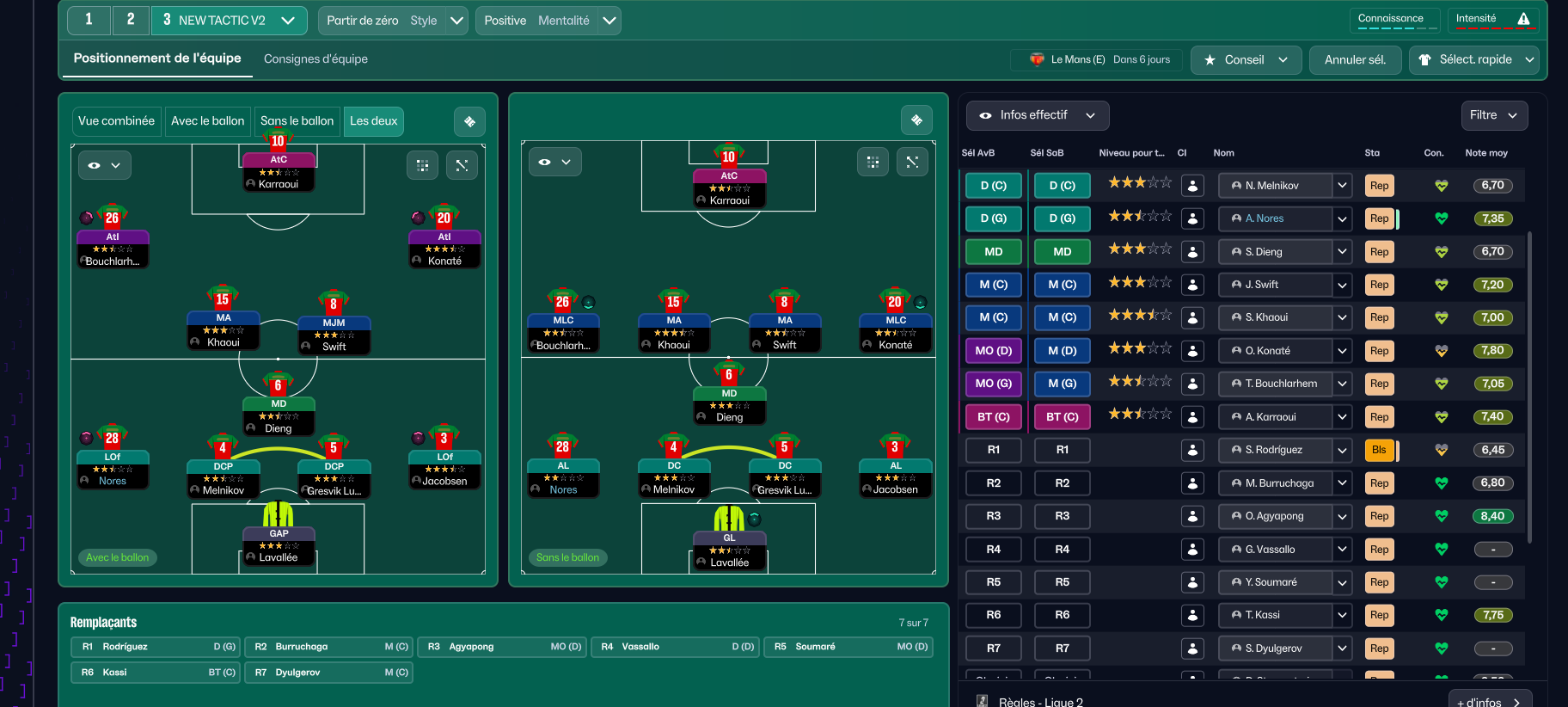
Formation & Style
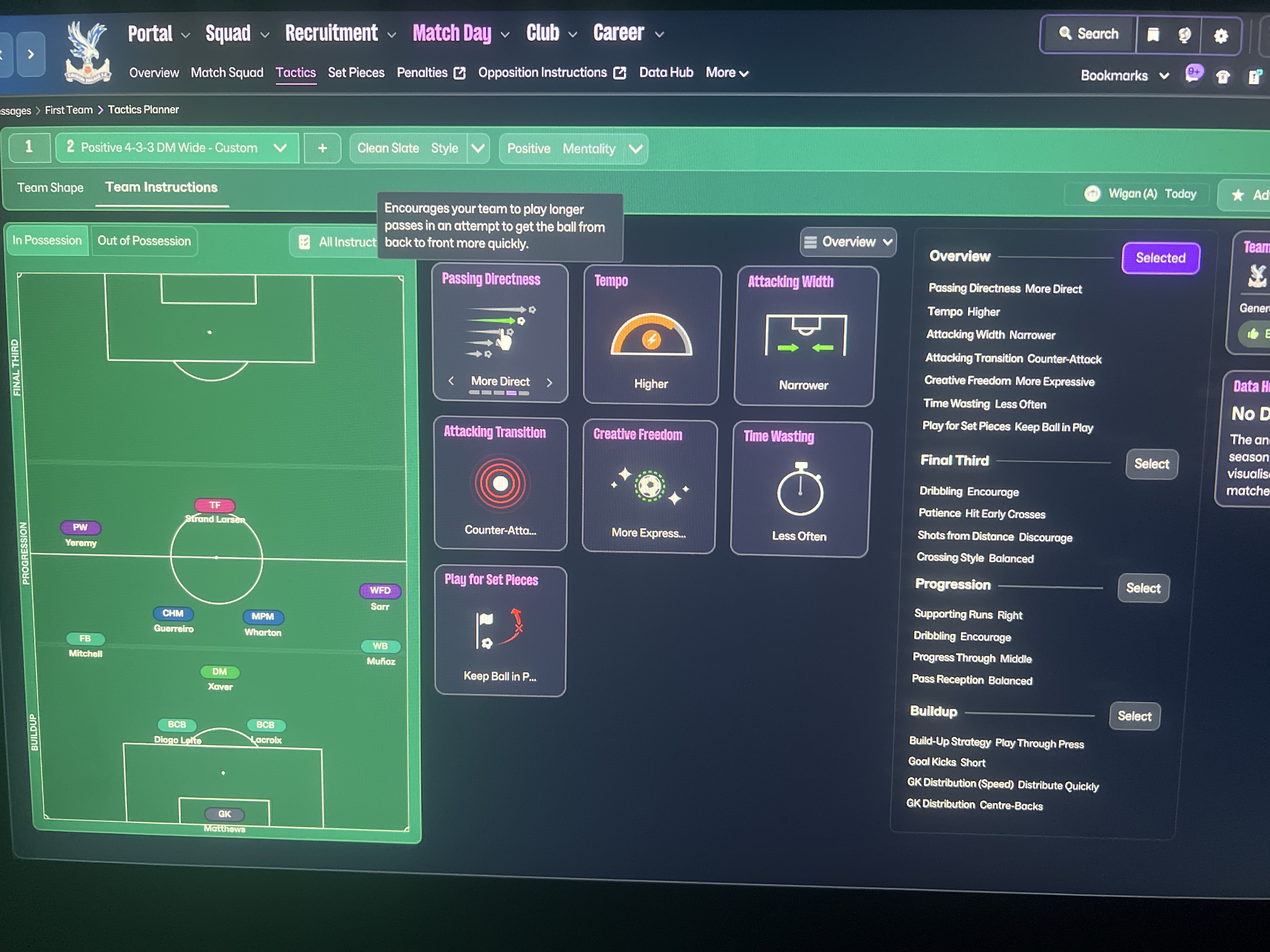
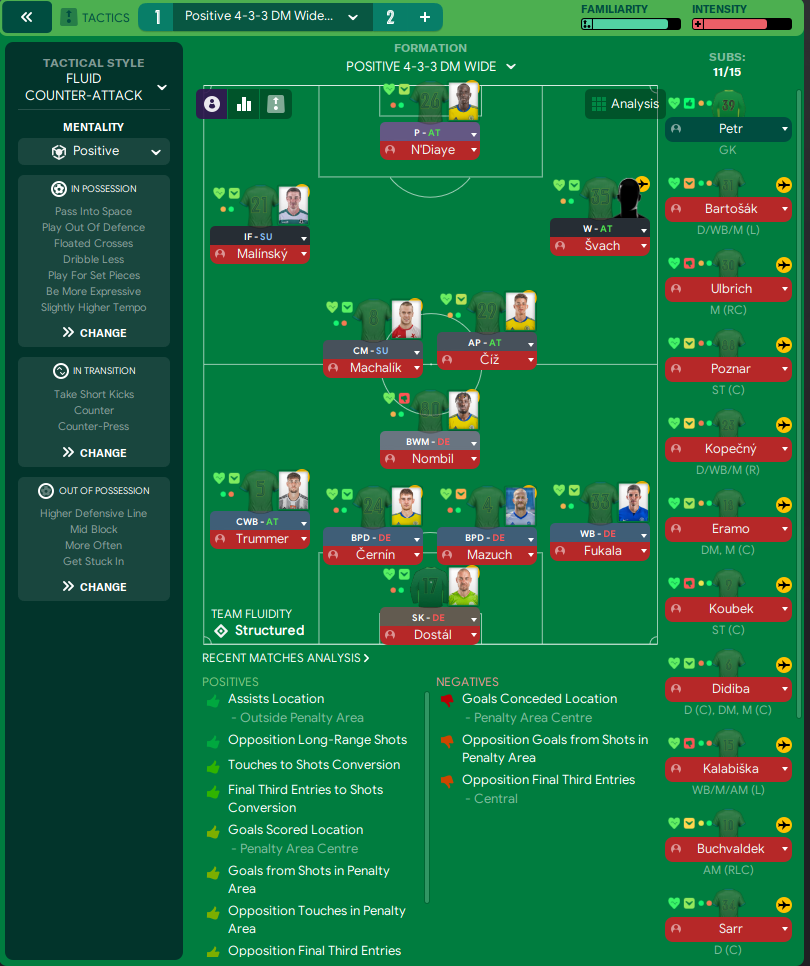
Tactical Style:Positive
Mentality:Positive
Formation:4-3-3 DM Wide
Team Fluidity:Custom
In Possession
More Direct
Higher
Narrower
More Expressive
Keep Ball in Play
In Transition
Counter-Attack
Out of Possession
Less Often
Team Shape Without Ball
Shape:Compact
Description:The defensive shape focuses on compactness to reduce space for oppositions while remaining solid with two ball-playing defenders.
Evidence:BPD roles at [2,2] and [2,4] help maintain possession under pressure.
Team Shape With Ball
Shape:Wide
Description:The team attempts to stretch the opposition through dynamic positioning of wingers and targeted forward.
Evidence:Winger at [6,1] and Inverted Forward at [6,3] create options in wide areas.
Phase Description
Attacking Play
Focuses on sharp transitions with a direct style complemented by wide attacks.
Defensive Transition
Counter-attacking upon winning the ball, emphasizing quick forward movement.
Main Focus
Utilizing width via wingers and targeting the aerial prowess of the Target Forward.
Key Strengths
Direct Play
High passing directness and tempo create frequent offensive movement.
Wide Attack Threat
Wingers are deployed to exploit spaces and deliver crosses.
Midfield Dominance
The midfield configuration ensures control over central areas.
Conflicting Directions
Lack of Width in Defensive Transitions
Narrow attacking width may limit options during defensive transition.
Defensive Vulnerabilities with Higher Tempo
Higher tempo can expose the backline if possession is lost.
Reliance on Set Piece Play
Limited options outside set pieces might hinder goal-scoring threats.
Tactical Suggestions
Increase Width in Attack
Adjust attacking width to allow for more expansive play.
Adjust Tempo During Counter-Attacks
Consider lowering tempo during counter-attacks for better control.
Reinforce Defensive Shape
Utilize a deeper defensive line to mitigate risks of being caught on the break.
Ask Questions About Your Lineup
Related Tactics
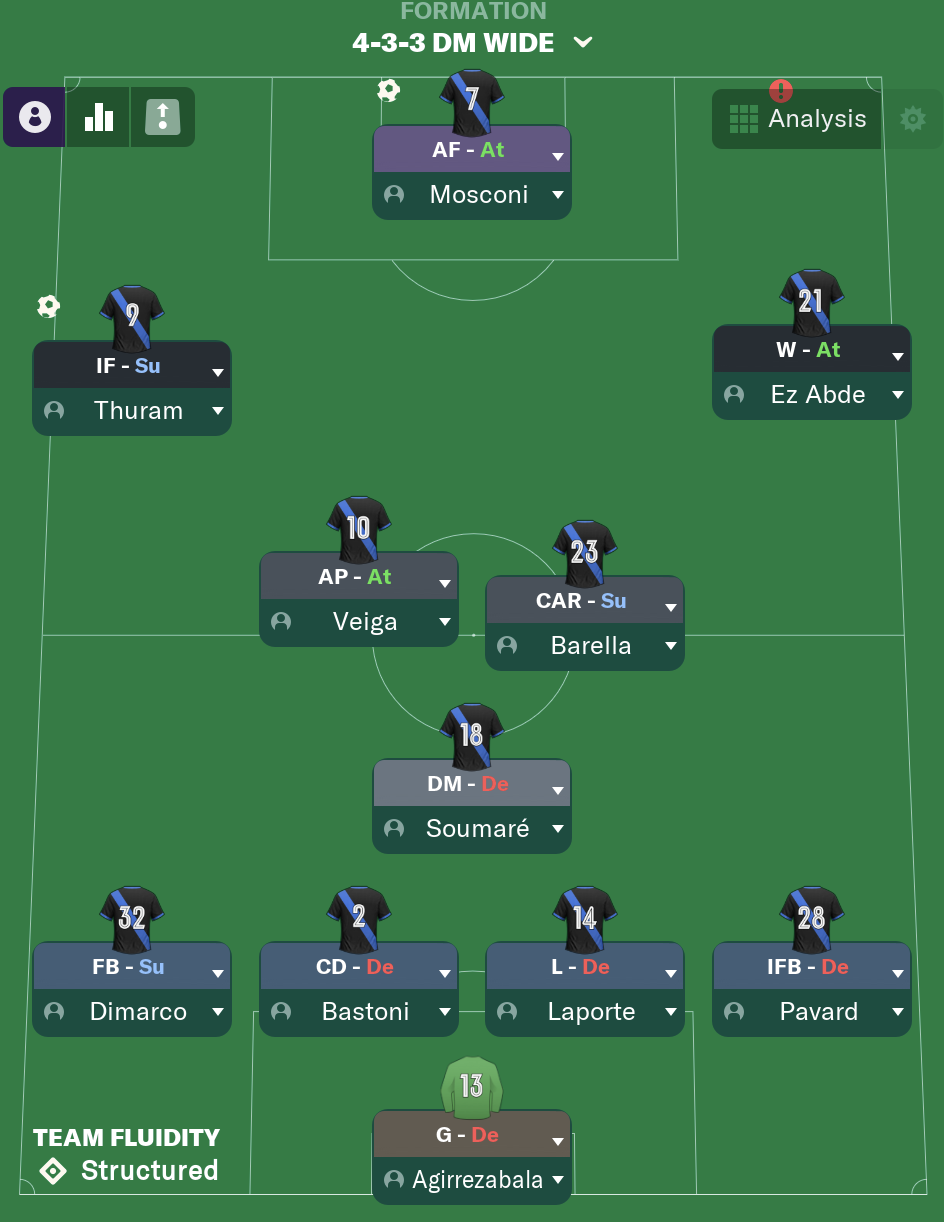
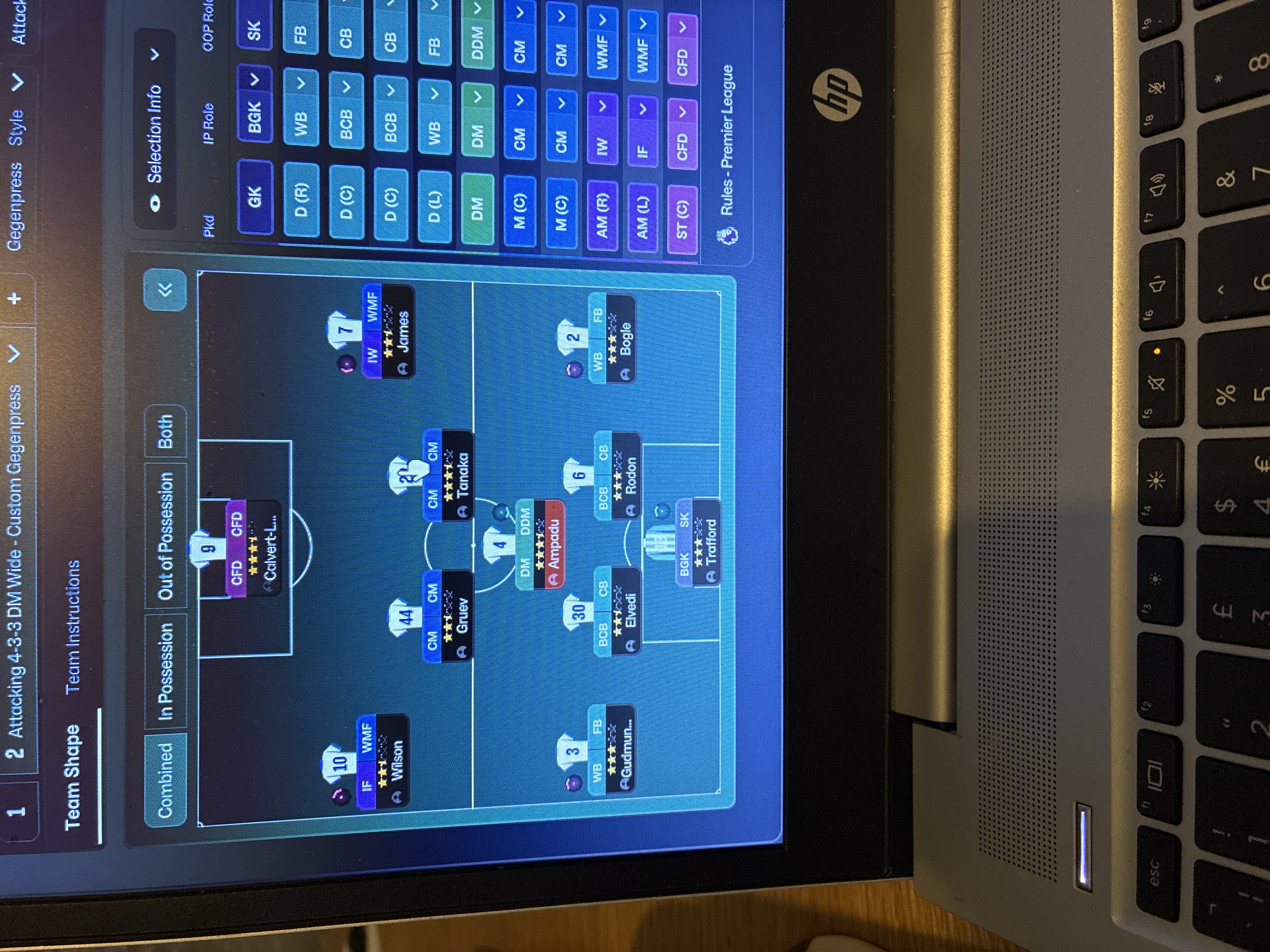
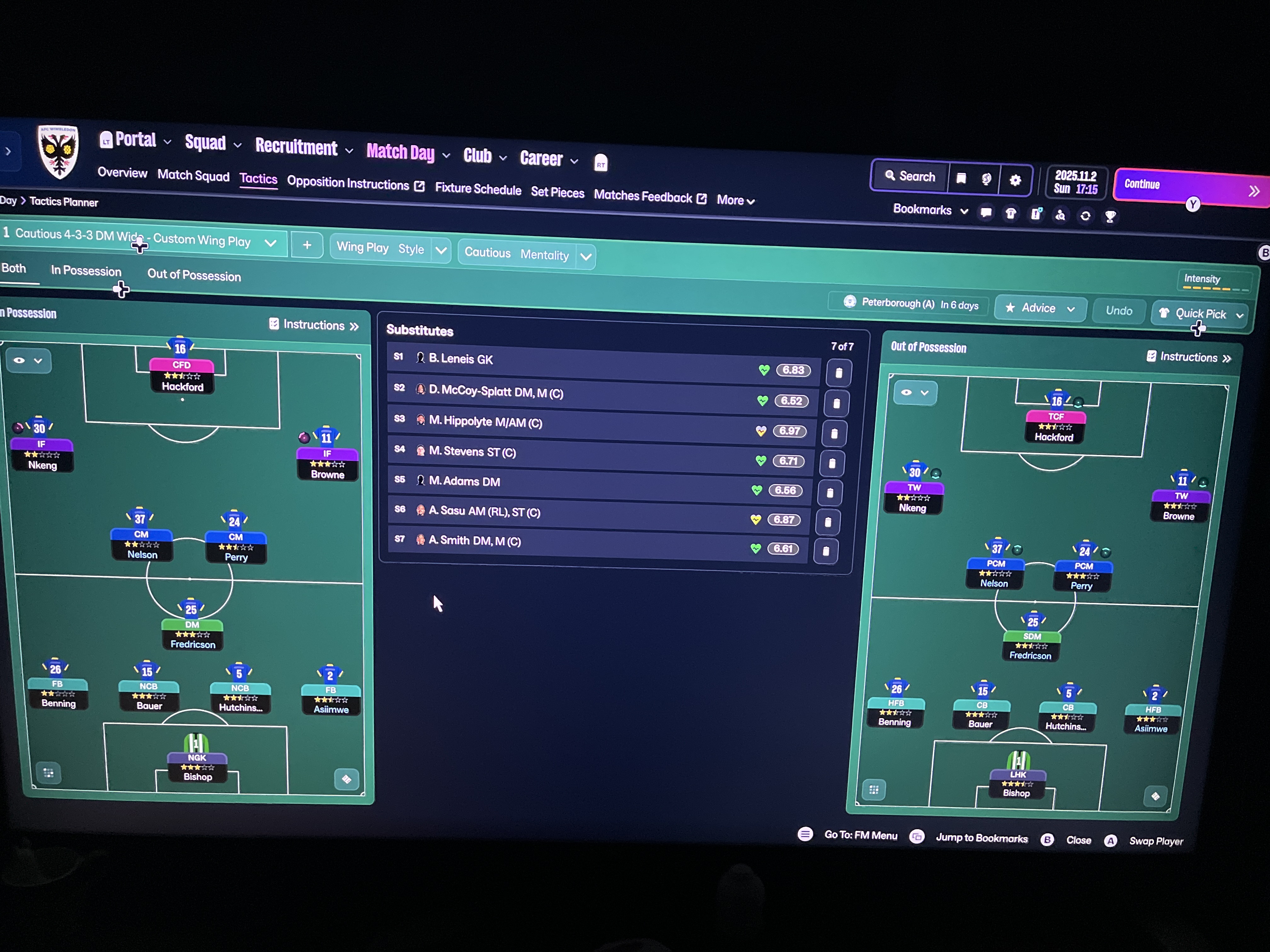
More Positive tactics
Guides for this formation
The tactical theory behind the 4-3-3 DM Wide: roles, instructions, and the trade-offs that decide whether the system holds up.
Foundations
Understanding the 4-3-3 Formation
Master the classic 4-3-3: player roles, tactical variations, and the trade-offs that decide whether it sings or stalls.
Read guide
Player pairings
Midfield Trios
Holder, runner, creator: the role distribution rule for three-man midfields, the AMC variants, and the antipatterns that break them.
Read guide
Playing styles
Gegenpressing: A Full Guide
Klopp-style gegenpressing in FM, including squad profile, line-and-press pairing, sustainable workload, and the antipatterns to avoid.
Read guide