Uploaded Tactic
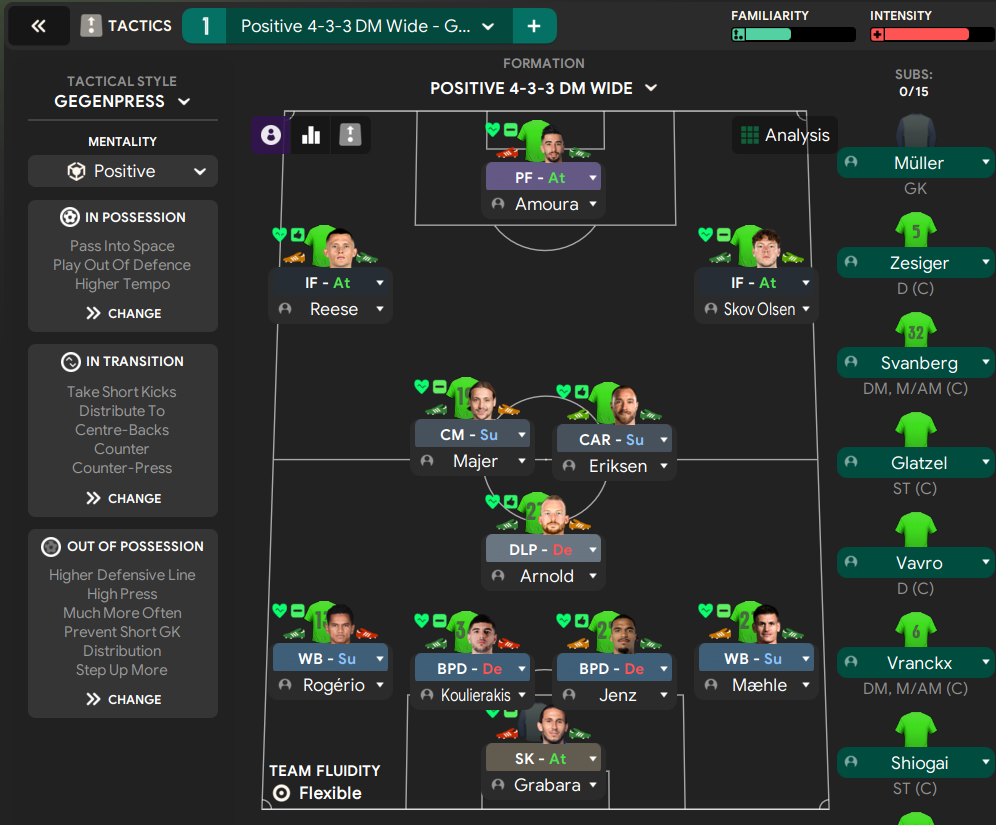
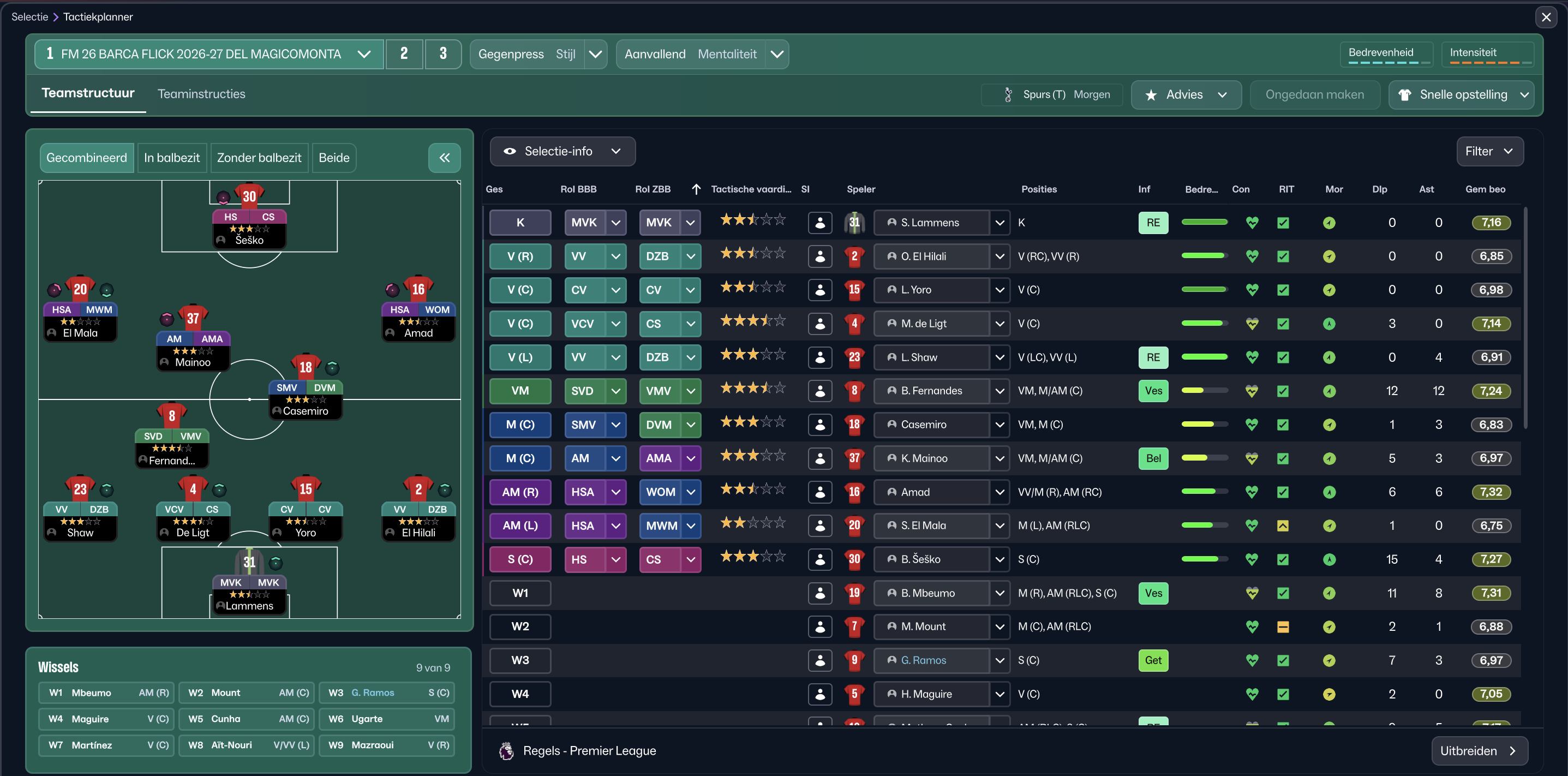
Formation & Style
Tactical Style:Gegenpress
Mentality:Positive
Formation:4-3-3 DM Wide
Team Fluidity:Flexible
In Possession
Pass Into Space
Play Out Of Defence
Higher Tempo
In Transition
Take Short Kicks
Distribute To Centre-Backs
Counter
Counter-Press
Out of Possession
Higher Defensive Line
High Press
Much More Often
Prevent Short GK Distribution
Step Up More
Team Shape Without Ball
Shape:Compact
Description:Defensive triangle formed with the DM providing cover for the backline, while the WB supports on the flanks.
Evidence:BPDs at [2,2] and [2,4] with DM at [3,3] aiding in defensive solidity.
Team Shape With Ball
Shape:Fluid
Description:A dynamic front line with priority on penetrating runs behind the defense and quick interplay.
Evidence:Inside Forwards at [5,2] and [5,4], with Pressing Forward at [6,3] facilitating attacking movements.
Phase Description
Attacking Play
Utilizes width with inside forwards to stretch the opposition, hoping to exploit the gaps between the lines.
Defensive Transition
Quickly shifts to counter-pressing to regain possession high up the pitch.
Main Focus
High-pressing style aiming for quick recoveries and rapid advancement into attack.
Key Strengths
High Pressing Intensity
The use of high pressing with a positive mentality facilitates immediate pressure on opponents to win the ball quickly.
Wide Attacking Options
Inside forwards provide width and cutting options, potentially confusing opposing defenders.
Controlled Build-Up Play
The deep-lying playmaker helps in transitioning play from defense to attack effectively.
Conflicting Directions
Lack of Defensive Midfield Cover
With a high defensive line and aggressive pressing, there could be vulnerabilities exposed on counter-attacks.
Dependence on Flanks for Attack
Heavy reliance on inside forwards could be neutralized by a well-structured defense.
Reduced Central Control
The arrangement can lead to a lack of numbers in central areas during attacking phases.
Tactical Suggestions
Adjust Defensive Line
Consider lowering the defensive line to mitigate risks of counter-attacks.
Incorporate a More Central Attacking Role
Adding a Trequartista in the AMC position could provide additional central creativity.
Rotate the Inside Forwards
Allowing inside forwards to interchange can create confusion in defensive setups.
Ask Questions About Your Lineup
Related Tactics
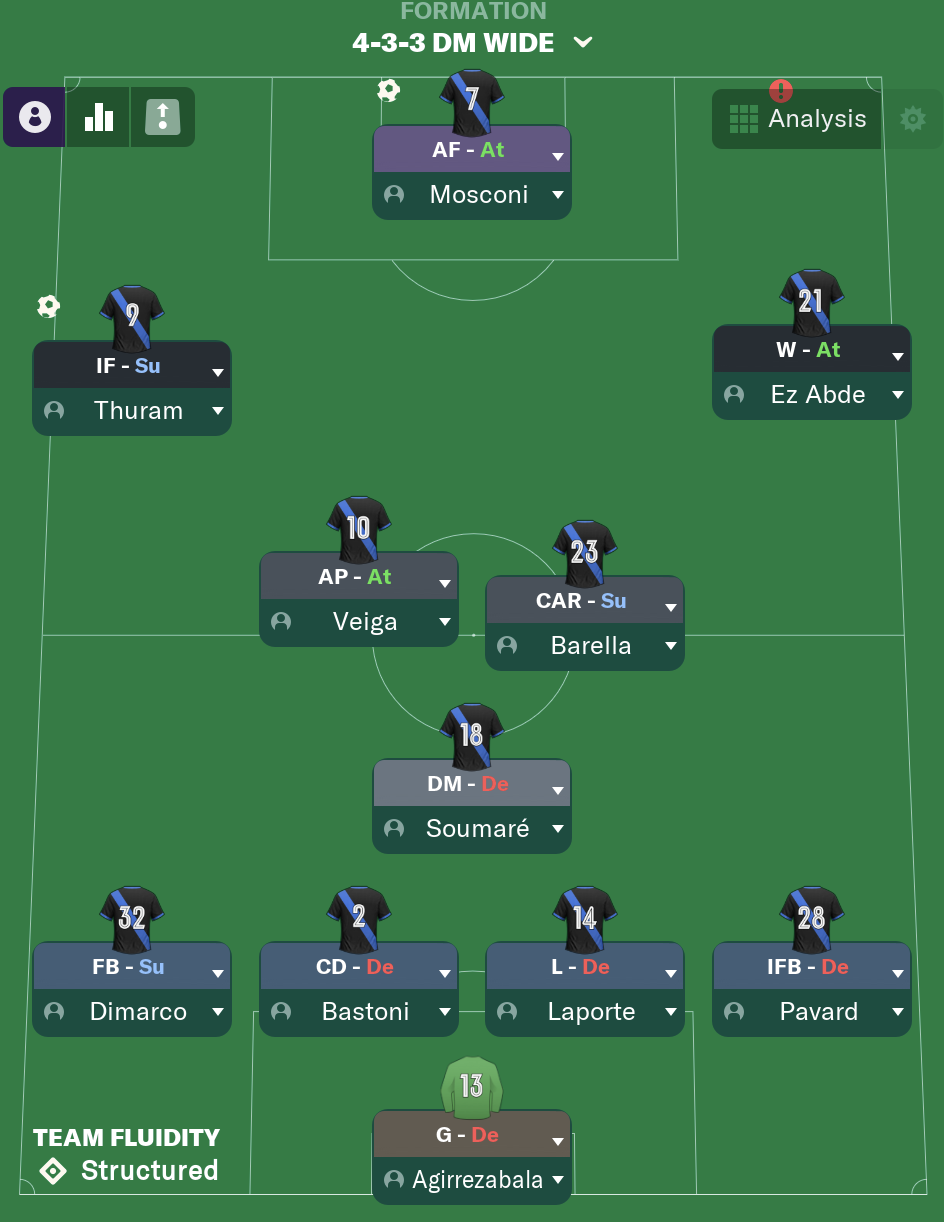
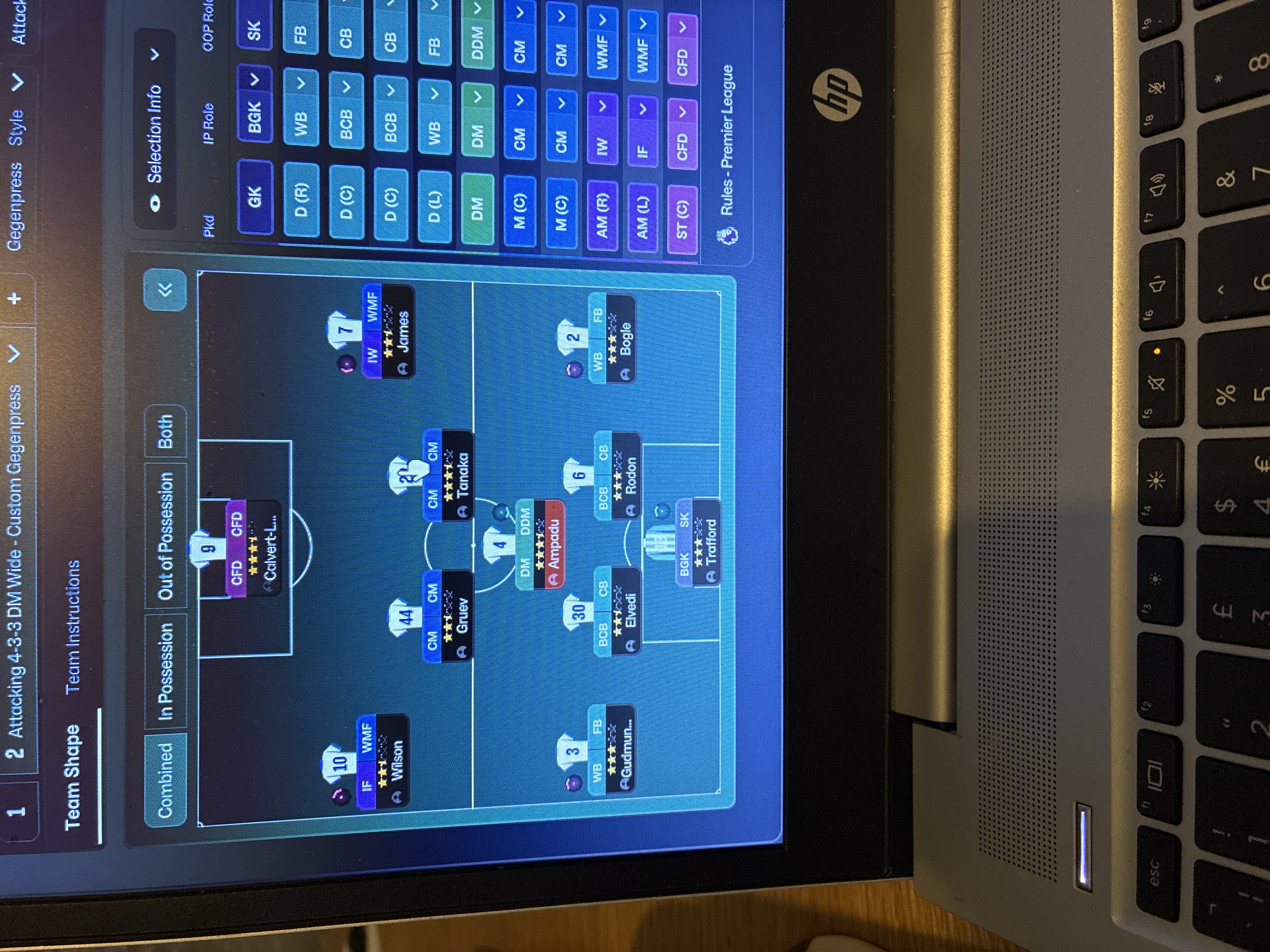
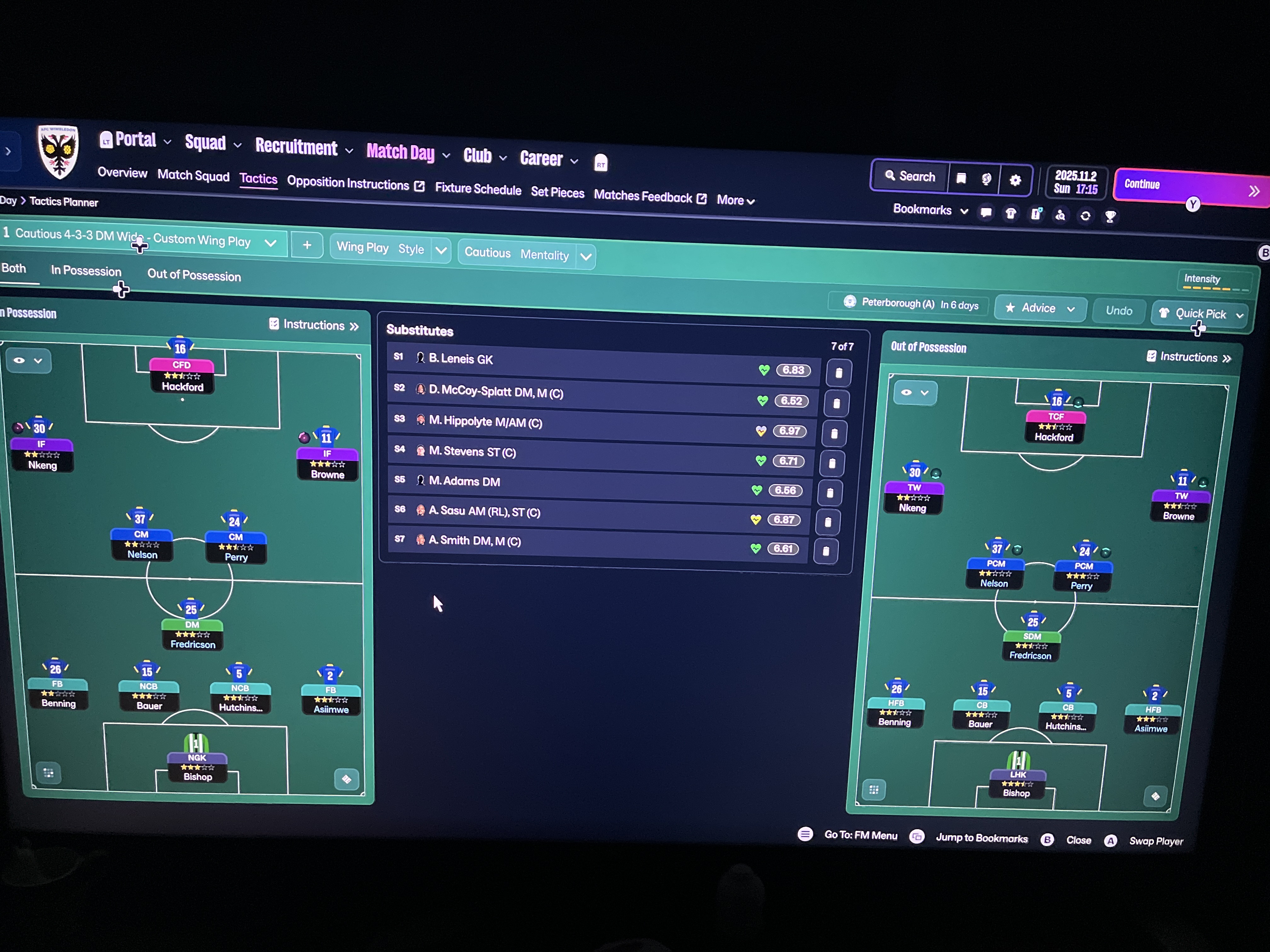
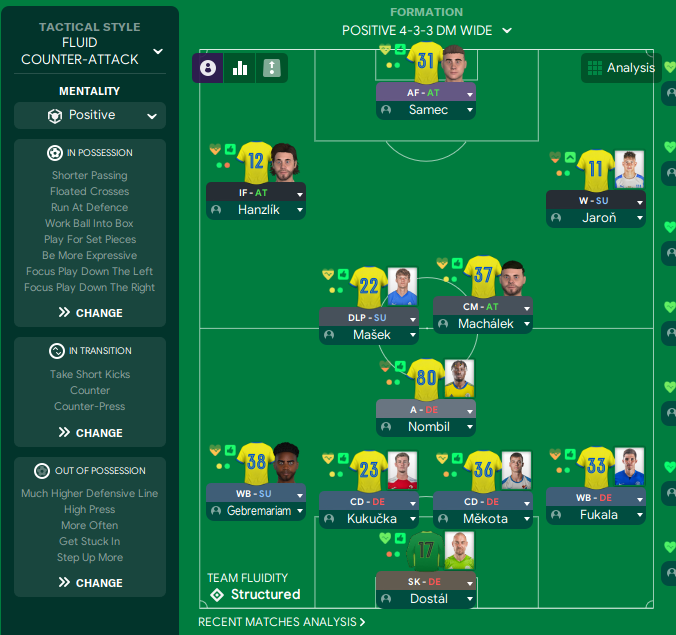
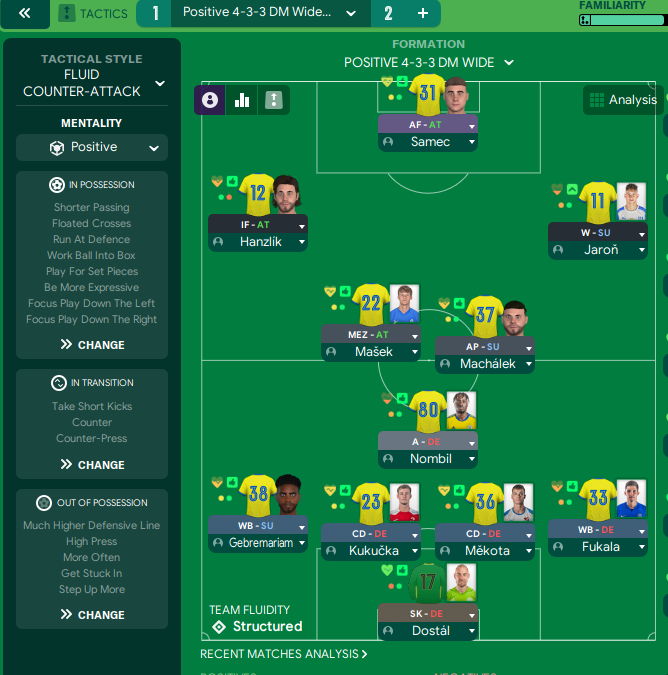
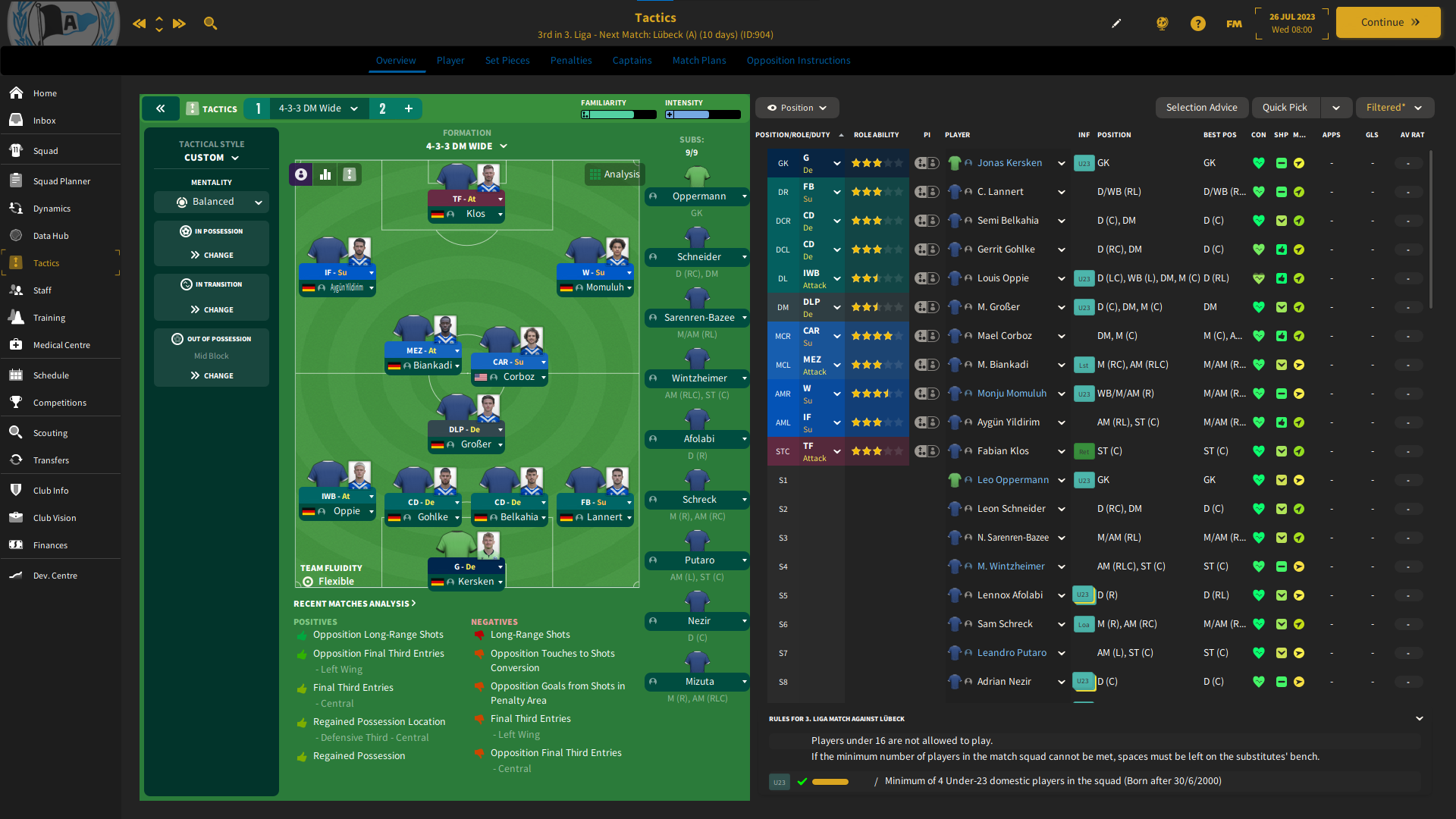
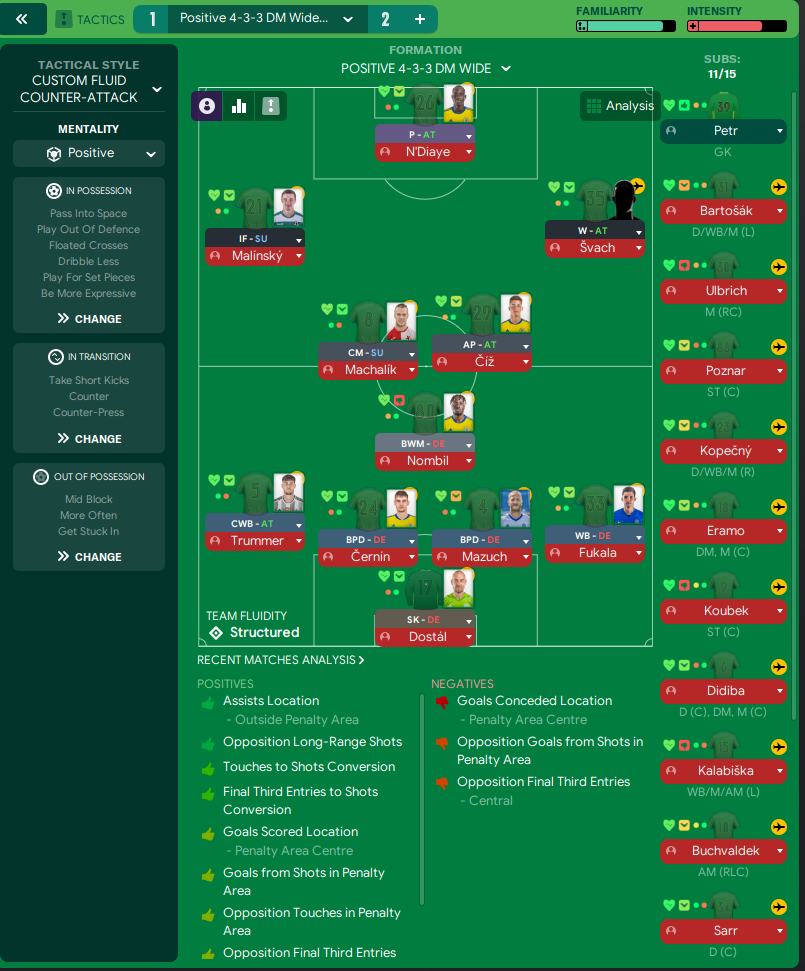
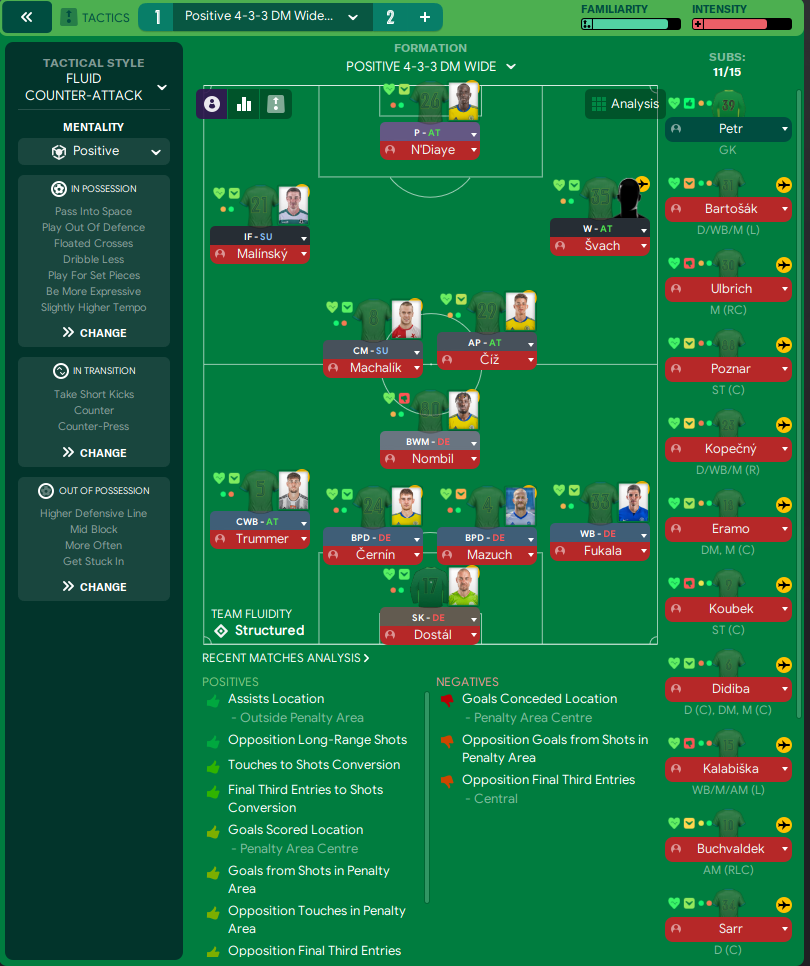
More Gegenpress tactics
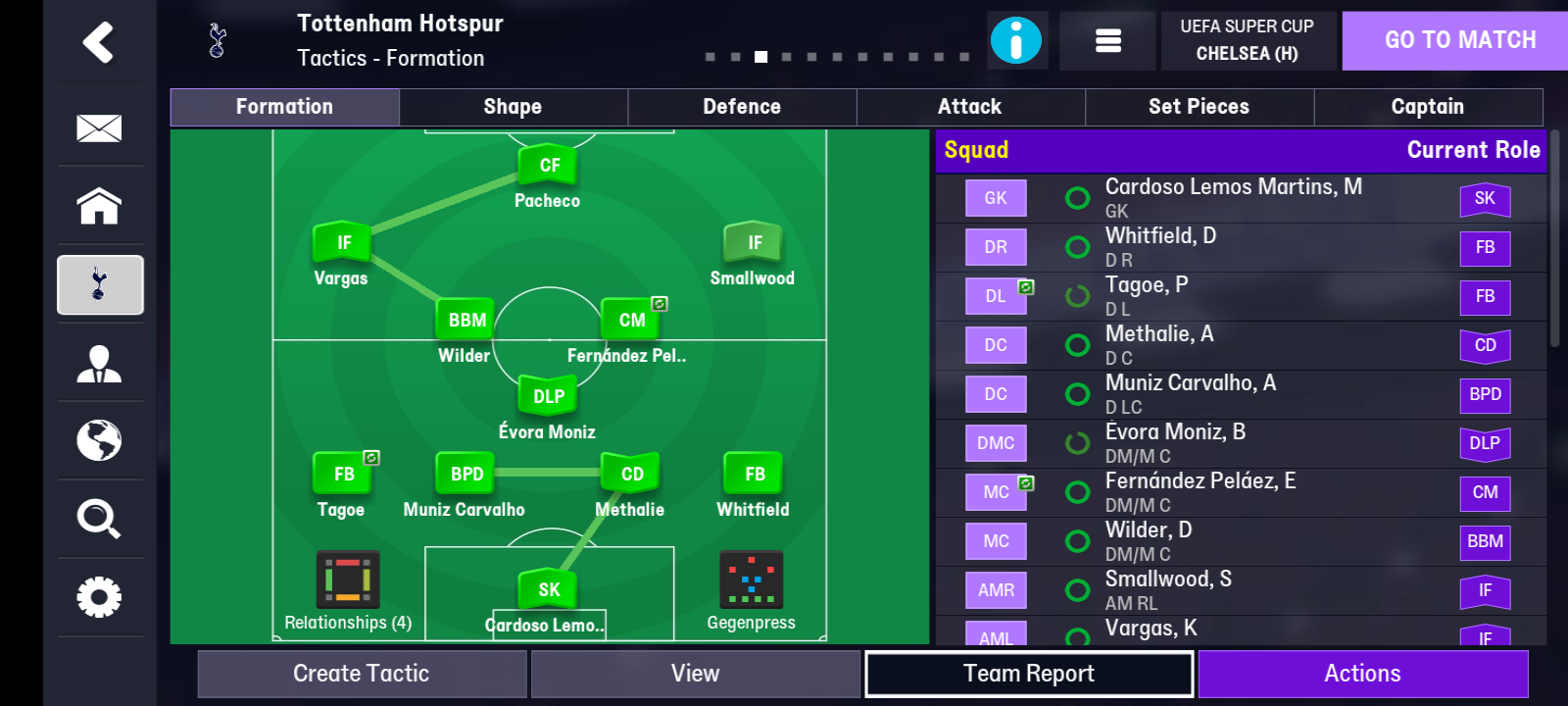
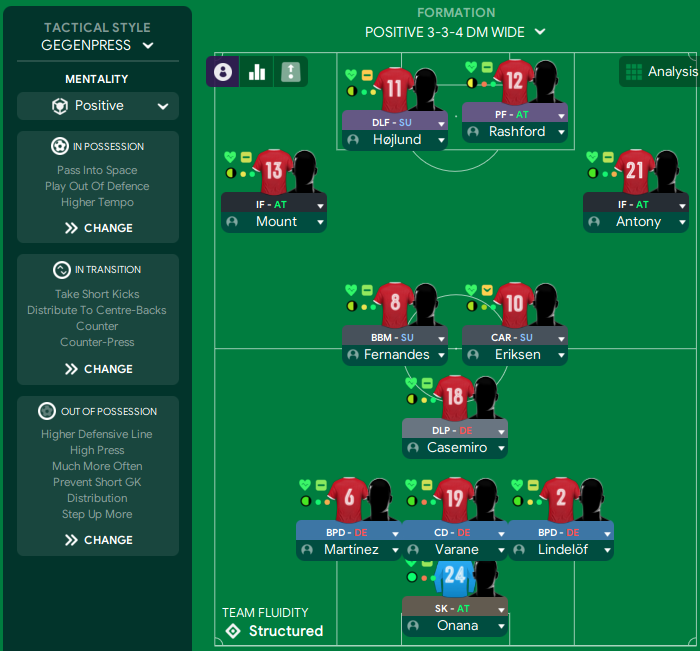
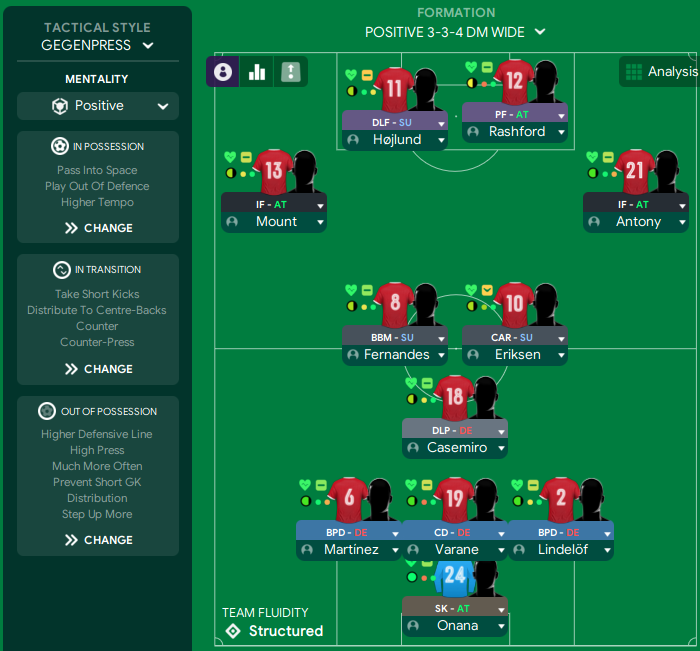
Guides for this formation
The tactical theory behind the 4-3-3 DM Wide: roles, instructions, and the trade-offs that decide whether the system holds up.
Foundations
Understanding the 4-3-3 Formation
Master the classic 4-3-3: player roles, tactical variations, and the trade-offs that decide whether it sings or stalls.
Read guide
Player pairings
Midfield Trios
Holder, runner, creator: the role distribution rule for three-man midfields, the AMC variants, and the antipatterns that break them.
Read guide
Playing styles
Gegenpressing: A Full Guide
Klopp-style gegenpressing in FM, including squad profile, line-and-press pairing, sustainable workload, and the antipatterns to avoid.
Read guide