Uploaded Tactic
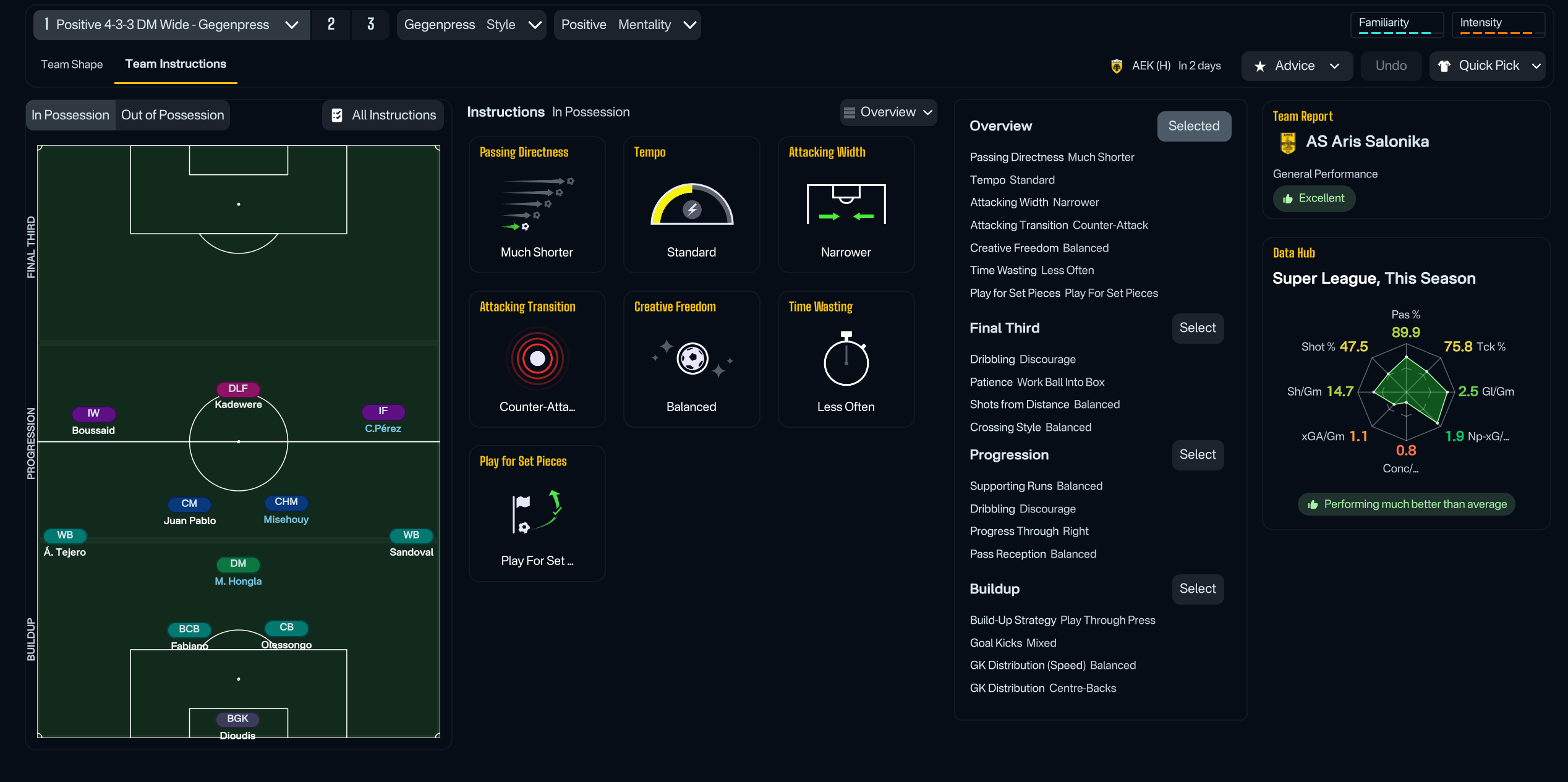
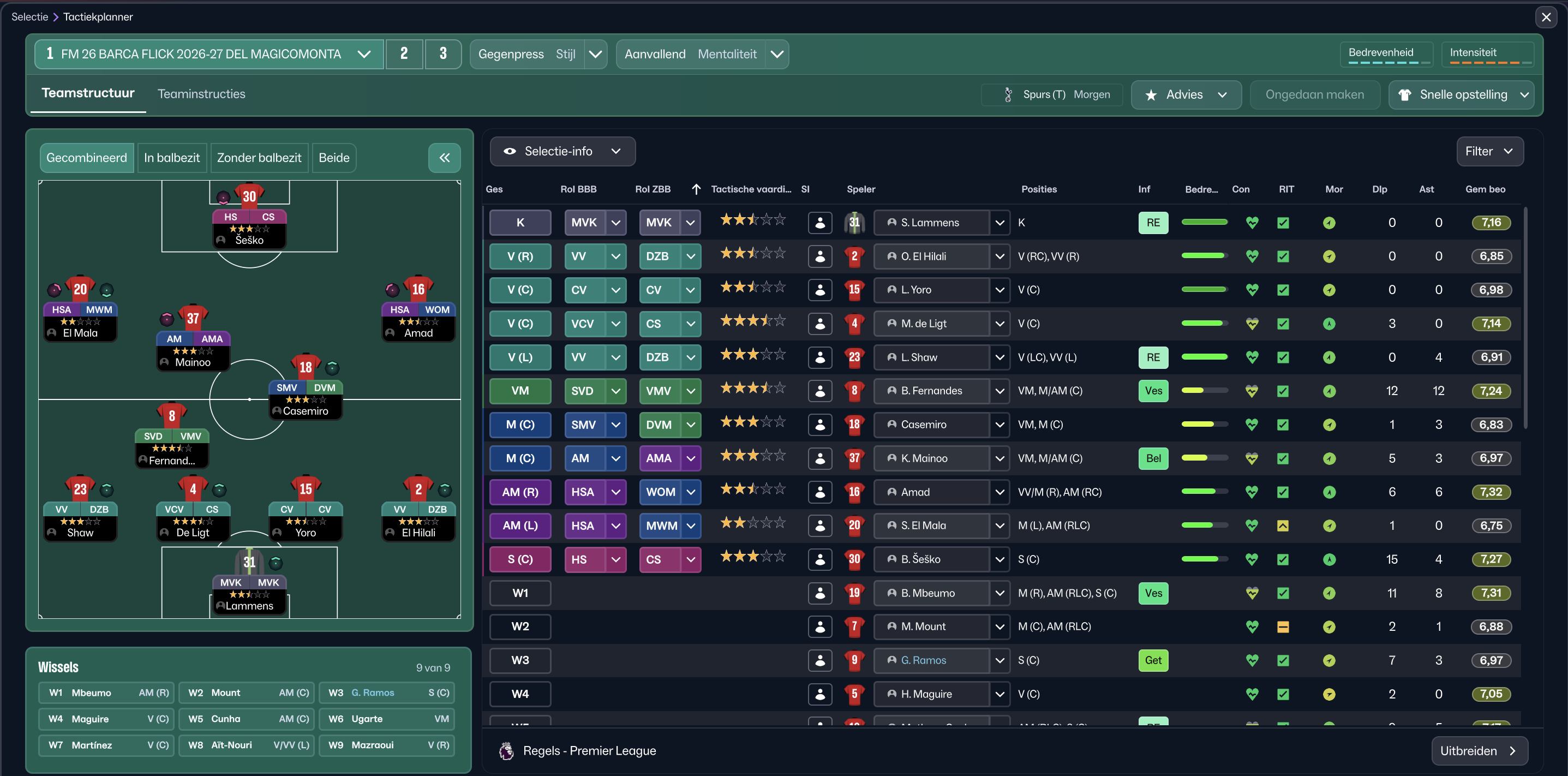
Formation & Style
Tactical Style:Gegenpress
Mentality:Positive
Formation:4-3-3 DM Wide
Team Fluidity:Structured
In Possession
Much Shorter Passing
Standard Tempo
Narrower Attacking Width
Counter-Attack
Balanced Creative Freedom
Less Often Time Wasting
Play For Set Pieces
In Transition
Counter-Attack
Out of Possession
Defensive Line:Higher
Line of Engagement:Higher
Pressing Intensity:More Urgent
Offside Trap:Yes
Team Shape Without Ball
Shape:Compact
Description:Defensive lines maintain compact shape with emphasis on preventing central penetration.
Evidence:DM at [3,3] and CBs at [2,2] & [2,3] encouraging solidity.
Team Shape With Ball
Shape:Fluid Wide Attack
Description:Utilizes width through overlapping wing-backs and inside forwards creating goal-scoring chances.
Evidence:WB at [2,1] & [2,5] combined with IF & IW to stretch the opposition.
Phase Description
Attacking Play
Utilizes short passing and swift counter-attack transitions to capitalize on defensive disorganization.
Defensive Transition
Focuses on regaining possession quickly through intense pressing.
Main Focus
Creating goal-scoring opportunities through quick ball movement and exploiting width.
Key Strengths
Counter-Attacking Threat
Effective quick transitions using the pace of the front three.
Midfield Control
Strong presence in midfield with a structured support system across the central area.
Width and Depth
Wide players create depth and stretch the opposition's defense.
Conflicting Directions
Too Narrow Play
With an emphasis on narrower attacking width, it may limit the full-backs' effectiveness if over-reliant on central play.
Inconsistent Pressing
Risk of leaving spaces in defense when pressing intensely if players are not coordinated.
Potential for Miscommunication
With varied roles in midfield, players may struggle to find their positions or roles during fluid movement.
Tactical Suggestions
Wider Attacking Width
Consider adjusting to a wider attacking width to better utilize wingers and full-backs.
Enhanced Counter-Press
Encourage more aggressive pressing immediately after losing possession.
Utilize Set Pieces
Leverage the option of set-piece scenarios for additional goal threat.
Ask Questions About Your Lineup
Related Tactics
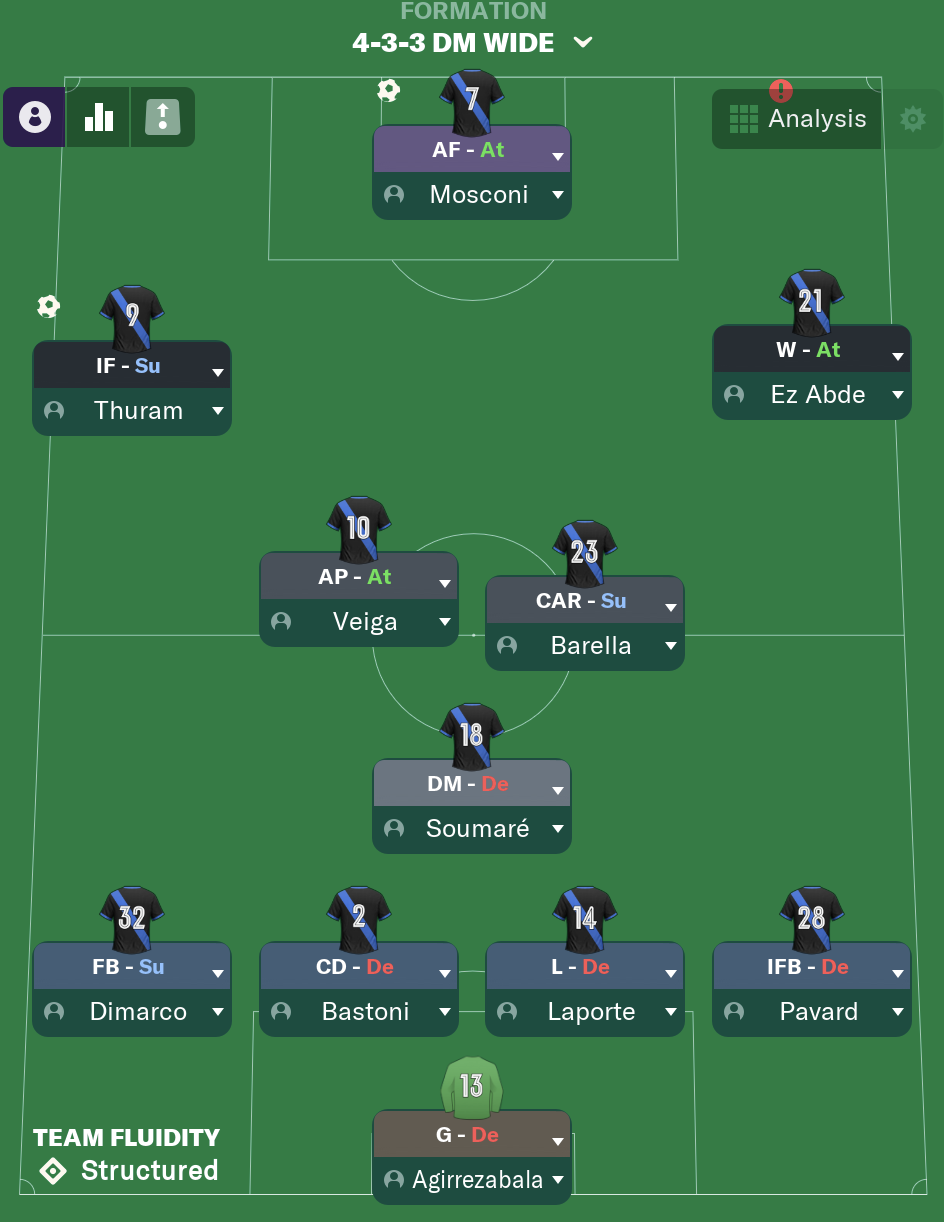
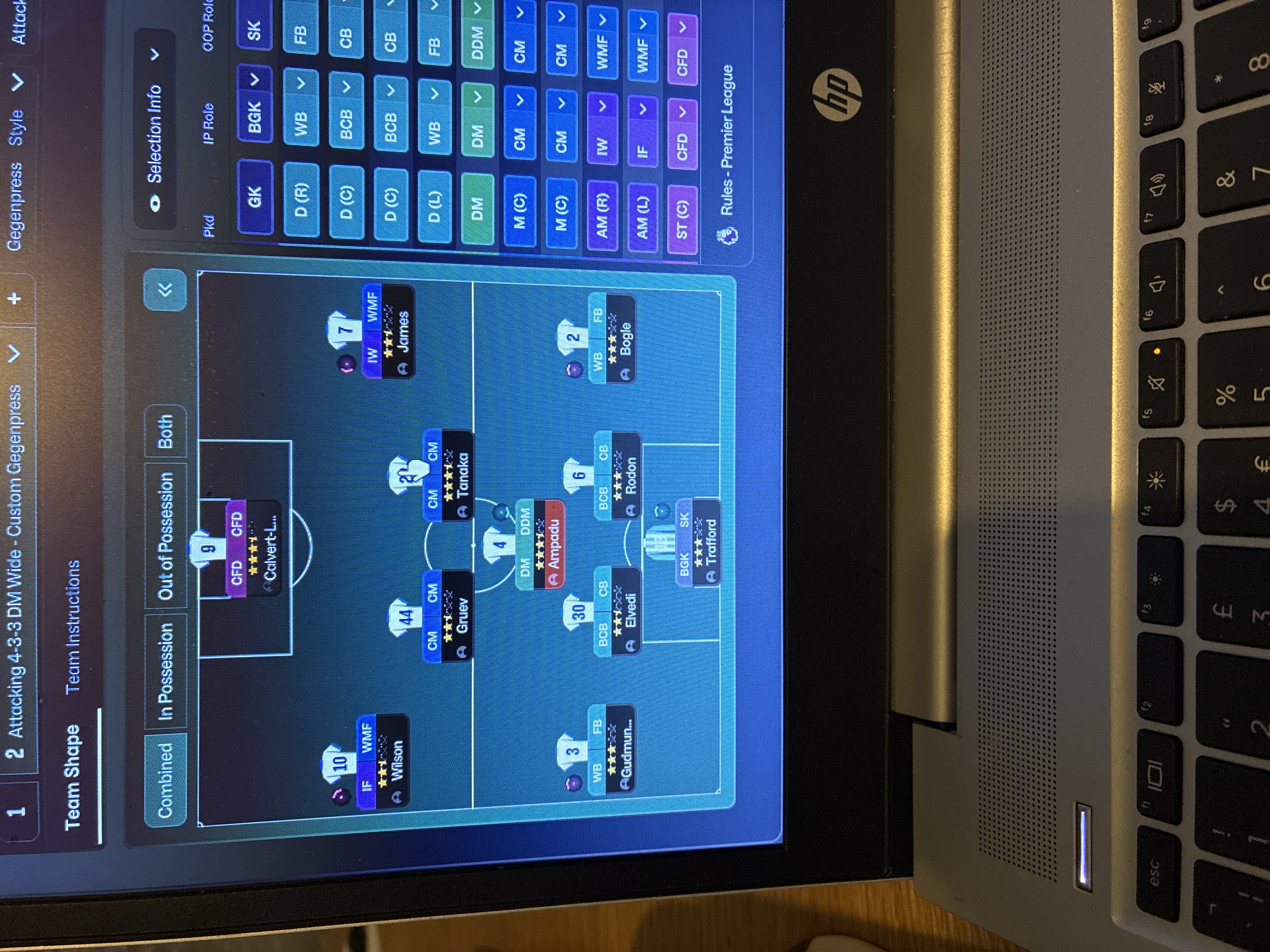
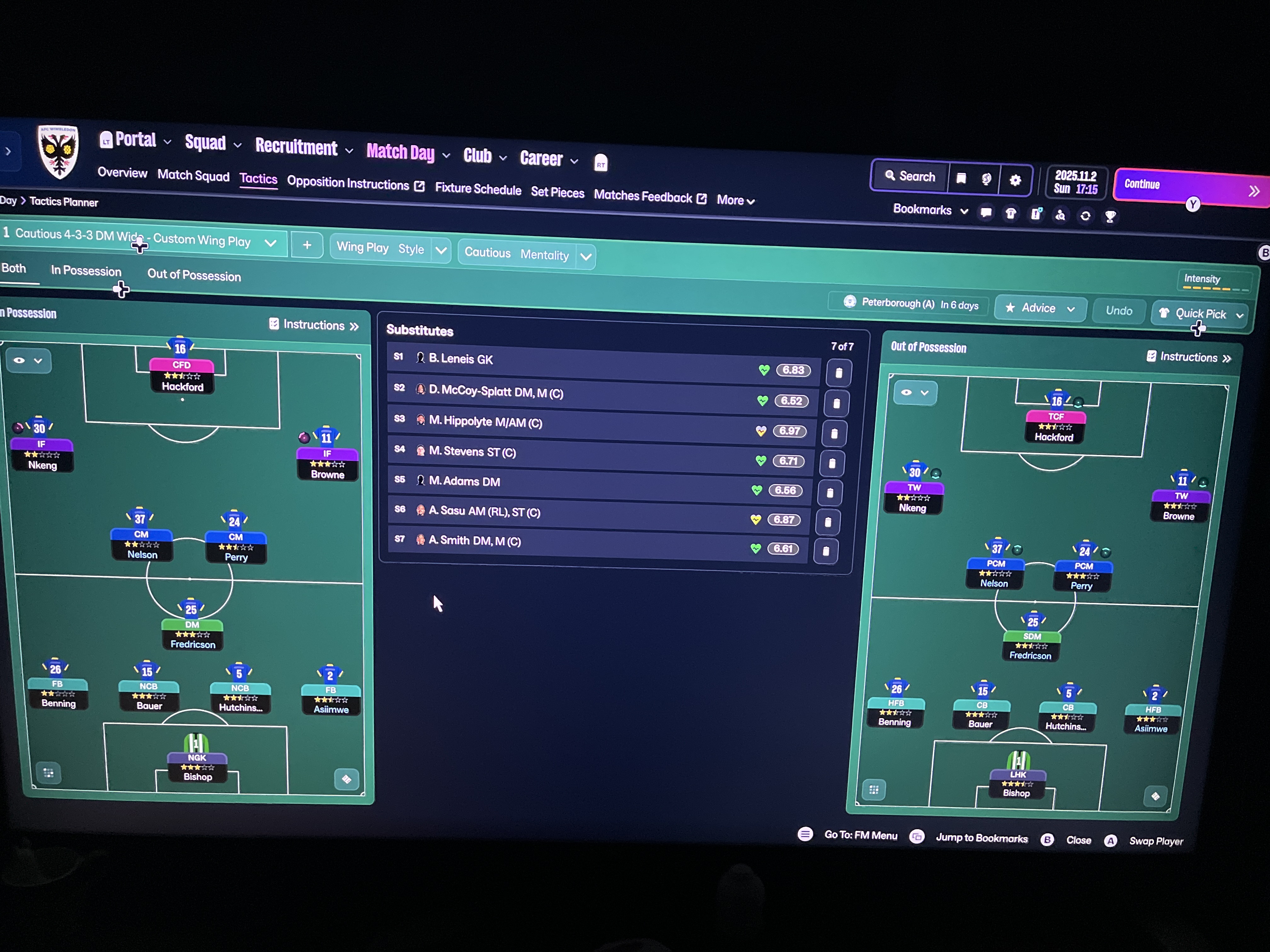
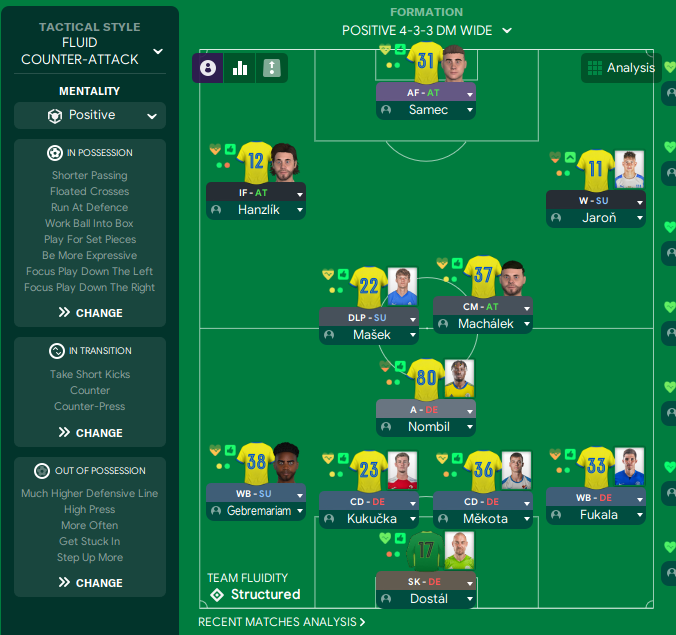
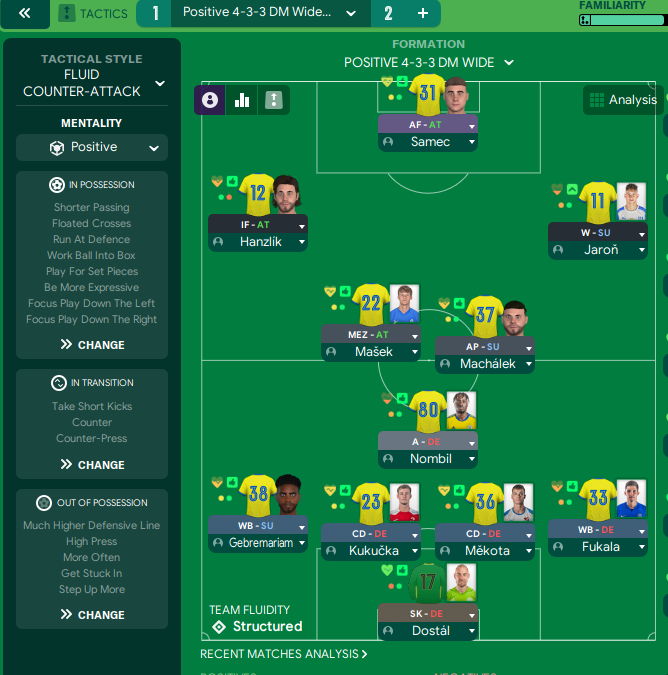
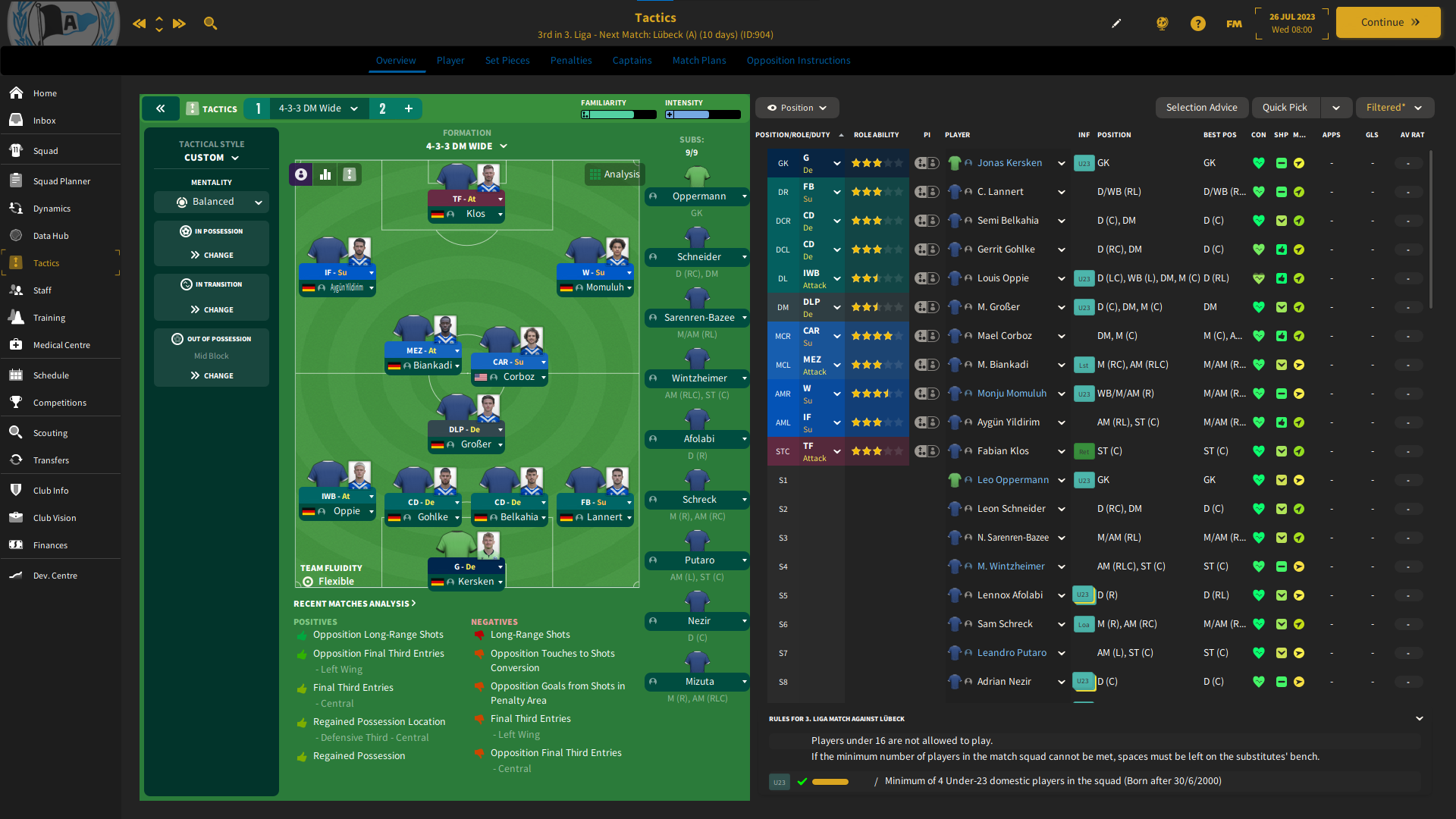
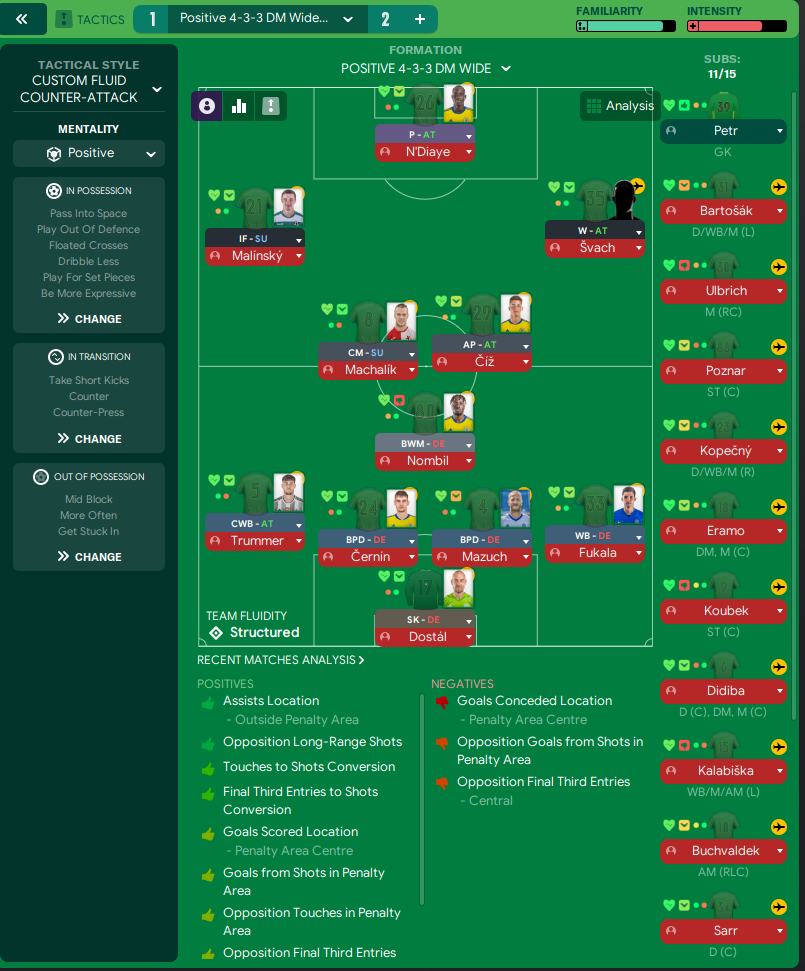
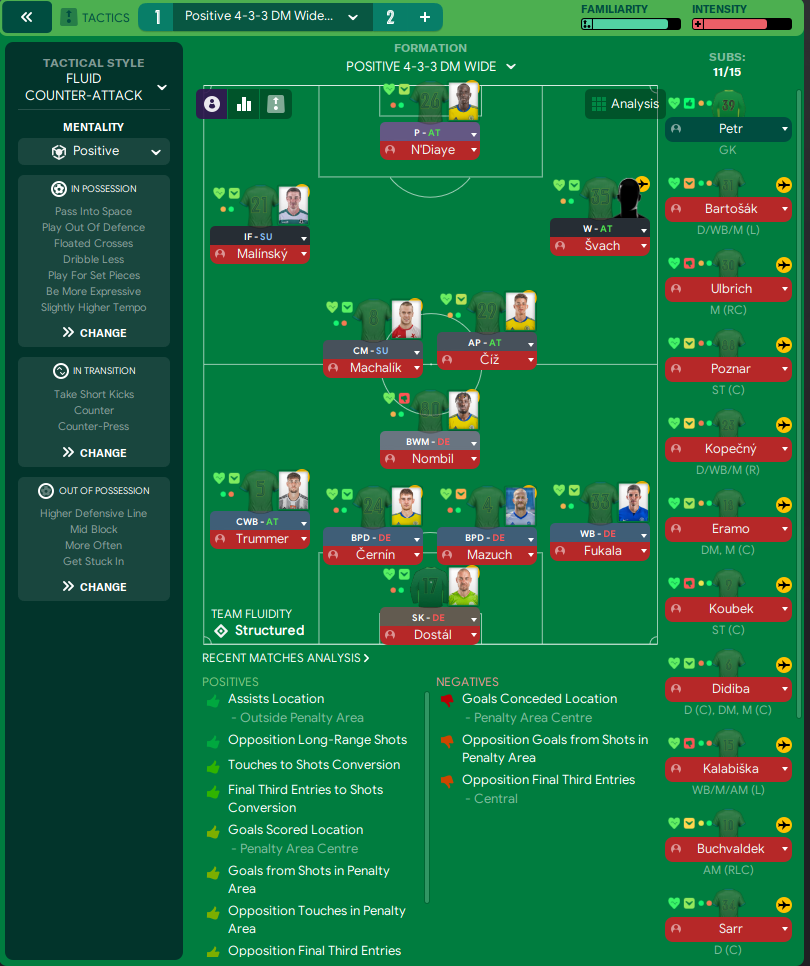
More Gegenpress tactics
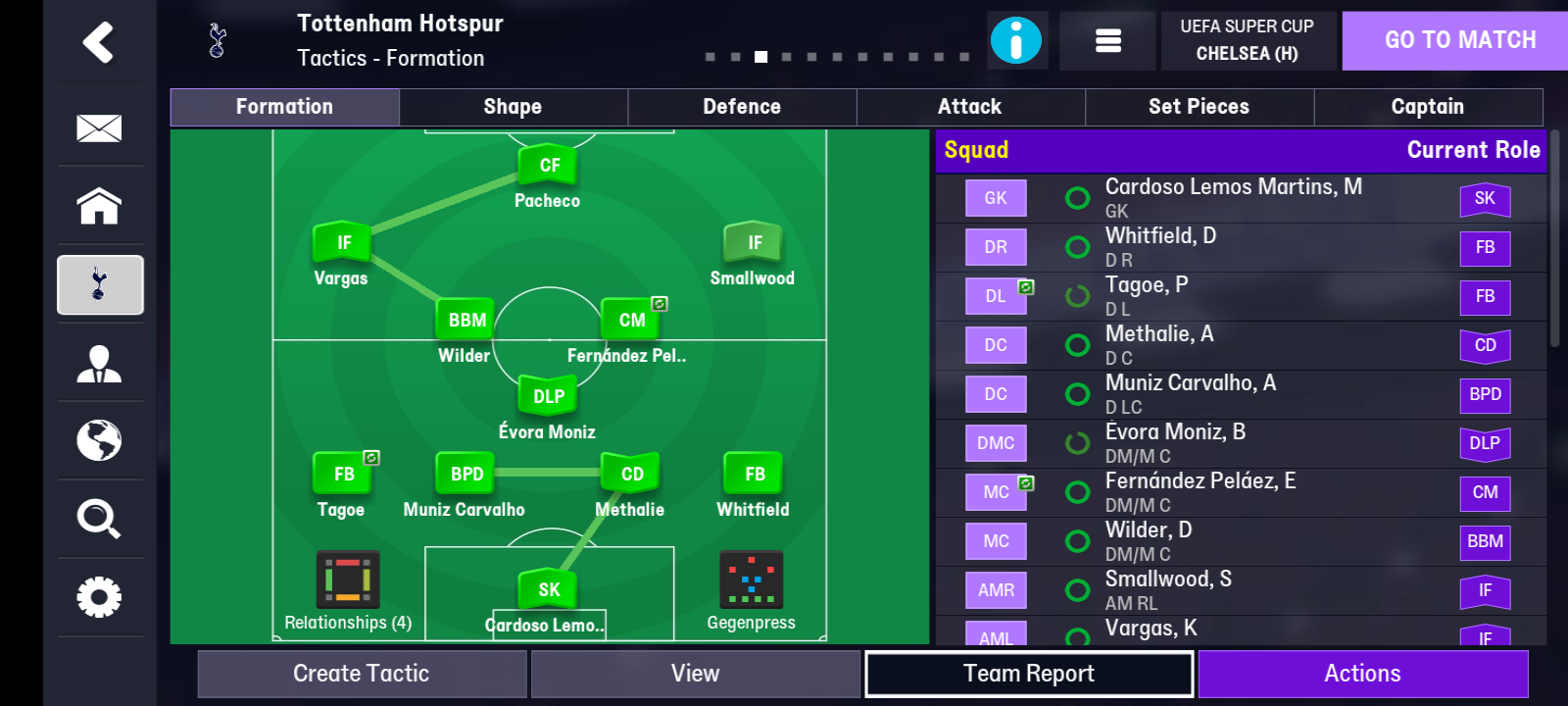
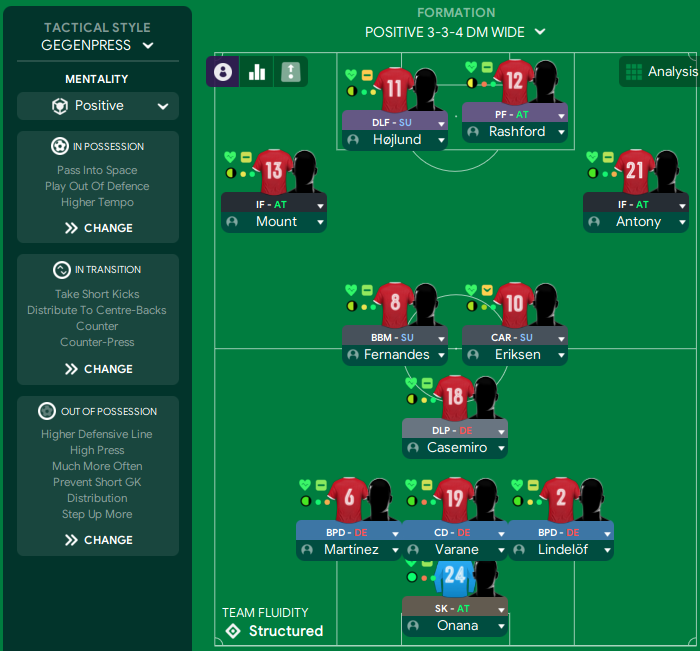
Guides for this formation
The tactical theory behind the 4-3-3 DM Wide: roles, instructions, and the trade-offs that decide whether the system holds up.
Foundations
Understanding the 4-3-3 Formation
Master the classic 4-3-3: player roles, tactical variations, and the trade-offs that decide whether it sings or stalls.
Read guide
Player pairings
Midfield Trios
Holder, runner, creator: the role distribution rule for three-man midfields, the AMC variants, and the antipatterns that break them.
Read guide
Playing styles
Gegenpressing: A Full Guide
Klopp-style gegenpressing in FM, including squad profile, line-and-press pairing, sustainable workload, and the antipatterns to avoid.
Read guide