Uploaded Tactic
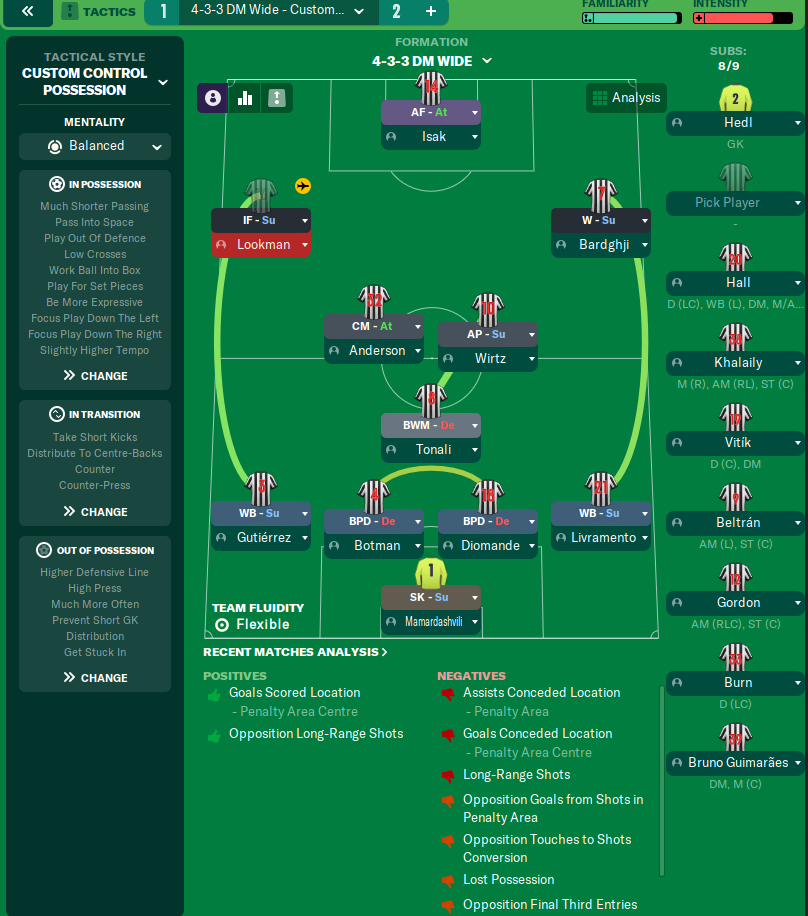
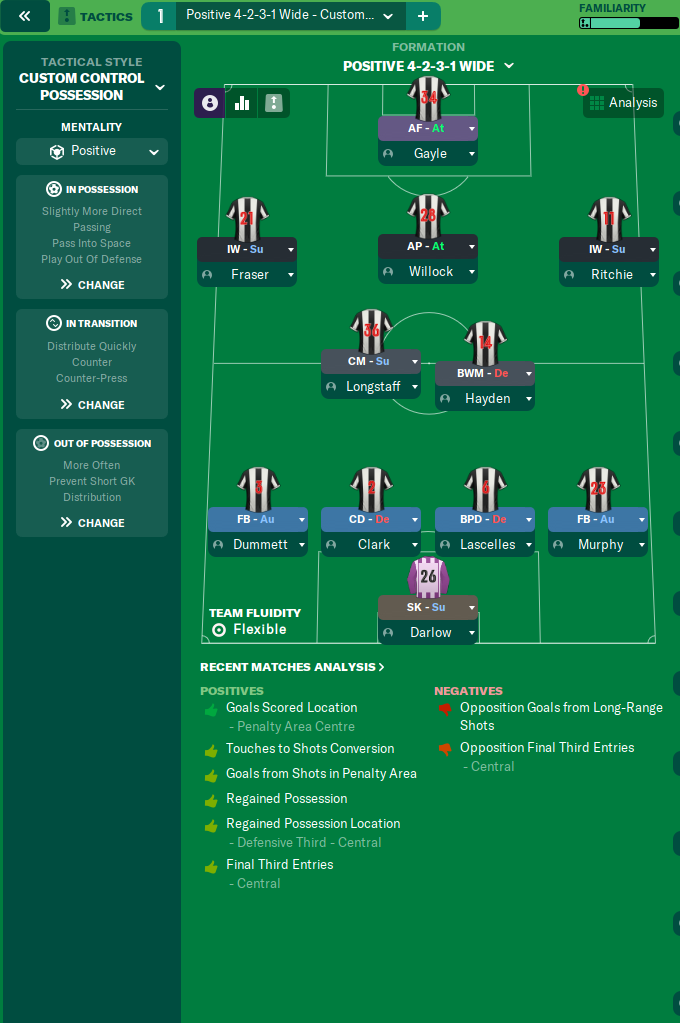
Formation & Style
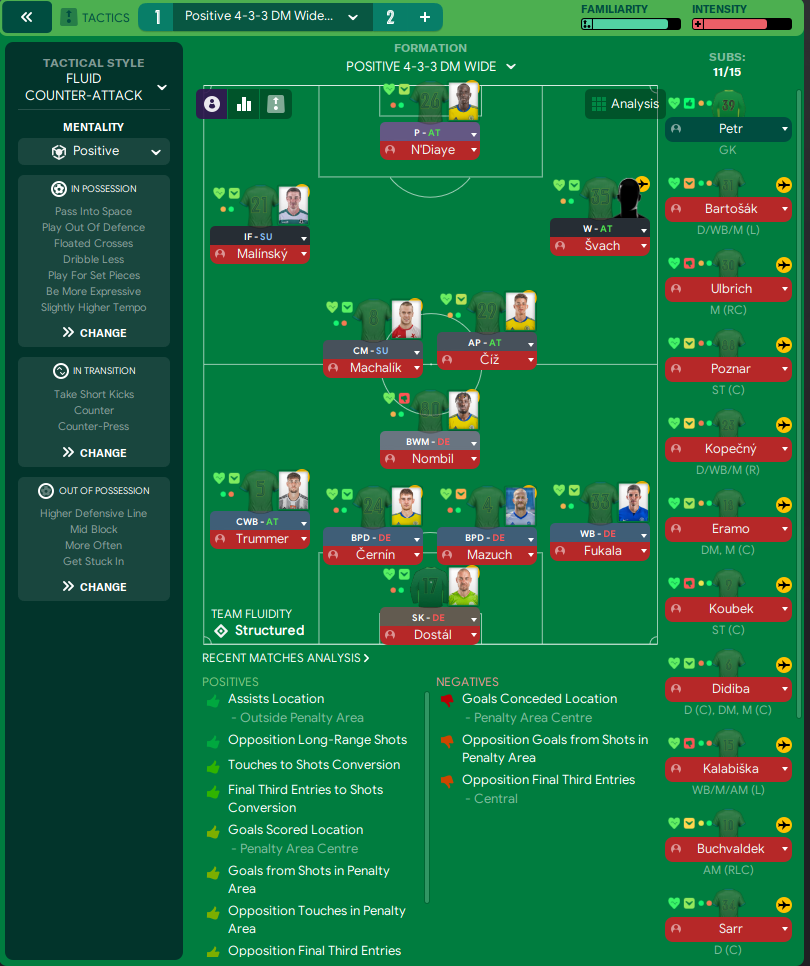
Tactical Style:Custom Control Possession
Mentality:Balanced
Formation:4-3-3 DM Wide
Team Fluidity:Flexible
In Possession
Much Shorter Passing
Play Out Of Defence
Low Crosses
Work Ball Into Box
Focus Play Down The Left
Slightly Higher Tempo
In Transition
Take Short Kicks
Distribute To Centre-Backs
Counter
Counter-Press
Out of Possession
Higher Defensive Line
Much More Often Prevent Short GK Distribution
Get Stuck In
Team Shape Without Ball
Shape:Compact Lines
Description:Defensive line is effectively positioned to restrict central access while maintaining pressure on the ball.
Evidence:3 CBs at [2,2] and [2,3], with BWM at [3,3] providing cover.
Team Shape With Ball
Shape:Fluid Width
Description:Broad attacking shape allowing space for wing play and central penetration.
Evidence:WB at [2,1] and [2,5] supporting the attack with I alternate.
Phase Description
Attacking Play
Utilizes width and quick short passing to break down defenses, with emphasis on creating chances from central areas.
Defensive Transition
Immediate counter-pressing to regain possession quickly upon losing the ball.
Main Focus
Maintain control of possession while creating goal-scoring opportunities through structured buildup.
Key Strengths
Balanced Midfield Control
The combination of a Ball-Winning Midfielder and a Central Midfielder ensures robust control and recovery in midfield.
Dynamic Attacking Options
Having an Advanced Forward alongside an Inside Forward creates multiple threats in the opponent's half.
Effective Wing Play
Wing-backs contribute to width, allowing inside forwards and wingers to penetrate.
Conflicting Directions
High Defensive Line vs. Counter-Pressing
While aiming to press high, a higher defensive line could be exposed during counter-attacks.
Focus Play on the Left vs. Balanced Midfield
Over-reliance on left-sided attacking can leave vulnerabilities on the right flank.
Short Passing with Higher Tempo
A high tempo can contradict the effectiveness of shorter passing, potentially leading to rushed decisions.
Tactical Suggestions
Consider Varying Attacking Focus
Distributing the play more evenly across both flanks can help exploit weaknesses in opponent's defense.
Adjust Defensive Line for Counter Situations
Lowering the defensive line slightly may mitigate the risk from counter-attacks.
Include Playmaker in Central Role
Integrating a more dynamic playmaker could improve chance creation.
Ask Questions About Your Lineup
Related Tactics
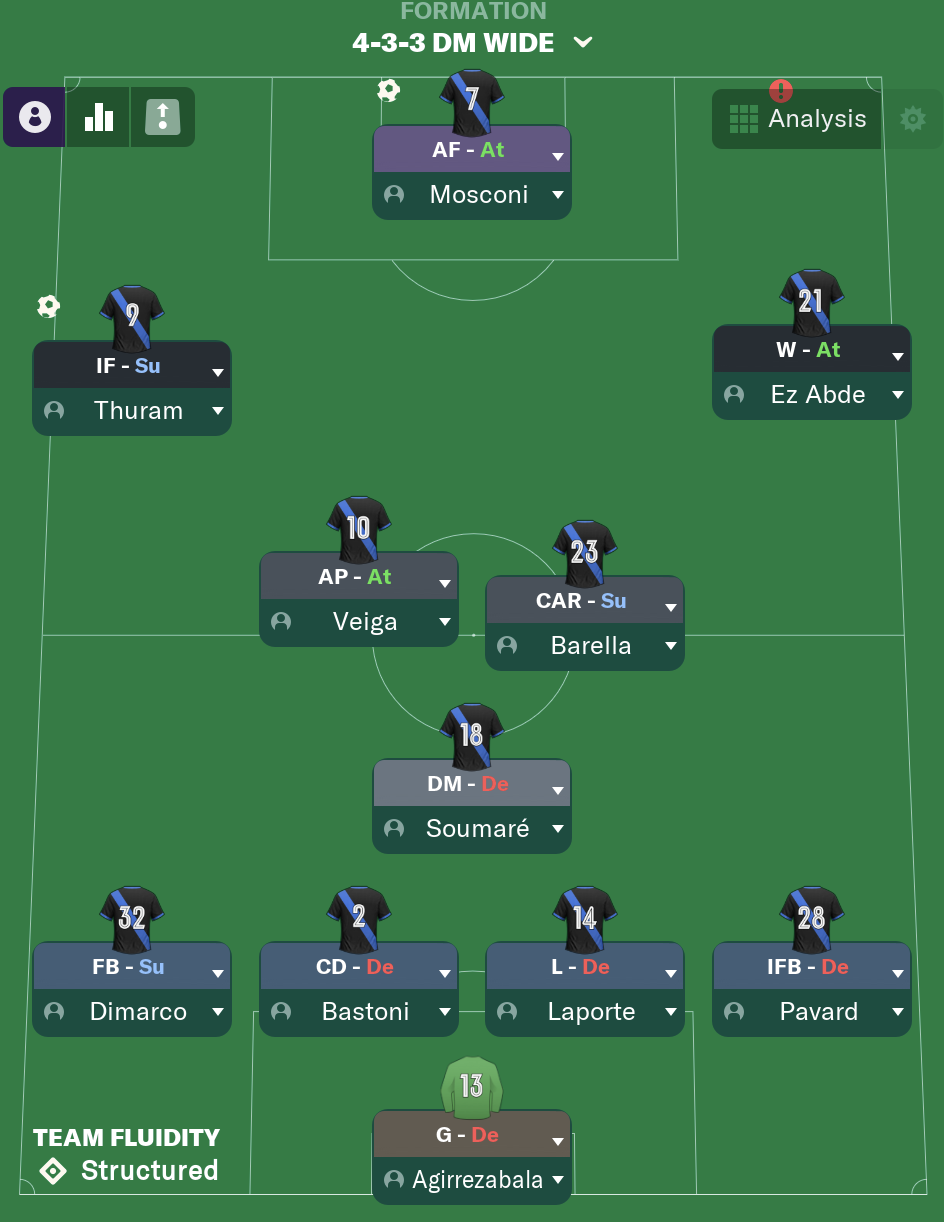
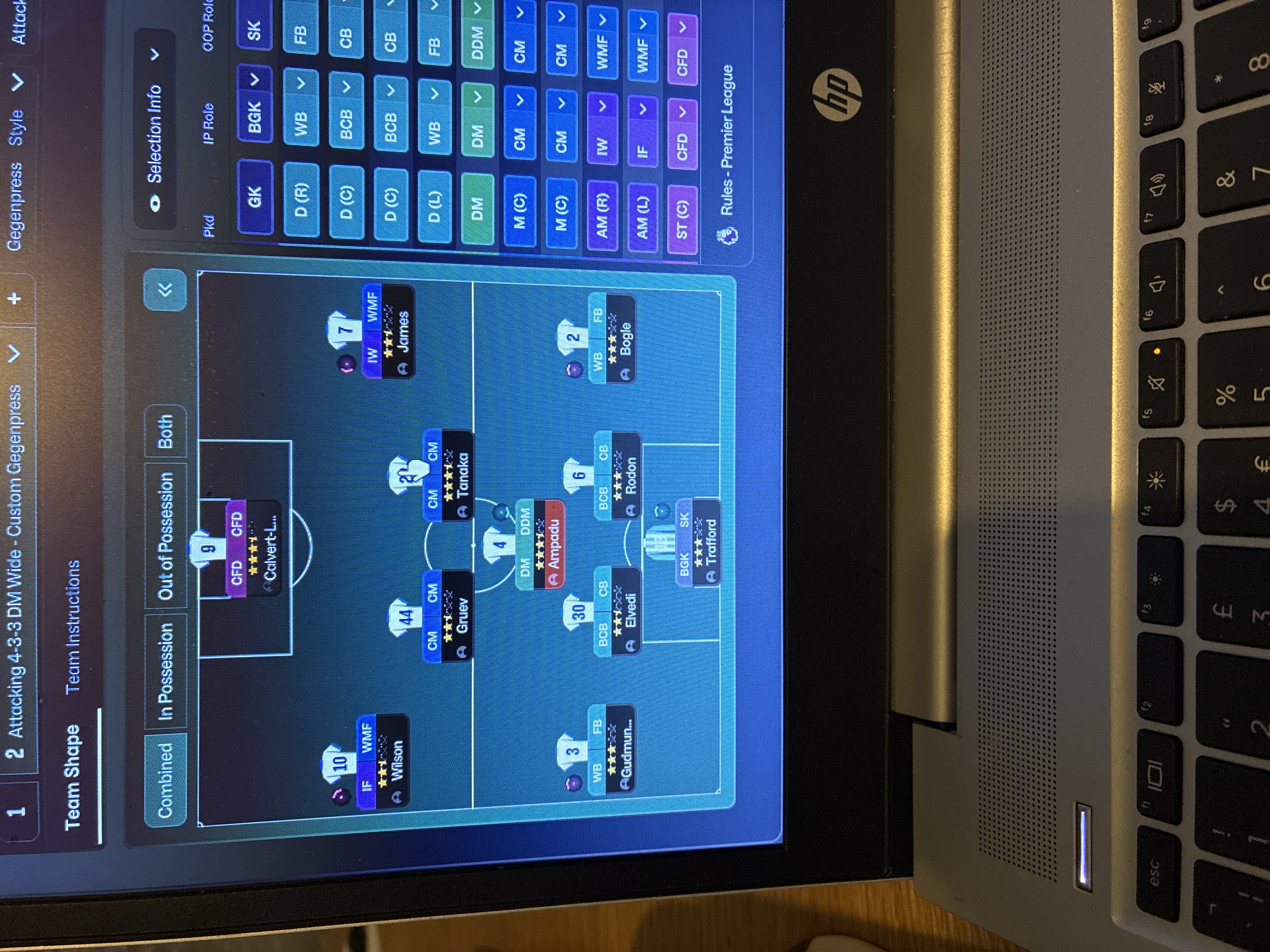
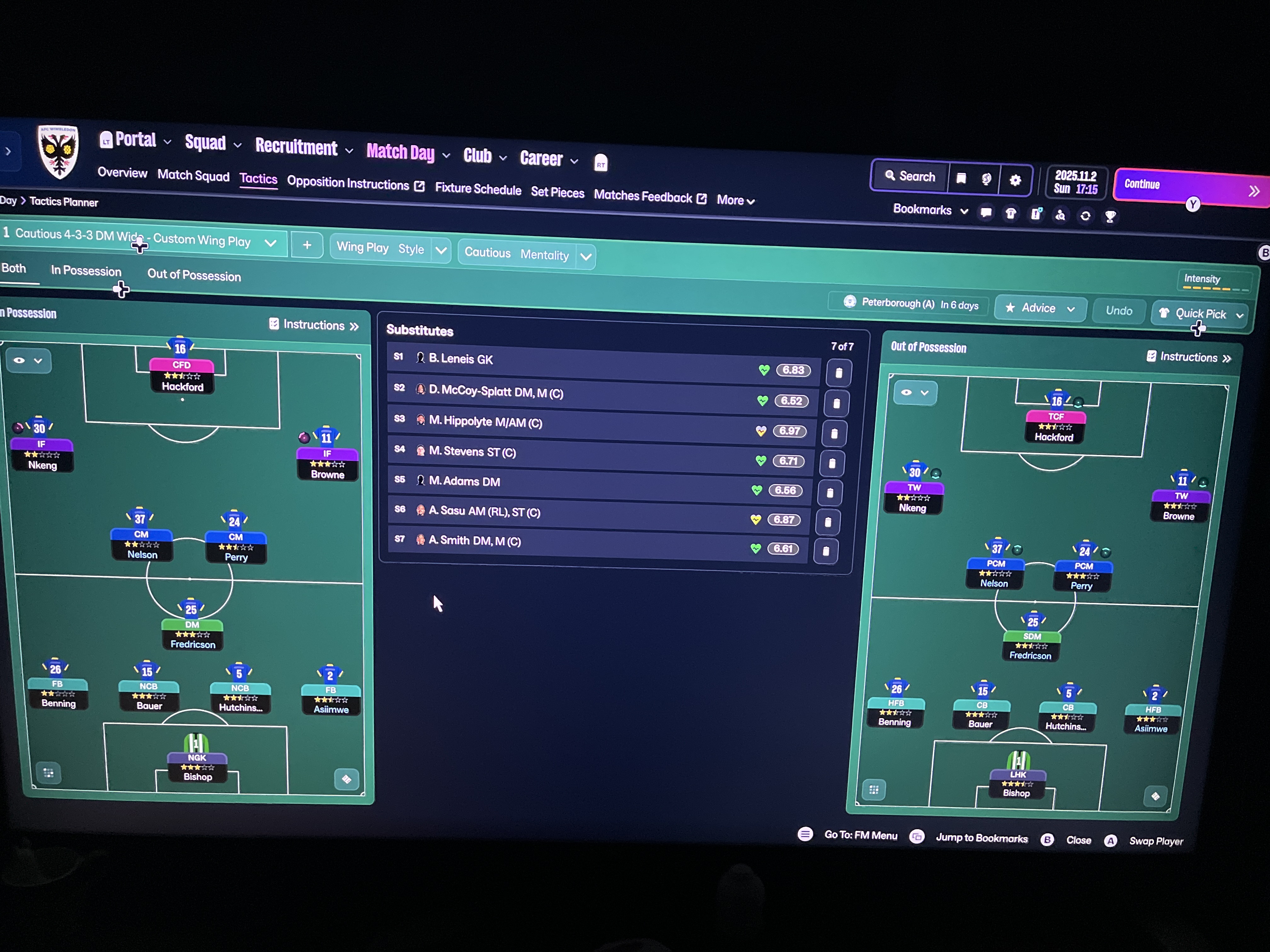
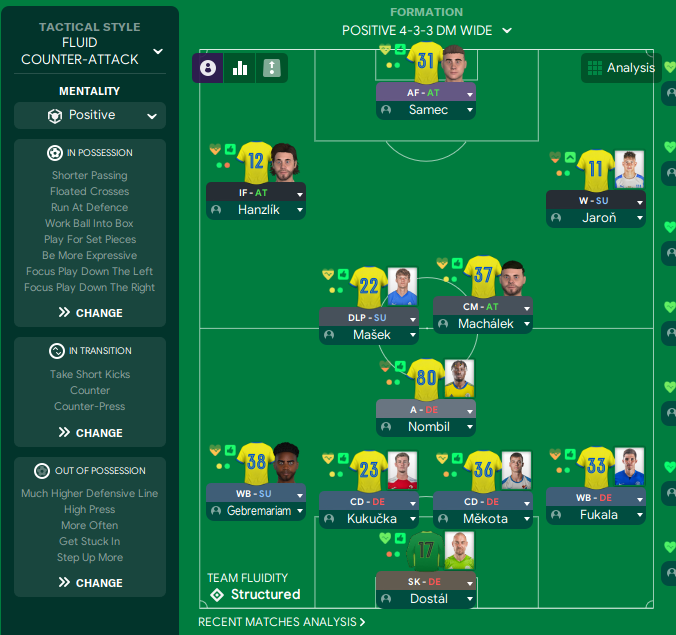
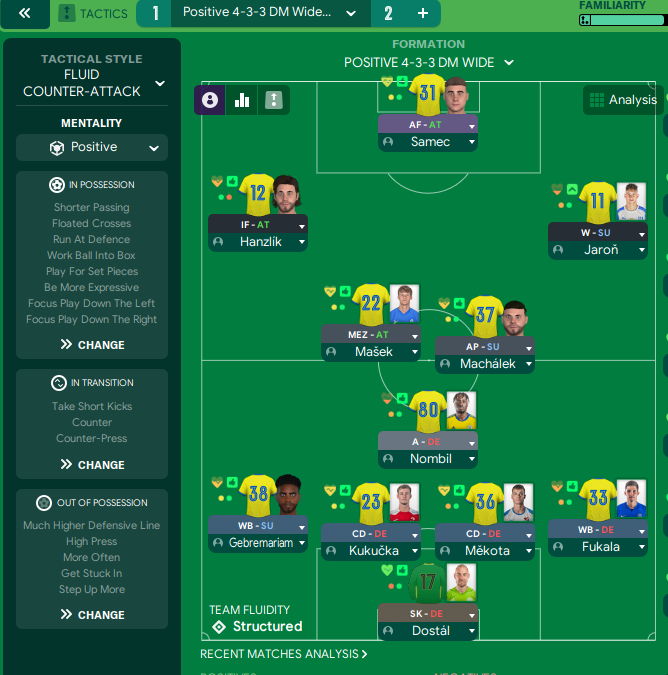
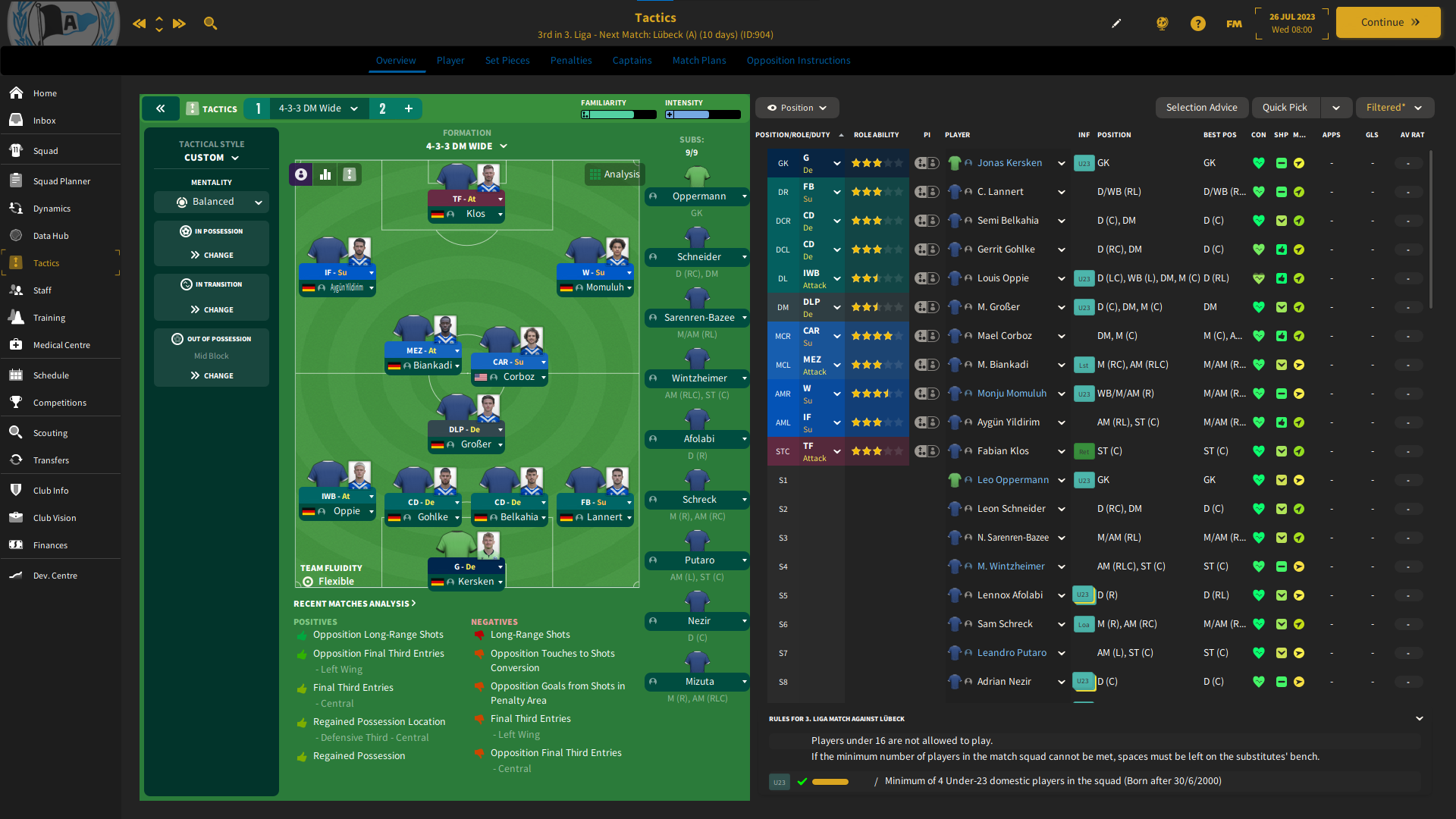
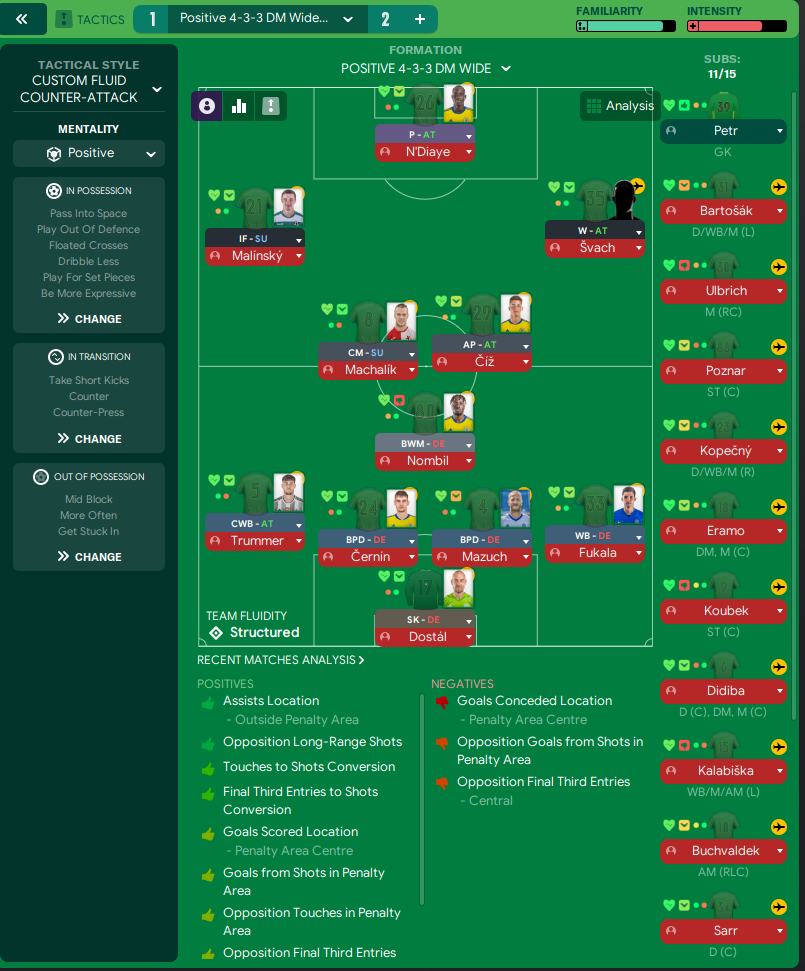
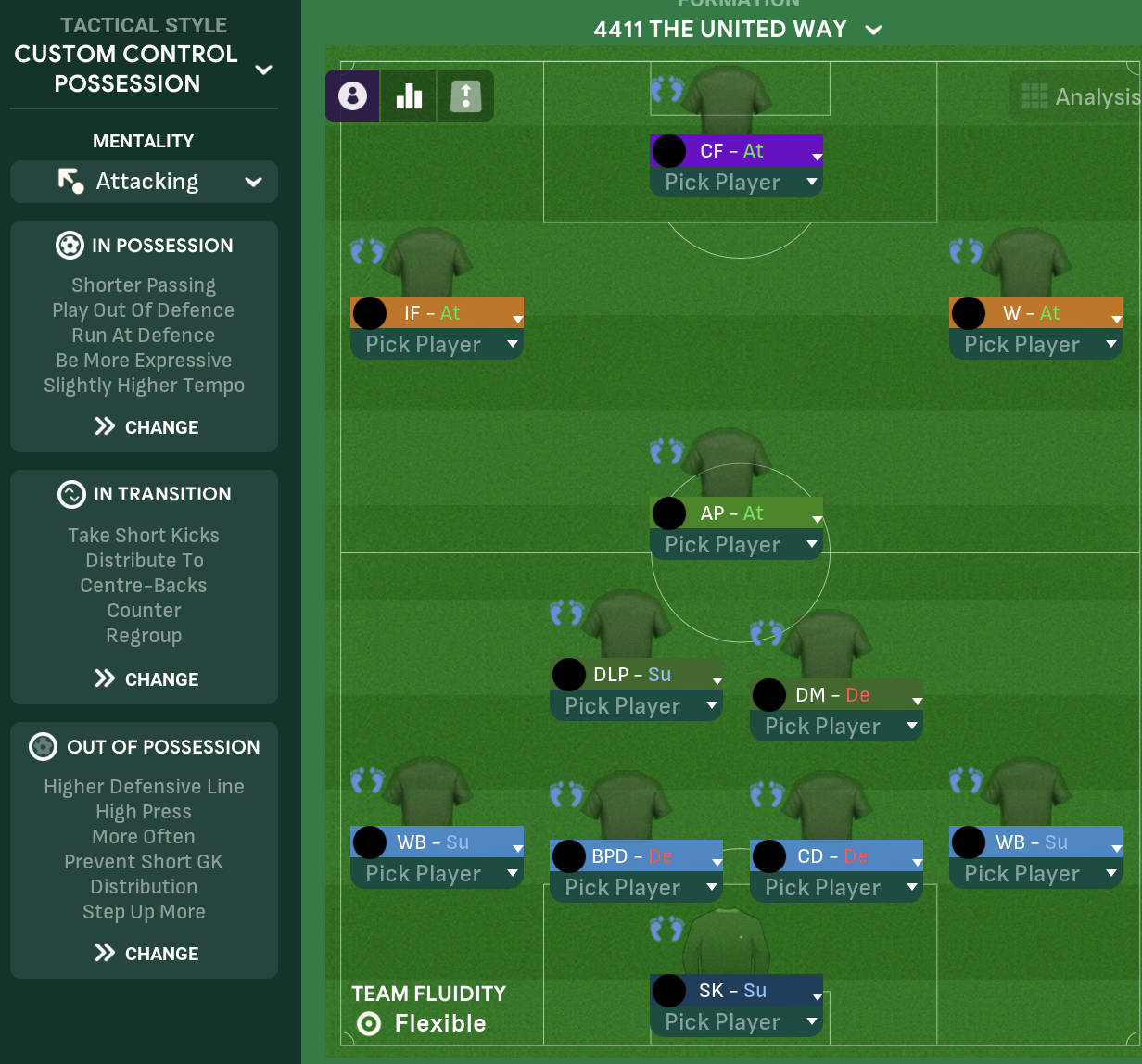
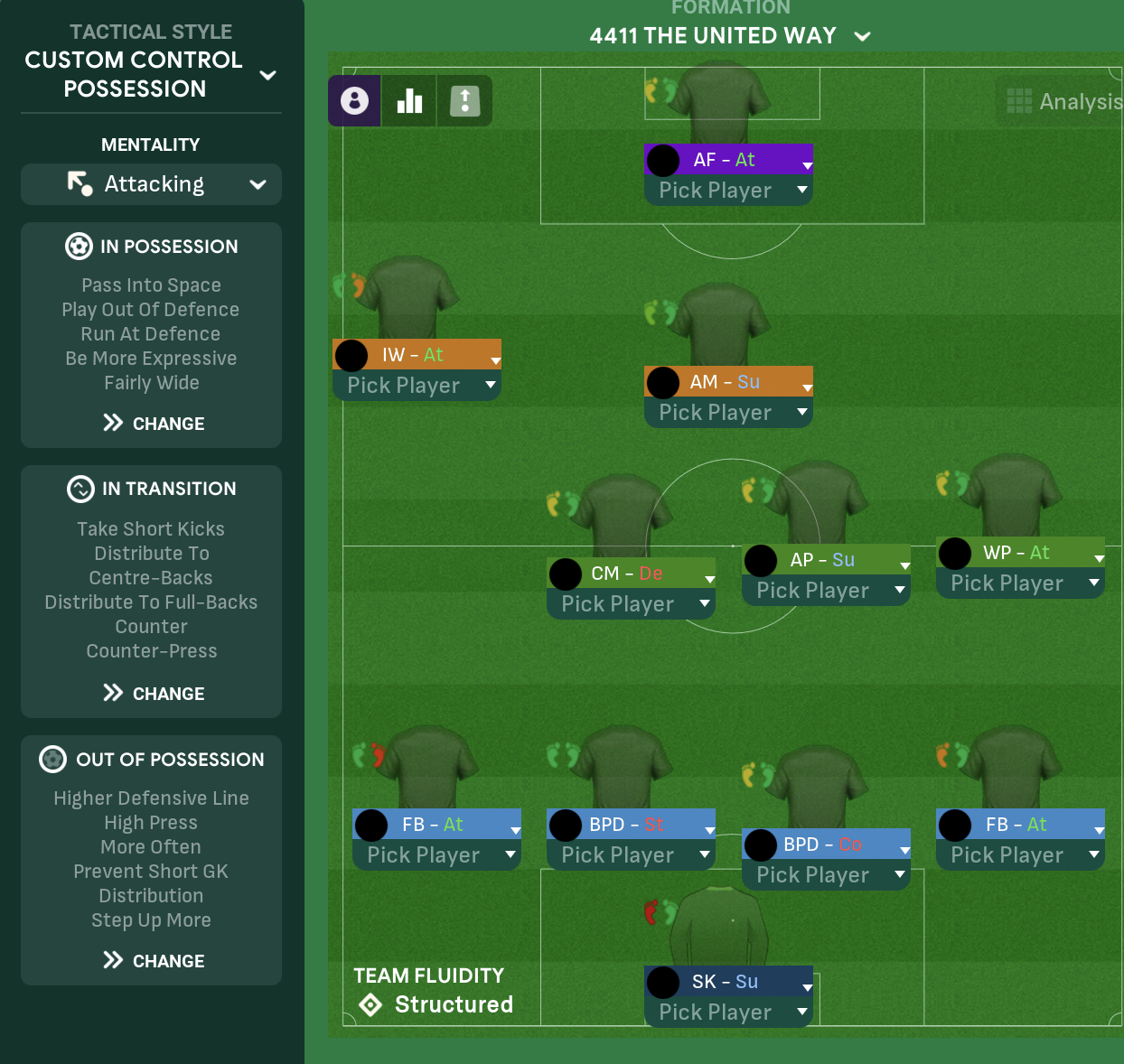
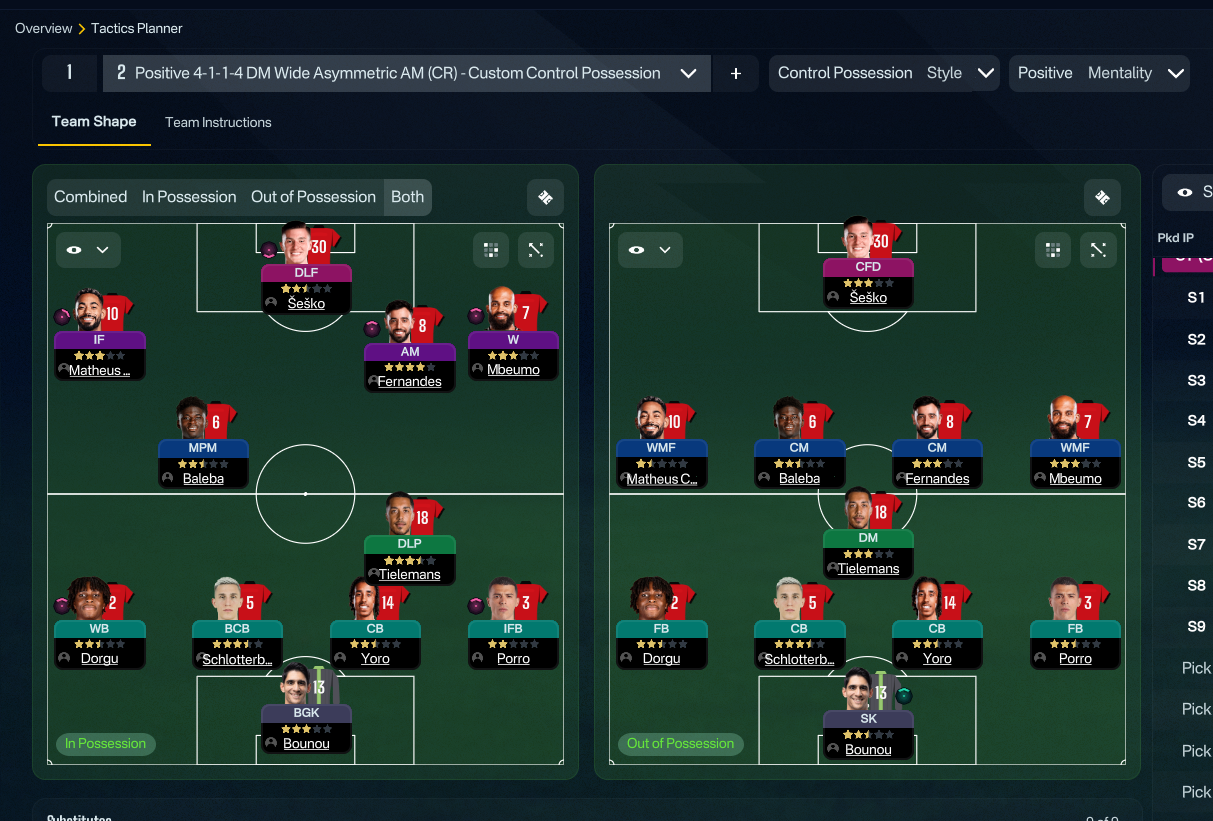
More Custom Control Possession tactics
Guides for this formation
The tactical theory behind the 4-3-3 DM Wide: roles, instructions, and the trade-offs that decide whether the system holds up.
Foundations
Understanding the 4-3-3 Formation
Master the classic 4-3-3: player roles, tactical variations, and the trade-offs that decide whether it sings or stalls.
Read guide
Player pairings
Midfield Trios
Holder, runner, creator: the role distribution rule for three-man midfields, the AMC variants, and the antipatterns that break them.
Read guide
Playing styles
Gegenpressing: A Full Guide
Klopp-style gegenpressing in FM, including squad profile, line-and-press pairing, sustainable workload, and the antipatterns to avoid.
Read guide